Saltar al contenido principal

Anuncio Superior

Mostrando entradas con la etiqueta Thelema. Mostrar todas las entradas

The Macabre and Mystical: Aleister Crowley, The Great Beast 666

The Macabre Aleister Crowley: The Great Beast 666 and Father of the Occult


EMERALD TABLE — Grimoire Record Ritual
⚔️ TypeSpell
📅 Date2026-08-04
📜 FileMC-2026-0322
Difficulty★★★★☆ Avanzado
Read time17 min
🔗 Related AppGoetian Seals Generator
cha0smagicklabs.com — Digital Grimoire of Chaos Magick

Step into the shadowed halls of occult history, where the name Aleister Crowley, known as the Great Beast 666, echoes with a potent blend of controversy and fascination. This isn't just a biographical sketch; it's an exploration into the very wellsprings of modern occultism, a journey into the mind of a figure who profoundly shaped esoteric thought and practice. We'll delve into his early life, his pivotal role in forming the Hermetic Order of the Golden Dawn, the enigmatic pronouncements of The Book of the Law, his controversial experiments with sex magic, and the persistent whispers of espionage that followed him.

Crowley's influence stretches far beyond the arcane circles he inhabited. His philosophy, his rituals, and his very persona have seeped into popular culture, music, and film, proving that the Great Beast continues to cast a long shadow. Understanding Crowley is crucial for anyone seeking to grasp the trajectory of Western esotericism in the 20th century and beyond. His life was a testament to the power of belief, the allure of the forbidden, and the relentless pursuit of arcane knowledge, often blurring the lines between genius and madness, revelation and delusion.

RitualThe Formative Years: Childhood and Cambridge

Born on October 12, 1875, Edward Alexander Crowley's upbringing was steeped in a fervent, almost suffocating, Protestant evangelicalism. His father, a preacher and later a member of the Plymouth Brethren, instilled in him a deep, albeit rebellious, familiarity with biblical texts. This early exposure to religious dogma and prophecy would later fuel his iconoclastic embrace of what he termed "Thelema" – his own spiritual philosophy centered on the principle of "Do what thou wilt shall be the whole of the Law."

Crowley's formative years were marked by a precocious intellect and a growing disillusionment with conventional religious teachings. He was sent to Malvern College and later, in 1895, to Trinity College, Cambridge, to study classics. While at Cambridge, his intellectual curiosity began to shift from academic pursuits to the burgeoning interest in occultism. He delved into various metaphysical texts, experiencing early glimmers of what would become his lifelong quest for hidden knowledge and spiritual enlightenment. His time at Cambridge was not just about scholastic achievement; it was a crucible where his future path as an occultist began to solidify, moving away from established doctrine towards personal revelation and mystical experience.

From White Stains to the Golden Dawn

Crowley's early literary endeavors, such as the anonymously published "White Stains" (intended to be a collection of erotic poetry and prose), hinted at his later fixation on the intersections of sexuality and spirituality. This fascination with the transgressive and the symbolic would become a hallmark of his occult system. It was also during this period that his ambition to join the ranks of influential occult organizations began to materialize. His efforts to gain entry into the Hermetic Order of the Golden Dawn, a prominent magical society of the time, marked a critical turning point in his occult career.

The Hermetic Order of the Golden Dawn, founded in 1887, was a secret society dedicated to the study and practice of ceremonial magic, alchemy, and divination. Its teachings were a synthesis of various esoteric traditions, including Kabbalah, Hermeticism, Rosicrucianism, and Egyptian magic. Crowley's admission into the Order in 1899 provided him with formal training in Western ceremonial magic, a structured framework through which he could hone his innate psychic abilities and explore the deeper mysteries of the universe. Within the Golden Dawn, he encountered individuals who would become both allies and rivals, and it was here that he began to ascend the ranks, absorbing and eventually challenging the established doctrines of the order. His time within the Golden Dawn, though ultimately tumultuous, laid the essential groundwork for his subsequent independent magical work.

The Contact with Horus and The Book of the Law

The pivotal event in Aleister Crowley's occult life, and arguably the genesis of his personal magical system, occurred in Cairo, Egypt, in 1904. During this period, Crowley claimed to have established contact with a spiritual entity or intelligence named Aiwass, who dictated to him a sacred text known as The Book of the Law (also called Liber AL vel Legis). Crowley described this experience as a profound revelation that laid out the principles of his new Aeon – the Aeon of Horus, which he believed was replacing the Aeon of Osiris.

The Book of the Law is a short, cryptic document that presents a revolutionary spiritual philosophy. Its central tenet is the law of Thelema: "Do what thou wilt shall be the whole of the Law. Love is the law, love under will." This is often interpreted not as a license for hedonistic indulgence, but as a directive to discover and fulfill one's true destiny or "True Will," aligning oneself with the cosmic order. Crowley saw himself as a prophet of this new Aeon, tasked with disseminating its teachings to the world. The book's complex symbolism, paradoxical pronouncements, and radical vision of spiritual liberation became the cornerstone of his magical and philosophical system, influencing generations of occultists and mystics.

The contact with what he identified as the Egyptian god Horus further cemented his belief in a divine mandate to usher in a new era of human consciousness. This sacred text and the associated revelations became the blueprint for his subsequent magical practices and organizational endeavors. The principles laid down in The Book of the Law would guide his life's work, shaping his understanding of magic, religion, and human potential.

Sex Magic and the Amalantrah Working

Central to Crowley’s mature magical system, known as Thelema, was the concept and practice of sex magic, or "Magickal Sex." He believed that the immense energy generated during sexual activity, when consciously directed with specific intent, could be harnessed to achieve magical results. This was not merely about physical pleasure; it was about channeling the primal life force for spiritual transformation, invocation, and manifestation. He expounded on these ideas in various writings, including parts of The Equinox and his autobiography.

One notable practice was the Amalantrah Working, undertaken around 1918. This involved prolonged periods of sexual abstinence followed by orgasm, during which Crowley would visualize and invoke various entities and concepts with the intention of achieving specific magical outcomes. During one such Amalantrah Working, he claimed to have contacted an entity named LAM through visualization and ecstatic states. LAM, often depicted as a visionary figure with a large head and almond-shaped eyes, became a recurring motif in Crowley's later occult work and was interpreted by some, including later figures in UFO culture, as an alien or extradimensional being. These practices were controversial even within esoteric circles, pushing the boundaries of what was considered acceptable or even sane in the pursuit of magical attainment.

Crowley viewed sexuality as a powerful, yet often misunderstood, force. By integrating it into his magical practices, he sought to unlock its latent potential for spiritual evolution, arguing that repression led to psychological maladies, while conscious integration could lead to liberation and expanded awareness. The intensity and unconventionality of his sexual magic practices contributed significantly to his public image as a debauched and dangerous figure.

Crowley as a Spy? Examining the Allegations

The notion of Aleister Crowley as a British double spy is a persistent and intriguing thread in the lore surrounding him. During World War I, Crowley, living in the neutral United States, was known to have engaged in propaganda efforts for the Allied cause, writing articles and distributing pamphlets designed to undermine German morale. His fluency in languages and his considerable network of contacts, both aristocratic and subversive, made him a potential asset for intelligence agencies.

Historians and biographers have explored these connections, with some suggesting he was indeed employed by British intelligence, perhaps reluctantly or indirectly. His exploits and known associates, including individuals with ties to governmental and military circles, have fueled speculation. However, concrete evidence proving he was a formal, sanctioned spy is scarce. It's more likely he acted independently, using his influence and skills to support the war effort in ways he saw fit, or perhaps that intelligence agencies simply monitored his activities due to his notoriety and potential to influence public opinion. The ambiguity surrounding his wartime activities adds another layer to his complex and often contradictory legacy, feeding into his mystique as a figure operating in the shadows, both occult and political.

The Abbey of Thelema and Drug Rituals

In 1920, Crowley established the Abbey of Thelema in Cefalù, Sicily. This was intended to be a magical commune, a place where followers could live and practice the principles of Thelema under his guidance. The Abbey became a focal point for his experiments in sex magic, ritual, and the exploration of altered states of consciousness, often facilitated by the use of drugs.

Crowley was an early and vocal proponent of drug use for spiritual and magical purposes. He experimented with various substances, including cannabis, opium, and hallucinogens like mescaline and LSD (though LSD was synthesized many years after his death, he anticipated its potential for visionary experiences). He viewed drugs not as mere recreational substances, but as tools that could "tune" the mind, break down ordinary consciousness, and facilitate contact with higher or deeper realms of awareness. He detailed these explorations in works such as The Confessions of Aleister Crowley and Magick Without Tears. The "drug rituals" at the Abbey involved combining these substances with specific magical operations, visualizations, and ascetic practices. These were controversial even at the time, leading to accusations of immoral conduct and contributing to the Abbey's eventual closure by the Italian authorities in 1923, purportedly due to the death of one of his followers in a ritualistic accident, and also due to concerns over drug use and public morality.

Exile, Addiction, and Final Works

Following his expulsion from Italy, Crowley's life became more nomadic and less focused on establishing physical centers of magical practice. He settled in England for a time, continuing his prolific writing and magical work. However, this period was also marked by increasing struggles with drug addiction, particularly to heroin, which he used to manage chronic pain and, he claimed, to aid his magical endeavors. His addiction often led to financial difficulties and strained relationships.

Despite these personal challenges, Crowley continued to produce significant magical texts. He revised and expanded his earlier works, wrote commentaries on sacred texts, and continued to develop his system of Thelema. His later writings often reflected on his life's journey, his philosophical insights, and his views on the future of humanity and consciousness. He remained a figure of controversy and fascination, inspiring some and repelling others with his radical ideas and unconventional lifestyle. His influence began to spread beyond occult circles, touching artists, writers, and musicians who were drawn to his iconoclastic spirit and his exploration of the human psyche's hidden depths.

Crowley’s later years were filled with continued magical research, prolific writing, and a constant battle with his own demons, both literal and metaphorical. Though his physical health declined, his intellectual and spiritual fire never truly extinguished, leaving behind a vast corpus of work that continues to be debated, studied, and practiced by occultists worldwide.

Jack Parsons, L. Ron Hubbard, and the Seeds of Scientology and UFO Culture

In the latter part of Crowley's life, his influence intersected with figures who would go on to create significant cultural and technological movements. One of the most striking examples is his connection with Jack Parsons, a brilliant rocket scientist and an occultist in Southern California. Parsons was a devoted follower of Thelema and, along with L. Ron Hubbard (who later founded Scientology), engaged in a series of rituals known as the "Babalon Working."

The Babalon Working, purportedly conducted in 1946, was an attempt to invoke the archetypal feminine divine, Babalon, and to manifest a "moonchild" – a magical offspring. These rituals, deeply rooted in Crowley's sex magic and occult principles, involved Hubbard and Parsons attempting to create magical effects in the physical world. While the literal success of the Working is debated, its legacy is undeniable. It is often cited as a key influence on Hubbard's subsequent development of Dianetics and Scientology, particularly the concepts of past lives, alien influences (Xenu), and the idea of spiritual technology.

Furthermore, the association with entities like LAM and supposed extraterrestrial communications during Crowley's own Amalantrah Working, combined with the esoteric practices of Parsons and Hubbard, created fertile ground for the burgeoning UFO culture of the mid-20th century. Many early UFO contactees and researchers drew parallels between their experiences and the occult traditions Crowley represented, seeing demons and aliens as potentially interchangeable phenomena. The connections between these occult dabblings and the foundations of Scientology and modern UFOlogy remain a subject of intense speculation and analysis, highlighting the unexpected ways Crowley's esoteric experiments rippled through subsequent cultural phenomena.

Crowley's Thelemic Funeral and Enduring Legacy

Aleister Crowley died on December 1, 1947, in a boarding house in Hastings, England, reportedly stating, "I am perplexed, but I am not defeated." His death marked the end of a life lived on the absolute fringes of conventional society, a life dedicated to the exploration of the extreme limits of consciousness and magic. His funeral, held in Brighton, was a small affair, but notably, it included an invocation of his chosen motto, "Toki Doki," and a reading from The Book of the Law, ensuring that even in death, the principles of Thelema were honored.

Crowley's influence is vast and multifaceted. He is credited with profoundly impacting modern occultism, particularly through the development of Chaos Magic, which embraced his radical skepticism towards dogma and his emphasis on experimentation. His ideas on sex magic, consciousness liberation, and the "Law of Thelema" continue to be studied, debated, and practiced by dedicated adherents. Beyond esoteric circles, his persona became archetypal: the ultimate rebel, the dark magician, the prophet of a new age. This image has been adopted and adapted by countless musicians, artists, and writers, solidifying his presence in popular culture as the quintessential occult figure. While often misrepresented and sensationalized, Aleister Crowley's true legacy lies in his relentless pursuit of self-knowledge and his challenge to conventional notions of reality, spirituality, and human potential.

The Macabre Influence Beyond Death

The shadow of the Great Beast extends far beyond his physical demise. Aleister Crowley's legacy is not merely confined to dusty tomes and esoteric societies; it has permeated art, music, and popular culture in ways that are both overt and subtly implied. Musicians, from The Beatles and Led Zeppelin to contemporary artists exploring darker themes, have referenced Crowley, his symbols, or his philosophy. His image has been incorporated into album art, lyrics, and stage performances, often drawing on the mystique of the occult rebel.

Hollywood has also frequently used Crowley as inspiration, or as a character, for films exploring themes of magic, mystery, and the dark side of human nature. His iconic image and controversial life story lend themselves to dramatic narratives, transforming him into a recurring archetype in cinematic portrayals of the occult. Beyond these direct references, his philosophical ideas, particularly the concept of "Do what thou wilt," continue to resonate with those seeking individual liberation and self-expression, even if they are unaware of their source.

The study of his extensive writings, including The Book of the Law, The Equinox, and his numerous magical diaries, remains a rigorous discipline for serious occultists. His emphasis on personal experience, experimentation, and the integration of all aspects of life—including sexuality and altered states of consciousness—offers a potent and challenging path for spiritual exploration. The enduring fascination with Aleister Crowley suggests that his exploration of the human psyche's hidden potentials, and his embrace of the macabre and the mystical, continues to speak to a deep-seated human desire to understand the mysteries that lie both within and beyond the veil of ordinary existence.

Mage's Arsenal

  • Essential: Goetian Seals Generator — This app allows you to accurately generate and work with the complex sigils of the Goetia, ensuring precise execution for your rituals.
  • Recommended: The Book of the Law by Aleister Crowley.
  • Further Study: Liber Null & Psychonaut by Peter J. Carroll.
  • Historical Context: Biographies of Aleister Crowley (e.g., by John Symonds or Tobias Churton).

FAQ: Frequently Asked Questions

What was Aleister Crowley's main philosophy?

Crowley's central philosophy is known as Thelema, encapsulated by the Law: "Do what thou wilt shall be the whole of the Law. Love is the law, love under will." He believed this meant discovering and fulfilling one's True Will, aligning with the cosmic order rather than indulging in mere hedonism. This philosophy emphasized individual liberty, self-realization, and the exploration of the divine within oneself.

Was Aleister Crowley a genuine occultist or a charlatan?

This question is central to the debate surrounding Crowley. His followers and many practitioners of modern occultism view him as a profound spiritual teacher and magician who revealed significant arcane truths. Critics and skeptics often dismiss him as a charlatan, a drug addict, or a charlatan who preyed on the gullible. His prolific writings on magic, his detailed system of Thelema, and the consistent testimonies of many practitioners suggest a genuine, albeit highly unorthodox, engagement with occult forces. Ultimately, his efficacy is often judged by the results practitioners achieve using his system.

How did Aleister Crowley influence modern occultism?

Crowley's influence is immense. He is considered one of the most significant figures in 20th-century Western esotericism. His emphasis on personal experience, his development of ceremonial magic techniques, and his philosophy of Thelema have directly inspired or influenced movements like Chaos Magic, modern Wicca, and various esoteric orders. His prolific writings continue to be foundational texts for many occultists, providing practical methodologies and philosophical frameworks for spiritual exploration.

Did Aleister Crowley practice sex magic, and why?

Yes, Aleister Crowley was a prominent advocate and practitioner of sex magic. He believed that the powerful energies generated during sexual activity, when consciously directed through specific intent and visualization, could be used to achieve magical goals, spiritual enlightenment, or to invoke entities. He saw sexuality not as something to be repressed, but as a potent force that, when integrated into magical practice, could lead to profound transformation and expanded consciousness. His writings on this subject are extensive and often controversial.

Is the Book of the Law the only important work by Crowley?

While The Book of the Law is considered the foundational sacred text of Thelema and a major revelation, Crowley produced a vast body of work. His other significant writings include The Equinox (a comprehensive journal detailing the practices and philosophy of Thelema), Magick in Theory and Practice (sometimes attributed to his disciple Oscar M.?’” but written and compiled by him), The Confessions of Aleister Crowley (his autobiography), and numerous commentaries on ancient texts and magical systems. These works provide detailed insights into his magical practices, philosophy, and personal journey.

How is the concept of "The Great Beast 666" understood in relation to Crowley?

The number 666 is famously associated with the "Beast" in the Book of Revelation in the Christian Bible. Aleister Crowley embraced this number and the title "The Great Beast" as symbolic of his role as a prophet of a new Aeon—the Aeon of Horus, which he believed was replacing the Aeon of Osiris. He saw the "Beast" not as an evil entity, but as a symbol of liberation, individualism, and the divine spark within humanity breaking free from repressive old orders. By adopting this controversial symbol, he aimed to reclaim and redefine its meaning within his Thelemic system, subverting its traditional negative connotations.

What were Crowley's views on drugs?

Crowley was an advocate for the use of certain psychoactive substances as tools for spiritual exploration and magical enhancement. He believed that drugs, when used consciously and with specific intent, could help to break down the limitations of ordinary consciousness, facilitate visionary experiences, and aid in the process of magical invocation and self-discovery. He documented his own experiments with substances like cannabis, opium, and his anticipation of hallucinogens in various writings, viewing them as potentially potent aids in the pursuit of higher knowledge and altered states of awareness.

About the author: Frater Alek0s is a veteran practitioner and researcher in the field of chaos magick. His work focuses on the practical and experimental application of occult techniques for self-development and reality exploration, demystifying esotericism for the modern practitioner.

Your Operation

The life of Aleister Crowley is a testament to the power of radical individualism and the relentless pursuit of esoteric knowledge. His journey, marked by profound revelations and notorious controversies, offers a compelling case study in the exploration of consciousness, magic, and spirituality. While his methods were often extreme, his core philosophy of Thelema – centered on discovering and fulfilling one's True Will – continues to inspire those who seek a path of self-mastery and liberation.

The challenge for any modern practitioner is to separate the historical persona and sensationalism from the practical, potent techniques and philosophies he espoused. Did he truly commune with divine intelligences, or was he a master psychologist and showman? The answer, as with much of the occult, likely lies in the personal experience and interpretation of the practitioner. To truly understand Crowley's impact, one must engage with his work critically, experiment with his methods safely, and determine for oneself the nature of the Great Beast and the truths he sought to unveil.


Referencias

  1. Crowley, A. (1904). The Book of the Law. Self-published.
  2. DuQuette, L. M. (1993). The Magick of Thelema. Weiser Books.
  3. Sutin, L. (2000). Do What Thou Wilt: A Life of Aleister Crowley. St. Martin's Press.
  4. Kaczynski, R. (2010). Perdurabo: The Life of Aleister Crowley. North Atlantic Books.
  5. Booth, M. (2000). A Magick Life: A Biography of Aleister Crowley. Coronet.
  6. Symonds, J. (1951). The Great Beast: The Life of Aleister Crowley. Rider & Company.
  7. Grant, K. (1972). The Magical Revival. Muller.
  8. Churton, T. (2011). Aleister Crowley: The Biography. Watkins.
  9. Cornelius, J. (1999). Aleister Crowley and the Ouija Board. Feral House.
  10. Evans, D. (2007). The History of British Magick After Crowley. Hidden Publishing.
  11. Fuller, J. F. C. (1909). The Star in the West. Walter Scott Publishing.
  12. Hymenaeus Beta (1995). The Equinox: Volume III, Numbers 1-10. O.T.O..
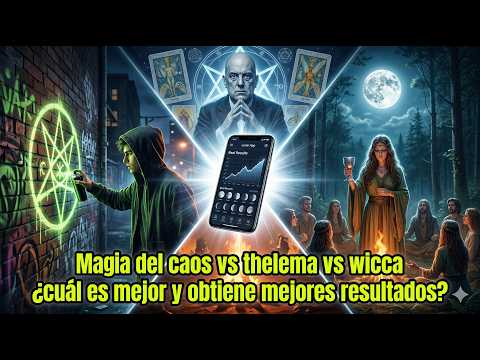
Magia del Caos vs. Thelema vs. Wicca: ¿Cuál Corriente Domina la Realidad?


La disyuntiva eterna: ¿es la estructura rígida de la Wicca la llave para desatar el poder, o es la disciplina austera de Thelema el camino hacia la maestría? Hoy, desmantelamos estas corrientes para revelarte dónde reside el verdadero potencial mágico en el siglo XXI. En la Magia del Caos, aprendemos que la realidad es maleable, y tu voluntad es la herramienta principal, pero, ¿cuál sistema te equipa mejor para forjar tu destino?

Si este post te está incomodando, vas por buen camino. Suscríbete para más golpes a tu zona de confort y comparte este post con alguien que aún crea en las hadas sin dientes.

Wicca: La Tradición y sus Límites

La Wicca, a menudo idealizada como un camino de retorno a la naturaleza y a la veneración de lo femenino, presenta un marco ritualístico bien definido. Sus covenes, sus altares y sus ciclos lunares ofrecen una estructura reconfortante para muchos. Sin embargo, para el mago que busca una manipulación directa y audaz de la realidad, la Wicca puede sentirse como un corsé. Sus dogmas, aunque pacíficos, limitan la experimentación pura y la voluntad individual sin filtros. Es un sistema que premia la adhesión y la tradición, pero ¿qué sucede cuando tu propia naturaleza caótica choca con sus dogmas?

Thelema: La Ley del Mago

Forjada por el enigmático Aleister Crowley, Thelema se centra en la "Voluntad Verdadera" como el motor del universo. Su mantra, "Haz lo que quieras, será toda la Ley", promete una autonomía radical. Sin embargo, la adhesión a los textos sagrados de Thelema, como el Liber AL vel Legis, y la jerarquía interna pueden crear un nuevo tipo de dogma. La disciplina requerida para comprender y aplicar sus complejas correspondencias y rituales puede ser abrumadora, y para algunos, elitista. ¿Es la Voluntad Verdadera una herramienta liberadora o una nueva cadena dorada para el adepto?

Magia del Caos: La Liberación Total

Aquí es donde las cosas se ponen interesantes. La Magia del Caos, nacida de la insatisfacción con los sistemas mágicos tradicionales y la influencia de figuras como Austin Osman Spare, se basa en la premisa de que las creencias son herramientas. "Nada es verdad, todo está permitido" no es una invitación a la anarquía, sino a la libertad de experimentar sin dogmas. La Magia del Caos te despoja de la necesidad de sistemas rígidos y te enseña a usar cualquier creencia o símbolo que te sea útil para lograr resultados. Se enfoca en la alteración de la conciencia, la neuroplasticidad y la manipulación directa de la psique. Para ello, utilizar una herramienta que simplifique la creación de sigilos y la carga de intenciones es fundamental. Puedes usar Chaos Magick Sigil Generator para generar tus propios sigilos al instante, permitiéndote centrarte en la intensidad de tu voluntad.

Comparativa para el Practicante Moderno

"La diferencia entre el mago y el creyente es simple: el mago conoce cómo funcionan los mecanismos, el creyente solo espera que funcionen."

Si buscas estructuras rígidas, ciclos lunares precisos en un calendario predefinido y veneración de deidades específicas, la Wicca podría ser tu camino. Si buscas una disciplina filosófica profunda, un código ético basado en la autoknowledge y la auto-maestría, Thelema te ofrecerá un desafío intelectual y espiritual. Pero si tu objetivo es la acción directa, la experimentación sin límites y resultados tangibles, la Magia del Caos te proporciona la flexibilidad y las herramientas para lograrlo. La Magia del Caos no descarta la sabiduría de otras tradiciones; la integra y la adapta, creando un sistema dinámico y personalizable. Aprovecha la tecnología para potenciar tu práctica. Estás en la era de la Divinación Digital y la Magitecnología.

Arsenal del Mago

Aquí te presento las herramientas que considero esenciales para cualquier practicante serio que no quiera perderse en dogmas:

  • Chaos Magick Sigil Generator (App): Esencial para la creación rápida y efectiva de sigilos, el corazón de muchas operaciones caóticas. Permite enfocar la intención sin la carga mental de la creación manual.
  • Liber Null & Psychonaut de Peter J. Carroll: Un texto fundamental para entender los principios de la Magia del Caos.
  • El Poder de la Voluntad de Aleister Crowley: Aunque desde una perspectiva Thelémica, los principios sobre la voluntad son universales y potentes.
  • Un amuleto vibracional: Algo que te conecte con tu intención y te sirva de ancla psíquica.

La clave no es la herramienta en sí, sino tu capacidad para infundirle tu propia energía y voluntad. La Technomancia está aquí para quedarse.

Elsie_A_E

Veredicto del Practicante

Si bien Wicca y Thelema ofrecen caminos estructurados y significativos, la Magia del Caos se alza como la opción más potente y adaptable para el practicante moderno. Su enfoque en la voluntad individual, la experimentación y la ausencia de dogmas la convierte en la herramienta definitiva para aquellos que desean ser arquitectos de su propia realidad. La limitación de otras sendas radica en su adherencia a sistemas que, si bien efectivos para algunos, pueden sofocar la chispa de la innovación y la autenticidad mágica.

Taller Práctico: Tu Operación

Crea tu Sigilo de "Dominación Caótica"

  1. Define tu Intención Clara: Piensa en una única declaración de cómo quieres que la Magia del Caos domine otras corrientes en tu práctica personal. Ejemplo: "Mi voluntad caótica es la ley principal en mi camino mágico."
  2. Genera tu Sigilo: Utiliza la app Chaos Magick Sigil Generator para transformar tu intención en un símbolo visual único.
  3. Carga el Sigilo: Elige un momento de alta carga emocional o un estado gnóstico (puedes usar vibraciones de alta frecuencia, meditación intensa, o cualquier método que te lleve al borde de la conciencia ordinaria). Visualiza tu sigilo y descarga en él toda la energía de tu voluntad, deseando que se manifieste.
  4. Olvida y Deja Ir: Una vez cargado, olvidaconscientemente el sigilo y su intención. Permite que el subconsciente lo trabaje.
  5. Registra tus Resultados: Lleva un diario de tus operaciones y anota cualquier manifestación notable en tu práctica.

Sobre el autor: Frater Alek0s es un veterano practicante e investigador en el campo de la magia del caos. Su trabajo se centra en la aplicación práctica y experimental de técnicas ocultas para el autodesarrollo y la exploración de la realidad, desmitificando el esoterismo para el practicante moderno.

Preguntas Frecuentes

  • ¿Puede la Magia del Caos dañarme? Al igual que cualquier herramienta poderosa, su uso irresponsable o malintencionado puede tener consecuencias. La Magia del Caos enfatiza la responsabilidad personal y la auto-superación.
  • ¿Necesito abandonar mi práctica actual para ser un mago del caos? No. La Magia del Caos es un meta-sistema que te permite integrar técnicas y creencias de otras tradiciones de forma efectiva.
  • ¿Los sigilos creados en apps son tan efectivos como los manuales? La efectividad reside en tu intención y carga energética, no en el método de creación del sigilo. La app agiliza el proceso.

Ahora es tu turno. ¿Crees que la Magia del Caos es una falta de respeto a las tradiciones antiguas como Thelema, o es simplemente la evolución necesaria para el mago del siglo XXI? ¿Qué sistema te ha dado los mejores resultados y por qué? Comparte tus experiencias y veredictos en los comentarios.

Nota del Practicante: La verdadera magia requiere recursos. En un mundo donde lo digital y lo inexplicable se cruzan, exploramos nuevas fronteras para asegurar el futuro. ¿Te atreves a ser parte de la vanguardia? Únete a la comunidad de Binance, apoya la causa y, con la estrategia correcta, podrías financiar no solo nuestra próxima expedición, sino tu propia fortuna.

The 28-Day Algerian Ordeal: Aleister Crowley's Descent into the Abyss


The air in the Algerian desert cracked with an unseen energy. In 1909, Aleister Crowley, the self-proclaimed Beast, and his devoted disciple Victor Neuburg, embarked on an operation of staggering ambition. Their goal: to ascend the 30 Enochian Aethyrs, a path rumored to grant divine knowledge or lead to utter annihilation. This was no mere spiritual retreat; it was a gamble for existence itself, a month-long trial by fire that would pit them against the very fabric of reality and the demon of the abyss, Choronzon, who would allegedly wear the guise of Crowley himself.

The allure of such a journey is potent. The promise of transcending ordinary human experience, of unlocking secrets whispered by angels or screamed by demons, has captivated generations. Yet, the desert is a harsh teacher. It strips away artifice, leaving only the raw will and the unvarnished psyche. For Crowley and Neuburg, the question wasn't just *if* they could conquer the Aethyrs, but *what would be left of them* after the attempt.

The pursuit of ultimate knowledge or power often walks a razor's edge between enlightenment and madness. This expedition into the Algerian wilderness exemplifies that perilous balance. We see men driven by an insatiable hunger for the transcendent, willing to risk everything—their sanity, their lives, their very souls—for a glimpse beyond the veil. The narrative of Crowley's life is replete with such audacious endeavors, often blurring the lines between profound spiritual insight and self-destructive delusion. This particular episode, however, stands as a stark testament to the potential costs of such extreme magical operations.

For those who wish to delve into the mechanics of Enochian magic and its theoretical underpinnings, understanding the language and its supposed angelic origins is crucial. The complexity of this system alone poses a significant challenge, demanding immense dedication and rigorous study. The idea of translating these celestial pronouncements into tangible magical effects is a feat few have truly mastered.

When undertaking such profound magical operations, the timing and the environment are paramount. The lunar cycles, planetary alignments, and even the subtle energetic shifts of the earth can profoundly influence the outcome. Many practitioners spend years studying astrological charts and geological energies to ensure their rituals are performed under the most auspicious conditions. However, the desert offers a unique, raw power—a minimalist stage where the magician's will is the primary, and often solitary, force at play.

Crowley's approach was never subtle. He reveled in theatricality, in pushing boundaries, and in shocking conventional sensibilities. His journey into the Algerian desert was a grand, public spectacle of his own design, a performance for the ages. It begs the question: was this a genuine attempt at divine union, or a masterful piece of self-aggrandizement, a desperate cry for recognition on the grandest possible stage? The history of occultism is littered with figures who mastered the art of performance, using spiritual fervor as a cloak for ego and personal gain.

The Mechanics of the Abyss: Enochian Aethyrs and Choronzon

The Enochian system, purportedly received by John Dee and Edward Kelley, describes a series of spiritual planes known as the Aethyrs. Each Aethyr possesses its own unique energetic signature, inhabitants, and challenges. The journey through them is a symbolic descent and ascent through layers of consciousness, a process that can profoundly alter the practitioner's perception of reality.

Crossing the "Abyss" in occult lore typically signifies a confrontation with the unmanifest, a dissolution of the ego into primal chaos before re-formation. It is a point of no return, where the magician faces their deepest fears, their shadow selves, and the fundamental emptiness that underpins existence. Choronzon, the demon of the Abyss, embodies this chaotic energy, the ultimate dissolver of form. His role in Crowley's narrative is pivotal; to confront him is to confront the ultimate negation of the self.

Many believe that Crowley's encounter with Choronzon was not a true crossing of the Abyss but a catastrophic failure, a descent into madness exacerbated by the harsh environment and his own hubris. They point to his subsequent behavior as evidence of this, arguing that his ego became more pronounced, not less. Others maintain that the operation was a success, albeit a dangerous one, and that Crowley's transformation, however unsettling, was a genuine, albeit extreme, spiritual breakthrough. The interpretation often hinges on one's definition of "success" in such esoteric endeavors and whether one views Crowley as a genuine mystic or a charlatan.

"The universe is a dream of a sleeping God. The magician's task is to wake the God up." - Attributed to Aleister Crowley

The desert itself can act as a potent amplifier for internal states. The isolation, the extreme conditions, and the vast, empty landscapes can strip away psychological defenses, forcing an encounter with the deepest aspects of the psyche. It is a crucible where the boundaries between the inner and outer worlds can become dangerously blurred. This is particularly true when combined with intense magical practices and altered states of consciousness.

Veredicto del Practicante

The Algerian expedition of Crowley and Neuburg remains one of occultism's most debated sagas. Was it a triumph of will and spiritual attainment, or a spectacular descent into delusion and psychological breakdown? The evidence is fractured, colored by Crowley's own often-unreliable narrative and Neuburg's fragmented accounts. What is undeniable is the sheer audacity of the attempt and the profound psychological impact it clearly had on both men. Whether viewed as a success, a failure, or a chaotic blend of both, it serves as a potent cautionary tale: the pursuit of ultimate knowledge is fraught with peril, and the cost of touching the divine can sometimes be oblivion.

Mage's Arsenal

  • Essential: The Vision and Voice: Liber 418 - The primary text detailing the Enochian Aethyr visions and the Algerian operation. It's dense and demands serious study.
  • The Confessions of Aleister Crowley - For context on Crowley's own self-mythologizing and early life.
  • The Magical Dilemma of Victor Neuburg - To understand the perspective of Crowley's key partner in this venture.
  • The Place of Enchantment: British Occultism & the Culture of the Modern - Offers a broader view of the occult milieu Crowley inhabited.

Taller Práctico: Navigating the Inner Abyss

While the full Enochian Aethyr workings are beyond the scope of a brief article and carry significant risks, principles can be extracted for personal development. The key is to approach the concept of confronting the "Abyss" through controlled, internal exploration, rather than external, potentially dangerous operations.

  1. Define Your "Abyss": Identify a core fear, a limiting belief, or a shadow aspect of yourself that you consistently avoid. This is your personal Abyss.
  2. Symbolic Representation: Find a symbol or image that represents this fear or aspect. This could be a sigil you create, an archetype, or a color.
  3. Controlled Immersion: Engage with this symbol in a safe, meditative state. Dedicate short, focused periods (e.g., 10-15 minutes) to visualizing the symbol and acknowledging the associated feelings without judgment.
  4. Journaling: After each session, immediately record your thoughts, emotions, and any insights gained. This creates an external record, mirroring the function of Crowley's written accounts.
  5. Gradual Exposure: As you become more comfortable, gradually increase the duration or intensity of your meditative sessions. The goal is not to be overwhelmed, but to integrate the shadow aspect into your consciousness.
  6. Maintain Grounding: Always ensure you have grounding techniques in place. This could be physical exercise, connecting with nature, or engaging in simple, mundane tasks after your practice.

The true magic lies not in external rituals alone, but in the internal transformation they can catalyze. This process demands courage, patience, and an unwavering commitment to self-honesty.

Frequently Asked Questions

  • Was the Algerian operation a success? The definition of success is highly debated. Crowley claimed spiritual advancement, while critics point to his subsequent behavior as evidence of madness or failure.
  • What is Choronzon? In Enochian lore, Choronzon is the demon of the Abyss, representing chaos, dissolution, and the ultimate challenge to the ego.
  • Is Enochian magic dangerous? Yes, extensively working with Enochian magic, particularly the higher Aethyrs, is considered highly dangerous and requires extensive preparation and advanced magical skill.
  • Can anyone attempt this operation? Absolutely not. The risks are immense, and untrained or unprepared individuals could suffer severe psychological damage.

Your Operation: The Desert of Your Mind

Reflect on the "cleansing" power of isolation. What aspects of your own "inner desert" do you consistently avoid confronting? Choose one of those aspects and commit to a daily journaling practice for the next seven days. Write down whatever comes to mind regarding this aspect, no matter how uncomfortable. Do not censor yourself. Your goal is to observe the terrain of your own psyche without immediate judgment. Report back on any surprising insights.

The pursuit of gnosis, of true knowledge, is an arduous path, often fraught with psychological peril. The journey through the Aethyrs, as undertaken by Crowley, represents an extreme example of this quest. While such high-risk operations might be beyond the reach of most, the principles of confronting the self, mastering one's internal landscape, and seeking knowledge with unwavering intent are universally applicable. For those serious about understanding these profound concepts and potentially engaging with them more deeply, foundational texts and disciplined practice are essential. However, it's crucial to remember that the digital realm offers powerful tools for exploration and management. For instance, systems that aid in generating complex symbolic representations or visualizing intent can be invaluable. Tools like the Magickal Seals Generator can help streamline the creation of personal symbols, allowing practitioners to focus on the energetic charge and intent, rather than the manual complexities of design.

Furthermore, aligning magical operations with opportune moments can significantly amplify their efficacy. Understanding the subtle energies of the cosmos is key. Resources such as the Lunar App can provide critical insights into lunar phases and astrological timing, helping to schedule rituals and meditations for maximum impact.

The journey into the depths of consciousness is not for the faint of heart. It requires rigorous self-examination, unwavering discipline, and often, the right tools to navigate the complexities. Whether studying ancient texts or utilizing modern digital aids, the path to gnosis is one of continuous learning and courageous exploration.

Practitioner's Note: True magick requires resources. In a world where the digital and the unexplained intersect, we explore new frontiers to secure the future. Do you dare to be part of the vanguard? Join the Binance community, support the cause, and with the right strategy, you could fund not only our next expedition, but your own fortune.

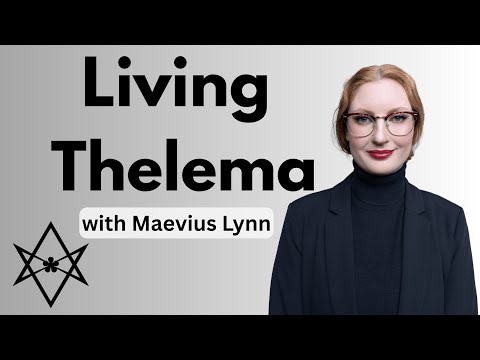
Thelema in Practice: Beyond the Grimorium with Maevius Lynn


The air crackled with an almost palpable energy, not of ozone after a storm, but of ideas poised to ignite. It was a Sunday afternoon, a quiet space carved out in the week's chaos, dedicated to dissecting a current of thought that has long fascinated and, at times, bewildered those on the fringes of esoteric exploration: Thelema. Our guest, Maevius Lynn, a writer, artist, and ceremonial magician, was not merely discussing Thelema; she was embodying its core tenet – magick as a living, breathing practice, not a dusty relic confined to history books.

Introduction: Meet Maevius Lynn

In the often-insular world of occultism, finding practitioners who bridge the gap between theory and tangible application can be a rare find. Maevius Lynn stands out. Residing in the Southern United States, she navigates Thelema not as a dogma, but as a vibrant, evolving tradition. Her unique position as both a solitary practitioner and an initiate within the Ordo Templi Orientis and the Temple of the Silver Star provides a rich tapestry of understanding that she generously shares. This conversation, which initially unfolded in a digital space on December 28th, 2023, transcended mere dialogue; it was an exploration into the heart of a philosophy that demands active participation.

Thelema as a Living Tradition

Lynn's approach to Thelema is fundamentally pragmatic. She champions the idea that magick, and by extension Thelema, should be integrated into one's daily existence, rather than relegated to a niche hobby. This is a critical distinction for anyone dabbling in the occult. Many find themselves drawn to the historical mystique of figures like Aleister Crowley, poring over ancient texts without ever translating that knowledge into personal transformation. Lynn's work, through her YouTube educational videos, online study groups, workshops, and lectures, actively combats this inertia. She inspires others to make Thelema a purposeful, actionable part of their lives, building bridges across diverse traditions to foster understanding and inclusion. The raw energy of personal experience, as one commenter pointed out, is paramount; Lynn echoes this by emphasizing practice over passive consumption of lore.

True Will and The Book of the Law

At the core of Thelemic philosophy lies the concept of True Will. This is not merely about desires or whims, but about the unique, inherent purpose of an individual. The Book of the Law (Liber AL vel Legis), Crowley's foundational text, serves as a guiding star in this journey. Lynn stresses that understanding and enacting one's True Will is the ultimate aim. As one keen observer noted, even Abrahamic traditions, in their mystical interpretations like Gnosticism, hint at a singular Truth beneath diverse expressions. Thelemic exploration often involves deciphering the deeper meanings within texts like the Book of the Law, understanding its symbolic language and its call to self-discovery. This resonates with the perennial wisdom found across various spiritual paths, a concept often overlooked in superficial analyses of occult systems.

The Role of Magick in Thelema

Philosophical Views and Ritual

Lynn's philosophical outlook as a Thelemite is nuanced, moving beyond simplistic interpretations. She addresses the role of ritual not as a rigid set of commands, but as a potent tool for focusing consciousness and enacting change. The debate on whether one can be an atheistic Thelemite, questioning the literal existence of deities while adhering to the philosophical tenets, highlights the intellectual flexibility within the tradition. This mirrors parallels found in other traditions, where symbolic deities represent psychological states or cosmic principles. The exploration of gnosis, the wisdom-understanding-knowledge that underlies many mystical systems, becomes a shared pursuit across seemingly disparate paths.

Thelema and Other Traditions

The interconnectedness of esoteric traditions is a recurring theme. Lynn's work, and indeed the very nature of Thelema, invites a syncretic approach. The discussion touches upon the Gnostic tradition, Abrahamic mysticism, and even indigenous spiritualities, suggesting a primordial tradition that informs them all. The idea that figures like Jinn, or even the symbolic representations in Christianity and Judaism, can have parallels in Thelemic thought demonstrates a deeply interwoven spiritual landscape. This syncretism is not about diluting beliefs, but about recognizing the universal truths that manifest in diverse forms. The parallels drawn to the Tree of Life and its relationship with Thelema, for instance, showcase how different systems can inform and enrich one another.

Crowley and Thelemite Deities

Questions surrounding Aleister Crowley himself and the nature of Thelemite deities are inevitable. Lynn acknowledges Crowley's pivotal role while encouraging practitioners to engage critically, rather than blindly accepting his pronouncements. The distinction between historical figures and the living tradition is vital. Similarly, the nature of Thelemite gods – whether they are independent entities or symbolic representations of internal states – remains a central point of inquiry for many. The suggestion that these deities differ from Egyptian ones invites a deeper dive into the evolution of occult symbolism and its interpretation across different eras and practitioners.

Women in Thelema and Lynn's New Book

The role of women within Thelema is a crucial area of exploration, and Lynn's insights are particularly valuable here. Her upcoming book, "The Holy Year of Thelema," promises to delve even deeper into these aspects of the tradition. The specific mention of the book here is not merely informative but serves as a direct portal for engaged readers seeking comprehensive material. The date associated with Thelemathon (October 24/25, 2026) also provides a concrete future point of reference for the community.

Veredict of the Practitioner: Is Thelema for You?

The core message from Maevius Lynn is clear: Thelema is an active, experiential path. It demands engagement, self-inquiry, and a willingness to integrate magick into the fabric of one's life. While some may find the lack of definitive answers on the nature of angels and demons disappointing, this very ambiguity is the fertile ground for personal exploration. Thelema is not a system of pre-digested beliefs; it is a framework within which to discover your own truth. As Lynn emphasizes, the goal is not to follow Crowley, but to discover and enact one's own True Will. For those who are drawn to a path of conscious creation and personal transformation, and who are willing to go beyond mere intellectual curiosity, Thelema offers a powerful, albeit demanding, journey.

Arsenal of the Magician

  • Books: "Liber AL vel Legis" (The Book of the Law), "The Holy Year of Thelema" (forthcoming by Maevius Lynn), "The Kybalion," "Liber Null & Psychonaut," "Condensed Chaos."
  • Resources: YouTube channels dedicated to practical magick, online study groups, occult conferences.
  • Concepts: True Will, Ceremonial Magick, initiation, syncretism, gnosis.
  • Tools: While not explicitly detailed for Thelema, any ritualistic tools can be adapted for personal practice, guided by intent.

FAQ: Thelema Clarified

What is True Will in Thelema?

True Will is the unique divine purpose or destiny of an individual, distinct from fleeting desires or societal expectations. Its discovery and enactment are central to the Thelemic path.

Is Thelema a religion or a philosophy?

Thelema is often described as a philosophical or spiritual system that encompasses religious, magical, and ethical aspects. It emphasizes personal experience and the pursuit of one's True Will over rigid dogma.

Can Thelema be practiced atheistically?

Yes, it is possible to practice Thelema from an atheistic perspective, interpreting deities and divine pronouncements as symbolic representations of psychological states or cosmic principles rather than literal external beings.

What is the role of Aleister Crowley in Thelema?

Aleister Crowley is considered the prophet of Thelema, having received and transcribed "The Book of the Law." However, practitioners are encouraged to engage critically with his work and focus on their own path and True Will.

How does Thelema differ from other occult traditions?

While sharing common ground with many esoteric systems, Thelema's central tenet of "Do what thou wilt shall be the whole of the Law" and its emphasis on individual True Will set it apart. It often incorporates elements from various traditions in a syncretic manner.

Your Operation: Define Your Path

Take a moment. Beyond the intellectual understanding, set aside any preconceived notions. Consider the core principle: "Do what thou wilt." What does this truly mean for *you*, in your current circumstances? Is it a call to action, a directive for self-discovery, or a philosophical ideal? Reflect on a recent decision you made. Was it driven by external pressure, societal expectation, or a deeper, intrinsic impulse? Journal your thoughts on this. Don't seek definitive answers, but explore the questions. This act of introspection, of looking inward to understand the currents that guide your actions, is the very essence of beginning to live Thelema. Your path is unique; your operation is to define it.

Practitioner's Note: True magick requires resources. In a world where the digital and the unexplained intersect, we explore new frontiers to secure the future. Do you dare to be part of the vanguard? Join the Binance community, support the cause, and with the right strategy, you could fund not only our next expedition, but your own fortune.

Leah Hirsig's Lost Diaries: Unearthing the Truth of Thelemic History


Introduction: The Scarlet Woman's Voice Emerges

The air crackles with an almost tangible energy, not of incantation, but of historical rediscovery. For too long, the narratives of modern occultism have been dominated by a singular, often bombastic, voice. But what happens when the carefully constructed silence around a pivotal figure is shattered, revealing not just a practitioner, but a complex, independent thinker? This is the territory we explore today, diving deep into the recently unearthed Leah Hirsig's diaries, a treasure trove illuminating a turbulent chapter in Thelemic history. For years, the archetype of the "Scarlet Woman" has been a cipher, a projection of male desire and ambition. Now, her own words begin to speak, forcing us to re-examine the foundational myths of a modern magical system.

The Architects of Revelation: White and Bogdan

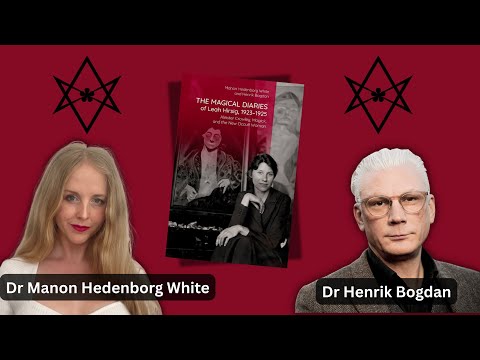
Behind every great archival discovery, there are diligent scholars. This exploration centers around the monumental work of Manon Hedenborg White and Henrik Bogdan, who have brought us "The Magical Diaries of Leah Hirsig, 1923 to 1925," a critical edition published by the esteemed Oxford University Press. Their meticulous editing and insightful commentary don't just present raw historical material; they reconstruct a lost world, offering a vital counter-narrative to established Thelemic lore. Their academic backgrounds, deeply rooted in the study of Western esotericism, provide the crucial framework for understanding the profound significance of these documents. This isn't just an academic exercise; it's an act of reclaiming a suppressed voice.

From Dust to Digital: The Genesis of the Diaries

The journey to publish these diaries was not a simple one. White and Bogdan navigated the labyrinthine challenges inherent in editing primary esoteric sources. These documents, surviving the ravages of time and obscurity, offer a rare, unvarnished glimpse into Hirsig's inner life and her active participation in the magical workings of her era. The painstaking process of transcription, annotation, and contextualization transforms fragmented entries into a coherent narrative, a testament to the power of dedicated scholarship in breathing life back into forgotten histories. This collaborative effort underscores the importance of such primary material for anyone serious about understanding the practical evolution of occult systems. For those who appreciate the depth of such foundational texts, delving into resources like Aleister Crowley's own compendiums, such as Magick in Theory and Practice, provides context for the environment Hirsig operated within.

Beyond the Myth: Leah Hirsig, Practitioner and Philosopher

The conventional portrayal of Leah Hirsig often reduces her to a mere accessory to Aleister Crowley, the archetypal "Scarlet Woman." However, these diaries peel back the layers of mystification, revealing a woman of considerable intellectual depth and independent magical practice. Her writings illuminate not only the daily operations of Crowley's elaborate magical system during a particularly volatile phase but also her own evolving spiritual philosophy. She emerges as a practitioner, a partner, and a fiercely independent thinker, challenging the male-dominated landscape of early 20th-century occultism. Her voice, often silenced or overshadowed, now demands attention, forcing a reckoning with the gendered power dynamics inherent in occult history. Understanding the complexities of such figures is paramount for anyone engaging with advanced magical theory.

Deconstructing Thelemic Practice: Sex Magick and the Scarlet Woman

At the heart of these diaries lies a candid exploration of Thelemic practice, particularly its more controversial aspects, such as sex magick. The diaries offer Hirsig's perspective on her role as the Scarlet Woman, a title laden with symbolic and practical implications within Crowley's framework. The conversations around these texts delve into the purpose and execution of such practices, examining how they were integrated into the daily lives and magical endeavors of both Crowley and Hirsig. While some find the explicit nature of these rituals unsettling, an honest engagement with the source material is crucial for grasping the full spectrum of Thelemic application. The explicit discussion of menstruation's role in Hirsig's magick further complicates established narratives, revealing a deeper, more embodied understanding of ritual power than often acknowledged. This exploration of energetic exchange and its role in magical manifestation is a critical area of study for serious practitioners.

Decoding Leah's Diaries: A New Perspective

The act of decoding Leah Hirsig's diaries is an intellectual and spiritual endeavor. White and Bogdan's critical edition provides the tools necessary to navigate Hirsig's personal language, her symbolic shorthand, and her emotional landscape. These documents reveal not just magical rituals but the profound emotional and intellectual labor Hirsig invested in her spiritual path. They illuminate the often-turbulent dynamics within the magical partnership she shared with Crowley, including their eventual estrangement. This unvarnished look at the lived experience of Thelemic practice offers invaluable insights for anyone seeking a more authentic understanding of occult traditions, moving beyond theoretical constructs to the messy, human reality of their application. The diaries also hint at the practical application of financial energies within Thelemic frameworks, a topic often whispered about but rarely detailed.

The Price of Admission: Gender, Authority, and Esoteric Scholarship

The significance of Hirsig's diaries extends far beyond the confines of Thelema. They offer a critical lens through which to examine broader historiographical questions about gender, authority, and the construction of occult knowledge in the early 20th century. Hirsig's independent thought and her active magical contributions challenge the patriarchal structures that have historically marginalized women's voices in esoteric traditions. Her eventual rejection of Crowley's prophetic status suggests a profound assertion of personal agency, a stark contrast to the often-cited "price of admission" involving self-degradation. This re-evaluation of historical narratives is vital for contemporary scholarship on Western esotericism, urging us to seek out and amplify marginalized perspectives. The very act of delving into such texts requires a commitment to rigorous inquiry, often demanding resources for deeper research and study. It's in these moments of intense research that one might appreciate the stability and potential for growth offered by exploring novel economic frontiers, such as .

Veredict of the Practitioner: Unlocking Subversive Histories

Veredict of the Practitioner: Unlocking Subversive Histories

Are Leah Hirsig's diaries essential reading? Absolutely. They are not merely historical documents; they are potent keys to unlocking a more nuanced and accurate understanding of modern occultism. For practitioners, they offer practical insights into ritual application, the complexities of magical partnerships, and the often-overlooked power of feminine magical currents. For scholars, they represent a critical primary source that demands a re-evaluation of established narratives surrounding figures like Aleister Crowley and the development of Thelema. The diaries reveal that true magical advancement often lies not in blind adherence to dogma, but in bold experimentation and the courage to question authority. They serve as a powerful reminder that history is written by the victors, but the true stories are often found in the margins, in the voices that refused to be silenced.

Arsenal of the Scholar-Practitioner

To truly grasp the context and implications of Leah Hirsig's work and the scholarship surrounding it, a curated selection of resources is invaluable:

  • Primary Texts: "The Magical Diaries of Leah Hirsig, 1923 to 1925" by Leah Hirsig, critically edited by Manon Hedenborg White and Henrik Bogdan. Aleister Crowley's "Magick in Theory and Practice" is essential for understanding the milieu.
  • Scholarly Works on Western Esotericism: Explore titles by Manon Hedenborg White and Henrik Bogdan themselves, as well as foundational texts on the history of magic and occultism.
  • Thelemic Resources: For those specifically engaging with Thelemic philosophy, delve into original sources and scholarly analyses that critically examine its development.
  • Historical Context: Books and articles detailing early 20th-century occult movements, the lives of key figures, and the social/cultural landscape of the time.
  • Tools for Deeper Understanding: Consider investing in high-quality editions of occult texts, specialized journals on esoteric studies, and maintaining a dedicated digital or physical research archive – much like one would maintain a magical journal. The rigor applied to magick should extend to its study. For those seeking advanced tools for organizing research and insights, exploring platforms designed for complex data management can be highly beneficial.

Frequently Asked Questions

  • Who was Leah Hirsig? Leah Hirsig was a practitioner of Aleister Crowley's Thelemic system, serving as his "Scarlet Woman" during a significant period of his magical career.
  • What is unique about her diaries? The diaries provide an unprecedented first-person account of her life, magical practices, and relationship with Crowley, offering a complex perspective that challenges established historical narratives.
  • Why are these diaries significant for Thelemic history? They offer critical primary source material that illuminates the practical workings of Thelema in the early 20th century, particularly from a female practitioner's viewpoint, and complicate established gender roles within the tradition.
  • What challenges did the editors face? Editing primary esoteric sources involves overcoming issues of obscure language, damaged texts, and the need for deep contextual knowledge to accurately interpret the material.
  • How do these diaries contribute to broader occult scholarship? They highlight the importance of marginalized voices, particularly women, in the history of Western esotericism and encourage a more critical examination of patriarchal narratives.

Your Operation: Challenge the Canon

Having absorbed this deep dive into Leah Hirsig's rediscovered voice, your operation is twofold. First, acquire and engage with the writings of Hirsig and the scholarship surrounding them. Do not rely solely on summaries. Second, reflect on the established narratives within your own magical or philosophical practice. Where do the voices of women, or other marginalized groups, appear in the history you've been taught? Where are they absent? Your task is to actively seek out these silenced voices and consider how their inclusion might fundamentally alter your understanding and practice. The true magic lies in confronting the accepted truths and forging your own informed path.

Practitioner's Note: True magick requires resources. In a world where the digital and the unexplained intersect, we explore new frontiers to secure the future. Do you dare to be part of the vanguard? Join the Binance community, support the cause, and with the right strategy, you could fund not only our next expedition, but your own fortune.