EMERALD TABLE — Grimoire Record
Goetia
| ⚔️ Type | Spell |
| 📅 Date | 2026-07-15 |
| 📜 File | MC-2026-0044 |
| ⭐ Difficulty | ★★★★★ Archimago |
| ⏱ Read time | 25 min |
| 🔗 Related App | Arcana Goetia |
cha0smagicklabs.com — Digital Grimoire of Chaos Magick
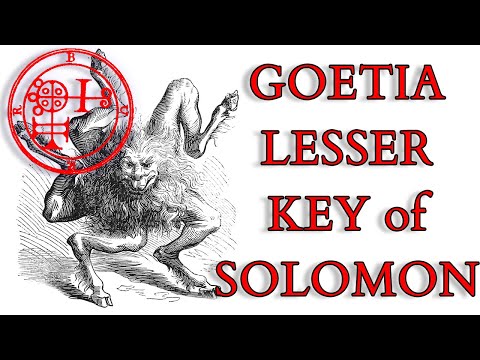
The realm of Solomonic magic, particularly its infamous grimoire, The Lesser Key of Solomon, beckons practitioners and scholars alike. For millennia, King Solomon has been woven into the tapestry of both exoteric wisdom and esoteric practices, his name synonymous with mastery over the unseen. This exploration delves into the historical currents that shaped Solomonic magic, the genealogy of supposed demonic entities, and the construction of this foundational text of occultism, the Lemegeton. We aim to shed light on Solomon's role as a sorcerer and the intricate hierarchies that define its most notorious section, the Goetia.
The imagination of ancient rabbis painted a world teeming with unseen forces. The Babylonian Talmud, in Mascetera Barakote, offers a chilling perspective: "If the eye were given permission to see, no creature could withstand the abundance and ubiquity of the shadim (demons) and continue to live." This imagery — demons more numerous than humans, lurking just beyond our perception like an "Earth over a pit" — paints reality as a pandemonium, a term coined by John Milton for the capital of Hell itself, signifying a place "full of demons." It is within this context of an infested world that texts attempting to catalogue, describe, and, most significantly, conjure and control these entities emerged. None has achieved greater notoriety than the Lemegeton, commonly known as The Lesser Key of Solomon. This document serves as an entry into that lineage, examining Solomon's purported control over demons and the evolution of this potent magical tradition.
GoetiaThe Enigma of Solomon: From Sage to Sorcerer
The biblical King Solomon is lauded for his unparalleled wisdom, divine favor, and vast knowledge. However, as centuries progressed, a parallel tradition emerged, casting him not merely as a sage but as a powerful sorcerer, capable of commanding spirits and demons. This shift in perception is crucial to understanding the genesis of Solomonic magic and the texts attributed to him. The Talmudic passages, while not directly detailing magical practices, lay the groundwork for a universe populated by countless spiritual entities, some benevolent, others malevolent. This fertile ground allowed for later interpretations that attributed to Solomon the ability to harness these forces.
The process by which Solomon transformed from a wise king into a master demonolator is a fascinating evolution of lore. Early biblical accounts emphasize his wisdom granted by God, his vast kingdom, and his construction of the Temple. There is little direct mention of magical pursuits in the canonical scriptures. However, apocryphal texts and later folklore began to imbue Solomon with supernatural abilities. The idea of Solomon as a figure who could control demons likely arose from interpretations of his supposed divine knowledge and his ability to understand all of nature, including its spiritual inhabitants. This esoteric understanding, in some traditions, was seen as a form of mastery over these beings.
The transition is a testament to how cultural narratives evolve, absorbing and reinterpreting ancient figures. The allure of a king who wielded not just earthly power but also the keys to the infernal realms was potent. This lore provided a rich foundation for the later development of extensive magical systems and grimoires that sought to replicate Solomon's alleged abilities. The very concept of a structured, hierarchical system of demonic control, as seen in the Goetia, owes much to this evolving legend. It's a narrative that taps into the universal human desire for power and understanding of the unknown, projecting it onto a figure already associated with ultimate wisdom.
The Genesis of the Lemegeton: A Tapestry of Text
The Lemegeton, or The Lesser Key of Solomon, is not a monolithic text authored by Solomon himself. Instead, it is a compilation, a tapestry woven from various sources over centuries, coalescing into the form we recognize today. Its composition is a complex historical puzzle, with scholars tracing its roots through medieval and Renaissance esoteric traditions. The manuscript's precise origins are obscure, but its influence is undeniable, shaping Western ceremonial magic for centuries.
The Lemegeton is traditionally divided into five distinct books:
* Theurgia-Goetia: This section focuses on the conjuration of aerial spirits, often described as both good and evil. It presents a hierarchy of these spirits and their respective seals.
* Ars Goetia: This is arguably the most infamous and influential part of the Lemegeton. It details seventy-two demons, their appearances, abilities, and the specific rituals required for their conjuration and binding. The structure here often involves detailed descriptions of the demon, its rank (king, duke, president, etc.), its powers, and the necessary preparations for the magician, including the use of specific talismans and incantations.
* Ars Theurgia-Goetia (sometimes listed as the third book, but distinct from the first): This section deals with spirits of the air and is similar in structure to the first part.
* Ars Paulina: Attributed to the Apostle Paul, this book focuses on planetary magic and the spirits associated with the hours of the day and night. It includes conjurations and descriptions of angelic and demonic influences tied to celestial movements.
* Ars Notoria: This is a collection of orations and prayers intended to grant the practitioner incredible memory, wisdom, and understanding of the liberal arts. It is often seen as a more theurgic or spiritually uplifting component compared to the Goetia.
The compilation process likely involved scholars, occultists, and possibly alchemists who gathered disparate texts, refining them and integrating them under the prestigious (and likely apocryphal) attribution to King Solomon. This practice of attributing ancient or divine authorship was common in the Renaissance, lending authority and mystique to the material. The *Ars Goetia*, in particular, has seen numerous redactions and variations, with different versions emphasizing slightly different aspects or including modified lists of spirits. The skill of the compilers lay not just in gathering the material but in creating a cohesive (albeit complex) system of ritual and hierarchy that resonated with practitioners.
The Four Pillars of Solomonic Magic
Within the framework of Solomonic magic, four core elements consistently appear, forming the bedrock of its practice. These are not mere historical curiosities but functional components intended to guide and empower the practitioner.
* The Magic Circle: This is the foundational protective element. Envisioned as a sacred space, it acts as a barrier against the entities being summoned, ensuring the magician’s safety. The circle is not just a geometric design; it is imbued with divine names and symbols believed to hold protective power. Its construction is precise, often involving specific materials and rituals of consecration. The integrity of the circle is paramount, as any breach could have dire consequences.
* The Triangle of Manifestation: Positioned outside the magic circle, this triangle serves as the designated area for the summoned entity to appear. It is also inscribed with divine names and symbols, compelling the spirit to confine itself to this space and preventing it from directly interacting with the magician or encroaching upon the circle. The triangle’s shape and inscriptions are believed to channel and contain the spirit's essence, facilitating its manifestation in a controlled manner.
* The Seal or Sigil: Each of the seventy-two demons in the *Ars Goetia* is associated with a unique seal, or sigil. These are not mere symbols but are believed to be the true name or essence of the spirit, engraved onto a material, often metal, corresponding to the spirit's planetary attribution. The seal acts as a key, a point of focus, and an identifier for the entity being summoned. It's crucial for the magician to procure or accurately create these seals, as they are fundamental to the summoning process.
* The Conjurations and Invocations: The verbal component of the ritual is critical. These are the incantations, prayers, and commands spoken by the magician. They typically involve invoking divine authority (often through Hebrew names of God) to compel the spirit's obedience. The language used is often archaic, imbued with power and intent, designed to impress upon the spirit the magician's authority and the divine backing behind the command. These recitations are not mere spells but are intended to create a powerful energetic and psychological state in the practitioner.
The Ars Goetia: A Grimoire of Seventy-Two Demons
The *Ars Goetia* stands as the most prominent section of The Lesser Key of Solomon, detailing a complex hierarchy of seventy-two demons. These entities are presented with distinct characteristics, ranks, and abilities, offering a structured approach to what might otherwise seem like chaotic demonic forces. The text meticulously catalogs each demon, providing a comprehensive guide for the aspiring practitioner.
Each of the seventy-two entities is assigned a rank, such as King, Duke, Marquis, Earl, Knight, President, and King. This hierarchy mirrors, in some ways, the organizational structures of earthly courts or military orders, lending a sense of order to the infernal hierarchy. For example, some demons are described as Kings, possessing dominion over numerous legions, while others are Dukes or Marquises, commanding fewer but still significant forces. This structure implies that the demons themselves operate within a complex social and power dynamic.
The abilities attributed to these demons are vast and varied, covering a wide spectrum of human desires and fears. They are said to grant knowledge of hidden things, reveal the past, present, and future, bestow eloquence, teach arts and sciences, effect reconciliation between friends or enemies, cause love or hatred, and even provide familiars or aid in physical tasks. This comprehensive list of powers suggests that the Goetic demons were seen as forces that could influence nearly every aspect of human life, for better or worse, depending on the magician's intent and skill.
The construction of the *Ars Goetia* emphasizes the rituals necessary for successful conjuration and control. This involves not only the proper preparation of the magician but also the specific tools and materials required. The magician must possess the appropriate grimoire, the relevant seals or talismans for each demon, and possibly other ritual implements like wands and robes. The rituals themselves are often elaborate, involving specific times, days, and astrological alignments considered auspicious for summoning particular entities. The aim is to create a controlled environment where the magician can assert authority over the summoned spirit, compelling it to obey through divine names and potent adjurations.
The Art of Conjuration: Compelling Obedience
The core of the *Ars Goetia*'s practice lies in the art of conjuration – the ritualistic process by which a magician summons and compels a spirit to appear and obey. This is not a request; it is a command, backed by perceived divine authority and a deep understanding of the symbolic language of magic. The underlying principle is that the magician uses "higher" powers to bind and direct "lower" forces, ensuring their cooperation without succumbing to their influence.
The process typically begins with the magician entering the prepared magic circle, creating a sanctuary of safety. Outside the circle, the Triangle of Manifestation is set up, serving as the designated space for the entity to appear. The magician then invokes divine names—often the Tetragrammaton (YHWH) and other powerful Hebrew names of God—using precise incantations. These names are believed to hold immense power, acting as a spiritual authority that demons are compelled to respect. The initial conjurations are often aimed at compelling the spirit to appear willingly within the triangle.
If the spirit resists or appears in an undesirable form, the magician employs a series of more forceful conjurations, sometimes referred to as "curses" or "curses of constraint." These are designed to increase the pressure on the entity, often threatening it with divine retribution or binding it with progressively stronger divine names. The use of the demon's specific seal is also critical during this phase, acting as a direct link and point of control. The magician might brandish the seal or focus intent upon it while reciting the commands.
A crucial aspect of successful conjuration is the magician's state of mind: unwavering belief, intense focus, and absolute certainty in their authority. Doubt is seen as a vulnerability that demons can exploit. The magician must project confidence and control, embodying the authority they invoke. This psychological fortitude, combined with the correct ritualistic actions and symbolic language, is what theoretically enables the magician to command these powerful entities. Once the spirit has appeared and is deemed obedient, the magician can then state their request or demand, which the spirit is bound to fulfill. The ritual concludes with a formal dismissal or license to depart, ensuring the spirit returns to its own realm without lingering or causing harm.
Arsenal of the Mage
* Essential: Chaos Magick Sigil Generator - Automate the creation and initial charging of sigils, freeing you to focus on the deeper aspects of demonic interaction if that is your path. While not directly for Goetic conjuration, it’s a modern tool for symbolic manifestation applicable to many magical intents, including those related to the powers described in demonolatry.
* Recommended: *The Lesser Key of Solomon: Lemegeton Clavicula Salomonis* (Joseph H. Peterson's edition is highly regarded for its scholarly approach and multiple source comparisons).
* Recommended: *Ritual Magic* by Elizabeth M. Butler - Provides historical context and practical insights into ceremonial magic traditions.
* Recommended: *The Goetia of Dr. Rudd* (Skinner and Rankine) - An alternative and often more complex version of the Goetia, offering different perspectives and correspondences.
* Resource: Sefaria.org - For accessing the Babylonian Talmud and other Jewish texts where early mentions of spirits appear.
FAQ: Frequently Asked Questions
What is the historical accuracy of The Lesser Key of Solomon?
The historical accuracy of The Lesser Key of Solomon is complex. While it purports to be a work of King Solomon, scholarly consensus points to it being a compilation from various medieval and Renaissance sources, likely assembled over centuries. Its value lies more in its influence on occult traditions and its reflection of historical magical beliefs than in direct historical fact regarding Solomon's own practices.
Are the demons described in the Goetia real entities?
The existence of the demons described in the *Ars Goetia* is a matter of belief and interpretation. From a psychological perspective, they can be viewed as archetypes or representations of human desires, fears, and subconscious forces. From a magical or theological perspective, they may be considered real spiritual entities. The text itself operates on the premise of their reality, and practitioners engage with them as such.
Can The Lesser Key of Solomon be used for benign purposes?
Yes, though its reputation is often associated with darker aspects of magic, the *Ars Goetia* describes demons said to possess powers that can be used for various purposes, including gaining knowledge, reconciliation, and understanding. The ethical application of its principles ultimately depends on the intent and moral framework of the practitioner. Many modern practitioners view these entities through a lens of psychological symbolism or as forces to be understood rather than malevolently worshipped.
How does the Goetia differ from other demonology texts?
The *Ars Goetia* is distinct in its systematic cataloging of seventy-two specific demons, their ranks, seals, and purported abilities, all presented within a coherent ritualistic framework attributed to Solomon. While other demonological texts might list demons or describe their characteristics, the precise structure and the emphasis on conjuration and control through specific seals and divine names make the *Ars Goetia* unique in its influence on Western ceremonial magic.
Is it dangerous to practice Goetic magic?
Practicing Goetic magic is widely considered to be potentially dangerous, especially for the untrained or unprepared. The rituals involve invoking entities that are believed to be powerful and potentially manipulative. The text itself emphasizes the need for strong protective measures, unwavering will, and profound knowledge. Without proper understanding, psychological fortitude, and adherence to ritualistic safeguards, a practitioner could face psychological distress, obsession, or other adverse effects.
What are the key components of a Goetic ritual?
The essential components include the magic circle for protection, the Triangle of Manifestation for the spirit's appearance, the specific seal or sigil of the demon being conjured, appropriate conjurations and adjurations (often invoking divine names), and the magician's own unwavering will and belief. Proper timing, astrological considerations, and personal purification are also often stressed.
A Historical Perspective on Solomonic Magic
The association of King Solomon with magic, particularly demonology, is a phenomenon that evolved over centuries, moving from biblical accounts of his wisdom to later esoteric traditions that portrayed him as a master magician. This transition is not sudden but rather a gradual accretion of lore, influenced by cultural shifts, the desire for authoritative magical texts, and the human fascination with power and the occult. Early references in the Hebrew Bible focus on Solomon's divine wisdom, his vast kingdom, and his piety, exemplified by his construction of the First Temple. There is no mention of him actively engaging in magical practices or commanding demons in the canonical scriptures.
However, non-canonical Jewish texts and later folklore began to attribute a more supernatural dimension to Solomon. For instance, the Talmud contains passages that, while not direct spells, hint at a world teeming with spiritual entities, the *shadim*. Some interpretations of these texts suggest that Solomon, through his divine wisdom, possessed knowledge of these beings and perhaps even a means to interact with or control them. This laid the groundwork for later magical traditions that would explicitly cast him as a powerful sorcerer.
During the Hellenistic and Roman periods, and especially into the Middle Ages and the Renaissance, this lore solidified. The discovery and dissemination of grimoires—books of magic—often attributed to ancient figures to lend them authority. Solomon's name became a powerful brand for any text claiming to hold secrets of spiritual control. The Lemegeton, or The Lesser Key of Solomon, is the most famous example. It is not a single text but a compilation, likely assembled from various magical treatises and oral traditions spanning several centuries. The *Ars Goetia*, the section detailing seventy-two demons, is particularly influential. This section, with its structured lists of spirits, their ranks, powers, and associated seals, reflects a period when occultists were attempting to systematize magical practices and create comprehensive systems of demonology. The very notion of a hierarchy of demons, with kings, dukes, and presidents, mirrors contemporary social and political structures, suggesting a reflection of the world order onto the infernal one. The "Lesser Key" itself likely represents a later distillation and organization of much older material, coalescing into the form that has captivated occultists for generations. It is important to note that various versions and redactions of the text exist, each with its own nuances and variations in the catalogued spirits and rituals. The enduring appeal of Solomonic magic lies in its promise of direct access to hidden knowledge and control over the supernatural, channeled through the persona of the wisest of kings.
The Goetia and Modern Practice
The *Ars Goetia*, despite its historical origins and often controversial reputation, continues to be a significant text for many modern practitioners of magic, particularly within certain branches of ceremonial magic and chaos magic. The approach to working with the Goetic entities today is often quite different from the historical imperative of literal summoning and binding. Many contemporary practitioners interpret the seventy-two demons as psychological archetypes, complex aspects of the human psyche, or symbolic representations of forces in the universe.
From a chaos magic perspective, the entities described in the Goetia can be seen as "belief systems" or "psychological constructs" that can be activated and utilized as tools for personal transformation. The power is not in the literal existence of a demon, but in the magician's ability to effectively use the symbolism and attributed powers of that entity to effect change in their own consciousness or reality. This approach, often termed "technomancy" or "belief engineering," involves engaging with the Goetic system as a symbolic language or a framework for psychological exploration. The "conjuration" might then be understood as a form of internal dialogue or a ritualistic process designed to integrate specific archetypal energies.
For those who do engage with the Goetia from a more traditional or animistic viewpoint, the emphasis is often on respectful interaction and understanding, rather than forceful command. This may involve offerings, sincere requests, and a focus on gaining knowledge or wisdom from these perceived entities, rather than seeking to "bind" them to one's will. The risks associated with such practices are still acknowledged, and a rigorous approach to ritual purity, psychic defense, and ethical intent is paramount. The *Chaos Magick Sigil Generator* can be a useful modern tool here, not necessarily for creating Goetic seals directly, but for understanding the principle of symbolic representation and manifestation, which is at the heart of all sigil work, including the creation of Goetic seals. The process encourages focus and intent, key elements for any magical operation.
Regardless of the specific interpretative framework, the *Ars Goetia* continues to offer a rich and complex system for exploring the nature of power, desire, and the unseen forces that shape human experience. Its enduring presence in occult literature speaks to its potent blend of historical mystique, structured ritual, and profound psychological or spiritual implications.
FAQ: Frequently Asked Questions
What is the historical accuracy of The Lesser Key of Solomon?
The historical accuracy of The Lesser Key of Solomon is complex. While it purports to be a work of King Solomon, scholarly consensus points to it being a compilation from various medieval and Renaissance sources, likely assembled over centuries. Its value lies more in its influence on occult traditions and its reflection of historical magical beliefs than in direct historical fact regarding Solomon's own practices.
Are the demons described in the Goetia real entities?
The existence of the demons described in the *Ars Goetia* is a matter of belief and interpretation. From a psychological perspective, they can be viewed as archetypes or representations of human desires, fears, and subconscious forces. From a magical or theological perspective, they may be considered real spiritual entities. The text itself operates on the premise of their reality, and practitioners engage with them as such.
Can The Lesser Key of Solomon be used for benign purposes?
Yes, though its reputation is often associated with darker aspects of magic, the *Ars Goetia* describes demons said to possess powers that can be used for various purposes, including gaining knowledge, reconciliation, and understanding. The ethical application of its principles ultimately depends on the intent and moral framework of the practitioner. Many modern practitioners view these entities through a lens of psychological symbolism or as forces to be understood rather than malevolently worshipped.
How does the Goetia differ from other demonology texts?
The *Ars Goetia* is distinct in its systematic cataloging of seventy-two specific demons, their ranks, seals, and purported abilities, all presented within a coherent ritualistic framework attributed to Solomon. While other demonological texts might list demons or describe their characteristics, the precise structure and the emphasis on conjuration and control through specific seals and divine names make the *Ars Goetia* unique in its influence on Western ceremonial magic.
Is it dangerous to practice Goetic magic?
Practicing Goetic magic is widely considered to be potentially dangerous, especially for the untrained or unprepared. The rituals involve invoking entities that are believed to be powerful and potentially manipulative. The text itself emphasizes the need for strong protective measures, unwavering will, and profound knowledge. Without proper understanding, psychological fortitude, and adherence to ritualistic safeguards, a practitioner could face psychological distress, obsession, or other adverse effects.
What are the key components of a Goetic ritual?
The essential components include the magic circle for protection, the Triangle of Manifestation for the spirit's appearance, the specific seal or sigil of the demon being conjured, appropriate conjurations and adjurations (often invoking divine names), and the magician's own unwavering will and belief. Proper timing, astrological considerations, and personal purification are also often stressed.
The Evolution of Solomonic Demonology
The legend of Solomon's dominion over demons is a long and complex one, deeply embedded in esoteric traditions. While the Bible itself primarily focuses on Solomon's wisdom and piety, later Jewish folklore and apocrypha began to attribute a more magical quality to his persona. The Talmudic references to *shadim* (demons) and their sheer numbers created a conceptual landscape where a figure of Solomon's stature could plausibly be seen as possessing the knowledge to manage such spiritual forces. This idea gained significant traction during the Hellenistic and Roman periods, where syncretism of various religious and magical beliefs was common.
As centuries progressed, particularly through the medieval period, the concept of demonology became more systematized. The magical traditions that culminated in the Renaissance grimoires found a potent figurehead in Solomon. His name lent immense authority to any text claiming to reveal secrets of the spiritual world, especially those concerning the command of lower spirits. This led to a body of literature collectively known as Solomonic magic, with *The Lesser Key of Solomon* being its most famous, if not most representative, manifestation.
The *Ars Goetia*, the most notorious section of the Lemegeton, is believed to have roots in earlier magical texts, possibly including some Jewish magical traditions and influences from Mesopotamian or Egyptian demonology that filtered into the cultural milieu. Its systematic cataloging of seventy-two demons—each with a unique rank, abilities, and seal—suggests a deliberate effort to create a structured hierarchy and a repeatable ritual framework. This systematization was characteristic of Renaissance occultism, which sought to codify and organize previously disparate magical beliefs and practices. The text likely evolved through multiple redactions, with different scribes and practitioners adding, modifying, or omitting certain elements. The specific numbering of seventy-two spirits is also significant, potentially referencing biblical concepts or other symbolic systems. The evolution of this demonology reflects a continuous human effort to map, understand, and potentially control the unseen forces believed to inhabit the world, projecting a desire for order and mastery through the legendary figure of King Solomon.
Demons and Their Domains: An Overview
The *Ars Goetia* presents a detailed catalog of seventy-two distinct demonic entities, each described with specific attributes and domains of influence. These descriptions offer a fascinating glimpse into the symbolic understanding of power, knowledge, and human desires prevalent within the historical context of the grimoire's compilation. Understanding these domains is key to appreciating the scope of Solomonic magic's purported applications.
The entities are assigned ranks within a hierarchy that often includes Kings, Dukes, Marquises, Earls/Counts, Knights, and Presidents. For example, Bael is listed as the first demon, a King ruling over the East, commanding 66 legions. Vassago, another demon, is described as a Prince who discovers things lost or hidden and reveals the past, present, and future. Paimon, a King of great majesty, instructs in all arts and sciences and can bestow familiar spirits. These are not merely fantastical creatures but are attributed specific functions that resonate with human aspirations and challenges.
The powers attributed to these demons span a wide range, from the intellectual and artistic to the physical and interpersonal. Many are said to grant knowledge: Asmodeus, a King, teaches arithmetic, astronomy, geometry, and grants invisibility. Purson, a King, knows hidden treasures and can tell past, present, and future events. Others are associated with influencing human relationships: Sitri, a Prince, can cause men and women to love each other. While some entities are described as capable of causing strife or misfortune, many are presented with powers that, if wielded correctly, could be seen as beneficial or empowering. The *Ars Goetia* essentially provides a symbolic map of various forces and influences, with each demon representing a distilled aspect of power or knowledge that a practitioner might seek to engage with. The method of engagement, as detailed in the text, involves precise rituals, specific tools, and a commanded obedience, underpinned by divine authority.
FAQ: Frequently Asked Questions
What is the historical accuracy of The Lesser Key of Solomon?
The historical accuracy of The Lesser Key of Solomon is complex. While it purports to be a work of King Solomon, scholarly consensus points to it being a compilation from various medieval and Renaissance sources, likely assembled over centuries. Its value lies more in its influence on occult traditions and its reflection of historical magical beliefs than in direct historical fact regarding Solomon's own practices.
Are the demons described in the Goetia real entities?
The existence of the demons described in the *Ars Goetia* is a matter of belief and interpretation. From a psychological perspective, they can be viewed as archetypes or representations of human desires, fears, and subconscious forces. From a magical or theological perspective, they may be considered real spiritual entities. The text itself operates on the premise of their reality, and practitioners engage with them as such.
Can The Lesser Key of Solomon be used for benign purposes?
Yes, though its reputation is often associated with darker aspects of magic, the *Ars Goetia* describes demons said to possess powers that can be used for various purposes, including gaining knowledge, reconciliation, and understanding. The ethical application of its principles ultimately depends on the intent and moral framework of the practitioner. Many modern practitioners view these entities through a lens of psychological symbolism or as forces to be understood rather than malevolently worshipped.
How does the Goetia differ from other demonology texts?
The *Ars Goetia* is distinct in its systematic cataloging of seventy-two specific demons, their ranks, seals, and purported abilities, all presented within a coherent ritualistic framework attributed to Solomon. While other demonological texts might list demons or describe their characteristics, the precise structure and the emphasis on conjuration and control through specific seals and divine names make the *Ars Goetia* unique in its influence on Western ceremonial magic.
Is it dangerous to practice Goetic magic?
Practicing Goetic magic is widely considered to be potentially dangerous, especially for the untrained or unprepared. The rituals involve invoking entities that are believed to be powerful and potentially manipulative. The text itself emphasizes the need for strong protective measures, unwavering will, and profound knowledge. Without proper understanding, psychological fortitude, and adherence to ritualistic safeguards, a practitioner could face psychological distress, obsession, or other adverse effects.
About the author: Frater Alek0s is a veteran practitioner and researcher in the field of chaos magick. His work focuses on the practical and experimental application of occult techniques for self-development and reality exploration, demystifying esotericism for the modern practitioner.
What are the key components of a Goetic ritual?
The essential components include the magic circle for protection, the Triangle of Manifestation for the spirit's appearance, the specific seal or sigil of the demon being conjured, appropriate conjurations and adjurations (often invoking divine names), and the magician's own unwavering will and belief. Proper timing, astrological considerations, and personal purification are also often stressed.
Referencias
- Mathers, S. L. M. (1904). The Goetia: The Lesser Key of Solomon the King. Weiser Books.
- Peterson, J. H. (2001). The Lesser Key of Solomon. Weiser Books.
- McGregor, J. (2018). The Ars Goetia: A Practical Guide. New Falcon Publications.
- Crowley, A. (1904). The Goetia: The Lesser Key of Solomon the King. Self-published.
- Rankine, D. (2009). The Grimoire of St. Cyprian. Avalonia.
- Skinner, S. (2006). The Goetia of Dr Rudd. Golden Hoard Press.
- Boudet, J. (2001). The Grimoire of Armadel. Weiser Books.
- Waite, A. E. (1898). The Book of Black Magic and of Pacts. Redway.
- Rudd, T. (2007). The Goetia of Dr Rudd: The Angels and Demons of Liber Malorum Spirituum. Golden Hoard Press.
- Kieckhefer, R. (1989). Magic in the Middle Ages. Cambridge University Press.
- Agrippa, C. (1533). De Occulta Philosophia Libri Tres. Various.
- Betz, H. (1986). The Greek Magical Papyri in Translation. University of Chicago Press.