Table of Contents
- RitualThe Genesis of the Grand Grimoire: A Pact with the Devil?
- The Core Tenets and Structures of the Grand Grimoire
- Historical Context and the Evolution of the Grand Grimoire Mythos
- The Red Dragon: Dangerous Rituals and Supernatural Pacts
- The Myth of King Solomon and the Occult Tradition
- The Modern Interpretation of the Grand Grimoire: Belief as a Tool
- The Grand Grimoire in Popular Culture and Modern Esotericism
- FAQ: Frequently Asked Questions about the Grand Grimoire
- Arsenal of the Modern Practitioner
- Your Personal Operation
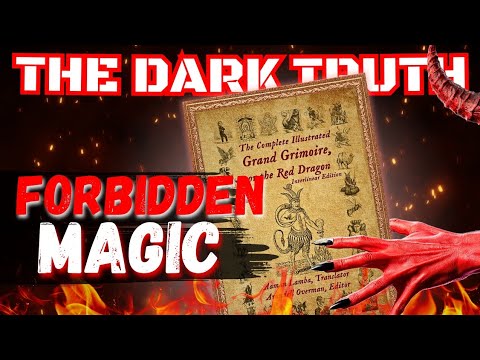
In the shadowed annals of the occult, whispers persist of a singular tome, its pages allegedly etched with the most potent incantations and arcane rituals known. A book reputedly capable of brokering pacts with entities beyond our ken, not least the very architect of despair. This grimoire, feared and revered in equal measure, is none other than the Red Dragon, or more commonly, the Grand Grimoire. Today, we embark on an illumination of its shadowed secrets, daring to expose the profound darkness it contains, and exploring the enduring question: what is the Book of Pacts?
If you want to put this into practice, Lunar Phase Calculator guides you step by step.
For many, the concept of magic remains confined to the realm of fantasy, a mere figment of cinematic imagination or a relic of a bygone, superstitious era. Yet, beneath the veneer of modern rationality, a hidden current flows. Throughout history, influential figures – from the secretive echelons of Masonic organizations steeped in ceremonial magic, to the glittering elites of Hollywood dabbling in ancient esoteric wisdom – have acknowledged the tangible reality of magic. They believe, with fervent conviction, that through the deliberate manipulation of arcane forces, they can harness spiritual power to sculpt their lived experiences, thereby reshaping their very reality. While contemporary society often dismisses such notions, the pursuit and application of magic, in its myriad forms, have never truly ceased. The Grand Grimoire, as a focal point of such pursuits, warrants a deep and critical examination.
RitualThe Genesis of the Grand Grimoire: A Pact with the Devil?
The question "what is the Book of Pacts?" inevitably leads us to its most notorious subject: the infernal bargain. The Grand Grimoire is steeped in lore that speaks of its creation not through scholarly research or divine inspiration, but through a direct covenant with Lucifer himself. Attributed to an occultist known pseudonymously as Honorius of Thebes, the text allegedly details the precise methods for invoking infernal legions, forging pacts for worldly gain—power, wealth, forbidden knowledge, and even influence over the destinies of nations. The narrative surrounding its creation is as terrifying as it is alluring: Honorius, an alleged sorcerer of immense, albeit dark, talent, is said to have journeyed to the fiery gates of hell, not to challenge the infernal prince, but to bargain. This pivotal encounter, purportedly in the year 1600, laid the foundation for a grimoire that would become synonymous with the ultimate Faustian pact.
The historical context surrounding the Grand Grimoire is as elusive as its creation narrative is sensational. While Honorius of Thebes is the attributed author, concrete historical evidence placing such an individual at that juncture is scarce, leading many scholars to classify the Grimoire as a deliberately constructed piece of magical literature, rather than a direct transcription of hellish dialogues. The very concept of an inferred pact with infernal entities, particularly Lucifer, taps into deep-seated primal fears and desires that have echoed through human history. The Red Dragon, therefore, becomes more than just a book of spells; it embodies the ultimate temptation—the promise of godlike power at the cost of eternal damnation. This duality, the potent allure of forbidden knowledge juxtaposed against the dire warnings of spiritual peril, is what has cemented its place in the occult consciousness.
The Grand Grimoire, in its various editions and interpretations, often includes detailed instructions for preparing ritualistic tools—wands, circles, the magician's habit—and for conducting elaborate ceremonies under specific astrological conditions. These elements are not unique to this particular grimoire; they are foundational components of many ceremonial magic traditions. However, the Grand Grimoire imbues these practices with an infernal flavour, purportedly channeling energies and entities associated with demonology. The text is divided into two main parts, each offering distinct but related paths to power. The first part focuses on conjurations and invocations, providing spells and rituals designed to summon various demons and spirits, detailing their sigils (symbols) and the specific offerings or conditions required for their appeasement or command. The second part, often referred to as the "Military or Infernal Section," delves into more direct methods of pact-making and offensive magic, including powerful curses and hexes.
The persistent mythos surrounding the Grand Grimoire speaks to a profound human fascination with the forbidden and the ultimate power. It represents not just a collection of rituals, but a philosophical exploration of the limits of human ambition and the perceived cost of transcending mortal constraints. Whether viewed as a genuine conduit to infernal powers or a sophisticated psychological tool designed to manipulate belief and intent, the Grand Grimoire continues to captivate and disturb, prompting an eternal question: what is the Book of Pacts, and what does it truly offer?
The Core Tenets and Structures of the Grand Grimoire
To truly understand what the Book of Pacts signifies, one must delve into the structural and thematic elements that comprise the Grand Grimoire. Its purportedly authentic lineage traces back to the early 17th century, though its circulation and influence grew significantly in the 19th century through various printed editions, most notably that published by L. V. Allegre in 1825. This edition, often cited as the "standard" version, is meticulously organized to guide the practitioner through a series of escalating magical operations, culminating in the most profound and dangerous of all: the pact.
The grimoire is generally divided into two main books, each with a distinct purpose and methodology. The first book, often titled "The Conjuration of Spirits," serves as an introduction to the infernal hierarchy and the necessary preparations for engaging with these entities. It begins with foundational rituals, emphasizing the importance of astrological timing and the construction of sacred space. This isn't merely symbolic; many occult traditions, including those purportedly influencing the Grand Grimoire, believe that specific celestial alignments empower the magician and lend greater efficacy to their rituals. The text provides specific instructions for items like the magician's wand, the pentacle (a protective amulet), and the enchanted robe, each crafted from specific materials and consecrated through particular rites. These preparations are designed to create a potent barrier between the mundane world and the spirit realm, and to imbue the practitioner with the necessary authority to command the entities they seek to invoke.
Central to the first book are the detailed conjurations. These are not simple prayers but complex sets of spoken commands, often incorporating Hebrew, Latin, and purportedly, the language of the spirits themselves. Each conjuration is directed towards specific named demons or classes of entities—Lucifer, Beelzebub, and others from infernal hierarchies—and outlines the precise 'terms' of the interaction. These terms might involve offerings, precise incantations, or the use of specific sigils. The sigils, in particular, are a cornerstone of the grimoire's practice. Believed to be the unique signatures or energetic keys to each spirit, their accurate representation and activation are paramount. The Grand Grimoire provides illustrative diagrams for many of these sigils, which the practitioner is instructed to draw or inscribe onto various materials, often parchment or metal, at specific times.
The second book, often termed "The Infernal Section" or "The Pact," escalates the operations to a far more perilous level. This section is where the concept of the "Book of Pacts" truly crystallizes. It is said to contain rituals for making explicit pacts: agreements where the magician offers something of value—often a portion of their life force, eternal servitude, or even their soul—in exchange for knowledge, power, or worldly possessions. This is the most controversial and perhaps the most fictionalized aspect of the grimoire. The rituals described are often graphic and demand extreme sacrifices, pushing the boundaries of what is considered acceptable or even possible within magical practice. The very act of attempting such a pact is described as a profound spiritual and psychological trial, with the potential for irreversible consequences. The emphasis here is on the direct negotiation with infernal powers, bypassing intermediaries and engaging in a direct exchange that could alter the fabric of one's existence, for better or, more often, for worse.
Beyond the spells and pacts, the Grand Grimoire also contains sections on practical magic, such as divination techniques, methods for imbuing objects with power, and even recipes for magical elixirs. These elements suggest a comprehensive, albeit dark, magical system. The grimoire's enduring power lies not only in its purported efficacy but also in its symbolic representation of humanity's eternal struggle with temptation, the desire for forbidden knowledge, and the ultimate cost of power. Understanding "what is the Book of Pacts" requires acknowledging this complex interplay of ritual, belief, and the potent, often terrifying, mythology that has grown around it.
Historical Context and the Evolution of the Grand Grimoire Mythos
The narrative surrounding the Grand Grimoire is intrinsically tied to the historical periods in which it gained prominence, namely the burgeoning interest in occultism during the 18th and 19th centuries. While the text itself claims ancient origins, its widespread circulation and notoriety largely stem from later printed versions that tapped into a public fascination with demonology and forbidden magic. Understanding this evolution is crucial to discerning the historical reality from the myth.
The 18th century saw a surge in the collection and publication of older magical texts, often framed as rediscovered secrets or ancient wisdom. This was a period of transition, where Enlightenment rationalism coexisted with a deep-seated belief in the supernatural. Grimoires, which had existed in manuscript form for centuries, began to be printed and distributed more widely, catering to a growing audience interested in magic, alchemy, and demonology. While many grimoires were focused on seemingly benign practices like fortune-telling, love spells, or protection, others delved into more dangerous territory, promising power through pacts with infernal entities. The Grand Grimoire, with its sensational claims of deals with Lucifer, fit perfectly into this emerging genre of "dark magic" literature.
The first known printed edition appeared around 1825, published by L. V. Allegre in Paris. This edition claimed to be a translation of a manuscript found in the tomb of Honorius of Thebes, a figure whose historical existence remains highly debated. The book's structure and content, however, bear striking resemblances to earlier magical texts, particularly the *Petit Albert* and the *Grimorium Verum*, suggesting a process of compilation and embellishment rather than a direct dictation from hell. The *Grimorium Verum*, itself a controversial text from the 18th century, also details rituals for summoning demons and making pacts, and it's plausible that the Grand Grimoire emerged from this tradition, potentially as an even more extreme or sensationalized version.
The 19th century, an era of spiritualism and fervent occult revival, further propelled the Grand Grimoire into popular consciousness. Figures like Eliphas Lévi, while often critical of such texts, discussed them within the broader context of magical traditions, lending them a degree of academic legitimacy that, ironically, only increased their mystique. Later occultists and researchers, including Aleister Crowley and the members of various occult orders, engaged with the Grand Grimoire, sometimes dissecting its practices, other times incorporating elements into their own magical systems. Crowley himself, while a proponent of diverse magical paths, often viewed grimoires like the Grand Grimoire with a critical eye, emphasizing the psychological and symbolic aspects of magic over literal interpretations of pacts with infernal beings.
The enduring appeal of the Grand Grimoire lies in its potent blend of fear and fascination. For some, it remains a genuine manual for forbidden power, a testament to the belief that such pacts are real and attainable. For others, it serves as a cautionary tale, a symbolic narrative about the dangers of unchecked ambition and the seductive nature of power. Its continued presence in occult literature and popular culture, often sensationalized, ensures that the question of "what is the Book of Pacts?" remains a topic of intrigue and debate, reflecting humanity's persistent grappling with the dark side of the known and the unknown. The historical journey of the Grand Grimoire is a narrative of compilation, sensationalism, and enduring myth-making, a reflection of the very human desire to understand and, perhaps, to wield the forbidden.
The Red Dragon: Dangerous Rituals and Supernatural Pacts
The Grand Grimoire, often referred to as the Red Dragon, is not merely a collection of arcane instructions; it is a manual for operations that, if enacted literally, venture into deeply dangerous territory. The core of its notoriety lies in the rituals it prescribes for making supernatural pacts, agreements that ostensibly grant the practitioner extraordinary abilities and worldly boons in exchange for a profound spiritual cost. These are not simple spells for finding lost keys; they are complex, demanding ceremonies that require unwavering intent and, according to the text, a willingness to sacrifice the mundane for the potentially transcendent—or the eternally damned.
The rituals detailed within the Grand Grimoire are often presented in a step-by-step format, designed to guide the practitioner through the process of summoning and negotiating with infernal entities. Central to these operations is the concept of the 'pact,' a formal agreement between the magician and a supernatural being. These pacts are not casual arrangements; they are described as binding contracts, often sealed with symbolic acts that carry significant weight within the occult framework. The Grand Grimoire outlines specific conjurations and incantations intended to compel entities like Lucifer, Beelzebub, or other demons to appear and engage in negotiation. The text specifies the time, place, and astrological conditions under which these rituals are most potent, emphasizing the belief that cosmic energies can be harnessed to amplify the magician's will.
One of the most significant aspects of these rituals is the requirement for specific sacrifices or offerings. While some interpretations suggest these might be symbolic, the Grimoire's language often implies literal offerings, ranging from rare herbs and metals to more disturbing elements like blood or even, in the most extreme legendary accounts, a portion of the magician's well-being or soul. The purpose of these offerings is to appease the summoned entities, demonstrate the magician's seriousness, and establish a tangible connection or exchange. The Grand Grimoire provides detailed sigils, or seals, for each entity, believed to be their unique energetic signature. The accurate depiction and activation of these sigils are considered critical for successful communication and negotiation, acting as a sort of 'key' to unlock the entity's attention and power.
The outcome of these pacts, as described in the lore, varies wildly. Successful pacts are said to grant the magician immense power: unparalleled influence, vast wealth, forbidden knowledge, or control over natural forces. The stories associated with King Solomon, for instance, often feature such pacts, attributing his wisdom and dominion to his dealings with supernatural entities. However, the Grand Grimoire consistently warns of dire consequences for failure or for attempting to circumvent the terms of the pact. These consequences can range from spiritual torment and psychological disintegration to outright damnation. The narrative of King Solomon's eventual downfall, often linked to his magical pursuits, serves as a potent cautionary tale within this context. The Grimoire, therefore, presents a perilous path: one that promises ultimate power but demands an ultimate price, playing on the age-old theme of temptation and the potential for hubris to lead to ruin.
What is the Book of Pacts? It is a testament to the enduring human fascination with forbidden knowledge and the seductive allure of ultimate power. It represents a symbolic exploration of the human condition, the constant negotiation between desire and consequence, and the profound mysteries that lie at the edges of our understanding. While the literal enactment of these rituals remains a subject of intense debate and caution, the Grand Grimoire continues to serve as a powerful cultural touchstone, reflecting our deepest fears and most audacious aspirations regarding the supernatural and our place within it.
The Myth of King Solomon and the Occult Tradition
The figure of King Solomon is inextricably linked to the lore of the Grand Grimoire and, indeed, to the broader tradition of Western occultism. His legendary wisdom, vast kingdom, and purported mastery over spirits have made him an archetypal figure in the history of magic, often cited as the ultimate practitioner who achieved unparalleled power through supernatural means. Understanding Solomon's narrative within this context provides critical insight into the enduring appeal and perceived legitimacy of texts like the Grand Grimoire.
According to biblical accounts, King Solomon's reign was marked by immense prosperity, wisdom, and divine favour. The First Book of Kings describes his prayer for wisdom, which God granted abundantly, leading to his renowned judicial decisions and vast knowledge. However, later traditions, particularly within Jewish mystical texts (Kabbalah) and various magical grimoires, attribute his greatness not solely to divine grace but also to his direct interaction with supernatural entities, including demons and spirits. This is where the story of Solomon becomes intertwined with the "Book of Pacts" concept.
The *Testament of Solomon*, an ancient Jewish pseudepigraphal text, is central to this association. It details how the archangel Michael gave Solomon a magical ring, inscribed with the seal of God, which granted him power over demons. Solomon is depicted using this ring to capture a multitude of demons, including Asmodeus, and forcing them to reveal their secrets, their weaknesses, and their specific spell-casting capabilities. He then allegedly compelled these demons to assist in the construction of the First Temple in Jerusalem, a feat of engineering and labour that, by its scale and grandeur, seemed beyond human capacity alone. This narrative establishes Solomon as a master of both divine and infernal powers, a magician who could command spirits through knowledge and the proper application of sacred seals.
This legendary account of King Solomon’s interactions with demons became a foundational element in subsequent grimoire traditions. The Grand Grimoire, in particular, draws heavily on this mythos, presenting Solomon as the ultimate example of what can be achieved through pacts and the mastery of infernal forces. The sigils and conjurations found within the Grand Grimoire are often presented as keys to unlocking the same powers that Solomon allegedly wielded. His story serves as both an inspiration and a warning: an inspiration for those who seek ultimate power and knowledge, and a warning about the potential spiritual and personal costs involved. The narrative often highlights Solomon's eventual downfall, attributed in some interpretations to his later dalliances with foreign gods and idols—a consequence of his hubris or his continuous engagement with powers beyond human comprehension.
Occultists and scholars throughout history have debated the literal truth of Solomon's magical exploits. Some view the stories as allegorical, representing the mastery of the lower self (demons) by the higher self (divine wisdom). Others interpret them literally, seeing Solomon as a historical or semi-historical figure who possessed genuine magical abilities. Regardless of interpretation, the myth of Solomon has profoundly shaped the Western occult tradition. It has provided a compelling archetype for the powerful magician and a narrative framework for understanding pacts and spirit communication. Thus, when we ask "what is the Book of Pacts?", the shadow of King Solomon looms large, representing the pinnacle of magical achievement and the ultimate test of spiritual integrity.
The Modern Interpretation of the Grand Grimoire: Belief as a Tool
While the Grand Grimoire is steeped in lore concerning literal pacts with demonic entities, its modern interpretation within many occult circles, especially those influenced by Chaos Magick, often shifts towards a more psychological and pragmatic understanding. Rather than viewing the grimoire as a direct conduit to hell, practitioners may see it as a powerful symbolic system and a sophisticated psychological tool. This perspective frames belief itself as the primary engine of magical change, regardless of the specific supernatural entities invoked.
In Chaos Magick, a contemporary magical system that emerged in the late 20th century, the concept of "belief as a tool" is paramount. Practitioners are encouraged to adopt, temporarily or permanently, whatever belief systems or cosmologies best serve their magical goals. This means that the entities and rituals described in the Grand Grimoire can be approached not necessarily as literal beings to be bargained with, but as potent archetypes or energetic forces that can be engaged with through focused intent and belief. The power of the Grand Grimoire's rituals, from this viewpoint, does not stem from an infernal entity's obligation but from the magician's own focused will, their conviction in the ritual's efficacy, and their ability to enter altered states of consciousness (gnosis) to enact change in their reality.
Applying this modern lens to the Grand Grimoire, the act of "making a pact" can be reinterpreted. Instead of literally selling one's soul, it might signify a profound, life-altering commitment to a particular path or goal, symbolically represented through the grimoire's dramatic framework. The "demons" or "spirits" invoked could be seen as personifications of primal urges, shadow aspects of the self, or powerful archetypal energies within the collective unconscious. By engaging with these figures through the Grand Grimoire's rituals, the practitioner aims to integrate or harness these aspects, rather than become their servant. The extreme sacrifices and conditions described might symbolize the significant personal changes, efforts, or risks required to achieve profound transformation.
Furthermore, the very act of studying and attempting to perform the Grand Grimoire's rituals, even without literal belief in demons, can be a powerful exercise. The detailed instructions, the emphasis on preparation, the focus required for conjurations, and the psychological intensity of the supposed pacts all serve to forge the magician's will, enhance their concentration, and potentially induce altered states of consciousness. These altered states are often considered key to accessing deeper levels of the mind and influencing reality. For practitioners who embrace the Chaos Magick paradigm, the Grand Grimoire becomes a training manual for the mind and will, utilizing its dramatic and often terrifying symbolism to push personal boundaries and achieve extraordinary results.
So, what is the Book of Pacts in this modern context? It is a potent symbolic language, a psychological trigger, and a challenging curriculum for developing magical will and intent. It offers a framework for confronting one's deepest desires and fears, and for exploring the profound power that arises from focused belief and unwavering commitment. While the literal interpretation continues to hold sway for some, the pragmatic and symbolic approach transforms the Grand Grimoire from a potentially dangerous text into a powerful tool for self-mastery and personal transformation. This shift in perspective allows individuals to engage with its challenging material without necessarily succumbing to its darkest interpretations, instead harnessing its symbolic power for their own evolution.
The Grand Grimoire in Popular Culture and Modern Esotericism
The Grand Grimoire, or the Red Dragon, has transcended its origins as a niche occult text to become a significant cultural reference point. Its dramatic narratives, terrifying imagery, and the ultimate promise of forbidden power have captivated authors, filmmakers, and modern esoteric practitioners alike, embedding it deeply within popular culture and the evolving landscape of modern esotericism.
In literature and film, the Grand Grimoire frequently appears as a plot device, symbolizing ultimate evil, forbidden knowledge, or the perilous path to power. It is often depicted as a dangerous artifact that, when opened or wielded, unleashes chaos or corrupts its user. These portrayals, while often sensationalized, tap into the core fears and fascinations associated with the book: the idea of a text with the power to alter destinies and broker deals with infernal forces. Such appearances serve to reinforce the grimoire's mythical status, introducing its terrifying allure to wider audiences and perpetuating its image as the ultimate "forbidden book."
In modern esotericism, the Grand Grimoire continues to be studied and, by some, practiced. While many contemporary occultists approach its rituals with extreme caution or adopt symbolic interpretations, its influence is undeniable. The emphasis on precise rituals, sigil work, and the invocation of spirits resonates with practitioners of ceremonial magic, demonology, and even certain branches of Chaos Magick. For those exploring the "left-hand path"—traditions that often emphasize self-deification and unconventional spiritual journeys—the Grand Grimoire offers a challenging and historically significant text. Its inclusion of detailed instructions for pacts appeals to those pushing the boundaries of their spiritual exploration, though it's often accompanied by stern warnings about the potential downsides.
The accessibility of digital platforms has also played a role in the Grand Grimoire's continued presence. Scans of old editions are readily available online, and discussions about its contents fill occult forums and social media groups. This digital dissemination, while democratizing access to information, also contributes to the spread of sensationalized or inaccurate interpretations. For a beginner encountering the Grand Grimoire for the first time, it can be challenging to discern between historical context, symbolic meaning, and literal magical practice. This accessibility also highlights the crucial need for critical engagement with such texts. As with any powerful magical system, understanding its historical context, potential symbolic meanings, and the serious ethical considerations involved is paramount.
When we consider "what is the Book of Pacts?" in the context of modern culture, we see a reflection of our enduring fascination with the unknown, the forbidden, and the potential for superhuman power. The Grand Grimoire, whether viewed as a literal manual for infernal dealings or a powerful symbolic system, continues to serve as a touchstone for exploring these profound themes. Its legacy is a testament to the persistent human curiosity about the ultimate price of power and the shadowy realms that lie just beyond the veil of everyday reality. It prompts us to question not only the nature of the pacts themselves but also the motivations and consequences of seeking them.
FAQ: Frequently Asked Questions about the Grand Grimoire
What is the Grand Grimoire?
The Grand Grimoire, also known as the Red Dragon, is an infamous occult text purportedly detailing rituals for summoning demons and making pacts with supernatural entities. It is considered one of the most significant and dangerous grimoires in Western esoteric tradition, allegedly dating back to the 17th century, though its widespread circulation began later.
Is the Grand Grimoire real?
The existence of the Grand Grimoire as a literal historical document dictated by infernal entities is highly debated. While printed editions exist and contain detailed rituals, most scholars and practitioners view it as a compilation of existing magical traditions, potentially embellished for sensational effect, rather than a firsthand account of a pact with Lucifer. Its power is often seen in its psychological impact and symbolic resonance.
What is a pact in the context of the Grand Grimoire?
In the context of the Grand Grimoire, a pact is a formal, often dangerous, agreement between a magician and an infernal entity. The magician typically offers something of significant personal value—such as their soul, lifelong servitude, or vital energy—in exchange for supernatural knowledge, power, wealth, or influence. These pacts are portrayed as binding and carrying severe spiritual consequences.
Who wrote the Grand Grimoire?
The Grand Grimoire is attributed to a figure named Honorius of Thebes, who supposedly obtained the knowledge directly from Lucifer around the year 1600. However, historical evidence for Honorius of Thebes is scarce, and the text is widely believed to be a compilation or elaboration of earlier magical traditions and manuscripts.
What are the dangers of using the Grand Grimoire?
The dangers associated with the Grand Grimoire are manifold, according to occult lore. These include spiritual corruption, psychological breakdown, eternal damnation, and attracting malevolent entities that could bring misfortune or harm. Practitioners are warned that attempting its rituals, especially pacts, carries extreme risks, even when approached with symbolic intent.
How can one safely engage with the Grand Grimoire's teachings?
Safely engaging with the Grand Grimoire's teachings typically involves a modern, pragmatic approach. This includes rigorous study of its historical context, understanding its symbolic meanings, and focusing on the psychological aspects of intention and belief rather than literal pact-making. Many practitioners use its structure for personal development, exploring the limits of their will and consciousness in a controlled, symbolic manner, often incorporating protective measures and discernment.
Arsenal of the Modern Practitioner
- Essential: Chaos Magick Sigil Generator — For codifying intent into potent symbols, a crucial aspect of many grimoires, including the symbolic interpretation of the Grand Grimoire's sigils. Automates the creation of sigils, allowing you to focus on the intent and the energy, rather than intricate drawing.
- Recommended: A critical edition or scholarly analysis of the Grand Grimoire (e.g., scholarly editions focusing on historical context and textual variations).
- Useful: Books on demonology, Kabbalah, and ceremonial magic history to provide broader context.
- For Symbolism: Texts exploring Jungian archetypes and the psychology of belief.
About the author: Frater Alek0s is a veteran practitioner and researcher in the field of chaos magick. His work focuses on the practical and experimental application of occult techniques for self-development and reality exploration, demystifying esotericism for the modern practitioner.
Your Personal Operation
The Grand Grimoire, or the Red Dragon, continues to haunt the edges of our collective consciousness, a potent symbol of forbidden knowledge and the allure of ultimate power. Whether viewed as a literal guide to infernal pacts or a profound psychological allegory, its impact on occult traditions and popular culture is undeniable. The question, "what is the Book of Pacts?", ultimately leads us inwards, prompting introspection on our own desires, fears, and the perceived limits of our power.
When confronting texts as historically charged and symbolically dense as the Grand Grimoire, intention and discernment are your most potent tools. The allure of power is seductive, but understanding the frameworks—historical, psychological, and symbolic—that surround such texts can lead to genuine insight and personal growth, rather than mere fascination with the abyss.
The Lunar Phase Calculator tool, part of the cha0smagicklabs ecosystem, is built exactly for this kind of work.
Have you ever encountered the lore of the Grand Grimoire, or similar forbidden texts? What are your thoughts on the nature of pacts—literal or symbolic? Share your experiences and perspectives in the comments below. If you found this exploration of the Book of Pacts illuminating, please share it with fellow seekers and truth-adventurers who might benefit from this critical perspective.
Referencias
- Carroll, P. J. (1987). Liber Null & Psychonaut. Weiser Books.
- Spare, A. O. (1913). The Book of Pleasure. Self-published.
- Hine, P. (1992). Condensed Chaos: An Introduction to Chaos Magic. New Falcon Publications.
- Crowley, A. (1904). The Book of the Law. Self-published.
- Sherwin, R. (2018). The Chaos Magic Handbook. CreateSpace.
- Kraig, D. M. (1988). Modern Magick: Eleven Lessons in the High Magickal Arts. Llewellyn Publications.
- Morrison, G. (2003). Pop Magic! The Art of Shaping Reality. Disinformation.
- DuQuette, L. M. (2003). The Chicken Qabalah of Rabbi Lamed Ben Clifford. Weiser Books.
- Webb, D. (2015). Chaos Magick: A Practical Guide. Self-published.
- Tyson, D. (2006). The Power of the Written Word. Llewellyn Publications.