
Table of Contents
Introduction: The Unseen Architect
The hum of the server room, the intricate dance of code, the subtle manipulation of algorithms – these are the unseen architects of our modern reality. Yet, long before silicon chips and cloud computing, other forces, often dismissed as superstition or outright fraud, have claimed to shape existence. Chaos Magick, a potent and often polarizing force in the esoteric world, stands at this very intersection. Is it a legitimate, albeit unconventional, exploration of consciousness and reality, or merely a sophisticated form of self-deception? Prepare to have your perceptions challenged.
Table of Contents
If this post is making you uncomfortable, you're probably on the right track. Subscribe for more gut-punches to your comfort zone and share this with someone who still believes in tooth fairies.
What is Chaos Magick?
At its core, Chaos Magick is a modern, results-oriented magical practice that emphasizes belief as a tool. Unlike traditional magical systems with rigid structures and dogma, Chaos Magick encourages practitioners to adopt and discard belief systems as needed to achieve specific results. Fundamentally, it's about the pragmatic application of will and belief to influence outcomes.
It strips away the elaborate rituals and ancient hierarchies of older occult traditions, focusing instead on the magician's intention, their psychological state, and their ability to effectively manipulate their own consciousness and, by extension, reality. Terms like Technomancy and Cybermancy are increasingly relevant as practitioners explore digital tools and virtual realities for their operations.
The Scientific Underpinnings
While the overt claims of Chaos Magick might sound fantastical, a closer examination reveals surprising parallels with modern scientific concepts, particularly in neuroscience and psychology. The core tenets often align with:
- Neuroplasticity: The ability of the brain to reorganize itself by forming new neural connections throughout life. Chaos Magick leverages this by intentionally altering belief systems and mental states to create new pathways and influence behavior and perception.
- The Placebo Effect: A phenomenon where a person experiences a real physiological or psychological change after receiving a treatment that has no therapeutic value. The intense belief and expectation cultivated in Chaos Magick rituals can induce significant internal and external changes.
- Quantum Mechanics (Interpretations): Some interpretations of quantum physics suggest that observation can influence outcomes. While a direct causal link to magic is speculative, the concept of the observer's role resonates with the magician's intention as a shaping force.
- State Gnosis: This is a crucial element. Chaos Magicians strive to enter a specific altered state of consciousness, often characterized by intense focus and a suspension of disbelief, where their intentions can be more effectively impressed upon their subconscious and the external world.
The deliberate use of symbols, sigils, altered states, and focused intention can be seen as a form of practical psychology, a way to hack the mind and influence the user's perceived reality. This is where the concept of Sigilos Digitales and Rituales con IA begins to intersect with traditional practice.
The Skepticism and the Charlatanism
It's impossible to discuss Chaos Magick without acknowledging the rampant skepticism and the undeniable presence of charlatans. The very flexibility of belief systems that empowers genuine practitioners also provides fertile ground for those who prey on the vulnerable.
- Lack of Empirical Proof: Many magical claims are inherently difficult, if not impossible, to prove empirically in a way that satisfies mainstream scientific standards. This leads many to dismiss it entirely.
- The "Cold Reading" Factor: Charlatans often employ techniques similar to cold reading, making vague pronouncements that can be interpreted in multiple ways, thus appearing to be accurate predictions or insights.
- Exploitation of Vulnerability: The desire for quick fixes, power, or connection can make individuals susceptible to those promising magical solutions without proper understanding or ethical grounding.
- The "Fake It Till You Make It" Downside: While belief is a tool in Chaos Magick, a complete lack of genuine understanding or ethical consideration often results in hollow performances rather than effective operations.
The line between a genuinely effective practitioner skillfully employing psychological and energetic principles, and a con artist selling snake oil, can be precullingly thin for the uninitiated. This is why a pragmatic, experimental approach is vital.
Chaos Magick in Practice
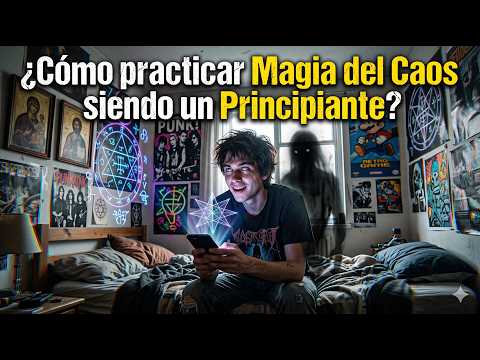
So, how does one actually *do* Chaos Magick? It's less about arcane texts and more about personal experimentation. Key elements include:
- Gnosis: Achieving altered states of consciousness is paramount. This can be done through various methods: sensory deprivation, intense focus on a sigil (a symbol representing an intention), ecstatic dance, breathwork, or even controlled chaos.
- Sigils: These are personalized symbols created to represent a specific desire or intention. They are charged with energy in a state of gnosis and then "released" into the subconscious or the ether, allowing them to work without conscious interference. For creating these potent symbols efficiently, I often turn to Chaos Magick Sigil Generator. It streamlines the process, allowing me to focus on the visualization rather than the tedious geometric construction.
- Belief Shifting: A Chaos Magician might temporarily adopt the belief of a specific deity, spirit, or even of science fiction characters to manipulate their worldview and achieve magical results. This is not about permanent delusion but temporary, effective adoption.
- Servitor Creation: These are essentially artificial thought-forms or AI-like entities created with a specific purpose. They are programmed with belief and intention to carry out tasks, acting as magical agents.
The beauty of Chaos Magick is its adaptability. It's a highly personal journey of exploration. It encourages skepticism of your own beliefs and a constant questioning of what works and why.
Mage's Arsenal
- Essential: Chaos Magick Sigil Generator App: This tool is invaluable for quickly designing and charging sigils, cutting down on manual effort and enhancing focus. It's a digital grimoire in your pocket.
- Liber Null & Psychonaut by Peter J. Carroll: A foundational text that outlines many of the core principles and techniques of Chaos Magick.
- Prime Chaos by Jake Stratton-Kent: Offers a different perspective and further exploration of Chaos Magick principles.
- A Journal and Pen: For recording intentions, sigils, experiments, and results. This is vital for tracking progress and understanding what works for *you*.
- Meditative Aids (Optional): Metronomes, binaural beats, or even simply a quiet space can aid in achieving gnosis.
Practitioner's Verdict
Chaos Magick is neither pure science nor mere charlatanism. It is a potent, self-directed practice that weaponizes belief, psychology, and consciousness itself. It demands rigorous self-honesty, a willingness to experiment, and an understanding that the results are often as nuanced and complex as the practitioner themselves. It’s a path for the intellectually curious and the pragmatically inclined, those who are willing to question everything, including their own magical theories, in the pursuit of tangible change. The true "science" lies in the experimentation; the "charlatanism" lies in those who fail to do the work or prey on others.
Frequently Asked Questions
- Is Chaos Magick dangerous? Like any powerful tool, it can be misused. Lack of self-awareness or ethical grounding can lead to unintended consequences. It emphasizes personal responsibility.
- Do I need to believe in gods or spirits? Not necessarily. Chaos Magick views these as potentially useful conceptual frameworks or archetypes that can be adopted temporarily to achieve an effect.
- What's the difference between Chaos Magick and traditional witchcraft? Chaos Magick is highly adaptable and belief-agnostic, prioritizing results over adherence to specific traditions or pantheons. Traditional witchcraft often has more established pantheons, rituals, and historical lineage.
- Can I really change reality with Chaos Magick? You can certainly influence your perception of reality and your interactions with it, leading to tangible, observable changes. The extent of this influence is a subject of ongoing personal experimentation.
About the author: Frater Alek0s is a veteran practitioner and researcher in the field of chaos magick. His work focuses on the practical and experimental application of occult techniques for self-development and reality exploration, demystifying esotericism for the modern practitioner.
Your Operation
Your first operation is to clearly define a simple, achievable intention. This could be something like finding a parking spot, having a productive thought for 30 minutes, or experiencing a moment of genuine calm. Then, create a sigil for this intention using your preferred method (manual drawing or a digital tool like Chaos Magick Sigil Generator). Practice entering a state of gnosis and then consciously "release" the sigil. Record your process and any results in your journal. The goal here is not grand manifestation, but mastering the fundamental steps.
Practitioner's Note: True magick requires resources. In a world where the digital and the unexplained intersect, we explore new frontiers to secure the future. Do you dare to be part of the vanguard? Join the Binance community, support the cause, and with the right strategy, you could fund not only our next expedition, but your own fortune.