
Vodou. The very name conjures images of dark rituals, potent curses, and an unseen world of spirits influencing the tangible realm. Often shrouded in fear and misunderstanding, Vodou is frequently misrepresented in popular culture as merely black magic. But what is the truth behind this ancient tradition, particularly at its birthplace? My journey took me to the heart of Benin, the cradle of Vodou, to peel back the layers of superstition and confront the reality of this deeply spiritual practice.
This isn't about sensationalism; it's about understanding. The mystique surrounding Vodou stems largely from its intentional ambiguity and the profound respect it commands from its practitioners. From the vibrant markets where talismans and effigies are sold to the homes of spiritual leaders, I sought to capture the essence of a faith that has shaped generations. The goal was not to debunk, but to observe, learn, and present an unvarnished look at how Vodou functions in the lives of its people. This exploration delves into the systems of belief, the ancestral connections, and the daily rituals that form the bedrock of this living tradition.
My initial encounters were met with a mixture of pride and caution. Many are eager to share their heritage, yet deeply protective of its sacred aspects from external judgment. The spiritual leaders, the Houngan and Mambo, are custodians of a profound knowledge passed down through oral tradition. They explained that Vodou is not inherently dark; it’s a system of spiritual connection, healing, and community support. The perceived "darkness" often arises from a lack of understanding or from isolated instances of misuse, much like any powerful force can be wielded for ill or good.
One of the most visually striking aspects is the sacred economy surrounding the practice. Markets dedicated to Vodou paraphernalia are a testament to the tangible aspect of faith. Here, you’ll find everything from carved wooden fetishes and symbolic charms to animal parts and meticulously crafted effigies. I spoke with a skull seller who claimed a particular skull could attract customers. It’s an intriguing statement, and it sparked a critical question: if such potent tools exist, why aren't his stalls overflowing with patrons? This observation highlights a crucial point often missed by outsiders: the efficacy of Vodou often lies not just in the object, but in the intention, the ritual, and the intricate web of spiritual forces it represents.
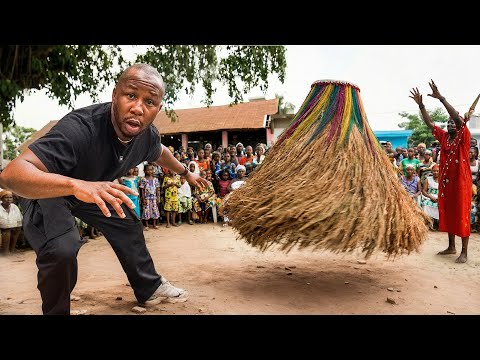
The performances, often seen as mysterious displays, are another area rife with speculation. Masquerades, featuring figures that appear to defy gravity or float ethereally, are a common sight. Outsiders often question if there are hidden mechanisms or people concealed within. While some performances might indeed utilize clever stagecraft and experienced individuals—it takes immense skill and training, often starting from childhood, to embody these roles—this does not diminish the spiritual significance. The elevated presence, the dance, the connection to the spirits are all part of a sacred drama. The belief is that these figures are conduits, embodying ancestral or nature spirits, and their elevated state is a manifestation of that spiritual power, not just a feat of physics or a clever trick.
The interaction with spiritual practitioners, the offering of respect, and the seeking of blessings are central. I witnessed scenes where credit cards were jokingly mentioned as a means of payment for spiritual services, a humorous nod to the clash between modern commerce and ancient traditions. These moments underscore that while Vodou is deeply spiritual, it also exists within a contemporary society. The humor, the quick wit, and the understanding of the outside world are all part of the living, evolving nature of the faith. It is a powerful reminder that spirituality does not exist in a vacuum, and practitioners are adapting and integrating their practices within the modern world.
The question of infrastructure and its impact on communities like Ganvie, the stilt village, also arose. Imagine Venice, but in Africa—a city built entirely on water. The potential for development, for leveraging the unique lifestyle and culture into sustainable tourism or economic opportunities, is immense. While the current living conditions are challenging, the resilience and ingenuity of the people are remarkable. This vision of a thriving, water-based African city highlights the untapped potential that often goes unrecognized when focusing solely on the perceived mystical or "primitive" aspects of a culture.
For any serious practitioner or investigator, having reliable tools and resources is paramount. While traditional methods of research and documentation are vital, the digital age offers unparalleled advantages. To truly delve into complex spiritual systems without interruption, I often rely on specialized software that handles intricate calculations and data management. For instance, when dealing with correspondences, planetary alignments, or the generation of complex symbols, having a digital assistant streamlines the process, allowing for deeper focus on the ritualistic and energetic aspects. You can leverage resources like Chaos Magick Sigil Generator to create your own sigils based on your intentions, moving beyond mere theoretical understanding to practical application. This tool allows for rapid experimentation, a core principle of Vodou and many other esoteric paths, enabling you to test hypotheses and refine your magical work with efficiency.
Mage's Arsenal
- Essential: Chaos Magick Sigil Generator - For rapid, intuitive sigil creation and intent manifestation.
- A comprehensive journal for documenting observations and experiences.
- High-quality recording equipment for capturing authentic dialogue and atmosphere.
- A selection of Benin guidebooks focusing on cultural and spiritual practices.
- Reputable academic texts on West African religions and anthropology.
Veredict of the Investigator
Vodou is far more than the sensationalized "dark magic" portrayed in media. It is a vibrant, complex spiritual system deeply intertwined with the cultural fabric of Benin. Its practitioners demonstrate profound faith, resilience, and a sophisticated understanding of spiritual energies. While elements might appear mysterious or even intimidating to outsiders, they are rooted in a rich tradition of ancestral reverence, healing, and community. The true "magic" lies in the lived experience, the community bonds, and the unwavering connection to the spiritual unseen. To approach Vodou with fear is to miss its profound depth and its role as a source of strength and identity for millions.
Practical Workshop: Crafting Your Intent
- Define Your Intention Clearly: What is the specific outcome you wish to manifest? Be precise. Is it for protection, healing, or perhaps attracting opportunities?
- Symbolic Representation: Translate your intention into a potent symbol. This could be a sigil, a personal glyph, or an object imbued with meaning.
- Energetic Charging: Infuse your symbol with your personal energy. This can be achieved through focused visualization, chanting, drumming, or dance – techniques central to Vodou practices.
- Ritualistic Offering: Present your charged symbol within a focused ritual. This might involve specific prayers, offerings (symbolic or literal, depending on your conviction), and a dedicated space.
- Release and Trust: Once the ritual is complete, release your intention. Trust in the process and the energies you have invoked. Avoid obsessive follow-up; allow the manifestation to unfold organically.
Frequently Asked Questions (FAQ)
- Is Vodou inherently evil? No. Like any spiritual system, it can be used for various purposes. Its core tenets revolve around ancestor veneration, healing, and maintaining spiritual balance, not malicious intent.
- Are there people inside the Vodou masquerades? While experienced practitioners may be involved in embodying spirits through elaborate costumes and performances, their elevated presence is understood as a manifestation of spiritual power, not merely a physical trick.
- Can Vodou be practiced by outsiders? While understanding and respect are crucial, Vodou is a traditional religion with specific initiation rites and lineages. Outsiders can learn about it respectfully, but deep participation is typically reserved for those initiated into the tradition.
- What is the difference between Vodou and other African traditional religions? Vodou specifically refers to the spiritual practices originating in Benin and Togo, heavily influenced by the Fon and Ewe peoples, with connections to Haitian Vodou. While sharing common threads of ancestor worship and spirit communication, each African traditional religion has unique pantheons, rituals, and cosmologies.
Your Operation: Reflective Inquiry
Consider a personal challenge you are currently facing. How could you translate the principle of translating intention into tangible symbols and energetic focus, as seen in Vodou practices, into your own problem-solving approach? What personal "sigil" or symbolic act could you create to address this challenge, and what steps would you take to imbue it with your own energy and intent?
Practitioner's Note: True magick requires resources. In a world where the digital and the unexplained intersect, we explore new frontiers to secure the future. Do you dare to be part of the vanguard? Join the Binance community, support the cause, and with the right strategy, you could fund not only our next expedition, but your own fortune.
No hay comentarios:
Publicar un comentario