
Table of Contents
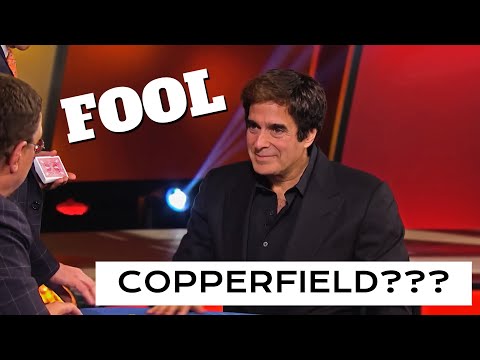
Prepare yourself for an unprecedented event in the annals of magic. In a truly unique episode of the acclaimed show Penn & Teller: Fool Us, the iconic duo, Penn Jillette and Teller, boldly step out of their judging roles and into the spotlight. Their mission? To astound none other than the legendary David Copperfield himself with an original, mind-bending illusion. This isn't just a magic show; it's a rare convergence of three titans, a strategic maneuver designed not only to entertain but to dissect the very fabric of illusion and showmanship. Alongside this historic confrontation, other skilled magicians take their shot at fooling the discerning eyes of Penn & Teller, weaving a tapestry of suspense, innovation, and truly unforgettable enchantments. This extraordinary meeting of unparalleled minds in modern magic, all sharing a single stage, is a masterclass in the art of deception and the psychology of wonder.
Deconstructing the Deception: A Magician's Perspective
The dynamics of Penn & Teller: Fool Us are intrinsically built on a foundation of intricate misdirection and a deep understanding of psychological manipulation. When the roles are reversed, as they are in this special episode featuring David Copperfield, the stakes amplify. Penn and Teller, known for their analytical approach to magic and their dedication to exposing the mechanics behind illusions (often with a cynical, yet respectful, bent), are now the ones tasked with creating the deception. This episode transcends simple trickery; it’s an exploration of intent, performance, and the subtle art of controlling perception. The audience, conditioned to expect Penn & Teller as the arbiters of magical truth, is itself a participant in a grander illusion. The whispers, the coded language, the dramatic pauses – these are not mere theatrical flourishes but carefully orchestrated elements designed to build anticipation and manage the audience's cognitive load. The true magic often lies not just in the execution of the trick, but in the narrative constructed around it.
The commentary surrounding this event reveals a fascinating spectrum of audience engagement. From speculation about whispered secrets ("Let the wookie win.") to humorous theories about David Copperfield's ageless appearance ("David hasn’t aged since I saw him in the 80’s."), the viewers are actively participating in the illusion, attempting to decipher the layers of deception. This active engagement is precisely what makes magic, and particularly the work of these legendary figures, so compelling. It taps into our innate desire for mystery and our cognitive challenge to solve the unsolvable. The mention of a specific playing card, the 4 of Spades, used in both this performance and their iconic David Letterman appearance, highlights a deliberate thematic resonance, a subtle nod to their own history and a testament to their meticulous planning. The idea of "magicians' code" is a direct acknowledgment of the unspoken language and shared knowledge within the fraternity of illusionists, a layer of complexity most viewers might not consciously perceive but which adds depth to the performance.
Moreover, the pragmatic considerations of staging such an event are worth noting. The efficiency of entertainment, the strategic use of a "commercial break right in the middle" to potentially reset or amplify – these are all hallmarks of professional production. The fact that Penn & Teller, despite being on a smaller network, can attract a legend like Copperfield speaks volumes about their enduring star power and the respect they command within the magic community. This isn't just about fooling an audience; it's about engaging in a sophisticated dialogue with fellow practitioners, pushing the boundaries of what's possible within the controlled environment of a performance.
The Grandeur of Copperfield's Golden Age
David Copperfield’s reign in the late 20th century was a phenomenon. His television specials were anticipated cultural events, drawing in massive audiences eager to witness illusions that seemed to defy the laws of physics. Many who grew up in that era recall his performances with a sense of wonder, a feeling of being transported to a realm where the impossible became tangible. His ability to captivate an audience, to make them *feel* the magic, is a testament to his skill as an entertainer. The memories shared by fans – of fathers being lit up like children, of personal moments coinciding with his performances – underscore the profound emotional impact his magic had. This era represented a peak in large-scale, televised illusion, where the scale of the spectacles and Copperfield’s personal charisma combined to create truly memorable experiences. His ability to evoke such strong emotional responses, even from those in critical fields like professional chefs, speaks to the universal appeal of well-executed wonder.
The practicalities of his live performances, as noted by some attendees, sometimes involved perceptions of brevity, yet this was often a consequence of being utterly engrossed. The "shortest show I ever saw" until realizing time had flown is a classic indicator of masterful pacing and captivating performance. The more intimate encounters, like meet-and-greets, have sometimes led to observations about the reality behind the illusion – the "small stature," the "hair dye and makeup." However, these observations rarely diminish the respect for the craft. Instead, they highlight the dedication required to maintain the illusion, the careful construction of persona that is as much a part of the magic as the tricks themselves. The enduring appeal of Copperfield's large-scale specials, marked by their blend of mystery and grand spectacle, continues to be a point of nostalgia and admiration for many.
Penn & Teller's Pragmatic Magic
Penn & Teller operate on a different philosophical plane of magic. While Copperfield often embodies the grand, mysterious magician, Penn & Teller are the analytical detectives, deconstructing illusions to reveal their often surprisingly simple, yet ingeniously applied, principles. Their approach is rooted in what could be termed "technomancy" – the integration of technology and modern understanding into magical performance and analysis. They are champions of the "how-to," not to demystify magic entirely, but to appreciate the cleverness of the engineering behind the illusion. Their performances are a blend of technical prowess, sharp wit, and a deep respect for the art form, even as they expose its inner workings. When they perform for Copperfield, they are not just doing a trick; they are engaging in a high-level discussion with a master, using their unique blend of technological understanding and psychological insight.
Their methodology often involves what can be described as "digital divination" or "magitech" in their analysis, subtly hinting at how modern tools can enhance or even create new forms of magical expression. Their fascination with the mechanics of illusion, from the precise timing of a card trick to the effective use of misdirection, mirrors the precision required in any rigorous scientific or technological endeavor. The way they frame their acts, often with a sense of intellectual curiosity and playful cynicism, draws viewers into their investigative process. This pragmatic, almost scientific, approach to magic makes their performances uniquely engaging, appealing to those who appreciate both the spectacle and the underlying ingenuity.
Technomancy: The Digital Evolution of Illusion
The integration of technology into magic, a concept we at Chaos Magick Practical are deeply invested in, is redefining the landscape of illusion. This is where "technomancy" truly comes into play. Consider the meticulous nature of creating perfect sigils, or the complex calculations involved in predicting celestial alignments for rituals. Traditionally, these would involve painstaking manual effort, charts, and extensive research. However, with the advent of sophisticated software and AI, the process becomes streamlined and accessible. Generating precise "digital sigils" can now be done with a few clicks, allowing practitioners to focus on intent and visualization rather than technical execution. Similarly, "digital divination" tools, such as AI-powered oracles or advanced "magitech" applications, offer new ways to interact with symbolic systems and gain insights. This evolution means that concepts like "rituals with AI" are not merely theoretical but are becoming practical realities for those seeking to harness the power of focused intent in the digital age. As we move further, understanding "esotericism digital" and the underlying principles of how "chaos magick" can be amplified through technological means is becoming paramount. Pioneers like "Austin Osman Spare," who explored unconventional methods of symbolic creation, laid groundwork that resonates even today, particularly when we consider the potential for creating "state gnosis" through digitally mediated experiences.
To truly harness these advancements, one must possess the right tools. For anyone looking to explore the creation of "digital sigils" or delve into advanced "magitech" practices, the Chaos Magick Sigil Generator is an indispensable asset. This application allows for the rapid and precise generation of sigils, freeing the practitioner to concentrate on the alignment of will and intent, rather than getting bogged down in complex geometric construction. It's a perfect example of how technological innovation can serve ancient magical principles, making powerful techniques more accessible and effective for the modern practitioner. This is the essence of practical magic in the 21st century – blending ancient wisdom with cutting-edge tools to achieve tangible results.
Mage's Arsenal
- Esencial: Chaos Magick Sigil Generator - For the rapid, precise creation of digital sigils and intent reinforcement.
- Liber Null & Psychonaut by Peter J. Carroll - A foundational text for understanding chaos magick principles.
- The Steganographia of John Dee - For those interested in the historical intersection of magic, science, and coded communication.
- A high-quality deck of Tarot cards (e.g., Rider-Waite or Thoth) - For divination and symbolic exploration.
- A reliable journal for recording spells, insights, and observations.
Practitioner's Verdict
This episode of Penn & Teller: Fool Us is more than just a magic performance; it's a meta-commentary on the art of illusion itself. By reversing roles, Penn & Teller don't just showcase their own ingenuity; they offer a profound look at what it takes to genuinely mystify masters of the craft. The interaction with David Copperfield, a figure who himself defined an era of large-scale magic, elevates the episode beyond a typical competition. The true success lies in the layered performance: the trick itself, the narrative surrounding it, and the audience’s own attempts to peel back the layers. It’s a masterclass in misdirection, not just for the audience, but for the magicians themselves. The episode serves as a potent reminder that magic, at its core, is about controlled perception and the power of belief, principles that are as relevant in the digital age as they were in Copperfield's televised specials.
Frequently Asked Questions
- Q: How did Penn & Teller manage to fool David Copperfield?
A: The specific method involves a combination of classic misdirection techniques, precise timing, and potentially psychological scripting, designed to leverage Copperfield's own deep understanding of magic against him. - Q: What was the significance of the brass knuckles?
A: The brass knuckles served as a powerful piece of misdirection, drawing attention to a physical prop while the core mechanics of the illusion likely occurred elsewhere, possibly through a hidden assistant or a different manipulation. - Q: Is David Copperfield's magic still relevant today?
A: Absolutely. While the era of large televised specials has waned, Copperfield's influence on illusion and showmanship, and his ability to captivate audiences, remains a benchmark in the magic world. His presence on Fool Us highlights this enduring legacy. - Q: How can I learn more about the psychology of magic?
A: Studying works by magicians like Penn & Teller themselves, as well as exploring books on cognitive biases, perception, and even the history of theatrical illusion, can provide deep insights.
Your Operation
For your operation, select one of the following: 1. Analyze a Performance: Choose a piece of media (a magic trick, a film scene, an advertisement) that you believe uses sophisticated misdirection. Break down the elements: What was the intended message or illusion? What techniques were used to achieve it? Where did your attention get directed, and what was happening elsewhere? Document your findings as if you were preparing a report for the Magi Intelligence Agency. 2. Design a Misdirection: Based on the principles discussed, design a simple, non-harmful misdirection for everyday life. For example, how could you subtly redirect someone's attention if you needed a few extra seconds to complete a task? Describe the setup, the misdirection element, and the intended outcome. Focus on elegance and efficiency, not complexity.
Practitioner's Note: True magick requires resources. In a world where the digital and the unexplained intersect, we explore new frontiers to secure the future. Do you dare to be part of the vanguard? Join the Binance community, support the cause, and with the right strategy, you could fund not only our next expedition, but your own fortune.
No hay comentarios:
Publicar un comentario