
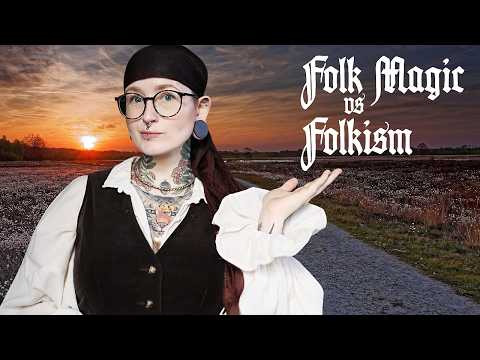
The air crackles with intention. Symbols hum with power. For some, it’s the echo of ancient rites, a tangible connection to ancestral roots. For others, it’s a dangerous justification, a cloak for exclusionary ideologies. In the interwoven worlds of spirituality and cultural practice, terms can become weapons, and misunderstandings can breed division. Today, we dissect two terms that sound remarkably alike but represent vastly different paths: 'folk magic' and 'folkism'. Understanding this distinction isn't just academic; it's crucial for building an inclusive and ethical spiritual practice, free from the shadows of racism.
Table of Contents
What is Folk Magic?
Folk magic, at its core, is the organic, often unwritten, body of magical practices that arise from specific cultures and communities. It is rooted in the lived experiences, local traditions, and ancestral knowledge passed down through generations, or developed organically within a cultural context. Think of it as the spiritual equivalent of regional cuisine – distinct, unique, and deeply tied to its place of origin. These practices are about community, healing, protection, and connecting with the spirit of the land and its inhabitants. They are inherited wisdom, adapted and molded by the needs and environment of the people who practice them. This is about honoring traditions, not gatekeeping them based on blood or birthright. It is the essence of Magia del Caos in its most elemental form – adapting and creating within your reality.
"Great breakdown in the differences between the terms and practices. Knowledge is power ✨" - Community Comment
The beauty of folk magic lies in its accessibility and its inherent adaptability. It doesn't require adherence to rigid dogma or exclusive lineage. As one practitioner shared, "I'd gladly teach anyone who is respectfully interested in my culture (Hungarian), you need no ancestry just your enthusiasm and patience." This sentiment underscores the inclusive nature of true folk traditions. They are living things, meant to be shared and experienced, not hoarded by a select few.
The Insidious Rise of 'Folkism'
Here’s where the waters get murky. 'Folkism', a term more recently weaponized, stands in stark opposition to the inclusive spirit of folk magic. It is an ideology, often cloaked in the language of cultural preservation, that promotes racial purity, ethno-nationalism, and exclusionary beliefs within spiritual or cultural practices, particularly within Pagan and Heathen communities. This is not about heritage; it's about hate. It’s about drawing lines in the sand based on arbitrary notions of race and ancestry, shutting out genuine seekers and perpetuating harmful hierarchies.
The comments reflect this unease: "I'm always nervous when someone tells me they're a Norse pagan. But I knew I got good vibes from you :)" and "If someone wants to Blot/Faining with me, the only thing that matters is whether they feel they should be there or not in their heart. The rest is up to the Gods and not to some weird metagenetic iteration of hate." This highlights the direct conflict between genuine spiritual pursuit and the divisive rhetoric of folkism. 'Folkism' twists cultural pride into a justification for racism, creating barriers where none should exist. It’s the antithesis of the interconnectedness sought in practices like Technomancy or Cybermancy, which often bridge cultural divides.
The connection to modern technological advancements, such as Rituals with IA or the creation of Sigilos Digitales, is often overlooked by these exclusionary groups. They cling to a romanticized, often fabricated, past, ignoring the potential for growth and evolution that technology offers to spiritual practices. For a deeper understanding of how these concepts can be utilized to create powerful digital sigils, consider exploring tools like our Chaos Magick Sigil Generator. This app streamlines the process, allowing you to focus on intention rather than archaic, exclusionary dogma.
Closing the Knowledge Gap: Why Clarity Matters
Many practitioners find themselves caught in this linguistic confusion. As one comment notes, "I did know this already, but I'm glad you're informing people since the words sound similar" and another, "Appreciate the clarification, I wasn't aware of this confusion upfront." This is precisely why clear communication and education are vital. The conflation of 'folk magic' with 'folkism' can inadvertently legitimize harmful ideologies and alienate individuals seeking authentic spiritual paths. It can lead to situations where someone practicing genuine folk traditions is misconstrued as holding racist beliefs simply because they use similar-sounding terminology.
The historical roots of these terms are complex, and for centuries, the term 'folk' was intrinsically linked to cultural identity without the baggage of racial supremacy. However, recent decades have seen fringe elements co-opt and twist these concepts for nefarious purposes. This manipulation creates a knowledge gap, a space where misinformation can thrive. Bridging this gap requires a conscious effort to define our terms and to call out the misuse of language when it serves to divide rather than unite. It is essential for any serious practitioner to recognize the historical context provided by figures like Austin Osman Spare, whose work explored the personal and adaptable nature of symbolic representation, far removed from racial dogma.
Practical Application and Inclusive Practice
So, how do we navigate this terrain ethically and effectively? The key lies in embracing the true spirit of folk magic: inclusivity, personal responsibility, and respect for all beings. True folk traditions are about connecting with your community and your environment, not about asserting racial superiority. Even in the realm of Digital Divination or when working with complex systems like the I Ching Oracle, the underlying principle remains one of open exploration and personal truth, not exclusion.
When engaging with cultural traditions, be they Norse, Celtic, or any other, approach them with humility and respect. Seek to understand the history and the cultural context, and always prioritize ethical engagement. If a practice feels exclusionary or promotes a narrow worldview, it’s a red flag. Remember the advice: "We can't erase that part of history and we can do it appropriately and mindfully, just taking out the fucked up shit." This sentiment is crucial. We can honor heritage without upholding its ugliest manifestations.
The practical application of inclusive magic means creating spaces where everyone feels welcome, regardless of their background. It means focusing on the *intent* and *spirit* of the practice rather than rigid, often fabricated, ancestral purity tests. For those exploring the deeper aspects of spiritual practice and seeking timely insights, utilizing tools that account for celestial influences can be incredibly beneficial. The Lunar Phase Calculator can help align your intentions with natural cycles, enhancing the potency of your workings.
It's also important to recognize that these issues are not confined to specific spiritual paths. As one comment points out, "Here in the US, we are in the very midst of it. It is very hard for some of us to subsist with our neighbors as we know them as outward racists now." This societal problem bleeds into spiritual communities, making the need for clarity and ethical practice even more urgent. Learning about different cultural traditions can be incredibly enriching, as seen in the sentiment, "Great video, I'd gladly teach anyone who is respectfully interested in my culture (Hungarian)... Thanks for this." This collaborative spirit is what true folk magic fosters.
Practitioner's Verdict
The distinction between folk magic and folkism is not mere semantics; it is a critical ethical boundary. Folk magic, when practiced with integrity, is a force for connection, community, and personal empowerment. Folkism, conversely, is a corrosive ideology that weaponizes culture and heritage to promote division and hate. As practitioners, we have a responsibility to understand this difference, to educate ourselves and others, and to actively reject any ideology that seeks to exclude or demonize based on race or origin. Ignoring these distinctions, or worse, conflating them, allows harmful narratives to fester. Always interrogate the source of beliefs and practices, asking: Does this expand my understanding and connection, or does it build walls?
Mage's Arsenal
- Essential: Chaos Magick Sigil Generator - For creating potent, personalized sigils and symbols, free from the limitations of exclusionary dogma.
- Recommended: Lunar Phase Calculator - To align your magical workings with natural cycles, enhancing the timing and effectiveness of your craft.
- Recommended: I Ching Oracle - For deep philosophical insights and guidance in navigating complex decisions, fostering mindful practice.
- Recommended: Goetian Seals Generator - For those who delve into more complex spirit work, offering precise tools for the creation of specific seals.
- Book: "The Triumph of the Moon" by Ronald Hutton - For a scholarly and comprehensive understanding of the history of modern witchcraft and Paganism, providing essential context.
- Book: "Idolatry is in the Eye: How to Get Gods Out of the Way" by Julian Vayne - To challenge dogma and encourage a personal, experiential approach to spirituality.
FAQ
- What is the main difference between 'folk magic' and 'folkism'?
Folk magic is the organic, community-based practice of magic, often passed down through tradition. Folkism is an exclusionary ideology, often promoting racial purity and ethno-nationalism, using similar terminology to mask its harmful agenda. - Can someone practice folk magic without specific ancestry?
Absolutely. While folk magic is rooted in cultural traditions, its spirit of growth and adaptation means people can respectfully engage with and learn from traditions without direct ancestry, as long as it's done with genuine interest and respect, not appropriation or exclusion. - How can I avoid accidentally supporting folkism when discussing cultural traditions?
Focus on inclusivity, personal experience, and the ethical application of magical principles. Be wary of language that emphasizes racial purity, exclusion, or superiority. Always question the historical accuracy and ethical implications of any practice or belief system. - Are there specific historical texts that discuss 'folkism'?
The term 'folkism' is more of a modern ideological label. While historical texts discuss tribalism and exclusion, 'folkism' as a distinct term often emerges in contemporary discussions within Pagan and Heathen communities to identify and critique racist elements.
Your Operation
Your operation today is one of clarity and ethical discernment. Reflect on a tradition or cultural practice that resonates with you. Now, critically examine it through the lens of inclusivity. Ask yourself: Does this practice build bridges or walls? Does it invite genuine connection and personal growth, or does it rely on exclusion and dogma? Document your findings. How can you ensure your own spiritual path remains a force for positive connection and growth, free from the shadows of prejudice? Consider how you might use the tools of modern Magitech to reinforce your intentions for a more inclusive and connected spiritual practice.
Practitioner's Note: True magick requires resources. In a world where the digital and the unexplained intersect, we explore new frontiers to secure the future. Do you dare to be part of the vanguard? Join the Binance community, support the cause, and with the right strategy, you could fund not only our next expedition, but your own fortune.
No hay comentarios:
Publicar un comentario