
Table of Contents
- Introduction: The Unseen Roots of Faith
- The Journey: A 2,500-Mile Odyssey Through Time
- Zoroastrianism: The Blueprint for Monotheism
- Cultural Coexistence and Modern Iran
- Practitioner's Verdict: The Enduring Power of Ancient Faith
- Mage's Arsenal
- Practical Workshop: Igniting Your Inner Flame
- Frequently Asked Questions
- Your Operation: A Personal Exploration
Introduction: The Unseen Roots of Faith
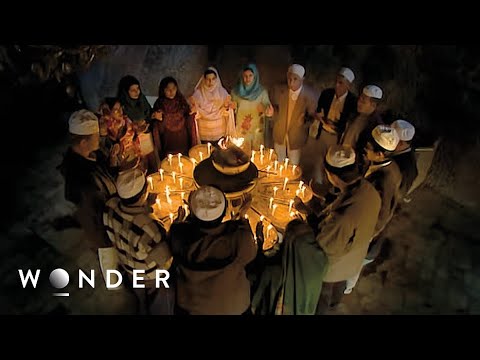
The scent of ancient dust and whispered prayers hangs heavy in the air. Iran, a land often shrouded in contemporary headlines, holds secrets far older and more profound than many realize. Before the Islamic revolutions, before the empires rose and fell, there was a flame – a spiritual fire that laid the foundation for much of the monotheistic world. Photojournalist David Adams, in his journey documented in "Iran - People Of The Flame," ventured beyond the often-portrayed image of modern Iran to unearth the living legacy of Zoroastrianism, the world's oldest monotheistic religion. This isn't just a travelogue; it's an exploration into the very bedrock of Western spiritual thought, a glimpse into the forbidden temples where "Good Words, Good Thoughts, Good Deeds" were not just a mantra, but a way of life. As we peel back the layers, we'll discover how concepts like a single God, the duality of good and evil, and the notion of a final judgment, all born from the teachings of the prophet Zarathustra (Zoroaster), have echoed through millennia, profoundly shaping Judaism, Christianity, and Islam. This deep dive is essential for anyone seeking to understand the true historical and spiritual currents that have shaped civilizations for over two millennia. The echoes of Ahura Mazda can be found in the divine structures of various cultures, hinting at a universal spiritual origin.
The Journey: A 2,500-Mile Odyssey Through Time
Adams' expedition was no mere sightseeing trip; it was a 2,500-mile odyssey that traversed the diverse tapestry of Iran. From the bustling, chaotic streets of Tehran, where the pulse of modern life beats strong, he ventured towards the remote, majestic Elburz Mountains. This was not just a geographical movement, but a temporal one, stepping back through centuries of history. Along this path, the documentary visits legendary sites, including the formidable Fortress of the Assassins, a name synonymous with intrigue and esoteric knowledge, and the unique troglodyte village of Kandovan, where life is literally carved into the mountainside. These aren’t just picturesque locations; they are living testaments to the resilience of ancient cultures and their ability to adapt and endure. The visual poetry of these landscapes serves as a powerful backdrop to the spiritual quest, showcasing the profound connection between the land and its enduring faith. The idea of finding the "Holy Fire" is a central theme, symbolizing the preservation of this ancient spiritual lineage against the tides of history.
Zoroastrianism: The Blueprint for Monotheism
At the heart of this exploration lies Zoroastrianism, and understanding its core tenets is crucial for grasping its monumental influence. Founded by the prophet Zarathustra, this ancient religion introduced revolutionary concepts to the spiritual landscape of its time. The belief in a single, supreme deity, Ahura Mazda, stands in stark contrast to the polytheistic systems prevalent then. Furthermore, Zoroastrianism posited a cosmic battle between forces of good (Spenta Mainyu) and evil (Angra Mainyu), a dualistic framework that deeply resonated and was later adopted by other major religions. The concepts of an afterlife, a spiritual realm of heaven and hell, and a final judgment where souls are held accountable for their earthly deeds, all find their genesis in Zarathustra's teachings. It's astonishing to consider that these foundational ideas, which have shaped the moral and eschatological frameworks of Judaism, Christianity, and Islam, originated thousands of years ago in Persia. For those seeking to understand the lineage of spiritual and ethical thought, engaging with the principles of Zoroastrianism is paramount. For practitioners of Magitech and Technomancy, understanding the foundational programming of human belief systems is a critical step in comprehending the architecture of reality itself.
Cultural Coexistence and Modern Iran
The documentary and its commentary highlight a nuanced reality often overlooked: the coexistence of diverse ethnic and cultural groups within Iran. While the presentation of modern Iran might suggest a monolithic society, the reality is far richer. The presence of a conservative Zoroastrian community, particularly in cities like Yazd and Tehran, demonstrates the enduring spirit of this ancient faith. It’s a testament to the people of Iran’s generosity and their commitment to preserving their historical and ancient sites. This rich heritage, preserved through centuries, underscores a narrative of cultural resilience. The sentiment that "Iran doesn't hate America as a nation, they are only against American imperialism" points to a complex geopolitical and cultural dynamic, where national identity and foreign policy can be distinct from the hospitality shown to individual travelers. This appreciation for history and cultural preservation is key, not just for understanding Iran, but for any serious practitioner of Esotericism Digital seeking to map the evolution of human consciousness. The shared roots with figures like the Magi of the Nativity, who were purportedly Zoroastrian, further emphasize this deep cultural intertwining.
Practitioner's Verdict: The Enduring Power of Ancient Faith
"Iran - People Of The Flame" serves as a potent reminder that the spiritual and philosophical underpinnings of major world religions are not isolated incidents, but interconnected threads woven through history. David Adams’ brave and insightful journey provides an invaluable glimpse into a tradition that has profoundly shaped humanity’s understanding of divinity, morality, and the afterlife. While the world has undoubtedly changed, the core tenets of Zoroastrianism – truth, righteousness, and the eternal struggle against falsehood – remain remarkably relevant. For the modern practitioner, understanding the origins of these powerful archetypes is not just academic; it’s a form of Cybermancy, gaining insight into the deep code of human belief. The documentary's exploration of sites like the Fortress of the Assassins also subtly points towards how historical narratives and esoteric knowledge are intertwined, a concept central to Chaos Magick. The resilience of the Zoroastrian community and its sacred "Holy Fire" is a beacon, demonstrating that ancient wisdom can indeed endure and inspire. The ability to find and connect with such foundational spiritual energies is, in essence, the practice of Technomancy.
Mage's Arsenal
* Essential: Chaos Magick Sigil Generator: For those inspired to create their own potent symbols of intent, drawing from the deep wells of historical symbolism and personal power. This app allows you to manifest your will into tangible digital sigils, a modern approach to ancient magical practice. Chaos Magick Sigil Generator. * Recommended: I Ching Oracle: To understand the flow of change and the wisdom of cyclical patterns, drawing parallels to the ancient cyclical philosophies present in many traditions, including those that influenced Zoroastrianism. I Ching Oracle. * Recommended: Lunar Phase Calculator: For timing your rituals and understanding celestial influences, a practice that has ancient roots across many spiritual traditions. Lunar Phase Calculator. * Book Recommendation: *The Teachings of Zoroaster* by Stephen N. Bryant. A foundational text for understanding the prophet’s philosophy. * Historical Text: *The Zend-Avesta*. The primary collection of religious texts of Zoroastrianism. * Resource: Academic papers on the influence of Zoroastrianism on Abrahamic religions.
Practical Workshop: Igniting Your Inner Flame
This exercise is about connecting with the core concept of intentionality and the "Inner Flame" that Zoroastrianism speaks of. It's a foundational step for anyone looking to understand personal power and spiritual drive, akin to understanding the "State Gnóstico" for deeper magical work.
- Set Your Intent: Find a quiet space. Close your eyes and focus on a core principle you wish to embody more fully. This could be truthfulness, courage, or inner peace.
- Visualize the Flame: Imagine a pure, radiant flame burning within your chest. This is your inner fire, your connection to the divine spark, akin to the sacred fire preserved in Zoroastrian temples.
- Affirmation: Silently or aloud, affirm your chosen principle. For example, "I embody courage and truth."
- Infuse the Flame: Visualize your chosen principle infusing this inner flame, making it brighter and stronger.
- Symbolic Action (Optional but potent): If you feel drawn, create a simple, personal sigil representing your chosen principle. This personal digital sigil can be generated using tools, allowing you to imbue it with your focused intention.
- Record: Note your experience, the principle you chose, and any insights gained in your magical journal or digital grimoire. This act of recording solidifies the experience, a practice vital in Digital Divination and personal magical development.
Frequently Asked Questions
- What is the historical significance of Zoroastrianism? Zoroastrianism is considered one of the world's oldest monotheistic religions, significantly influencing the development of Judaism, Christianity, and Islam through its concepts of a single God, dualism, and an afterlife.
- Are there still Zoroastrians in Iran today? Yes, there is a small but dedicated Zoroastrian community that continues to practice their faith in Iran, particularly in regions like Yazd.
- How did Zoroastrianism influence other religions? Its concepts of a benevolent creator God, an adversarial force of evil, heaven and hell, and a final judgment are believed to have been adopted or adapted by the Abrahamic faiths during various periods of historical interaction, such as the Babylonian Exile.
- What are the core principles of Zoroastrianism? The foundational principles are often summarized as "Good Words, Good Thoughts, Good Deeds" (Humata, Hukhta, Hvarshta), emphasizing ethical conduct and the importance of personal responsibility in the cosmic struggle between good and evil.
Your Operation: A Personal Exploration
Your operation is to consider the profound impact of ancient spiritual systems on our modern world and your own belief structure. Reflect on the following: How has the concept of a single, ultimate deity shaped your understanding of the universe? Have you ever felt the pull of a "dualistic" struggle in your own life – a clear battle between what feels right and what feels wrong? Furthermore, contemplate the power of enduring traditions. The fact that Zoroastrianism, with its roots stretching back thousands of years, still holds relevance and has adherents today, speaks volumes about the enduring nature of deep spiritual inquiry. For a deeper dive into the mechanics of intentional manifestation, drawing parallels between ancient rituals and modern digital tools, explore the use of modern sigil creation apps. For those interested in the foundational principles of effective manifestation and the ethical considerations within magical practice, consider exploring the concept of Austin Osman Spare's work and its implications for creating personal symbols of power.
Practitioner's Note: True magick requires resources. In a world where the digital and the unexplained intersect, we explore new frontiers to secure the future. Do you dare to be part of the vanguard? Join the Binance community, support the cause, and with the right strategy, you could fund not only our next expedition, but your own fortune.
No hay comentarios:
Publicar un comentario