
Table of Contents
- Introduction: Navigating the Pagan Landscape
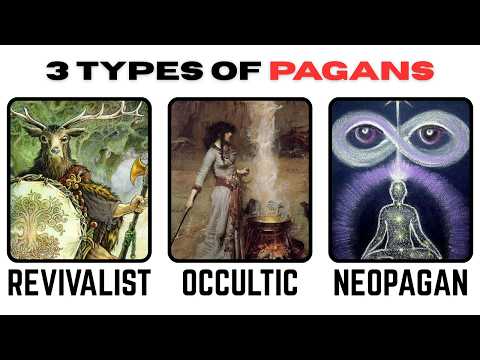
- The Revivalist Currents: Reclaiming Ancient Roots
- Hellenism: The Echoes of Olympus
- Heathenry & Ásatrú: Honoring the Norse Pantheon
- Kemeticism: The Nile's Enduring Mysticism
- Rodnovery: The Slavic Earth Wisdom
- Celtic Reconstructionism: The Veil of the Isles
- Religio Romana: The Roman Way
- Occult Systems: The Technomancy of the Soul
- Thelema: The Law of Love
- Chaos Magic: The Art of Willful Manifestation
- Hermetic Magic: The Emerald Tablet's Legacy
- Luciferian Traditions: The Light-Bearer's Path
- Neopaganism: Modern Adaptations and Innovations
- Wicca: The Craft's Woven Path
- Modern Druidry: Nature's Bardic Voice
- Goddess Spirituality: The Feminine Divine
- Eclectic Paganism: The Weaver's Loom
- Neo-Shamanism: Bridging Worlds
- Practitioner's Verdict: Cutting Through the Dogma
- Mage's Arsenal: Essential Tools for the Journey
- Practical Guide: Crafting Your Personal Path
- Frequently Asked Questions
- Your Operation: Manifesting Your Pagan Identity
Introduction: Navigating the Pagan Landscape
The world of modern spirituality is a vibrant, often confusing, tapestry. Within it, Paganism stands out not as a monolithic religion, but as a constellation of diverse paths, many seeking to reconnect with ancient traditions or forge new spiritual frameworks. This guide is designed to cut through the noise, offering a pragmatic overview of the major currents within modern Paganism and occult systems. We're not here for abstract philosophy; we're here to understand what people *do*, how they *believe*, and what drives their practice. Forget the ten-minute fluff; this is about understanding the core mechanics. For those seeking to operationalize their spiritual exploration, understanding these distinct yet often overlapping domains is crucial. Many practitioners find that the abstract nature of these paths benefits immensely from tools that can concretize intention. For instance, developing a personal sigil or a digital grimoire can be a powerful way to focus energy, a concept fundamental to many occult disciplines. If you're looking to streamline the creation of such potent symbols, Chaos Magick Sigil Generator offers an intuitive platform to design and manifest your intentions quickly and effectively.
The Revivalist Currents: Reclaiming Ancient Roots
This is where the serious work of reconstruction begins. These paths are not about reinventing the wheel, but painstakingly reassembling ancient spokes. They are driven by a desire to revive and practice pre-Christian European religions. This involves deep historical research, archaeological interpretation, and a commitment to authenticity, even when evidence is scarce. The goal is to recreate a living tradition, not a museum exhibit. The rigor involved is substantial, and for many, the act of rebuilding a shattered lineage is a profound spiritual undertaking.
Hellenism: The Echoes of Olympus
Hellenism, or Hellenic Polytheism, seeks to revive the worship of the Olympian gods and heroes of ancient Greece. Practitioners focus on honoring deities like Zeus, Hera, Apollo, and Athena through prayer, offerings, and festivals that mirror ancient Greek practices. It's a path deeply rooted in philosophy, mythology, and the pursuit of *eudaimonia* (human flourishing). The dedication required for genuine reconstruction is immense, demanding a scholarly approach to ancient texts and archaeological findings.
<3>Heathenry & Ásatrú: Honoring the Norse PantheonHeathenry encompasses a range of traditions aiming to revive Germanic paganism, with Ásatrú (meaning "truth to the Æsir") being a prominent focus on the Norse pantheon. This includes the worship of gods like Odin, Thor, and Freya. Practices often involve *blóts* (sacrifices or offerings), *symbel* (ritual toasts), and a strong emphasis on Germanic ethics such as honor, community, and hospitality. The lore is rich, and the practical application demands a deep dive into the Eddas and sagas.
Kemeticism: The Nile's Enduring Mysticism
Resurrecting the ancient Egyptian religion, Kemeticism centers on venerating deities such as Ra, Isis, Osiris, and Thoth. Practitioners engage in rituals, prayers, and offerings, drawing heavily from hieroglyphic texts, tomb inscriptions, and religious artifacts. It’s a path that emphasizes cosmic order (*Ma'at*), magic, and the afterlife, requiring a strong connection to historical details and a reverence for the divine feminine and masculine principles as embodied by the Egyptian pantheon.
Rodnovery: The Slavic Earth Wisdom
Rodnovery, or Slavic Native Faith, is a polycentric revival of the pre-Christian Slavic religions. It venerates gods like Perun, Mokosh, and Svarog, often with a strong connection to nature, the earth, and ancestral spirits. Practices can include agricultural festivals, nature veneration, and rituals aimed at invoking the blessings of the land. The reconstruction is challenging due to limited historical records, making it a path often shaped by interpretation and ongoing research.
Celtic Reconstructionism: The Veil of the Isles
Celtic Reconstructionism (CR) aims to revive the ancient Celtic Iron Age religions. It’s characterized by a dedication to historical and linguistic accuracy, avoiding syncretism with later esoteric traditions or modern fantasy. Practitioners focus on deities, spirits, and practices specific to the various Celtic cultures (Gaelic, Welsh, Brittonic). It emphasizes a deep connection to the natural world, ancestral reverence, and a nuanced understanding of myth and magic.
Religio Romana: The Roman Way
Religio Romana endeavors to revive the polytheistic religion of ancient Rome. It involves honoring Roman deities like Jupiter, Mars, and Vesta, often through public and private rituals, prayers, and vows. It places a strong emphasis on the concept of *pax deorum* – the peace or right relationship between the gods and humanity, maintained through correct ritual performance and civic virtue. This path requires meticulous study of Roman history, literature, and religious practices to ensure authenticity.
Occult Systems: The Technomancy of the Soul
Moving beyond direct revival, these systems are more about personal gnosis, magical technology, and exploring the deeper mechanics of consciousness and reality. They often incorporate elements from various traditions but prioritize direct experience and personal will. This is where the line between religious practice and magical technology blurs, with systems designed to manipulate perceived reality through focused intent and elaborate symbolic frameworks. The precision and intent required here make tools that aid in focalization invaluable. For the dedicated practitioner looking to refine their symbolic language or create potent talismans, consider exploring the capabilities of Chaos Magick Sigil Generator. It's designed to help bring abstract intentions into tangible, geometric forms, a core principle in many of these practices.
Thelema: The Law of Love
Founded by Aleister Crowley, Thelema is a philosophical, magical, and religious system centered on the "True Will." Its core tenet is "Do what thou wilt shall be the whole of the Law." Thelema emphasizes individual sovereignty, spiritual development, and the union of opposites. It involves complex magical practices, rituals (like the Gnostic Mass), and philosophical exploration, all aimed at discovering and enacting one's unique destiny.
Chaos Magic: The Art of Willful Manifestation
Chaos Magic, or Caos Magick, rejects rigid dogma in favor of a pragmatic, results-oriented approach. It posits that belief is a tool that can be adopted and discarded as needed. Practitioners use a wide array of techniques, from sigil magic and gnosis to altered states of consciousness, drawing inspiration from any source that yields results. It’s the ultimate form of technomancy, treating magic as a technology to be engineered and applied. The flexibility of this system makes it ideal for experimentation. For those diving into sigil creation, the process can be tedious manually. Apps like Chaos Magick Sigil Generator streamline this, allowing for rapid design and iteration, perfect for the experimentalist.
Hermetic Magic: The Emerald Tablet's Legacy
Rooted in the teachings attributed to Hermes Trismegistus, Hermeticism focuses on the principles outlined in the Emerald Tablet, particularly "As above, so below." It blends Neoplatonic philosophy, Kabbalistic mysticism, and alchemical symbolism. Hermetic magic aims for spiritual transformation and understanding the divine order of the cosmos through intellectual and practical disciplines.
Luciferian Traditions: The Light-Bearer's Path
Luciferianism, as practiced in modern occultism, views Lucifer not as a fallen angel but as a symbol of illumination, self-knowledge, and the pursuit of wisdom. These traditions often emphasize personal empowerment, intellectual curiosity, and the exploration of the shadow self. Practices can involve invoking Luciferian archetypes and engaging with forbidden knowledge to achieve transformation and self-realization.
Neopaganism: Modern Adaptations and Innovations
Neopaganism encompasses movements that draw inspiration from ancient pagan religions but are often characterized by modern interpretations, adaptations, and sometimes entirely new constructs. These paths are generally less focused on strict historical reconstruction and more on contemporary spiritual needs and expressions.
Wicca: The Craft's Woven Path
Wicca is perhaps the most widely recognized Neopagan tradition, characterized by its reverence for nature, the divine as both God and Goddess, and its focus on magical practice or "The Craft." Wiccans typically follow a lunar calendar of festivals (Sabbats and Esbats) and practice rituals for healing, manifestation, and spiritual connection. While its roots are debated, its modern form emerged in the mid-20th century.
Modern Druidry: Nature's Bardic Voice
Modern Druidry draws inspiration from the ancient Druids of Celtic Europe, focusing on reverence for nature, ancestral connection, and wisdom traditions. While eschewing a strictly reconstructionist agenda, modern Druids often engage in practices like celebrating seasonal festivals, meditating in nature, and studying Celtic lore and mythology. It’s a path that champions ecological awareness and a deep, reciprocal relationship with the Earth.
Goddess Spirituality: The Feminine Divine
This broad movement centers on the worship and veneration of the Divine Feminine in its many forms. It spans Goddess-centric traditions within Wicca, independent movements, and broader spiritual philosophies that emphasize the archetypal feminine principles of creation, nurturing, intuition, and transformation. It is a powerful counterpoint to patriarchal religious structures.
Eclectic Paganism: The Weaver's Loom
Eclectic Paganism is not a single tradition but a *method* of practice. Eclectics draw from multiple Pagan, occult, or spiritual traditions to create a personal path that resonates with them. This can involve blending elements of Hellenism with Wicca, or incorporating Norse mythology with Chaos Magick. The emphasis is on personal choice and creating a spiritual framework that is uniquely tailored to the individual's journey, much like an artisan weaving disparate threads into a coherent whole. This approach often benefits from tools that can help organize diverse intentions and symbols. For instance, using the Chaos Magick Sigil Generator can help unify various symbolic influences into a single, potent sigil.
Neo-Shamanism: Bridging Worlds
Neo-shamanism refers to modern spiritual practices that aim to emulate or adapt the techniques and worldview of ancient shamans. This often involves altered states of consciousness (induced via drumming, chanting, or other methods) for healing, divination, communication with spirits, and journeying into other realms. It emphasizes a non-dualistic view of reality, where the physical and spiritual worlds are interconnected.
Practitioner's Verdict: Cutting Through the Dogma
The landscape of modern Paganism and occultism is a deliberate rejection of monolithic religious structures. Each path, from the scholarly rigor of reconstructionism to the experimental freedom of Chaos Magic, offers a unique lens through which to view and interact with reality. The key takeaway? There is no single "right" way. What matters is authenticity, personal resonance, and tangible results – whether that result is a deeper connection to ancestral gods, a more profound understanding of oneself, or the successful manifestation of a desired outcome. The true "magic" lies not in dogma, but in deliberate action and focused will. The pursuit of knowledge in these fields often requires dedicated resources. For those serious about their craft, exploring digital platforms can be surprisingly effective. For example, leveraging tools like the Chaos Magick Sigil Generator can significantly accelerate the process of creating symbolic tools, freeing up mental energy for deeper work.
Mage's Arsenal: Essential Tools for the Journey
* Essential: Chaos Magick Sigil Generator (https://play.google.com/store/apps/details?id=com.cha0smagick.sigilgeneratorfinal) - For anyone practicing sigil magic, intent crystallization, or creating personal symbols of power. This app automates and refines the design process. * Liber Null & Psychonaut by Peter J. Carroll - A foundational text for Chaos Magic, offering experimental techniques and a framework for understanding magical reality. * The Golden Bough by James George Frazer - An anthropological study of ancient myths and religions, invaluable for understanding the roots of many Pagan traditions. * Thelema Lodge Lectures by Aleister Crowley - For those interested in exploring the core philosophy and practices of Thelema. * Mythos by Stephen Fry - A modern, accessible retelling of Greek myths, excellent for grounding oneself in Hellenistic narratives. * The Poetic Edda - The primary source for Norse mythology and heroic legends. * The Kybalion - A seminal work on Hermetic philosophy, outlining the Universal Laws. * A well-bound journal and quality pens - For recording rituals, meditations, dreams, and sigil designs. Digital tools are great, but the tactile experience of writing can be a powerful anchor.
Practical Guide: Crafting Your Personal Path
1. Identify Your Core Resonance: Which of these paths or elements speaks to you most deeply? Is it the historical accuracy of revivalism, the experimental nature of occult systems, or the adaptive spirit of Neopaganism? Don't force it; feel where your energy is drawn. 2. Deep Dive into a Chosen Path (Initially): Select one tradition or system that strongly resonates. Dedicate time to research its history, core beliefs, and common practices. Read primary texts if possible, or reputable secondary sources. 3. Experiment with Core Techniques: Whether it's a simple prayer to an Olympian deity, a basic sigil creation, or a nature meditation, begin practicing. Start small. The goal is experience, not immediate mastery. 4. Integrate, Don't Just Copy: As you gain experience, you'll naturally find connections between different traditions or identify elements that don't serve you. This is where Eclectic Paganism becomes a natural evolution for many. Use tools like the Chaos Magick Sigil Generator to create personalized symbols that amalgamate influences from various sources, acting as a unique anchor for your personal synthesis. 5. Record Everything: Keep a magical journal. Note what you did, when you did it, how you felt, and any synchronicities or manifestations. This is your personal grimoire, your data. 6. Seek Community (Wisely): Finding like-minded individuals can be invaluable, but be discerning. Not all groups are healthy, and not all advice is sound. Prioritize those who emphasize critical thinking and personal responsibility.
Frequently Asked Questions
* Q: Can I practice multiple Pagan traditions at once? A: Absolutely. Many practitioners, especially those identifying as Eclectic or Chaos Magicians, blend elements from various traditions to forge a unique spiritual path. The key is conscious integration and ensuring the practices remain coherent and personally meaningful. * Q: Is Chaos Magic dangerous? A: Like any powerful tool, it carries risks if misused. Chaos Magic's strength lies in its pragmatic approach to belief as a tool. The primary danger comes from a lack of self-awareness, poor intent, or neglecting the psychological impact of one's magical workings. Responsible practice involves rigorous self-examination and a clear understanding of one's goals and their potential consequences. * Q: How do I know if my chosen path is "real" Paganism? A: "Real" Paganism is often defined by the practitioner's commitment and intent. Reconstructionist paths prioritize historical authenticity, while Neopagan and occult paths emphasize personal experience and efficacy. The validity of your path is ultimately determined by its ability to foster your spiritual growth and connect you to what you perceive as the divine or the forces of reality. * Q: What's the difference between Neopaganism and Reconstructionism? A: Reconstructionists aim to revive ancient pagan religions as accurately as possible, based on historical evidence. Neopagans draw inspiration from ancient traditions but are more focused on adapting those ideas into modern spiritual practices, which may include innovation and syncretism with other systems. * Q: How can I start working with deities if I'm unsure which pantheon to choose? A: Research different pantheons and their associated myths and archetypes. Meditate on which deities or spiritual forces resonate most strongly with your current life circumstances and aspirations. Many practitioners find specific deities call to them at different stages of their journey. You can also begin with more general nature veneration or the concept of the Divine Feminine/Masculine.
Your Operation: Manifesting Your Pagan Identity
For your first operation, I challenge you to perform an act of *conscious synthesis*. Choose *one* element from *two different* traditions discussed above (e.g., a Hellenic prayer and a Chaos Magick sigil concept). Spend 15 minutes researching both. Then, spend another 15 minutes in quiet contemplation, attempting to visualize a symbolic representation that merges the essence of these two disparate elements. This could be a sigil, a mental image, or a brief written incantation. The goal is not perfection, but the *act* of creative blending. Record this synthesis in your journal. For a more structured approach to translating your synthesized intention into a visual form, consider using the Chaos Magick Sigil Generator to give your merged concept a tangible, reproducible form. This exercise is about understanding that spiritual paths are not rigid boxes, but fluid landscapes waiting for your personal imprint.
Practitioner's Note: True magick requires resources. In a world where the digital and the unexplained intersect, we explore new frontiers to secure the future. Do you dare to be part of the vanguard? Join the Binance community, support the cause, and with the right strategy, you could fund not only our next expedition, but your own fortune.
No hay comentarios:
Publicar un comentario