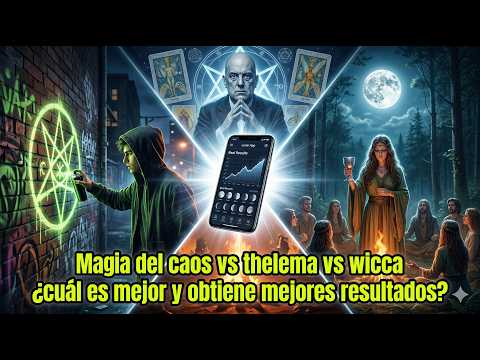
La disyuntiva eterna: ¿es la estructura rígida de la Wicca la llave para desatar el poder, o es la disciplina austera de Thelema el camino hacia la maestría? Hoy, desmantelamos estas corrientes para revelarte dónde reside el verdadero potencial mágico en el siglo XXI. En la Magia del Caos, aprendemos que la realidad es maleable, y tu voluntad es la herramienta principal, pero, ¿cuál sistema te equipa mejor para forjar tu destino?
Si este post te está incomodando, vas por buen camino. Suscríbete para más golpes a tu zona de confort y comparte este post con alguien que aún crea en las hadas sin dientes.
Wicca: La Tradición y sus Límites
La Wicca, a menudo idealizada como un camino de retorno a la naturaleza y a la veneración de lo femenino, presenta un marco ritualístico bien definido. Sus covenes, sus altares y sus ciclos lunares ofrecen una estructura reconfortante para muchos. Sin embargo, para el mago que busca una manipulación directa y audaz de la realidad, la Wicca puede sentirse como un corsé. Sus dogmas, aunque pacíficos, limitan la experimentación pura y la voluntad individual sin filtros. Es un sistema que premia la adhesión y la tradición, pero ¿qué sucede cuando tu propia naturaleza caótica choca con sus dogmas?
Thelema: La Ley del Mago
Forjada por el enigmático Aleister Crowley, Thelema se centra en la "Voluntad Verdadera" como el motor del universo. Su mantra, "Haz lo que quieras, será toda la Ley", promete una autonomía radical. Sin embargo, la adhesión a los textos sagrados de Thelema, como el Liber AL vel Legis, y la jerarquía interna pueden crear un nuevo tipo de dogma. La disciplina requerida para comprender y aplicar sus complejas correspondencias y rituales puede ser abrumadora, y para algunos, elitista. ¿Es la Voluntad Verdadera una herramienta liberadora o una nueva cadena dorada para el adepto?
Magia del Caos: La Liberación Total
Aquí es donde las cosas se ponen interesantes. La Magia del Caos, nacida de la insatisfacción con los sistemas mágicos tradicionales y la influencia de figuras como Austin Osman Spare, se basa en la premisa de que las creencias son herramientas. "Nada es verdad, todo está permitido" no es una invitación a la anarquía, sino a la libertad de experimentar sin dogmas. La Magia del Caos te despoja de la necesidad de sistemas rígidos y te enseña a usar cualquier creencia o símbolo que te sea útil para lograr resultados. Se enfoca en la alteración de la conciencia, la neuroplasticidad y la manipulación directa de la psique. Para ello, utilizar una herramienta que simplifique la creación de sigilos y la carga de intenciones es fundamental. Puedes usar Chaos Magick Sigil Generator para generar tus propios sigilos al instante, permitiéndote centrarte en la intensidad de tu voluntad.
Comparativa para el Practicante Moderno
"La diferencia entre el mago y el creyente es simple: el mago conoce cómo funcionan los mecanismos, el creyente solo espera que funcionen."
Si buscas estructuras rígidas, ciclos lunares precisos en un calendario predefinido y veneración de deidades específicas, la Wicca podría ser tu camino. Si buscas una disciplina filosófica profunda, un código ético basado en la autoknowledge y la auto-maestría, Thelema te ofrecerá un desafío intelectual y espiritual. Pero si tu objetivo es la acción directa, la experimentación sin límites y resultados tangibles, la Magia del Caos te proporciona la flexibilidad y las herramientas para lograrlo. La Magia del Caos no descarta la sabiduría de otras tradiciones; la integra y la adapta, creando un sistema dinámico y personalizable. Aprovecha la tecnología para potenciar tu práctica. Estás en la era de la Divinación Digital y la Magitecnología.
Arsenal del Mago
Aquí te presento las herramientas que considero esenciales para cualquier practicante serio que no quiera perderse en dogmas:
Chaos Magick Sigil Generator (App): Esencial para la creación rápida y efectiva de sigilos, el corazón de muchas operaciones caóticas. Permite enfocar la intención sin la carga mental de la creación manual.
Liber Null & Psychonaut de Peter J. Carroll: Un texto fundamental para entender los principios de la Magia del Caos.
El Poder de la Voluntad de Aleister Crowley: Aunque desde una perspectiva Thelémica, los principios sobre la voluntad son universales y potentes.
Un amuleto vibracional: Algo que te conecte con tu intención y te sirva de ancla psíquica.
La clave no es la herramienta en sí, sino tu capacidad para infundirle tu propia energía y voluntad. La Technomancia está aquí para quedarse.
Elsie_A_E
Veredicto del Practicante
Si bien Wicca y Thelema ofrecen caminos estructurados y significativos, la Magia del Caos se alza como la opción más potente y adaptable para el practicante moderno. Su enfoque en la voluntad individual, la experimentación y la ausencia de dogmas la convierte en la herramienta definitiva para aquellos que desean ser arquitectos de su propia realidad. La limitación de otras sendas radica en su adherencia a sistemas que, si bien efectivos para algunos, pueden sofocar la chispa de la innovación y la autenticidad mágica.
Taller Práctico: Tu Operación
Crea tu Sigilo de "Dominación Caótica"
Define tu Intención Clara: Piensa en una única declaración de cómo quieres que la Magia del Caos domine otras corrientes en tu práctica personal. Ejemplo: "Mi voluntad caótica es la ley principal en mi camino mágico."
Genera tu Sigilo: Utiliza la app Chaos Magick Sigil Generator para transformar tu intención en un símbolo visual único.
Carga el Sigilo: Elige un momento de alta carga emocional o un estado gnóstico (puedes usar vibraciones de alta frecuencia, meditación intensa, o cualquier método que te lleve al borde de la conciencia ordinaria). Visualiza tu sigilo y descarga en él toda la energía de tu voluntad, deseando que se manifieste.
Olvida y Deja Ir: Una vez cargado, olvidaconscientemente el sigilo y su intención. Permite que el subconsciente lo trabaje.
Registra tus Resultados: Lleva un diario de tus operaciones y anota cualquier manifestación notable en tu práctica.
Sobre el autor: Frater Alek0s es un veterano practicante e investigador en el campo de la magia del caos. Su trabajo se centra en la aplicación práctica y experimental de técnicas ocultas para el autodesarrollo y la exploración de la realidad, desmitificando el esoterismo para el practicante moderno.
Preguntas Frecuentes
¿Puede la Magia del Caos dañarme? Al igual que cualquier herramienta poderosa, su uso irresponsable o malintencionado puede tener consecuencias. La Magia del Caos enfatiza la responsabilidad personal y la auto-superación.
¿Necesito abandonar mi práctica actual para ser un mago del caos? No. La Magia del Caos es un meta-sistema que te permite integrar técnicas y creencias de otras tradiciones de forma efectiva.
¿Los sigilos creados en apps son tan efectivos como los manuales? La efectividad reside en tu intención y carga energética, no en el método de creación del sigilo. La app agiliza el proceso.
Ahora es tu turno. ¿Crees que la Magia del Caos es una falta de respeto a las tradiciones antiguas como Thelema, o es simplemente la evolución necesaria para el mago del siglo XXI? ¿Qué sistema te ha dado los mejores resultados y por qué? Comparte tus experiencias y veredictos en los comentarios.
Nota del Practicante: La verdadera magia requiere recursos. En un mundo donde lo digital y lo inexplicable se cruzan, exploramos nuevas fronteras para asegurar el futuro. ¿Te atreves a ser parte de la vanguardia? Únete a la comunidad de Binance, apoya la causa y, con la estrategia correcta, podrías financiar no solo nuestra próxima expedición, sino tu propia fortuna.
The world of modern spirituality is a vibrant, often confusing, tapestry. Within it, Paganism stands out not as a monolithic religion, but as a constellation of diverse paths, many seeking to reconnect with ancient traditions or forge new spiritual frameworks. This guide is designed to cut through the noise, offering a pragmatic overview of the major currents within modern Paganism and occult systems. We're not here for abstract philosophy; we're here to understand what people *do*, how they *believe*, and what drives their practice. Forget the ten-minute fluff; this is about understanding the core mechanics. For those seeking to operationalize their spiritual exploration, understanding these distinct yet often overlapping domains is crucial. Many practitioners find that the abstract nature of these paths benefits immensely from tools that can concretize intention. For instance, developing a personal sigil or a digital grimoire can be a powerful way to focus energy, a concept fundamental to many occult disciplines. If you're looking to streamline the creation of such potent symbols, Chaos Magick Sigil Generator offers an intuitive platform to design and manifest your intentions quickly and effectively.
The Revivalist Currents: Reclaiming Ancient Roots
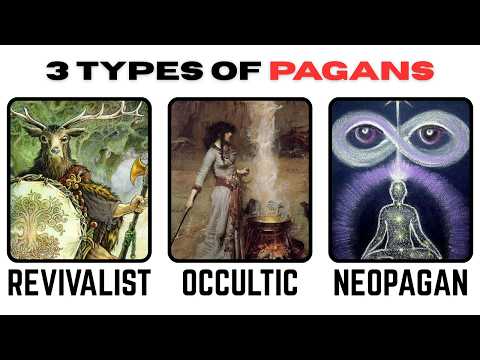
This is where the serious work of reconstruction begins. These paths are not about reinventing the wheel, but painstakingly reassembling ancient spokes. They are driven by a desire to revive and practice pre-Christian European religions. This involves deep historical research, archaeological interpretation, and a commitment to authenticity, even when evidence is scarce. The goal is to recreate a living tradition, not a museum exhibit. The rigor involved is substantial, and for many, the act of rebuilding a shattered lineage is a profound spiritual undertaking.
Hellenism: The Echoes of Olympus
Hellenism, or Hellenic Polytheism, seeks to revive the worship of the Olympian gods and heroes of ancient Greece. Practitioners focus on honoring deities like Zeus, Hera, Apollo, and Athena through prayer, offerings, and festivals that mirror ancient Greek practices. It's a path deeply rooted in philosophy, mythology, and the pursuit of *eudaimonia* (human flourishing). The dedication required for genuine reconstruction is immense, demanding a scholarly approach to ancient texts and archaeological findings.
<3>Heathenry & Ásatrú: Honoring the Norse Pantheon
Heathenry encompasses a range of traditions aiming to revive Germanic paganism, with Ásatrú (meaning "truth to the Æsir") being a prominent focus on the Norse pantheon. This includes the worship of gods like Odin, Thor, and Freya. Practices often involve *blóts* (sacrifices or offerings), *symbel* (ritual toasts), and a strong emphasis on Germanic ethics such as honor, community, and hospitality. The lore is rich, and the practical application demands a deep dive into the Eddas and sagas.
Kemeticism: The Nile's Enduring Mysticism
Resurrecting the ancient Egyptian religion, Kemeticism centers on venerating deities such as Ra, Isis, Osiris, and Thoth. Practitioners engage in rituals, prayers, and offerings, drawing heavily from hieroglyphic texts, tomb inscriptions, and religious artifacts. It’s a path that emphasizes cosmic order (*Ma'at*), magic, and the afterlife, requiring a strong connection to historical details and a reverence for the divine feminine and masculine principles as embodied by the Egyptian pantheon.
Rodnovery: The Slavic Earth Wisdom
Rodnovery, or Slavic Native Faith, is a polycentric revival of the pre-Christian Slavic religions. It venerates gods like Perun, Mokosh, and Svarog, often with a strong connection to nature, the earth, and ancestral spirits. Practices can include agricultural festivals, nature veneration, and rituals aimed at invoking the blessings of the land. The reconstruction is challenging due to limited historical records, making it a path often shaped by interpretation and ongoing research.
Celtic Reconstructionism: The Veil of the Isles
Celtic Reconstructionism (CR) aims to revive the ancient Celtic Iron Age religions. It’s characterized by a dedication to historical and linguistic accuracy, avoiding syncretism with later esoteric traditions or modern fantasy. Practitioners focus on deities, spirits, and practices specific to the various Celtic cultures (Gaelic, Welsh, Brittonic). It emphasizes a deep connection to the natural world, ancestral reverence, and a nuanced understanding of myth and magic.
Religio Romana: The Roman Way
Religio Romana endeavors to revive the polytheistic religion of ancient Rome. It involves honoring Roman deities like Jupiter, Mars, and Vesta, often through public and private rituals, prayers, and vows. It places a strong emphasis on the concept of *pax deorum* – the peace or right relationship between the gods and humanity, maintained through correct ritual performance and civic virtue. This path requires meticulous study of Roman history, literature, and religious practices to ensure authenticity.
Occult Systems: The Technomancy of the Soul
Moving beyond direct revival, these systems are more about personal gnosis, magical technology, and exploring the deeper mechanics of consciousness and reality. They often incorporate elements from various traditions but prioritize direct experience and personal will. This is where the line between religious practice and magical technology blurs, with systems designed to manipulate perceived reality through focused intent and elaborate symbolic frameworks. The precision and intent required here make tools that aid in focalization invaluable. For the dedicated practitioner looking to refine their symbolic language or create potent talismans, consider exploring the capabilities of Chaos Magick Sigil Generator. It's designed to help bring abstract intentions into tangible, geometric forms, a core principle in many of these practices.
Thelema: The Law of Love
Founded by Aleister Crowley, Thelema is a philosophical, magical, and religious system centered on the "True Will." Its core tenet is "Do what thou wilt shall be the whole of the Law." Thelema emphasizes individual sovereignty, spiritual development, and the union of opposites. It involves complex magical practices, rituals (like the Gnostic Mass), and philosophical exploration, all aimed at discovering and enacting one's unique destiny.
Chaos Magic: The Art of Willful Manifestation
Chaos Magic, or Caos Magick, rejects rigid dogma in favor of a pragmatic, results-oriented approach. It posits that belief is a tool that can be adopted and discarded as needed. Practitioners use a wide array of techniques, from sigil magic and gnosis to altered states of consciousness, drawing inspiration from any source that yields results. It’s the ultimate form of technomancy, treating magic as a technology to be engineered and applied. The flexibility of this system makes it ideal for experimentation. For those diving into sigil creation, the process can be tedious manually. Apps like Chaos Magick Sigil Generator streamline this, allowing for rapid design and iteration, perfect for the experimentalist.
Hermetic Magic: The Emerald Tablet's Legacy
Rooted in the teachings attributed to Hermes Trismegistus, Hermeticism focuses on the principles outlined in the Emerald Tablet, particularly "As above, so below." It blends Neoplatonic philosophy, Kabbalistic mysticism, and alchemical symbolism. Hermetic magic aims for spiritual transformation and understanding the divine order of the cosmos through intellectual and practical disciplines.
Luciferian Traditions: The Light-Bearer's Path
Luciferianism, as practiced in modern occultism, views Lucifer not as a fallen angel but as a symbol of illumination, self-knowledge, and the pursuit of wisdom. These traditions often emphasize personal empowerment, intellectual curiosity, and the exploration of the shadow self. Practices can involve invoking Luciferian archetypes and engaging with forbidden knowledge to achieve transformation and self-realization.
Neopaganism: Modern Adaptations and Innovations
Neopaganism encompasses movements that draw inspiration from ancient pagan religions but are often characterized by modern interpretations, adaptations, and sometimes entirely new constructs. These paths are generally less focused on strict historical reconstruction and more on contemporary spiritual needs and expressions.
Wicca: The Craft's Woven Path
Wicca is perhaps the most widely recognized Neopagan tradition, characterized by its reverence for nature, the divine as both God and Goddess, and its focus on magical practice or "The Craft." Wiccans typically follow a lunar calendar of festivals (Sabbats and Esbats) and practice rituals for healing, manifestation, and spiritual connection. While its roots are debated, its modern form emerged in the mid-20th century.
Modern Druidry: Nature's Bardic Voice
Modern Druidry draws inspiration from the ancient Druids of Celtic Europe, focusing on reverence for nature, ancestral connection, and wisdom traditions. While eschewing a strictly reconstructionist agenda, modern Druids often engage in practices like celebrating seasonal festivals, meditating in nature, and studying Celtic lore and mythology. It’s a path that champions ecological awareness and a deep, reciprocal relationship with the Earth.
Goddess Spirituality: The Feminine Divine
This broad movement centers on the worship and veneration of the Divine Feminine in its many forms. It spans Goddess-centric traditions within Wicca, independent movements, and broader spiritual philosophies that emphasize the archetypal feminine principles of creation, nurturing, intuition, and transformation. It is a powerful counterpoint to patriarchal religious structures.
Eclectic Paganism: The Weaver's Loom
Eclectic Paganism is not a single tradition but a *method* of practice. Eclectics draw from multiple Pagan, occult, or spiritual traditions to create a personal path that resonates with them. This can involve blending elements of Hellenism with Wicca, or incorporating Norse mythology with Chaos Magick. The emphasis is on personal choice and creating a spiritual framework that is uniquely tailored to the individual's journey, much like an artisan weaving disparate threads into a coherent whole. This approach often benefits from tools that can help organize diverse intentions and symbols. For instance, using the Chaos Magick Sigil Generator can help unify various symbolic influences into a single, potent sigil.
Neo-Shamanism: Bridging Worlds
Neo-shamanism refers to modern spiritual practices that aim to emulate or adapt the techniques and worldview of ancient shamans. This often involves altered states of consciousness (induced via drumming, chanting, or other methods) for healing, divination, communication with spirits, and journeying into other realms. It emphasizes a non-dualistic view of reality, where the physical and spiritual worlds are interconnected.
Practitioner's Verdict: Cutting Through the Dogma
The landscape of modern Paganism and occultism is a deliberate rejection of monolithic religious structures. Each path, from the scholarly rigor of reconstructionism to the experimental freedom of Chaos Magic, offers a unique lens through which to view and interact with reality. The key takeaway? There is no single "right" way. What matters is authenticity, personal resonance, and tangible results – whether that result is a deeper connection to ancestral gods, a more profound understanding of oneself, or the successful manifestation of a desired outcome. The true "magic" lies not in dogma, but in deliberate action and focused will. The pursuit of knowledge in these fields often requires dedicated resources. For those serious about their craft, exploring digital platforms can be surprisingly effective. For example, leveraging tools like the Chaos Magick Sigil Generator can significantly accelerate the process of creating symbolic tools, freeing up mental energy for deeper work.
Mage's Arsenal: Essential Tools for the Journey
* Essential: Chaos Magick Sigil Generator (https://play.google.com/store/apps/details?id=com.cha0smagick.sigilgeneratorfinal) - For anyone practicing sigil magic, intent crystallization, or creating personal symbols of power. This app automates and refines the design process.
* Liber Null & Psychonaut by Peter J. Carroll - A foundational text for Chaos Magic, offering experimental techniques and a framework for understanding magical reality.
* The Golden Bough by James George Frazer - An anthropological study of ancient myths and religions, invaluable for understanding the roots of many Pagan traditions.
* Thelema Lodge Lectures by Aleister Crowley - For those interested in exploring the core philosophy and practices of Thelema.
* Mythos by Stephen Fry - A modern, accessible retelling of Greek myths, excellent for grounding oneself in Hellenistic narratives.
* The Poetic Edda - The primary source for Norse mythology and heroic legends.
* The Kybalion - A seminal work on Hermetic philosophy, outlining the Universal Laws.
* A well-bound journal and quality pens - For recording rituals, meditations, dreams, and sigil designs. Digital tools are great, but the tactile experience of writing can be a powerful anchor.
Practical Guide: Crafting Your Personal Path
1. Identify Your Core Resonance: Which of these paths or elements speaks to you most deeply? Is it the historical accuracy of revivalism, the experimental nature of occult systems, or the adaptive spirit of Neopaganism? Don't force it; feel where your energy is drawn.
2. Deep Dive into a Chosen Path (Initially): Select one tradition or system that strongly resonates. Dedicate time to research its history, core beliefs, and common practices. Read primary texts if possible, or reputable secondary sources.
3. Experiment with Core Techniques: Whether it's a simple prayer to an Olympian deity, a basic sigil creation, or a nature meditation, begin practicing. Start small. The goal is experience, not immediate mastery.
4. Integrate, Don't Just Copy: As you gain experience, you'll naturally find connections between different traditions or identify elements that don't serve you. This is where Eclectic Paganism becomes a natural evolution for many. Use tools like the Chaos Magick Sigil Generator to create personalized symbols that amalgamate influences from various sources, acting as a unique anchor for your personal synthesis.
5. Record Everything: Keep a magical journal. Note what you did, when you did it, how you felt, and any synchronicities or manifestations. This is your personal grimoire, your data.
6. Seek Community (Wisely): Finding like-minded individuals can be invaluable, but be discerning. Not all groups are healthy, and not all advice is sound. Prioritize those who emphasize critical thinking and personal responsibility.
Frequently Asked Questions
* Q: Can I practice multiple Pagan traditions at once?
A: Absolutely. Many practitioners, especially those identifying as Eclectic or Chaos Magicians, blend elements from various traditions to forge a unique spiritual path. The key is conscious integration and ensuring the practices remain coherent and personally meaningful.
* Q: Is Chaos Magic dangerous?
A: Like any powerful tool, it carries risks if misused. Chaos Magic's strength lies in its pragmatic approach to belief as a tool. The primary danger comes from a lack of self-awareness, poor intent, or neglecting the psychological impact of one's magical workings. Responsible practice involves rigorous self-examination and a clear understanding of one's goals and their potential consequences.
* Q: How do I know if my chosen path is "real" Paganism?
A: "Real" Paganism is often defined by the practitioner's commitment and intent. Reconstructionist paths prioritize historical authenticity, while Neopagan and occult paths emphasize personal experience and efficacy. The validity of your path is ultimately determined by its ability to foster your spiritual growth and connect you to what you perceive as the divine or the forces of reality.
* Q: What's the difference between Neopaganism and Reconstructionism?
A: Reconstructionists aim to revive ancient pagan religions as accurately as possible, based on historical evidence. Neopagans draw inspiration from ancient traditions but are more focused on adapting those ideas into modern spiritual practices, which may include innovation and syncretism with other systems.
* Q: How can I start working with deities if I'm unsure which pantheon to choose?
A: Research different pantheons and their associated myths and archetypes. Meditate on which deities or spiritual forces resonate most strongly with your current life circumstances and aspirations. Many practitioners find specific deities call to them at different stages of their journey. You can also begin with more general nature veneration or the concept of the Divine Feminine/Masculine.
Your Operation: Manifesting Your Pagan Identity
For your first operation, I challenge you to perform an act of *conscious synthesis*. Choose *one* element from *two different* traditions discussed above (e.g., a Hellenic prayer and a Chaos Magick sigil concept). Spend 15 minutes researching both. Then, spend another 15 minutes in quiet contemplation, attempting to visualize a symbolic representation that merges the essence of these two disparate elements. This could be a sigil, a mental image, or a brief written incantation. The goal is not perfection, but the *act* of creative blending. Record this synthesis in your journal. For a more structured approach to translating your synthesized intention into a visual form, consider using the Chaos Magick Sigil Generator to give your merged concept a tangible, reproducible form. This exercise is about understanding that spiritual paths are not rigid boxes, but fluid landscapes waiting for your personal imprint.
Practitioner's Note: True magick requires resources. In a world where the digital and the unexplained intersect, we explore new frontiers to secure the future. Do you dare to be part of the vanguard? Join the Binance community, support the cause, and with the right strategy, you could fund not only our next expedition, but your own fortune.
The term "Paganism" can feel like a vast, uncharted territory for newcomers, a swirling nebula of traditions that seem both deeply familiar and bewilderingly distinct. How do these paths diverge? What truly sets them apart in the grand tapestry of spiritual exploration? At its core, Paganism acts as an encompassing umbrella for spiritual inclinations that predate the dominant monotheistic religions, a rich heritage rooted in the earth and the cycles of nature.
In this guide, we'll cut through the confusion by dissecting the nuances of various Pagan paths. We're not here for academic debates; we're here to equip you with practical understanding, enabling you to navigate this landscape with clarity and purpose. Whether you're drawn to ancient rituals, nature-based practices, or the vibrant resurgence of old traditions, this breakdown will serve as your digital grimoire.
Paganism isn't a monolithic religion but rather a spectrum of indigenous, nature-venerating, and often polytheistic or animistic spiritual traditions. Its essence lies in its roots, often tracing back to pre-Christian or pre-Islamic indigenous practices. The modern resurgence of Paganism, however, has birthed new interpretations and innovations, making it a dynamic and evolving field. For many, it's a return to ancestral ways, a deep connection with the Earth, or a philosophical stance that embraces the immanent divine in all things. While other resources might offer surface-level explanations, our goal is to delve into the practical distinctions and underlying philosophies that define these diverse paths. For those seeking to organize their findings and deepen their understanding, tools that facilitate structured research are invaluable. Consider exploring digital archiving solutions that allow you to categorize and cross-reference information efficiently, much like how a seasoned technomancer maps complex magical matrices.
Reconstructionist Paganism: Echoes of Antiquity
Reconstructionist Paganism aims to revive and practice ancient, pre-Christian European religions as accurately as historical and archaeological evidence allows. This isn't about mere romanticism; it's a serious scholarly and spiritual endeavor. Practitioners meticulously study ancient texts, artifacts, and folklore to reconstruct rituals, beliefs, and social structures. Examples include Hellenic Reconstructionism (reviving ancient Greek religion), Roman Reconstructionism, Norse Heathenry (often focusing on the Vanir and Aesir), Celtic Reconstructionism, and Slavic Native Faith.
"The past is not dead. It is not even past." – William Faulkner. Reconstructionists embody this, seeking to breathe life back into ancient lifeways.
The commitment involves a deep dive into historical sources, often requiring fluency in ancient languages or extensive collaboration with academics. The goal is authenticity, distinguishing it from more syncretic or modernly inspired Pagan paths. This rigorous approach to historical accuracy is a hallmark of dedicated practitioners seeking a profound connection to their ancestral spiritual heritage.
Modern Pagan Movements: A New Dawn
This category encompasses a broad range of Pagan paths that emerged or significantly evolved in the 19th and 20th centuries, often influenced by Romanticism, occult studies, and a dissatisfaction with mainstream religious paradigms. While some draw heavily on ancient traditions (like Reconstructionism), many are more eclectic or innovative.
Wicca: Perhaps the most well-known modern Pagan religion, often characterized by its duotheistic structure (Horned God and Triple Goddess), seasonal festivals (the Wheel of the Year), and emphasis on magic and nature.
Neo-Paganism: A broader umbrella term that includes Wicca and many other modern Pagan traditions that are not strictly Reconstructionist. This can range from highly individualistic practices to organized denominations.
Eclectic Paganism: A very common path where individuals draw inspiration and practice from multiple Pagan traditions, creating a personalized spiritual system. This flexibility is a key strength, allowing for deep personal resonance.
Gardnerian and Alexandrian Wicca: Specific traditions within Wicca with established lineages and practices, founded by Gerald Gardner and Alex Sanders, respectively.
Feminist Spirituality: Movements that often overlap with Wicca and Neo-Paganism, emphasizing the divine feminine and challenging patriarchal religious structures.
The development of these modern movements highlights the adaptive nature of spirituality. It's crucial to understand that "modern" doesn't imply a lack of depth or authenticity. These paths often engage deeply with psychological principles and the human need for connection to the sacred. For practitioners navigating these evolving spiritual landscapes, organizing their insights and practices is paramount. Think of it as curating a personal digital grimoire, where every ritual, sigil, and insight is cataloged for future reference and power. For those serious about building complex patterns of intention, utilizing tools that can generate and store intricate sigils is indispensable – consider exploring the capabilities of Chaos Magick Sigil Generator to bring your digital manifestations to life.
Nature and Earth-Centric Paths: The Pulse of the Planet
These paths place the Earth and the natural world at the absolute center of their spiritual practice. The divine is often perceived as immanent within nature, seen in seasons, elements, plants, animals, and celestial bodies. This is where the concept of Gaia, the living Earth, becomes central.
Druidry (Modern): While inspired by ancient Celtic Druids, modern Druidry is largely a revivalist movement, focusing on reverence for nature, ancestor veneration, and often a philosophical approach to life. It emphasizes ecological consciousness and a deep connection to the land.
Green Witchcraft: A practice rooted in nature magic, herbalism, and attunement with the cycles of the Earth and moon. It's often less about a specific religious dogma and more about a practical, hands-on relationship with the natural world.
Animism: The belief that all things—plants, animals, rocks, rivers, weather—possess a spirit or consciousness. This is often a foundational belief system within many indigenous traditions and informs many other Pagan paths. It’s less a distinct religion and more a worldview.
Pantheism/Panentheism: Pantheism sees the divine as identical with the universe, while Panentheism sees the divine as *in* the universe and also transcending it. Both emphasize the sacredness of the cosmos.
Gaianism: Directly venerates the Earth (Gaia) as a living, conscious entity. This path is deeply ecological and calls for a reciprocal relationship with the planet.
The insights from these paths are profoundly practical, teaching us about sustainability, ecological balance, and the interconnectedness of all life. For practitioners, understanding the subtle energies involved in natural cycles is key. This often involves careful timing and observation. For anyone looking to synchronize their practices with cosmic rhythms, a reliable tool for tracking celestial events is indispensable. I personally rely on the Lunar Phase Calculator to align my most potent workings with the moon’s powerful influence.
Shamanism: Bridging Worlds
Shamanism, arguably the oldest spiritual practice known to humanity, is less a specific religion and more a set of techniques for entering altered states of consciousness (often called gnosis or ecstatic states) to interact with the spirit world. Shamans act as intermediaries between the human and spirit realms, often for healing, divination, or guiding souls.
Key aspects include:
Spirit Journeys: Entering trance states to travel to other realities.
Spirit Helpers: Engaging with spirit guides, animal spirits, and other entities.
Healing: Diagnosing and treating spiritual or psychosomatic ailments.
Divination: Seeking knowledge and guidance from the spirit world.
While rooted in ancient indigenous cultures worldwide, modern shamanic practices have emerged, often adapted for contemporary contexts. These adapted forms might blend traditional techniques with psychological insights or other spiritual frameworks. It's vital to approach shamanism with respect for its indigenous origins and to differentiate between authentic indigenous shamanism and modern, often Westernized, shamanic practices. The pursuit of altered states and deeper connections requires disciplined intent. For those exploring the boundaries of consciousness, understanding astrological timing can also be a powerful amplifier. The Lunar Phase Calculator, while seemingly simple, offers crucial insights into energetic tides that can profoundly impact trance work.
Regional or Ethnic Traditions: Roots and Resilience
This category highlights Pagan traditions deeply tied to specific geographic regions, ethnic groups, or cultural heritages. They often represent the resilience of indigenous beliefs that have survived, adapted, or been partially revived in the face of historical pressures, including colonization and religious persecution.
Celtic Traditions: Encompassing the spiritual practices of the ancient Celts, including various regional interpretations (e.g., Irish, Welsh, Scottish, Gallic). Modern Druidry and Celtic Reconstructionism fall under this umbrella.
Norse/Germanic Traditions (Heathenry/Asatru): Based on the beliefs of the ancient Germanic peoples, focusing on figures like Odin, Thor, and Freya, and often incorporating a strong ethical code like the Nine Noble Virtues.
Slavic Native Faith: A revivalist movement encompassing the spiritual traditions of various Slavic peoples, often involving veneration of Perun, Mokosh, and other native deities.
Finnish Paganism (Suomenusko): The indigenous religion of Finland, characterized by animistic beliefs and a rich mythology.
Basque Mythology: The pre-Christian spiritual traditions of the Basque people, with unique deities and folklore.
Native American/Indigenous Traditions: A vast and diverse array of spiritual practices belonging to the indigenous peoples of North America. These are often deeply rooted in specific tribal cultures and cosmologies, with ongoing efforts by communities to revive and preserve them. It is crucial to approach these traditions with immense respect and acknowledge that they are living practices, not historical curiosities.
Hinduism: While often categorized distinctly, Hinduism shares many characteristics with Paganism, including polytheism (or henotheism/panentheism), nature worship, ancestor veneration, shamanic elements, and complex ritualistic practices. Its ancient roots and diverse traditions make it a fascinating comparative study.
These traditions are vital reminders that spirituality is deeply interwoven with culture, history, and land. They underscore the importance of ancestral connections and the ongoing struggle for cultural preservation. For those delving into the intricate symbolism and lineage of these traditions, precise tools for understanding esoteric correspondences are invaluable. The Norse Rune Oracle can offer profound insights into the archetypal energies that underpin many of these ancient systems.
Practitioner's Verdict: Navigating the Connections
The lines between these Pagan paths are rarely rigid; they are more like vibrant, overlapping currents in a flowing river. Many practitioners find themselves drawn to elements from multiple traditions, creating a deeply personal and eclectic spiritual practice. Animism, for instance, is not exclusive to Shamanism or Earth-centric paths; it can be a foundational worldview for a Reconstructionist Hellenist or a modern Wiccan.
Pros:
Richness and Diversity: The sheer variety offers something for nearly everyone seeking an alternative to Abrahamic religions.
Emphasis on Nature: A strong ecological focus is increasingly relevant and vital for planetary well-being.
Personal Empowerment: Many paths encourage individual responsibility and direct experience of the divine.
Connection to Ancestry: Offers a tangible link to historical and cultural roots.
Cons:
Potential for Confusion: The vastness can be overwhelming for beginners.
Risk of Appropriation: Care must be taken, especially when engaging with traditions outside one's direct cultural heritage.
Internal Disagreements: Like any spiritual landscape, there can be debates and differing interpretations among practitioners.
Ultimately, the "best" path is the one that resonates with your soul and aligns with your personal ethics and goals. The key is sincere exploration, responsible practice, and a willingness to learn from the wisdom embedded in each tradition. As you define your own approach, consider how digital tools can enhance your practice. The ability to generate and visualize complex symbolic structures can be incredibly powerful. For instance, creating unique symbols for personal well-being or specific intentions is made far more efficient with specialized software, streamlining the process so you can focus on the energetic attunement. Tools like the Chaos Magick Sigil Generator can be invaluable for this purpose.
Mage's Arsenal: Essential Tools for Exploration
Essential:Chaos Magick Sigil Generator: For crafting and visualizing personal symbols of power and intent. This is fundamental for anyone interested in sigilization, which is a core technique across many modern Pagan and magical paths.
Recommended:
Lunar Phase Calculator: Crucial for timing rituals, magical workings, and understanding natural cycles.
Norse Rune Oracle: For those drawn to Norse traditions or seeking wisdom through runic divination.
I Ching Oracle: A powerful tool for divination and philosophical insight, bridging Eastern wisdom with Western esoteric interests.
Relevant Books: Such as "The Triumph of the Moon" by Ronald Hutton for historical context, "Liber Null and Psychonaut" by Peter J. Carroll for Chaos Magick principles, or specific texts related to your chosen path (e.g., "Green Witchcraft" by Ann Moura, "The Druid Revival Reader" by Philip Carr-Gomm).
Journals: For recording rituals, dreams, insights, and personal magical progress.
Frequently Asked Questions
What is the fundamental difference between Paganism and Neo-Paganism?
Paganism broadly refers to indigenous spiritual traditions that predate major monotheistic religions. Neo-Paganism specifically refers to the modern, often eclectic, revival and reinterpretation of these ancient paths that emerged in the 19th and 20th centuries.
Is Animism always part of Shamanism?
Animism is a worldview where spirits inhabit all things. Shamanism is a practice of spirit-mediated healing and divination. While animistic beliefs often underpin shamanic practices, they are distinct concepts. One can be an animist without being a shaman, and vice versa, though they frequently overlap.
What are the Nine Noble Virtues in Heathenry?
The Nine Noble Virtues are a set of ethical guidelines commonly associated with modern Norse Paganism (Heathenry/Asatru). While their exact historical origin is debated, they are widely accepted by many practitioners. They typically include Courage, Truth, Honor, Fidelity, Discipline, Hospitality, Industriousness, Self-Reliance, and Moderation.
Is Wicca the oldest modern Pagan path?
While Wicca is one of the most prominent and influential modern Pagan traditions, Modern Druidry, as a formalized revivalist movement, often predates it. However, various occult and esoteric movements in the late 19th and early 20th centuries also laid groundwork for later Neo-Pagan developments.
Can I combine elements from different Pagan paths?
Absolutely. Eclectic Paganism is a widely practiced and respected approach. Many individuals find that creating a personalized spiritual system drawing from various traditions allows for the deepest personal resonance and effectiveness.
Your Operation: Charting Your Path
Now that you have a clearer map of the Pagan landscape, it's time to begin your own exploration. Choose one tradition that has resonated most strongly with you throughout this breakdown. Dedicate one week to focused research on this specific path. What are its core tenets? What deities or spirits are central to it? What are its primary rituals or practices? Your operation is to identify at least three key practices or beliefs of that tradition and consider how they might integrate into your life. Don't just read; reflect on how these concepts challenge or affirm your current worldview. Document your thoughts and any initial impressions in your journal. This focused introspection is the first step in building a robust and personally meaningful spiritual practice.
For those seeking a more structured approach to defining and manifesting their spiritual intentions, consider the power of digital sigilization. The ability to translate abstract desires into potent visual symbols is a cornerstone of practical magic. By utilizing tools that can help you design and refine these symbols, you can amplify your ability to focus your will and manifest your intentions effectively. Explore how you can leverage technology to enhance your spiritual work.
Practitioner's Note: True magick requires resources. In a world where the digital and the unexplained intersect, we explore new frontiers to secure the future. Do you dare to be part of the vanguard? Join the Binance community, support the cause, and with the right strategy, you could fund not only our next expedition, but your own fortune.