Mostrando entradas con la etiqueta Heathenry. Mostrar todas las entradas

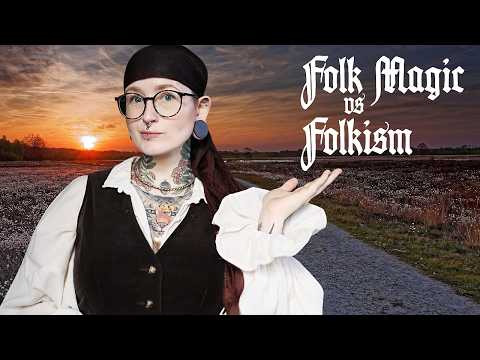
Tradition vs. Racism: Deconstructing 'Folk Magic' and 'Folkism'


The air crackles with intention. Symbols hum with power. For some, it’s the echo of ancient rites, a tangible connection to ancestral roots. For others, it’s a dangerous justification, a cloak for exclusionary ideologies. In the interwoven worlds of spirituality and cultural practice, terms can become weapons, and misunderstandings can breed division. Today, we dissect two terms that sound remarkably alike but represent vastly different paths: 'folk magic' and 'folkism'. Understanding this distinction isn't just academic; it's crucial for building an inclusive and ethical spiritual practice, free from the shadows of racism.

What is Folk Magic?

Folk magic, at its core, is the organic, often unwritten, body of magical practices that arise from specific cultures and communities. It is rooted in the lived experiences, local traditions, and ancestral knowledge passed down through generations, or developed organically within a cultural context. Think of it as the spiritual equivalent of regional cuisine – distinct, unique, and deeply tied to its place of origin. These practices are about community, healing, protection, and connecting with the spirit of the land and its inhabitants. They are inherited wisdom, adapted and molded by the needs and environment of the people who practice them. This is about honoring traditions, not gatekeeping them based on blood or birthright. It is the essence of Magia del Caos in its most elemental form – adapting and creating within your reality.

"Great breakdown in the differences between the terms and practices. Knowledge is power ✨" - Community Comment

The beauty of folk magic lies in its accessibility and its inherent adaptability. It doesn't require adherence to rigid dogma or exclusive lineage. As one practitioner shared, "I'd gladly teach anyone who is respectfully interested in my culture (Hungarian), you need no ancestry just your enthusiasm and patience." This sentiment underscores the inclusive nature of true folk traditions. They are living things, meant to be shared and experienced, not hoarded by a select few.

The Insidious Rise of 'Folkism'

Here’s where the waters get murky. 'Folkism', a term more recently weaponized, stands in stark opposition to the inclusive spirit of folk magic. It is an ideology, often cloaked in the language of cultural preservation, that promotes racial purity, ethno-nationalism, and exclusionary beliefs within spiritual or cultural practices, particularly within Pagan and Heathen communities. This is not about heritage; it's about hate. It’s about drawing lines in the sand based on arbitrary notions of race and ancestry, shutting out genuine seekers and perpetuating harmful hierarchies.

The comments reflect this unease: "I'm always nervous when someone tells me they're a Norse pagan. But I knew I got good vibes from you :)" and "If someone wants to Blot/Faining with me, the only thing that matters is whether they feel they should be there or not in their heart. The rest is up to the Gods and not to some weird metagenetic iteration of hate." This highlights the direct conflict between genuine spiritual pursuit and the divisive rhetoric of folkism. 'Folkism' twists cultural pride into a justification for racism, creating barriers where none should exist. It’s the antithesis of the interconnectedness sought in practices like Technomancy or Cybermancy, which often bridge cultural divides.

The connection to modern technological advancements, such as Rituals with IA or the creation of Sigilos Digitales, is often overlooked by these exclusionary groups. They cling to a romanticized, often fabricated, past, ignoring the potential for growth and evolution that technology offers to spiritual practices. For a deeper understanding of how these concepts can be utilized to create powerful digital sigils, consider exploring tools like our Chaos Magick Sigil Generator. This app streamlines the process, allowing you to focus on intention rather than archaic, exclusionary dogma.

Closing the Knowledge Gap: Why Clarity Matters

Many practitioners find themselves caught in this linguistic confusion. As one comment notes, "I did know this already, but I'm glad you're informing people since the words sound similar" and another, "Appreciate the clarification, I wasn't aware of this confusion upfront." This is precisely why clear communication and education are vital. The conflation of 'folk magic' with 'folkism' can inadvertently legitimize harmful ideologies and alienate individuals seeking authentic spiritual paths. It can lead to situations where someone practicing genuine folk traditions is misconstrued as holding racist beliefs simply because they use similar-sounding terminology.

The historical roots of these terms are complex, and for centuries, the term 'folk' was intrinsically linked to cultural identity without the baggage of racial supremacy. However, recent decades have seen fringe elements co-opt and twist these concepts for nefarious purposes. This manipulation creates a knowledge gap, a space where misinformation can thrive. Bridging this gap requires a conscious effort to define our terms and to call out the misuse of language when it serves to divide rather than unite. It is essential for any serious practitioner to recognize the historical context provided by figures like Austin Osman Spare, whose work explored the personal and adaptable nature of symbolic representation, far removed from racial dogma.

Practical Application and Inclusive Practice

So, how do we navigate this terrain ethically and effectively? The key lies in embracing the true spirit of folk magic: inclusivity, personal responsibility, and respect for all beings. True folk traditions are about connecting with your community and your environment, not about asserting racial superiority. Even in the realm of Digital Divination or when working with complex systems like the I Ching Oracle, the underlying principle remains one of open exploration and personal truth, not exclusion.

When engaging with cultural traditions, be they Norse, Celtic, or any other, approach them with humility and respect. Seek to understand the history and the cultural context, and always prioritize ethical engagement. If a practice feels exclusionary or promotes a narrow worldview, it’s a red flag. Remember the advice: "We can't erase that part of history and we can do it appropriately and mindfully, just taking out the fucked up shit." This sentiment is crucial. We can honor heritage without upholding its ugliest manifestations.

The practical application of inclusive magic means creating spaces where everyone feels welcome, regardless of their background. It means focusing on the *intent* and *spirit* of the practice rather than rigid, often fabricated, ancestral purity tests. For those exploring the deeper aspects of spiritual practice and seeking timely insights, utilizing tools that account for celestial influences can be incredibly beneficial. The Lunar Phase Calculator can help align your intentions with natural cycles, enhancing the potency of your workings.

It's also important to recognize that these issues are not confined to specific spiritual paths. As one comment points out, "Here in the US, we are in the very midst of it. It is very hard for some of us to subsist with our neighbors as we know them as outward racists now." This societal problem bleeds into spiritual communities, making the need for clarity and ethical practice even more urgent. Learning about different cultural traditions can be incredibly enriching, as seen in the sentiment, "Great video, I'd gladly teach anyone who is respectfully interested in my culture (Hungarian)... Thanks for this." This collaborative spirit is what true folk magic fosters.

Practitioner's Verdict

The distinction between folk magic and folkism is not mere semantics; it is a critical ethical boundary. Folk magic, when practiced with integrity, is a force for connection, community, and personal empowerment. Folkism, conversely, is a corrosive ideology that weaponizes culture and heritage to promote division and hate. As practitioners, we have a responsibility to understand this difference, to educate ourselves and others, and to actively reject any ideology that seeks to exclude or demonize based on race or origin. Ignoring these distinctions, or worse, conflating them, allows harmful narratives to fester. Always interrogate the source of beliefs and practices, asking: Does this expand my understanding and connection, or does it build walls?

Mage's Arsenal

  • Essential: Chaos Magick Sigil Generator - For creating potent, personalized sigils and symbols, free from the limitations of exclusionary dogma.
  • Recommended: Lunar Phase Calculator - To align your magical workings with natural cycles, enhancing the timing and effectiveness of your craft.
  • Recommended: I Ching Oracle - For deep philosophical insights and guidance in navigating complex decisions, fostering mindful practice.
  • Recommended: Goetian Seals Generator - For those who delve into more complex spirit work, offering precise tools for the creation of specific seals.
  • Book: "The Triumph of the Moon" by Ronald Hutton - For a scholarly and comprehensive understanding of the history of modern witchcraft and Paganism, providing essential context.
  • Book: "Idolatry is in the Eye: How to Get Gods Out of the Way" by Julian Vayne - To challenge dogma and encourage a personal, experiential approach to spirituality.

FAQ

  • What is the main difference between 'folk magic' and 'folkism'?
    Folk magic is the organic, community-based practice of magic, often passed down through tradition. Folkism is an exclusionary ideology, often promoting racial purity and ethno-nationalism, using similar terminology to mask its harmful agenda.
  • Can someone practice folk magic without specific ancestry?
    Absolutely. While folk magic is rooted in cultural traditions, its spirit of growth and adaptation means people can respectfully engage with and learn from traditions without direct ancestry, as long as it's done with genuine interest and respect, not appropriation or exclusion.
  • How can I avoid accidentally supporting folkism when discussing cultural traditions?
    Focus on inclusivity, personal experience, and the ethical application of magical principles. Be wary of language that emphasizes racial purity, exclusion, or superiority. Always question the historical accuracy and ethical implications of any practice or belief system.
  • Are there specific historical texts that discuss 'folkism'?
    The term 'folkism' is more of a modern ideological label. While historical texts discuss tribalism and exclusion, 'folkism' as a distinct term often emerges in contemporary discussions within Pagan and Heathen communities to identify and critique racist elements.

Your Operation

Your operation today is one of clarity and ethical discernment. Reflect on a tradition or cultural practice that resonates with you. Now, critically examine it through the lens of inclusivity. Ask yourself: Does this practice build bridges or walls? Does it invite genuine connection and personal growth, or does it rely on exclusion and dogma? Document your findings. How can you ensure your own spiritual path remains a force for positive connection and growth, free from the shadows of prejudice? Consider how you might use the tools of modern Magitech to reinforce your intentions for a more inclusive and connected spiritual practice.

Practitioner's Note: True magick requires resources. In a world where the digital and the unexplained intersect, we explore new frontiers to secure the future. Do you dare to be part of the vanguard? Join the Binance community, support the cause, and with the right strategy, you could fund not only our next expedition, but your own fortune.

Understanding the Kaleidoscope: A Pragmatic Guide to Pagan Paths


The term "Paganism" can feel like a vast, uncharted territory for newcomers, a swirling nebula of traditions that seem both deeply familiar and bewilderingly distinct. How do these paths diverge? What truly sets them apart in the grand tapestry of spiritual exploration? At its core, Paganism acts as an encompassing umbrella for spiritual inclinations that predate the dominant monotheistic religions, a rich heritage rooted in the earth and the cycles of nature.

In this guide, we'll cut through the confusion by dissecting the nuances of various Pagan paths. We're not here for academic debates; we're here to equip you with practical understanding, enabling you to navigate this landscape with clarity and purpose. Whether you're drawn to ancient rituals, nature-based practices, or the vibrant resurgence of old traditions, this breakdown will serve as your digital grimoire.

Introduction: The Pagan Umbrella

Paganism isn't a monolithic religion but rather a spectrum of indigenous, nature-venerating, and often polytheistic or animistic spiritual traditions. Its essence lies in its roots, often tracing back to pre-Christian or pre-Islamic indigenous practices. The modern resurgence of Paganism, however, has birthed new interpretations and innovations, making it a dynamic and evolving field. For many, it's a return to ancestral ways, a deep connection with the Earth, or a philosophical stance that embraces the immanent divine in all things. While other resources might offer surface-level explanations, our goal is to delve into the practical distinctions and underlying philosophies that define these diverse paths. For those seeking to organize their findings and deepen their understanding, tools that facilitate structured research are invaluable. Consider exploring digital archiving solutions that allow you to categorize and cross-reference information efficiently, much like how a seasoned technomancer maps complex magical matrices.

Reconstructionist Paganism: Echoes of Antiquity

Reconstructionist Paganism aims to revive and practice ancient, pre-Christian European religions as accurately as historical and archaeological evidence allows. This isn't about mere romanticism; it's a serious scholarly and spiritual endeavor. Practitioners meticulously study ancient texts, artifacts, and folklore to reconstruct rituals, beliefs, and social structures. Examples include Hellenic Reconstructionism (reviving ancient Greek religion), Roman Reconstructionism, Norse Heathenry (often focusing on the Vanir and Aesir), Celtic Reconstructionism, and Slavic Native Faith.

"The past is not dead. It is not even past." – William Faulkner. Reconstructionists embody this, seeking to breathe life back into ancient lifeways.

The commitment involves a deep dive into historical sources, often requiring fluency in ancient languages or extensive collaboration with academics. The goal is authenticity, distinguishing it from more syncretic or modernly inspired Pagan paths. This rigorous approach to historical accuracy is a hallmark of dedicated practitioners seeking a profound connection to their ancestral spiritual heritage.

Modern Pagan Movements: A New Dawn

This category encompasses a broad range of Pagan paths that emerged or significantly evolved in the 19th and 20th centuries, often influenced by Romanticism, occult studies, and a dissatisfaction with mainstream religious paradigms. While some draw heavily on ancient traditions (like Reconstructionism), many are more eclectic or innovative.

  • Wicca: Perhaps the most well-known modern Pagan religion, often characterized by its duotheistic structure (Horned God and Triple Goddess), seasonal festivals (the Wheel of the Year), and emphasis on magic and nature.
  • Neo-Paganism: A broader umbrella term that includes Wicca and many other modern Pagan traditions that are not strictly Reconstructionist. This can range from highly individualistic practices to organized denominations.
  • Eclectic Paganism: A very common path where individuals draw inspiration and practice from multiple Pagan traditions, creating a personalized spiritual system. This flexibility is a key strength, allowing for deep personal resonance.
  • Gardnerian and Alexandrian Wicca: Specific traditions within Wicca with established lineages and practices, founded by Gerald Gardner and Alex Sanders, respectively.
  • Feminist Spirituality: Movements that often overlap with Wicca and Neo-Paganism, emphasizing the divine feminine and challenging patriarchal religious structures.

The development of these modern movements highlights the adaptive nature of spirituality. It's crucial to understand that "modern" doesn't imply a lack of depth or authenticity. These paths often engage deeply with psychological principles and the human need for connection to the sacred. For practitioners navigating these evolving spiritual landscapes, organizing their insights and practices is paramount. Think of it as curating a personal digital grimoire, where every ritual, sigil, and insight is cataloged for future reference and power. For those serious about building complex patterns of intention, utilizing tools that can generate and store intricate sigils is indispensable – consider exploring the capabilities of Chaos Magick Sigil Generator to bring your digital manifestations to life.

Nature and Earth-Centric Paths: The Pulse of the Planet

These paths place the Earth and the natural world at the absolute center of their spiritual practice. The divine is often perceived as immanent within nature, seen in seasons, elements, plants, animals, and celestial bodies. This is where the concept of Gaia, the living Earth, becomes central.

  • Druidry (Modern): While inspired by ancient Celtic Druids, modern Druidry is largely a revivalist movement, focusing on reverence for nature, ancestor veneration, and often a philosophical approach to life. It emphasizes ecological consciousness and a deep connection to the land.
  • Green Witchcraft: A practice rooted in nature magic, herbalism, and attunement with the cycles of the Earth and moon. It's often less about a specific religious dogma and more about a practical, hands-on relationship with the natural world.
  • Animism: The belief that all things—plants, animals, rocks, rivers, weather—possess a spirit or consciousness. This is often a foundational belief system within many indigenous traditions and informs many other Pagan paths. It’s less a distinct religion and more a worldview.
  • Pantheism/Panentheism: Pantheism sees the divine as identical with the universe, while Panentheism sees the divine as *in* the universe and also transcending it. Both emphasize the sacredness of the cosmos.
  • Gaianism: Directly venerates the Earth (Gaia) as a living, conscious entity. This path is deeply ecological and calls for a reciprocal relationship with the planet.

The insights from these paths are profoundly practical, teaching us about sustainability, ecological balance, and the interconnectedness of all life. For practitioners, understanding the subtle energies involved in natural cycles is key. This often involves careful timing and observation. For anyone looking to synchronize their practices with cosmic rhythms, a reliable tool for tracking celestial events is indispensable. I personally rely on the Lunar Phase Calculator to align my most potent workings with the moon’s powerful influence.

Shamanism: Bridging Worlds

Shamanism, arguably the oldest spiritual practice known to humanity, is less a specific religion and more a set of techniques for entering altered states of consciousness (often called gnosis or ecstatic states) to interact with the spirit world. Shamans act as intermediaries between the human and spirit realms, often for healing, divination, or guiding souls.

Key aspects include:

  • Spirit Journeys: Entering trance states to travel to other realities.
  • Spirit Helpers: Engaging with spirit guides, animal spirits, and other entities.
  • Healing: Diagnosing and treating spiritual or psychosomatic ailments.
  • Divination: Seeking knowledge and guidance from the spirit world.

While rooted in ancient indigenous cultures worldwide, modern shamanic practices have emerged, often adapted for contemporary contexts. These adapted forms might blend traditional techniques with psychological insights or other spiritual frameworks. It's vital to approach shamanism with respect for its indigenous origins and to differentiate between authentic indigenous shamanism and modern, often Westernized, shamanic practices. The pursuit of altered states and deeper connections requires disciplined intent. For those exploring the boundaries of consciousness, understanding astrological timing can also be a powerful amplifier. The Lunar Phase Calculator, while seemingly simple, offers crucial insights into energetic tides that can profoundly impact trance work.

Regional or Ethnic Traditions: Roots and Resilience

This category highlights Pagan traditions deeply tied to specific geographic regions, ethnic groups, or cultural heritages. They often represent the resilience of indigenous beliefs that have survived, adapted, or been partially revived in the face of historical pressures, including colonization and religious persecution.

  • Celtic Traditions: Encompassing the spiritual practices of the ancient Celts, including various regional interpretations (e.g., Irish, Welsh, Scottish, Gallic). Modern Druidry and Celtic Reconstructionism fall under this umbrella.
  • Norse/Germanic Traditions (Heathenry/Asatru): Based on the beliefs of the ancient Germanic peoples, focusing on figures like Odin, Thor, and Freya, and often incorporating a strong ethical code like the Nine Noble Virtues.
  • Slavic Native Faith: A revivalist movement encompassing the spiritual traditions of various Slavic peoples, often involving veneration of Perun, Mokosh, and other native deities.
  • Finnish Paganism (Suomenusko): The indigenous religion of Finland, characterized by animistic beliefs and a rich mythology.
  • Basque Mythology: The pre-Christian spiritual traditions of the Basque people, with unique deities and folklore.
  • Native American/Indigenous Traditions: A vast and diverse array of spiritual practices belonging to the indigenous peoples of North America. These are often deeply rooted in specific tribal cultures and cosmologies, with ongoing efforts by communities to revive and preserve them. It is crucial to approach these traditions with immense respect and acknowledge that they are living practices, not historical curiosities.
  • Hinduism: While often categorized distinctly, Hinduism shares many characteristics with Paganism, including polytheism (or henotheism/panentheism), nature worship, ancestor veneration, shamanic elements, and complex ritualistic practices. Its ancient roots and diverse traditions make it a fascinating comparative study.

These traditions are vital reminders that spirituality is deeply interwoven with culture, history, and land. They underscore the importance of ancestral connections and the ongoing struggle for cultural preservation. For those delving into the intricate symbolism and lineage of these traditions, precise tools for understanding esoteric correspondences are invaluable. The Norse Rune Oracle can offer profound insights into the archetypal energies that underpin many of these ancient systems.

Practitioner's Verdict: Navigating the Connections

The lines between these Pagan paths are rarely rigid; they are more like vibrant, overlapping currents in a flowing river. Many practitioners find themselves drawn to elements from multiple traditions, creating a deeply personal and eclectic spiritual practice. Animism, for instance, is not exclusive to Shamanism or Earth-centric paths; it can be a foundational worldview for a Reconstructionist Hellenist or a modern Wiccan.

Pros:

  • Richness and Diversity: The sheer variety offers something for nearly everyone seeking an alternative to Abrahamic religions.
  • Emphasis on Nature: A strong ecological focus is increasingly relevant and vital for planetary well-being.
  • Personal Empowerment: Many paths encourage individual responsibility and direct experience of the divine.
  • Connection to Ancestry: Offers a tangible link to historical and cultural roots.

Cons:

  • Potential for Confusion: The vastness can be overwhelming for beginners.
  • Risk of Appropriation: Care must be taken, especially when engaging with traditions outside one's direct cultural heritage.
  • Internal Disagreements: Like any spiritual landscape, there can be debates and differing interpretations among practitioners.

Ultimately, the "best" path is the one that resonates with your soul and aligns with your personal ethics and goals. The key is sincere exploration, responsible practice, and a willingness to learn from the wisdom embedded in each tradition. As you define your own approach, consider how digital tools can enhance your practice. The ability to generate and visualize complex symbolic structures can be incredibly powerful. For instance, creating unique symbols for personal well-being or specific intentions is made far more efficient with specialized software, streamlining the process so you can focus on the energetic attunement. Tools like the Chaos Magick Sigil Generator can be invaluable for this purpose.

Mage's Arsenal: Essential Tools for Exploration

Essential: Chaos Magick Sigil Generator: For crafting and visualizing personal symbols of power and intent. This is fundamental for anyone interested in sigilization, which is a core technique across many modern Pagan and magical paths.

Recommended:

  • Lunar Phase Calculator: Crucial for timing rituals, magical workings, and understanding natural cycles.
  • Norse Rune Oracle: For those drawn to Norse traditions or seeking wisdom through runic divination.
  • I Ching Oracle: A powerful tool for divination and philosophical insight, bridging Eastern wisdom with Western esoteric interests.
  • Relevant Books: Such as "The Triumph of the Moon" by Ronald Hutton for historical context, "Liber Null and Psychonaut" by Peter J. Carroll for Chaos Magick principles, or specific texts related to your chosen path (e.g., "Green Witchcraft" by Ann Moura, "The Druid Revival Reader" by Philip Carr-Gomm).
  • Journals: For recording rituals, dreams, insights, and personal magical progress.

Frequently Asked Questions

What is the fundamental difference between Paganism and Neo-Paganism?

Paganism broadly refers to indigenous spiritual traditions that predate major monotheistic religions. Neo-Paganism specifically refers to the modern, often eclectic, revival and reinterpretation of these ancient paths that emerged in the 19th and 20th centuries.

Is Animism always part of Shamanism?

Animism is a worldview where spirits inhabit all things. Shamanism is a practice of spirit-mediated healing and divination. While animistic beliefs often underpin shamanic practices, they are distinct concepts. One can be an animist without being a shaman, and vice versa, though they frequently overlap.

What are the Nine Noble Virtues in Heathenry?

The Nine Noble Virtues are a set of ethical guidelines commonly associated with modern Norse Paganism (Heathenry/Asatru). While their exact historical origin is debated, they are widely accepted by many practitioners. They typically include Courage, Truth, Honor, Fidelity, Discipline, Hospitality, Industriousness, Self-Reliance, and Moderation.

Is Wicca the oldest modern Pagan path?

While Wicca is one of the most prominent and influential modern Pagan traditions, Modern Druidry, as a formalized revivalist movement, often predates it. However, various occult and esoteric movements in the late 19th and early 20th centuries also laid groundwork for later Neo-Pagan developments.

Can I combine elements from different Pagan paths?

Absolutely. Eclectic Paganism is a widely practiced and respected approach. Many individuals find that creating a personalized spiritual system drawing from various traditions allows for the deepest personal resonance and effectiveness.

Your Operation: Charting Your Path

Now that you have a clearer map of the Pagan landscape, it's time to begin your own exploration. Choose one tradition that has resonated most strongly with you throughout this breakdown. Dedicate one week to focused research on this specific path. What are its core tenets? What deities or spirits are central to it? What are its primary rituals or practices? Your operation is to identify at least three key practices or beliefs of that tradition and consider how they might integrate into your life. Don't just read; reflect on how these concepts challenge or affirm your current worldview. Document your thoughts and any initial impressions in your journal. This focused introspection is the first step in building a robust and personally meaningful spiritual practice.

For those seeking a more structured approach to defining and manifesting their spiritual intentions, consider the power of digital sigilization. The ability to translate abstract desires into potent visual symbols is a cornerstone of practical magic. By utilizing tools that can help you design and refine these symbols, you can amplify your ability to focus your will and manifest your intentions effectively. Explore how you can leverage technology to enhance your spiritual work.

Practitioner's Note: True magick requires resources. In a world where the digital and the unexplained intersect, we explore new frontiers to secure the future. Do you dare to be part of the vanguard? Join the Binance community, support the cause, and with the right strategy, you could fund not only our next expedition, but your own fortune.