
Table of Contents
- Introduction: The Blurring Lines of Ancient Symbolism
- Moloch: A Scar on Ancient History
- Nandi: The Divine Chariot of Shiva
- Bull Symbolism Across Cultures: A Universal Archetype
- The Technomantic Connection: Symbolism and Digital Divination
- Practitioner's Verdict: Separating Fact from Fear
- Mage's Arsenal: Essential Tools for Deeper Research
- Practical Workshop: Decoding Symbolism in Your Life
- Frequently Asked Questions
- Your Operation: Unveiling Personal Symbolism
Introduction: The Blurring Lines of Ancient Symbolism
The scent of ancient incense and the echo of forgotten rites often lead us down paths where cultures and mythologies intertwine in unexpected ways. One such startling intersection is the question: could the dreaded deity Moloch, often associated with horrific child sacrifice, have roots in the rich tapestry of Hindu tradition, specifically with Nandi, the sacred bull of Lord Shiva? This isn't a mere academic debate; it delves into how historical narratives are constructed, how symbols are adopted and transmuted, and how fear can distort our understanding of the divine. We're not just looking at statues and scriptures; we're performing a psycho-historical autopsy on a potent symbol that has terrified and fascinated humanity for millennia.
The modern era, with its globalized information streams, often presents us with seemingly shocking connections. While sensationalism is tempting, a true practitioner seeks understanding, not mere sensationalism. The goal is to peel back the layers of myth, history, and cultural projection to find the underlying currents of human consciousness. This exploration is crucial for anyone serious about understanding the deep currents of Magitech, the way ancient symbols and modern technology can inform each other. It's about discerning truth from fear-mongering, a vital skill in the practice of Magia del Caos.
Moloch: A Scar on Ancient History
Moloch, or Molech, appears primarily in biblical texts – the Old Testament – as an idol or deity associated with the Ammonites. The descriptions are stark and horrifying: it demanded child sacrifice by fire, a practice that horrified the Israelites and became a benchmark for abhorrent idolatry. Texts like Leviticus and Jeremiah explicitly condemn this ritual, painting Moloch as a deity of destruction and a symbol of paganism at its most brutal.
"Do not give any of your children to be sacrificed to Molech, for you would desecrate the name of your God. I am the Lord." - Leviticus 18:21
The chilling requirement of child sacrifice is the defining characteristic of Moloch in historical and religious discourse. This practice, particularly the immolation of children, served as a potent symbol of the 'other' – the foreign, the barbaric, the antithesis of Yahweh. The fear and revulsion associated with Moloch have cemented its image as a primeval force of evil in many Western traditions. This narrative has, over time, been amplified, often without critical examination, leading to the common perception of Moloch as an unambiguously demonic entity.
The historical accounts of Moloch are largely derived from antagonistic sources, meaning they were written by those who opposed the worship of Moloch. This is a critical point of consideration, as such accounts are prone to exaggeration and demonization to further their own religious or political agendas. The word "Mlechcha" from Sanskrit, used by ancient Indians to refer to 'outsiders' and 'barbaric foreigners,' offers a comparative insight into how 'the other' can be characterized, suggesting that such labeling is a recurring human tendency across cultures and timelines. This critical lens is essential when evaluating any historical or religious claim, especially those involving practices like child sacrifice.
Nandi: The Divine Chariot of Shiva
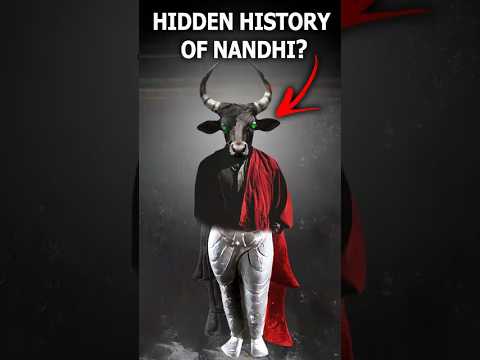
In stark contrast, Nandi is revered in Hinduism as the divine gatekeeper and mount of Lord Shiva. Depicted as a powerful, white bull, Nandi is a symbol of strength, fidelity, and righteousness. He is often seen seated patiently outside Shiva temples, guarding the sacred space and embodying devotion. All Hindu Puranas consistently portray Nandi as a manifestation or an embodiment of Shiva himself, or at least one of his principal Ganas (attendants). His role is protective and auspicious, far removed from any association with harmful practices.
The association of Lord Shiva with animals, as seen with Nandi, is also mirrored in other deities. For instance, Lord Ganesha's vehicle is a mouse, Vishnu rides an eagle (Garuda), and Yama, the god of death, uses a bull. This practice of associating deities with animals often signifies deeper symbolic messages about respect for nature and the inherent divinity in all life forms. It's a subtle yet profound reminder of the interconnectedness of existence, a message that resonates even in our increasingly technological world. The concept of Shiva as Bhootnath (Lord of Ghosts/spirits) also highlights his connection to entities that exist beyond the conventional material realm, much like the focused intent required for creating Sigilos Digitales.
Furthermore, the bull, as an astrological symbol present in various zodiac signs like Taurus, has been honored across numerous cultures. This widespread veneration suggests a deeper, perhaps archetypal, recognition of the bull's inherent power and symbolic significance in the collective unconscious. The fact that Nandi is consistently depicted as a benevolent and devoted figure, embodying loyalty and dharma, places him in a diametrically opposite category to the Moloch described in biblical texts.
Bull Symbolism Across Cultures: A Universal Archetype
The recurring presence of the bull as a powerful symbol across diverse ancient cultures is undeniable. From the aforementioned Nandi in Hinduism to the Minotaur in Greek mythology, and even connections to the Egyptian Apis Bull, the bull motif appears to hold a universal significance representing strength, fertility, power, and sometimes, raw, untamed energy. The Apis Bull, revered in ancient Egypt and connected to the god Ptah, shares striking visual and symbolic similarities with Nandi, leading some researchers to explore potential cross-cultural influences or shared archetypal understandings.
The Greek Minotaur, a creature with the body of a man and the head of a bull residing in the Labyrinth, also gets mentioned in the same breath as Moloch by some. This highlights how figures of power, often associated with animalistic traits, can become focal points for fear and fascination. It's also worth noting that geographical connections exist; Nandyal in Andhra Pradesh, India, is renowned for its Nava Nandi temples, including the sacred Maha Nandi temple, a significant pilgrimage site. This geographical and devotional context underscores Nandi's firmly established role within Hinduism.
The question of where the lines got crossed, especially concerning the abhorrent practice of child sacrifice, remains a critical point. While similarities in animal symbolism can be observed, the fundamental tenets of Hindu scriptures concerning Nandi do not involve or condone any form of sacrifice, let alone child sacrifice. This disparity is crucial. The narrative of Moloch demanding child sacrifice stems from specific biblical condemnations, whereas Nandi's lore is built on devotion and righteousness. This begs the question: did certain foreign interpretations or misinterpretations of bull imagery, possibly influenced by accounts of Moloch worship, somehow become conflated with indigenous bull deities?
The Technomantic Connection: Symbolism and Digital Divination
In our modern pursuit of knowledge, especially within the realm of esotericism, the tools we use to explore these ancient symbols are evolving. The ability to research and cross-reference information across vast digital libraries is unprecedented. This is where the concepts of Technomancy and Cybermancy become relevant. We can now explore ancient religious texts and mythological figures with a speed and depth previously unimaginable.
For practitioners delving into complex symbolic systems, the ability to organize and analyze this information is paramount. Tools that allow for rapid pattern recognition and cross-referencing can significantly enhance understanding. The very act of comparing Moloch and Nandi requires a methodical approach, akin to advanced data analysis. This is why utilizing sophisticated tools for research and practice is not just convenient, but essential. For a deep dive into symbols and their potential manifestations, employing advanced digital divination techniques can offer new perspectives, bridging the gap between ancient lore and modern understanding. This is where specialized software can assist immensely.
When analysing such complex historical and religious figures, the integration of technology can clarify nuances. For instance, concepts like the "third eye" mentioned in relation to Shiva, or the broader symbolism of bulls across cultures, can be explored through digital archives, comparative mythology databases, and even AI-driven pattern analysis. This allows for a more objective and comprehensive understanding, moving beyond the sensational or the dogmatic. The discipline of Esoterismo Digital is built upon this very foundation: leveraging technological advancements to deconstruct and understand ancient mystical traditions.
Practitioner's Verdict: Separating Fact from Fear
The assertion that Nandi is Moloch is, from a rigorous practitioner's standpoint, a misinterpretation fueled by superficial similarities in symbolism and a lack of critical engagement with historical and religious contexts. While both figures involve a bull motif, their theological roles, scriptural descriptions, and associated practices are diametrically opposed. Nandi represents dharma, devotion, and auspiciousness within Hinduism; Moloch, as described in antagonistic biblical accounts, represents a deity demanding horrific sacrifices. The fear and moral condemnation associated with Moloch are absent from all Hindu scriptures concerning Nandi.
The conflation likely arises from several factors: the universal reverence for the bull archetype, the possibility of foreign influences on certain cults or interpretations, and the tendency to sensationalize ancient religious practices. The mention of "child sacrifice" in relation to Moloch is the most significant distinguishing factor. No credible Hindu scripture or tradition links Nandi or Shiva to such practices. The "third eye" detail, while correctly observed as a key attribute of Shiva, does not bridge the chasm between Nandi and Moloch; rather, it reinforces Shiva's distinct theological identity.
Ultimately, the line was likely "crossed" not by a direct transformation of Nandi into Moloch, but by the forceful imposition of foreign narratives and fears onto ancient, often animalistic, symbols. The Christian and so-called Jewish traditions, as noted in some comments, have strong narratives condemning Moloch, and these narratives can easily be projected onto any ancient bull imagery encountered through a lens of comparative religion without proper discernment. It's crucial to approach these connections with a healthy skepticism and a commitment to understanding the internal logic and scriptural basis of each tradition independently before drawing sweeping conclusions.
Mage's Arsenal: Essential Tools for Deeper Research
- Chaos Magick Sigil Generator: Essential for translating intentions into potent symbolic forms, helping to demystify the creation of personal sigils and understanding abstract concepts. (Link)
- "The Golden Bough" by James George Frazer: A foundational work in comparative mythology and religion, exploring common themes and symbols across cultures.
- "Liber Null & Psychonaut" by Peter J. Carroll: A foundational text in Chaos Magick, essential for understanding practical techniques and the philosophy of belief as a tool.
- Academic papers on comparative religion and ancient Near Eastern studies: For rigorous, evidence-based analysis of deities and practices.
- Reliable encyclopedias of mythology and religion: For quick, authoritative overviews of figures and traditions.
Practical Workshop: Decoding Symbolism in Your Life
- Identify a recurring symbol in your life: This could be an animal, an object, a color, or even a recurring number.
- Research its potential meanings: Look into its historical, cultural, and psychological associations. Consider its significance in mythology, religion, and even popular culture.
- Reflect on its personal resonance: Why do you think this symbol appears to you? What emotions or thoughts does it evoke? Does it connect to any personal beliefs or aspirations?
- Consider the context: Where and when does this symbol appear? The context often provides crucial clues to its message. For example, a bull appearing in a dream during a period of financial stress might symbolize resilience and strength, whereas appearing during a conflict might represent aggression.
- Utilize a tool for deeper insight: For example, you might use the Lunar Phase Calculator to see if astrological timings correlate with the appearance of the symbol, or the Chaos Magick Sigil Generator to create a personal sigil representing your understanding of the symbol's message.
- Journal your findings: Document your research, reflections, and any actions you decide to take based on the insights gained. This consistent practice can unlock profound personal meaning.
Frequently Asked Questions
- Is there any historical evidence connecting Nandi to child sacrifice?
No, there is no credible historical or scriptural evidence from Hindu traditions that links Nandi or Lord Shiva to child sacrifice. The association of child sacrifice is specific to Moloch in certain biblical texts. - Why is bull symbolism so prevalent across different cultures?
The bull represents powerful archetypal energies such as strength, virility, fertility, and power. It's a primal symbol recognized across many societies, likely tied to early agrarian societies and the observable might of the animal. - Could foreign influences have distorted the perception of Hindu deities?
It's plausible that historical interactions and the imposition of foreign narratives, particularly during periods of colonization or religious conquest, may have led to misinterpretations or the conflation of symbols. However, the core doctrines of Hinduism remain distinct. - How can I differentiate between genuine symbolic connections and fear-based projections?
Differentiate by examining the source material, the internal consistency of a tradition, and the nature of the practices described. Fear-based projections often arise from antagonistic accounts or sensationalized interpretations, lacking the foundational basis of the tradition itself. Skepticism and rigorous research are key.
Your Operation: Unveiling Personal Symbolism
Now it's your turn to engage with the concept of symbolic resonance. Think about a modern technological symbol that holds significance for you, perhaps an icon, a piece of software, or even a digital process. How does its design and function inform your understanding of its "purpose" or "spirit"? Does it possess a "consciousness" in your eyes, much like an egregore or a server? Write down your thoughts and share them in the comments below. Let's explore the evolving landscape of symbolism in the digital age.
It's fascinating how ancient symbolism continues to echo in our modern world, influencing our understanding of both the divine and the technological. If you're looking to amplify your intentions and explore these symbolic connections more directly, I highly recommend our Chaos Magick Sigil Generator app. It's a powerful tool for translating abstract concepts and desires into tangible, personalized sigils. You can generate and charge your own unique symbols to manifest your will. Explore the power of creation at your fingertips:
Chaos Magick Sigil Generator - Craft your personal symbols for manifestation.
Practitioner's Note: True magick requires resources. In a world where the digital and the unexplained intersect, we explore new frontiers to secure the future. Do you dare to be part of the vanguard? Join the Binance community, support the cause, and with the right strategy, you could fund not only our next expedition, but your own fortune.
No hay comentarios:
Publicar un comentario