
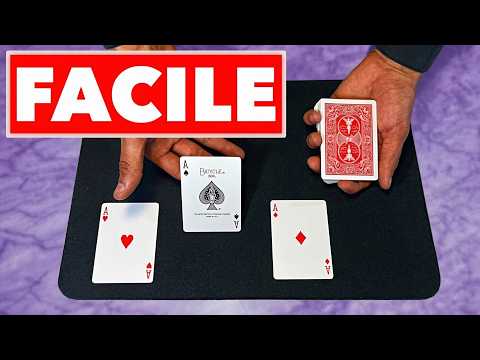
Imagine a magic trick where the spectator shuffles, cuts, and deals the cards themselves. You don't touch a single card. Yet, through an infallible mathematical principle, you find their three chosen cards every single time. This trick drives people wild because they feel like they controlled the entire process, only to be completely baffled by the outcome.
The core of this illusion lies not in sleight of hand, but in a clever application of mathematical probability and the psychology of perceived control. Many viewers are fascinated by the underlying mechanics, often asking, "I’m more interested in the math behind this." This is where the true power of structured deception lies – in making the spectator believe they are in charge, while you, the magician, are orchestrating the inevitable conclusion.
This method is a testament to how elegant mathematics can be when applied to the art of deception. It’s a principle that, once understood, can be adapted and refined, moving beyond simple card tricks into more complex applications of probability and prediction. For those who delve into the deeper aspects of magic, understanding these foundational mathematical puzzles is as crucial as any sleight of hand. It’s about building a system where the outcome is predetermined, disguised as a spontaneous event.
While the direct application here is a card trick, the principles can be extrapolated. Think of it as a rudimentary form of Technomancy, where a system (mathematics, in this case) is used to influence or predict an outcome. The spectator’s actions become inputs into a pre-designed algorithm, leading to a specific, astonishing result. This is the essence of many Digital Divination methods as well, where algorithms predict or reveal information based on user input, albeit with a different intent.
The beauty of this trick is its simplicity in execution for the magician, contrasted with its profound mystery for the spectator. It’s a prime example of how effective magic doesn't always require complex maneuvers. Sometimes, a deep understanding of underlying principles is far more potent. This is why many practitioners invest heavily in understanding the foundational theories behind various magical practices, from the historical Austin Osman Spare's sigil creation to modern applications of Magitech. They understand that true mastery comes from grasping the 'why' and 'how' of the effect, not just the performance.
The phrase "it works 100%" is, of course, an exaggeration for effect, but it speaks to the reliability of the mathematical core. The spectator's choices, while seemingly free, are constrained by the structure of the trick, ensuring that any set of choices will lead back to the desired cards. This predictability is what makes magicians so powerful, allowing them to create moments of genuine wonder and astonishment. It is a subtle dance between mathematical certainty and psychological misdirection.
For those seeking to replicate this effect, or even build upon it, the key is a thorough understanding of the underlying mathematical property. It’s about learning to think computationally, even when dealing with physical objects like cards. This kind of thinking is what separates a casual performer from a true master of the craft. It’s the kind of insight that can elevate your practice, whether you’re interested in card tricks, Esoterismo Digital, or even exploring Rituales con IA.
The spectator’s feeling of control is paramount here. They shuffle, they cut, they deal. They are convinced they've thwarted any attempt at trickery. This psychological element is often more powerful than any overt magical act. It’s a core principle in many forms of magic and Magia del Caos – the magician sets the stage, but the spectator’s own actions become the mechanism of the illusion. Understanding the Estado Gnóstico and how to induce it through seemingly mundane actions is a powerful tool.
If you’re looking to delve deeper into the mechanics of such tricks, or explore how mathematical principles intertwine with magical effects, having the right tools can make a significant difference. For instance, understanding probability and permutations is key. While you can do this with pen and paper, a tool designed for complex calculations can save immense time and allow you to focus on the performance and psychological aspects. For those interested in exploring the mathematical underpinnings of prediction and systems, the I Ching Oracle can offer a fascinating perspective on structured divination and decision-making, revealing how complex outcomes can arise from seemingly simple inputs and philosophical frameworks.
The Math Behind the Miracle
The principle at play here is a form of mathematical permutation, often referred to as a "key card" or "mathematical stack" effect. While the exact method can vary, a common approach involves setting up the deck in a specific order before the trick begins. The spectator's actions—shuffling, cutting, and dealing—are guided by subtle cues or inherent properties of the trick's construct that ensure the key cards remain in a predictable position or relation to the chosen cards.
For example, a basic version might involve setting the deck so that the spectator's actions naturally divide the deck in a way that preserves the relative order of certain cards. When the spectator deals, the cards they choose will inevitably fall into positions that, when accounted for by the magician, reveal their identity. It's about creating a controlled environment where chaos appears to reign.
The phrasing "super tour merci beaucoup de ton partage" and "Ottimo gioco, improvvisato." highlights how spectators perceive these tricks. They often feel improvised and miraculous, unaware of the scientific or mathematical structure holding it all together. This illusion of spontaneity is what makes the trick so potent. This perceived improvisation is key to the magician's success, making the impossible seem achievable through sheer force of will or luck.
The spectator's greatest ally is their belief in free will. The magician's greatest tool is the understanding that even "free will" can operate within predictable parameters when structured correctly.
Veredicto del Practicante
This automatic trick is a masterpiece of deceptive simplicity. It leverages the spectator's desire to be in control and their underestimation of mathematical influence. It requires minimal sleight of hand, making it accessible to beginners, yet its impact is profound, baffling even experienced performers. The key is meticulous preparation and a clear understanding of the mathematical principle. It’s a gateway into understanding how order can be imposed upon apparent chaos, a core concept in many magical traditions and even in fields like Cybermancy.
Arsenal del Mago
* Esencial: A deck of cards. The specific type matters less than its condition; a well-maintained deck is crucial for smooth handling and a convincing performance. * Recomendado: A clear understanding of basic permutation mathematics. Resources like introductory probability textbooks or online tutorials can be invaluable. * Recomendado: For exploring structured divination and systems of prediction, the I Ching Oracle app provides a digital framework to understand how complex outcomes can be derived from structured inputs and philosophical principles.
Taller Práctico: La Operación de la Predicción Perfecta
This section will be a more detailed breakdown of how to implement the trick, assuming a common mathematical principle.
- Preparación Silenciosa: Before the trick begins, secretly arrange a portion of the deck in a specific order. For instance, you might stack the deck so that certain "key" cards are interspersed at regular intervals (e.g., every 10 cards). The order can be as simple as alphabetical or numerical, or a more complex cipher.
- La Mezcla Controlada: Present the deck to the spectator. Instruct them to shuffle the deck thoroughly. The crucial element here is how you manage the shuffle. You can either use a "false shuffle" that retains the pre-arranged order, or, if the deck is large enough and the sequence is robust, a genuine shuffle might still preserve enough of the order. Alternatively, you can instruct the spectator to perform a specific type of shuffle (e.g., a riffle shuffle) that, while appearing random, tends to maintain the relative order of certain cards if done in a particular way.
- El Corte Estratégico: After the shuffle, ask the spectator to cut the deck. This is often done by lifting a portion of the deck and placing it on top or beside the remainder. The spectator is typically asked to cut the deck into two or three piles. The mathematics here ensure that even after cutting, the key cards remain in a predictable relationship to the rest of the deck.
- La Distribución Reveladora: Instruct the spectator to deal the cards from the top of one of the piles into a new pile, or to deal them out one by one. The number of cards they deal, or the pile they choose, is often dictated by a number they themselves select or that is derived from their chosen cards.
- La Identificación Precisa: Based on the spectator's actions—how they shuffled, cut, and dealt—you can now determine their chosen cards. For example, if you know the position of your key cards, and the spectator dealt a certain number of cards, you can calculate which cards fall into specific positions within the dealt pile. The chosen cards will invariably be found at these predictable points.
- El Arte de la Revelación: The final reveal should be dramatic. You might point to specific cards in the dealt pile, or have the spectator count to certain positions. The key is to make it seem as if their actions led to this inevitable, astonishing conclusion, without any direct intervention from you.
Remember, the success of this trick hinges on the spectator believing they had complete control. Your performance, your confidence, and your ability to direct their actions subtly are as important as the mathematical principle itself. This principle of imposing order through guided chaos is a fundamental concept that echoes in various forms of magic and even in understanding complex systems like those found in Magia del Caos.
FAQ
- Does this trick require a specially prepared deck? While some variations might, the most impactful versions rely on mathematical principles that can work with a standard, albeit possibly pre-arranged, deck. The secret is the sequence, not necessarily marked cards.
- How many spectators can participate? This specific trick is often best performed with one or two spectators who can interact directly with the cards. However, the underlying mathematical principles can be scaled for larger groups with careful planning.
- What if the spectator wants to shuffle again? This is where the magician's skill comes in. You might have pre-planned responses, a false shuffle ready, or you could transition to a different effect that uses the now-randomized deck. It's about adapting and maintaining control of the performance narrative.
- Is this considered "cheating"? In magic, the goal is to create wonder and illusion. While mathematical principles are used, the focus is on the effect and the spectator's experience, not on deceiving them into believing something impossible is happening through supernatural means, unless that is the intended piece of theater. It's a form of intellectual prestidigitation.
Your Operation: The Mathematical Autopsy
Your operation is to take a standard deck of cards and, using a well-understood mathematical principle (a simple stack and a guaranteed cut/deal sequence), perform this trick. Focus on the spectator's feeling of control. Document their reactions. Did they shuffle thoroughly? Did they cut freely? How did they react when their cards were revealed? Reflect on how your subtle direction, or the inherent mathematical property, guided their actions to a predetermined outcome.
For those who find the mathematical aspect fascinating and wish to explore more structured systems of prediction and discovery, I strongly recommend exploring tools that can aid in understanding probability and combinatorial mathematics. While manual calculation is possible, leveraging technology can significantly enhance your learning process and focus your efforts on the performance. For a deeper dive into such structured systems, consider exploring the I Ching Oracle, which offers a digital exploration into divination and decision-making through ancient mathematical principles. It’s a powerful way to see how complex patterns can emerge from structured processes, a concept that resonates deeply with the art of magic.
Practitioner's Note: True magick requires resources. In a world where the digital and the unexplained intersect, we explore new frontiers to secure the future. Do you dare to be part of the vanguard? Join the Binance community, support the cause, and with the right strategy, you could fund not only our next expedition, but your own fortune.
No hay comentarios:
Publicar un comentario