
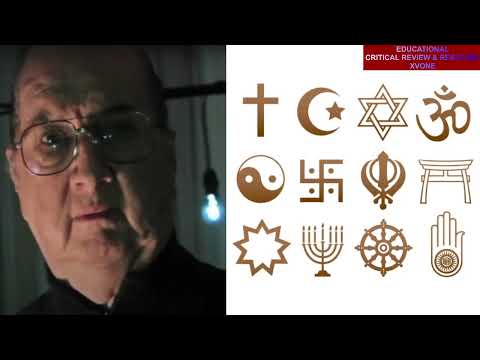
The scent of ozone and ancient parchment often fills the mind when contemplating the architecture of belief. Jordan Maxwell, a preeminent American researcher and scholar in the field of occult and religious philosophies, was a master cartographer of this unseen terrain. His life's work was dedicated to exposing the esoteric foundations that underpin Western religions and secret societies, revealing hidden agendas that have long shaped our world. Maxwell’s exploration into the symbols and structures of both ancient and modern secret societies didn't just captivate audiences; it provided a lens through which to critically examine the very systems we inhabit.
In a world increasingly saturated with information, the ability to discern underlying patterns is paramount. Maxwell argued that many of our societal structures—legal, religious, and political—are not arbitrary but are built upon deeply ingrained esoteric principles, often veiled in symbolism and ritual. He challenged viewers to look beyond the surface, to question the familiar, and to understand that the "system" is a construct, a carefully designed edifice whose blueprints are hidden in plain sight within sacred texts and societal rituals.
Consider, for instance, the concept of property tax, a seemingly mundane aspect of modern life. Maxwell, and many who followed his work, would point to historical esoteric roots for such societal impositions, suggesting that their origins lie not in secular necessity but in ancient systems of control and taxation designed by those who understood the power of symbolic law. This perspective encourages a deeper investigation into the historical evolution of laws and their ties to esoteric doctrines. As one commenter aptly put it, “Property Tax JUS came 2 India,” hinting at the global reach and historical persistence of these systems.
The idea that societal laws might be authored by forces beyond the common understanding, as suggested by the "reptilian" metaphor, while seemingly outlandish, points to a core tenet of Maxwell's work: the existence of hidden controllers and their symbolic language. This isn't about literal reptilians, but about ancient, powerful lineages or groups who have maintained influence through esoteric knowledge and symbolic manipulation. Understanding these mechanisms is the first step in breaking free from their influence.
Maxwell’s emphasis on the power of imagination also resonates deeply with Gnostic philosophy. The Gnostics understood that individual consciousness and perception are key to understanding reality. As one comment suggests, "The Gnostics were right all along." This aligns with Maxwell’s teachings that true understanding comes from within, from recognizing that "Imagination IS God: Dear Creator of your own reality." This perspective empowers the individual, framing them as the ultimate architect of their own destiny, free from the dictates of external institutions that often masquerade as infallible.
The inherent limitations of religious institutions in fostering genuine connection and well-being were also a recurring theme in discussions surrounding Maxwell’s work. The sentiment, "L amour, unité, la joie, la bienveillance n'ont pas besoin des institutions religieuses," reflects a growing sentiment that authentic spiritual experience transcends dogma and institutional structures. Maxwell’s research provided a framework for understanding why such institutions often fall short, being rooted in systems designed for control rather than for genuine spiritual liberation.
Ultimately, Maxwell’s legacy is one of awakened curiosity. He provided the tools and the perspective to decode the patterns of control that permeate our world. His work on Technomancy and Esoterismo Digital encourages us to view modern systems, including digital ones, through an esoteric lens. The "system" is not a monolithic entity but a complex web of symbols, laws, and beliefs, and understanding its hidden architecture is the path to personal liberation.
For those seeking to delve deeper into the practical application of these insights, especially in the digital realm, tools that help generate and understand symbolic language are invaluable. While Maxwell's work often involved historical texts and symbols, the principles of Sigilos Digitales and Digital Divination are modern manifestations of ancient practices. These digital tools can help bypass the tedious manual processes and focus directly on the energetic intent, much like Maxwell encouraged us to focus on the underlying meaning rather than superficial dogma. To begin exploring these symbolic generation techniques, tools like the Chaos Magick Sigil Generator can be incredibly useful in crafting personal sigils or exploring the creation of digital Magitech.
Maxwell's passing leaves a void, but his teachings live on through countless researchers and practitioners. The journey of unmasking the system is ongoing, and it begins with a willingness to question, to learn, and to see the world through the lens of esoteric wisdom. As he often implied, the most powerful magic lies not in external rituals, but in the conscious application of knowledge and the clear intention of the mind.
Mage's Arsenal
- Essential: Chaos Magick Sigil Generator - For understanding and creating potent sigils, a cornerstone of modern esoteric practice.
- Recommended: Books on esotericism and comparative religion (e.g., works by Austin Osman Spare, Manly P. Hall) - To expand your understanding of symbolic language and hidden histories.
- Recommended: Resources on Gnosticism and ancient philosophies - To grasp the philosophical underpinnings of Western religions and secret societies.
- Recommended: Works exploring the history of secret societies and their symbols - To contextualize the influence Maxwell discussed.
Veredicto del Practicante
Jordan Maxwell's contribution to the field of esoteric studies is undeniable. He served as a crucial bridge for many, translating complex occult and religious philosophies into accessible concepts that encouraged critical thinking about societal structures. His strength lay in his ability to connect seemingly disparate elements—ancient symbols, modern religions, legal systems—revealing an underlying, unified, and often manipulative "system." While some of his more conspiratorial leanings might require a discerning eye, his core message about the power of hidden knowledge and symbolic language remains profoundly relevant. He wasn’t just an academic; he was a provocateur who dared individuals to question the reality presented to them, the true hallmark of a significant esoteric teacher.
The System: A Practical Breakdown
Understanding Maxwell’s concept of "the system" involves deconstructing its components. It’s not a single entity but a confluence of:
- Symbolic Language: Religions and secret societies employ symbols to encode knowledge and maintain control. These symbols often link back to ancient astronomical, astrological, and magical traditions.
- Esoteric Laws: Maxwell argued that many legal and social structures are derived from ancient esoteric principles, designed to influence collective consciousness and behavior.
- Hidden Agendas: The purpose behind these structures is often to maintain power for a select few, obscuring the true nature of reality and individual potential.
- Ritual and Repetition: The constant reinforcement of these symbols and laws through rituals, ceremonies, and societal norms solidifies their hold on the collective psyche.
Frequently Asked Questions
- Q: What was Jordan Maxwell's primary contribution?
A: Jordan Maxwell's primary contribution was his extensive research and scholarship exposing the esoteric foundations of Western religions and secret societies, revealing hidden agendas and symbolic control systems. - Q: How did Maxwell view modern laws and religions?
A: Maxwell viewed modern laws and religions as often being built upon ancient esoteric principles and symbolic language, designed to influence and control populations. - Q: Is Maxwell's work considered conspiracy theory?
A: While some aspects of his work touch upon themes common in conspiracy theories, Maxwell framed it as exposing historical esoteric knowledge and its ongoing influence, encouraging critical thinking rather than blind acceptance. - Q: What is the connection between Maxwell's work and Gnosticism?
A: Maxwell's emphasis on inner knowledge, the power of imagination, and the critique of external institutions aligns closely with Gnostic philosophies, particularly the idea of creator deities and the power of individual consciousness.
Your Operation: Deconstruct a Symbol
Take a common symbol from your daily life—a corporate logo, a traffic sign, a religious icon. Research its historical origins and potential esoteric meanings. How might this symbol be influencing your perception or behavior? Document your findings and reflect on whether it serves your highest good or the agenda of a larger system.
Practitioner's Note: True magick requires resources. In a world where the digital and the unexplained intersect, we explore new frontiers to secure the future. Do you dare to be part of the vanguard? Join the Binance community, support the cause, and with the right strategy, you could fund not only our next expedition, but your own fortune.
No hay comentarios:
Publicar un comentario