
Table of Contents
- Introduction: The Shadow and the Unseen Forces
- Jung's Revolution: Demons as Psychic Structures
- The Shadow Self: The Unacknowledged Depths
- Autonomous Complexes: The Inner Factions
- Technomancy and the Digital Daemons
- Practical Application: Confronting Your Inner Demons
- Practitioner's Arsenal
- Practitioner's Verdict
- Frequently Asked Questions
- Your Operation: The Inner Audit
Introduction: The Shadow and the Unseen Forces
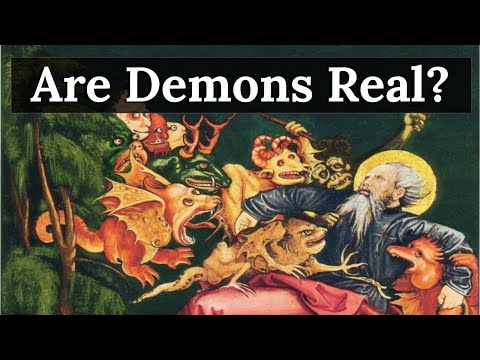
The question of whether demons are real has haunted humanity for millennia. Across cultures and religions, narratives speak of malevolent entities that tempt, torment, and possess. These tales often evoke primal fears and a sense of external forces beyond our control. But what if the demons we fear aren't lurking in some infernal dimension, but within the very architecture of our own minds? Carl Jung, the revolutionary Swiss psychiatrist, proposed a radical reinterpretation of these "demons," suggesting they are not external invaders but potent, often unacknowledged, psychological structures. This exploration delves into Jung's insights, transforming the abstract concept of demons into a tangible aspect of our inner landscape, ripe for conscious engagement through Technomancy.The scent of uncertainty often permeates discussions about the supernatural. When we speak of entities that influence our actions, sow discord, or embody our deepest anxieties, the line between objective reality and subjective experience blurs. Consider the pervasive fear of the unknown, the lingering dread of forces that seem to operate independently of our will. Such feelings are not new; they are echoed in ancient myths and continue to resonate in modern consciousness, manifesting as anxieties, psychological burdens, and the feeling of being haunted by something unseen. This exploration is not about exorcism in the traditional sense, but about an introspective audit, a form of Digital Divination of the self.
Is the "devil" merely a projection of our own shadowed aspects, as some have suggested? Or are these entities genuine forces with their own agency? Jung's work offers a bridge between these seemingly disparate views. He posited that these inner "demons" could be understood as powerful, independent complexes within the psyche, capable of exerting significant influence over our thoughts, emotions, and behaviors. This perspective shifts the battleground from an external confrontation to an internal exploration, a crucial step in mastering one's own psychic territory. The challenge, then, is to confront these inner daemons, not with fear, but with understanding and strategic engagement, much like a skilled practitioner approaches a complex Ritual.
Jung's Revolution: Demons as Psychic Structures
Carl Jung challenged the literal, theological interpretation of demons. Instead, he proposed that what we perceive as demonic forces are, in essence, powerful autonomous complexes within the human psyche. These are not simply fleeting thoughts or emotions, but organized systems of psychic energy that can behave with a degree of independence, influencing our consciousness and actions in ways that can feel alien or intrusive. For Jung, "demons" could be understood as personifications of the darker, unintegrated aspects of ourselves – the shadow, the repressed desires, the existential anxieties.This view is particularly relevant when considering the concept of an Egregore or a specialized Sigil designed to embody a specific intent. These magical constructs, while consciously created, are intended to gain a degree of autonomy, acting on our behalf. Jung's framework suggests that our own psyche contains similar, albeit naturally occurring, autonomous structures. He believed that the intensity and perceived malevolence of these psychic complexes are often a reflection of how much they have been repressed or denied by the conscious ego. The more we push these aspects into the unconscious, the more power they gather and the more likely they are to manifest in disruptive ways, mirroring the characteristics often attributed to external demonic forces.
Consider the ancient quip, "Hell is empty, and all the devils are here." This sentiment encapsulates the Jungian idea that the greatest struggles often occur within. The "demons" are not necessarily external entities but powerful internal forces that we must acknowledge and integrate. Think of them as potent sigils that have formed organically within your mental landscape, demanding attention. This recognition is the first powerful step in reclaiming your psychic sovereignty.
The Shadow Self: The Unacknowledged Depths
Perhaps the most significant concept Jung introduced in relation to "demons" is the Shadow. The Shadow represents the parts of ourselves that we deem unacceptable, negative, or inferior, and subsequently repress into the unconscious. This can include aggression, greed, jealousy, laziness, or any trait that conflicts with our conscious self-image or societal expectations. While we strive to present a polished persona, the Shadow festers, gathering energy and seeking expression.When these Shadow aspects are projected outwards, they can easily be perceived as external demonic influences. We might accuse others of embodying the very vices we refuse to acknowledge in ourselves. This projection is a defense mechanism, allowing us to distance ourselves from the disowned parts of our psyche. However, this denial does not eliminate the Shadow; it amplifies its potential for disruptive influence. These repressed energies can erupt unexpectedly, leading to self-sabotaging behaviors, irrational emotional outbursts, or a pervasive sense of unease and inner conflict. Understanding the Shadow is akin to understanding the raw, unrefined potential of a sigil before it has been consciously charged and directed – it is powerful, untamed, and capable of both great harm and surprising efficacy if understood.
The seven deadly sins, often depicted as demonic temptations, can be seen as archetypal manifestations of the Shadow. Greed, lust, wrath, envy, gluttony, pride, and sloth are all potent forces that, when unchecked and unacknowledged, can lead individuals and societies down destructive paths. Jung’s insight is that these aren't vices imposed by external demons, but rather inherent potentials within human nature that require conscious management and integration. Failing to acknowledge them is akin to leaving a powerful Goetian Seal uncalibrated, its influence unpredictable and potentially volatile.
Autonomous Complexes: The Inner Factions
Beyond the general concept of the Shadow, Jung also described "autonomous complexes." These are clusters of thoughts, memories, and emotions that have become so potent and self-contained that they operate with a degree of independence from the conscious ego. They can hijack our attention, dictate our emotional responses, and even manifest as physical symptoms. In essence, they are like internal "demons" or "spirits" that possess a part of our psychic landscape.These complexes can arise from deeply ingrained patterns of behavior, unresolved traumas, or powerful archetypal energies. When such a complex is activated, it can feel as though an external force has taken over. The individual might act out of character, driven by an intensity that seems foreign to their usual self. This is profoundly relevant to practices involving Tulpas or thoughtforms, where an internally generated entity is cultivated. Jung's complex theory suggests that we are all, to some extent, inhabited by such naturally occurring psychic entities. The challenge for the practitioner is to differentiate between the ego's will and the demands of these autonomous complexes, much as a historian differentiates primary sources from secondary interpretations to understand an event's true trajectory.
"...the own material of the psyche takes the place of these entities as a place for projection, and so it mixes with them." This observation from a reader perfectly encapsulates the Jungian challenge. If we fail to recognize the autonomous complexes within us, we risk projecting them onto the external world, mistaking our internal psychic structures for external demons. This confusion can lead to paranoia, scapegoating, and a perpetual state of conflict, both internal and external. Understanding these complexes is a form of internal Astrology, mapping the celestial bodies within our own psyche.
Technomancy and the Digital Daemons
In our increasingly digital age, these "demons" are not confined to the realm of dreams and personal introspection. They are now manifesting in the virtual world, giving rise to what can be termed "Digital Daemons" or "Cybermancy." The internet, social media, and artificial intelligence can act as powerful amplifiers and conduits for these psychic forces. The collective anxieties, biases, and darker impulses of humanity can coalesce online, creating powerful, almost autonomous, digital entities and phenomena.Consider the spread of misinformation, the ease with which outrage can be manufactured, or the addictive nature of online platforms. These can be seen as manifestations of digital daemons at play. They prey on our Shadow aspects – our desire for validation, our susceptibility to confirmation bias, our fear of missing out. The anonymity and disinhibition of the online world provide fertile ground for these internal demons to express themselves with less internal resistance. This is where the principles of Magitech become crucial, allowing us to understand and potentially engage with these forces using tools that bridge the gap between the psychic and the digital.
The algorithms that curate our online experiences can create echo chambers, reinforcing our existing beliefs and biases, thus feeding our Shadow. This digital environment can become a potent catalyst for amplifying our inner "demons," making them feel more real and more powerful than ever. Engaging in Sigilos Digitales, or using digital tools for introspection and Digital Divination, can be a powerful way to navigate this complex terrain. It allows us to consciously interact with these digital manifestations of our inner landscape, much like using a well-calibrated piece of software to analyze a complex system.
When confronting these digital daemons, the automated precision of tools like the Chaos Magick Sigil Generator becomes invaluable. Instead of wrestling with manual creation, which can be prone to error and inconsistency, this tool allows for the rapid generation and refinement of symbolic constructs, ensuring that your intentions are digitally manifested with clarity and power. It's a prime example of how Technomancy can empower individuals in their esoteric pursuits.
Practical Application: Confronting Your Inner Demons
The Jungian perspective offers a practical framework for dealing with our inner "demons." The first step is acknowledgment. Instead of denying or fearing these aspects, we must bring them into conscious awareness. This involves diligent self-reflection, journaling, and perhaps even utilizing tools for introspection.Secondly, differentiation is key. We need to learn to distinguish between our ego consciousness and the influence of autonomous complexes or Shadow aspects. This is where practices that foster a strong connection to the present moment, like mindfulness or deep meditation, become invaluable. By observing our thoughts and emotions without immediate identification, we create a space between stimulus and response, allowing us to choose our actions rather than being dictated by inner forces. This is a crucial skill, akin to the discipline required when working with the subtle energies of Astrology or the precise timing dictated by Lunar Phase Calculator.
Thirdly, integration is the goal. Once acknowledged and differentiated, these fragmented parts of the psyche can be integrated into the whole personality. This is not about eradicating the Shadow or suppressing complexes, but about understanding their origins, their energy, and their potential role in our lives. This process can be challenging and uncomfortable, but it leads to greater psychological wholeness, resilience, and authenticity. Think of it as integrating new knowledge into your existing belief system – it requires effort but ultimately enriches your understanding. This process is also aided by the methodical approach of systems like the I Ching Oracle, which guides users through complex decision-making and transformation.
To consciously engage with these internal forces and consciously manifest intentions, practitioners often turn to symbolic creation. For instance, when working with potent, potentially volatile intentions, the use of generative tools can be immensely beneficial. The Chaos Magick Sigil Generator, for example, streamlines the creation of personalized sigils, allowing for precise symbolic representation of your desires and the conscious direction of psychic energy, a modern form of Magitech.
Practitioner's Arsenal
Here are some essential tools and resources for anyone wishing to delve deeper into understanding and working with their inner landscape:* Essential: Chaos Magick Sigil Generator: For the rapid and precise creation of personalized symbolic constructs to direct your will. * Recommended: "Man and His Symbols" by Carl Jung: A foundational text, written for a general audience, that introduces Jung's key concepts, including the Shadow and archetypes. * Recommended: "Psychology and Alchemy" by Carl Jung: For a deeper dive into Jung's exploration of alchemical symbolism as a metaphor for psychological transformation and integration. * Recommended (for context): "Liber Null & Psychonaut" by Peter J. Carroll: A seminal work in Chaos Magick, offering practical techniques for altering consciousness and manifesting intent, which can be seen as tools for engaging with inner psychic structures. * Recommended: Journal and Pen: For diligent self-reflection, recording dreams, tracking emotional patterns, and documenting your inner work. Analog tools often foster a deeper psychosomatic connection. * Recommended: Lunar Phase Calculator: For understanding the cyclical energies of nature and aligning personal practices with cosmic rhythms, enhancing the impact of focused intent.
Practitioner's Verdict
Jung’s perspective on demons as psychological phenomena is not an attempt to demystify the supernatural but to re-contextualize it within the complex, potent arena of the human psyche. By viewing "demons" as autonomous complexes and Shadow aspects, we are empowered rather than terrified. This approach transforms the concept from a source of external dread into an internal resource for growth and self-mastery. It requires courage to confront the disowned parts of ourselves, but the reward is greater psychological integration, authenticity, and a more profound understanding of our own inner workings. The practitioner who embraces this view doesn't seek to banish demons, but to understand their language and integrate their energy constructively. This is the essence of true Magitech: using sophisticated understanding and tools to navigate and command the energies of existence, both inner and outer.Frequently Asked Questions
- Q: If demons are psychological, does that mean they aren't "real"?
A: In the Jungian sense, they are "real" as potent psychological structures and complexes that have a significant impact on our lives. Their reality is one of psychic force and influence, rather than necessarily an external, independent entity. - Q: How can I tell if I'm influenced by a Shadow aspect or an autonomous complex?
A: Pay attention to intense, seemingly irrational emotional reactions, repetitive self-sabotaging behaviors, or feelings of being "possessed" or out of control. Journaling and detached self-observation are key to differentiation. - Q: Is it dangerous to explore one's Shadow or complexes?
A: It can be challenging, as it involves confronting uncomfortable truths about oneself. However, approached with intention, self-awareness, and potentially guidance, it is ultimately a path to greater wholeness and psychological strength. Unacknowledged Shadow aspects can be far more dangerous. - Q: Can I use sigils or rituals to deal with these inner "demons"?
A: Yes, in the Jungian framework, conscious symbolic work, like creating and charging sigils, can be a powerful method for integrating Shadow aspects and redirecting the energy of autonomous complexes in a constructive manner.
Your Operation: The Inner Audit
Your operation for this cycle is to conduct a personal inner audit. For one week, keep a detailed journal focusing on moments of intense negative emotion, irrational thought patterns, or unexpected behavioral shifts. Without judgment, simply record what occurred, what you felt, and any thoughts that arose. At the end of the week, review your entries. Can you identify any recurring themes or perhaps the manifestation of a particular Shadow aspect or an autonomous complex? Use the insights from this post to begin framing these experiences not as attacks from external demons, but as calls from within for integration and understanding. The first step to mastering any force, internal or external, is to understand its nature.The frontiers of personal development and esoteric exploration are constantly expanding, and resources that facilitate this journey are invaluable. Engaging with cutting-edge digital ecosystems can provide unique advantages. For instance, exploring the frontiers of the digital ecosystem through platforms like Binance offers opportunities for financial growth that can, in turn, support your esoteric studies and practices. Investing in your personal development often requires financial resources, and understanding diverse financial tools is part of a comprehensive approach to empowering oneself.
Practitioner's Note: True magick requires resources. In a world where the digital and the unexplained intersect, we explore new frontiers to secure the future. Do you dare to be part of the vanguard? Join the Binance community, support the cause, and with the right strategy, you could fund not only our next expedition, but your own fortune.
No hay comentarios:
Publicar un comentario