
Table of Contents
- CaosThe Shifting Sands of Magical Theory
- The Psychological Turn: Magic Meets the Mind
- Austin Osman Spare: The Prophet of the Psyche
- The Legacy: Sigils and the Birth of Chaos Magic
- The Philosophy of Zos-Kia as a Practice of Liberation
- Beyond the Sigil: Spare's Broader Influence on Contemporary Magick
- Sigil Creation Today: Integrating Spare's Wisdom
- FAQs: Understanding Austin Osman Spare's Sigil Magic
- Your Operation: Embracing the Zos-Kia Today
- The Shifting Sands of Magical Theory
- The Psychological Turn: Magic Meets the Mind
- Austin Osman Spare: The Prophet of the Psyche
- The Legacy: Sigils and the Birth of Chaos Magic
- The Philosophy of Zos-Kia as a Practice of Liberation
- Sigil Creation Today: Integrating Spare's Wisdom
- FAQs: Understanding Austin Osman Spare's Sigil Magic
- Your Operation: Embracing the Zos-Kia Today
The history of magic is a tapestry woven with threads of radical innovation, each era introducing shifts so profound that prevailing theories often become logically and practically exclusive from what came before. From the naturalistic theories of Al-Kindi's stellar rays to the apocalyptic, mystical ascent of Enochian magic, the trajectory of Western magic is far more varied and complex than commonly perceived. The late 19th and early 20th centuries stand as a pivotal period, marked by tectonic shifts in both magical theory and practice. It was during this era that magic formally intersected with the burgeoning fields of psychology and psychoanalysis, alongside philosophical developments concerning the concept of the will. While figures like Aleister Crowley are widely recognized, the Edwardian artist and occultist Austin Osman Spare emerged as a truly prophetic voice in this magical revolution. His artistic, philosophical, and, crucially, magical genius are only now receiving the full appreciation they deserve, particularly his theory of sigil magic, which has profoundly influenced the development of Chaos Magic, a practice that is increasingly popular and potent. In this exploration, we will delve into the magical philosophy of Austin Osman Spare, examining how his groundbreaking work laid the foundation for much of contemporary esoteric practice.
If your interest lies in the realms of magic, hermetic philosophy, or mysticism, consider subscribing and exploring my other content dedicated to esotericism and the academic study of the occult. Your support through Patreon or a one-time donation is deeply valued and enables the creation of accessible, scholarly, and free content like this.
CaosThe Shifting Sands of Magical Theory
The evolution of magical practices is not a linear progression but a series of paradigm shifts, each building upon, reacting against, or reinterpreting the foundations laid by its predecessors. Understanding this historical context is crucial for appreciating the radical nature of Austin Osman Spare's contributions. Ancient magical systems often relied on complex cosmologies, intricate correspondences, and codified rituals designed to interact with perceived divine or elemental forces. The Solomonic tradition, for instance, focused on the evocation and binding of spirits, employing elaborate sigils and incantations derived from ancient Hebrew texts and a codified understanding of angelic hierarchies. This approach was deeply embedded within a specific religious framework, believing in a divinely ordered cosmos where spirits could be compelled to serve human will through the correct application of divine authority.
In contrast, the Hermetic tradition, heavily influenced by the Emerald Tablet and the Corpus Hermeticum, emphasized the principle of "As Above, So Below," focusing on the interconnectedness of the macrocosm and microcosm. This tradition sought to understand the underlying resonant principles of the universe, viewing magic as a science of correspondences, where manipulating symbols, planetary energies, and elemental forces could effect change in the material world. Alchemy, a central practice within Hermeticism, was not merely about transmuting base metals into gold but also about the spiritual purification and transformation of the alchemist themselves.
The Renaissance saw a resurgence of interest in these ancient traditions, often blended with Neoplatonic philosophy, Kabbalah, and a burgeoning interest in natural philosophy. Figures like John Dee and Giordano Bruno explored complex systems of angelic magic, scrying, and the manipulation of universal forces. This period was characterized by a belief in the inherent animism of nature and the potential for the human intellect to grasp and manipulate the hidden laws of the universe. Magic was often seen as a legitimate, albeit esoteric, branch of knowledge, intertwined with astrology, alchemy, and early forms of science.
The Psychological Turn: Magic Meets the Mind
The advent of the late 19th and early 20th centuries marked a significant departure. The rise of scientific materialism had begun to challenge traditional animistic and spiritual worldviews. However, rather than disappearing, magic began to integrate with new intellectual currents. Psychology, particularly the nascent field of psychoanalysis pioneered by Sigmund Freud, offered a new lens through which to understand the human psyche. Concepts like the unconscious, repressed desires, and the power of symbolic representation provided fertile ground for magical experimentation.
Figures like the members of the Hermetic Order of the Golden Dawn sought to systematize magical practices, drawing from a vast array of traditions, including Hermeticism, Kabbalah, Egyptian mythology, and Rosicrucianism. They developed elaborate rituals, complex symbolic systems, and a hierarchical structure designed to guide practitioners through stages of spiritual development. While they maintained a link to traditional occult frameworks, their work also began to explore the psychological dimensions of ritual and initiation.
Aleister Crowley, a prominent figure to emerge from the Golden Dawn, pushed these boundaries further. His philosophy of Thelema, centered on the "Great Work" and the principle of "Do what thou wilt shall be the whole of the Law," emphasized individual will and self-realization. Crowley’s magical system was eclectic, incorporating elements from diverse traditions, but critically, he began to emphasize the subjective experience of the magician and the power of belief itself as a primary magical tool. He explored altered states of consciousness, the use of sexual energy in magic, and the creation of magical spells and rituals tailored to individual needs and psychological profiles.
Austin Osman Spare: The Prophet of the Psyche
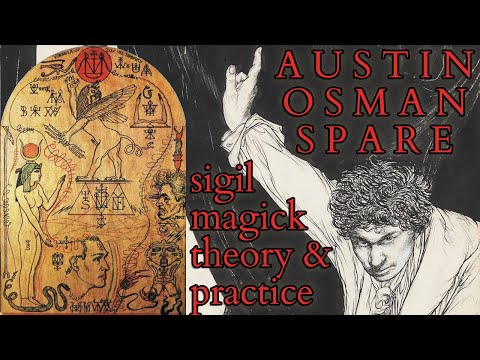
It is within this context of psychological exploration and individualistic magical theory that Austin Osman Spare (1886–1956) truly stands out. While his contemporaries were often engaged in large-scale ceremonial systems or esoteric scholarship, Spare’s approach was intensely personal, artistic, and focused on the untapped potential of the individual psyche. He was an artist of prodigious talent, whose work, often disturbing and surreal, delved into the subconscious, exploring themes of desire, sexuality, death, and the primal forces that drive human behavior.
Spare’s magical philosophy was deeply intertwined with his artistic output. He saw no fundamental division between art and magic; both were expressions of the will and means of accessing and manifesting hidden realities. Central to his system were the concepts of Kia and Zos.
Kia: The Universal Will
Spare’s concept of Kia represented a primordial, undifferentiated consciousness or will, the fundamental essence of existence from which all reality arises. It was the ultimate source of power, a state of pure potentiality. The goal of magic, for Spare, was to align oneself with this Kia, to tap into this universal wellspring of creative force. This was not about commanding external spirits but about realizing the inherent magical potential within the self. He believed that the individual consciousness, when properly focused and liberated from societal conditioning and inhibitions, could directly influence reality.
Zos: The Human Form as Magus
Zos, on the other hand, represented the human form, the individual as a locus of magical power. Spare viewed the body not as a hindrance to spiritual pursuits but as a vehicle for magic, a microcosm containing the potential of the Kia. Practices aimed at liberating the individual from psychological inhibitions and societal constraints were crucial, as these were seen as barriers to accessing the Zos-Kia potential. This involved exploring forbidden desires, confronting primal fears, and embracing the totality of human experience, including its darker, more instinctual aspects. Spare’s work often challenged conventional morality and societal norms, advocating for a radical embrace of instinct and individual will.
The Sigil Revolution: Planting Seeds in the Psyche
Perhaps Spare’s most enduring legacy is his theory and practice of sigil magic. He developed a method that was both elegant and revolutionary, stripping away the complex symbolism and ritualistic paraphernalia common in earlier magical traditions. Spare’s sigils were not elaborate diagrams or arcane symbols but simplified, abstract representations of a specific desire.
The process, as Spare envisioned it, involved several key steps:
1. Formulating the Statement of Intent: The magician first formulates a clear and concise statement of their desire. This statement must be phrased positively, focusing on what the magician *wants* to achieve, rather than what they *don't* want. For example, instead of "I don't want to be poor," the intent should be "I want financial abundance."
2. Eliminating Vowels and Repeating Letters: Spare’s method involved removing all vowels from the statement of intent and then eliminating any repeated letters. This process reduced the statement to a pool of unique consonants.
3. Abstracting the Consonants into a Symbol: The unique consonants were then abstracted and stylized into a unique, often geometric or calligraphic, sigil. The goal was not necessarily artistic beauty but the creation of a symbol that was aesthetically pleasing to the magician and contained the essence of their intent. Spare often used flowing, organic lines, sometimes incorporating elements of handwriting or abstract forms derived from his own artistic style. The process was intuitive; the magician would sketch and combine these abstracted letters until a satisfactory symbol emerged.
4. Charging the Sigil: This is the crucial step where the sigil is imbued with magical energy. Spare advocated for charging sigils through states of intense emotional or sensory overload, often referred to as gnosis. This could be achieved through various means: intense sexual arousal, extreme physical exertion, pain, ecstatic states, or even sensory deprivation. The key was to reach a state of intense focus where the conscious mind becomes temporarily suspended, allowing the sigil to be impressed directly onto the subconscious. The charging process was often brief and intense, designed to overwhelm the rational mind.
5. Obliviation and Release: After charging, the sigil was to be consciously forgotten. This "forgetting" was critical. The conscious mind, with its doubts and analytical tendencies, was seen as a hindrance to the sigil's manifestation. By forgetting the sigil, the magician released it to operate on the subconscious level, allowing it to work its magic without conscious interference. Spare believed that the sigil, once created and charged, acted as a seed planted in the fertile ground of the subconscious, which would then manifest in the outer world through synchronicity and altered circumstances.
Spare’s sigil method was revolutionary because it was highly individualistic, bypassed complex symbolic systems, and emphasized the psychological mechanisms of belief and will. It was a direct, pragmatic approach to magic, focused on achieving tangible results through the power of the individual’s own psyche.
The Legacy: Sigils and the Birth of Chaos Magic
Austin Osman Spare’s work, particularly his sigil techniques, had a delayed but profound impact on the trajectory of Western esotericism. While not widely recognized during much of his lifetime, his ideas gained traction in the latter half of the 20th century, becoming a cornerstone of the burgeoning Chaos Magic movement.
Chaos Magic, which began to coalesce in the 1970s and 80s, embraced Spare's emphasis on pragmatism, psychological manipulation, and the idea that belief is a magical tool that can be adopted, discarded, and manipulated at will. Chaos magicians looked to Spare's sigil techniques as a highly effective method for bypassing the limitations of belief systems and directly programming the subconscious.
Peter J. Carroll, a key figure in the development of Chaos Magic, alongside Ray Sherwin, drew heavily from Spare’s work when formulating the principles of “magick” (a term popularized by Crowley, but recontextualized by Chaos magicians). Carroll’s *Liber Null* and *Psychonaut* extensively discuss sigil creation and charging techniques, often referencing Spare’s methods. The core tenets of Chaos Magic – such as the belief that “magick is the science and art of causing change in conformity with Will,” and the radical concept that “all is consciousness” and “belief is a tool” – find direct lineage in Spare’s philosophy.
Chaos magicians adopted and adapted Spare’s sigil methods in numerous ways. They explored new methods of charging, including using digital tools, computer programming, music, and even mass media. The abstract nature of Spare’s sigils made them highly adaptable; they could be rendered as digital graphics, incorporated into music, or even designed as algorithms. The emphasis remained on the personal connection between the magician, the sigil, and the resulting altered state of consciousness, followed by the crucial act of forgetting.
The development of Chaos Magick Sigil Generator, a digital tool, exemplifies this evolution. It takes the core principles of Spare’s method – intent formulation, abstracting symbols – and automates them, generating unique sigils based on user input. The intent behind such tools is to streamline the creation process, allowing practitioners to focus on the more challenging, yet essential, aspects of charging and obliviating. It addresses the problem of time and consistency in sigil creation, allowing for rapid iteration and experimentation. For many, the challenge of consistently creating unique and artistically resonant sigils by hand can be a barrier. Tools like the Chaos Magick Sigil Generator allow users to bypass this hurdle, generating symbols quickly and efficiently. This frees up mental energy to focus on the crucial elements of intent clarity and the subsequent charging process, making it easier for practitioners to engage with the core mechanics of sigil magic. Instead of spending hours on the graphical aspect, users can dedicate their focus to achieving the necessary altered states of consciousness for successful charging.
The Philosophy of Zos-Kia as a Practice of Liberation
Spare’s concepts of Zos and Kia offered a profound framework for liberation. In a world that often conditions individuals to conform, to suppress instinct, and to adhere to rigid moral and psychological frameworks, Spare advocated for a radical self-acceptance and a reclamation of primal energies. His art and writings were a continuous exploration of the hidden self, the "other" within, and the vast, untapped potential residing in the subconscious.
The practice of sigil magic, rooted in Zos-Kia, is not merely about manifesting desires but about a deeper process of self-discovery and self-transformation. By confronting and integrating suppressed aspects of the self, by embracing forbidden desires, and by understanding belief as a malleable tool, the practitioner embarks on a journey of psychological freedom. The act of creating a sigil requires introspection, forcing the magician to articulate their deepest intentions. The charging process demands engagement with intense emotional states, pushing the boundaries of ordinary consciousness. And the obliviating phase encourages trust in the subconscious and the release of egoic control.
This process is inherently empowering. It suggests that individuals are not merely subject to external forces or predetermined fates but possess the inherent capacity to shape their reality through disciplined engagement with their own consciousness. Spare’s vision was a radical humanism where the individual, through the mastery of their own inner landscape, could achieve extraordinary results.
The influence of Austin Osman Spare’s sigil magic extends far beyond Chaos Magic. It has inspired artists, writers, and practitioners across various esoteric disciplines, offering a direct and potent method for magical work. His emphasis on art, psychology, and individual will continues to resonate, reminding us that the most potent magical tools are often those that reside within ourselves, waiting to be unlocked through focused intention and liberated belief.
Beyond the Sigil: Spare's Broader Influence on Contemporary Magick
While sigil magic is perhaps Spare's most widely adopted technique, his broader philosophical contributions have also been deeply influential. His exploration of automatic writing and automatic drawing parallels many contemporary practices of stream-of-consciousness journaling and intuitive art creation. Spare saw these techniques as direct conduits to the subconscious, bypassing the censorious nature of the conscious mind, thereby revealing hidden desires and insights.
His ideas on belief as a tool were foundational for Chaos Magic’s pragmatic approach. Unlike older traditions that often demanded adherence to specific cosmologies or deities, Chaos Magic, influenced by Spare, views belief as a flexible construct that can be adopted and discarded as needed for magical effect. This allows practitioners to experiment freely with different paradigms without being bound by dogma.
Furthermore, Spare’s art itself serves as a form of magical text. His imagery, often filled with totemic figures, hybrid beings, and unsettling juxtapositions, can be seen as a visual exploration of the Zos-Kia dynamic and a potent source of inspiration for sigil creation or as objects of contemplation for altered states. Many practitioners today utilize Spare’s artwork as a direct source for sigil inspiration or as focal points for meditation.
The discussion of "Kia" as a primordial consciousness also resonates with contemporary concepts in quantum physics regarding unified fields and interconnectedness, albeit through an esoteric lens. Spare’s vision was not one of a distant, external deity, but of an immanent, creative force accessible through the individual’s own being.
Sigil Creation Today: Integrating Spare's Wisdom
The practice of sigil magic, as envisioned by Spare, remains remarkably relevant. While sophisticated digital tools now exist, the core principles endure. The emphasis on clear intent, the reduction of that intent into a unique symbol, the charging through altered states, and the subsequent act of forgetting are the pillars of effective sigil work.
For those new to sigil magic, starting with Spare’s original methods is highly recommended. The process of manually creating a sigil forces a deeper engagement with the intent and the symbol itself. It cultivates a connection that can be diluted by purely automated processes.
Arsenal of the Modern Magician:
* Core Tool: Chaos Magick Sigil Generator - This application streamlines the process of codifying your intent into a unique sigil. By inputting your statement of desire, the generator creates a symbol in moments, freeing you to focus on the critical steps of charging and releasing. This tool addresses the common challenge of consistently generating aesthetically unique and potent sigils, allowing for faster experimentation and application. Instead of laboring over the graphical representation, you can dedicate your energy to achieving the necessary altered state of consciousness for effective charge. * Foundational Text: *The Collected Works of Austin Osman Spare* - Essential for understanding the depth of his philosophy and artistic vision. * Modern Interpretation: *Liber Null & Psychonaut* by Peter J. Carroll - Offers a fantastic introduction to Chaos Magic principles, heavily influenced by Spare. * Artistic Inspiration: Collections of Austin Osman Spare's artwork.
The beauty of Spare’s sigil magic lies in its adaptability. Whether drawn by hand, generated digitally, or even encoded into music, the fundamental principles remain the same. The power lies not in the medium, but in the magician's ability to focus their will, tap into their subconscious, and embrace the liberating potential of their own Zos-Kia.
FAQs: Understanding Austin Osman Spare's Sigil Magic
What are the core concepts of Austin Osman Spare's magical philosophy?
Spare's philosophy is centered on two primary concepts: Kia, representing a primordial, undifferentiated universal will or consciousness, and Zos, representing the human form as a vessel and locus of magical power. His system emphasizes accessing the Kia through the Zos by liberating the individual psyche from inhibitions.How does Spare's sigil magic differ from traditional magical systems?
Spare’s method is revolutionary in its simplicity and individualism. It bypasses complex symbolic systems, focuses on abstracting a personal intent into a unique symbol, and emphasizes psychological charging through altered states (gnosis) followed by conscious forgetting, rather than elaborate rituals or the invocation of external entities.Can sigils be created using digital tools, or must they be hand-drawn?
While Spare primarily used hand-drawing, his principles are adaptable. Digital tools like the Chaos Magick Sigil Generator can create sigils based on Spare's method, allowing practitioners to focus on intent and charging. The effectiveness lies in the process, not solely the medium.What is 'gnosis' in the context of Spare's sigil magic?
Gnosis, for Spare, refers to an altered state of consciousness characterized by intense focus and the temporary suspension of the rational mind. This state is crucial for charging a sigil, allowing it to be impressed upon the subconscious without conscious interference. Methods include sexual ecstasy, intense emotion, physical exertion, or sensory deprivation.Why is "forgetting" the sigil after charging so important?
Consciously forgetting the sigil is vital because the rational mind, with its doubts and analytical tendencies, can interfere with the subconscious manifestation process. By releasing the sigil from conscious awareness, it is free to operate on the subconscious level, leading to manifestation through synchronicity and altered circumstances.Is Austin Osman Spare's work considered part of Chaos Magic?
Yes, Austin Osman Spare's sigil magic is considered a foundational influence on Chaos Magic. His emphasis on psychological mechanisms, individual will, belief manipulation, and simplified ritual paved the way for the pragmatic and eclectic approach of Chaos Magic.What is the significance of Spare's art in his magical philosophy?
Spare viewed his art and magic as inseparable. His artwork often explores the subconscious, primal desires, and the Zos-Kia dynamic, serving as both an expression of his magical insights and a source of inspiration for sigil creation and altered states of consciousness.How can one start practicing sigil magic inspired by Spare?
Begin by formulating a clear, positive intent. Then, follow the steps of removing vowels and repeating letters, abstracting the remaining consonants into a unique symbol, charging it during an altered state of consciousness, and finally, consciously forgetting it. Experimentation with different charging methods is encouraged.Does Spare’s philosophy have modern relevance?
Absolutely. His emphasis on individual power, psychological liberation, and the malleability of belief is highly relevant in contemporary discussions about self-empowerment, consciousness, and the manipulation of digital and psychological realities. His work offers a timeless path to understanding and harnessing one's inner potential.Your Operation: Embracing the Zos-Kia Today
The wisdom of Austin Osman Spare is not confined to dusty tomes or arcane rituals; it is a living philosophy accessible through personal practice. The sigil is a direct tool for engaging with your own psyche, for planting seeds of intention in the fertile ground of the subconscious.
Have you ever experimented with sigil magic, either Spare's method or a variation? What was your experience like? Share your thoughts, successes, and even your challenges in the comments below. Your insights contribute to the collective understanding and practice within this grimorie. If this exploration into Spare’s groundbreaking techniques has resonated with you, consider sharing it with fellow practitioners who might find value in this information.
The Chaos Magick Sigil Generator is an excellent tool to begin your sigil creation journey. It simplifies the symbolic reduction process, allowing you to focus on the crucial aspects of intent and charging. It's a practical application of Spare's genius, designed for the modern practitioner.
Austin Osman Spare's Sigil Magic: Charting the Origins of Chaos
The history of magic is a tapestry woven with threads of radical innovation, each era introducing shifts so profound that prevailing theories often become logically and practically exclusive from what came before. From the naturalistic theories of Al-Kindi's stellar rays to the apocalyptic, mystical ascent of Enochian magic, the trajectory of Western magic is far more varied and complex than commonly perceived. The late 19th and early 20th centuries stand as a pivotal period, marked by tectonic shifts in both magical theory and practice. It was during this era that magic formally intersected with the burgeoning fields of psychology and psychoanalysis, alongside philosophical developments concerning the concept of the will. While figures like Aleister Crowley are widely recognized, the Edwardian artist and occultist Austin Osman Spare emerged as a truly prophetic voice in this magical revolution. His artistic, philosophical, and, crucially, magical genius are only now receiving the full appreciation they deserve, particularly his theory of sigil magic, which has profoundly influenced the development of Chaos Magic, a practice that is increasingly popular and potent. In this exploration, we will delve into the magical philosophy of Austin Osman Spare, examining how his groundbreaking work laid the foundation for much of contemporary esoteric practice.
If your interest lies in the realms of magic, hermetic philosophy, or mysticism, consider subscribing and exploring my other content dedicated to esotericism and the academic study of the occult. Your support through Patreon or a one-time donation is deeply valued and enables the creation of accessible, scholarly, and free content like this.
The Shifting Sands of Magical Theory
The evolution of magical practices is not a linear progression but a series of paradigm shifts, each building upon, reacting against, or reinterpreting the foundations laid by its predecessors. Understanding this historical context is crucial for appreciating the radical nature of Austin Osman Spare's contributions. Ancient magical systems often relied on complex cosmologies, intricate correspondences, and codified rituals designed to interact with perceived divine or elemental forces. The Solomonic tradition, for instance, focused on the evocation and binding of spirits, employing elaborate sigils and incantations derived from ancient Hebrew texts and a codified understanding of angelic hierarchies. This approach was deeply embedded within a specific religious framework, believing in a divinely ordered cosmos where spirits could be compelled to serve human will through the correct application of divine authority.
In contrast, the Hermetic tradition, heavily influenced by the Emerald Tablet and the Corpus Hermeticum, emphasized the principle of "As Above, So Below," focusing on the interconnectedness of the macrocosm and microcosm. This tradition sought to understand the underlying resonant principles of the universe, viewing magic as a science of correspondences, where manipulating symbols, planetary energies, and elemental forces could effect change in the material world. Alchemy, a central practice within Hermeticism, was not merely about transmuting base metals into gold but also about the spiritual purification and transformation of the alchemist themselves.
The Renaissance saw a resurgence of interest in these ancient traditions, often blended with Neoplatonic philosophy, Kabbalah, and a burgeoning interest in natural philosophy. Figures like John Dee and Giordano Bruno explored complex systems of angelic magic, scrying, and the manipulation of universal forces. This period was characterized by a belief in the inherent animism of nature and the potential for the human intellect to grasp and manipulate the hidden laws of the universe. Magic was often seen as a legitimate, albeit esoteric, branch of knowledge, intertwined with astrology, alchemy, and early forms of science.
The Psychological Turn: Magic Meets the Mind
The advent of the late 19th and early 20th centuries marked a significant departure. The rise of scientific materialism had begun to challenge traditional animistic and spiritual worldviews. However, rather than disappearing, magic began to integrate with new intellectual currents. Psychology, particularly the nascent field of psychoanalysis pioneered by Sigmund Freud, offered a new lens through which to understand the human psyche. Concepts like the unconscious, repressed desires, and the power of symbolic representation provided fertile ground for magical experimentation.
Figures like the members of the Hermetic Order of the Golden Dawn sought to systematize magical practices, drawing from a vast array of traditions, including Hermeticism, Kabbalah, Egyptian mythology, and Rosicrucianism. They developed elaborate rituals, complex symbolic systems, and a hierarchical structure designed to guide practitioners through stages of spiritual development. While they maintained a link to traditional occult frameworks, their work also began to explore the psychological dimensions of ritual and initiation.
Aleister Crowley, a prominent figure to emerge from the Golden Dawn, pushed these boundaries further. His philosophy of Thelema, centered on the "Great Work" and the principle of "Do what thou wilt shall be the whole of the Law," emphasized individual will and self-realization. Crowley’s magical system was eclectic, incorporating elements from diverse traditions, but critically, he began to emphasize the subjective experience of the magician and the power of belief itself as a primary magical tool. He explored altered states of consciousness, the use of sexual energy in magic, and the creation of magical spells and rituals tailored to individual needs and psychological profiles.
Austin Osman Spare: The Prophet of the Psyche
It is within this context of psychological exploration and individualistic magical theory that Austin Osman Spare (1886–1956) truly stands out. While his contemporaries were often engaged in large-scale ceremonial systems or esoteric scholarship, Spare’s approach was intensely personal, artistic, and focused on the untapped potential of the individual psyche. He was an artist of prodigious talent, whose work, often disturbing and surreal, delved into the subconscious, exploring themes of desire, sexuality, death, and the primal forces that drive human behavior.
Spare’s magical philosophy was deeply intertwined with his artistic output. He saw no fundamental division between art and magic; both were expressions of the will and means of accessing and manifesting hidden realities. Central to his system were the concepts of Kia and Zos.
Kia: The Universal Will
Spare’s concept of Kia represented a primordial, undifferentiated consciousness or will, the fundamental essence of existence from which all reality arises. It was the ultimate source of power, a state of pure potentiality. The goal of magic, for Spare, was to align oneself with this Kia, to tap into this universal wellspring of creative force. This was not about commanding external spirits but about realizing the inherent magical potential within the self. He believed that the individual consciousness, when properly focused and liberated from societal conditioning and inhibitions, could directly influence reality.
Zos: The Human Form as Magus
Zos, on the other hand, represented the human form, the individual as a locus of magical power. Spare viewed the body not as a hindrance to spiritual pursuits but as a vehicle for magic, a microcosm containing the potential of the Kia. Practices aimed at liberating the individual from psychological inhibitions and societal constraints were crucial, as these were seen as barriers to accessing the Zos-Kia potential. This involved exploring forbidden desires, confronting primal fears, and embracing the totality of human experience, including its darker, more instinctual aspects. Spare’s work often challenged conventional morality and societal norms, advocating for a radical embrace of instinct and individual will.
The Sigil Revolution: Planting Seeds in the Psyche
Perhaps Spare’s most enduring legacy is his theory and practice of sigil magic. He developed a method that was both elegant and revolutionary, stripping away the complex symbolism and ritualistic paraphernalia common in earlier magical traditions. Spare’s sigils were not elaborate diagrams or arcane symbols but simplified, abstract representations of a specific desire. The following process, as Spare envisioned it, is central to his approach:
1. Formulating the Statement of Intent
The magician first formulates a clear and concise statement of their desire. This statement must be phrased positively, focusing on what the magician *wants* to achieve, rather than what they *don't* want. For example, instead of "I don't want to be poor," the intent should be "I want financial abundance." A clear intent is the bedrock of any successful magical operation.
2. Eliminating Vowels and Repeating Letters
Spare’s method involved removing all vowels from the statement of intent and then eliminating any repeated letters. This process reduced the statement to a pool of unique consonants. This linguistic reduction serves to strip away the conscious, analytical baggage associated with the words, allowing for a more primal symbolic representation.
3. Abstracting the Consonants into a Symbol
The unique consonants were then abstracted and stylized into a unique, often geometric or calligraphic, sigil. The goal was not necessarily artistic beauty but the creation of a symbol that was aesthetically pleasing to the magician and contained the essence of their intent. Spare often used flowing, organic lines, sometimes incorporating elements of handwriting or abstract forms derived from his own artistic style. The process was intuitive; the magician would sketch and combine these abstracted letters until a satisfactory symbol emerged. This artistic abstraction is where the personal connection to the sigil begins.
4. Charging the Sigil: The Gnosis Connection
This is the crucial step where the sigil is imbued with magical energy. Spare advocated for charging sigils through states of intense emotional or sensory overload, often referred to as gnosis. This could be achieved through various means: intense sexual arousal, extreme physical exertion, pain, ecstatic states, or even sensory deprivation. The key was to reach a state of intense focus where the conscious mind becomes temporarily suspended, allowing the sigil to be impressed directly onto the subconscious. The charging process was often brief and intense, designed to overwhelm the rational mind.
The act of charging a sigil is where the raw energy that will drive its manifestation is infused. For practitioners of Chaos Magic, this stage is paramount, often adapting Spare’s original methods to include modern techniques such as mantra chanting, elaborate visualization, or even the use of psychoactive substances, always within the framework of achieving a profound altered state.
5. Obliviation and Release: The Power of Forgetting
After charging, the sigil was to be consciously forgotten. This "forgetting" was critical. The conscious mind, with its doubts and analytical tendencies, was seen as a hindrance to the sigil's manifestation. By forgetting the sigil, the magician released it to operate on the subconscious level, allowing it to work its magic without conscious interference. Spare believed that the sigil, once created and charged, acted as a seed planted in the fertile ground of the subconscious, which would then manifest in the outer world through synchronicity and altered circumstances.
Spare’s sigil method was revolutionary because it was highly individualistic, bypassed complex symbolic systems, and emphasized the psychological mechanisms of belief and will. It was a direct, pragmatic approach to magic, focused on achieving tangible results through the power of the individual’s own psyche. This pragmatic element is a key takeaway for any modern practitioner.
The Legacy: Sigils and the Birth of Chaos Magic
Austin Osman Spare’s work, particularly his sigil techniques, had a delayed but profound impact on the trajectory of Western esotericism. While not widely recognized during much of his lifetime, his ideas gained traction in the latter half of the 20th century, becoming a cornerstone of the burgeoning Chaos Magic movement. The influence of Spare's approach is undeniable in shaping how modern practitioners engage with magical operations.
Chaos Magic, which began to coalesce in the 1970s and 80s, embraced Spare's emphasis on pragmatism, psychological manipulation, and the idea that belief is a magical tool that can be adopted, discarded, and manipulated at will. Chaos magicians looked to Spare's sigil techniques as a highly effective method for bypassing the limitations of belief systems and directly programming the subconscious. Peter J. Carroll, a key figure in the development of Chaos Magic, alongside Ray Sherwin, drew heavily from Spare’s work when formulating the principles of “magick” (a term popularized by Crowley, but recontextualized by Chaos magicians). Carroll’s *Liber Null* and *Psychonaut* extensively discuss sigil creation and charging techniques, often referencing Spare’s methods. The core tenets of Chaos Magic – such as the belief that “magick is the science and art of causing change in conformity with Will,” and the radical concept that “all is consciousness” and “belief is a tool” – find direct lineage in Spare’s philosophy.
Chaos magicians adopted and adapted Spare’s sigil methods in numerous ways. They explored new methods of charging, including using digital tools, computer programming, music, and even mass media. The abstract nature of Spare’s sigils made them highly adaptable; they could be rendered as digital graphics, incorporated into music, or even designed as algorithms. The emphasis remained on the personal connection between the magician, the sigil, and the resulting altered state of consciousness, followed by the crucial act of forgetting. The development of Chaos Magick Sigil Generator, a digital tool, exemplifies this evolution. It takes the core principles of Spare’s method – intent formulation, abstracting symbols – and automates them, generating unique sigils based on user input. The intent behind such tools is to streamline the creation process, allowing practitioners to focus on the more challenging, yet essential, aspects of charging and obliviating. It addresses the problem of time and consistency in sigil creation, allowing for rapid iteration and experimentation. For many, the challenge of consistently creating unique and artistically resonant sigils by hand can be a barrier. Tools like the Chaos Magick Sigil Generator allow users to bypass this hurdle, generating symbols quickly and efficiently. This frees up mental energy to focus on the crucial elements of intent clarity and the subsequent charging process, making it easier for practitioners to engage with the core mechanics of sigil magic. Instead of spending hours on the graphical aspect, users can dedicate their focus to achieving the necessary altered states of consciousness for successful charging. This integration of technology demonstrates the enduring adaptability of Spare's core concepts.
The Philosophy of Zos-Kia as a Practice of Liberation
Spare’s concepts of Zos and Kia offered a profound framework for liberation. In a world that often conditions individuals to conform, to suppress instinct, and to adhere to rigid moral and psychological frameworks, Spare advocated for a radical self-acceptance and a reclamation of primal energies. His art and writings were a continuous exploration of the hidden self, the "other" within, and the vast, untapped potential residing in the subconscious. The practice of sigil magic, rooted in Zos-Kia, is not merely about manifesting desires but about a deeper process of self-discovery and self-transformation. By confronting and integrating suppressed aspects of the self, by embracing forbidden desires, and by understanding belief as a malleable tool, the practitioner embarks on a journey of psychological freedom. The act of creating a sigil requires introspection, forcing the magician to articulate their deepest intentions. The charging process demands engagement with intense emotional states, pushing the boundaries of ordinary consciousness. And the obliviating phase encourages trust in the subconscious and the release of egoic control.
This process is inherently empowering. It suggests that individuals are not merely subject to external forces or predetermined fates but possess the inherent capacity to shape their reality through disciplined engagement with their own consciousness. Spare’s vision was a radical humanism where the individual, through the mastery of their own inner landscape, could achieve extraordinary results. The influence of Austin Osman Spare’s sigil magic extends far beyond Chaos Magic. It has inspired artists, writers, and practitioners across various esoteric disciplines, offering a direct and potent method for magical work. His emphasis on art, psychology, and individual will continues to resonate, reminding us that the most potent magical tools are often those that reside within ourselves, waiting to be unlocked through focused intention and liberated belief. His exploration of automatic writing and automatic drawing parallels many contemporary practices of stream-of-consciousness journaling and intuitive art creation. Spare saw these techniques as direct conduits to the subconscious, bypassing the censorious nature of the conscious mind, thereby revealing hidden desires and insights. His ideas on belief as a tool were foundational for Chaos Magic’s pragmatic approach. Unlike older traditions that often demanded adherence to specific cosmologies or deities, Chaos Magic, influenced by Spare, views belief as a flexible construct that can be adopted and discarded as needed for magical effect. This allows practitioners to experiment freely with different paradigms without being bound by dogma. Furthermore, Spare’s art itself serves as a form of magical text. His imagery, often filled with totemic figures, hybrid beings, and unsettling juxtapositions, can be seen as a visual exploration of the Zos-Kia dynamic and a potent source of inspiration for sigil creation or as objects of contemplation for altered states. Many practitioners today utilize Spare’s artwork as a direct source for sigil inspiration or as focal points for meditation. The discussion of "Kia" as a primordial consciousness also resonates with contemporary concepts in quantum physics regarding unified fields and interconnectedness, albeit through an esoteric lens. Spare’s vision was not one of a distant, external deity, but of an immanent, creative force accessible through the individual’s own being.
Sigil Creation Today: Integrating Spare's Wisdom
The practice of sigil magic, as envisioned by Spare, remains remarkably relevant. While sophisticated digital tools now exist, the core principles endure. The emphasis on clear intent, the reduction of that intent into a unique symbol, the charging through altered states, and the subsequent act of forgetting are the pillars of effective sigil work. For those new to sigil magic, starting with Spare’s original methods is highly recommended. The process of manually creating a sigil forces a deeper engagement with the intent and the symbol itself. It cultivates a connection that can be diluted by purely automated processes.
Arsenal of the Modern Magician
- Core Tool: Chaos Magick Sigil Generator - This application streamlines the process of codifying your intent into a unique sigil. By inputting your statement of desire, the generator creates a symbol in moments, freeing you to focus on the critical steps of charging and releasing. This tool addresses the common challenge of consistently generating aesthetically unique and potent sigils, allowing for faster experimentation and application. Instead of laboring over the graphical representation, you can dedicate your energy to achieving the necessary altered state of consciousness for effective charge.
- Foundational Text: *The Collected Works of Austin Osman Spare* - Essential for understanding the depth of his philosophy and artistic vision.
- Modern Interpretation: *Liber Null & Psychonaut* by Peter J. Carroll - Offers a fantastic introduction to Chaos Magic principles, heavily influenced by Spare.
- Artistic Inspiration: Collections of Austin Osman Spare's artwork.
The beauty of Spare’s sigil magic lies in its adaptability. Whether drawn by hand, generated digitally, or even encoded into music, the fundamental principles remain the same. The power lies not in the medium, but in the magician's ability to focus their will, tap into their subconscious, and embrace the liberating potential of their own Zos-Kia.
FAQs: Understanding Austin Osman Spare's Sigil Magic
What are the core concepts of Austin Osman Spare's magical philosophy?
Spare's philosophy is centered on two primary concepts: Kia, representing a primordial, undifferentiated universal will or consciousness, and Zos, representing the human form as a vessel and locus of magical power. His system emphasizes accessing the Kia through the Zos by liberating the individual psyche from inhibitions.
How does Spare's sigil magic differ from traditional magical systems?
Spare’s method is revolutionary in its simplicity and individualism. It bypasses complex symbolic systems, focuses on abstracting a personal intent into a unique symbol, and emphasizes psychological charging through altered states (gnosis) followed by conscious forgetting, rather than elaborate rituals or the invocation of external entities.
Can sigils be created using digital tools, or must they be hand-drawn?
While Spare primarily used hand-drawing, his principles are adaptable. Digital tools like the Chaos Magick Sigil Generator can create sigils based on Spare's method, allowing practitioners to focus on intent and charging. The effectiveness lies in the process, not solely the medium.
What is 'gnosis' in the context of Spare's sigil magic?
Gnosis, for Spare, refers to an altered state of consciousness characterized by intense focus and the temporary suspension of the rational mind. This state is crucial for charging a sigil, allowing it to be impressed upon the subconscious without conscious interference. Methods include sexual ecstasy, intense emotion, physical exertion, or sensory deprivation.
Why is "forgetting" the sigil after charging so important?
Consciously forgetting the sigil is vital because the rational mind, with its doubts and analytical tendencies, can interfere with the subconscious manifestation process. By releasing the sigil from conscious awareness, it is free to operate on the subconscious level, leading to manifestation through synchronicity and altered circumstances.
Is Austin Osman Spare's work considered part of Chaos Magic?
Yes, Austin Osman Spare's sigil magic is considered a foundational influence on Chaos Magic. His emphasis on psychological mechanisms, individual will, belief manipulation, and simplified ritual paved the way for the pragmatic and eclectic approach of Chaos Magic.
What is the significance of Spare's art in his magical philosophy?
Spare viewed his art and magic as inseparable. His artwork often explores the subconscious, primal desires, and the Zos-Kia dynamic, serving as both an expression of his magical insights and a source of inspiration for sigil creation and altered states of consciousness.
How can one start practicing sigil magic inspired by Spare?
Begin by formulating a clear, positive intent. Then, follow the steps of removing vowels and repeating letters, abstracting the remaining consonants into a unique symbol, charging it during an altered state of consciousness, and finally, consciously forgetting it. Experimentation with different charging methods is encouraged. For a streamlined approach, utilize tools like the Chaos Magick Sigil Generator to create your sigils efficiently.
Does Spare’s philosophy have modern relevance?
Absolutely. His emphasis on individual power, psychological liberation, and the malleability of belief is highly relevant in contemporary discussions about self-empowerment, consciousness, and the manipulation of digital and psychological realities. His work offers a timeless path to understanding and harnessing one's inner potential.
About the author: Frater Alek0s is a veteran practitioner and researcher in the field of chaos magick. His work focuses on the practical and experimental application of occult techniques for self-development and reality exploration, demystifying esotericism for the modern practitioner.
Your Operation: Embracing the Zos-Kia Today
The wisdom of Austin Osman Spare is not confined to dusty tomes or arcane rituals; it is a living philosophy accessible through personal practice. The sigil is a direct tool for engaging with your own psyche, for planting seeds of intention in the fertile ground of the subconscious.
Have you ever experimented with sigil magic, either Spare's method or a variation? What was your experience like? Share your thoughts, successes, and even your challenges in the comments below. Your insights contribute to the collective understanding and practice within this grimorie. If this exploration into Spare’s groundbreaking techniques has resonated with you, consider sharing it with fellow practitioners who might find value in this information.
The Chaos Magick Sigil Generator is an excellent tool to begin your sigil creation journey. It simplifies the symbolic reduction process, allowing you to focus on the crucial aspects of intent and charging. It's a practical application of Spare's genius, designed for the modern practitioner.
Referencias
- Spare, A. O. (1913). The Book of Pleasure. Self-published.
- Carroll, P. J. (1987). Liber Null & Psychonaut. Weiser Books.
- Morrison, G. (2003). Pop Magic! The Art of Shaping Reality. Disinformation.
- Hine, P. (1992). Condensed Chaos: An Introduction to Chaos Magic. New Falcon Publications.
- Sherwin, R. (2018). The Chaos Magic Handbook. CreateSpace.
- Lavrin, J. (2016). Advanced Sigil Magic. Self-published.
- Peterson, S. (2017). The Art of Sigil Craft. Self-published.
- Bardon, F. (1956). The Practice of Magical Evocation. Dieter Ruggeberg.
- Crowley, A. (1904). The Book of the Law. Self-published.
- Kraig, D. M. (1988). Modern Magick: Eleven Lessons in the High Magickal Arts. Llewellyn Publications.
No hay comentarios:
Publicar un comentario