Saltar al contenido principal

Anuncio Superior

Mostrando entradas con la etiqueta personal growth. Mostrar todas las entradas

Has Modern Witchcraft Lost Its Way?

Has Modern Witchcraft Lost Its Way?


EMERALD TABLE — Grimoire Record Ritual
⚔️ TypeSpell
📅 Date2026-07-26
📜 FileMC-2026-0266
Difficulty★★★☆☆ Intermedio
Read time7 min
🔗 Related AppLunar Phase Calculator
cha0smagicklabs.com — Digital Grimoire of Chaos Magick

The path of the modern witch is a labyrinth of evolving traditions, digital echoes, and an ever-present pressure to perform perceived spiritual mastery. In this exploration, we delve into the subtle yet pervasive issues of spiritual ego, gatekeeping, and plagiarism that can stifle authentic practice, even within the most sacred spaces. This isn't about pointing fingers, but about examining the collective journey and fostering environments where true learning and connection can flourish.

RitualThe Shadow of Spiritual Ego and Gatekeeping

Spiritual ego, at its core, is the insidious belief that one has attained a superior level of spiritual awareness or knowledge, placing them on a pedestal above others. This often manifests as a subtle, yet damaging, form of gatekeeping—hoarding information or experiences for personal gain, status, or a sense of authority. It's not merely about controlling information; it's about wielding it as a tool for power within a community. This can arise from a place of deep insecurity, a desperate need to maintain control in a world that feels uncertain. When individuals feel they must conform to a rigid set of beliefs or practices to be considered "authentic," it creates a toxic environment where genuine curiosity is stifled, and honest questioning is met with shame.

The insidious nature of spiritual ego can lead practitioners to believe their understanding is absolute, their vibration inherently higher. This can manifest through manipulative language, persuasive rhetoric designed to shut down dialogue, and the implicit threat that questioning their pronouncements is a sign of spiritual deficiency. Such tactics create a climate of fear, where members of a spiritual community feel compelled to remain silent, lest they be deemed "wrong" or "low vibrational." This is a far cry from the open exchange of ideas and mutual growth that should characterize any spiritual path. As Peter J. Carroll might have observed, dogma often replaces genuine exploration, hindering the very spiritual progress it purports to serve.

The Pervasive Problem of Plagiarism in Spiritual Spaces

Within women's spiritual communities, the issue of plagiarism is a particularly prevalent and disheartening concern. The ease with which information can be copied and disseminated online often blurs the lines between inspiration and outright theft. When someone's unique insights, personal experiences, or hard-won knowledge are presented as original without proper attribution, it erodes trust and devalues the labor of the original creator. This is not simply an act of copying words; it's often the appropriation of a spiritual journey, a personal truth distilled through lived experience.

The temptation to plagiarize can stem from a fear of not being enough, of not having original insights to offer. It can be easier to rehash someone else's well-articulated ideas than to embark on the sometimes arduous process of self-discovery and authentic expression. This trend is particularly damaging in spaces intended for mutual support and growth. When plagiarism becomes rampant, it creates an environment where individuals are hesitant to share their unique perspectives, fearing they will be stolen or misrepresented. This stifles the very creativity and originality that the modern spiritual movement should champion.

The Danger of Ideological Purity Over Spiritual Experience

Across many spiritual practices, a concerning trend is emerging: ideology is increasingly replacing genuine spiritual experience. This is a phenomenon that has historical parallels, as noted in the contemplative traditions. For centuries, individuals who embodied spiritual truths were recognized regardless of their appearance or background. Yet, a rigid adherence to specific doctrines or interpretations can lead to the denial of spiritual presence, simply because it doesn't fit a pre-conceived mold. Whether it's the rejection of a divinely embodied figure because they "don't look the part" or the dismissal of a spiritual path that deviates from established dogma, the result is the same: a failure to see what is right before our eyes.

This ideological purity, when prioritized over lived spiritual experience, is detrimental. It creates a framework where external validation and adherence to a belief system become more important than the internal journey of connection and understanding. The irony is that such rigidity, while appearing firm, can actually be a sign of deep insecurity. Running for the hills when someone starts talking about "the truth" is, in many ways, sound advice. Absolute truth, as a claim, often signifies the absence of genuine inquiry and the presence of a closed system of belief.

Embracing Lifelong Learning and Authentic Connection

The antidote to these corrosive tendencies lies in embracing a commitment to lifelong learning and fostering authentic, compassionate connections. Spiritual ego and gatekeeping are fundamentally rooted in insecurity and a fear of not being enough. Recognizing this is the first step towards overcoming it. As the video discussion suggests, feeling imposter syndrome in new situations is perfectly normal. It's when we feel less than competent despite our experience and tools that we should examine our perspectives.

Learning across different disciplines, much like Newton's approach of embracing both science and alchemy, can create a richer, more personal spiritual path. There is no inherent contradiction in exploring diverse fields of knowledge and integrating them into one's practice. Furthermore, shame has no place in genuine spiritual discourse. A differing opinion is simply that—an opinion—and shaming has rarely, if ever, led to genuine internal dialogue or lasting change. Polite and generous engagement with diverse perspectives is far more conducive to growth and understanding.

The modern witch is not defined by rigid adherence to dogma or by the accumulation of spiritual accolades, but by a humble, compassionate, and continuous journey of self-discovery. It is about holding space for others, not by controlling access to knowledge, but by creating environments where curiosity is encouraged, where mistakes are seen as learning opportunities, and where the shared exploration of the mysteries is the ultimate goal.

Arsenal of the Mage

* Essential: Goetian Seals Generator — Effortlessly create and understand the intricate seals of Goetic entities, ensuring precise representation for your rituals. * Recommended Reading: Peter J. Carroll's "Liber Null & Psychonaut" for a foundational understanding of chaos magic principles. * Further Exploration: Books on comparative mythology and religious studies to broaden understanding of spiritual archetypes across cultures.

About the author: Frater Alek0s is a veteran practitioner and researcher in the field of chaos magick. His work focuses on the practical and experimental application of occult techniques for self-development and reality exploration, demystifying esotericism for the modern practitioner.

FAQ: Frequently Asked Questions

What is Spiritual Ego and how does it manifest?

Spiritual ego is the inflated sense of self-importance or superiority derived from one's spiritual beliefs or practices. It manifests as condescension towards others, a belief in having unique or absolute spiritual knowledge, and a tendency to judge those with different perspectives or levels of experience. It often fuels gatekeeping behavior, where individuals withhold information or guidance to maintain a sense of authority.

How can I avoid gatekeeping in my spiritual practice?

Authentic spirituality thrives on generosity and mutual growth. To avoid gatekeeping, focus on sharing knowledge freely without demanding adherence to your specific beliefs. Encourage questions, celebrate different paths, and recognize that everyone is on their own unique journey. Remember that true spiritual authority comes from lived experience and humility, not from controlling access to information.

What are the dangers of plagiarism in spiritual communities?

Plagiarism erodes trust, devalues original work, and stifles authentic expression. In spiritual communities, it can lead to misinformation, the appropriation of sacred knowledge, and the creation of hierarchical structures based on stolen ideas rather than genuine insight. It undermines the collaborative and supportive environment that is crucial for spiritual development.

How can I differentiate between inspiration and imitation?

Inspiration often involves being influenced by another's work and then creating something new and personal from that influence, adding your own unique perspective and experiences. Imitation, on the other hand, involves closely copying another's work without significant transformation or attribution. Pay attention to whether the new creation is adding a novel element or simply rephrasing existing content. Always give credit where it's due.

What does it mean to "hold space" for others authentically?

Holding space authentically means creating a safe, non-judgmental environment where others feel seen, heard, and supported in their spiritual journey. It involves active listening, empathy, and a willingness to allow individuals to explore their own truths without imposing your own beliefs or expectations. It's about presence and acceptance, not about providing all the answers or controlling the narrative.

Is it wrong to feel Imposter Syndrome in spiritual spaces?

No, it's not wrong to feel imposter syndrome. It's a common human experience, especially when navigating new spiritual waters or engaging with advanced practitioners. The key is not to let it paralyze you. Recognize the feeling, acknowledge your current level of understanding without judgment, and remember that continuous learning and growth are inherent to any spiritual path. Your perceived lack of "expert" status doesn't invalidate your journey or your contributions.

How can diverse learning across disciplines benefit my spiritual path?

Learning across disciplines can enrich your spiritual journey by providing new perspectives and tools for understanding yourself and the world. For example, studying psychology can offer insights into your own psyche, while exploring physics might deepen your understanding of universal interconnectedness. This cross-pollination of ideas prevents dogma and encourages a more holistic, nuanced, and personally meaningful spiritual practice.

Your Operation

The modern spiritual landscape is a dynamic space. As you navigate your personal path, remember the importance of humility, generosity, and an open mind. When you encounter information or practices that resonate, seek to understand their origins and always strive to integrate them into your own unique way of being, rather than blindly adopting them. If you are working with entities or seeking deeper understanding of esoteric systems, tools like the Goetian Seals Generator can offer precise and respectful ways to engage. Always prioritize authentic connection and continuous learning over the illusion of spiritual mastery.


Referencias

  1. Cunningham, S. (1988). Wicca: A Guide for the Solitary Practitioner. Llewellyn Publications.
  2. Gardner, G. (1954). Witchcraft Today. Rider & Company.
  3. Valiente, D. (1962). Witchcraft for Tomorrow. Rider & Company.
  4. Starhawk (1979). The Spiral Dance. Harper & Row.
  5. Hutton, R. (1999). The Triumph of the Moon. Oxford University Press.
  6. Grimassi, R. (2000). Encyclopedia of Wicca & Witchcraft. Llewellyn Publications.
  7. Buckland, R. (1974). Buckland's Complete Book of Witchcraft. Llewellyn Publications.
  8. Farrar, J. (1981). Eight Sabbats for Witches. Robert Hale.
  9. Murray, M. (1921). The Witch-Cult in Western Europe. Oxford University Press.
  10. Leland, C. G. (1899). Aradia: Gospel of the Witches. David Nutt.
  11. Berger, H. (2005). Witchcraft and Magic: Contemporary North America. University of Pennsylvania Press.
  12. Crowther, P. (1959). The Witches Speak. Athol Publications.
The Unseen Architects: Mastering the Esoteric Laws You Never Knew Existed


The veil between the mundane and the magical is often thinner than we perceive. Beyond the well-trodden paths of manifestation and energy healing lie deeper, less-discussed universal laws that profoundly sculpt our reality, our growth, and our inner transformation. This isn't about surface-level spirituality; this is about deconstructing the hidden mechanics that govern our existence, operating silently in our everyday lives, our psychology, and our conscious living. Forget the platitudes; we're diving deep into the esoteric blueprints of self-mastery.

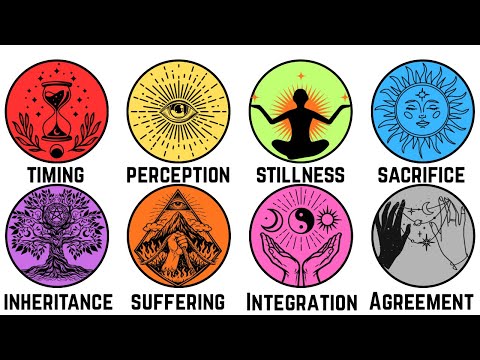
Sacred Delay: The Wisdom of Cosmic Timing

We live in a culture obsessed with instant gratification. We want it now. But the universe operates on a different clock. Sacred Delay isn't about procrastination; it's about the inherent wisdom embedded in the timing of events. This law teaches us that growth is not linear, and sometimes, the gestation period before manifestation is as crucial as the manifestation itself. It’s the universe giving you time to build the internal scaffolding to support your desires. Without this pause, the tower we build might crumble under its own weight. Understanding this principle means letting go of the frantic need to force outcomes and instead learning to dance with the rhythm of creation. It's about recognizing that the opportune moment is often cultivated in the quiet waiting.

"The greatest wisdom is to know yourself and the universe. Sometimes, that knowledge comes not from action, but from patient observation and aligned waiting."

For those seeking to accelerate their personal evolution, understanding the nuances of timing is paramount. It’s not about *if* something will manifest, but *when* it is truly aligned with your highest good and capacity. This is where practices like astrology and contemplative meditation come into play, helping to attune you to cosmic cycles. Investing in comprehensive guides like "The Kybalion" can offer profound insights into universal laws, including those related to correspondence and polarity, which indirectly inform the concept of timing.

Perceptual Limitation: How Your Reality is Filtered

What you perceive as reality is merely a sliver of the totality. Our senses, our beliefs, our past experiences – they all act as filters, shaping what information we receive and how we interpret it. This Perceptual Limitation means that two individuals can witness the exact same event and have drastically different understandings of it. It’s why dogma can be so dangerous; it solidifies one particular filter as the 'truth'. The path to expanded awareness involves consciously questioning and refining these filters. Are you seeing the situation for what it is, or through the lens of past trauma or societal conditioning? Learning to adjust your perception is a fundamental aspect of inner work, allowing you to access a richer, more nuanced understanding of the world around you.

This concept is deeply intertwined with cognitive biases and psychological archetypes. Understanding how your mind erects these perceptual walls is the first step to dismantling them. For explorers of the mind, delving into works that explore consciousness and perception is key. Resources like the writings of Carl Jung on archetypes offer a framework for understanding the collective filters we inherit. To truly expand your perceptual horizons, engaging with different perspectives through divination systems or through dialogues with individuals of vastly different life experiences can be incredibly illuminating.

Stillness: The Unseen Source of Clarity

In our hyper-stimulated world, stillness is a foreign concept. We equate movement and activity with progress. Yet, true clarity rarely emerges from noise. Stillness is not emptiness; it is a fertile void where insight can arise. When you quiet the external chaos and the internal chatter, you create space for your intuition to speak. This is where the profound understanding of complex issues can emerge, where solutions to intractable problems become self-evident. It’s in the stillness that we connect with our inner guidance system, the part of us that already knows the way.

Cultivating stillness can be achieved through various practices. While meditation is the most obvious, activities like mindful walking, spending time in nature, or even focused breathing exercises can induce this state. The key is to intentionally withdraw from external stimuli and turn your attention inward. For practitioners, the journey to inner clarity often involves exploring different meditative techniques. The discipline required for consistent meditation can be bolstered by understanding its psychological benefits, a topic extensively covered in modern psychology and ancient esoteric texts alike.

Sacrifice: The True Cost of Attachment

Sacrifice is often misunderstood as mere loss or deprivation. In esoteric terms, however, sacrifice is the intentional relinquishing of something to achieve a greater good or to facilitate transformation. It's not about giving up what you love without reason, but about understanding that certain attachments hold you back. The more tightly you cling to comfort, old identities, or limiting beliefs, the less freedom you have to evolve. True sacrifice is a conscious act of liberation, freeing up energy and space for something more aligned and powerful to take root.

This law challenges the modern notion that accumulation is the ultimate goal. It posits that intentional release, a form of energetic sacrifice, is a pathway to greater power and freedom. Consider the shedding of an old skin; it feels like a loss, but it is necessary for growth. For those engaged in deep inner work, understanding the concept of non-attachment is crucial. Practices that foster detachment, such as stoicism or certain Buddhist teachings, can provide valuable frameworks. When exploring spiritual growth, it’s vital to differentiate between healthy detachment and unhealthy emotional suppression. Resources that explore personal boundaries and the psychology of letting go can be incredibly beneficial here.

Energetic Inheritance: Breaking Generational Patterns

You are not born in a vacuum. We inherit not just genetic traits but also energetic imprints from our lineage – patterns of thought, emotion, and behavior that have been passed down through generations. These energetic inheritances can manifest as unconscious drives, recurring challenges, or deeply ingrained beliefs about ourselves and the world. Recognizing these patterns is the first step in breaking free from their influence. It requires an honest look at family dynamics and understanding how ancestral experiences might be shaping your present reality.

This law highlights the interconnectedness of consciousness across generations. It suggests that healing within a family line doesn't just benefit the present, but also honors and potentially transforms the past. For those seeking to understand and heal these deep-seated patterns, exploring modalities like family constellation work, ancestral healing rituals, or psychological approaches focused on intergenerational trauma can be profoundly effective. Understanding the energetic blueprint of your lineage is a powerful form of self-discovery that can unlock significant personal freedom.

Voluntary Difficulty: Forge Your Strength Through Chosen Challenge

Comfort is a seductive but ultimately stagnant state. Voluntary difficulty is the conscious choice to engage with challenges that push your boundaries and expand your capabilities. It's the belief that true strength and resilience are forged in the crucible of effort and adversity. By choosing to face difficulty head-on, rather than avoiding it, you build inner fortitude, learn invaluable lessons, and develop a deeper sense of self-efficacy. This is not about seeking needless suffering, but about embracing chosen struggles that lead to growth.

This principle is often found in the training of athletes, warriors, and dedicated spiritual practitioners. The idea is that by increasing your tolerance for discomfort and learning to navigate complexity, you become more capable and adaptable. Engaging in difficult but rewarding tasks – whether it’s learning a new complex skill, undertaking a demanding physical challenge, or diving into deep philosophical inquiry – is a powerful way to embody this law. For consistent practice, consider resources that focus on discipline and habit formation, as these are essential for embracing voluntary difficulty consistently.

Integration: Embodying True Understanding

Knowledge without application is inert. Integration is the process of weaving newfound understanding or spiritual insight into the fabric of your daily life, making it a lived experience rather than just an intellectual concept. It's about embodying the principles you learn, allowing them to transform your actions, reactions, and the very way you perceive yourself and the world. True transformation occurs not just when you *know* something, but when you *are* it.

This process moves beyond mere learning and into the realm of genuine alchemy. It requires conscious effort to translate theoretical knowledge into practical behavior. Whether you're learning a new magical technique, a psychological principle, or a philosophical concept, the act of integrating it into your being is what solidifies its power. This might involve journaling about your experiences, practicing new behaviors consistently, or finding ways to apply your knowledge creatively. For deep integration, consider building a consistent personal practice, perhaps using a dedicated journal for tracking your progress and insights, akin to the detailed accounts found in classic magical journals found throughout history.

Inner Permission: The Gatekeeper of All Change

Ultimately, every significant shift, every new beginning, every act of genuine transformation requires one fundamental element: your own inner permission. External forces, learned knowledge, and even divine will can only go so far if you, on an internal level, have not granted yourself the allowance to change, to grow, to heal, or to succeed. Inner permission is the silent, often unconscious, gatekeeper to your own potential. It's the internal 'yes' that allows change to truly take root and flourish. Denying yourself this permission is the most powerful form of self-sabotage.

Recognizing and granting yourself inner permission is the final, crucial step in manifesting any desired change. This can be particularly challenging when dealing with deeply ingrained beliefs or past traumas. Techniques that promote self-compassion, forgiveness, and acceptance are vital here. Practices like affirmations, EFT (Emotional Freedom Techniques), or therapeutic modalities focused on self-worth can be instrumental in cultivating this essential internal consent. The journey of self-mastery is, at its core, an ongoing practice of granting yourself permission to explore, to learn, and to become your highest self.

Arsenal of the Adept

To truly master these esoteric laws, a well-equipped practitioner requires specific tools and knowledge. Consider these essential resources:

  • Books: "Condensed Chaos: An Introduction to the Magic of Magic" by Phil Hine for practical approaches, "The Power of Now" by Eckhart Tolle for cultivating presence, and classical texts on hermeticism like "The Emerald Tablet" for foundational principles.
  • Tools: A dedicated journal for tracking insights and practicing integration, a calm space for contemplation and stillness, and resources for expanding perception such as diverse art, music, and literature.
  • Further Study: Deep diving into subjects like psychology, anthropology, and the history of consciousness can provide invaluable context for understanding these laws.

Frequently Asked Questions

  • How can I practically apply the law of Sacred Delay? Focus on setting intentions and then releasing the urgent need for immediate results. Engage in practices that foster patience and trust in the unfolding process, such as mindfulness or observational exercises.
  • What's the difference between Perceptual Limitation and delusion? Perceptual Limitation is the natural filtering of reality by our senses and beliefs. Delusion is a persistent false belief often resistant to evidence to the contrary. Awareness of Perceptual Limitation allows us to correct for it; delusion often requires more intensive intervention.
  • Can energetic inheritance be altered? Yes, by becoming aware of the patterns and consciously choosing different responses and beliefs, you can begin to break and transmute these inherited energetic lines.

Your Operation: Re-Mapping Your Internal Landscape

Now, put these principles into action. For the next seven days, dedicate a short period each day to consciously observe your internal landscape. Identify one ingrained belief or pattern (energetic inheritance, perceptual limitation) that may be holding you back. Then, intentionally grant yourself inner permission to explore an alternative perspective or action related to this pattern, even if it feels slightly uncomfortable (voluntary difficulty). Record your observations and any shifts in your perception or any nascent clarity that arises during moments of stillness. This is your personal experiment in re-mapping your internal world.

Practitioner's Note: True magick requires resources. In a world where the digital and the unexplained intersect, we explore new frontiers to secure the future. Do you dare to be part of the vanguard? Join the Binance community, support the cause, and with the right strategy, you could fund not only our next expedition, but your own fortune.

Jungian Archetypes and Alchemy: A Practical Guide to the Shadow and Individuation


The journey into the depths of the psyche is not for the faint of heart. It's a descent into a forgotten landscape, a realm where the archetypes of the unconscious hold sway and the shadow lurks, waiting for recognition. Carl Jung, a titan of modern psychology, didn't just theorize about these forces; he mapped their influence, proposing the arduous yet ultimately liberating process of individuation. This is not about abstract philosophy; it's about the practical, often uncomfortable, work of integrating the hidden parts of ourselves to achieve a state of wholeness and individual freedom. Understanding these concepts isn't merely academic; it's a blueprint for personal transformation, a roadmap to becoming the fully realized individual you are meant to be.

Jung's work profoundly intersects with esoteric traditions, most notably alchemy. He saw the alchemical pursuit of transforming base metals into gold as a powerful metaphor for the psychic work of transforming the ego-dominated personality into a more integrated, self-aware whole. The symbols, the processes, the stages described in alchemical texts – *solve et coagula* (dissolve and coagulate), the *nigredo* (blackening), the *albedo* (whitening), and the *rubedo* (reddening) – all mirror the stages of psychological development and the confrontation with the unconscious. This isn't just historical curiosity; it's a rich source of practical insight for anyone serious about their inner work.

The Core Concepts: Archetypes, Shadow, and Individuation

At the heart of Jung's analytical psychology lie several key concepts that are crucial for understanding the path to self-realization:

  • Archetypes: These are universal, primal patterns and images that derive from the collective unconscious and are the psychic counterpart of instinct. They are not simple inherited ideas but rather innate tendencies to categorize experience and respond to the world in certain ways. Think of them as the fundamental blueprints of human experience – the Hero, the Great Mother, the Wise Old Man, the Trickster, and, critically for our discussion, the Shadow.
  • The Shadow: This is perhaps the most challenging archetype to confront. The shadow represents the repressed, unacceptable parts of the personality – the things we deny about ourselves, both positive and negative. It contains our weaknesses, our primal instincts, our hidden desires, and our unacknowledged potential. Ignoring the shadow doesn’t make it disappear; it gives it power to project onto others and sabotage our lives.
  • The Process of Individuation: This is the lifelong psychological journey of self-discovery and integration. It's the process by which an individual becomes a distinct, indivisible whole, a conscious being who is separate from the collective unconscious, yet still part of the whole. It involves the conscious integration of archetypal patterns, the deliberate confrontation and assimilation of the shadow, and the development of a unique personality that is both true to itself and functional in the world.

Alchemy as a Metaphor for Psychic Transformation

Jung's fascination with alchemy wasn't a mere academic pursuit. He recognized in its complex symbolism a profound, albeit veiled, map of the soul’s journey. The alchemical stages, when viewed through a psychological lens, offer a practical framework for understanding the arduous work of individuation:

  1. The Nigredo (Blackening/Decomposition): This initial stage corresponds to the confrontation with the shadow, the dissolution of the ego's false assumptions, and the chaos that arises when repressed material surfaces. It's the breakdown of the old self, a necessary descent into darkness and uncertainty before any new formation can occur. It's the realization of what needs to be purged or integrated.
  2. The Albedo (Whitening/Purification): Following the dissolution of the *nigredo*, the *albedo* represents a purification, a clarification, and the emergence of a new, nascent consciousness. It’s akin to the initial stages of shadow integration, where understanding and differentiation begin to supplant confusion. This stage can feel like tentative hope, a dawning awareness after profound darkness.
  3. The Citrinitas (Yellowing): Often seen as a transition between the albedo and rubedo, this stage signifies the dawning of wisdom and the beginning of the solar consciousness. In psychological terms, it might represent the integration of intellectual understanding with emotional insight.
  4. The Rubedo (Reddening/Integration): This is the final, triumphant stage, symbolizing the complete transformation and union of opposites – consciousness and unconscious, spirit and matter, masculine and feminine. It represents the achieved wholeness, the state of the *lapis philosophorum* (philosopher's stone), the fully individuated self.

For the modern practitioner, these alchemical stages are not to be performed literally in a laboratory, but contemplated and enacted within the laboratory of the psyche. They offer a symbolic language to describe the often non-linear, challenging, and ultimately rewarding path of becoming whole.

The Practical Application: Working with Your Shadow

Confronting your shadow is not an optional extra for Jungian psychology; it's the linchpin of the individuation process. Without this difficult work, true wholeness remains an elusive ideal. So, how does one practically engage with this hidden aspect of the self?

Taller Práctico: Desmantelando Tu Sombra Persona

  1. Autobservación Honesta: Begin by paying close attention to your reactions. What triggers strong negative emotions in you (anger, disgust, judgment) when you see these traits in others? Often, what we vehemently reject in others is a projection of our own disowned shadow. Keep a journal dedicated to these observations.
  2. Exploración de Sueños: Dreams are a primary avenue for the unconscious to communicate. Pay attention to characters, settings, and emotions in your dreams, especially those that feel uncomfortable or "not you." Jung believed that dream figures often represent aspects of the dreamer’s own personality.
  3. Confrontación con el Arquetipo del Anima/Animus: For men, the anima is the unconscious feminine aspect; for women, the animus is the unconscious masculine aspect. These archetypes are deeply intertwined with the shadow. Integrating them involves acknowledging and developing the qualities associated with the opposite gender, which often unlocks repressed shadow material.
  4. Acceptance and Integration: This is the most challenging part. The goal is not to *eliminate* the shadow, but to *integrate* it. This means acknowledging its existence, understanding its origins, and learning to manage its impulses rather than let them control you unconsciously. It involves accepting that these "negative" traits are part of your totality, and can even be sources of hidden strength if understood and directed consciously.

Arsenal del Mago: Essential Resources for Deeper Study

To truly delve into Jung's world and its alchemical parallels, certain foundational texts and concepts are indispensable. Engaging with these resources will significantly deepen your understanding and your practical application of these potent psychological tools:

  • "Psychology and Alchemy" by C.G. Jung: This is the seminal work where Jung explicitly details his alchemical research and its connection to the individuation process. It's dense but profoundly rewarding.
  • "Man and His Symbols" by C.G. Jung (and collaborators): A more accessible introduction to Jungian concepts, including archetypes, the collective unconscious, and dream analysis.
  • "Liber Null & Psychonaut" by Peter J. Carroll: While not directly Jungian, this book is a cornerstone of chaos magic, offering practical techniques for altering consciousness and manifesting will – concepts that can be productively viewed through a Jungian lens for understanding the mechanics of psychic energy.
  • Alchemical Texts (e.g., "The Emerald Tablet," "Atalanta Fugiens"): Reading primary alchemical sources, even in translation, can offer direct insight into the symbolic language Jung analyzed.
  • Tarot Decks (e.g., Rider-Waite-Smith, Thoth): Many archetypal images found in tarot cards resonate deeply with Jungian archetypes and alchemical symbolism, making them excellent tools for self-exploration and divinatory work that mirrors psychological processes. A Rider-Waite-Smith deck is excellent for beginners, while the Thoth deck, influenced by Aleister Crowley and Lady Frieda Harris, is deeply steeped in esoteric symbolism that Jung himself would have appreciated.
  • Meditation and Mindfulness Apps: Tools like Headspace or Calm, while secular, teach foundational skills in self-observation, focus, and emotional regulation – critical components for both shadow work and the broader individuation process.

Veredicto del Practicante: ¿Vale la pena este Camino?

The path Jung laid out – the confrontation with archetypes, the integration of the shadow, and the arduous journey of individuation – is not an easy one. It demands courage, honesty, and a willingness to face the parts of yourself you’d rather ignore. However, the rewards are immense. It leads to a more authentic self, a deeper understanding of one's place in the world, and a liberation from the unconscious compulsions that often dictate our lives. The alchemical metaphor provides a rich, symbolic language to navigate this terrain, offering ancient wisdom for modern psychological challenges. It is a path that promises not only greater psychic health but a profound sense of purpose and integration.

Preguntas Frecuentes

Q: How does Jung's concept of the Shadow differ from simple bad habits or moral failings?
A: While bad habits can be part of the shadow, the shadow encompasses a much broader spectrum of disowned aspects of the personality, both negative and positive. It's the totality of what the ego refuses to acknowledge about itself, often due to societal conditioning or personal trauma. It's not just about what you *do*, but what you *are* that you reject.
Q: Can I achieve individuation without studying alchemy?
A: Absolutely. Jung developed his theories independently of a deep scholarly engagement with alchemy, and many practitioners focus solely on psychological exploration. However, Jung found alchemy provided a unique and powerful symbolic framework that can illuminate and accelerate the individuation process for those who resonate with its imagery.
Q: Is confronting the shadow dangerous?
A: It can be challenging and emotionally intense, but not inherently dangerous if approached with awareness and proper support. The danger lies more in *not* confronting the shadow, as its unacknowledged power can lead to destructive behaviors and projections. Gradual, conscious engagement is key.

Tu Operación: Cartografía Psíquica Personal

Take one specific trait or tendency that you strongly dislike or judge in others. Commit to observing, over the next week, when and how this trait manifests within yourself, either directly or indirectly. Keep a detailed journal entry for each instance, noting the context, your emotional state, and any resulting actions or thoughts. This is your initial step in mapping your personal shadow territory. No judgment, just observation.

Nota del Practicante: La verdadera magia requiere recursos. En un mundo donde lo digital y lo inexplicable se cruzan, exploramos nuevas fronteras para asegurar el futuro. ¿Te atreves a ser parte de la vanguardia? Únete a la comunidad de Binance, apoya la causa y, con la estrategia correcta, podrías financiar no solo nuestra próxima expedición, sino tu propia fortuna.