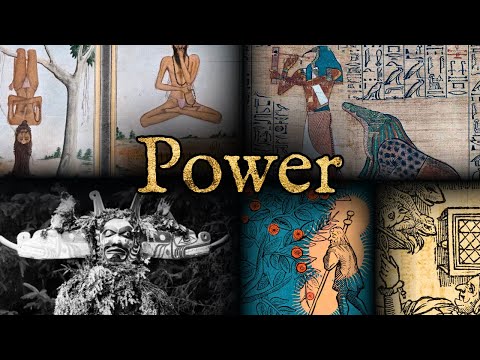
The world around us pulses with unseen forces, a fact recognized by humanity long before the advent of organized religion or scientific rationalism. Magic, in its most fundamental sense, is the acknowledgment and engagement with this inherent agency and hidden potency within the universe. It's not an aberration, but a foundational aspect of the human experience, a way of participating as cosmic beings within cosmic processes. As Chris Gosden writes, there's a continuity between human will and the world; the universe also enters us. Magic, therefore, is the natural extension of a worldview that perceives life and power in everything, a direct participation in the deeper forces shaping existence.
RitualThe Archetype of the Magician: From Center Stage to the Margins
For centuries, the archetype of the magician has captivated the human imagination. Whether depicted uttering inscrutable words in an ancient tongue, raising a wand, or shifting the very fabric of reality, his image is one of mystery and power. However, this perception of magic as an opaque, marginal practice is a relatively recent phenomenon. Historically, the magician occupied a significant societal role, and magic was interwoven into the fabric of daily life. Its roots stretch back to the earliest human cultures, predating established religions and forming a core component of human storytelling and understanding.
Table of Contents
The historian Michael D. Bailey defines magic simply: "Magic is any attempt to manipulate supernatural or natural forces by anything other than direct physical means." This definition places magic as a natural consequence of a worldview that imbues even seemingly inert objects with agency and hidden powers. This perspective, where the world is alive, participatory, and permeated by these forces, is a recurring vision found across diverse cultures, religions, folklore traditions, and esoteric systems throughout history.
Defining Magic: Across Cultures and Disciplines
Defining magic has been a complex endeavor, evolving with human understanding. In the Middle Ages, it was often viewed as the invocation or employment of supernatural or spiritual forces. Later, in modern academia, magic began to be articulated more holistically. Claude Lévi-Strauss saw it as a “humanization of the universe,” proposing a third ontological model distinct from both the perceived passivity of organized religion and the indifferent clockwork universe of scientific rationalism. This model allowed for a direct participation in cosmic processes, positioning humans as cosmic beings capable of influencing and being influenced by the surrounding world.
This concept of inherent power and agency resonates across various traditions. Consider the "mana" of Melanesia, the "orenda" of the Huron, the "heka" of ancient Egypt, the "dori" of Amazonian shamans, or the "qi" of Daoist philosophy. These terms, though distinct, point to a shared understanding of a pervasive spiritual force that permeates reality. This force isn't merely an abstract concept; it manifests in sacred sites, magical objects, and through principles like contagion, where proximity or shared essence facilitates influence.
The practice of magic often involves navigating these forces through various means. Shamanic initiation, for instance, is a path to spirit-bestowed power, while the concept of the "evil eye" speaks to innate human potency and the potential for influence, both positive and negative. Asceticism, yoga, and other forms of disciplined practice—seen in traditions like the cultivation of mystical abilities—are all methods of harnessing and directing these inherent energies. Ultimately, magic proposes a radically different understanding of reality, one where human beings actively participate in the deeper forces that shape existence.
The Flow of Power: Principles of Enchantment
The core of what we term "enchantment" lies in the understanding and manipulation of these pervasive forces. These are the fundamental principles that underpin magical practice across cultures and throughout history.
Mana, Orenda, Heka, Qi: Concepts of Spiritual Force
While the terminology differs, the underlying concept of an animating spiritual force is remarkably consistent:
* Mana (Melanesia): Often described as a supernatural force or energy that can be embodied in people, animals, objects, or places. It's associated with power, authority, and efficacy. * Orenda (Huron): Similar to mana, orenda is an invisible force believed to be inherent in all things, living or inanimate. It's the power that allows things to act and influence others. * Heka (Ancient Egypt): Heka was personified as a god and was the fundamental magical force that permeated creation. It was the power that allowed the gods to create and sustain the world, and humans to enact magic. * Qi (Daoism): Also known as "chi" or "prana" in other traditions, qi is the vital life force that flows through all things. Its harmonious movement is essential for health and well-being, and its directed manipulation is central to Daoist practices like acupuncture and Qigong.
These concepts suggest a universe not of inert matter governed by cold, indifferent laws, but one brimming with agency and responsive to human intent.
Sacred Sites and Magical Objects: Points of Power
The concept of "enchanted" often extends to locations and objects believed to be imbued with these forces. Sacred sites—ancient henges, ley lines, natural springs, or mountain peaks—are often seen as focal points where these energies are particularly potent or accessible. Similarly, magical objects, from wands and talismans to amulets and talismans, are imbued with intent and therefore considered conduits of this power. The principle of contagion, where an object that once had a connection to a person or place retains a link to it, further illustrates how these forces can be transferred and manipulated.
Shamanic Initiation and Spirit-Bestowed Power
A common thread in magical traditions is the concept of power being bestowed or awakened through specific experiences, often shamanic in nature. Shamanic initiation is a transformative process, frequently involving journeys to other realms, encounters with spirit guides, and ordeals that awaken latent abilities. This spirit-bestowed power is not merely learned; it is often perceived as a direct infusion of the animating force of the cosmos.
The Evil Eye and Innate Human Potency
Conversely, some traditions focus on the inherent, often involuntary, potency within humans. The belief in the "evil eye," for instance, suggests that a person's gaze or even their thoughts can inadvertently project harmful energy. This highlights a worldview where human consciousness and willpower are not confined to direct physical action but can actively influence the world around them through subtle energies.
Asceticism, Yoga, and Cultivation of Mystical Abilities
Across many cultures, practices like asceticism, yoga, and various forms of meditation are employed to cultivate, refine, and control these internal and external forces. These disciplines are not merely about physical or mental discipline; they are pathways to attuning oneself with the deeper energies of existence, enhancing perception, and developing what are often termed "mystical abilities"—forms of awareness and influence that transcend ordinary physical means.
Magical Causality and Participation in the Cosmos
At its heart, magic proposes a different understanding of causality. It’s not solely based on direct, observable physical actions leading to predictable outcomes. Instead, it embraces a principle of participation: human actions, focused intent, and symbolic representations can directly influence cosmic processes. This is where the idea of being "enchanted" or "enchanting" the world comes into play – it’s about aligning one's will and consciousness with the inherent energies of the universe, becoming an active participant rather than a passive observer.
This participatory relationship between magicians, spirits, and the divine is central. Magic traditions often depict a cosmos populated by various entities—spirits, elementals, deities—with whom interaction is possible and often necessary for magical work. The magician acts as a bridge, a conscious facilitator of these interactions, drawing upon and directing the flow of power.
Your Operation: Weaving Enchantment into Your Practice
Understanding these foundational principles of magical power and enchantment is crucial for any practitioner. The archetypal magician, far from being a relic of the past, represents a profound human impulse to engage with the living, participatory universe.
To truly weave enchantment into your practice, consider these points:
* Recognize the Agency: Acknowledge that the world around you is not inert. Everything—from stones and water to your own thoughts—possesses a form of agency or underlying energy. * Cultivate Your Intent: As the concept of "enchanted" suggests, power is often directed by focused will. Clarity of intention is paramount in any magical act. * Explore the Tools: Whether it's an object, a place, or a symbolic representation, understand how these tools act as conduits or focal points for magical energy. * Engage with Forces: Whether you conceptualize them as mana, qi, spirits, or cosmic energies, learn to perceive and work with these forces. This often involves developing your intuition and sensory awareness beyond the purely physical.
Arsenal of the Enchanter
* Essential: The Goetic Seals Generator - Need to work with the precise geometries of the Goetic entities? This app helps generate their seals with accuracy, ensuring that your invocation channels the correct energies. * Foundational Reading: *Magic: A History* by Chris Gosden. Provides an excellent overview of how magical worldviews have shaped human history. * Classic Text: *The Greek Magical Papyri in Translation* edited by Hans Dieter Betz. Offers direct insight into ancient magical practices and concepts of power. * Modern Understanding: *Condensed Chaos* by Phil Hine. A practical introduction to Chaos Magic, which emphasizes the fluid nature of belief and the power of individual will.
FAQ: Unraveling Enchantment
What does "enchanted" truly mean in a magical context?
In a magical context, "enchanted" refers to something or somewhere that has been imbued with magical energy or consciousness. This could be an object, a place, or even a person, making them a focal point or conduit for supernatural or hidden forces. It implies a shift from the mundane to the extraordinary through the application of magical principles.How can I learn to perceive these hidden forces?
Perceiving hidden forces often involves developing your intuition and subtle senses. Practices like meditation, mindfulness, and specific energy-work exercises can help attune your awareness. Engaging with nature, observing the subtle shifts in environment and your own internal responses, can also be very revealing. It’s a gradual process of opening your perception beyond the purely physical.Is magic about controlling these forces, or working with them?
While some traditions emphasize control, the more profound aspect of enchantment, and often magic itself, lies in working *with* these forces. It's about understanding their nature, aligning your intent with their flow, and becoming a participatory agent in the cosmic dance. Control can be a part of it, but harmonious collaboration is often more effective and sustainable.Can everyday objects be enchanted?
Absolutely. The principle of contagion and the power of focused intent mean that almost any object can be enchanted. The key is the ritualistic act, the clarity of your desire, and the energy you invest in the process. A simple object, consecrated with purpose, can become a potent magical tool.Why is understanding the history and philosophy of magic important for practice?
Understanding the historical and philosophical underpinnings provides context and depth to your practice. It reveals the underlying assumptions about reality that have informed magical traditions for millennia. This knowledge can prevent you from falling into superstition and instead ground your practice in a robust understanding of how magical worldviews propose reality operates.About the author: Frater Alek0s is a veteran practitioner and researcher in the field of chaos magick. His work focuses on the practical and experimental application of occult techniques for self-development and reality exploration, demystifying esotericism for the modern practitioner.
Veredict: The Living Universe
The concept of enchantment is rooted in a worldview that sees the universe as alive, participatory, and imbued with forces that humans can interact with and influence. This isn't about superstition, but about a radically different epistemology—a way of knowing and being that acknowledges and engages with the deeper currents of existence. Understanding mana, orenda, heka, qi, and the principles of connection and agency allows us to move beyond a purely mechanistic view of reality towards one that is dynamic, responsive, and ultimately, magical. The magician, then, is not an outsider, but an integral part of this enchanted world, a conscious participant in its ongoing creation.
Referencias
- Carroll, P. J. (1987). Liber Null & Psychonaut. Weiser Books.
- Spare, A. O. (1913). The Book of Pleasure. Self-published.
- Hine, P. (1992). Condensed Chaos: An Introduction to Chaos Magic. New Falcon Publications.
- Crowley, A. (1904). The Book of the Law. Self-published.
- Sherwin, R. (2018). The Chaos Magic Handbook. CreateSpace.
- Kraig, D. M. (1988). Modern Magick: Eleven Lessons in the High Magickal Arts. Llewellyn Publications.
- Morrison, G. (2003). Pop Magic! The Art of Shaping Reality. Disinformation.
- DuQuette, L. M. (2003). The Chicken Qabalah of Rabbi Lamed Ben Clifford. Weiser Books.
- Webb, D. (2015). Chaos Magick: A Practical Guide. Self-published.
- Tyson, D. (2006). The Power of the Written Word. Llewellyn Publications.
- Bonewits, I. (1971). Real Magic. Creative Age Press.
- Greer, J. M. (2003). The New Encyclopedia of the Occult. Llewellyn Publications.