
Absolutely! Here's the transformed content, adhering strictly to your instructions, formatted for a grimorio page, and written in English.
***
Table of Contents
The concept of "bloodlines" within esoteric traditions is as old as the pursuit of hidden knowledge itself. It suggests a lineage, not merely of genetics, but of spiritual inheritance, a perpetuation of arcane arts and power through generations. This isn't about simple ancestry; it's about the transmission of potent secrets, of access to certain energetic frequencies, and perhaps even of a predisposition towards the magical path. For centuries, whispers have circulated about certain families, certain lineages, who have held the reins of mystical knowledge, guiding or manipulating the course of history from the shadows. But what does this truly mean for the modern practitioner, and how can we understand these ancient claims in a practical, magical sense?
The idea of a bloodline magic is deeply ingrained in many spiritual and occult systems, often misunderstood and sensationalized. It’s not simply about having ‘magic in your veins,’ but rather about a lineage carrying specific energetic imprints, ancestral consciousness, and perhaps predispositions towards certain magical practices or psychic sensitivities. These bloodlines are often portrayed as having maintained ancient rituals, secret knowledge, and connections to hidden powers for millennia, sometimes for good, sometimes for ill. Understanding these concepts requires looking beyond simplistic notions of inherited power and delving into the energetic, psychological, and historical dimensions of esoteric lineage.
RitualTracing the Threads: An Esoteric Genealogy
The notion of inherited occult power is not unique to any single culture or tradition. Ancient Hinduism, with its complex caste system and emphasis on karmic lineage, speaks of Brahmins as priest-classes who have maintained sacred knowledge and rituals for vast cosmological ages, referencing concepts like the ‘Brahma-Yuga’ and the ‘Savartakan fire’—a solar flash that guides humanity's evolutionary steps, manifesting in avatars like Kalki. Zoroastrianism, too, references a similar concept of spiritual transformation known as ‘Frashokereti.’ These ancient belief systems, some scholars claim, originate from a much older Siberian empire that predates even Atlantis, developing around a solar event that pushed humanity towards its next evolutionary phase.
The connection between these ancient Indian and Siberian traditions is often explored in relation to what some scholars refer to as the ‘Mahabharata’ and ancient texts that describe a belief system centered around a solar flash. This event, they posit, served as a catalyst for humanity's genetic mutation and evolutionary leap. The Indian scholars themselves assert that their religion dates back over 18,000 years, placing its origins far beyond commonly accepted timelines. This deep history suggests a continuous line of spiritual and, arguably, magical practice passed down through generations, forming a potent ancestral continuity.
Within the European context, figures like the Hapsburg bloodline are frequently mentioned in discussions of powerful esoteric lineages. It's often suggested that members of such families, even if not actively practicing magic, possess an inherent energetic signature or access to ancestral psychic reserves. This isn't necessarily about practicing dark arts, but about a subtle, pervasive influence transmitted through generations. The concept of 'swapping children' among relatives, bringing nephews and nieces up as one's own, is sometimes cited as a method of ensuring supposed security or continuity within such lineages, blurring the lines of biological and adopted succession.
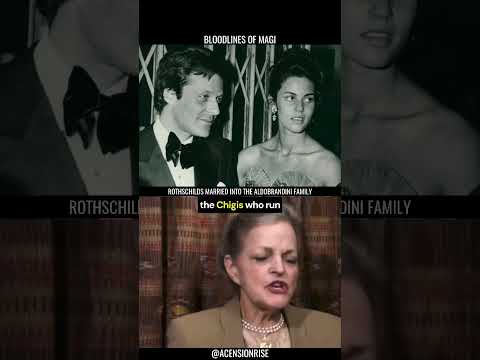
The Rothschild family is another frequently cited example, often linked to immense wealth and influence. Interpretations vary wildly, from seeing them as guardians of occult secrets to agents of global manipulation. Some theories posit that individuals like Guy de Rothschild were, in fact, born into different families (like the Rockefellers) before being integrated into the Rothschild lineage for strategic reasons. These narratives, whether factually accurate or mythologized, speak to a perception of deep-seated, intergenerational control and the potent influence wielded by these alleged bloodlines.
It's crucial to dissect these narratives critically. Are we talking about literal genetic transfer of magical ability, or an inherited energetic blueprint shaped by generations of focused belief, ritual, and intention? The latter seems more plausible from a magical perspective. A family that has, for centuries, dedicated itself to certain spiritual or occult practices, consciously or unconsciously, could indeed create a powerful energetic legacy. This legacy might manifest as a heightened psychic sensitivity, an intuitive understanding of certain magical principles, or even a resonant field that influences their environment—a form of ancestral consciousness that guides and shapes the living.
The "Magi" and Their Role
The term "Magi" itself evokes a sense of ancient wisdom, often associated with priest-kings, sorcerers, and royal advisors in ancient Persia and beyond. They were often seen as intermediaries between the mortal and divine realms, possessing knowledge of astrology, divination, and potent rituals. The idea that the "Magi" are a specific bloodline, as suggested by some commenters, implies a continuity of this priestly, esoteric class. This perspective suggests that these aren't just historical figures, but a living lineage whose influence, though perhaps hidden, persists.
The concept of a "priest-class" worshipping a "Mother-Goddess" since the ‘Brahma-Yuga’ points to a primal, chthonic layer of magic and spirituality. This ancient worship, deeply intertwined with occult practices, is suggested to have influenced major religious traditions, including Hinduism and Zoroastrianism. The "White Pope's Hat," with its distinct Pharisaic-like design, is sometimes interpreted as a symbol of this ancient, unbroken lineage, a visual echo of Pharaonic crowns and a connection to a continuous, powerful spiritual authority.
The assertion that "evil infiltrated the church and destroyed everything that great people like Jesus literally died for" speaks to a deep disillusionment with established religious institutions. From this viewpoint, these powerful bloodlines, rather than being benevolent keepers of secrets, are seen as entities that have corrupted sacred traditions for their own ends, leading nations astray and perpetuating deception. This perspective frames the historical power struggles not as political or economic, but as a cosmic battle between primal forces, with these bloodlines acting as agents of a darker, manipulative agenda.
The Nature of Their "Magic"
When we speak of the "magic" of these bloodlines, we must be careful not to fall into simplistic portrayals of spellcasting or demonic pacts, though these are often woven into the narratives. It's more likely a complex interplay of several factors:
* Energetic Inheritance: A subtle, perhaps genetically influenced, predisposition to interact with subtle energies more profoundly than the average person. This could manifest as heightened intuition, psychic sensitivity, or an innate understanding of energetic resonance. * Psychic Imprinting & Ancestral Memory: Generations of focused intent, ritual practice, and belief systems can create a powerful psychic imprint on a lineage. This might manifest as ancestral memories, recurring archetypes, or psychic "echoes" that guide descendants. * Knowledge Transmission: The deliberate, secret transmission of esoteric knowledge, rituals, and operational frameworks from one generation to the next. This isn't just theoretical knowledge but practical, experiential wisdom. * Resonant Influence: The power derived not from individual spells, but from collective belief, historical momentum, and a sustained energetic presence that subtly shapes perceptions and events over long periods. This is what some might call "hyper-objects" of power.
The comment, "You have problems with the power only when is not in your hands," encapsulates a core aspect of how these lineages are perceived: their power is intrinsic, self-sustaining, and deeply integrated into their existence, unlike the power sought by external practitioners. It's not a tool to be picked up and put down, but an aspect of their being.
Some outright dismiss these ideas as deception: "False idols. Magic is deception." This viewpoint often stems from a more rigid or exoteric understanding of spirituality, where any deviation from established dogma is seen as a trick. Such critiques highlight the inherent conflict between the exoteric and esoteric understandings of power and spirituality. However, for the practitioner, the efficacy of a magical act or system is often judged by its results, regardless of its perceived source or moral alignment.
Practical Takeaways for Today's Practitioner
While the lore of ancient bloodlines can be fascinating, its practical application lies not in seeking inherited power, but in understanding the principles it represents.
1. The Power of Lineage and Ancestry: Focus on your own ancestral connections. What energetic patterns, what predispositions, what dormant talents might lie within your own lineage? Work with your ancestors, not necessarily for inherited power, but for guidance, wisdom, and energetic support. 2. The Creation of Energetic Imprints: Understand that your own focused intention and sustained practice create energetic imprints for future generations – your own descendants, or even your spiritual legatees. Your magical work leaves a ripple. 3. Belief as a Tool: Whether these bloodlines are literal carriers of ancient magic or simply groups who have wielded significant influence through sustained belief and practice, the lesson is clear: belief, sustained over time and across generations, is an incredibly potent force. As P.J. Carroll (1987) noted, in Chaos Magic, "Belief is a tool." 4. Self-Sovereignty: Ultimately, no bloodline holds a monopoly on magic. The practitioner who cultivates their own inner power, clarity of intent, and connection to gnosis can achieve results independently of any perceived external lineage. The true power lies within your own will and practice.
The concept of bloodlines might seem like a relic of ancient myths, but it speaks to enduring truths about inheritance, power, and the subtle currents that shape human history and consciousness. By examining these narratives, we can gain a deeper appreciation for the long game of esoteric practice and the profound impact of sustained, intergenerational intention.
Arsenal of the Mage
- Essential: Chaos Magick Sigil Generator — Effortlessly create sigils that encode your intent, allowing you to focus on the crucial act of charging and releasing.
- For Study: Peter J. Carroll's *Liber Null & Psychonaut* — Explore the foundational principles of Chaos Magic, including the creation and charging of sigils.
- Further Reading: Research into ancient religious texts like the Mahabharata and Zoroastrian scriptures for cross-cultural perspectives on spiritual lineage and transformation.
FAQ: Bloodlines and Esoteric Power
Are "bloodlines of Magi" literal genetic lineages with innate magical powers?
The concept is complex. While genetic predispositions might play a role, it's more likely that "bloodlines" refer to lineages that have carried down specific energetic imprints, ritualistic knowledge, and sustained collective intention. This creates an inherited psychic or energetic legacy rather than a direct genetic transfer of spells.
How can an individual connect with their own ancestral magical potential if they aren't part of a known esoteric bloodline?
Focus on conscious ancestral work. Research your family history, meditate on your ancestors, and perform rituals to honor them. By opening yourself to their potential influence and wisdom, you can tap into dormant energetic patterns and spiritual legacies within your own lineage.
If these bloodlines are so powerful, why aren't they more openly recognized?
The very nature of esoteric power often dictates a degree of secrecy. Furthermore, perceived manipulation or influence from such groups might be subtle, operating through societal structures, cultural narratives, and economic forces rather than overt magical displays. Their power may be in their hidden persistence and influence.
What is the practical significance of the "Magi" concept in modern magic?
The "Magi" represent a historical archetype of the scholar, priest, and magician who wielded significant influence through arcane knowledge and ritual. For modern practitioners, this archetype can serve as an inspiration: to pursue deep knowledge, cultivate disciplined practice, and understand the interplay between spiritual authority and worldly influence.
About the author: Frater Alek0s is a veteran practitioner and researcher in the field of chaos magick. His work focuses on the practical and experimental application of occult techniques for self-development and reality exploration, demystifying esotericism for the modern practitioner.
Is the idea of bloodline magic inherently 'good' or 'evil,' or is it neutral?
The concept itself is neutral. Like any form of power, its manifestation depends on the intent and practices of those who carry it. Narratives often frame them as 'good' or 'evil' based on their perceived actions and influence within societal structures, but magic itself is a force that can be wielded for any purpose.
Referencias
- Carroll, P. J. (1987). Liber Null & Psychonaut. Weiser Books.
- Spare, A. O. (1913). The Book of Pleasure. Self-published.
- Hine, P. (1992). Condensed Chaos: An Introduction to Chaos Magic. New Falcon Publications.
- Crowley, A. (1904). The Book of the Law. Self-published.
- Sherwin, R. (2018). The Chaos Magic Handbook. CreateSpace.
- Kraig, D. M. (1988). Modern Magick: Eleven Lessons in the High Magickal Arts. Llewellyn Publications.
- Morrison, G. (2003). Pop Magic! The Art of Shaping Reality. Disinformation.
- DuQuette, L. M. (2003). The Chicken Qabalah of Rabbi Lamed Ben Clifford. Weiser Books.
- Webb, D. (2015). Chaos Magick: A Practical Guide. Self-published.
- Tyson, D. (2006). The Power of the Written Word. Llewellyn Publications.
- Bonewits, I. (1971). Real Magic. Creative Age Press.
- Greer, J. M. (2003). The New Encyclopedia of the Occult. Llewellyn Publications.
