Saltar al contenido principal

Anuncio Superior

Mostrando entradas con la etiqueta Mythology. Mostrar todas las entradas

The Magi: Unveiling the Secrets of Ancient Wisdom and Myth


The figures known as the Magi have long captivated the human imagination, famed as ancient keepers of esoteric wisdom. Their story intertwines with foundational elements of Western mythology and religion, particularly through their association with Zoroastrianism and their pivotal role in the Nativity narrative. But who were these enigmatic figures, and how did their legend evolve through history and early Christian theology? Join us as we embark on a journey through the history, myth, and theology surrounding the Magi.

This exploration is dedicated to the pursuit of knowledge and understanding, much like the meticulous research and preservation efforts of ancient scholars and modern digital archives. In our pursuit of clarity, technological tools can be invaluable. For instance, when delving into complex historical texts or diverse interpretations, a reliable tool for organizing and cross-referencing information can be a game-changer.

For practitioners seeking to organize their studies and integrate digital tools into their magical workflow, the Chaos Magick Sigil Generator offers a powerful solution. It allows for rapid creation and refinement of sigils, freeing up mental energy for deeper contemplation and experimentation.

Who Were the Original Magi?

The term "Magi" (singular: Magus) originally referred to priests of ancient Zoroastrianism, a religion founded by the prophet Zoroaster (or Zarathushtra) in Persia. These were not merely religious figures but were deeply involved in what we might now call occult sciences, with a profound expertise in fields like astrology, divination, and natural philosophy. Their understanding of celestial movements was intricate, blurring the lines between astronomy and astrology in a way that is often misunderstood today. This conflation of astronomy and astrology was a hallmark of ancient scientific inquiry, and the Magi were at its forefront, observing the heavens not just for calendrical or agricultural purposes, but for divine insight.

"It is important to note that astronomy and astrology were conflated as one science in the times of the Magi."

Early Christian theologians later grappled with the complex legacy of these pagan priest-kings. Their pagan origins presented a theological challenge, yet their narrative significance in the Gospel of Matthew—where they follow a star to Bethlehem and present gifts to the infant Jesus—made them indispensable to the Christmas story. The precise historical dating of Zoroaster himself is a subject of ongoing academic debate, with linguistic analysis of the Gathas (the oldest hymns attributed to him) suggesting a much earlier origin than previously assumed, possibly predating 1000 BC, and placing him in dialogue with the Vedic Sanskrit tradition.

The Magi in Early Christian Tradition

The most famous depiction of the Magi comes from the New Testament, specifically the Gospel of Matthew. Here, they are presented as wise men from the East who followed a star to pay homage to the newborn Jesus. Matthew's account, however, is notably sparse on details. He doesn't specify their number, their names, or even their royal status, referring to them simply as "Magi." It was through subsequent theological interpretation, tradition, and artistic representation that the familiar image of the three kings—Caspar, Melchior, and Balthazar—emerged. These figures were later depicted as representing the three known continents of the time (Europe, Asia, and Africa), symbolizing the universality of Christ's message.

The early Church Fathers engaged deeply with the theological implications of the Magi's visit. Some saw it as a validation of pagan wisdom, suggesting that God's revelation could manifest even outside the Abrahamic tradition. Others viewed it as a prophecy of the Gentiles' eventual conversion to Christianity. The act of bringing gifts—gold, frankincense, and myrrh—was also imbued with symbolic meaning: gold for kingship, frankincense for divinity, and myrrh for humanity and eventual suffering.

"The church fathers’ writing as an RPG manual is absolutely hilarious."

This integration of pagan figures into Christian narrative highlights a common theme in the development of religious traditions: the absorption and reinterpretation of existing mythologies and practices. For many, like the commenter observing the study of Christian theology as akin to reading a rulebook for a game they'll never play, this analytical approach offers a valuable perspective, allowing for serious consideration of faith without literal adherence.

Mythology and Symbolism of the Magi

Over centuries, the Magi evolved from historical priests and astrologers into legendary figures laden with symbolism. Their journey became a metaphor for seeking truth and divine knowledge, a pilgrimage driven by celestial signs. The "star" they followed has been a subject of countless astronomical and theological hypotheses, ranging from a literal star to a comet, a planetary conjunction, or even a divine manifestation. Regardless of its literal interpretation, the star symbolizes guidance, hope, and the irresistible pull of spiritual destiny.

The gifts they bore—gold, frankincense, and myrrh—became potent symbols in Christian iconography and theology. Gold, acknowledging Christ's kingship; frankincense, recognizing his divinity; and myrrh, alluding to his human suffering and eventual death. This trio of gifts profoundly shaped the visual and theological landscape of Christmas, embedding the Magi as essential characters in the sacred drama.

The development of the Magi's mythology is a testament to the human drive to understand the cosmos and our place within it. This drive is also evident in technomancy, where practitioners utilize advanced tools to explore esoteric principles. The Chaos Magick Sigil Generator plays a role here, enabling rapid, intuitive creation of potent symbols, a modern echo of ancient practices.

"Gandalf like wizards with thier hats and bears that appear everywhere."

The Magi in Historical Context and Modern Interpretation

From a historical perspective, the Magi were Zoroastrian priests, deeply connected to the Achaemenid and subsequent Persian empires. Their role extended beyond religious ritual; they were often scholars, advisors, and believed to possess knowledge of the divine. The association with "kings" likely emerged later, possibly influenced by Old Testament prophecies regarding the return of Israel and the homage paid by kings to divine rulers.

In modern times, the Magi continue to inspire. They represent the seeker, the wise one, and the bringer of precious gifts. Their story is a reminder of the interconnectedness of cultures and the enduring human quest for meaning. The appreciation for scholarly, yet accessible, presentations of religious and historical topics, like those from @TheEsotericaChannel, underscores a contemporary desire to understand faith and myth through a lens of critical inquiry and respectful curiosity. The sentiment "taking faith seriously but not literally" resonates deeply, offering a path for engaging with complex traditions without succumbing to dogma.

Mage's Arsenal

  • Book: The Magi: Zoroastrianism and the Magi in Antiquity by W. Brian Orr or similar scholarly works
  • Book: Zoroastrianism: An Introduction by Germaine T. A. van der Werff
  • Resource: Academic articles on Zoroastrianism and early Christian interpretations of the Magi.
  • Tool: Chaos Magick Sigil Generator - For creating powerful symbolic representations quickly and intuitively.
  • Resource: Primary texts such as the Gospel of Matthew and other New Testament Apocrypha.

FAQ

  • Q: Were the Magi originally from the Bible?
    A: The term "Magi" appears in the Gospel of Matthew, but their historical origins lie with the priesthood of ancient Zoroastrianism in Persia.
  • Q: What did the Magi's gifts symbolize?
    A: Gold symbolized kingship, frankincense symbolized divinity, and myrrh symbolized humanity and suffering.
  • Q: How many Magi were there?
    A: The Bible does not specify their number. The tradition of three kings developed later through theological interpretation and artistic representation.
  • Q: What is the connection between Magi and astrology?
    A: In antiquity, fields like astronomy and astrology were often conflated. The Magi were renowned for their knowledge of celestial movements and divination.

Your Operation: Reflect and Create

The journey of the Magi is one of discovery, reverence, and the bringing of valuable insight from distant lands. Consider what "gifts" you possess—knowledge, skills, creativity—that you can bring forth to illuminate your own path or that of others. How can you integrate ancient symbolic practices with modern tools to gain new perspectives? Share your thoughts on how the Magi's story inspires your own explorations in the comments below. What ancient wisdom are you currently uncovering?

gemini_metadesc: Explore the history and myth of the Magi. From Zoroastrian priests to biblical figures, uncover their esoteric wisdom, astrological expertise, and legendary journey.

gemini_labels: Magi, Zoroastrianism, Esoteric Wisdom, Ancient History, Biblical Figures, Astrology, Mythology, Religious Studies

gemini_telegram: Delve into the enigmatic world of the Magi! Originally Persian priests steeped in esoteric wisdom and astrology, they became immortalized in the Christmas narrative. We explore their historical roots, the evolution of their myth, and their enduring symbolism.

For those who seek to channel ancient power through modern means, the Chaos Magick Sigil Generator is an essential tool for crafting potent symbols swiftly. Discover how these legendary figures connect to our ongoing quest for understanding and magical practice.
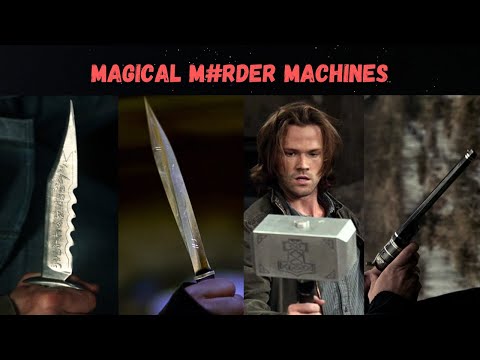
Supernatural's Arsenal: A Pragmatic Look at Mythic Weapons


In the gritty world of Supernatural, the Winchester brothers didn't just rely on grit and a souped-up Impala. Their survival against celestial beings, demonic hordes, and cosmic entities hinged on a diverse, often arcane, arsenal. But beyond the on-screen spectacle, what makes these weapons truly compelling from a practitioner's perspective? It's not just about their power, but their origin, limitations, and the underlying principles they represent. From the pragmatic ingenuity of human craftsmanship to the raw force of divine artifacts, let's dissect the keys to their effectiveness.

The Colt: Human Ingenuity Against the Divine

The Colt is more than just a powerful firearm; it's a testament to human will and a significant artifact in the lore. Crafted by Samuel Colt himself, it possesses the extraordinary ability to kill virtually anything – demons, spirits, and even lesser gods. The fact that a human could forge an instrument capable of challenging beings of immense power is a core theme. As one commenter aptly noted, "The thing I love about the Colt is that it was made by a regular human, and yet it was powerful enough to kill a prince of hell... shows just how impressive the Colt actually is." This highlights the principle that intent and craftsmanship can imbue an object with tremendous power, regardless of the creator's supernatural status. However, its effectiveness is also tied to its limited ammunition, a crucial constraint that forces strategic thinking rather than brute force. Missing a shot with the Colt is far more catastrophic than with any other weapon.

Angel Blades and Archangel Blades: Celestial Conflict

Angel blades represent the internal policing mechanism of Heaven. Ordinary angel blades are designed to kill angels, a necessity given that angels cannot smite their own kind through natural means. The existence of these blades suggests a proactive approach by the Heavenly Host, likely established to maintain order and deal with rogue angels. The lore, as discussed in community comments, suggests they might have been a response to the threat posed by Lucifer and his followers.

"My headcanon was that the angel blades came about because of Lucifer and lesser fallen angels. The heavenly host decided (maybe by themselves or maybe told by god) it was a good idea for angels to have something that could kill any of their brethren who go against heaven."

The Archangel blade, visually distinct and capable of harming even Archangels, presents a higher tier of celestial combat. The initial disappointment with its Season 5 appearance, where it was visually identical to a regular angel blade, underscores the importance of distinct symbolism in magical artifacts. Its later reintroduction with a golden, unique appearance and the lore that only an Archangel can wield it solidifies its status as a specialized, high-level weapon. This distinction is vital for understanding the hierarchy of power within celestial beings.

The First Blade: Power Bound by Sin

The First Blade is perhaps one of the most terrifying weapons in the series, intrinsically linked to Cain and the Mark of Cain. Its power is not inherent in its forging, but in its association with the first murder and the subsequent corruption it inflicts. As the comments suggest, "It also heavily implies that Cain made the blade. What most likely happened is that Cain struck the deal with Luci, made the blade then poked Abel with it." This connection to primal sin and bloodlust makes it a weapon of immense destructive potential, but one that comes at the cost of the wielder's soul. It embodies the principle that some powers are too dangerous to wield, not because they are uncontrollable, but because they corrupt the user. The lore that it required the Mark of Cain to unlock its full potential highlights the symbiotic relationship between the wielder and the artifact, a common theme in technomancy.

Demonic Tools and Cursed Artifacts

Beyond the celestial and the primal, the show features a variety of demonic weapons and cursed objects. The "British Men of Letters" brass knuckles, enchanted with Enochian symbols to harm angels, exemplifies a more localized and specialized form of magic. These are not cosmic instruments but tactical tools born from specific knowledge and intent, akin to bespoke digital sigils. The evolution of the Winchester's approach, from "exercising" demons to outright stabbing them, reflects a pragmatic shift in tactics as they faced increasingly dire threats. This mirrors the evolution of any practitioner: initial caution giving way to decisive action as experience grows.

Divine Artifacts: Mjolnir, Staff of Moses, and More

The series frequently draws from real-world mythology, bringing artifacts like Mjolnir and the Staff of Moses into play. Mjolnir, Thor's hammer, embodies raw, blunt force, a weapon of the storm and, as noted, historically is depicted as incredibly heavy, requiring divine aid to wield. The Staff of Moses, on the other hand, represents versatility: capable of unleashing plagues, parting waters, and transforming into a serpent. These artifacts remind us that true power often lies not just in destruction, but in control and manipulation of fundamental forces. Their inclusion also ties into broader traditions of esotericism, suggesting that even ancient myths hold practical keys to understanding reality.

Technomantic Considerations

Considering these weapons through the lens of magitech, we see patterns of intent, energy infusion, and symbolic resonance. The Colt, a product of skilled human craftsmanship, is a precursor to what could be achieved with advanced AI in ritual. Angel blades, while divine in origin, function through a specific mechanism designed for a particular outcome, much like a finely tuned algorithm. The First Blade's power, tied to a "Mark," is a stark example of how binding specific energetic or symbolic conditions can amplify or corrupt an artifact's function. Even the seemingly simple act of holding a sword, as playfully observed in one comment ("holding it like a lit firework"), plays into the psychodrama of ritual performance crucial for gnostic states. The idea of a "dragon sword" requiring dragon blood also taps into sympathetic magic principles, where a part of the target is used to create an effective counter.

Mage's Arsenal

  • Essential: Chaos Magick Sigil Generator - For designing and manifesting your own powerful intentions, whether for weapons or personal goals. Essential for translating pure will into tangible forms.
  • Highly Recommended: The Colt Revolver Replica (Prop) - For inspiring the mindset of tactical precision and the power of human-made arcane tools.
  • Recommended: Books on Enochian Magic & Talismans - To understand the principles behind enchanted items like the British Men of Letters brass knuckles.
  • Recommended: "Liber Null & Psychonaut" by Peter J. Carroll - For understanding the practical application of will and the creation of potent magical constructs, mirroring the power dynamics seen in the show. Features insights from Austin Osman Spare.
  • Reference: "The Complete Book of Norse Mythology" - To delve deeper into the origins of artifacts like Mjolnir and understand their mythological context.

Practitioner's Verdict

From a practical magic standpoint, the most consistently useful weapons are those that leverage clear principles of intent and energy. The Colt, despite its ammunition limitations, is a prime example of a focused, human-crafted tool designed for maximum efficacy. Angel blades, while specific to angels, represent a well-defined magical construct. The First Blade serves as a potent cautionary tale: power derived from pure malice and sin is a path to self-destruction. Artifacts like the Staff of Moses, however, hint at a more profound level of magic – the ability to manipulate fundamental forces. Ultimately, the effectiveness of any weapon in Supernatural, much like in real-world occultism, boils down to understanding its origin, its limitations, and the wielder's own state of being and intent. The "Winchester Way" often involved a blend of supernatural artifacts and sheer, bloody-minded resolve – a combination that cannot be underestimated.

FAQ

  • Which weapon is the most versatile?
    The Staff of Moses is arguably the most versatile due to its ability to transform and enact broad magical effects, from plagues to elemental control.
  • Could the Colt kill God or The Darkness?
    While stated to kill "anything," its efficacy against cosmic beings like God or The Darkness is questionable. The lore suggests these entities exist on a fundamental plane beyond the Colt's intended scope, although it could harm them.
  • What is the difference between an Angel Blade and an Archangel Blade?
    An Angel Blade is designed to kill angels, while an Archangel Blade is significantly more powerful, capable of killing other Archangels, and can only be wielded by them.
  • How did the First Blade gain its power?
    Its power is linked to the first act of murder committed by Cain, and later amplified when coupled with the Mark of Cain. Its destructive potential is tied to sin and corruption.
  • Are the weapons in Supernatural based on real mythology?
    Yes, many are directly inspired by or are direct interpretations of mythological artifacts and concepts, such as Mjolnir, the Staff of Moses, and various demonic/angelic lore.

Your Operation: The Symbol of Personal Power

You've seen the diverse arsenal wielded to combat supernatural threats. Now, it's time to integrate these principles into your own practice. Your operation is not about wielding a cosmic hammer, but about crafting your own symbolic tool of power. Design a sigil that represents your personal will to overcome obstacles, whether they are external challenges or internal limitations. Focus on the clarity of your intent, the symbolic resonance of the design, and the energy you imbue it with. Remember the Colt’s effectiveness stemming from its human-made precision and the Archangel Blade’s specific function. Your sigil is your bespoke tool – make it count.

For a practical approach to creating and focusing your intentions, I recommend using [Chaos Magick Sigil Generator]. It’s an excellent tool for translating your will into potent symbols, streamlining the process of ritualistic design and manifestation.

Practitioner's Note: True magick requires resources. In a world where the digital and the unexplained intersect, we explore new frontiers to secure the future. Do you dare to be part of the vanguard? Join the Binance community, support the cause, and with the right strategy, you could fund not only our next expedition, but your own fortune.

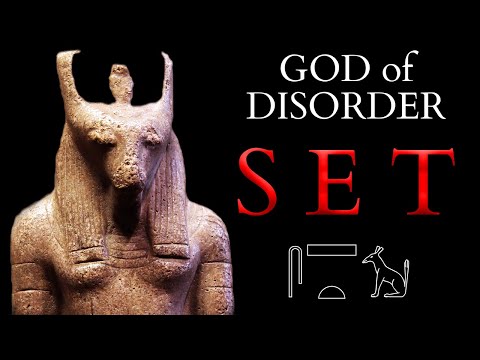
Set: The Enigmatic God of Chaos and Cosmic Balance in Ancient Egypt


The ancient Egyptian pantheon is a tapestry woven with threads of order, divine providence, and, intriguingly, chaos. Among its most enigmatic figures stands Set (or Seth), a deity whose nature defies simple categorization. He is simultaneously the murderer of Osiris and the contender against Horus, yet also the protector of Ra and the god of the frontier. To understand Set is to delve into the very heart of Egyptian cosmology, where duality and contradiction are not flaws, but fundamental forces shaping reality. This exploration will trace his historical presence, his complex roles, and his eventual synthesis with other deities, highlighting his enduring relevance, even in the modern age. The age of the internet, with its inherent confusion and rapid shifts, might just be the age of Set.

Who is Set? The God of Chaos and Contradiction

Set is a deity of profound paradox. He embodies the wild, untamed aspects of existence: the scorching desert, violent storms, and the foreign lands that bordered Egypt. Yet, he is not merely a destructive force. His dominion over the frontier implies a role in guarding Egypt's borders from external threats, a critical function in a civilization deeply concerned with maintaining cosmic order (Ma'at). His association with violence can be seen not just as aggression, but as a necessary force for destruction that clears the way for creation, a principle deeply understood in various esoteric traditions, including modern Chaos Magick. This duality makes him a figure of both dread and respect, revered even by dynasties like the Ramessides, who adopted him as a patron deity.

Set's Role in Key Egyptian Myths

Set's most famous mythological role is that of Osiris's murderer and Horus's adversary. In the Osiris myth, Set, driven by jealousy or a desire for power, dismembers his brother Osiris and scatters his body parts across Egypt. This act initiates a cycle of conflict that defines much of Egyptian mythology. However, this account is often simplified. Some interpretations suggest Set's actions, while brutal, were part of a larger cosmic drama that ultimately led to Osiris becoming the ruler of the underworld, ushering in the concept of the afterlife. His struggle with Horus, the rightful heir, is a dramatic representation of the perennial conflict between established order and disruptive forces, a theme echoed in cultures worldwide. It's a stark reminder that even within a system of law and order, the disruptive element plays a vital role; as Dr. James Justin Sledge noted, "The chaos of creation and the routine of consistent productivity—too much of either is probably destruction: through the disorder of pure difference, or the living death of pure repetition..."

The Enigmatic 'Set-Animal'

The exact zoological identity of the creature associated with Set remains a subject of debate among scholars. Often described as a "Set-animal" or "typhonian beast," it possesses a curved snout, erect ears, a slender body, and a forked tail. Theories range from aardvarks and donkeys to mythical composite creatures. This ambiguity is fitting for a god of confusion and the unpredictable. Some argue that the Was-scepter, a symbol of divine power and dominion, was a stylized representation of the Set-animal, suggesting that even in his more accepted roles, the essence of his chaotic strength was present. This association with divine strength, even when his veneration waned, highlights his fundamental position within the Egyptian pantheon.

Set's Cosmic Battles: Defender of Ra

Beyond his familial conflicts, Set played a crucial role in the daily solar journey of Ra, the sun god. Each night, Ra traversed the underworld in his solar barque, a journey fraught with peril. The greatest threat was Apophis (Apep), the embodiment of primordial chaos, who sought to devour the sun and plunge the cosmos into darkness. It was Set who famously stood at the bow of the solar barque, wielding his strength to fend off Apophis's attacks and ensure Ra's safe passage and rebirth each morning. This position makes Set a vital protector of cosmic order, a stark contrast to his role as a disruptor within the Ennead. He is the necessary force that battles the ultimate chaos, embodying the principle that order often arises from, or is defended by, a controlled form of destructive power. This dynamic is central to understanding the complexities of Esotericism.

Syncretism: Set's Merging with Other Deities

Throughout history, Set's complex nature led to his syncretism with deities from other cultures. The Egyptians, in their interactions with foreign peoples, often identified their own gods with the deities of their neighbors. Set was notably equated with the Canaanite storm god Ba'al, sharing attributes of thunder, lightning, and fertility. More intriguingly, in some historical periods, there were attempts to equate him with the deity of the Hebrews, Yahweh. This often stemmed from the perception of Yahweh's actions within the Exodus narrative—plagues, conquest, and divine fury being seen as consistent with the domain of the god of chaos. Furthermore, in some interpretations of later syncretic texts, certain figures in the Greek Magical Papyri seem to draw upon Set's attributes, blending his chaotic and protective aspects into new magical frameworks. This ability to absorb and integrate other powers speaks to the potent and adaptable nature of his archetype, a concept that resonates deeply with the ideas of Technomancy and the fluid nature of digital deities.

Set's Influence in Later Magical Traditions

Set's dual nature as both destroyer and protector, chaos and order, made him a fascinating figure for later magical traditions. In the Greek Magical Papyri, his influence can be seen in spells that harness chaotic energies for protection or transformation. His association with the desert and the untamed could be invoked for rituals requiring a connection to raw, primal forces. The acknowledgment of his role in battling Apophis also positioned him as a guardian against ultimate dissolution. For those exploring the fringes of occultism, Set represents the potent, untamed will that can be directed towards specific ends, a principle central to the practice of sigil creation, which is beautifully facilitated by tools like the Chaos Magick Sigil Generator. The ability to harness and direct chaotic intent is the hallmark of advanced Magick.

Modern Interpretations and the Age of Set

In contemporary times, Set continues to fascinate. His archetype resonates with the modern experience of information overload and rapid societal change. As one commentator noted, "the age of the internet may very well be the age of Set." He embodies the confusion, the disruption, and the overwhelming influx of stimuli that characterize our digital lives. Yet, like in ancient Egypt, there is also a recognition of the wisdom and clarity that can emerge from this chaos. Many find a parallel in Set's complex relationship with Ma'at, suggesting that true order is not the absence of chaos, but its integration and management. His popularity in modern mytho-poetic contexts, from fiction to gaming, underscores his enduring power as a symbol of the dark, yet essential, forces that shape our reality. This makes the study of such figures increasingly relevant for practitioners of Digital Divination and those exploring Rituals with AI.

Mage's Arsenal: Essential Resources for Studying Set

  • Esoterica Channel Patreon: For deeper dives and exclusive content that fosters your personal practice and understanding of figures like Set. Learn more.
  • Set: God of Confusion by Hans te Velde: A scholarly exploration that delves into the complexities of Set's nature and worship. (Essential for serious students).
  • Pinch's Egyptian Mythology: A Guide to the Gods, Goddesses, and Traditions of Ancient Egypt: A comprehensive overview of the Egyptian pantheon, providing crucial context for Set's place within it.
  • Lichtheim's Ancient Egyptian Literature (Vols. 1-3): For direct access to the primary texts and narratives that shaped the understanding of Egyptian deities, including Set.

Verdict of the Practitioner

Set is more than just a villain; he is a vital cosmic principle. While his antagonistic roles are undeniable, his position as defender of Ra and god of the frontier reveals a profound understanding of balance. In the realm of practical magic, recognizing Set means acknowledging that disruption is a necessary precursor to creation. His archetype is a powerful reminder that embracing the chaotic, the foreign, and the even the 'poisonous' aspects of existence can lead to profound growth and transformation. For those who seek to navigate the complexities of reality, understanding Set offers a potent key to harnessing the forces of change. Investing in detailed scholarship, like te Velde's work, is paramount to moving beyond simplistic interpretations. For those on the forefront of exploring digital esotericism, concepts such as Cybermancy and the creation of Sigils Digitales draw heavily from the principles embodied by Set.

Frequently Asked Questions

  • Is Set purely an evil god? No, Set is a god of duality. While he is associated with violence and chaos, he also plays a crucial role in protecting the sun god Ra from Apophis, the embodiment of ultimate chaos.
  • What animal is Set associated with? The exact identity of the "Set-animal" is debated, but it is often described as a mythical creature with distinctive features like a curved snout and upright ears. Some scholars link it to a stylized representation of the Was-scepter.
  • Why was Set equated with other gods like Ba'al or Yahweh? Syncretism occurred when cultures interacted. Set's attributes of storm, violence, and foreignness led to his identification with similar deities from neighboring regions, including Ba'al and, in some historical interpretations, Yahweh, due to perceived similarities in divine actions.
  • How does Set relate to modern magical practices? Set's archetype of chaos, disruption, and transformation makes him relevant to modern occultism, particularly in Chaos Magick, where the conscious manipulation of belief and reality is paramount. His role in battling ultimate chaos also resonates with practitioners seeking to overcome existential threats.

Your Operation: Embracing the Chaotic Principle

Your operation today is to begin integrating the principle of Set into your understanding of reality. Reflect on a situation in your life that feels chaotic or out of control. Instead of solely viewing it as negative, ask yourself: What potential for creation or transformation lies within this disorder? How can this 'foreign' element in your life serve as a frontier of new understanding or a battleground for your personal order (Ma'at)? Consider how the very disruption might be clearing space for something new. This is not about passively accepting chaos, but actively engaging with it, much like Set at the bow of Ra's barque. For those looking to actively shape their intent and manifest change, exploring the practical applications of sigil creation with tools such as the Chaos Magick Sigil Generator can be an effective way to channel this potent, dynamic energy.

Practitioner's Note: True magick requires resources. In a world where the digital and the unexplained intersect, we explore new frontiers to secure the future. Do you dare to be part of the vanguard? Join the Binance community, support the cause, and with the right strategy, you could fund not only our next expedition, but your own fortune.

A World Without Religion: A Pragmatic Exploration


Can we truly conceive of a reality devoid of religious frameworks? It's a thought experiment that opens a Pandora's Box of societal, ethical, and even existential questions. The concept of divinity, sacred texts, and organized worship are so deeply interwoven into the fabric of human history that their absence feels almost unimaginable. This exploration isn't about demeaning faith, but about pragmatically dissecting the potential ripple effects, both absurd and profound, on our collective consciousness and societal structures. We’ve seen various interpretations of this hypothetical, from humorous alternate histories to starkly different moral landscapes. Let's peel back the layers.

The Butterfly Effect: Unforeseen Consequences

When we propose a world without religion, we're not just removing doctrines; we're altering countless historical and cultural trajectories. Consider the subtle shifts: the nuances of gratitude, as observed in Japanese traditions like saying "いただきます" (itadakimasu), which acknowledges the collective effort behind a meal. In a non-religious context, this can evolve into a profound appreciation for society and the interconnectedness of all beings, a secular reverence for existence itself. This demonstrates that the impulse for expressing thanks and recognizing the contributions of others isn't inherently tied to divine acknowledgment.

Extrapolate further, and the effects become more fantastical, yet illustrative. Imagine historical timelines diverging wildly: perhaps the Aztecs, without the influence of Spanish Catholicism, maintain their dominance in modern Mexico, or ancient Egyptian mythology, itself a complex system of beliefs, continues to evolve, perhaps leading to unique cultural syntheses. As one commentator amusingly suggested, "The Egyptian Avengers." These scenarios highlight how deeply religious beliefs have shaped historical events, political landscapes, and even artistic expressions. The absence of a specific religious doctrine could indeed trigger a cascade of changes, a veritable butterfly effect altering the course of civilization.

This thought experiment also touches upon the very human need for narrative and meaning. Even in a world devoid of traditional religion, humanity would likely seek to fill that void. The comment about "You could make a religion out of this" points to our innate tendency to create belief systems, rituals, and structures that provide order and purpose. Whether it's the reverence for a butcher who has earned respect through their craft, or a secular appreciation for the farmers and workers who provide sustenance, the underlying principle remains: finding meaning in collective action and individual roles.

"The cow wasn't even thanked for sacrificing its life." This cynical observation highlights how, even in secular contexts, ethical considerations around sacrifice and acknowledgment would persist. It forces us to confront the practical implications of our actions and our responsibilities towards other living beings, regardless of religious affiliation.

Ethics Without Dogma: A New Moral Compass?

A significant question arises: could a society function ethically without religious tenets? The argument isn't that religion is the sole source of morality, but that it has historically provided a widely accepted framework for right and wrong. In its absence, would societal chaos ensue? The evidence suggests otherwise. Many find basic human empathy and an innate sense of right and wrong sufficient. The core principles of respect, fairness, and compassion can exist independently of divine commandments. In fact, some argue that secular ethics, grounded in reason and empathy, can be more robust and adaptable than those based on ancient texts.

This isn't to say that the transition would be seamless. The potential for "other ways of hating each other" remains a potent, albeit cynical, observation. Human nature, with its capacity for conflict, might simply find new justifications for division. However, the crucial difference lies in the *source* of justification. Without religion as a potential shield or catalyst for conflict, disagreements might be addressed through more pragmatic, albeit still contentious, means – perhaps even through a bizarre form of inter-country "cook-offs" for dominance, as humorously posited by one viewer.

Moreover, the absence of religious dogma doesn't necessarily equate to an absence of profound meaning or a sense of wonder. Mythology, in its broader sense – the collection of stories, symbols, and archetypes that shape our understanding of the world – would likely persist. The tales of gods, monsters, and heroes, whether framed religiously or secularly, fulfill a deep-seated human need for narrative and heroic archetypes. The comment mentioning "Joseph and the Amazing Technicolor Dreamcoat?" hints at the enduring power of such narratives, even when presented in a non-religious context.

The Persistence of Myth: Stories We Tell Ourselves

The hypothetical world explored here doesn't necessarily become a sterile, purely rational landscape. It suggests a reality where mythology, in its broadest sense, might still thrive. The fascination with ancient Egypt, for instance, points to the enduring appeal of its rich mythological tapestry. Even without a formalized religion, these stories, symbols, and archetypes continue to capture the imagination. This concept of secular mythology is crucial; it acknowledges our need for grand narratives and symbolic frameworks, whether they originate from divine revelation or collective human imagination.

The idea that "mythology would still exist in some way shape or form" is powerful. It implies that the human drive to understand the cosmos, our place within it, and the fundamental questions of existence would not disappear. Instead, these questions might be explored through philosophy, art, science, and new forms of storytelling. The exploration of existence, akin to the secular appreciation for the interconnectedness of life, would simply be reframed. This is where the practical tools of understanding the world become paramount.

Practical Applications: Arsenal of the Mind: Tools for Navigating Reality

Navigating a complex reality, whether it's shaped by millennia of religious thought or a sudden secular paradigm, requires effective tools. For the modern practitioner, the ability to generate and manifest intentions is paramount. This is where the fusion of ancient principles and modern technology becomes indispensable. The creation of sigils, for example, a core practice in chaos magic, requires focused intent and symbolic representation. Manually crafting these can be tedious and prone to error, potentially disrupting the gnosis state. This is precisely why tools designed for efficiency and precision are invaluable.

The practical aspect of exploring such concepts also benefits from structured approaches. Understanding the philosophical underpinnings of a world without religion can be enhanced by examining how ancient belief systems influenced societal structures, ethical codes, and even everyday practices. This is where deep dives into history, anthropology, and comparative religion become crucial. For the serious practitioner, however, the true value lies in applying these insights. The ability to generate and refine intentions, to create personal symbols of power, and to understand the energetic mechanics of manifestation are skills honed through practice. These are not merely academic exercises, but practical techniques for shaping one's reality.

"The fact that it isn't pure chaos because people still have basic human empathy and respect and ultimately ideas of right and wrong is really great." This observation underscores the resilience of human morality. While religion has often been a codifier of ethics, the underlying capacity for ethical reasoning and social cohesion appears to be a fundamental aspect of human psychology.

Practitioner's Verdict

The hypothetical "world without religion" is less a destination and more a lens through which to examine our current reality. It forces us to confront the functions religion has served – providing moral frameworks, community, meaning, and ritual – and to consider how these needs might be met in its absence. The humorous outcomes, while entertaining, serve to illustrate the profound and often underestimated impact of religious belief on history and culture. Ultimately, this thought experiment highlights that human beings are inherently meaning-making creatures, driven by empathy, narrative, and a desire for order, whether that order is divinely ordained or humanly constructed. The true magic lies not in the belief system, but in the conscious cultivation of intention and ethics.

Frequently Asked Questions

  • Q: If religion disappeared, would morality disappear with it?
    A: Not necessarily. Human empathy, reason, and social contracts can form the basis of a robust ethical system, independent of religious dogma.
  • Q: What would happen to historical events and cultural traditions without religion?
    A: Historical trajectories and cultural development would be drastically altered. Many traditions and societal structures are deeply intertwined with religious beliefs.
  • Q: Could mythology still exist without formal religion?
    A: Yes. Mythology, as the human need for narrative, symbols, and understanding existence, would likely persist, possibly taking new forms through art, philosophy, or secular storytelling.
  • Q: Is there a practical benefit to exploring this "world without religion"?
    A: Yes, it encourages a pragmatic assessment of societal structures, ethical frameworks, and the human need for meaning, prompting us to understand the functions religion has served and how those needs might be met otherwise.

Your Operation: A Personal Paradigm Shift

Consider your own framework of ethics and meaning. If you were to strip away all religious or dogmatic influences, what would remain? Identify one core principle that guides your actions, independent of external decree. How can you strengthen this principle in your daily life, not through adherence to a creed, but through conscious practice and intentional focus? Reflect on how the narratives you consume, whether from ancient myths or modern media, shape your understanding of purpose. What new narratives can you consciously create or embrace to build a more meaningful and ethical personal reality?

Practitioner's Note: True magick requires resources. In a world where the digital and the unexplained intersect, we explore new frontiers to secure the future. Do you dare to be part of the vanguard? Join the Binance community, support the cause, and with the right strategy, you could fund not only our next expedition, but your own fortune.

How Ancient Deities Became Demons: A Historical Deep Dive


The whispers of forgotten gods echo through the halls of history, their forms once radiant and revered, now shrouded in shadows of demonization. It's a narrative as old as conquest itself: the victors rewrite the spiritual landscape, transforming the divine figures of the vanquished into instruments of terror. This exploration delves into the intricate tapestry of religious conflict, cultural metamorphosis, and theological evolution that led to the vilification of ancient pagan gods and potent esoteric symbols.

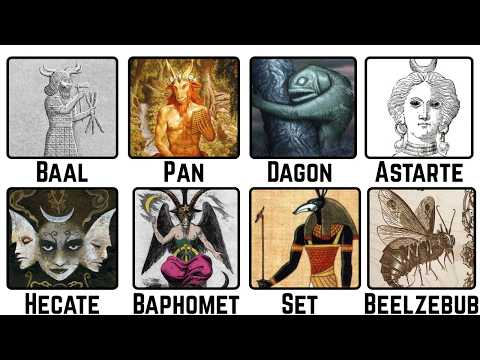
We will dissect the historical journeys of figures like Baal, Pan, Dagon, Astarte, Hecate, Set, and even Baphomet. Witness how storm gods, the embodiment of primal power, and fertility goddesses, creators of life, were twisted into demonic archetypes. Trace the descent of nature spirits, once benevolent guides, into figures of corruption, and how powerful occult symbols became synonymous with malevolence in later Jewish and Christian narratives. Our journey spans from the ancient fervor of Canaanite religion and the rich mythology of Mesopotamia, through the philosophical depths of Greek mythology and the enigmatic pantheon of Egyptian mythology, reaching into the crucible of medieval Europe and the mysterious dawn of 19th-century occultism. This is an analytical expedition, revealing how the relentless march of political power, the ascendancy of monotheism, the ambitions of empire building, and the fierce competition between faiths reshaped the spiritual iconography across millennia, all without succumbing to sensationalism.

The Fall of Baal: A Storm God's Demise

Baal, often depicted as a powerful storm god, was central to the pantheons of many ancient Near Eastern cultures, including the Canaanites. His worship was deeply intertwined with agricultural cycles and the promise of rain and fertility. However, as monotheistic faiths like Judaism began to solidify their theological frameworks, Baal became a prime target. The narrative presented in texts like the Hebrew Bible often portrays Baal worship as idolatrous and corrupt, directly opposing the worship of Yahweh. This wasn't merely a theological disagreement; it was a political and cultural struggle for dominance. By demonizing Baal, early Israelite leaders effectively delegitimized the religious practices of surrounding peoples, consolidating their own spiritual authority. The fervent attacks on Baal as a false idol set a precedent for the later demonization of other deities.

Consider the complexities of early Hebrew religion. The idea that Yahweh and El were initially distinct storm gods, later synthesized amidst Babylonian influence to forge monotheism, provides a fascinating lens. The concept of Ashtaroth as a divine consort, a representation of the divine mother, highlights the ancient patriarchal shift that often accompanies the rise of singular male deities. This echoes the broader historical trend of masculine deities supplanting feminine principles in positions of ultimate power. The justifications for violence often attributed to these deities in later epochs seem to underscore a human construct of the divine, reflecting our basest traits rather than a loving creator.

Pan's Shadow: From Nature's Embrace to Demonic Wildness

Pan, the goat-footed god of the Greeks, embodied the wild, untamed spirit of nature. His domain was the forests, mountains, and pastoral life, often associated with revelry, music, and primal instincts. As Christianity spread throughout the Roman Empire, figures like Pan became emblematic of paganism's allure and perceived licentiousness. His association with sensuality, wildness, and ecstatic states was reinterpreted through a lens of sin and corruption. The hoofs, the horns, and his association with music and dance were gradually twisted into devilish attributes. The fear of the wild and the unknown, inherent in many human societies, was projected onto Pan, transforming him from a spirit of nature into a symbol of untamed, dangerous forces.

The Hellenistic interpretations of older deities often serve as fertile ground for demonization. When these symbols cross cultural boundaries and encounter new theological systems, their original meanings can be drastically altered. The discomfort with untamed nature and primal urges, often seen in more ascetic or disciplined religious traditions, finds a convenient scapegoat in figures like Pan.

Dagon's Transformation: A Semitic Deity's Descent

Dagon was a prominent Mesopotamian and Canaanite deity, often associated with grain, agriculture, and possibly storms. As a significant god in Philistine culture, his temples and worship were well-established. His prominence made him a direct rival to the rising power of Yahweh in early Israelite narratives. The biblical accounts frequently depict Dagon in opposition to the Ark of the Covenant, portraying his statue falling before it, symbolizing the superiority of the Israelite God. This narrative effectively diminished Dagon's stature, casting him as a lesser, ultimately defeated, idol. The association of sea-dwelling or fish-like imagery sometimes linked to Dagon further lent itself to later interpretations associating him with monstrous or sub-aquatic entities within demonological lore.

It's crucial to acknowledge that "Israelite monotheism" as a fully formed concept likely developed later, primarily within the Kingdom of Judah. Early Semitic peoples, including the Israelites themselves, had a history of polytheism. The integration of deities like Baal Hadad was not "new" to the Israelites, as they were part of the same cultural sphere. Jezebel, often blamed for introducing Baal worship, was in fact bringing back a deity whose worship was already extant.

Astarte's Reimagining: A Goddess of Love and War Corrupted

Astarte (or Ishtar in Babylonian and Assyrian traditions) was a major deity across the ancient Near East, revered as a goddess of love, beauty, sex, fertility, war, and political power. Her worship was widespread and deeply ingrained in the cultural fabric of many societies. In the biblical narratives, Astarte is often equated with Asherah, another goddess whose worship was suppressed by proponents of strict monotheism. The Hebrew Bible frequently condemns the worship of Asherah and Astarte as an abomination, directly linking them to idolatry and spiritual defilement. Her powerful and multifaceted nature, encompassing both eroticism and martial prowess, made her a potent symbol of the "other" that needed to be eradicated by emerging monotheistic systems.

The divine mother figure represented by Astarte and Asherah often clashed with the ascendant patriarchal structures that favored singular male deities. Eradicating the worship of these powerful feminine deities was not just about religious purity; it was about asserting a new social and political order where masculine principles dominated.

Hecate's Midnight: The Sorceress of the Crossroads

Hecate, a goddess from the pre-Hellenic pantheon, later integrated into Greek mythology, was associated with magic, witchcraft, the night, moon, ghosts, and crossroads. She was often depicted as a powerful, enigmatic figure, sometimes with three faces or bodies, presiding over liminal spaces and transitions. As Christianity became the dominant religion in Europe, Hecate, with her strong ties to magic and the nocturnal realm, became an easy target for demonization. She was increasingly conflated with witches and demonic entities, her traditional domains of shadowy places and mystical knowledge becoming associated with malevolent sorcery and pacts with the devil. Her complex nature, existing on the fringes of the Olympian pantheon, made her a convenient symbol for all that was considered dark and forbidden.

The association of Hecate with liminal spaces—crossroads, boundaries, the threshold between worlds—is a potent metaphor for her position in religious history. She represents the "other," the power that exists outside the established order, making her an ideal figure to be cast as demonic when that order shifts.

Set's Rebellion: The Egyptian God of Chaos

In ancient Egyptian mythology, Set was the god of chaos, deserts, storms, and foreigners. He was a complex deity, often depicted as an antagonist to Osiris and Horus, representing the untamed forces that threatened the ordered cosmos represented by the pharaoh and the established religious system. While an integral part of the Egyptian pantheon, Set's disruptive nature made him a symbol of disorder. When foreign powers or religious ideas gained influence in Egypt, figures like Set, representing chaos and the "other," could be more easily demonized or reinterpreted as malevolent. Later traditions, particularly those influenced by Abrahamic religions, sometimes drew parallels between Set and demonic figures due to his role as an antagonist and his association with disruptive, "unclean" domains like the desert.

The concept of an "Egyptian monotheism" under Akhenaten, though brief, highlights the fluidity of religious thought in the ancient world. The eventual return to polytheism, and the subsequent re-establishment of traditional deities, shows how religious identities were constructed and contested, often by absorbing or reinterpreting elements from neighboring cultures.

The Enigma of Baphomet: A Symbol's Perilous Evolution

Baphomet is a figure that first gained notoriety during the trials of the Knights Templar in the early 14th century. Accused of heresy, the Templars were alleged to have worshipped an idol known as Baphomet. The exact nature of this idol remains obscure, but it became a potent symbol of heresy and devil worship in the Christian imagination. Centuries later, in the 19th century, occultists like Éliphas Lévi reinterpreted Baphomet as a symbolic representation of the reconciliation of opposites—male and female, good and evil, light and dark—often depicted with a human body, goat's head, and wings. This symbolic, esoteric interpretation, however, did not erase the earlier association with devil worship. In modern popular culture and certain fringe interpretations, Baphomet continues to be linked with Satanism and demonic forces, illustrating how symbols can acquire new, often darker, meanings through historical association and cultural fear.

The perception of Baphomet illustrates how a symbol's meaning can be violently re-written. From a potentially misunderstood idol of a disgraced military order to a complex arcane sigil, its journey is a testament to the power of narrative and fear in shaping our understanding of the "other."

The Alchemy of Divinity: Why Gods Become Demons

The transformation of pagan deities into demons is not merely an artifact of religious history; it is a recurring pattern woven into the fabric of human civilization. It is a powerful illustration of how power structures, cultural dominance, and the fear of the unknown can reshape our spiritual narratives. The demonization of ancient gods served multiple purposes: it legitimized the conquering religion, consolidated theological and political power, and provided a framework for understanding and controlling perceived threats—whether they were external cultures or internal anxieties.

Ultimately, figures like Baal, Pan, Dagon, Astarte, Hecate, Set, and Baphomet remind us that the divine is not static. It is a fluid concept, constantly being reinterpreted, redefined, and, at times, actively suppressed by the forces that seek to impose their own spiritual order. Understanding this process is crucial for anyone seeking true esoteric knowledge, moving beyond simplistic good-versus-evil binaries to appreciate the complex interplay of history, power, and belief.

Your Operation: Reclaiming the Narrative

The historical demonization of ancient deities reveals a pattern of control and redefinition. Consider a deity or spiritual figure from your own cultural background or one that resonates with you. How has their portrayal evolved over time? What forces might have influenced this evolution? Your task is to investigate one such figure, looking beyond simplistic interpretations to understand the historical, political, and cultural factors that shaped their perception. Document your findings, noting where the original meaning might have been obscured or intentionally corrupted. This is an exercise in critical thinking and reclaiming the richness of spiritual heritage from the shadows of imposed dogma.


Arsenal del Mago

  • Esencial: Magickal Seals Generator - Para visualizar y generar la esencia de figuras arquetípicas, independientemente de su connotación.
  • *Liber Null & Psychonaut* por Peter J. Carroll - La biblia de la Magia del Caos, fundamental para entender la manipulación de la realidad.
  • *The Golden Bough* por James George Frazer - Un compendio exhaustivo de mitología y rituales comparados a través de culturas.
  • *The Kybalion* - Principios herméticos que subyacen en muchas de estas transformaciones y arquetipos.
  • Un diario de estudio detallado - Para registrar tus propias investigaciones y reflexiones sobre estas figuras.

Preguntas Frecuentes

  • ¿Por qué las religiones monoteístas tienden a demonizar a las deidades de religiones politeístas?
    La demonización sirve para desacreditar las creencias rivales, consolidar la autoridad del nuevo sistema de creencias y marcar una clara distinción entre "lo sagrado" y "lo profano" según la visión del vencedor.
  • ¿Podrían figuras como Satanás ser interpretaciones posteriores de deidades antiguas?
    Existe una fuerte teoría académica que sugiere que el concepto de Satanás en las religiones abrahámicas se desarrolló en parte a partir de la demonización de deidades extranjeras y figuras adversariales de mitologías anteriores, adaptándose a nuevas narrativas teológicas.
  • ¿El Baphomet de los Templarios es el mismo que el Baphomet moderno?
    No necesariamente. El Baphomet de los Templarios es una figura histórica oscura ligada a acusaciones de herejía. El Baphomet moderno, popularizado por ocultistas del siglo XIX, es una representación simbólica compleja con significados esotéricos distintos, aunque la asociación con lo "demoníaco" persiste en la cultura popular.
  • ¿Cómo puedo usar este conocimiento para mi propia práctica mágica?
    Comprender cómo las energías y los arquetipos son manipulados y redefinidos históricamente te da poder. Te permite identificar las capas de significado en los símbolos, deconstruir dogmas y trabajar de forma más consciente con las fuerzas arquetípicas, reconociendo cómo su "naturaleza" puede ser percibida de maneras muy diferentes.

Practitioner's Note: True magick requires resources. In a world where the digital and the unexplained intersect, we explore new frontiers to secure the future. Do you dare to be part of the vanguard? Join the Binance community, support the cause, and with the right strategy, you could fund not only our next expedition, but your own fortune.

Forbidden Rites: Unveiling Asia's Most Extreme Occult Practices


Practice Region Description Potential Dangers
Sokushinbutsu (Self-Mummification) Japan Monks undergo extreme asceticism, dietary restrictions, and meditation to preserve their bodies after death, a practice not universally supported by traditional Buddhist doctrine which often warns against extreme asceticism. Severe physical and psychological toll on the practitioner, potential for misinterpretation of religious tenets.
Ghost Marriage (冥婚) China, Singapore, Malaysia Rituals to marry deceased individuals, often to appease spirits, ensure lineage continuity, or fulfill unfulfilled desires. While often conducted privately by families, historical instances involved grave robbing. Ethical concerns regarding grave desecration, potential for exploitation, familial pressure.
Kulam/Mambabarang (Witchcraft/Sorcery) Philippines Practices involving curses, hexes, and malevolent magic, often fueled by personal grudges or perceived slights. Involves inflicting harm through spiritual means. Psychological distress, potential for real-world harm through manipulation or misdiagnosis (e.g., attributing ailments to curses), social ostracization.
Pocong (Spirit) Indonesia, Malaysia The bound corpse of a deceased person, often depicted as a malevolent entity. Different classifications (white, red, black) suggest varying levels of danger and intent. Fear, psychological distress, potential for manipulation through superstition.
Ma Chơi (Ghost Games) Vietnam Ritualistic games played during sleepovers, blurring lines between playful superstition and genuine engagement with the spirit world. Potential for heightened anxiety or fear in younger participants, blurring of reality and fantasy.

The pursuit of the arcane is a thread woven deeply into the fabric of human history, an enduring testament to our fascination with the unseen forces that shape our world. Across continents, ancient traditions have birthed practices so potent, so steeped in mystery, that they have often been relegated to the shadows, whispered about in hushed tones and, in many cases, permanently banned. Asia, a crucible of spiritual and occult philosophies, offers a particularly rich tapestry of these forbidden rites, each carrying its own weight of spiritual significance, potential power, and profound danger.

It's a common misconception that the pursuit of enlightenment or spiritual power within these traditions is always a serene journey. Often, the path is paved with extreme measures, pushing the boundaries of human endurance and challenging the very definition of sacrifice. This drive for ultimate understanding frequently leads practitioners to the precipice of what society deems acceptable, and beyond.

The Silent Ascent: Sokushinbutsu – A Monk's Final Sacrifice

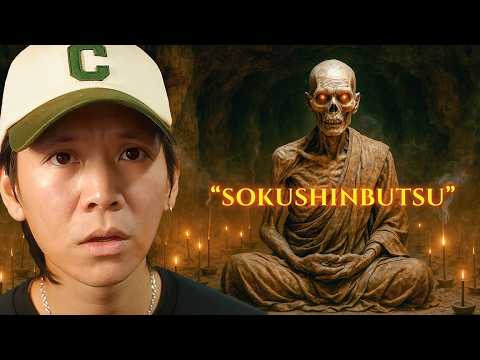
In the rugged mountains and secluded temples of Japan, a practice known as Sokushinbutsu emerged, a testament to an extreme form of devotion that pushes the limits of asceticism. This ritual involved monks undertaking a rigorous, multi-year process of self-starvation, dietary control, and intense meditation, all with the ultimate goal of preserving their physical bodies after death, transforming them into mummified relics. The idea was that such a profound act of self-denial would elevate the monk to Buddhahood, or at least create a sacred artifact to guide future generations.

The process was grueling. Monks would gradually eliminate grains and nuts from their diet, subsisting on bark, roots, and pine needles. This arduous regimen, coupled with constant meditation and chanting, would slowly dehydrate the body and lead to a state of near-death. Upon the monk's final passing, their body, already remarkably preserved, would be placed in a tomb, often with only a small opening for incense, for a further period to ensure complete mummification. The result was a preserved body, revered as a sacred object, resonating with the immense willpower of the ascetic.

It is crucial to understand that this level of self-mortification is not universally endorsed within traditional Buddhism. The concept of "The Middle Way," a core teaching, specifically warns against extreme asceticism and self-flagellation, advocating for a balanced approach to spiritual development. The Sokushinbutsu practice, therefore, represents a radical departure from mainstream Buddhist philosophy, leaning more towards a fervent, almost desperate, quest for ultimate spiritual attainment, often bordering on what many would consider debilitating self-harm. The psychological toll, the intense physical suffering, and the profound isolation required for this practice are beyond comprehension for most.

The Unseen Contracts: Ghost Marriage and the Pact with the Departed

Across East and Southeast Asia, particularly in Chinese, Singaporean, and Malaysian cultures, the practice of Ghost Marriage, or Ming Hun (冥婚), has persisted despite its controversial nature. This ritual involves arranging a marriage between a living person and a deceased individual, or between two deceased individuals. The motivations are varied: to appease restless spirits, to ensure a family lineage continues through the deceased, or to provide companionship for a soul believed to be lonely in the afterlife. Historically, this practice has been linked to grave robbing, where families would steal corpses to perform the ceremony, a grim detail that underlines the desperation and seriousness with which this rite was approached. Imagine the horror of realizing your loved one's remains have been disturbed, not for desecration, but for an otherworldly matrimonial union.

The modern practice, while often less reliant on corpse theft, still carries significant weight. Families may choose a living partner—often a widow or widower, or sometimes a younger relative—to marry the deceased. This union is symbolic, a pact intended to bring harmony between the living and the dead. However, the ethical implications are vast. The act of performing a marriage for profit, or coercing individuals into such unions, raises severe questions about exploitation. The lingering specter of its more violent origins, where the dead were literally stolen to fulfill a ritual, casts a long shadow over the entire tradition. The stories of ghost marriages being held privately, even in recent times, demonstrate that this practice, while potentially outlawed or frowned upon, remains deeply embedded in the cultural consciousness.

Whispers of the Shadow: Kulam and the Philippine Sorceress

The Philippines, an archipelago steeped in a rich tapestry of folklore and spiritual beliefs, is home to practices like Kulam and the machinations of Mambabarang – forms of witchcraft and sorcery that continue to instill fear and awe. These are not mere superstitions; they are living traditions that, for many, represent a tangible threat. The stories abound of individuals targeted by witches, often due to personal disputes, perceived slights, or unrequited desires. One chilling account speaks of a prominent dentist who spurned the advances of a woman with alleged occult affiliations. Soon after, he awoke paralyzed, one leg inexplicably withered to half its size. Local doctors were baffled, but a spirit healer revealed it was a curse, a manifestation of the woman's wrath. The healing process was lengthy, a stark reminder of the potent, and often malevolent, force of these practices.

Another encounter involves an Aswang, a shapeshifting creature from Filipino folklore. While not always malicious, crossing paths with one, especially in its spectral, featureless pig form, can leave a person deeply shaken for weeks. These tales are not just ghost stories; they are descriptions of a palpable spiritual warfare that exists alongside the mundane. The line between genuine spiritual affliction and psychological suggestion is often blurred, with many attributing unexplained illnesses or misfortune to the work of a mangkukulam (witch) or mambabarang (sorceress). The ongoing cultural fascination, even depicting battles between modern-day healers and sorcerers in popular media like "Penduko," highlights how these ancient beliefs continue to shape the perception of reality for many Filipinos, particularly in rural areas.

The Bound Terror: Pocong and the Restless Dead

In the spectral landscapes of Indonesia and Malaysia, the Pocong reigns as one of the most unsettling figures in local folklore. Often depicted as the bound corpse of a deceased person, wrapped tightly in a burial shroud tied at the head, feet, and neck, the Pocong is believed to be unable to move freely, thus its characteristic hopping gait. This visual representation is a stark reminder of death's finality and the potential for spiritual unrest.

Local lore categorizes Pocong into different types, each with varying degrees of malevolence. The common white Pocong is often seen as less dangerous, while the red Pocong is described as far more devious and difficult for traditional shamans, or Bomoh, to handle. The black Pocong is considered the most dangerous, imbued with pure evil and capable of causing death to its victims. The fear associated with the Pocong is so pervasive that it influences everyday behaviors, such as the caution advised when encountering red packets found on the ground. Many believe these packets can be traps, used to lure unsuspecting individuals into performing rituals or becoming ensnared by malevolent entities, a theme explored in films like "Marry My Dead Body" and its Thai remake "Red Envelope." This cultural awareness extends to other spectral beings, like the Pontianak, which also has its own terrifying classifications.

The Ritualistic Game: Ma Chơi and the Spirit's Play

In Vietnam, a less overtly terrifying, yet still intriguing, practice exists: Ma Chơi, which translates to "play ghost" or "play with ghost." This tradition, particularly popular among children during sleepovers, involves a ritualistic game that blurs the lines between innocent fun and genuine engagement with the spirit world. While specific rules can vary, the core idea revolves around invoking or interacting with spirits in a playful context.

Though often dismissed as a children's game, the underlying concept of intentionally engaging with the unseen carries a subtle risk. For young, impressionable minds, the distinction between playful interaction and genuine spiritual contact can become muddled, potentially leading to heightened anxiety, fear, or a distorted perception of reality. The game serves as a cultural touchstone, reflecting a society where the presence of spirits is acknowledged and integrated into various aspects of life, even into childhood pastimes.

Arsenal of the Occultist: Tools for the Unseen Journey

Navigating the complex and often dangerous currents of occult practices requires more than mere intention; it demands the right tools and knowledge. For those serious about delving into these realms, a curated arsenal is indispensable:

  • Books: "Liber Null & Psychonaut" by Peter J. Carroll is foundational for Chaos Magick. "Condensed Chaos" by Phil Hine offers practical guidance, while "The Kybalion" provides ancient esoteric principles. For a deeper dive into specific cultural practices, look for anthropological studies and historical texts relevant to the region you are exploring.
  • Ritual Implements: Depending on the practice, items like a ritual dagger (athame), a wand, consecrated chalices, and specific types of incense (sandalwood, frankincense, myrrh) can serve to focus intent and energy.
  • Divination Tools: Tarot decks, such as the Thoth deck for its complex symbolism, or even simpler Rider-Waite variants, can offer insights. Scrying mirrors or bowls of water are also classic tools for divination.
  • Journals: A dedicated journal is paramount for recording spells, sigils, dream work, and ritual outcomes. This is crucial for tracking progress and understanding the subtle energies at play.
  • Digital Resources: Modern practitioners can leverage astrology apps for timing, sigil generators for creation, and secure digital platforms for note-taking. However, always ensure the security and privacy of your work.

The Practitioner's Verdict: Navigating the Forbidden

The occult practices detailed here are not for the faint of heart. They represent the extreme edges of spiritual and psychological exploration, often pushing individuals to their absolute limits. Sokushinbutsu demands unparalleled self-discipline and physical endurance, Ghost Marriage grapples with profound ethical and spiritual complexities, while Kulam and Pocong tap into primal fears and the tangible impact of malevolent spiritual forces.

These practices, while perhaps banned or relegated to the fringes, serve as powerful reminders of humanity's enduring quest to understand life, death, and the forces that lie beyond our perceived reality. They highlight the diverse ways cultures attempt to mediate with the spiritual realm, often through methods that defy conventional understanding and societal norms.

Your Operation: Define Your Relationship with the Unseen

After exploring these potent and often forbidden rites, it's time to confront your own relationship with the unseen. Consider the following:

  • Do the cautionary tales of these practices resonate with your own understanding of spiritual power and its potential for misuse?
  • If you were to engage with any of these traditions (hypothetically, and with extreme caution), what ethical considerations would be paramount in your approach?
  • How does the cultural context of these practices shape their perceived danger and spiritual significance?

Share your reflections and insights in the comments below. Let's engage in a dialogue about the true nature of power, sacrifice, and the unseen forces that continue to shape our world.

Practitioner's Note: True magick requires resources. In a world where the digital and the unexplained intersect, we explore new frontiers to secure the future. Do you dare to be part of the vanguard? Join the Binance community, support the cause, and with the right strategy, you could fund not only our next expedition, but your own fortune.

Unveiling Every Divine Feminine Archetype: A Pragmatic Exploration for Modern Practitioners


The tapestry of the human psyche is interwoven with powerful, recurring patterns. These aren't mere characters in ancient myths; they are the very architecture of our inner experience, potent forces shaping our reality. The Divine Feminine, far from being a simplistic notion of "niceness," is a complex spectrum of energies. Understanding these archetypes is not about blind belief, but about recognizing and harnessing these forces within ourselves. This exploration delves into the core feminine archetypes, dissecting their psychological and spiritual functions to equip you for your own practice, moving beyond mere storytelling into actionable self-mastery.

Tabla de Contenidos

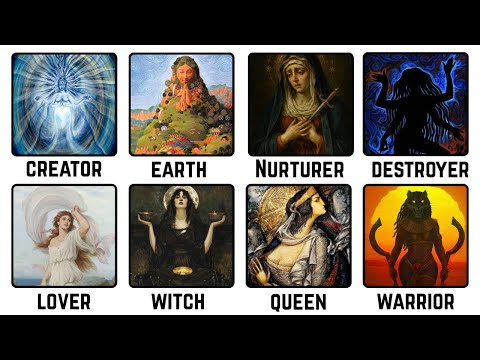
The Creator / Cosmic Mother: The Prime Mover

Before anything can manifest, it must first be conceived. The Creator archetype embodies pure potential, the primordial force of genesis. Think of it not as a gentle nurturer, but as a raw, unbridled power that sparks existence into being. This isn't about passive creation; it's the dynamic impulse that initiates all things. Psychologically, it represents our capacity for original thought, innovation, and the sheer will to bring something new into the world. It’s the cosmic breath that ignites stars and, on a personal level, the surge of inspiration that drives breakthroughs. Understanding this archetype means recognizing the inherent power of intention at its most foundational level. For those seeking to initiate new projects or overcome inertia, attuning to the Creator energy is paramount. This raw power is often explored in advanced texts on cosmology and the origins of consciousness.

The Earth Mother: Foundation and Sustenance

Once created, life requires grounding and sustenance. The Earth Mother is the archetype of the physical realm, the provider of resources, and the anchor of reality. She represents fertility, abundance, and the nurturing embrace of the planet itself. Psychologically, this archetype connects us to our physical bodies, our need for security, and our capacity to sustain ourselves and others. It's the energy that allows life to flourish, providing the dense, tangible energy necessary for existence. This archetype is deeply tied to the cycles of nature, growth, and the physical expression of abundance. Many cultures represent this through deities associated with agriculture and the land. Exploring the connection between elemental forces and archetypal expression, particularly earth and water, can offer profound insights into this energy. If you find yourself disconnected from your physical reality or struggling with grounding, invoking the Earth Mother’s energy can be profoundly stabilizing.

The Nurturer / Caregiver: The Heart of Compassion

The Nurturer embodies empathy, compassion, and selfless care. This is the energy that tends to wounds, soothes distress, and fosters growth through gentle attention. Psychologically, it’s our capacity for deep connection, unconditional love, and the drive to protect and heal. While sometimes associated with a milder form of feminine energy, the Nurturer's power lies in its unwavering dedication and its ability to create a safe haven. It’s the energy that allows communities to thrive and individuals to feel seen and supported. This archetype also highlights the importance of self-care; to nurture others effectively, one must first tend to their own inner wellspring. Many find solace and guidance through practices dedicated to the Nurturer, often involving elements of healing practices and emotional regulation.

The Destroyer / Transformer: The Catalyst for Change

Often misunderstood and feared, the Destroyer archetype is not about malice, but about necessary transformation. This is the force of dissolution that clears away the old to make way for the new. Think of wildfire clearing a forest to allow new growth, or the shedding of old skin for a serpent. Psychologically, it represents our capacity to let go of outmoded beliefs, limiting patterns, and attachments that no longer serve us. It is the energy of radical change, catharsis, and rebirth. Without this archetype, stagnation sets in, preventing evolution. Embracing the Destroyer means understanding that endings are integral to new beginnings. This potent energy is explored in depth by figures like Carl Jung in his work on individuation, and its raw power is often represented by fierce goddesses like Kali. Understanding these transformative cycles is key to navigating personal and collective upheaval.

The Lover / Muse: The Embodiment of Desire and Connection

The Lover archetype is the embodiment of passion, sensuality, and deep connection. It is the force that draws us together, ignites desire, and inspires creativity. Psychologically, it represents our capacity for intimacy, aesthetic appreciation, and the drive to experience pleasure and beauty. This archetype is not solely about romantic love; it's about the passionate engagement with life itself, the pursuit of art, beauty, and profound connection in all its forms. It's the muse that sparks artistic creation and the deep bond that fuels relationships. For practitioners, understanding the Lover archetype can unlock greater creativity and capacity for meaningful connection. The exploration of desire and its role in the spiritual path is a complex subject, often touched upon in esoteric philosophy.

The Witch / Seer: Master of Intuition and Mystery

The Witch archetype is the custodian of intuition, mystery, and the untamed aspects of the feminine. She operates beyond the confines of logic, accessing inner knowing and symbolic understanding. Psychologically, this archetype connects us to our subconscious, our psychic abilities, and our capacity for nonlinear insight. It's the power of the intuitive leap, the seer who perceives hidden truths and navigates the unseen realms. This archetype embodies wisdom gained through experience and a deep connection to the natural world and its hidden currents. It's about knowing without needing explicit proof, trusting the inner voice. For those looking to enhance their intuition and understanding of subtle energies, engaging with the Witch archetype is essential. The misunderstood history of witchcraft also presents a fascinating lens through which to examine societal reactions to feminine power and knowledge.

The Queen / Sovereign: The Pillar of Authority and Order

The Queen archetype represents authority, leadership, and the establishment of order. She governs with wisdom, integrity, and a clear vision. Psychologically, this archetype connects us to our inner sense of sovereignty, our ability to set boundaries, manage resources, and lead with purpose. It’s about taking responsibility for one's domain, whether that's a personal life, a family, or a larger community. The Queen is not about domination, but about dignified command and the harmonious structuring of life. She embodies the capacity for self-rule and the ability to create a functional and prosperous environment. Cultivating the Queen's energy can empower individuals to take charge of their lives with confidence and clarity. Mastering this archetype often involves understanding principles of leadership and organizational psychology.

The Warrior / Protector: The Force of Vigor and Defense

The Warrior archetype is the embodiment of strength, courage, and the determined will to protect what is valuable. This is the energy that confronts challenges head-on, defending oneself and one’s principles with vigor and strategic action. Psychologically, it represents our capacity for assertiveness, resilience, and the drive to overcome obstacles. While often associated with masculine energy, the Divine Feminine Warrior is a fierce protector, a guardian of sacred spaces and truths. She fights battles not for conquest, but for preservation and justice. Engaging this archetype means developing the courage to stand firm, protect boundaries, and persevere through adversity. This is not about aggression, but about the powerful defense of life and spirit. Resources on self-defense psychology and martial discipline can shed light on the practical application of this energy.

Integrating the Archetypes: The Path to Wholeness

The true power of the Divine Feminine lies not in embodying a single archetype, but in integrating all of them. These are not separate entities, but facets of a complex whole. An imbalance occurs when one archetype dominates to the exclusion of others, or when they are suppressed. For instance, an unchecked Nurturer might lead to burnout, while a suppressed Warrior might result in a victim mentality. The goal is fluidity—the ability to call upon the appropriate energy for any given situation. This is the essence of psychological and spiritual integration, a journey towards becoming a more complete and resilient individual.

Practical Application: Harnessing Archetypal Power

How do we actively engage with these archetypes? It begins with recognition. Observe these energies in your own life and in the dynamics around you. Journaling about your experiences, identifying which archetypes are most prominent for you and which are underdeveloped, is a potent first step. Visualization practices, meditation, and even creative expression can be tailored to engage specific archetypes. For example, when experiencing creative block, visualize the Creator’s spark. When needing to set boundaries, call upon the Queen’s authority. When facing a difficult decision, seek the Witch’s intuition. This isn’t about adopting a persona; it’s about consciously accessing and embodying these innate potentials.

Arsenal del Mago

  • Books: "Women Who Run With the Wolves" by Clarissa Pinkola Estés (essential for understanding the narrative and psychological depth of feminine archetypes), "The Hero with a Thousand Faces" by Joseph Campbell (for understanding archetypal patterns across genders and cultures), and "The Kybalion" for foundational principles of Hermetic philosophy.
  • Tools: A well-chosen Tarot deck (like the Rider-Waite-Smith or Thoth, for their rich symbolic language), a dedicated journal for archetype tracking, and high-quality art supplies for creative expression.
  • Resources: Online courses on Jungian psychology, mytho-poetic studies, and guided meditations focusing on specific archetypes.

Preguntas Frecuentes

  • ¿Son los arquetipos del Feminino Divino solo para mujeres? No, los arquetipos son patrones universales de la psique humana y son relevantes para todas las personas, independientemente de su género.
  • ¿Qué sucede si un arquetipo se siente "negativo" o "peligroso"? Los arquetipos no son inherentemente buenos o malos; son energías con potencial para la manifestación constructiva o destructiva. El "peligro" a menudo surge de su desequilibrio o supresión, o de una falta de habilidad para manejarlos conscientemente.
  • ¿Cómo distingo entre un arquetipo y un simple rasgo de personalidad? Los arquetipos son patrones psíquicos primordiales, mucho más profundos y universales que los rasgos de personalidad individuales, que son influenciados por experiencias personales y entorno.
  • ¿Pueden los arquetipos manifestarse en mi vida diaria? Absolutamente. Desde la energía creativa que utilizas en tu trabajo hasta la forma en que cuidas a tus seres queridos, los arquetipos están constantemente operando y manifestándose en tus acciones, pensamientos y emociones.

Tu Operación: Definir Tu Equilibrio Arquetípico

Ahora, lleva este conocimiento a la práctica. Dedica tiempo a la introspección. Reflexiona sobre el contenido de este artículo y pregúntate: ¿Cuáles de estos arquetipos resuenan más fuertemente contigo en este momento de tu vida? ¿Cuáles sientes que están subdesarrollados o en desequilibrio? Haz una lista y define una acción concreta, una pequeña "operación" para invocar el arquetipo que deseas fortalecer o equilibrar en la próxima semana. Puede ser tan simple como dedicar 10 minutos al día a una meditación específica, escribir un diario sobre tu experiencia con un arquetipo particular, o realizar una acción que encarne el arquetipo que necesitas. Documenta tus observaciones. La verdadera maestría no reside en el conocimiento, sino en la aplicación consciente.

Practitioner's Note: True magick requires resources. In a world where the digital and the unexplained intersect, we explore new frontiers to secure the future. Do you dare to be part of the vanguard? Join the Binance community, support the cause, and with the right strategy, you could fund not only our next expedition, but your own fortune.

The Most Terrifying Historical Figures Mistaken for Witches: A Pragmatic Analysis


Unveiling the "Witch": Beyond Folklore and Fear

The air crackles with whispers of ancient power, of women wielding forces beyond comprehension. The term "witch" conjures images of cackling crones, dark rituals, and pacts with the infernal. But what if these terrifying figures aren't born of supernatural malevolence, but of very human fears, social control, and the manipulation of narrative? This exploration delves into historical figures branded as "witches," not to perpetuate sensationalism, but to dissect the socio-political mechanisms at play and understand how such archetypes are constructed and wielded. We move beyond the folklore to examine the reality of fear, power, and societal anxieties.

The Witchcraft Accusations: A Lens on Societal Fears

The history of witchcraft accusations is deeply intertwined with periods of significant social upheaval, religious fervor, and patriarchal control. It's crucial to understand that the concept of "witch" has evolved dramatically. During periods like the European witch trials, accusations were often a convenient tool to eliminate undesirables, silence dissent, or scapegoat marginalized individuals. The "witch" became a nexus for anxieties surrounding disease, famine, and perceived moral decay. From a pragmatic standpoint, these accusations were less about actual supernatural incursions and more about the human tendency to externalize problems and seek simple, often brutal, solutions.

The idea of pacts with demonic entities, while central to witch trial confessions, often stemmed from intense psychological pressure, torture, and deeply ingrained religious dogma. Understanding these confessions requires a critical lens, acknowledging the role of coercive interrogation and the desire to conform to the expected narrative of guilt. It’s a stark reminder of how belief systems, when weaponized, can lead to devastating persecutions.

Case Studies: When Fear Manufactured "Witches"

Let's dissect some historical figures who have been painted with the brush of witchcraft, exploring the underlying realities and the myths that took hold.

Agnes Sorel: The Royal Favorite Under Scrutiny

Her posthumous condemnation and the efforts to strip her of her titles by Charles VII's successor, Louis XI, point to political machinations rather than supernatural transgressions. The convenience of a dead scapegoat, especially one associated with the previous regime, was a powerful political tool. The narrative surrounding her influence was reinterpreted through a lens of suspicion, common in eras where women held unconventional power.

Elizabeth Báthory: The Blood Countess and Enduring Myths

Elizabeth Báthory, a Hungarian countess from the late 16th and early 17th centuries, is infamous for the legend that she bathed in the blood of virgins to retain her youth. This gruesome tale, while captivating, is more accurately viewed as a potent blend of historical fact and embellishment. Báthory and her servants were indeed accused of torturing and murdering hundreds of young women. However, the extent of her supposed supernatural practices, like blood-bathing, is largely unsubstantiated and likely a product of the sensationalism that surrounded her trial.

The enduring power of the Báthory myth lies in its primal fear factor. It taps into our deepest anxieties about corruption, abuse of power, and the potential for monstrosity within the seemingly civilized.

Her noble status likely afforded her a degree of protection initially, but the sheer volume of accusations and the testimonies against her eventually led to her confinement. The details of her crimes are horrific, but attributing them to "witchcraft" rather than extreme sadism and abuse of power simplifies a complex, albeit depraved, human reality. Studying figures like Báthory offers insights into the darker aspects of human psychology and the ways societies grapple with evil. The narrative of the "Blood Countess" has become a cornerstone of gothic horror, far removed from the actual legal proceedings.

Merga Bien: The Spanish "Witch" and Social Control

Merga Bien, a woman accused and convicted of witchcraft in Logroño, Spain, in the 17th century, represents a more common archetype of witch trials. Her case, documented in legal records, highlights the societal pressures and fear that fueled these accusations. Modern analysis suggests that many of Bien's alleged confessions were likely coerced through torture, a standard practice during the Spanish Inquisition. The accusations against her – cursing crops, bewitching individuals, and participating in Sabbats – reflect the prevailing fears and superstitions of the era.

The case of Merga Bien underscores the role of social control. Accusations often targeted those who were already marginalized, such as the poor, the elderly, or those who deviated from social norms. The notion of "good witches" vs. "bad witches" or "good sorcerers" is a modern reinterpretation that doesn't fully align with the historical context where any perceived deviation could be branded as heresy or witchcraft. We see similar patterns when examining the persecution of the Templars; their wealth and influence made them targets, with accusations of heresy and sodomy serving to justify their downfall.

Marie Laveau: The Voodoo Queen and Cult of Personality

Marie Laveau, a prominent Voodoo practitioner in 19th-century New Orleans, is a fascinating figure who blurred the lines between shamanism, religious leader, and folk healer. While the term "witch" wasn't her primary designation, the mystique surrounding her practice and the fear some held of Voodoo placed her within a similar cultural archetype. Laveau was a powerful social figure, blending African spiritual traditions with Catholicism and exercising considerable influence over both the Black and white communities.

Her reputation was a complex tapestry woven from genuine spiritual efficacy, shrewd social navigation, and perhaps a touch of manufactured mystique. She provided remedies, spiritual guidance, and allegedly even advised on criminal matters. The enduring legends about her powers and her ability to appear in multiple places at once speak to a powerful cult of personality. Her story highlights how individuals who operate outside mainstream religious and social structures, especially those with unique spiritual practices, can become subjects of fascination and fear, often labelled with terms that fit contemporary anxieties, including "witchcraft."

Modernity's Echoes: The "Witch" in Contemporary Society

Today, the concept of the "witch" has seen a significant resurgence, often reclaimed as a symbol of female empowerment, independence, and connection to nature. Contemporary movements like Wicca and Neo-Paganism embrace the term, divorcing it from its historical persecution. However, the archetypal image of the terrifying figure still lingers in popular culture, often used to represent female power that is perceived as dangerous or untamed. The contrast between historical persecution and modern reclamation is a testament to how cultural narratives evolve.

The question of whether "witches" exist today, in the historical sense, is complex. If we define witchcraft by its historical accusations – malevolent pacts, curses, and supernatural harm – then it's unlikely in the form it was once understood. However, if we consider individuals who actively practice spiritual traditions, perform rituals, and channel energy for personal or communal goals, then yes, such practitioners exist. The key difference lies in intent, method, and societal context. Modern practitioners often emphasize ethical practice and personal growth, a far cry from the demonic pacts of old.

Practitioner's Verdict: Deconstructing the "Witch" Archetype

The historical figures associated with "witchcraft" are not supernatural entities but complex human beings caught in the crosscurrents of fear, power, and societal control. Their stories serve as potent case studies in how narratives of the "other" are constructed and perpetuated. The terror associated with these figures often stems from their defiance of established norms, their perceived or actual wield of influence, or simply their status as convenient scapegoats.

For the modern practitioner, understanding these historical narratives is not about fear but about recognizing the enduring power of archetypes and the psychological mechanisms of accusation and control. The "witch" archetype, stripped of its sensationalism, becomes a symbol of the untamed feminine, of forbidden knowledge, and of the power that exists outside conventional structures. It's a potent reminder that true power often resides in the ability to define one's own narrative, rather than being defined by the fears of others. This historical context is vital for anyone seeking to understand the deeper currents of magic and belief; ignoring it is akin to practicing without a foundational understanding of one's chosen discipline.

Arsenal of the Practitioner

  • "The Trial of the Witches: A Study of the European Witch Hunts" by Norman Cohn - Essential for understanding the historical context and societal drivers of witch trials.
  • "The Golden Bough" by James George Frazer - While dated, it offers broad anthropological perspectives on magic, religion, and ritual across cultures.
  • "The Witch: A History of Fear, from Ancient Rome to the Present Day" by Ronald Hutton - A comprehensive academic overview of the phenomenon.
  • Historical legal documents from specific witch trials (e.g., Logroño trials, Salem Witch Trials) - For a direct look at accusations and confessions.
  • Academic journals on history, anthropology, and sociology focusing on folklore and superstition.

Practical Workshop: Analyzing Historical Narratives for Personal Power

Deconstructing historical narratives is a powerful exercise in critical thinking and self-empowerment. Here’s how to apply it:

  1. Identify a contemporary "witch hunt": This doesn't have to be literal. Look for instances where individuals or groups are demonized or ostracized based on fear, misunderstanding, or prejudice (e.g., media hysteria around certain figures, social media pile-ons).
  2. Analyze the accused: What characteristics, actions, or beliefs make them targets? Are they powerful, influential, or simply different?
  3. Examine the accusers/narrative creators: Who benefits from this demonization? What societal anxieties are being projected onto the accused? What evidence (or lack thereof) is presented?
  4. Deconstruct the narrative: Separate fact from speculation, proven actions from rumor, and genuine threat from manufactured fear.
  5. Find your power: How does understanding these patterns help you navigate your own life, protect yourself from manipulation, and recognize true power versus projected fear in others?

Frequently Asked Questions

Q: Are there any historical accounts that definitively prove witchcraft as depicted in folklore?
A: No. Historical accounts of "witchcraft" are overwhelmingly tied to accusations, confessions (often coerced), and folklore. There is no verifiable, empirical evidence of humans performing supernatural feats in the manner depicted in myths.

Q: What is the difference between a witch and a sorcerer?
A: Historically, the distinction has been fluid and often gendered, with "witch" commonly applied to women and "sorcerer" to men. In modern practice, the terms are often reclaimed and may refer to practitioners of specific magical traditions or those who identify with the archetypal "witch" or "sorcerer" figure.

Q: How did social status affect accusations of witchcraft?
A: While anyone could be accused, social status played a complex role. Powerful individuals might be accused through political machinations or jealousy (like some interpretations of Agnes Sorel), while those with no power (the poor, elderly women) were often easier targets for mass accusations and persecution due to their perceived vulnerability and lack of social protection.

Q: What is the significance of figures like Marie Laveau in understanding witchcraft narratives?
A: Marie Laveau, as a prominent spiritual leader with practices outside the mainstream, demonstrates how individuals wielding significant influence through unconventional means can become subjects of both awe and fear, often being categorized under broader, fear-driven labels like "witchcraft" by those who don't understand or accept her traditions.

Your Operation: Deconstruct a Modern Myth

Select a figure or phenomenon from contemporary culture that is being demonized or sensationalized, analogous to historical "witchcraft" accusations. This could be a controversial public figure, a fringe belief system, or a perceived social threat. Analyze the narrative surrounding this phenomenon using the framework we've explored: identify the accusers, the nature of the accusations, the underlying societal fears, and the potential benefits of perpetuating the negative narrative. Document your analysis. What does this modern "witch hunt" reveal about our current societal anxieties and power structures?

Practitioner's Note: True magick requires resources. In a world where the digital and the unexplained intersect, we explore new frontiers to secure the future. Do you dare to be part of the vanguard? Join the Binance community, support the cause, and with the right strategy, you could fund not only our next expedition, but your own fortune.