
As Frater Alek0s, custodian of the Digital Grimoire, I understand the mission. Let's transform this raw data into a proper grimoire page, adhering strictly to the established rules, with English as the output language.
***
Table of Contents
- MagitechThe Stars as the First Sacred Texts
- The Genesis of Religious Mythology: Celestial Narratives
- The Astrotheological Interpretation of Key Religious Symbols
- Astrotheology in Practice: Modern Interpretations and Tools
- FAQ: Questions on Astrotheology
- The Mage's Arsenal
- Your Operation: Integrating Astrotheological Insights
The very fabric of what we perceive as "religion" often traces back to celestial observations and the awe-inspiring dance of the cosmos. This exploration delves into the concept of Astrotheology, positing that many ancient and modern religious systems are, at their core, interpretations of astronomical phenomena. We will dissect this perspective, examining how planetary movements, stellar cycles, and celestial events have been mythologized, deified, and woven into the foundational narratives of human spiritual expression. Prepare to see familiar religious tenets through a stellar, rather than terrestrial, lens.
MagitechThe Stars as the First Sacred Texts
Before papyrus scrolls, stone tablets, or even oral traditions became the primary vessels of sacred knowledge, the night sky served as humanity's first illuminated manuscript. For millennia, our ancestors gazed upwards, charting the predictable yet mysterious movements of the sun, moon, and stars. These observations were not mere curiosities; they were vital for survival. The sun's cycle dictated planting and harvesting seasons, the moon's phases influenced tides and perhaps even human behavior, and the appearance of certain constellations signaled important astronomical events. It is within this context of profound dependence and wonder that the seeds of astrotheology were sown.
Consider the reverence shown to the sun. Its daily rising and setting, its apparent journey across the sky, and its role in bringing light and warmth made it a natural candidate for deification. Many early pantheons feature solar deities, from Ra in ancient Egypt to Apollo in Greek mythology. Similarly, the moon, with its waxing and waning phases, its association with the night, and its often subtler influence, also found its place among the celestial pantheon. These celestial bodies were not just distant lights; they were perceived as divine entities, their movements interpreted as expressions of will, power, and cosmic order. The patterns observed in the heavens were seen as reflections of earthly events and, more importantly, as a divine blueprint for human life and society.
The constellations, too, played a significant role. The ancient Greeks, for example, identified specific mythical figures and animals within the star patterns, linking them to their epic tales and genealogies. These celestial narratives served as a cosmic theater, reenacting timeless dramas of creation, destruction, love, and war. The arrangement of stars was not random; it was believed to be a deliberate composition, imbued with meaning and purpose. This profound recognition of the sky as a source of divine instruction and narrative is the bedrock of astrotheology. It suggests that our oldest religious stories are not just allegorical tales, but sophisticated, albeit ancient, astronomical calendars and cosmographical charts.
The enduring presence of certain symbols and archetypes across disparate cultures further supports this. The depiction of deities with solar halos, the prevalence of lunar symbolism, and the recurring motif of a "black sun" or a "hidden light" can all be interpreted through an astrotheological framework. These symbols, rather than being merely decorative or abstract, may represent specific astronomical occurrences or cycles that were central to the spiritual understanding of ancient peoples. The ancient Babylonians, for instance, charted the movements of the planets with remarkable precision, associating them with specific gods and believing their positions held sway over earthly affairs.
The concept of a "Great Year," a cyclical period after which celestial bodies return to their original positions, also influenced ancient religious thought. This cyclical understanding of time, mirrored in the endless journey of the sun and the predictable rhythm of the seasons, permeated religious philosophies, suggesting a cosmic order that was both eternal and recurring. The idea of rebirth, resurrection, and reincarnation found in many religions can be seen as earthly echoes of these celestial cycles of renewal.
In essence, astrotheology proposes that human spirituality is deeply intertwined with our relationship to the cosmos. The celestial sphere was not just a backdrop to human existence; it was an active participant, a source of divine wisdom, and the very origin of many of our most sacred stories and symbols. By studying these celestial roots, we can gain a profound new perspective on the origins and evolution of religion itself.
The Genesis of Religious Mythology: Celestial Narratives
The ancient world was a canvas upon which celestial events were painted with mythological fervor. When we examine the narratives that form the backbone of many religious traditions, a striking pattern emerges: these stories often mirror astronomical phenomena. The cyclical nature of the sun's journey, from its death at sunset to its rebirth at dawn, is a powerful archetype that finds expression in tales of resurrection and divine triumph over darkness. The death and rebirth of solar deities, such as the Egyptian Osiris or the Greek Adonis, can be seen as dramatic reenactments of the sun's daily and annual cycles.
Consider the story of Jesus Christ. While deeply theological in its interpretation, an astrotheological perspective suggests parallels with the sun's journey. His birth around the winter solstice, his crucifixion during Passover (which often falls near the spring equinox), and his resurrection represent a cosmic drama of death and rebirth that mirrors the sun's path through the year. The twelve disciples, too, can be seen as echoes of the twelve zodiacal constellations through which the sun appears to travel over the course of a year.
Similarly, the veneration of the moon and its phases is deeply embedded in many religious practices. The biblical narratives often mention lunar festivals and observances. The Canaanites and Hebrews, for instance, were notably lunar worshippers, associating the moon with deities like 'Amm and Asherah, who could be seen as lunar goddesses. This contrasts with the solar worship prominent in later Roman traditions, where deities like Mithras, closely associated with the sun, gained prominence. The concept of the "black sun," often associated with lunar deities or hidden solar power, also appears in various esoteric traditions, suggesting a deeper understanding of celestial cycles beyond just the visible light.
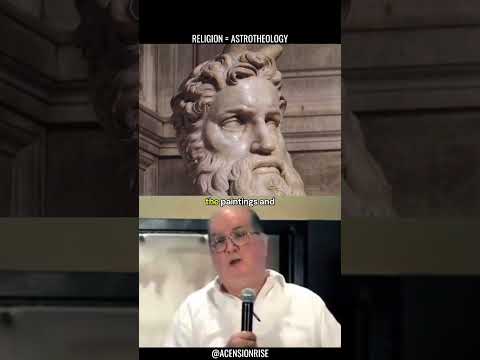
The biblical figure of Moses, often depicted with horns, presents another fascinating astrotheological puzzle. While often explained through mistranslations or symbolic interpretations, some theories link these horns to ancient depictions of horned solar deities or lunar symbolism. The idea of "passing children through the fire" to deities like Molech, as condemned in the Hebrew Bible, can also be viewed through a lens of distorted celestial worship or ritualistic astronomical observation linked to fiery celestial events or deities. The condemnation itself highlights the extreme practices that could arise from misinterpretations or perversions of celestial reverence.
The very concept of "God" can be deconstructed astrotheologically. The acronym GOD (Generate, Operate, Destroy/Transform) reflects functions that can be mapped onto natural processes: the sun generates life-giving energy, the cosmos operates through predictable cycles, and the universe undergoes constant cycles of creation and dissolution. The Aramaic word for God, "El," shares roots with ancient Semitic terms for deities, often associated with celestial bodies. This linguistic connection further reinforces the idea that early conceptions of the divine were intimately tied to the observable heavens.
The historical evolution of religious practices also reveals the influence of astrotheology. Christianity, for example, emerged within the Roman Empire, a culture deeply influenced by solar worship. Many scholars propose that Christian doctrines and festivals were, in part, syncretized with existing pagan traditions, including those centered around the sun. The Roman Catholic Church, in this context, has been referred to by critics as a continuation of ancient Babylonian practices, suggesting that the core rituals and symbolism may have been adapted rather than entirely new.
Ultimately, the astrotheological perspective suggests that the Abrahamic narratives, while rich in theological meaning, also contain layers of meaning derived from ancient astronomical observation and worship. The "God of the Bible" called Moses as his prophet, but the representations of these figures in European art, some argue, have been distorted through pagan lenses, leading to confusing depictions of figures like Moses or Jesus that do not align with the original biblical accounts. This highlights how cultural and religious syncretism can alter the perception and worship of even the most foundational figures.
The Astrotheological Interpretation of Key Religious Symbols
Religious iconography is a rich tapestry of symbols, each imbued with layers of meaning that have evolved over millennia. From an astrotheological viewpoint, many of these potent symbols can be decoded as representations of celestial bodies, cycles, and events. Understanding these symbols through a cosmic lens can unlock new insights into the origins and intended meanings of religious doctrines.
The solar halo or nimbus, a ubiquitous feature in religious art, is perhaps the most direct visual link. It is almost universally understood as a symbol of divinity, enlightenment, or sacredness. From an astrotheological perspective, it is a clear representation of the sun, the primary source of light and life, and often the most revered celestial body in early cultures. The sun’s radiant crown was a natural metaphor for the divine presence and spiritual illumination. Deities depicted with halos are, in essence, being equated with the life-giving power of the sun.
The cross, a central symbol in Christianity, also lends itself to astrotheological interpretation. While its theological meanings are profound, its geometry can be seen as representing the intersection of earthly and celestial planes, or the four cardinal directions aligned with celestial movements. The solar cross, an ancient symbol predating Christianity, directly links the circle of the sun to the cross, representing the sun's journey through the four seasons or its path across the sky. The crucifixion itself, occurring during a solar event (often near the vernal equinox), further intertwines the symbol with solar cycles of death and rebirth.
The crescent moon often accompanies depictions of deities, particularly goddesses, in many cultures. This symbol is a direct representation of the moon in its waxing phase, signifying cyclical renewal, intuition, and the feminine principle. In many ancient religions, the moon was associated with goddesses and was crucial for tracking time, particularly for agricultural communities. The lunar cycle, with its predictable yet observable changes, provided an early form of sacred calendar and influenced rituals and festivals. The association of lunar deities with the "black sun" or "dark side of the moon" speaks to the esoteric understanding of celestial forces, where even the absence of light or the hidden aspect of a celestial body holds profound symbolic power.
The horned figure, as seen in some depictions of Moses or even in pagan deities like Pan or the Green Man, can be interpreted through an astrotheological lens. Horns, in ancient symbolism, often represented power, divinity, and the divine connection to the animalistic and natural world. Some scholars suggest that horned deities were often linked to solar bull symbolism, where the constellation Taurus, representing a bull, was prominent in ancient celestial calendars. The bull's horns could then be seen as mirroring the rays of the sun, or the bull itself as a powerful solar symbol representing strength and fertility, tied to the spring season.
The serpent or dragon is another pervasive symbol across religious and mythological traditions. In an astrotheological context, the serpent can represent the path of celestial bodies. The ecliptic, the apparent path of the sun across the sky, is often depicted as a serpent or dragon, particularly in relation to the constellations that form the zodiac. The serpent’s shedding of skin can also symbolize renewal, mirroring the cyclical nature of celestial events and the promise of rebirth. It can also represent the chaotic forces of the primordial universe from which order (represented by celestial bodies and predictable cycles) emerged.
The concept of the "Black Sun" itself, mentioned in various contexts, often refers to a hidden or esoteric solar force. Astrotheologically, this could represent the sun during the winter solstice, when its power is seemingly at its lowest, yet it holds the promise of return. It could also refer to the sun as perceived from the underworld or hidden realms in creation myths. This duality of light and darkness, of manifestation and concealment, is a fundamental aspect of celestial observation and a potent source of religious symbolism.
These interpretations are not meant to dismiss the theological or spiritual depths of religious symbols but to offer a complementary understanding. By recognizing the astronomical underpinnings, we can appreciate how ancient peoples translated their profound observations of the heavens into a rich symbolic language that continues to resonate today. The stars, it seems, have always been a primary source of divine inspiration and sacred storytelling.
Astrotheology in Practice: Modern Interpretations and Tools
While astrotheology offers a compelling framework for understanding the origins of religion, its application extends beyond historical analysis. Modern practitioners and researchers are using contemporary tools and methodologies to explore and validate these ancient connections. The digital age has opened new avenues for studying celestial patterns and their purported influence on human belief systems, making the once esoteric field more accessible.
One of the most practical ways to engage with astrotheology today is through the use of digital tools that map celestial positions and movements with incredible accuracy. Software like Chaos Magick Sigil Generator offers a unique approach. While primarily designed for creating sigils, the underlying principle of translating intent into symbolic form can be applied to astrological charting. By understanding the complex interplay of planetary energies and their symbolic representations, one can generate unique symbols or "sigils" that resonate with specific astrological configurations. For example, a practitioner might create a sigil designed to harness the harmonizing influence of Venus or the communicative energy of Mercury by incorporating their planetary symbols and numerical correspondences into a sigil design. The generator acts as a digital forge, allowing the practitioner to manifest complex celestial archetypes into tangible, albeit digital, symbols for focused magical work. This bypasses the need for manual chart calculations and opens up creative possibilities for personal ritual and meditation.
Astrology itself, the ancient art of interpreting planetary positions and their influence, is a direct descendant of astrotheological thought. Modern astrological software and online resources allow for the generation of detailed birth charts and transit predictions. By analyzing the placement of planets in zodiac signs and houses, and the aspects they form, practitioners can gain insights into archetypal energies influencing individuals and collective events. This analytical approach can reveal how mythological narratives might have been inspired by specific planetary alignments or the perceived characteristics of celestial bodies. The correspondence between mythological figures and planetary rulers is a cornerstone of this practice.
Furthermore, archaeoastronomy, the study of how ancient peoples understood celestial phenomena and used them in their constructions and rituals, provides tangible evidence. Sites like Stonehenge, the Egyptian pyramids, and Mayan observatories are meticulously aligned with solar, lunar, and stellar events. Studying these alignments allows us to reconstruct the astronomical knowledge of ancient cultures and understand how this knowledge was integrated into their religious and societal structures. It provides empirical support for the idea that celestial observation was not peripheral but central to the development of religious thought.
The concept of "The Black Sun," while often shrouded in mystery, is also being explored through modern lenses. It can be interpreted not just as a symbolic representation of hidden solar power or a specific astronomical event, but as a metaphor for the subconscious mind, the unexplored depths of consciousness that hold immense creative potential. Understanding these archetypes, whether viewed through a historical, astrological, or psychological lens, allows for a more integrated approach to personal development and spiritual exploration. The "black sun" might represent the generative power within, waiting to be consciously directed, much like the sun's energy governs the visible world.
In essence, modern astrotheology is a multidisciplinary endeavor. It combines historical research, mythological analysis, astrological interpretation, and even technological tools. It encourages a holistic view of religion, recognizing that our deepest spiritual impulses may be, in part, an echo of our ancient fascination with the grand cosmic theater unfolding above us. By using the tools available today, whether it's a sigil generator or an astronomical charting program, individuals can actively engage with these celestial archetypes, fostering a deeper connection to the cosmos and potentially uncovering new layers of meaning in their own spiritual practices.
FAQ: Questions on Astrotheology
What is the fundamental principle of Astrotheology?
The core principle of astrotheology is the belief that many religious myths, symbols, and rituals are direct interpretations or allegories of astronomical phenomena, celestial cycles, and the observable movements of the sun, moon, planets, and stars. It posits that early religions were deeply rooted in observing and understanding the cosmos.
Are modern religions still influenced by Astrotheology?
Yes, arguably. While overt solar or lunar worship may have diminished in many mainstream traditions, astrotheological principles suggest that underlying symbolism, festival timings (like Christmas aligning with the winter solstice or Easter with the spring equinox), and archetypal narratives continue to carry echoes of celestial influence. Esoteric and occult traditions, in particular, often retain explicit astrological and astrotheological elements.
How does the "Black Sun" concept relate to Astrotheology?
In astrotheology, the "Black Sun" can represent various things: the sun at its lowest point during the winter solstice, symbolizing death and the promise of rebirth; a hidden or esoteric solar force; or even the sun as perceived from subterranean realms in creation myths. It speaks to the duality of celestial power – the visible and the hidden, the bright and the dark aspects of cosmic cycles.
Can I practice Astrotheology without being religious?
Absolutely. Astrotheology can be approached from a secular, mythological, psychological, or even scientific perspective. It's about understanding the historical influences of celestial observation on human culture and belief, rather than adhering to a specific religious doctrine. Many explore it for personal insight into archetypes and natural cycles.
What is the connection between Astrotheology and astrology?
They are closely related. Astrology developed from astrotheological observations, seeking to interpret the supposed influence of celestial bodies and their configurations on earthly events and human lives. While astrotheology focuses on the origins and symbolic meanings within religion, astrology applies these celestial interpretations to divination and personal charting.
Is Astrotheology a recognized academic field?
Yes, fields like archaeoastronomy, comparative mythology, and the history of religion often incorporate astrotheological perspectives. While not always a standalone discipline, its insights are valuable for understanding ancient cultures, the development of symbolism, and the roots of religious thought across civilizations.
How can tools like the Chaos Magick Sigil Generator be used in Astrotheology?
These tools can be used to visually represent and imbue with intent specific astrological configurations or celestial archetypes. By translating planetary symbols, zodiacal signs, or cyclical concepts into sigils, practitioners can create personal talismans or focal points for meditation and magical work that resonate with astrotheological principles.
Did Abrahamic religions originate from sun worship?
Astrotheology suggests that while the Abrahamic traditions evolved theologically, their origins and early practices were influenced by surrounding cultures that practiced solar and lunar worship. Elements like festival timings, symbolism (e.g., halos), and divine narratives can be interpreted as having astrotheological roots, though the theological interpretations within these religions are distinct and paramount to their adherents.
The Mage's Arsenal
- Essential: Chaos Magick Sigil Generator — Effortlessly translate astrological archetypes and intentions into potent digital symbols for ritual and meditation.
- Recommended Reading: Works by Jordan Maxwell (though specific book titles vary, his lectures and essays are key), and texts on comparative mythology and archaeoastronomy.
- Tools for Exploration: Astrological charting software, archaeoastronomy resources, and comparative religion encyclopedias.
About the author: Frater Alek0s is a veteran practitioner and researcher in the field of chaos magick. His work focuses on the practical and experimental application of occult techniques for self-development and reality exploration, demystifying esotericism for the modern practitioner.
Your Operation: Integrating Astrotheological Insights
To truly integrate the insights of astrotheology into your practice, move beyond mere intellectual understanding. Begin by looking at the sky with a new eye. Observe the sun's daily journey, the moon's phase transformations, and the predictable dance of the visible planets. Note how these cycles align with traditional religious festivals or personal milestones in your life. Consider creating simple sigils using the Chaos Magick Sigil Generator that represent these celestial archetypes – perhaps a sigil for the sun's rebirth at the winter solstice, or for lunar intuition during the new moon.
Furthermore, examine the religious or mythological symbols that resonate with you. Research their potential astrotheological connections. Does a solar halo appear in your iconography? Does a crescent moon feature prominently? Does the story of a divine birth coincide with a solstice or equinox? Use these observations as prompts for journaling or meditation. You might find that focusing on the sun's consistent return each morning, or the moon's steady cycle, can ground your magical intent and bring a new dimension of cosmic connection to your practice. The universe is speaking to us through its celestial movements; astrotheology is simply learning to read that ancient, starry language.
***
Referencias
- Carroll, P. J. (1987). Liber Null & Psychonaut. Weiser Books.
- Spare, A. O. (1913). The Book of Pleasure. Self-published.
- Hine, P. (1992). Condensed Chaos: An Introduction to Chaos Magic. New Falcon Publications.
- Crowley, A. (1904). The Book of the Law. Self-published.
- Sherwin, R. (2018). The Chaos Magic Handbook. CreateSpace.
- Kraig, D. M. (1988). Modern Magick: Eleven Lessons in the High Magickal Arts. Llewellyn Publications.
- Morrison, G. (2003). Pop Magic! The Art of Shaping Reality. Disinformation.
- DuQuette, L. M. (2003). The Chicken Qabalah of Rabbi Lamed Ben Clifford. Weiser Books.
- Webb, D. (2015). Chaos Magick: A Practical Guide. Self-published.
- Tyson, D. (2006). The Power of the Written Word. Llewellyn Publications.
- Bonewits, I. (1971). Real Magic. Creative Age Press.
- Greer, J. M. (2003). The New Encyclopedia of the Occult. Llewellyn Publications.