Saltar al contenido principal

Anuncio Superior

Mostrando entradas con la etiqueta history of magic. Mostrar todas las entradas

Ancient Earth: The Primordial Roots of the Witch Archetype

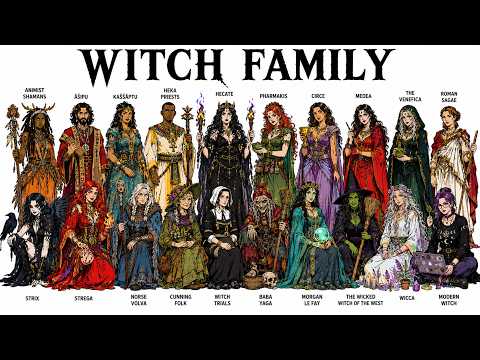
ANCIENT MAGICAL BEINGS THAT STARTED THE WITCH LEGEND - The Witch's DARK Family tree


EMERALD TABLE — Grimoire Record Ritual
⚔️ TypeSpell
📅 Date2026-08-04
📜 FileMC-2026-0336
Difficulty★★★☆☆ Intermedio
Read time10 min
🔗 Related AppGoetian Seals Generator
cha0smagicklabs.com — Digital Grimoire of Chaos Magick

When we conjure the image of a witch, the mind often conjures a figure cloaked in shadow, perhaps an ancient crone with a pointed hat, soaring through the moonlit sky on a broomstick, weaving spells of ill intent. Yet, a fundamental misunderstanding pervades this popular perception. A witch, in its most ancient form, is not a creature of myth; it is a title, a role bestowed upon individuals within human societies.

Unlike the lineage of mythical beings – the Mesopotamian demons Lilitu and Lamashtu, for instance – the witch's ancestral tree branches differently. It does not begin with supernatural entities or monstrous beings. Instead, its roots are firmly planted in humanity itself. For millennia, across diverse global cultures, it was believed that certain individuals possessed an extraordinary reservoir of knowledge. These were the people capable of healing the afflicted, communing with spirits, foretelling future events, or orchestrating rituals far beyond the scope of ordinary folk. Over vast stretches of time, these individuals gradually evolved within cultural narratives to become what many societies would eventually term 'witches'.

RitualThe Animist Shaman: Humanity's First Mystics

Long before the advent of recorded history, a profound belief system known as animism permeated the consciousness of numerous ancient cultures. This worldview posited that spirits were omnipresent, residing not only within animate beings like animals but also within the very fabric of the natural world: rivers, mountains, forests, and even inanimate objects. A deep, interconnectedness was perceived between the physical and spiritual realms, and certain individuals were believed to possess the rare and potent ability to navigate both. These figures are often identified as shamans.

While their specific practices and beliefs undoubtedly varied across different cultural landscapes, shamans were, as a general rule, esteemed members of their communities rather than ostracized outcasts. Their roles were multifaceted: they performed vital healing rituals, interpreted the cryptic language of dreams, presided over sacred ceremonies, acted as intermediaries with the spirit world, invoked blessings upon successful hunts, and sought answers during times of widespread illness, famine, or communal disaster. Some traditions held that they possessed the capacity to enter profound trance-like states, facilitating their journeys between worlds.

The Archetype of the Healer and Guide

The earliest understanding of a 'witch' leans heavily on the archetype of the healer and spiritual guide. These were individuals deeply attuned to the natural world, possessing a profound understanding of herbs, their medicinal properties, and the subtle energies that permeated existence. Their knowledge was not feared but sought after. They were the village wise women, the herbalists, the midwives, the storytellers who preserved ancestral wisdom. Their power stemmed from understanding, nurturing, and facilitating – not from malice or destruction.

The transition from this respected role to the image of the malevolent sorceress is a complex socio-historical phenomenon. It's often attributed to shifts in societal power structures, particularly the rise of patriarchal systems that sought to control or demonize female authority and knowledge. As societies became more centralized and organized under dominant religious or political doctrines, practices that deviated from the norm, especially those associated with female autonomy and traditional forms of spiritualism, began to be viewed with suspicion and, eventually, outright fear.

From Revered Elder to Feared Outcast

The historical lineage of the witch is not one of inherent evil. For the majority of human history, those who would later be branded as witches were revered figures. They were the pillars of community, offering solace, wisdom, and practical assistance. Their connection to the spiritual and natural worlds was seen as a gift, a vital link that maintained balance and well-being.

The dramatic shift in perception, culminating in the image of the broom-riding, spell-casting antagonist, is a relatively recent development in the grand narrative of human history. This transformation was fueled by a confluence of factors: religious persecution, societal anxieties, and the deliberate demonization of alternative spiritual paths. The very qualities that once made these individuals respected – their knowledge of herbs, their connection to nature, their intuitive abilities – were twisted and reinterpreted as signs of malevolence and pacts with dark forces during periods like the European witch trials.

The Role of Patriarchy in Demonization

Many contemporary scholars and practitioners argue that the demonization of the witch is intrinsically linked to patriarchal societal structures. In societies where male authority became dominant, women who held knowledge, power, or autonomy—especially those related to healing, midwifery, and spiritual insight—posed a perceived threat. By rebranding these women as 'witches' and associating them with evil, societies could effectively marginalize and control them. This narrative served to consolidate power, suppress female leadership, and enforce conformity to newly established religious and social norms.

The fear instilled by these narratives served a crucial social purpose: to keep women in check, to discourage independent thought or practice, and to solidify the dominance of established religious and political institutions. The image of the 'evil witch' became a convenient scapegoat for societal ills and a powerful tool for social control.

Connecting to the Spiritual: Early Forms of Ritual

The earliest forms of practice associated with the lineage of the witch involved deep engagement with the spiritual and natural worlds. This included communicating with ancestral spirits, understanding the cycles of nature and the moon, and utilizing herbs and natural elements for healing and ritual. These practices were not about wielding destructive power but about seeking balance, understanding, and connection.

The shamanistic journey between worlds, the interpretation of omens, and the channeling of natural energies were all part of a holistic approach to life, seeking harmony with the cosmos. These ancient rituals were foundational, providing the bedrock upon which later, more formalized magical practices would be built. The essence of these early practices was one of reverence for life and the interconnectedness of all things.

Modern Reclaimings and the Ancestral Echo

Today, many individuals who identify as witches are actively engaged in reclaiming and reinterpreting this ancient lineage. They seek to honor the wisdom of the animist shamans and the revered healers of antiquity, distinguishing their contemporary practices from the distorted, fear-mongering images that emerged during periods of persecution. This reclamation involves understanding the historical context, acknowledging the patriarchal forces that led to the demonization of witchcraft, and celebrating the inherent power and wisdom that resides within the archetype.

Many modern witches see themselves as carrying forward an ancestral echo – a continuation of the lineage of those who sought knowledge, healing, and a deeper connection to the earth and spirit. This involves studying ancient practices, reviving herbalism, practicing divination, and fostering a profound respect for the natural world. The goal is often to heal the historical wounds associated with the 'witch' label and to embrace its original meaning of spiritual insight and natural wisdom.

The Goetian Connection: A Different Branch of Ancient Power

While the lineage of the witch primarily arises from human spiritual practitioners, it's important to acknowledge that other ancient traditions explore different avenues of power and spiritual interaction. One such tradition involves entities and systems that predate much of common folklore, offering a distinct yet sometimes overlapping pathway into the arcane. These ancient systems often involve structured hierarchies of spirits and demons, documented in texts that have survived centuries of scrutiny.

The Goetia, for example, details a system of 72 demons, each with unique characteristics and powers, often depicted through their specific sigils or seals. These entities are not 'witches' in the human sense but represent a different facet of the ancient magical landscape – powers that can be invoked or worked with through specific ceremonial frameworks. Understanding these systems requires a meticulous approach, respecting the precise forms and intentions associated with each entity.

A Practical Tool for Working with Ancient Seals

The meticulous study and application of ancient magical systems, particularly those involving complex sigils and seals like those found in the Goetia, can be incredibly demanding. Reproducing these symbols accurately, understanding their correspondences, and integrating them into one's practice requires precision and focus. The process of generating, understanding, and utilizing these specific magical forms can be time-consuming when relying solely on manual methods.

This is where specialized tools become invaluable for the modern practitioner. The Goetian Seals Generator is designed to streamline the process of working with these ancient entities. This app provides a digital interface to accurately generate and explore the seals of the 72 Goetian demons, assisting practitioners in their ritual work and study. It ensures the fidelity of the symbols, allowing the mage to focus on the intention and gnosis required for effective magical operation, rather than wrestling with the minutiae of symbol creation.

FAQ: Unraveling the Witch's Origins

Is a witch a creature or a human title?

Primarily, a witch is understood as a human individual who holds a title or role within a society, often associated with possessing extraordinary knowledge or abilities. While folklore has created mythical beings that *appear* as witches, the historical and archetypal root is human.

Were ancient witches evil?

No, the earliest ancestors of what became known as witches were generally not evil. They were typically respected healers, spiritual guides, and wise members of their communities. The association with evil emerged much later due to historical and societal factors like the rise of patriarchal structures and religious persecution.

What is animism and how does it relate to early witches?

Animism is the belief that spirits inhabit all things – animals, plants, natural phenomena, and objects. Early witch ancestors, often referred to as shamans, were believed to have the ability to travel between the spiritual and physical worlds, mediating between humans and these spirits within an animistic framework.

Why did the perception of witches change over time?

The shift from revered healer to feared outcast is largely attributed to the rise of patriarchal societies that sought to control female autonomy and knowledge. Religious persecution and societal anxieties also played a significant role in demonizing these figures and their practices.

How does the Goetia differ from the witch lineage?

While the witch lineage stems from human practitioners of magic and spiritualism, the Goetia refers to a specific system of demonology detailing 72 demons. These entities are distinct from human witches, though both represent different facets of ancient magical and spiritual traditions that practitioners might engage with.

What are the benefits of using a Goetian Seals Generator app?

Apps like the Goetian Seals Generator offer precision in reproducing ancient seals, saving practitioners time and ensuring the accuracy of these complex symbols. This allows the mage to concentrate more fully on the intention and the ritualistic aspects of working with these entities.

Can the 'witch' archetype be traced to specific ancient Mesopotamian demons?

While some mythical lineages, like those explored in certain family trees of mythological creatures, might begin with figures like Lilitu and Lamashtu, the direct ancestral line of the 'witch' as understood in this context begins with human practitioners. The connection to ancient demons is more about the broader tapestry of ancient magical beings, rather than the direct origin of the witch archetype itself.

Mage's Arsenal

  • Essential: Goetian Seals Generator - Accurately generate and study the seals of ancient Goetian entities.
  • Reference: Understanding Animism and Shamanism (General knowledge bases).
  • Context: Historical texts on the evolution of witchcraft and mythology (General knowledge bases).
  • Tool: Reliable occult encyclopedia or historical texts on demonology.

About the author: Frater Alek0s is a veteran practitioner and researcher in the field of chaos magick. His work focuses on the practical and experimental application of occult techniques for self-development and reality exploration, demystifying esotericism for the modern practitioner.

Your Operation

To truly grasp the ancient roots of the witch archetype, engage with the concept of the shaman and the healer. Reflect on how societal structures can twist the perception of powerful, knowledgeable individuals. Consider the animistic worldview and its emphasis on the interconnectedness of all life. Understand that the 'witch' label has a complex and evolving history, moving from revered community member to feared outsider and now, for many, a reclaimed symbol of wisdom and natural power.

For those interested in exploring other branches of ancient spiritual interaction, delve into systems like the Goetia. Use tools like the Goetian Seals Generator to ensure accuracy in your studies and practice. Remember, true power lies not just in the symbols, but in the clarity of intention and the depth of your understanding and connection.


Referencias

  1. Carroll, P. J. (1987). Liber Null & Psychonaut. Weiser Books.
  2. Spare, A. O. (1913). The Book of Pleasure. Self-published.
  3. Hine, P. (1992). Condensed Chaos: An Introduction to Chaos Magic. New Falcon Publications.
  4. Crowley, A. (1904). The Book of the Law. Self-published.
  5. Sherwin, R. (2018). The Chaos Magic Handbook. CreateSpace.
  6. Kraig, D. M. (1988). Modern Magick: Eleven Lessons in the High Magickal Arts. Llewellyn Publications.
  7. Morrison, G. (2003). Pop Magic! The Art of Shaping Reality. Disinformation.
  8. DuQuette, L. M. (2003). The Chicken Qabalah of Rabbi Lamed Ben Clifford. Weiser Books.
  9. Webb, D. (2015). Chaos Magick: A Practical Guide. Self-published.
  10. Tyson, D. (2006). The Power of the Written Word. Llewellyn Publications.
  11. Bonewits, I. (1971). Real Magic. Creative Age Press.
  12. Greer, J. M. (2003). The New Encyclopedia of the Occult. Llewellyn Publications.
Every Forbidden Ritual: An Explorer's Grimmoire

Every Forbidden Ritual Explained in 12 Minutes


EMERALD TABLE — Grimoire Record Ritual
⚔️ TypeSpell
📅 Date2026-08-04
📜 FileMC-2026-0307
Difficulty★★★★☆ Avanzado
Read time14 min
🔗 Related AppLunar Phase Calculator
cha0smagicklabs.com — Digital Grimoire of Chaos Magick

You've stumbled upon a page that delves into the shadows, exploring rituals that have been whispered about, feared, and often misunderstood. In our quest to understand the full spectrum of magical practice, we must acknowledge what lies beyond the commonly accepted. This exploration is not an endorsement, but an illumination of practices deemed forbidden across various traditions.

The concept of "forbidden" in magic is fluid, often reflecting societal anxieties, power structures, or genuine spiritual dangers. What one tradition bans, another might embrace or utilize cautiously. Let's unpack some of these potent practices, understanding their historical context and the reasons for their taboo status.

RitualThe Spectrum of Forbidden Rituals

Magic, in its essence, is about intention and will manifesting change. Throughout history, practitioners have pushed boundaries, seeking power, knowledge, or transcendence through methods that challenge conventional morality or safety. These rituals, often deemed dangerous or taboo, represent extreme applications of magical will.

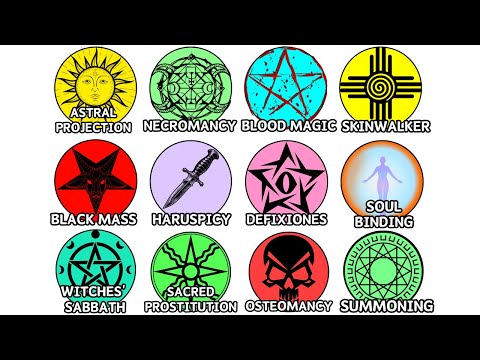
Astral Projection: Venturing Beyond the Veil

Astral projection is a practice where consciousness is believed to separate from the physical body, allowing it to travel through the astral plane – a spiritual dimension unseen by physical eyes. Think of it as a conscious out-of-body experience aimed at exploration, gaining knowledge, or interacting with spiritual entities. Historically, it was viewed with a mix of awe and fear. While some saw it as a path to enlightenment, others warned of leaving the physical body vulnerable to possession by malevolent entities, or the risk of psychological distress and permanent dissociation from one's physical form.

The taboo nature of astral projection stems from its potential to disrupt the perceived balance between the physical and spiritual realms. It's like opening a door to potentially dangerous territories without adequate protection or understanding. The CIA's involvement in such practices, notably through 'Operation Stargate,' highlights a serious, albeit classified, interest in these phenomena.

Blood Magic: The Potency of Life Force

Blood magic involves the use of blood – often human or animal – in rituals to amplify spells, heal, or curse. The underlying belief is that blood contains vital life force, making it a powerful conduit for magical energy. Some African cultures, for instance, historically employed blood magic for spiritual protection or to invoke curses upon enemies. The idea is that by using a substance so intrinsically linked to life, the ritual's potency is drastically increased; it's like switching from a basic tool to a hyper-charged one.

However, the use of another's blood can create spiritual entanglements, potentially linking your fate and misfortunes to theirs. This practice is forbidden due to the spiritual risks involved, such as attracting negative energies or malevolent forces, and is seen by many as violating the sacredness of blood itself. The implications of such entanglements are profound, potentially binding you to energies you cannot control.

Necromancy: Communicating with the Departed

Necromancy is the practice of communicating with the dead, often through divination or summoning. The goal can range from seeking lost knowledge or guidance to commanding spirits for various purposes. It's a practice deeply embedded in folklore and often associated with darker aspects of magic, partly due to its direct engagement with death and the unknown. In popular culture and historical accounts, necromancers are often depicted as figures who delve into forbidden arts, using tools like shovels not just for practical reasons but as symbolic instruments of their craft.

The taboo surrounding necromancy is rooted in the fear of disturbing the natural order of life and death, the potential for attracting malevolent spirits, and the psychological toll of communing with the deceased. Many organized religions strictly forbid any form of communication with spirits, viewing it as an affront to the divine order and a path to spiritual corruption.

The Black Mass: A Subversion of Sacred Ritual

The Black Mass is a ritual that parodies or subverts the Catholic Mass, often involving blasphemous acts, invocations of infernal entities, and symbolic rejection of religious dogma. It is seen as an act of defiance against established religious authority and sacred principles. The Black Mass is typically characterized by its reversal of traditional rites, symbolizing a turning away from the divine and an embrace of the infernal or the profane. It's an inversion, a dark mirror reflecting sacred practices.

Its forbidden status comes from its direct challenge to religious institutions and its perceived invocation of demonic forces. While often sensationalized, the intent behind such a ritual is typically to gain power through rebellion against perceived spiritual control or to explore the 'shadow' aspects of existence.

Human Sacrifice: The Ultimate Offering

Human sacrifice, the ritualistic killing of a human being, is perhaps one of the most universally condemned practices in magic and religion. It represents the ultimate offering, where the most precious life force is given to a deity, spirit, or cosmic force to achieve a powerful result – be it appeasement, immense power, or a profound magical effect. The belief is that by sacrificing the ultimate gift, the recipient will grant an equally ultimate boon.

Its prohibition is deeply ingrained in modern ethics and most legal systems due to the inherent violation of human life and dignity. Historically, it was practiced in various cultures to ensure good harvests, win wars, or appease angry gods. However, the ethical and moral implications are so severe that it remains at the absolute extreme of forbidden rituals.

Summoning Rituals: Invoking Powers Beyond the Mundane

Summoning rituals involve the deliberate invocation of spirits, entities, or deities, often with the goal of obtaining knowledge, assistance, or power. These can range from calling upon benevolent guides to commanding more ambiguous or potentially dangerous entities. The key is the intention to draw something from beyond the practitioner's immediate physical reality into their sphere of influence or perception.

The danger lies in the nature of what is summoned and the practitioner's ability to control or safely interact with it. Invocations can go awry, leading to possession, unwanted spiritual attachments, or psychological trauma. Many traditions warn against tampering with forces one does not fully understand or control. The concept of binding one's soul to a computer, initially a humorous thought in community comments, highlights the modern interpretation of such anxieties in a technological age.

Cannibalistic Rituals: Consuming the Essence

Cannibalistic rituals involve the consumption of human flesh, often within a ritualistic context. The motivations can vary, including beliefs about absorbing the strength, spirit, or knowledge of the consumed individual, appeasing deities, or as a form of extreme warfare. It's a primal act, often viewed as the ultimate violation of respect towards the dead and the sanctity of the human form.

The taboo is multi-layered: ethical, moral, and spiritual. Beyond the obvious revulsion, the belief is that consuming a person's flesh transfers their essence, potentially leading to spiritual corruption or entanglement. The graphic depictions often associated with this ritual underscore its deeply unsettling nature.

Haruspicy: Divination Through Entrails

Haruspicy is an ancient form of divination that involves examining the entrails of sacrificed animals to interpret omens or predict the future. Practiced extensively by the Etruscans and Romans, it was believed that the gods communicated their will through the patterns and conditions of the organs. The entrails were seen as a direct message from the divine.

While not inherently violent in intent for the practitioner, the practice itself involves ritualistic sacrifice. The "forbidden" aspect often relates to the perceived manipulation of divine will or the engagement with practices deemed pagan or superstitious by succeeding religious movements. The question of what the entrails predict can range from cosmic pronouncements to mundane outcomes, like predicting a good meal.

Curse Tablets (Defixiones): Imposing Will Through Binding

Curse tablets, or defixiones, were inscribed objects, typically lead or clay, used in ancient times to invoke spirits or deities to inflict harm, misfortune, or binding upon an enemy. They were personal tools of malediction, intended to cause specific harm to an individual or group. These were essentially magical lawsuits, aiming to bind the target magically.

Their forbidden nature arises from their direct intent to cause harm and suffering, aligning with malevolent magic rather than beneficial spells. While a powerful tool of personal retribution, their use is considered ethically reprehensible in most magical and societal frameworks due to their destructive intent.

Soul Binding: Eternal Connections and Risks

Soul binding refers to rituals intended to create a permanent or deeply significant spiritual connection between two or more individuals, or between an individual and a spirit or deity. This can be for purposes of eternal companionship, shared power, or to ensure a spiritual link persists beyond death. The idea of binding one's soul to a computer, as a user humorously suggested, highlights the modern adaptation of this concept.

The risks are substantial: if the bond is with a malevolent entity or a troubled soul, it can lead to spiritual entanglement and suffering. The phrase "imagine if someone bound their soul to their computer" captures the essence of this fear when applied to technology – what happens if our digital selves are irrevocably linked to something beyond our control?

Skinwalker Rituals: Transformation and Taboo

Skinwalker rituals are associated with shape-shifting practices, particularly within Navajo (Diné) and other Native American traditions. Skinwalkers are believed to be witches who can transform into animal forms, often to cause harm or mischief. The rituals involve an intense, often dark, process to gain this ability.

These practices are highly taboo due to deep cultural beliefs about respecting the spiritual world and the potential for misuse of such powers. They are not just about transformation but about a pact with darker forces. Many tribes, including the Cherokee and Comanche, have similar traditions, underscoring the widespread nature of these beliefs and the inherent dangers associated with them.

The Witches' Sabbath: Gatherings of the Forbidden

The Witches' Sabbath, particularly in European folklore, refers to legendary nocturnal gatherings of witches, often depicted as involving devil worship, cannibalism, and other forbidden rites. While largely a product of historical persecution and superstition, the concept represents a gathering of those who practiced magic outside the sanctioned norms of the time, often associated with pacts with dark forces.

The fear and prohibition stemmed from the perceived threat these gatherings posed to established religious and social order. They were seen as a source of ultimate evil, a place where all moral boundaries were crossed.

Sacred Prostitution: Ritualistic Union and Exchange

Sacred prostitution, historically found in some ancient cultures (e.g., Mesopotamia, Greece), involved sexual acts performed as part of religious rituals, often as a form of worship or exchange with a deity. It was believed to promote fertility, prosperity, or as a way to connect with divine energies, particularly those related to Venus or fertility goddesses. It was seen not as a profane act, but a divine service.

Its forbidden status in modern times stems from a confluence of religious condemnation, societal views on sexuality, and the ethical complexities surrounding sex and spirituality. While divorced from its original sacred context, the practice remains a potent example of how sexual energy has been historically integrated into magical and religious rites.

Self-Mummification: The Ritual of Physical Preservation

Self-mummification is a rare and extreme ritual where an individual intentionally prepares their body for preserved death, often through a prolonged period of fasting, meditation, and specific dietary practices, to achieve a state of physical preservation after death. This was practiced in some Buddhist traditions, aiming to achieve a state of enlightenment or sainthood that would continue to benefit followers even after the practitioner's physical demise.

The extreme nature of the practice – involving severe physical discipline and the intent to manipulate the afterlife of one's own body – makes it highly unusual and often viewed with awe or apprehension. It challenges our understanding of life, death, and the body's role in the spiritual journey.

Osteomancy: Divination Through Bones

Osteomancy is a form of divination using bones, often from animals, to gain insight or predictions. In ancient cultures, bones were inscribed or interpreted based on their patterns, sounds, or other characteristics. It's a practice tied to the primal connection with the animal kingdom and the symbolic representation of life and death.

While less sensational than other forbidden rituals, osteomancy is often grouped with pagan or shamanic practices that were suppressed by dominant religious forces. Its forbidden status arises from its association with non-sanctioned spiritual inquiry and its connection to the mysteries of life and death, often involving the sacrifice of animals.

The Lunar Connection: Timing Your Operations

When exploring any magical practice, especially those involving potent or potentially dangerous energies, timing is paramount. The cycles of the moon offer a powerful framework for understanding and directing magical intent. Working with lunar phases can amplify your rituals, provide clarity, or mitigate risks.

For example, attempting a summoning ritual during a waning moon might be counterproductive if your aim is amplification, whereas a binding ritual could be more potent. Conversely, working with intentions of growth or attraction is often best aligned with a waxing moon. The danger of a ritual can sometimes be mitigated by aligning it with the cosmic tides. Understanding these cycles is crucial for any serious practitioner seeking to harness natural forces effectively.

This is where the right tools become invaluable. Manually tracking the lunar phases can be intricate and time-consuming, pulling your focus away from the core magical work. For this reason, I rely on the Lunar Phase Calculator. It simplifies tracking the moon's cycles, providing clear insights into the optimal times for specific magical operations, whether you're casting a protective charm or exploring the edges of astral travel. It helps ensure your magical timing is precise, aligning your efforts with the most potent cosmic energies.

Mage's Arsenal

  • Essential: Lunar Phase Calculator — Your indispensable tool for timing magical operations with cosmic precision.
  • Exploratory Reading: Books on comparative mythology, occult history, and comparative religion.
  • Journal: A dedicated notebook for recording insights, experiences, and intentions related to these practices.
  • Protective Amulets: Depending on the ritual, a focus for protective energies might be necessary.

FAQ: Explorations and Clarifications

Are these rituals truly "forbidden," or just taboo in certain traditions?

The nature of "forbidden" is subjective and context-dependent. Many of these rituals are taboo within specific religious or cultural frameworks due to perceived dangers, moral objections, or historical persecution. However, across different cultures and throughout history, many have also been practiced, albeit sometimes in secret or with great caution. The term "forbidden" often highlights practices that carry significant inherent risks or challenge fundamental ethical codes.

Can practicing these rituals lead to genuine power or enlightenment?

The potential for power or insight exists in virtually any magical practice, depending on the practitioner's skill, intent, and the underlying metaphysical principles they engage with. However, practices deemed forbidden often carry disproportionately high risks. Enlightenment is a journey of understanding, and while some practitioners might find unconventional paths to it through these rituals, the dangers and potential for spiritual corruption are significant deterrents.

Is it possible to perform these rituals safely?

Safety in magic is relative and depends heavily on the practitioner's knowledge, preparation, intent, and the specific tradition's guidelines. Some rituals, like human sacrifice, are ethically irreconcilable with safety. Others, like astral projection or communication with spirits, might be approached with caution, extensive preparation, protective measures, and a deep understanding of the forces involved. For many forbidden practices, the inherent risks are so high that safe execution by an untrained individual is considered impossible.

What is the difference between a "black mass" and a "sabbath"?

While both are associated with forbidden or counter-religious practices, they have distinct origins. The Black Mass is typically described as a ritualistic inversion or parody of the Christian Mass, often involving devil worship and blasphemy. The Witches' Sabbath is a more folkloric concept of nocturnal gatherings of witches, often linked to pacts with the devil and widespread magical activity, though its historical reality is debated and often conflated with the persecution of individuals accused of witchcraft.

Are there any modern interpretations or safer alternatives to these forbidden rituals?

Many practitioners seek to explore the underlying principles of forbidden rituals through safer, symbolic, or psychological means. For example, the intense focus and boundary-pushing of astral projection might be explored through deep meditation or lucid dreaming. The raw power sought in blood magic could be channeled through symbolic representations of life force or intense emotional catharsis. The act of summoning might be reinterpreted as deep psychological work or communion with archetypal forces. The key is understanding the root intention and finding modern, ethical ways to engage with it.

About the author: Frater Alek0s is a veteran practitioner and researcher in the field of chaos magick. His work focuses on the practical and experimental application of occult techniques for self-development and reality exploration, demystifying esotericism for the modern practitioner.

Your Operation: Intent and Caution

Engaging with the concept of forbidden rituals requires a sober assessment of risks versus potential rewards. It is a path not to be trod lightly, if at all. The wisdom of various esoteric traditions consistently highlights the importance of grounding, protection, and clear intention when dealing with potent spiritual forces.

If your exploration leads you to consider any of these practices, do so with the utmost caution. Understand the energetic, psychological, and spiritual implications. Always ensure your intent is clear and aligned with the highest good, and never engage in practices that cause harm to yourself or others. The goal of exploring these topics is understanding, not necessarily replication. Use this knowledge to deepen your respect for the boundaries that esoteric traditions have established for a reason.


Referencias

  1. Carroll, P. J. (1987). Liber Null & Psychonaut. Weiser Books.
  2. Spare, A. O. (1913). The Book of Pleasure. Self-published.
  3. Hine, P. (1992). Condensed Chaos: An Introduction to Chaos Magic. New Falcon Publications.
  4. Crowley, A. (1904). The Book of the Law. Self-published.
  5. Sherwin, R. (2018). The Chaos Magic Handbook. CreateSpace.
  6. Kraig, D. M. (1988). Modern Magick: Eleven Lessons in the High Magickal Arts. Llewellyn Publications.
  7. Morrison, G. (2003). Pop Magic! The Art of Shaping Reality. Disinformation.
  8. DuQuette, L. M. (2003). The Chicken Qabalah of Rabbi Lamed Ben Clifford. Weiser Books.
  9. Webb, D. (2015). Chaos Magick: A Practical Guide. Self-published.
  10. Tyson, D. (2006). The Power of the Written Word. Llewellyn Publications.
  11. Bonewits, I. (1971). Real Magic. Creative Age Press.
  12. Greer, J. M. (2003). The New Encyclopedia of the Occult. Llewellyn Publications.