Saltar al contenido principal

Anuncio Superior

Mostrando entradas con la etiqueta occult. Mostrar todas las entradas

Thoth: The Ibis-Headed Architect of Wisdom, Magic, and Fate

Who is Thoth?  The Egyptian God of Writing, Magic, the Moon and Fate who Became Hermes Trismegistus


EMERALD TABLE — Grimoire Record Magitech
⚔️ TypeSpell
📅 Date2026-08-04
📜 FileMC-2026-0315
Difficulty★★★★☆ Avanzado
Read time17 min
🔗 Related AppGoetian Seals Generator
cha0smagicklabs.com — Digital Grimoire of Chaos Magick

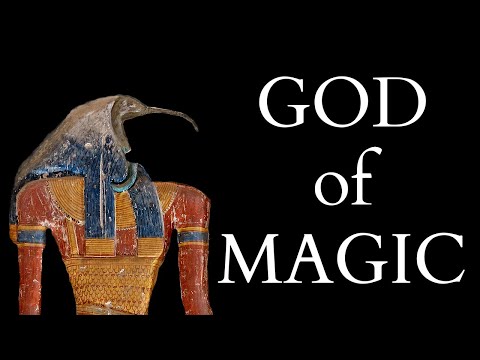
In the grand tapestry of ancient Egypt, few deities command the mystique and enduring influence of Thoth. More than just a god, Thoth stands as the very embodiment of divine knowledge, the meticulous scribe of the cosmos, and the silent architect of fate. His legacy, originating from the sands of antiquity, transcends millennia, weaving through the fabric of Western esoteric traditions and continuing to resonate with modern practitioners seeking deeper understanding. If you are drawn to the currents of magic, hermetic philosophy, or the ancient pathways of wisdom, you are likely to find your journey intersecting with the profound influence of Thoth.

MagitechThe Origin and Evolution of Thoth

The exact genesis of Thoth remains shrouded in the mists of time, a characteristic that only deepens his enigmatic allure. Early Egyptian beliefs suggest his roots may lie in a lunar deity, a celestial observer charting the silent passage of night and the waxing and waning of the moon. This celestial connection imbued him with an association with cycles, rhythm, and the subtle influences that govern earthly affairs. As Egyptian civilization flourished, so too did the pantheon, and Thoth’s role expanded, solidifying his position as a pivotal figure. He transitioned from a lunar association to becoming the supreme mediator in divine disputes, the arbiter of justice (Ma'at), and the silent witness to the cosmic order. His profound intellect and role as the divine scribe led him to be recognized as the god of writing, language, knowledge, and, crucially, magic, or heka.

This mastery over the written word and the arcane arts made him indispensable. He was credited with recording the spells that aided Osiris in his resurrection, and he famously interceded in the tumultuous conflict between Horus and Set, ensuring a semblance of divine justice prevailed. His worship was particularly prominent in Hermopolis, where he was revered as the Lord of the Ogdoad—an assembly of eight primordial deities embodying the fundamental forces of creation. This multifaceted nature allowed him to absorb and transcend the limitations of a single domain, establishing him as a god of multifaceted wisdom.

Thoth's Syntheses: From Egyptian God to Hermetic Father

The true transcendence of Thoth’s influence is most powerfully illustrated through his syncretism with the Greek deity Hermes. As Greek and Roman cultures interacted with and absorbed elements of Egyptian civilization, their pantheons began to merge. The attributes of swiftness, communication, and wisdom embodied by Hermes found a natural resonance with Thoth. This fusion was not merely a renaming; it was a profound merging of divine essences, resulting in the legendary figure of Hermes Trismegistus—the Thrice Great Hermes.

Hermes Trismegistus became far more than just an Egyptian god or a Greek messenger; he was elevated to the status of a mythical sage and the founder of hermetic philosophy. His teachings, purportedly revealed to humanity, formed the bedrock of alchemy, astrology, and magic, shaping the philosophical landscape of Western esotericism for centuries. The iconic "Emerald Tablet," a foundational text of alchemy, is attributed to him, purportedly containing the summation of all knowledge: "As above, so below." In this profound sense, Thoth, through his Greek counterpart, did not merely survive the decline of classical Egyptian theology—he became its enduring avatar, a living testament to the power of knowledge, the efficacy of magic, and the immutable nature of fate.

The Role of Heka (Magic) in Thoth's Domain

For practitioners deeply immersed in the arcane arts, Thoth's connection to heka—the Egyptian concept of magic—is paramount. It’s crucial to understand that Egyptian magic, as embodied by Thoth, was not about incantations for personal gain in a superficial sense. Instead, heka was understood as the fundamental divine force that permeated creation, the underlying language and power through which the cosmos was spoken into existence. Thoth, as the divine scribe and architect of this cosmic language, was the master of heka.

His role in magical practices was often that of a patron or a guide. When rituals or spells were performed, invoking Thoth was a way to tap into the underlying principles of magical efficacy. He represented the clarity of intent, the precision of language, and the power of symbolic representation—all vital components of effective magical work. For those drawing sigils, crafting talismans, or performing complex divinatory rites, Thoth’s association with writing and knowledge made him a natural deity to call upon for precision and success. The meticulous nature of creating sacred texts or symbols mirrors Thoth’s own role as the divine record-keeper.

Thoth, Fate, and the Cosmic Order

Beyond wisdom and magic, Thoth held dominion over fate. This aspect of his divinity speaks to his role as the cosmic accountant, the deity who recorded and perhaps even guided the unfolding of destiny. In ancient Egyptian thought, fate was not a rigid, inescapable chain of events, but rather a complex interplay of divine will, human action, and cosmic patterns. Thoth, as the god of writing and knowledge, was the one who inscribed these patterns, who understood the celestial mechanics that governed cause and effect.

This understanding of Thoth as a keeper of fate offers a unique perspective for modern practitioners. It highlights the importance of understanding the underlying currents that influence manifestation. Whether one is working with astrological timings, lunar cycles, or even digital tools, recognizing the principle of cosmic order that Thoth represents can lend depth to one's practice. The idea that our desires, when properly articulated and charged with intent, can be "written" into the fabric of reality is a central tenet that resonates with Thoth's domain. This connection is particularly potent when dealing with tools that represent codified intent, such as sigils, or when seeking to align one's actions with auspicious timings.

Thoth in Modern Esoteric Practice

The enduring legacy of Thoth means that his influence is deeply felt within contemporary occult and esoteric circles. For many, he is revered not just as an ancient deity but as a living archetype—the God of Wisdom, the ultimate communicator, and the patron of all who seek knowledge and mastery over the hidden arts.

Practitioners often invoke Thoth for clarity in thought, inspiration in writing, and precision in magical workings. His association with the moon also connects him to intuitive practices, divination, and the cyclical nature of manifestation. In technomancy, where digital tools are used for magical ends, Thoth’s role as the divine scribe and patron of writing is particularly relevant. The precise coding required for sigil generators, the structured logic of divination software, or even the creation of digital talismans can be seen as modern manifestations of Thoth’s ancient domain.

When working with complex symbolic systems or seeking to imbue digital creations with magical intent, calling upon Thoth can provide the necessary focus and precision. His embodiment of knowledge makes him an ideal invoked entity for anyone seeking to understand intricate magical systems or to effectively translate their will into a desired outcome. The very act of understanding and disseminating esoteric knowledge, as we do on this platform, is a practice that aligns perfectly with the Thothian archetype.

The "Thothful" Nature of Inquiry

The resonance between the sound of "Thoth" and the English word "thought" is not merely a linguistic coincidence; it underscores a deep connection between the deity and the very act of cognition and ideation. This is a concept that has not gone unnoticed by those who study him. A truly "Thothful" approach to inquiry involves a deep dive into understanding, a meticulous examination of evidence, and a commitment to uncovering the underlying principles. It is about engaging with knowledge not just passively, but actively—questioning, analyzing, and synthesizing information to arrive at a deeper truth.

This method of inquiry is fundamental to the spirit of exploration found within the hermetic traditions that Thoth helped to inspire. It means approaching esoteric subjects with rigor, acknowledging their complexity, and appreciating the multifaceted nature of divine principles. It's about moving beyond simplistic definitions to grasp the subtle nuances and interconnectedness of various occult sciences. A "Thothful" mind is one that seeks not just answers, but understanding, and recognizes that true wisdom often lies in the journey of discovery itself, a journey Thoth intimately understands and guides.

Thoth and the Ogdoad of Hermopolis

The significance of Thoth's association with the Ogdoad of Hermopolis cannot be overstated. This group of eight primordial deities represented the fundamental, chaotic forces that existed before creation—the very potencies of the unformed abyss. Within this primeval assembly, Thoth played a crucial role, often depicted as both a member and the architect of the cosmic order that emerged from this chaos. The Ogdoad typically included deities representing concepts like darkness, watery abyss, infinity, and hiddenness, which were essential for the emergence of light and form.

Thoth's presence within this group signifies his deep connection to the very source of creation. He was not merely a god who appeared after the world was made; he was instrumental in the process of its making. As the divine scribe and the embodiment of cosmic intellect, he understood the blueprint of existence. His role within the Ogdoad highlights his function as a mediator between the formless void and the manifested reality, a theme that echoes throughout hermetic philosophy. Understanding this connection provides a profound insight into Thoth's power as a god of creation and order, capable of bringing structure and meaning to even the most fundamental forces.

Thoth's Enduring Impact on Hermeticism

The fusion of Thoth with the Greek Hermes to form Hermes Trismegistus marked a pivotal moment in the history of Western esoteric thought. Hermes Trismegistus became the legendary progenitor of hermeticism, a philosophical and spiritual tradition that has profoundly influenced alchemy, astrology, magic, and Kabbalah. The "Corpus Hermeticum," a collection of philosophical and religious writings attributed to Hermes Trismegistus, served as a primary source of inspiration for Renaissance thinkers and occultists alike.

These texts delve into profound concepts such as the nature of God, the cosmos, the human soul, and the hidden principles of the universe. The famous Hermetic axiom, "As above, so below," encapsulates the core belief in the interconnectedness of all things, from the celestial realms to the earthly plane. Thoth, through Hermes Trismegistus, provided the foundational knowledge and the archetypal figure for this entire lineage of wisdom. His influence is not confined to ancient history; it is alive in the very foundations of modern occult practice, offering a continuous thread of esoteric understanding that connects the ancient world to our own.

FAQs About Thoth

What are the main domains associated with Thoth?

Thoth is primarily associated with wisdom, writing, magic (heka), the moon, knowledge, scribal arts, judgment, fate, and creation. He was also recognized as the mediator of divine disputes and the scribe of the gods. His synthesis with Hermes Trismegistus also links him to hermetic philosophy, alchemy, and astrology.

How did Thoth become Hermes Trismegistus?

During the Greco-Roman period, Egyptian and Greek cultures intermingled. The attributes of the Greek god Hermes, who was associated with communication, travel, and intellect, were found to be highly compatible with those of Thoth. This led to a syncretism where the two deities were merged into a single, composite figure known as Hermes Trismegistus, meaning "Hermes the Thrice Great." This figure became the legendary founder of hermetic philosophy.

What is the significance of Thoth's association with the ibis and baboon?

Thoth was most commonly depicted as an ibis-headed man or as a baboon. The ibis, with its distinctive curved beak, was thought by some to resemble a scribe's stylus or stylus and palette, symbolizing his role as the divine writer. The baboon form, often depicted in a contemplative or watchful posture, represented his wisdom and his connection to the dawn and the sun's cycle, aligning with his nocturnal and lunar associations.

Can Thoth be invoked in modern magic?

Absolutely. Thoth is a widely invoked deity in many modern magical traditions, particularly those influenced by hermeticism and chaos magic. Practitioners often call upon him for clarity of thought, inspiration, success in writing or creative endeavors, precision in spellcasting, and guidance in understanding complex magical principles. His association with heka makes him a natural patron for magicians.

What is the connection between Thoth and "fate"?

Thoth’s role as the divine scribe extended to recording and understanding the unfolding of destiny. He was seen as the keeper of cosmic records and the arbiter of judgment. This means he was not just writing down events, but also understanding the intricate mechanisms of cause and effect that shape them. For practitioners, this aspect of Thoth highlights the importance of intention, precise articulation of desires, and understanding the underlying order when working with manifestation or divination.

How does Thoth relate to the concept of "thought"?

The similarity between the name "Thoth" and the English word "thought" is often noted. This phonetic echo underscores his primary association with intellect, wisdom, and cognition. He represents the divine spark of ideation, the power of language to shape reality, and the meticulous process of knowledge acquisition and dissemination. To be "Thothful" is to engage in deep, deliberate, and insightful thinking, characteristic of his divine nature.

What was the Ogdoad of Hermopolis?

The Ogdoad of Hermopolis was a group of eight primordial deities in ancient Egyptian religion, representing the fundamental forces of chaos and the unformed state of the universe before creation. Thoth was a key member of this group, often depicted as the intellect that brought order to this primordial chaos, enabling creation to occur. Their existence highlights Thoth's role not just as a god of existing knowledge, but as a force behind the very act of creation and the establishment of cosmic order.

The Scholar's Toolkit: Essential Resources

To truly delve into the profound depths of Thoth requires diligent study and a commitment to exploring the myriad facets of his influence. While direct experiential work is paramount, understanding his historical and philosophical context is invaluable. Access to reliable texts and tools can significantly enhance one's practice and comprehension. The journey into esoteric knowledge is often facilitated by having the right resources at hand, allowing for deeper exploration and more precise application of learned principles.

When precision in magical creation and understanding of complex symbolic systems is required, a well-crafted tool can be indispensable. The meticulous nature of Thoth's domain, from cosmic decrees to the precise articulation of spells, mirrors the need for accuracy when working with potent magical constructs. This is where specialized applications can serve as modern extensions of ancient practices, automating complex processes and allowing the practitioner to focus on the core magical intent and gnosis.

For those seeking to master the creation and charging of complex magical symbols, especially those with a focus on intricate design and efficient generation, a dedicated digital tool can prove invaluable. The challenges of manually creating such symbols, ensuring symmetry, accuracy, and rapid generation for effective charging, can be a significant hurdle. Many practitioners find that manual methods are time-consuming and prone to error, detracting from the crucial elements of intent and gnosis.

This is precisely where reliable digital assistance becomes a boon. By automating the complex creation of symbols, these tools free up the practitioner's mental energy to focus on the crucial aspects of magical work: the clarity of intention and the achievement of a state of gnosis. The modern practitioner, much like ancient scribes meticulously detailing sacred texts, can leverage technology to enhance their arcane endeavors. The goal is to ensure the magical construct is as potent and precise as possible, facilitating the manifestation of will.

For instance, when working with the foundational principles of hermeticism or symbolic magic, the creation of precise sigils or talismans is often a key component. Imagine the challenge of manually designing a complex sigil, ensuring perfect balance and form, only to have a slight miscalculation disrupt its energetic integrity. The desire for efficiency and accuracy in such craft is a constant for dedicated practitioners.

Fortunately, the digital age offers solutions. Tools designed for the modern magician can help streamline these processes. For example, crafting intricate symbolic representations for magical purposes can be greatly aided by specialized software. One such tool that proves exceptionally useful for practitioners who appreciate precision and symbolic depth is the Goetian Seals Generator. This application is designed to assist in the creation and understanding of complex symbolic forms, allowing users to generate and explore various designs with ease.

By utilizing such a resource, practitioners can save considerable time and effort, ensuring that their symbolic creations are as potent and aesthetically aligned with their magical intent as possible. This allows for greater focus on the deeper, more esoteric aspects of the work. Relying on such assistive technologies is not a dilution of magical practice but a strategic adaptation, ensuring that the core of the work—intent and gnosis—remains paramount.

Visualizations and Symbolism

Thoth's iconography is rich with symbolism, offering further layers of understanding for the practitioner. His most common forms—the ibis and the baboon—are not arbitrary choices but are imbued with deep meaning relevant to his domains.

The ibis, a wading bird often seen probing the mud with its long beak, was seen as a natural scribe. Its hunting method of carefully examining the ground for sustenance was likened to the meticulous process of recording knowledge. The curved beak itself was sometimes interpreted as representing a stylus, and the bird's association with the dawn and the moon linked it to cycles of revelation and hidden knowledge. The ibis's ability to navigate both water and land also symbolized Thoth's role as a mediator between different realms—the physical and the divine, the known and the unknown.

The baboon, another form associated with Thoth, is often depicted in a seated, contemplative posture, gazing towards the rising sun. This imagery connects Thoth to the dawn, the beginning of creation, and thus to his role as a god of creation and renewal. Baboons were also seen as intelligent and social creatures, reflecting Thoth's association with wisdom, communication, and the ordering of society. Their nocturnal activity also reinforced his lunar connections. In some depictions, baboons are shown raising their hands in adoration of the sun, linking them to solar worship and the divine light of knowledge.

These symbolic animal forms are not mere decorations; they are visual keys that unlock deeper aspects of Thoth’s nature, reminding practitioners of his multifaceted powers and his intimate connection to the natural world and the cycles of existence.

Thoth in Daily Practice

For the modern practitioner, Thoth offers a wellspring of practical inspiration that can be integrated into daily life. Beyond grand rituals, his influence can be found in the mindful application of knowledge and the precise articulation of intent.

Consider your own daily interactions with language and information. Every written word you produce, every piece of knowledge you acquire, every decision you make based on reasoned thought can be seen as a subtle invocation of Thothian principles. To approach these activities with a sense of sacredness—treating writing as a form of spellcraft, research as a quest for divine knowledge, and decision-making as an act of inscribing one’s fate—elevates the mundane into the magical.

When you are faced with a complex task, a challenging piece of writing, or the need for clarity in communication, consciously invoke Thoth: "By the wisdom of Thoth, grant me clarity of thought and precision of expression." This simple act can shift your mindset, aligning your energy with his archetypal domain. Similarly, when engaging in practices like journaling, charting lunar phases, or even organizing your digital files, you are, in essence, participating in the Thothian practice of ordering and recording.

The development of structured thought processes, the pursuit of disciplined learning, and the careful crafting of communication are all pathways that honor Thoth. He reminds us that knowledge is power, but wisdom is the skillful application of that power. By cultivating these habits, we not only enhance our personal and magical lives but also actively participate in the enduring legacy of this ancient and profound deity.

About the author: Frater Alek0s is a veteran practitioner and researcher in the field of chaos magick. His work focuses on the practical and experimental application of occult techniques for self-development and reality exploration, demystifying esotericism for the modern practitioner.

Conclusion: The Everlasting Scribe

Thoth stands as a testament to the enduring power of intellect, the sacredness of language, and the fundamental role of magic in shaping reality. From his origins as an ibis-headed deity in the fertile lands of ancient Egypt to his apotheosis as Hermes Trismegistus, the father of hermetic philosophy, his influence has been profound and pervasive. He is the divine scribe who records the decrees of fate, the patron of wisdom who illuminates the path of knowledge, and the master of heka who understands the very fabric of creation.

For the magician, the philosopher, or indeed any seeker of truth, Thoth offers a powerful archetype. He encourages precision in intent, diligence in study, and reverence for the power of articulated thought. His presence reminds us that the universe is, in many ways, a sacred text, and that by understanding its language, we can indeed learn to write our own destinies. As long as humanity continues to seek knowledge, to communicate, and to engage with the mysterious forces that govern existence, the spirit of Thoth will continue to guide and inspire.


Referencias

  1. Cunningham, S. (1988). Wicca: A Guide for the Solitary Practitioner. Llewellyn Publications.
  2. Conway, D. J. (2002). Moon Magick: Myth & Magic, Crafts & Recipes, Rituals & Spells. Llewellyn Publications.
  3. Grimassi, R. (2000). Encyclopedia of Wicca & Witchcraft. Llewellyn Publications.
  4. Kynes, T. (2016). Lunar Living: Working with the Magic of the Moon Cycles. Llewellyn Publications.
  5. McCoy, E. (1995). The Witch's Circle: A Modern Practitioner's Guide to the Old Ways. Llewellyn Publications.
  6. Dugan, E. (2006). The Moon: Myth and Image. Four Winds Press.
  7. Matthews, C. (2002). The Celtic Tradition. Element Books.
  8. Beyer, R. (2000). The Goddess and the Moon. Llewellyn Publications.
  9. Bord, J. (1974). The Secret Country. Paul Elek.
  10. Campanelli, P. (2005). The Wheel of the Year. Llewellyn Publications.
  11. Farrar, J. (1984). The Witches' God: Lord of the Dance. Robert Hale.
  12. Franklin, A. (2008). The Art of Lunar Magick. Llewellyn Publications.
Every Forbidden Ritual: An Explorer's Grimmoire

Every Forbidden Ritual Explained in 12 Minutes


EMERALD TABLE — Grimoire Record Ritual
⚔️ TypeSpell
📅 Date2026-08-04
📜 FileMC-2026-0307
Difficulty★★★★☆ Avanzado
Read time14 min
🔗 Related AppLunar Phase Calculator
cha0smagicklabs.com — Digital Grimoire of Chaos Magick

You've stumbled upon a page that delves into the shadows, exploring rituals that have been whispered about, feared, and often misunderstood. In our quest to understand the full spectrum of magical practice, we must acknowledge what lies beyond the commonly accepted. This exploration is not an endorsement, but an illumination of practices deemed forbidden across various traditions.

The concept of "forbidden" in magic is fluid, often reflecting societal anxieties, power structures, or genuine spiritual dangers. What one tradition bans, another might embrace or utilize cautiously. Let's unpack some of these potent practices, understanding their historical context and the reasons for their taboo status.

RitualThe Spectrum of Forbidden Rituals

Magic, in its essence, is about intention and will manifesting change. Throughout history, practitioners have pushed boundaries, seeking power, knowledge, or transcendence through methods that challenge conventional morality or safety. These rituals, often deemed dangerous or taboo, represent extreme applications of magical will.

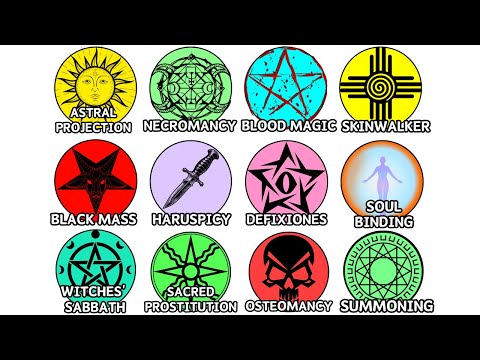
Astral Projection: Venturing Beyond the Veil

Astral projection is a practice where consciousness is believed to separate from the physical body, allowing it to travel through the astral plane – a spiritual dimension unseen by physical eyes. Think of it as a conscious out-of-body experience aimed at exploration, gaining knowledge, or interacting with spiritual entities. Historically, it was viewed with a mix of awe and fear. While some saw it as a path to enlightenment, others warned of leaving the physical body vulnerable to possession by malevolent entities, or the risk of psychological distress and permanent dissociation from one's physical form.

The taboo nature of astral projection stems from its potential to disrupt the perceived balance between the physical and spiritual realms. It's like opening a door to potentially dangerous territories without adequate protection or understanding. The CIA's involvement in such practices, notably through 'Operation Stargate,' highlights a serious, albeit classified, interest in these phenomena.

Blood Magic: The Potency of Life Force

Blood magic involves the use of blood – often human or animal – in rituals to amplify spells, heal, or curse. The underlying belief is that blood contains vital life force, making it a powerful conduit for magical energy. Some African cultures, for instance, historically employed blood magic for spiritual protection or to invoke curses upon enemies. The idea is that by using a substance so intrinsically linked to life, the ritual's potency is drastically increased; it's like switching from a basic tool to a hyper-charged one.

However, the use of another's blood can create spiritual entanglements, potentially linking your fate and misfortunes to theirs. This practice is forbidden due to the spiritual risks involved, such as attracting negative energies or malevolent forces, and is seen by many as violating the sacredness of blood itself. The implications of such entanglements are profound, potentially binding you to energies you cannot control.

Necromancy: Communicating with the Departed

Necromancy is the practice of communicating with the dead, often through divination or summoning. The goal can range from seeking lost knowledge or guidance to commanding spirits for various purposes. It's a practice deeply embedded in folklore and often associated with darker aspects of magic, partly due to its direct engagement with death and the unknown. In popular culture and historical accounts, necromancers are often depicted as figures who delve into forbidden arts, using tools like shovels not just for practical reasons but as symbolic instruments of their craft.

The taboo surrounding necromancy is rooted in the fear of disturbing the natural order of life and death, the potential for attracting malevolent spirits, and the psychological toll of communing with the deceased. Many organized religions strictly forbid any form of communication with spirits, viewing it as an affront to the divine order and a path to spiritual corruption.

The Black Mass: A Subversion of Sacred Ritual

The Black Mass is a ritual that parodies or subverts the Catholic Mass, often involving blasphemous acts, invocations of infernal entities, and symbolic rejection of religious dogma. It is seen as an act of defiance against established religious authority and sacred principles. The Black Mass is typically characterized by its reversal of traditional rites, symbolizing a turning away from the divine and an embrace of the infernal or the profane. It's an inversion, a dark mirror reflecting sacred practices.

Its forbidden status comes from its direct challenge to religious institutions and its perceived invocation of demonic forces. While often sensationalized, the intent behind such a ritual is typically to gain power through rebellion against perceived spiritual control or to explore the 'shadow' aspects of existence.

Human Sacrifice: The Ultimate Offering

Human sacrifice, the ritualistic killing of a human being, is perhaps one of the most universally condemned practices in magic and religion. It represents the ultimate offering, where the most precious life force is given to a deity, spirit, or cosmic force to achieve a powerful result – be it appeasement, immense power, or a profound magical effect. The belief is that by sacrificing the ultimate gift, the recipient will grant an equally ultimate boon.

Its prohibition is deeply ingrained in modern ethics and most legal systems due to the inherent violation of human life and dignity. Historically, it was practiced in various cultures to ensure good harvests, win wars, or appease angry gods. However, the ethical and moral implications are so severe that it remains at the absolute extreme of forbidden rituals.

Summoning Rituals: Invoking Powers Beyond the Mundane

Summoning rituals involve the deliberate invocation of spirits, entities, or deities, often with the goal of obtaining knowledge, assistance, or power. These can range from calling upon benevolent guides to commanding more ambiguous or potentially dangerous entities. The key is the intention to draw something from beyond the practitioner's immediate physical reality into their sphere of influence or perception.

The danger lies in the nature of what is summoned and the practitioner's ability to control or safely interact with it. Invocations can go awry, leading to possession, unwanted spiritual attachments, or psychological trauma. Many traditions warn against tampering with forces one does not fully understand or control. The concept of binding one's soul to a computer, initially a humorous thought in community comments, highlights the modern interpretation of such anxieties in a technological age.

Cannibalistic Rituals: Consuming the Essence

Cannibalistic rituals involve the consumption of human flesh, often within a ritualistic context. The motivations can vary, including beliefs about absorbing the strength, spirit, or knowledge of the consumed individual, appeasing deities, or as a form of extreme warfare. It's a primal act, often viewed as the ultimate violation of respect towards the dead and the sanctity of the human form.

The taboo is multi-layered: ethical, moral, and spiritual. Beyond the obvious revulsion, the belief is that consuming a person's flesh transfers their essence, potentially leading to spiritual corruption or entanglement. The graphic depictions often associated with this ritual underscore its deeply unsettling nature.

Haruspicy: Divination Through Entrails

Haruspicy is an ancient form of divination that involves examining the entrails of sacrificed animals to interpret omens or predict the future. Practiced extensively by the Etruscans and Romans, it was believed that the gods communicated their will through the patterns and conditions of the organs. The entrails were seen as a direct message from the divine.

While not inherently violent in intent for the practitioner, the practice itself involves ritualistic sacrifice. The "forbidden" aspect often relates to the perceived manipulation of divine will or the engagement with practices deemed pagan or superstitious by succeeding religious movements. The question of what the entrails predict can range from cosmic pronouncements to mundane outcomes, like predicting a good meal.

Curse Tablets (Defixiones): Imposing Will Through Binding

Curse tablets, or defixiones, were inscribed objects, typically lead or clay, used in ancient times to invoke spirits or deities to inflict harm, misfortune, or binding upon an enemy. They were personal tools of malediction, intended to cause specific harm to an individual or group. These were essentially magical lawsuits, aiming to bind the target magically.

Their forbidden nature arises from their direct intent to cause harm and suffering, aligning with malevolent magic rather than beneficial spells. While a powerful tool of personal retribution, their use is considered ethically reprehensible in most magical and societal frameworks due to their destructive intent.

Soul Binding: Eternal Connections and Risks

Soul binding refers to rituals intended to create a permanent or deeply significant spiritual connection between two or more individuals, or between an individual and a spirit or deity. This can be for purposes of eternal companionship, shared power, or to ensure a spiritual link persists beyond death. The idea of binding one's soul to a computer, as a user humorously suggested, highlights the modern adaptation of this concept.

The risks are substantial: if the bond is with a malevolent entity or a troubled soul, it can lead to spiritual entanglement and suffering. The phrase "imagine if someone bound their soul to their computer" captures the essence of this fear when applied to technology – what happens if our digital selves are irrevocably linked to something beyond our control?

Skinwalker Rituals: Transformation and Taboo

Skinwalker rituals are associated with shape-shifting practices, particularly within Navajo (Diné) and other Native American traditions. Skinwalkers are believed to be witches who can transform into animal forms, often to cause harm or mischief. The rituals involve an intense, often dark, process to gain this ability.

These practices are highly taboo due to deep cultural beliefs about respecting the spiritual world and the potential for misuse of such powers. They are not just about transformation but about a pact with darker forces. Many tribes, including the Cherokee and Comanche, have similar traditions, underscoring the widespread nature of these beliefs and the inherent dangers associated with them.

The Witches' Sabbath: Gatherings of the Forbidden

The Witches' Sabbath, particularly in European folklore, refers to legendary nocturnal gatherings of witches, often depicted as involving devil worship, cannibalism, and other forbidden rites. While largely a product of historical persecution and superstition, the concept represents a gathering of those who practiced magic outside the sanctioned norms of the time, often associated with pacts with dark forces.

The fear and prohibition stemmed from the perceived threat these gatherings posed to established religious and social order. They were seen as a source of ultimate evil, a place where all moral boundaries were crossed.

Sacred Prostitution: Ritualistic Union and Exchange

Sacred prostitution, historically found in some ancient cultures (e.g., Mesopotamia, Greece), involved sexual acts performed as part of religious rituals, often as a form of worship or exchange with a deity. It was believed to promote fertility, prosperity, or as a way to connect with divine energies, particularly those related to Venus or fertility goddesses. It was seen not as a profane act, but a divine service.

Its forbidden status in modern times stems from a confluence of religious condemnation, societal views on sexuality, and the ethical complexities surrounding sex and spirituality. While divorced from its original sacred context, the practice remains a potent example of how sexual energy has been historically integrated into magical and religious rites.

Self-Mummification: The Ritual of Physical Preservation

Self-mummification is a rare and extreme ritual where an individual intentionally prepares their body for preserved death, often through a prolonged period of fasting, meditation, and specific dietary practices, to achieve a state of physical preservation after death. This was practiced in some Buddhist traditions, aiming to achieve a state of enlightenment or sainthood that would continue to benefit followers even after the practitioner's physical demise.

The extreme nature of the practice – involving severe physical discipline and the intent to manipulate the afterlife of one's own body – makes it highly unusual and often viewed with awe or apprehension. It challenges our understanding of life, death, and the body's role in the spiritual journey.

Osteomancy: Divination Through Bones

Osteomancy is a form of divination using bones, often from animals, to gain insight or predictions. In ancient cultures, bones were inscribed or interpreted based on their patterns, sounds, or other characteristics. It's a practice tied to the primal connection with the animal kingdom and the symbolic representation of life and death.

While less sensational than other forbidden rituals, osteomancy is often grouped with pagan or shamanic practices that were suppressed by dominant religious forces. Its forbidden status arises from its association with non-sanctioned spiritual inquiry and its connection to the mysteries of life and death, often involving the sacrifice of animals.

The Lunar Connection: Timing Your Operations

When exploring any magical practice, especially those involving potent or potentially dangerous energies, timing is paramount. The cycles of the moon offer a powerful framework for understanding and directing magical intent. Working with lunar phases can amplify your rituals, provide clarity, or mitigate risks.

For example, attempting a summoning ritual during a waning moon might be counterproductive if your aim is amplification, whereas a binding ritual could be more potent. Conversely, working with intentions of growth or attraction is often best aligned with a waxing moon. The danger of a ritual can sometimes be mitigated by aligning it with the cosmic tides. Understanding these cycles is crucial for any serious practitioner seeking to harness natural forces effectively.

This is where the right tools become invaluable. Manually tracking the lunar phases can be intricate and time-consuming, pulling your focus away from the core magical work. For this reason, I rely on the Lunar Phase Calculator. It simplifies tracking the moon's cycles, providing clear insights into the optimal times for specific magical operations, whether you're casting a protective charm or exploring the edges of astral travel. It helps ensure your magical timing is precise, aligning your efforts with the most potent cosmic energies.

Mage's Arsenal

  • Essential: Lunar Phase Calculator — Your indispensable tool for timing magical operations with cosmic precision.
  • Exploratory Reading: Books on comparative mythology, occult history, and comparative religion.
  • Journal: A dedicated notebook for recording insights, experiences, and intentions related to these practices.
  • Protective Amulets: Depending on the ritual, a focus for protective energies might be necessary.

FAQ: Explorations and Clarifications

Are these rituals truly "forbidden," or just taboo in certain traditions?

The nature of "forbidden" is subjective and context-dependent. Many of these rituals are taboo within specific religious or cultural frameworks due to perceived dangers, moral objections, or historical persecution. However, across different cultures and throughout history, many have also been practiced, albeit sometimes in secret or with great caution. The term "forbidden" often highlights practices that carry significant inherent risks or challenge fundamental ethical codes.

Can practicing these rituals lead to genuine power or enlightenment?

The potential for power or insight exists in virtually any magical practice, depending on the practitioner's skill, intent, and the underlying metaphysical principles they engage with. However, practices deemed forbidden often carry disproportionately high risks. Enlightenment is a journey of understanding, and while some practitioners might find unconventional paths to it through these rituals, the dangers and potential for spiritual corruption are significant deterrents.

Is it possible to perform these rituals safely?

Safety in magic is relative and depends heavily on the practitioner's knowledge, preparation, intent, and the specific tradition's guidelines. Some rituals, like human sacrifice, are ethically irreconcilable with safety. Others, like astral projection or communication with spirits, might be approached with caution, extensive preparation, protective measures, and a deep understanding of the forces involved. For many forbidden practices, the inherent risks are so high that safe execution by an untrained individual is considered impossible.

What is the difference between a "black mass" and a "sabbath"?

While both are associated with forbidden or counter-religious practices, they have distinct origins. The Black Mass is typically described as a ritualistic inversion or parody of the Christian Mass, often involving devil worship and blasphemy. The Witches' Sabbath is a more folkloric concept of nocturnal gatherings of witches, often linked to pacts with the devil and widespread magical activity, though its historical reality is debated and often conflated with the persecution of individuals accused of witchcraft.

Are there any modern interpretations or safer alternatives to these forbidden rituals?

Many practitioners seek to explore the underlying principles of forbidden rituals through safer, symbolic, or psychological means. For example, the intense focus and boundary-pushing of astral projection might be explored through deep meditation or lucid dreaming. The raw power sought in blood magic could be channeled through symbolic representations of life force or intense emotional catharsis. The act of summoning might be reinterpreted as deep psychological work or communion with archetypal forces. The key is understanding the root intention and finding modern, ethical ways to engage with it.

About the author: Frater Alek0s is a veteran practitioner and researcher in the field of chaos magick. His work focuses on the practical and experimental application of occult techniques for self-development and reality exploration, demystifying esotericism for the modern practitioner.

Your Operation: Intent and Caution

Engaging with the concept of forbidden rituals requires a sober assessment of risks versus potential rewards. It is a path not to be trod lightly, if at all. The wisdom of various esoteric traditions consistently highlights the importance of grounding, protection, and clear intention when dealing with potent spiritual forces.

If your exploration leads you to consider any of these practices, do so with the utmost caution. Understand the energetic, psychological, and spiritual implications. Always ensure your intent is clear and aligned with the highest good, and never engage in practices that cause harm to yourself or others. The goal of exploring these topics is understanding, not necessarily replication. Use this knowledge to deepen your respect for the boundaries that esoteric traditions have established for a reason.


Referencias

  1. Carroll, P. J. (1987). Liber Null & Psychonaut. Weiser Books.
  2. Spare, A. O. (1913). The Book of Pleasure. Self-published.
  3. Hine, P. (1992). Condensed Chaos: An Introduction to Chaos Magic. New Falcon Publications.
  4. Crowley, A. (1904). The Book of the Law. Self-published.
  5. Sherwin, R. (2018). The Chaos Magic Handbook. CreateSpace.
  6. Kraig, D. M. (1988). Modern Magick: Eleven Lessons in the High Magickal Arts. Llewellyn Publications.
  7. Morrison, G. (2003). Pop Magic! The Art of Shaping Reality. Disinformation.
  8. DuQuette, L. M. (2003). The Chicken Qabalah of Rabbi Lamed Ben Clifford. Weiser Books.
  9. Webb, D. (2015). Chaos Magick: A Practical Guide. Self-published.
  10. Tyson, D. (2006). The Power of the Written Word. Llewellyn Publications.
  11. Bonewits, I. (1971). Real Magic. Creative Age Press.
  12. Greer, J. M. (2003). The New Encyclopedia of the Occult. Llewellyn Publications.

1988: The Year Magick Became Physics Through Virtual Mechanics

The 1988 Book That Turned Magick Into Physics


EMERALD TABLE — Grimoire Record Magitech
⚔️ TypeSpell
📅 Date2026-08-04
📜 FileMC-2026-0304
Difficulty★★★★☆ Avanzado
Read time14 min
🔗 Related AppGoetian Seals Generator
cha0smagicklabs.com — Digital Grimoire of Chaos Magick

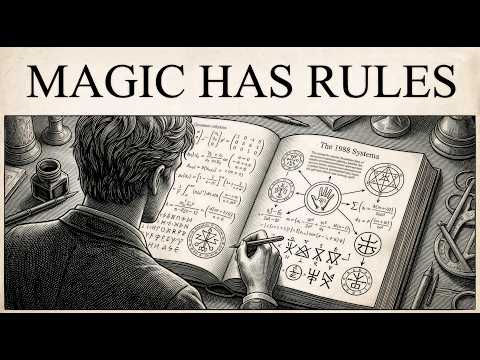
In the realm of the arcane, few moments mark a paradigm shift as profoundly as the year 1988. It was a year when the abstract language of physics and the ancient art of sorcery began to intertwine, suggesting a unified mechanism underlying both. This convergence wasn't just metaphorical; it proposed a literal framework for how spells might operate, mirroring the very forces that govern subatomic particles. The book that dared to bridge this gap, Sorcery as Virtual Mechanics, published by Steven Mace, offered a radical proposition: that the Feynman diagrams physicists use to describe particle interactions could, in fact, describe the mechanics of magick.

MagitechThe Feynman Diagram: A Universe of Exchange

Physicists employ intricate diagrams, known as Feynman diagrams, to visualize and calculate the interactions between subatomic particles. These diagrams, characterized by arrows representing particles and vertices signifying force exchange, are more than just visual aids; they are the very language used to speak about the universe's fundamental operations. Each line and vertex corresponds to a precise mathematical term, allowing scientists to describe complex events, such as two electrons repelling each other through the exchange of a photon, with astonishing accuracy. Before Richard Feynman developed this method, grasping such dynamic interactions at the quantum level was nearly impossible. The intricate dance of force and particle exchange, once shrouded in mystery, became quantifiable and understandable through these schematics.

Steven Mace's Radical Proposition: Sorcery as Virtual Mechanics

In February of 1988, Steven Mace published a book that dared to place one of these profound Feynman diagrams on its cover. This was no mere ornamental choice; it was the thesis. Mace's book, Sorcery as Virtual Mechanics, argued that the same underlying mechanism physicists used to describe electromagnetic interactions was precisely what governed the casting of spells by a sorcerer. He posited that magic, far from being an ethereal force, possessed a tangible, operative mechanism—one that could be learned and wielded by anyone willing to understand its protocol. The book's central argument was revolutionary: it didn't just theorize about magic's efficacy; it sought to prove its operational basis, effectively turning magick into a branch of physics.

A Synchronicity of Publication and Passing

In a twist of fate that resonated deeply with the book's themes, Steven Mace placed copies of Sorcery as Virtual Mechanics on a shelf in a New Haven bookstore on the very day Richard Feynman, the brilliant mind behind the diagrams, passed away. Mace was unaware of Feynman's death until he read it in an obituary two days later. This profound synchronicity—the author of a book whose core visual metaphor came from Feynman publishing on the day of Feynman's death, without any conscious causal link—underscored the very concepts Mace explored: the interconnectedness of events and the operation of underlying universal mechanisms, a subject also touched upon by Jungian psychology and the practices of Chaos Magick.

Bridging the Ethereal and the Physical

The implications of Mace's work are staggering. By framing sorcery through the lens of virtual mechanics, he offered a potential bridge between the seemingly disparate realms of the spiritual and the material. The book connected concepts such as virtual photons, Jung's documented synchronicities, and the experimental approaches of Chaos Magick into a cohesive operational pattern. This framework suggested that magicians throughout history, operating on instinct or tradition, had unknowingly been manipulating the same fundamental forces that physicists described. The notion that one could consciously "operate the mechanism" of reality, without needing to fully comprehend its deepest \"why,\" aligns with the practical, results-oriented ethos of modern magical traditions.

The Legacy of Virtual Mechanics

While Sorcery as Virtual Mechanics is now out of print and notoriously difficult to find, its ideas continue to resonate. The concept that magic operates on a verifiable, physical mechanism—akin to the exchange forces in quantum physics—profoundly alters our understanding of both disciplines. It suggests that the "impossible" might simply be the result of operating an unknown or misunderstood physical law. Mace's framework provides a theoretical underpinning for practices that have long relied on intuition and faith, grounding them in a language that science itself uses to describe the universe's fundamental interactions. This perspective invites practitioners to view their work not as arcane rituals, but as precise operations within a larger, comprehensible cosmic engine.

The Physics of the Unseen

Mace's work is a testament to the idea that the universe operates on principles that transcend our conventional understanding. By applying the rigorous logic of physics to the practice of sorcery, he opened a new avenue for exploration. The book implies that the patterns observed in quantum field theory—the dance of virtual particles mediating forces—are mirrored in the energetic exchanges of spellcasting. This is not merely a philosophical musing; it's a proposed operational model. Understanding this mechanism allows for a more deliberate and precise approach to magical workings. The intention, the focus, and the release—all factors in a successful spell—can be viewed as specific inputs into this virtual mechanical system, much like directing energy between subatomic entities.

The Tension of Unacknowledged Mechanisms

One of the most striking observations from Mace's framework is the recognition that countless magicians throughout history likely operated this same mechanism without possessing the explicit knowledge of it. Their rituals, their incantations, and their focused intentions were, in essence, protocols for interacting with these fundamental forces. The tension arises from the gap between the observable effect—the magic—and the unknown cause. Mace’s book attempts to fill this gap, providing a name and a model for the underlying "physics" of the impossible. This suggests that the power of belief, intention, and synchronicity, as explored by figures like Carl Jung, might not be purely psychological phenomena but manifestations of these underlying virtual mechanics.

Operationalizing the Impossible

The true power of Sorcery as Virtual Mechanics lies not just in its theoretical framework but in its implicit invitation to practice. If magic is indeed a form of physics, then it can be learned, applied, and refined. Mace's work suggests that the "protocol" for operating this mechanism is accessible. This aligns with the principles of Chaos Magick, which emphasizes experimentation and results over dogma. By understanding that spells are, in a sense, carefully orchestrated energetic exchanges, practitioners can approach their craft with a newfound scientific rigor. It transforms ritual from a blind act of faith into a calculated operation, where intention and focus are the key variables determining the outcome.

The Goetian Connection: Seals and Virtual Mechanics

The principles laid out by Steven Mace in Sorcery as Virtual Mechanics offer a fascinating lens through which to view older magical traditions, such as those involving the seals of Goetia. The intricate geometric designs of these seals, meticulously crafted and imbued with specific intentions, can be understood as visual protocols. Just as a Feynman diagram maps the exchange of force between particles, a Goetian seal can be seen as a diagram for directing specific energetic interactions with archetypal forces or entities. The precise proportions, the associated sigils, and the ritualistic invocation all serve as instructions for operating the "virtual mechanics" of the universe to achieve a desired outcome.

The problem for many practitioners working with complex sigils or seals is the inherent difficulty in their creation and activation. Precise geometry and the accurate representation of symbolic elements are crucial, and a single error can lead to a distorted or failed working.

This is where modern tools can be revolutionary. For instance, if you're working with the powerful seals of the Ars Goetia, struggling to get the proportions just right or needing to generate a clean, digital representation for a ritual, you face a common hurdle. Creating these seals manually requires a deep understanding of esoteric geometry and often significant artistic skill. A flawed seal can lead to a misdirected intention, undermining the entire magical operation. This is precisely the kind of obstacle that technological advancements can help overcome, allowing practitioners to focus on the intent and gnosis rather than the minutiae of draughtsmanship.

This is why I strongly recommend the Goetian Seals Generator. This app takes the complexity out of seal creation. It allows you to accurately generate and even customize Goetian seals, ensuring the integrity of the symbolic framework. By providing a reliable and precise tool for seal generation, the Goetian Seals Generator democratizes access to these powerful symbols, enabling practitioners to perform workings with greater confidence and efficacy, directly aligning with the principles of operational magic Mace described.

Mage's Arsenal

  • Essential: Goetian Seals Generator - For precise creation and digital representation of Goetian seals.
  • Foundational Reading: Sorcery as Virtual Mechanics by Steven Mace. (Note: This book is extremely rare and often out of print. Seek digital archives or rare book dealers.)
  • Theoretical Context: Works by Richard Feynman on Quantum Electrodynamics (e.g., QED: The Strange Theory of Light and Matter).
  • Psychological Correlates: Works by Carl Jung on Synchronicity and Archetypes.
  • Experimental Magick: Books by Peter J. Carroll (e.g., Liber Null & Psychonaut) and Austin Osman Spare (e.g., The Book of Pleasure).

Frequently Asked Questions (FAQ)

What is the significance of the year 1988 in relation to magick?

The year 1988 is significant because it marked the publication of Steven Mace's book, Sorcery as Virtual Mechanics. This book proposed that magick operates on the same fundamental mechanics as particle interactions in physics, using Feynman diagrams as its central metaphor. The near-simultaneous death of physicist Richard Feynman added a layer of profound synchronicity to this event.

What are Feynman diagrams and how do they relate to magic?

Feynman diagrams are visual representations used by physicists to describe interactions between subatomic particles. They depict particles as lines and force exchanges as vertices. Mace's thesis was that the logic and structure of these diagrams could directly map onto the process of spellcasting, suggesting that magic is a form of applied physics, or "virtual mechanics."

Why is Steven Mace's book so hard to find?

Sorcery as Virtual Mechanics is notoriously difficult to find as it is largely out of print and has not seen widespread re-publication. This rarity, coupled with its radical content, has led many to speculate that forces exist which wish to suppress this knowledge, a phenomenon often discussed in esoteric circles.

Can anyone learn to operate these "virtual mechanics"?

According to Mace's thesis and the logic of virtual mechanics, yes. The book suggests that if magic has a mechanism identical to physical forces, then understanding and applying the correct "protocol"—intention, focus, gnosis, and release—can allow anyone to operate it. This aligns with the practical, experimental approach of Chaos Magick.

How does this relate to Jung's concept of synchronicity?

Carl Jung's concept of synchronicity describes meaningful coincidences—events that are connected not by causality but by meaning. Mace's framework of virtual mechanics provides a potential physical underpinning for synchronicity. If events can be influenced by the exchange of forces and information akin to subatomic interactions, then "meaningful coincidences" might be the observable result of these underlying, non-causal connections being activated by intention.

What is the difference between metaphor and mechanism in Mace's work?

Mace explicitly sought to move beyond metaphor. Many previous attempts to link magic and physics relied on analogy. Sorcery as Virtual Mechanics, however, proposed a literal, operational mechanism—identical to that described by physics. It wasn't saying magic is like physics; it argued magic is physics, operating on the same principles and subject to the same laws, albeit through a different application of intention and consciousness.

Are spells just a form of applied quantum mechanics?

Mace's book suggests a strong parallel, framing magic as operating via principles analogous to quantum field theory, particularly the exchange of virtual particles. While it's not identical to quantum mechanics as currently understood in mainstream physics, it proposes a similar underlying mechanism for how forces and information are exchanged and how events can be influenced through focused intention. It's the "physics of the impossible," or at least, the closest scientific parallel magic has ever found.

Does this mean magic is "real" in a scientific sense?

Mace's work argues for magic being "real" in a scientifically operative sense. By proposing a concrete, testable mechanism analogous to those described in quantum physics, he suggests that magic is not merely belief or placebo but a form of interacting with the fundamental forces of the universe. The efficacy of magic, seen through this lens, is dependent on correctly operating this mechanism—understanding the protocol.

The Future of Magick as Physics

While the practical application of Mace's theories remains a frontier for exploration, the core idea—that the universe possesses a unified mechanism for interaction, understandable through both physics and sorcery—is revolutionary. It challenges us to reconsider the boundaries between science and spirituality, suggesting they may be two sides of the same coin. The exploration of virtual mechanics in magic invites a new era of magical practice, one grounded in experimental rigor, precise intention, and a profound understanding of the interconnectedness of all things. As practitioners, we stand at the threshold of a reality where the seemingly impossible can be approached with the systematic understanding of a scientist.

Appendix: Further Explorations

Virtual Mechanics and Chaos Magick

The principles of Chaos Magick, particularly its emphasis on belief as a tool, the operational nature of magic, and the use of sigils to encode intention, find a powerful resonance in Steven Mace's concept of virtual mechanics. Carroll's ideas about "techno-shamanism" and Spare's focus on the subconscious mind as a generator of symbolic power align with the notion of consciously manipulating universal interaction mechanisms. Mace's work provides a potential 'how' to the 'what' and 'why' that these traditions explore, suggesting that the energy channeled in Chaos Magick rituals is, at its core, the same energy that mediates fundamental particle forces.

The Role of Intention and Belief

Central to both physics (in its interpretation of quantum phenomena) and magic is the role of intention and belief. In quantum mechanics, the observer's role and the act of measurement can influence outcomes. In magic, intention is the driving force behind a spell, amplified by belief and focus. Virtual mechanics provides a framework where intention acts as the operator of the universal mechanism, directing the exchange of forces and information to manifest a desired outcome. This suggests that belief is not merely a psychological state but a critical component in the operational protocol of magic.

Synchronicity as a Manifestation of Virtual Mechanics

Carl Jung's concept of synchronicity, defined as meaningful coincidences lacking a causal link, is profoundly illuminated by Mace's theory. If the universe operates on a mechanism of virtual particle exchange that can be influenced by focused intention, then seemingly coincidental events could be understood as the direct result of these energetic interactions. A magician, consciously or unconsciously, might be manipulating these forces to create opportune moments or to align disparate events, leading to synchronicities that appear without conventional cause but are deeply meaningful to the practitioner.

The Rarity and the "Powers That Be"

The scarcity of Mace's book and the difficulty in finding complete versions have led to speculation about deliberate suppression. In esoteric circles, it's common to believe that certain knowledge, particularly that which could empower the masses, is actively kept from public access by established powers—whether governmental, religious, or even esoteric organizations themselves. The idea that "powers that be" might wish to keep "common folk" from understanding and using this fundamental truth about reality is a recurring theme in discussions surrounding Mace's work.

Personal Experience and Verification

Many individuals who have encountered Mace's ideas report a sense of recognition, feeling as though they had intuitively grasped similar concepts. The ability to explain the successes and failures in their own magical practice through a more concrete, scientific lens is invaluable. When a spell works brilliantly, explaining it as a successful operation of virtual mechanics, and when it fails, analyzing it as an error in the "protocol," provides a more robust and less faith-based approach to magical experimentation.

The Physics of the Impossible vs. Unexplained Science

The assertion that magic is "only science unexplained" is a common refrain in discussions bridging these fields. Mace's work elevates this by proposing a specific, identifiable mechanism. It suggests that magic isn't just unexplained science; it's science operating through principles that are currently outside the mainstream paradigm of physics, yet directly analogous to its known mechanics. It is the "physics of the impossible" because it deals with observable effects that current scientific models struggle to explain through conventional causality.

The Observer Effect in Magick

Similar to how the observer effect in quantum mechanics suggests that the act of observation can influence the outcome, in Mace's framework, the conscious intention of the magician acts as the "observer" and "operator." The magician's focused awareness and intent direct the flow of virtual particles or energetic exchanges, influencing reality. This highlights the active role of consciousness in shaping external events, a concept central to many magical and spiritual traditions.

About the author: Frater Alek0s is a veteran practitioner and researcher in the field of chaos magick. His work focuses on the practical and experimental application of occult techniques for self-development and reality exploration, demystifying esotericism for the modern practitioner.

Connecting to Core Principles

Steven Mace's framework provides a mechanism for understanding seemingly disparate concepts: the power of symbols (sigils, seals), the necessity of altered states (gnosis), the role of intention, the significance of synchronicities, and the influence of archetypal forces. By positing a unified underlying principle—virtual mechanics—he offers a way to integrate these elements into a coherent and operational model of magic. This is what makes the book so profound and why its ideas continue to inspire practitioners seeking a more rigorous understanding of their craft.


Referencias

  1. Carroll, P. J. (1987). Liber Null & Psychonaut. Weiser Books.
  2. Spare, A. O. (1913). The Book of Pleasure. Self-published.
  3. Hine, P. (1992). Condensed Chaos: An Introduction to Chaos Magic. New Falcon Publications.
  4. Crowley, A. (1904). The Book of the Law. Self-published.
  5. Sherwin, R. (2018). The Chaos Magic Handbook. CreateSpace.
  6. Kraig, D. M. (1988). Modern Magick: Eleven Lessons in the High Magickal Arts. Llewellyn Publications.
  7. Morrison, G. (2003). Pop Magic! The Art of Shaping Reality. Disinformation.
  8. DuQuette, L. M. (2003). The Chicken Qabalah of Rabbi Lamed Ben Clifford. Weiser Books.
  9. Webb, D. (2015). Chaos Magick: A Practical Guide. Self-published.
  10. Tyson, D. (2006). The Power of the Written Word. Llewellyn Publications.
  11. Bonewits, I. (1971). Real Magic. Creative Age Press.
  12. Greer, J. M. (2003). The New Encyclopedia of the Occult. Llewellyn Publications.