Saltar al contenido principal

Anuncio Superior

Mostrando entradas con la etiqueta hermeticism. Mostrar todas las entradas

Fire, Air, Water, Earth: The Elemental Significance and Ritual Codification

Fire, Air, Water, Earth, The Code Behind Your Ritual Work


EMERALD TABLE — Grimoire Record Ritual
⚔️ TypeSpell
📅 Date2026-08-13
📜 FileMC-2026-0385
Difficulty★★★★☆ Avanzado
Read time15 min
🔗 Related AppLunar Phase Calculator
cha0smagicklabs.com — Digital Grimoire of Chaos Magick

Fire. Air. Water. Earth. These are not mere substances or abstract concepts; they are fundamental patterns of force that underpin all existence, particularly within the energetic architecture of ritual work. For over a century, systems like the Hermetic Order of the Golden Dawn have recognized these four elements – representing qualities of heat, cold, moisture, and dryness – as the foundational bedrock upon which ceremonial magic is built. These elemental forces are not external phenomena but are deeply encoded within our very being, influencing our intentions, actions, and transformations. This exploration delves into the profound significance of each element, examining what they govern, the consequences of their undeveloped presence within us, and how the dynamic interplay between them facilitates profound change.

If you want to put this into practice, Lunar Phase Calculator guides you step by step.

This is Part 2 of our foundational Knowledge Lecture series, designed for the serious practitioner seeking not just names, but the actual operational understanding of these forces. We will dissect the mechanics of each element, offering a framework for self-analysis that goes beyond rote memorization. As you engage with this material, pay close attention to where your attention naturally drifts or where resistance arises. This subtle data is crucial. The elemental significance of your inner landscape is a vital component of your ritual work, dictating the efficacy of your spells and the speed of your manifestation.

RitualThe Elemental Framework: More Than Metaphor, It's Mechanics

The elemental framework of Western esotericism, particularly as systematized by the Golden Dawn, is built upon a sophisticated understanding of energetic dynamics. It's a codified system, and like any effective code, its power lies in its structure, not merely in belief. For those who have engaged with these materials, an awareness of their internal elemental balance is often the first step towards understanding personal blockages. The lecture you're about to absorb, and the subsequent practical application you'll undertake, are designed to illuminate these mechanics. This isn't about adopting a new belief system; it's about learning to operate within a pre-existing, universally applicable energetic system. The significance of fire, air, water, and earth in ritual work is profound, as they represent distinct qualities of force that can be invoked, balanced, and directed.

Fire: The Catalyst of Action and Transformation

Fire, in its elemental aspect, is the principle of energy, action, and transformation. It governs our will, our passion, our drive, and our capacity for decisive action. When balanced, fire ignites our spirit, allowing us to initiate projects, overcome inertia, and manifest our desires with fiery determination. It is the spark that ignites intention, the heat that burns away obstacles, and the transformative force that reshapes what was before. The significance of fire in ritual work is undeniable; it is the engine that powers the spell, the initial surge of energy that propels our will into manifestation. Without an active fire element, our desires remain dormant, our intentions theoretical, and our rituals lacking the essential dynamic force to bring them into reality. This is the energy of the warrior, the innovator, and the alchemist who understands that true change requires a catalyst.

An undeveloped or suppressed fire element within an individual can manifest as a lack of motivation, procrastination, an inability to commit to goals, or a general feeling of lethargy. It’s the feeling of being stuck, of having grand ideas but no capacity to execute them. This is often observed in individuals who are overly analytical or fearful of taking risks, their internal fire dampened by doubt or external conditioning. Conversely, an over-developed or uncontrolled fire element can lead to impulsivity, aggression, burnout, a tendency to act without thinking, and a destructive pursuit of immediate gratification. Mastery lies in channeling this potent force, directing its transformative power towards constructive ends. Understanding the significance of fire in ritual work is the first step in harnessing this primal energy.

Air: The Principle of Intellect, Communication, and Movement

Air represents the realm of intellect, communication, thought, and movement. It is the principle of adaptability, the ability to disseminate information, and the capacity for swift action. This element governs our minds, our ability to communicate ideas, our perceptions, and our connections to the world around us. A balanced air element allows for clarity of thought, effective communication, intellectual curiosity, and the ability to adapt to changing circumstances. It is the breath that sustains life, the wind that carries seeds, and the medium through which ideas travel. In ritual work, air embodies the clarity of intention, the precise formulation of spells, and the dissemination of energetic patterns into the wider world. Its significance lies in its ability to bridge the gap between intention and manifestation, carrying the seed of desire to its fertile ground.

When the air element is underdeveloped, individuals may struggle with communication, experience mental fog, have difficulty organizing thoughts, or feel disconnected and stagnant. This can lead to misunderstandings, a lack of inspiration, and a feeling of being trapped within one's own mind. Conversely, an overactive air element can result in scattered thoughts, excessive mental chatter, anxiety, a tendency to be overly intellectual or detached, and a constant need for external stimulation. It can manifest as an inability to focus or ground oneself, leading to a constant state of flux without tangible results. Balancing the air element allows for focused intellect, clear communication, and the intelligent application of will, ensuring that the energies invoked in ritual are well-directed and effectively transmitted.

Water: The Realm of Emotion, Intuition, and Receptivity

Water embodies the principles of emotion, intuition, receptivity, and the subconscious. It governs our feelings, our empathy, our intuition, and our connection to the ebb and flow of life. This element is fluid, adaptable, and deeply connected to the inner world of sentiment and feeling. A balanced water element fosters emotional intelligence, deep intuition, empathy, creativity, and a profound understanding of the subtle currents that influence our lives. It is the ocean of consciousness, the flow of emotion, and the mirror that reflects our inner truths. In ritual, water represents the emotional charge, the intuitive understanding, and the receptive state necessary to absorb and integrate magical energies. Its significance is in its ability to connect us to the deeper currents of the psyche, allowing for emotional healing and intuitive guidance.

An underdeveloped water element can lead to emotional suppression, a lack of empathy, difficulty connecting with one's feelings, and a disconnect from intuition. Individuals may appear cold, detached, or overly rigid, struggling to navigate the emotional landscape of life. This can result in superficial relationships and a lack of depth in their experiences. On the other hand, an overactive or unbalanced water element can lead to emotional volatility, hypersensitivity, mood swings, overwhelming feelings, and a tendency to be easily influenced. It can manifest as a drowning in one's own emotions, leading to a loss of personal agency and an inability to act decisively. Mastering the water element involves developing emotional resilience, cultivating healthy intuition, and integrating emotional wisdom into one's being, allowing for a deeper connection to oneself and the magical currents of the universe. The significance of water in ritual preparation and execution is paramount for emotional resonance and intuitive insight.

Earth: The Foundation of Form, Stability, and Manifestation

Earth embodies the principles of form, stability, manifestation, and grounding. It is the principle of tangibility, the physical world, and the materialization of energy into form. This element governs our connection to the physical body, our sense of security, our ability to create tangible results, and our grounding in reality. A balanced earth element provides a strong sense of stability, practical grounding, reliability, and the capacity to bring intentions into concrete reality. It is the soil that nourishes life, the stone that provides structure, and the tangible foundation upon which all else is built. In ritual, earth represents the grounding of intent, the stabilization of energies, and the physical manifestation of the magical work. Its significance lies in its ability to anchor the ephemeral into the concrete, ensuring that magical efforts yield tangible results.

When the earth element is underdeveloped, individuals may struggle with grounding, experience a lack of stability, feel disconnected from their physical bodies, or have difficulty manifesting tangible results in their lives. This can lead to a feeling of being unrooted, unrealistic, and constantly chasing fleeting dreams without ever achieving them. Conversely, an overdeveloped or rigid earth element can manifest as stubbornness, materialism, resistance to change, and an inability to adapt or embrace new ideas or spiritual concepts. It can lead to a life overly focused on the material, neglecting the emotional and spiritual dimensions of existence. Balancing the earth element is crucial for bringing magical work into tangible form, providing the necessary stability and structure for manifestation. The significance of Earth in ritual is in its ability to solidify intention and create lasting tangible results.

The Dynamic Interplay: Elements in Ritual and Personal Development

The true power of the elemental system lies not in viewing them as separate entities, but in understanding their dynamic interplay. Ritual work is not about invoking isolated elements, but about orchestrating their harmonious convergence. Imagine a ritual for manifestation: Fire provides the initial drive and will to act; Air clarifies the intention and communicates it to the universe; Water imbues the intention with emotional resonance and intuitive receptivity; and Earth provides the stable matrix for the desire to manifest physically. Each element supports and balances the others, creating a potent synergy.

When engaging in personal development, identifying which element is predominant or deficient within your energetic constitution is a powerful diagnostic tool. The Golden Dawn system, and many subsequent magical paths, offer specific rituals and practices to address these imbalances. For instance, if one finds themselves mired in Earth, struggling with inertia and lack of movement, as one practitioner noted, the focus shifts to invigorating the Fire and Air elements to initiate action and clarity. Conversely, if one is overly scattered with Air, lacking grounding, the Earth element needs strengthening to create stability and focus. The significance of this internal elemental balance cannot be overstated for effective ritual work. Our internal disposition directly impacts our ability to engage with and direct external forces. The fire air water earth ritual significance is deeply intertwined with our personal energetic state.

The Golden Dawn System: Structure for Transformation

The Golden Dawn system, with its emphasis on structure and precise ritual language, provides a robust framework for working with these elemental forces. It recognizes that the universe operates on certain fundamental laws and principles, and that by understanding these principles, practitioners can effectively interact with them. The elements are not mere symbolic representations; they are active forces that can be invoked, directed, and balanced to achieve specific results. The ceremonial magician learns to work with these forces not just externally within the ritual space, but internally, transforming their own energetic makeup.

The Outer Order teachings, for example, introduce foundational rituals like the Lesser Banishing Ritual of the Pentagram (LBRP). The LBRP is more than just a banishing; it is a fundamental tool for clearing and balancing the elemental forces within one's personal aura and ritual space. It's a preparatory rite that aligns the practitioner with the forces they intend to work with, establishing a clear energetic foundation. For those who find themselves drawn to the operational side of these teachings, understanding the elemental mechanics is paramount. The Golden Dawn system is built to facilitate transformation through rigorous practice and a deep understanding of these underlying energetic principles. The elemental significance of fire, air, water, and earth is the very grammar of this magic.

Identifying Your Elemental Imbalance: Resistance as Data

A crucial aspect of working with the elements is self-awareness. As noted in the lecture's conclusion, "Notice which element your attention slid away from while watching. That resistance is data." This simple instruction is a profound key. When we are asked to confront an element that is either underdeveloped or overactive and causing us difficulty, our natural response is often to resist or disengage. This resistance is not a failure; it is a signpost. It points directly to the area within our energetic system that requires the most attention and work. If your mind wandered during the discussion on Air, it may indicate a struggle with communication or mental clarity. If you felt uncomfortable or impatient during the section on Fire, it might suggest issues with action or motivation. This self-observation is the first step in consciously working with the elements.

The significance of this internal exploration cannot be overstated. If you find yourself drawn to a particular element's description, or feel a strong resonance with its qualities, this too is valuable data. It indicates an area of strength or a potential pathway for development. The goal is not to eliminate any element, but to achieve a harmonious balance. This balance allows for the full expression of one's potential, facilitating effective ritual work, personal growth, and the manifestation of desired outcomes. The understanding of fire air water earth ritual significance is therefore deeply personal.

Harnessing Your Elemental Data: Practical Application

For those who wish to move beyond theoretical understanding and engage directly with these elemental forces, practical application is key. The Golden Dawn system offers structured pathways to achieve this balance. The full Golden Dawn Course provides a comprehensive curriculum, covering the foundational rituals and mechanics necessary for transformation. This includes detailed instruction on how to work with each element, how to balance them within yourself, and how to integrate this understanding into your magical practice. The ritual course is designed to take the abstract concepts of elemental significance and translate them into tangible, actionable steps.

Specifically, if you identify with an imbalance – for example, being "mired in Earth, intention without movement," as one practitioner so eloquently put it – the course offers direct methods to address this. It provides the rituals that work that specific element directly, presented in an order that is most effective for transformation. This isn't just about naming the problem; it's about providing the tools to actively solve it. The free LBRP training is another excellent starting point, offering a foundational ritual that serves as a tuning fork for your energetic system, preparing you for deeper work with the elements and their significance in your ritual practices.

FAQ: Addressing Common Questions on Elemental Work

What is the fundamental significance of the four elements in Western magic?

The four elements (Fire, Air, Water, Earth) are foundational energetic principles that represent distinct qualities of force: action/will (Fire), intellect/communication (Air), emotion/intuition (Water), and form/stability (Earth). They are seen as both external forces and internal aspects of the practitioner, forming the basis of many magical systems for invoking, balancing, and transforming energies in ritual work and personal development.

How does an elemental imbalance manifest in daily life and ritual?

Elemental imbalances can lead to specific behavioral and energetic patterns. For instance, underdeveloped Fire might cause procrastination and lack of motivation, while an overactive Fire can lead to aggression or burnout. Similarly, weak Water can result in emotional detachment, whereas excess Water may cause emotional volatility. Understanding these manifestations is crucial for identifying areas needing balance for more effective ritual outcomes.

Can I truly change my elemental makeup through ritual?

Yes, the core principle of elemental magic and systems like the Golden Dawn is transformation. Through structured rituals, meditation, and consistent practice, practitioners can consciously work to balance and strengthen specific elemental aspects within themselves. This is not about changing who you are fundamentally, but about refining and harmonizing your energetic constitution to achieve greater effectiveness in your life and magic.

Is ceremonial magic inherently complex, or can beginners grasp elemental work?

While ceremonial magic can appear complex, systems like the Golden Dawn break down foundational principles like elemental work into manageable steps. Starting with basic rituals like the LBRP and understanding the basic significance of each element provides a solid entry point. Structured courses and dedicated practice allow beginners to gradually master these concepts and their application in ritual.

How does intention relate to the elements in a ritual?

Intention is the driving force, and the elements provide the means of its expression and manifestation. Fire provides the initial impetus and will for the intention. Air clarifies the intention and directs it. Water imbues the intention with emotional power and intuitive understanding. Earth grounds the intention, giving it form and the potential for tangible reality. A well-intentioned ritual requires the balanced interplay of all four elements to be truly effective.

Are elemental correspondences universal, or do they vary by tradition?

While the core principles of the four elements are remarkably consistent across many Western esoteric traditions, their specific correspondences and applications can vary. The Golden Dawn system offers a detailed set of correspondences for each element, which forms a robust framework. However, practitioners may also discover their own personal correspondences through experimentation and intuition. The significance of fire, air, water, earth in ritual is universal, but the specific language and tools used to engage them can be personalized.

Arsenal del Mago

  • Esencial para Elemental Balance: Lunar Phase Calculator — While not directly elemental, understanding lunar phases is crucial for timing rituals that harness the subtle energies of Water and Earth, influencing receptivity and manifestation cycles. Knowing when the moon is waxing (Earth) or in a water sign can dramatically enhance your elemental workings.
  • Fundacional Text: *The Tree of Life* by Israel Regardie — A cornerstone text for understanding the Golden Dawn system, including its elemental and energetic frameworks.
  • Advanced Understanding: *Liber Null & Psychonaut* by Peter J. Carroll — For a more chaotic and experimental approach to elemental forces and their manipulation.
  • Ritual Tools: A personal altar, elemental representations (e.g., a candle for Fire, incense for Air, a chalice of water, a pinch of salt or stone for Earth), and a journal for recording observations.

About the author: Frater Alek0s is a veteran practitioner and researcher in the field of chaos magick. His work focuses on the practical and experimental application of occult techniques for self-development and reality exploration, demystifying esotericism for the modern practitioner.

Your Operation: Elemental Self-Assessment

As you've absorbed this lecture and considered the fire air water earth ritual significance, take a moment for introspection. Which element calls to you most strongly? Which element do you find yourself actively avoiding or resisting? Note these observations in your journal. This is not about judgment, but about gathering data for your personal work. If you're ready to actively engage with and balance these forces, the resources are available. The Golden Dawn system is designed for transformation, offering a clear path from theoretical knowledge to practical mastery. The journey of elemental mastery is a journey into the core of your own being and your capacity to interact with the universe.

The Lunar Phase Calculator tool, part of the cha0smagicklabs ecosystem, is built exactly for this kind of work.

If you found this exploration into the elemental significance of ritual work valuable, consider sharing it with fellow seekers. Understanding these fundamental forces is a powerful step on the path of any practitioner. What element do you feel is most dominant in your life right now, and why? Share your initial self-assessment in the comments below – your insights can help illuminate the path for others.


Referencias

  1. Carroll, P. J. (1987). Liber Null & Psychonaut. Weiser Books.
  2. Spare, A. O. (1913). The Book of Pleasure. Self-published.
  3. Hine, P. (1992). Condensed Chaos: An Introduction to Chaos Magic. New Falcon Publications.
  4. Crowley, A. (1904). The Book of the Law. Self-published.
  5. Sherwin, R. (2018). The Chaos Magic Handbook. CreateSpace.
  6. Kraig, D. M. (1988). Modern Magick: Eleven Lessons in the High Magickal Arts. Llewellyn Publications.
  7. Morrison, G. (2003). Pop Magic! The Art of Shaping Reality. Disinformation.
  8. DuQuette, L. M. (2003). The Chicken Qabalah of Rabbi Lamed Ben Clifford. Weiser Books.
  9. Webb, D. (2015). Chaos Magick: A Practical Guide. Self-published.
  10. Tyson, D. (2006). The Power of the Written Word. Llewellyn Publications.
  11. Bonewits, I. (1971). Real Magic. Creative Age Press.
  12. Greer, J. M. (2003). The New Encyclopedia of the Occult. Llewellyn Publications.
VENUS: The Hidden Magic of the Goddess

VENUS - A Magia Oculta por trás da Deusa


EMERALD TABLE — Grimoire Record Chaos
⚔️ TypeSpell
📅 Date2026-08-04
📜 FileMC-2026-0328
Difficulty★★★☆☆ Intermedio
Read time9 min
🔗 Related AppGoetian Seals Generator
cha0smagicklabs.com — Digital Grimoire of Chaos Magick

The symbol of Venus, ancient and profound, holds far more than the modern superficial understanding of "the planet of love." Throughout history, Venus has been revered as a powerful force intertwined with beauty, desire, creation, and harmony. Embarking on a journey through the classical sources and the works of pivotal Western esoteric authors, we can trace how this potent symbol has evolved across different eras, adapting its meaning while retaining its core essence. This exploration delves into the rich tapestry of Venus's occult significance, offering a practical foundation for the practicing magician.

CaosThe Historical and Esoteric Journey of Venus

Our exploration begins in ancient Greece, where Aphrodite first emerged. Hesiod's *Theogony* recounts her birth, a narrative that profoundly influenced later interpretations of her role, even touching upon her significance in the Trojan War. The Romans, adopting the Greek pantheon, transformed Aphrodite into Venus, elevating her to a mythical ancestress of their vast empire, as immortalized in Virgil's *Aeneid*. This transition highlights an early shift: from a purely divine entity to a foundational mythos upon which political power could be built.

The Renaissance marked a significant evolution in the understanding of planetary principles. Thinkers like Paracelsus began to perceive Venus not merely as a deity of antiquity but as an active principle resonating within the fabric of nature itself. This marks a crucial pivot from deific worship to the understanding of celestial bodies as active forces with tangible correspondences in the terrestrial realm.

Further solidifying this perspective, Cornelius Agrippa, in his *De Occulta Philosophia Libri Tres*, meticulously gathered centuries of tradition. He compiled a vast system of correspondences, linking the planets, the natural world, and the human being into an intricate web of occult knowledge. Agrippa's work, a cornerstone of Western esotericism, provided a framework for understanding planetary energies not just as astrological influences but as potent forces that could be manipulated through ritual and sympathetic magic. This understanding is vital for anyone seeking to harness Venusian energies.

This foundational knowledge is crucial for any practitioner. Understanding the historical layers of Venus allows us to appreciate its multifaceted nature and to utilize its energies with greater precision. The desire for beauty, the drive for creation, and the pursuit of harmony are all Venusian currents that can be channeled for magical purposes.

Venusian Principles in Modern Practice

Beyond the historical and philosophical context, the energies associated with Venus hold immense practical value for the modern magician. The pursuit of aesthetic perfection, the fostering of harmonious relationships, and the creative impulse are all potent forces that can be directed through focused magical practice. Whether you are seeking to manifest beauty in your life, to foster stronger bonds with others, or to enhance your creative endeavors, understanding and working with Venusian principles is essential.

The key lies in recognizing that Venus is not solely about passive attraction or nebulous "love." It is about the principle of attraction itself, the magnetic force that draws disparate elements into pleasing configurations. This can manifest as the attraction of resources, the alignment of favorable circumstances, or the generation of inspiring ideas.

Harnessing Venusian Energy

For many practitioners, the challenge lies in translating these abstract principles into concrete magical actions. The visual representation of Venus, often through its astrological symbol or the sigils associated with its planetary intelligence, serves as a potent focal point. These symbols act as conduits, allowing the practitioner to connect with and direct the Venusian current.

This is where specialized tools can make a profound difference. Drawing and charging sigils manually can be time-consuming, and slight inaccuracies in their execution can dilute their intended power. I've found that the complexities of accurately rendering the intricate seals associated with planetary intelligences can be a stumbling block for many. The delicate balance of lines and curves requires precision, and deviating even slightly from the traditional forms can disrupt the flow of energy. This is a frustration I've encountered personally, especially when needing to work with these energies efficiently.

This is precisely why I rely on the Goetian Seals Generator. This application streamlines the process of creating accurate and potent sigils for planetary intelligences, including those associated with Venus. (https://play.google.com/store/apps/details?id=com.app.goetiansealsgeneratorapp) It allows you to bypass the tedious manual drawing and focus on what truly matters: your intention and the subsequent charging ritual. By ensuring the geometric perfection of the sigil, it maximizes the energy transfer and amplifies the magical effect.

Frequently Asked Questions (FAQ)

What is the primary occult significance of Venus?

Beyond its astrological association with love and beauty, Venus represents the principle of attraction, harmony, desire, creation, and aesthetic perfection. It is the force that draws things together, fosters connection, and inspires creativity.

How does Venus differ from Aphrodite or Venus in classical mythology?

While Aphrodite and Venus are the mythological personifications of Venusian energy, the occult understanding goes deeper. These deities represent facets of the planet's principle: Aphrodite embodies raw desire and beauty, while the Roman Venus also signifies foundational mythos and imperial power. Occultism views Venus as a fundamental cosmic force that these goddesses embody and channel.

Can Venusian magic be used for wealth manifestation?

Absolutely. Venus is associated with abundance, luxury, and the attraction of resources. By focusing on harmonious configurations and the principle of attraction, Venusian magic can be employed to draw wealth and prosperity into one's life. This often involves creating talismans or performing rituals aimed at fostering a magnetic aura for financial gain.

What are some common Venusian symbols in occultism?

The astrological symbol for Venus (♀), the rose, the dove, the number five, and specific planetary seals derived from authors like Cornelius Agrippa are common. These symbols act as focal points for channeling Venusian energies during magical operations.

How can one increase their Venusian energy?

Engaging in activities that embody Venusian principles is key. This includes appreciating and creating art and beauty, fostering harmonious relationships, practicing self-love, engaging in creative pursuits, and performing rituals focused on attraction and abundance.

How does Agrippa's system of correspondences relate to Venus?

Agrippa meticulously cataloged planetary correspondences, linking Venus to specific herbs, stones, colors, metals, days of the week (Friday), and angelic intelligences. Understanding these correspondences allows for the creation of more potent talismans, potions, and rituals designed to invoke and direct Venusian forces.

Is Venusian magic only for romantic pursuits?

Not at all. While romantic love is a prominent aspect, Venusian magic encompasses a broader spectrum of attraction, including artistic inspiration, financial prosperity, social harmony, and the manifestation of beauty in all its forms. It is the magic of alignment and desirability.

Comparative Analysis of Venusian Magic Approaches

| Approach | Core Principle | Primary Tools | Application Focus | Key Authors/Traditions | | :-------------------- | :------------------------------------------- | :-------------------------------------------------- | :--------------------------------------------------- | :--------------------------------------------------- | | Classical Mythology | Deific worship, narrative embodiment | Prayers, offerings, storytelling | Appeasement, seeking favor, understanding divine roles | Hesiod, Virgil, Ovid | | Renaissance Hermeticism | Planetary principles as natural forces | Talismans, planetary correspondences, ritual | Harmony with nature, influencing events, personal growth | Paracelsus, Agrippa | | Modern Chaos Magic | Belief as a tool, sigil magic, gnosis | Sigils (digital/drawn), servitors, focused intention | Manifestation of desire, personal power, specific results | Austin Osman Spare, Peter J. Carroll, Ray Sherwin | | Astrological Interpretation | Celestial influence on personality/events | Natal charts, transits, progressions | Self-understanding, timing mundane/magical actions | Ptolemy, Modern Astrologers |

My Personal Operation with Venusian Energies

Years ago, I found myself creatively blocked. My artistic endeavors felt stagnant, and the spark that usually fueled my work had dwindled. Recognizing this as a potential blockage of Venusian energy, I decided to perform a ritual focused on reigniting my creative fire.

I began by gathering items corresponding to Venus: a rose quartz crystal, a small amethyst geode, a vial of rose oil, and a piece of copper. I chose Friday, Venus's day. I created a simple altar space, focusing on aesthetics and beauty. Using a precisely rendered seal of Venus (which I generated using the Goetian Seals Generator, ensuring its accuracy), I charged it with my intention: "May the divine flow of creative inspiration and aesthetic harmony be fully open to me." I focused intently on the seal while anointing it with rose oil, visualizing the energy of attraction and creation flowing into it, and then into myself.

I then entered a state of gnosis, a light trance induced by chanting Venus's planetary intelligence mantra and the visualization of a vibrant pink light expanding from my heart. The sigil was then "released" by burning a rose petal inscribed with my intention.

The results were not instantaneous, but within a week, I felt a significant shift. New ideas began to flow, my perception of beauty intensified, and I found myself eagerly returning to my creative projects with renewed vigor. The block had indeed been cleared, and my connection to Venusian creative power was re-established.

The Hidden Magic of Venus

Venus, the "Morning Star" and "Evening Star," is more than just a celestial body or a mythological figure. It is a living principle of attraction, beauty, desire, harmony, and creation that permeates the universe and our own lives. Understanding its historical, philosophical, and practical applications allows the magician to tap into a potent force for manifestation and personal transformation. Whether you are seeking to enhance your relationships, cultivate abundance, or awaken your creative spirit, the hidden magic of Venus is a powerful ally.

Arsenal of the Mage

* Essential: Goetian Seals Generator - Effortlessly create accurate and powerful planetary and goetic sigils for your rituals. (https://play.google.com/store/apps/details?id=com.app.goetiansealsgeneratorapp) * Essential Reading: *De Occulta Philosophia Libri Tres* by Cornelius Agrippa. * Essential Reading: *Theogony* by Hesiod. * Essential Reading: *Aeneid* by Virgil. * Recommended: *The Book of Pleasure* by Austin Osman Spare (for understanding desire and sigil creation). * Recommended: *Liber Null & Psychonaut* by Peter J. Carroll (for principles of chaos magic application). * Tools: Rose quartz, amethyst, rose oil, copper, altar cloth in pink or green.

Your Operation: Putting Venusian Magic into Practice

1. Define Your Intent: Clearly articulate what you wish to manifest or enhance using Venusian energy. Be specific about beauty, harmony, attraction, or creative flow. 2. Choose Your Symbol: Select a Venusian symbol. This could be the astrological sigil, a rose, a dove, or a specific planetary seal. For optimal results and ease, consider using the Goetian Seals Generator to create a precise sigil. 3. Set the Scene: Create a sacred space that appeals to your sense of beauty and harmony. Use appropriate colors (pink, green), scents (rose, jasmine), and music. Perform this operation on a Friday if possible. 4. Charge the Sigil: Hold the sigil (physical or mental imag) and focus your intention into it. Visualize the energy of desire, attraction, and creation flowing from you into the symbol. 5. Enter Gnosis: Utilize a method of altered consciousness to "charge" the sigil with power. This could be ecstatic dancing, chanting, deep meditation, or any technique that bypasses the conscious censor. 6. Release and Forget: Once charged, release the sigil. This can be done by destroying it (burning, burying), or simply by consciously letting go of the desire and the symbol, trusting in its manifestation.

About the author: Frater Alek0s is a veteran practitioner and researcher in the field of chaos magick. His work focuses on the practical and experimental application of occult techniques for self-development and reality exploration, demystifying esotericism for the modern practitioner.

* Agrippa, C. (n.d.). *De Occulta Philosophia Libri Tres*. (Original work published 1531–1533) * Carroll, P. J. (1987). *Liber Null & Psychonaut*. Weiser Books. * Hesiod. (n.d.). *Theogony*. (Original work c. 700 BCE) * Paracelsus. (n.d.). (Various works on nature and planetary influences). * Spare, A. O. (1913). *The Book of Pleasure*. Self-published. * Virgil. (n.d.). *Aeneid*. (Original work c. 29–19 BCE)

Referencias

  1. Carroll, P. J. (1987). Liber Null & Psychonaut. Weiser Books.
  2. Spare, A. O. (1913). The Book of Pleasure. Self-published.
  3. Hine, P. (1992). Condensed Chaos: An Introduction to Chaos Magic. New Falcon Publications.
  4. Crowley, A. (1904). The Book of the Law. Self-published.
  5. Sherwin, R. (2018). The Chaos Magic Handbook. CreateSpace.
  6. Kraig, D. M. (1988). Modern Magick: Eleven Lessons in the High Magickal Arts. Llewellyn Publications.
  7. Morrison, G. (2003). Pop Magic! The Art of Shaping Reality. Disinformation.
  8. DuQuette, L. M. (2003). The Chicken Qabalah of Rabbi Lamed Ben Clifford. Weiser Books.
  9. Webb, D. (2015). Chaos Magick: A Practical Guide. Self-published.
  10. Tyson, D. (2006). The Power of the Written Word. Llewellyn Publications.
  11. Bonewits, I. (1971). Real Magic. Creative Age Press.
  12. Greer, J. M. (2003). The New Encyclopedia of the Occult. Llewellyn Publications.
Thoth: The Ibis-Headed Architect of Wisdom, Magic, and Fate

Who is Thoth?  The Egyptian God of Writing, Magic, the Moon and Fate who Became Hermes Trismegistus


EMERALD TABLE — Grimoire Record Magitech
⚔️ TypeSpell
📅 Date2026-08-04
📜 FileMC-2026-0315
Difficulty★★★★☆ Avanzado
Read time17 min
🔗 Related AppGoetian Seals Generator
cha0smagicklabs.com — Digital Grimoire of Chaos Magick

In the grand tapestry of ancient Egypt, few deities command the mystique and enduring influence of Thoth. More than just a god, Thoth stands as the very embodiment of divine knowledge, the meticulous scribe of the cosmos, and the silent architect of fate. His legacy, originating from the sands of antiquity, transcends millennia, weaving through the fabric of Western esoteric traditions and continuing to resonate with modern practitioners seeking deeper understanding. If you are drawn to the currents of magic, hermetic philosophy, or the ancient pathways of wisdom, you are likely to find your journey intersecting with the profound influence of Thoth.

MagitechThe Origin and Evolution of Thoth

The exact genesis of Thoth remains shrouded in the mists of time, a characteristic that only deepens his enigmatic allure. Early Egyptian beliefs suggest his roots may lie in a lunar deity, a celestial observer charting the silent passage of night and the waxing and waning of the moon. This celestial connection imbued him with an association with cycles, rhythm, and the subtle influences that govern earthly affairs. As Egyptian civilization flourished, so too did the pantheon, and Thoth’s role expanded, solidifying his position as a pivotal figure. He transitioned from a lunar association to becoming the supreme mediator in divine disputes, the arbiter of justice (Ma'at), and the silent witness to the cosmic order. His profound intellect and role as the divine scribe led him to be recognized as the god of writing, language, knowledge, and, crucially, magic, or heka.

This mastery over the written word and the arcane arts made him indispensable. He was credited with recording the spells that aided Osiris in his resurrection, and he famously interceded in the tumultuous conflict between Horus and Set, ensuring a semblance of divine justice prevailed. His worship was particularly prominent in Hermopolis, where he was revered as the Lord of the Ogdoad—an assembly of eight primordial deities embodying the fundamental forces of creation. This multifaceted nature allowed him to absorb and transcend the limitations of a single domain, establishing him as a god of multifaceted wisdom.

Thoth's Syntheses: From Egyptian God to Hermetic Father

The true transcendence of Thoth’s influence is most powerfully illustrated through his syncretism with the Greek deity Hermes. As Greek and Roman cultures interacted with and absorbed elements of Egyptian civilization, their pantheons began to merge. The attributes of swiftness, communication, and wisdom embodied by Hermes found a natural resonance with Thoth. This fusion was not merely a renaming; it was a profound merging of divine essences, resulting in the legendary figure of Hermes Trismegistus—the Thrice Great Hermes.

Hermes Trismegistus became far more than just an Egyptian god or a Greek messenger; he was elevated to the status of a mythical sage and the founder of hermetic philosophy. His teachings, purportedly revealed to humanity, formed the bedrock of alchemy, astrology, and magic, shaping the philosophical landscape of Western esotericism for centuries. The iconic "Emerald Tablet," a foundational text of alchemy, is attributed to him, purportedly containing the summation of all knowledge: "As above, so below." In this profound sense, Thoth, through his Greek counterpart, did not merely survive the decline of classical Egyptian theology—he became its enduring avatar, a living testament to the power of knowledge, the efficacy of magic, and the immutable nature of fate.

The Role of Heka (Magic) in Thoth's Domain

For practitioners deeply immersed in the arcane arts, Thoth's connection to heka—the Egyptian concept of magic—is paramount. It’s crucial to understand that Egyptian magic, as embodied by Thoth, was not about incantations for personal gain in a superficial sense. Instead, heka was understood as the fundamental divine force that permeated creation, the underlying language and power through which the cosmos was spoken into existence. Thoth, as the divine scribe and architect of this cosmic language, was the master of heka.

His role in magical practices was often that of a patron or a guide. When rituals or spells were performed, invoking Thoth was a way to tap into the underlying principles of magical efficacy. He represented the clarity of intent, the precision of language, and the power of symbolic representation—all vital components of effective magical work. For those drawing sigils, crafting talismans, or performing complex divinatory rites, Thoth’s association with writing and knowledge made him a natural deity to call upon for precision and success. The meticulous nature of creating sacred texts or symbols mirrors Thoth’s own role as the divine record-keeper.

Thoth, Fate, and the Cosmic Order

Beyond wisdom and magic, Thoth held dominion over fate. This aspect of his divinity speaks to his role as the cosmic accountant, the deity who recorded and perhaps even guided the unfolding of destiny. In ancient Egyptian thought, fate was not a rigid, inescapable chain of events, but rather a complex interplay of divine will, human action, and cosmic patterns. Thoth, as the god of writing and knowledge, was the one who inscribed these patterns, who understood the celestial mechanics that governed cause and effect.

This understanding of Thoth as a keeper of fate offers a unique perspective for modern practitioners. It highlights the importance of understanding the underlying currents that influence manifestation. Whether one is working with astrological timings, lunar cycles, or even digital tools, recognizing the principle of cosmic order that Thoth represents can lend depth to one's practice. The idea that our desires, when properly articulated and charged with intent, can be "written" into the fabric of reality is a central tenet that resonates with Thoth's domain. This connection is particularly potent when dealing with tools that represent codified intent, such as sigils, or when seeking to align one's actions with auspicious timings.

Thoth in Modern Esoteric Practice

The enduring legacy of Thoth means that his influence is deeply felt within contemporary occult and esoteric circles. For many, he is revered not just as an ancient deity but as a living archetype—the God of Wisdom, the ultimate communicator, and the patron of all who seek knowledge and mastery over the hidden arts.

Practitioners often invoke Thoth for clarity in thought, inspiration in writing, and precision in magical workings. His association with the moon also connects him to intuitive practices, divination, and the cyclical nature of manifestation. In technomancy, where digital tools are used for magical ends, Thoth’s role as the divine scribe and patron of writing is particularly relevant. The precise coding required for sigil generators, the structured logic of divination software, or even the creation of digital talismans can be seen as modern manifestations of Thoth’s ancient domain.

When working with complex symbolic systems or seeking to imbue digital creations with magical intent, calling upon Thoth can provide the necessary focus and precision. His embodiment of knowledge makes him an ideal invoked entity for anyone seeking to understand intricate magical systems or to effectively translate their will into a desired outcome. The very act of understanding and disseminating esoteric knowledge, as we do on this platform, is a practice that aligns perfectly with the Thothian archetype.

The "Thothful" Nature of Inquiry

The resonance between the sound of "Thoth" and the English word "thought" is not merely a linguistic coincidence; it underscores a deep connection between the deity and the very act of cognition and ideation. This is a concept that has not gone unnoticed by those who study him. A truly "Thothful" approach to inquiry involves a deep dive into understanding, a meticulous examination of evidence, and a commitment to uncovering the underlying principles. It is about engaging with knowledge not just passively, but actively—questioning, analyzing, and synthesizing information to arrive at a deeper truth.

This method of inquiry is fundamental to the spirit of exploration found within the hermetic traditions that Thoth helped to inspire. It means approaching esoteric subjects with rigor, acknowledging their complexity, and appreciating the multifaceted nature of divine principles. It's about moving beyond simplistic definitions to grasp the subtle nuances and interconnectedness of various occult sciences. A "Thothful" mind is one that seeks not just answers, but understanding, and recognizes that true wisdom often lies in the journey of discovery itself, a journey Thoth intimately understands and guides.

Thoth and the Ogdoad of Hermopolis

The significance of Thoth's association with the Ogdoad of Hermopolis cannot be overstated. This group of eight primordial deities represented the fundamental, chaotic forces that existed before creation—the very potencies of the unformed abyss. Within this primeval assembly, Thoth played a crucial role, often depicted as both a member and the architect of the cosmic order that emerged from this chaos. The Ogdoad typically included deities representing concepts like darkness, watery abyss, infinity, and hiddenness, which were essential for the emergence of light and form.

Thoth's presence within this group signifies his deep connection to the very source of creation. He was not merely a god who appeared after the world was made; he was instrumental in the process of its making. As the divine scribe and the embodiment of cosmic intellect, he understood the blueprint of existence. His role within the Ogdoad highlights his function as a mediator between the formless void and the manifested reality, a theme that echoes throughout hermetic philosophy. Understanding this connection provides a profound insight into Thoth's power as a god of creation and order, capable of bringing structure and meaning to even the most fundamental forces.

Thoth's Enduring Impact on Hermeticism

The fusion of Thoth with the Greek Hermes to form Hermes Trismegistus marked a pivotal moment in the history of Western esoteric thought. Hermes Trismegistus became the legendary progenitor of hermeticism, a philosophical and spiritual tradition that has profoundly influenced alchemy, astrology, magic, and Kabbalah. The "Corpus Hermeticum," a collection of philosophical and religious writings attributed to Hermes Trismegistus, served as a primary source of inspiration for Renaissance thinkers and occultists alike.

These texts delve into profound concepts such as the nature of God, the cosmos, the human soul, and the hidden principles of the universe. The famous Hermetic axiom, "As above, so below," encapsulates the core belief in the interconnectedness of all things, from the celestial realms to the earthly plane. Thoth, through Hermes Trismegistus, provided the foundational knowledge and the archetypal figure for this entire lineage of wisdom. His influence is not confined to ancient history; it is alive in the very foundations of modern occult practice, offering a continuous thread of esoteric understanding that connects the ancient world to our own.

FAQs About Thoth

What are the main domains associated with Thoth?

Thoth is primarily associated with wisdom, writing, magic (heka), the moon, knowledge, scribal arts, judgment, fate, and creation. He was also recognized as the mediator of divine disputes and the scribe of the gods. His synthesis with Hermes Trismegistus also links him to hermetic philosophy, alchemy, and astrology.

How did Thoth become Hermes Trismegistus?

During the Greco-Roman period, Egyptian and Greek cultures intermingled. The attributes of the Greek god Hermes, who was associated with communication, travel, and intellect, were found to be highly compatible with those of Thoth. This led to a syncretism where the two deities were merged into a single, composite figure known as Hermes Trismegistus, meaning "Hermes the Thrice Great." This figure became the legendary founder of hermetic philosophy.

What is the significance of Thoth's association with the ibis and baboon?

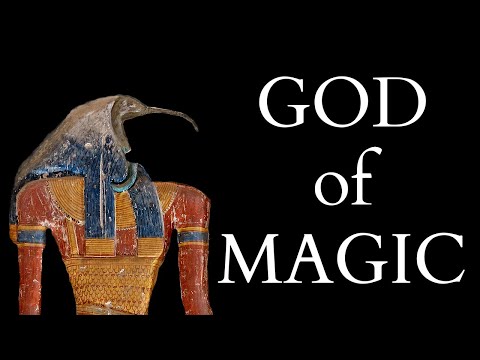
Thoth was most commonly depicted as an ibis-headed man or as a baboon. The ibis, with its distinctive curved beak, was thought by some to resemble a scribe's stylus or stylus and palette, symbolizing his role as the divine writer. The baboon form, often depicted in a contemplative or watchful posture, represented his wisdom and his connection to the dawn and the sun's cycle, aligning with his nocturnal and lunar associations.

Can Thoth be invoked in modern magic?

Absolutely. Thoth is a widely invoked deity in many modern magical traditions, particularly those influenced by hermeticism and chaos magic. Practitioners often call upon him for clarity of thought, inspiration, success in writing or creative endeavors, precision in spellcasting, and guidance in understanding complex magical principles. His association with heka makes him a natural patron for magicians.

What is the connection between Thoth and "fate"?

Thoth’s role as the divine scribe extended to recording and understanding the unfolding of destiny. He was seen as the keeper of cosmic records and the arbiter of judgment. This means he was not just writing down events, but also understanding the intricate mechanisms of cause and effect that shape them. For practitioners, this aspect of Thoth highlights the importance of intention, precise articulation of desires, and understanding the underlying order when working with manifestation or divination.

How does Thoth relate to the concept of "thought"?

The similarity between the name "Thoth" and the English word "thought" is often noted. This phonetic echo underscores his primary association with intellect, wisdom, and cognition. He represents the divine spark of ideation, the power of language to shape reality, and the meticulous process of knowledge acquisition and dissemination. To be "Thothful" is to engage in deep, deliberate, and insightful thinking, characteristic of his divine nature.

What was the Ogdoad of Hermopolis?

The Ogdoad of Hermopolis was a group of eight primordial deities in ancient Egyptian religion, representing the fundamental forces of chaos and the unformed state of the universe before creation. Thoth was a key member of this group, often depicted as the intellect that brought order to this primordial chaos, enabling creation to occur. Their existence highlights Thoth's role not just as a god of existing knowledge, but as a force behind the very act of creation and the establishment of cosmic order.

The Scholar's Toolkit: Essential Resources

To truly delve into the profound depths of Thoth requires diligent study and a commitment to exploring the myriad facets of his influence. While direct experiential work is paramount, understanding his historical and philosophical context is invaluable. Access to reliable texts and tools can significantly enhance one's practice and comprehension. The journey into esoteric knowledge is often facilitated by having the right resources at hand, allowing for deeper exploration and more precise application of learned principles.

When precision in magical creation and understanding of complex symbolic systems is required, a well-crafted tool can be indispensable. The meticulous nature of Thoth's domain, from cosmic decrees to the precise articulation of spells, mirrors the need for accuracy when working with potent magical constructs. This is where specialized applications can serve as modern extensions of ancient practices, automating complex processes and allowing the practitioner to focus on the core magical intent and gnosis.

For those seeking to master the creation and charging of complex magical symbols, especially those with a focus on intricate design and efficient generation, a dedicated digital tool can prove invaluable. The challenges of manually creating such symbols, ensuring symmetry, accuracy, and rapid generation for effective charging, can be a significant hurdle. Many practitioners find that manual methods are time-consuming and prone to error, detracting from the crucial elements of intent and gnosis.

This is precisely where reliable digital assistance becomes a boon. By automating the complex creation of symbols, these tools free up the practitioner's mental energy to focus on the crucial aspects of magical work: the clarity of intention and the achievement of a state of gnosis. The modern practitioner, much like ancient scribes meticulously detailing sacred texts, can leverage technology to enhance their arcane endeavors. The goal is to ensure the magical construct is as potent and precise as possible, facilitating the manifestation of will.

For instance, when working with the foundational principles of hermeticism or symbolic magic, the creation of precise sigils or talismans is often a key component. Imagine the challenge of manually designing a complex sigil, ensuring perfect balance and form, only to have a slight miscalculation disrupt its energetic integrity. The desire for efficiency and accuracy in such craft is a constant for dedicated practitioners.

Fortunately, the digital age offers solutions. Tools designed for the modern magician can help streamline these processes. For example, crafting intricate symbolic representations for magical purposes can be greatly aided by specialized software. One such tool that proves exceptionally useful for practitioners who appreciate precision and symbolic depth is the Goetian Seals Generator. This application is designed to assist in the creation and understanding of complex symbolic forms, allowing users to generate and explore various designs with ease.

By utilizing such a resource, practitioners can save considerable time and effort, ensuring that their symbolic creations are as potent and aesthetically aligned with their magical intent as possible. This allows for greater focus on the deeper, more esoteric aspects of the work. Relying on such assistive technologies is not a dilution of magical practice but a strategic adaptation, ensuring that the core of the work—intent and gnosis—remains paramount.

Visualizations and Symbolism

Thoth's iconography is rich with symbolism, offering further layers of understanding for the practitioner. His most common forms—the ibis and the baboon—are not arbitrary choices but are imbued with deep meaning relevant to his domains.

The ibis, a wading bird often seen probing the mud with its long beak, was seen as a natural scribe. Its hunting method of carefully examining the ground for sustenance was likened to the meticulous process of recording knowledge. The curved beak itself was sometimes interpreted as representing a stylus, and the bird's association with the dawn and the moon linked it to cycles of revelation and hidden knowledge. The ibis's ability to navigate both water and land also symbolized Thoth's role as a mediator between different realms—the physical and the divine, the known and the unknown.

The baboon, another form associated with Thoth, is often depicted in a seated, contemplative posture, gazing towards the rising sun. This imagery connects Thoth to the dawn, the beginning of creation, and thus to his role as a god of creation and renewal. Baboons were also seen as intelligent and social creatures, reflecting Thoth's association with wisdom, communication, and the ordering of society. Their nocturnal activity also reinforced his lunar connections. In some depictions, baboons are shown raising their hands in adoration of the sun, linking them to solar worship and the divine light of knowledge.

These symbolic animal forms are not mere decorations; they are visual keys that unlock deeper aspects of Thoth’s nature, reminding practitioners of his multifaceted powers and his intimate connection to the natural world and the cycles of existence.

Thoth in Daily Practice

For the modern practitioner, Thoth offers a wellspring of practical inspiration that can be integrated into daily life. Beyond grand rituals, his influence can be found in the mindful application of knowledge and the precise articulation of intent.

Consider your own daily interactions with language and information. Every written word you produce, every piece of knowledge you acquire, every decision you make based on reasoned thought can be seen as a subtle invocation of Thothian principles. To approach these activities with a sense of sacredness—treating writing as a form of spellcraft, research as a quest for divine knowledge, and decision-making as an act of inscribing one’s fate—elevates the mundane into the magical.

When you are faced with a complex task, a challenging piece of writing, or the need for clarity in communication, consciously invoke Thoth: "By the wisdom of Thoth, grant me clarity of thought and precision of expression." This simple act can shift your mindset, aligning your energy with his archetypal domain. Similarly, when engaging in practices like journaling, charting lunar phases, or even organizing your digital files, you are, in essence, participating in the Thothian practice of ordering and recording.

The development of structured thought processes, the pursuit of disciplined learning, and the careful crafting of communication are all pathways that honor Thoth. He reminds us that knowledge is power, but wisdom is the skillful application of that power. By cultivating these habits, we not only enhance our personal and magical lives but also actively participate in the enduring legacy of this ancient and profound deity.

About the author: Frater Alek0s is a veteran practitioner and researcher in the field of chaos magick. His work focuses on the practical and experimental application of occult techniques for self-development and reality exploration, demystifying esotericism for the modern practitioner.

Conclusion: The Everlasting Scribe

Thoth stands as a testament to the enduring power of intellect, the sacredness of language, and the fundamental role of magic in shaping reality. From his origins as an ibis-headed deity in the fertile lands of ancient Egypt to his apotheosis as Hermes Trismegistus, the father of hermetic philosophy, his influence has been profound and pervasive. He is the divine scribe who records the decrees of fate, the patron of wisdom who illuminates the path of knowledge, and the master of heka who understands the very fabric of creation.

For the magician, the philosopher, or indeed any seeker of truth, Thoth offers a powerful archetype. He encourages precision in intent, diligence in study, and reverence for the power of articulated thought. His presence reminds us that the universe is, in many ways, a sacred text, and that by understanding its language, we can indeed learn to write our own destinies. As long as humanity continues to seek knowledge, to communicate, and to engage with the mysterious forces that govern existence, the spirit of Thoth will continue to guide and inspire.


Referencias

  1. Cunningham, S. (1988). Wicca: A Guide for the Solitary Practitioner. Llewellyn Publications.
  2. Conway, D. J. (2002). Moon Magick: Myth & Magic, Crafts & Recipes, Rituals & Spells. Llewellyn Publications.
  3. Grimassi, R. (2000). Encyclopedia of Wicca & Witchcraft. Llewellyn Publications.
  4. Kynes, T. (2016). Lunar Living: Working with the Magic of the Moon Cycles. Llewellyn Publications.
  5. McCoy, E. (1995). The Witch's Circle: A Modern Practitioner's Guide to the Old Ways. Llewellyn Publications.
  6. Dugan, E. (2006). The Moon: Myth and Image. Four Winds Press.
  7. Matthews, C. (2002). The Celtic Tradition. Element Books.
  8. Beyer, R. (2000). The Goddess and the Moon. Llewellyn Publications.
  9. Bord, J. (1974). The Secret Country. Paul Elek.
  10. Campanelli, P. (2005). The Wheel of the Year. Llewellyn Publications.
  11. Farrar, J. (1984). The Witches' God: Lord of the Dance. Robert Hale.
  12. Franklin, A. (2008). The Art of Lunar Magick. Llewellyn Publications.