Saltar al contenido principal

Anuncio Superior

Mostrando entradas con la etiqueta goetia. Mostrar todas las entradas

Goetian Seals Generator: The Cosmic Dance of the Tank Drum

Tank drum: Danza Cósmica


EMERALD TABLE — Grimoire Record Goetia
⚔️ TypeSpell
📅 Date2026-08-10
📜 FileMC-2026-0357
Difficulty★★★☆☆ Intermedio
Read time7 min
🔗 Related AppGoetian Seals Generator
cha0smagicklabs.com — Digital Grimoire of Chaos Magick

The tank drum is more than just a musical instrument; it's a gateway to a cosmic dance. Its ethereal tones resonate with frequencies that can alter perception and induce altered states of consciousness, making it a potent tool for the modern practitioner. Exploring its use in magical practice reveals a depth of application that goes far beyond mere sonic pleasure. This isn't just about making pleasing sounds; it's about weaving a tapestry of intention and resonance.

The journey into the tank drum's magical potential begins with understanding its fundamental nature. It's a percussive instrument, yes, but its sound is uniquely complex, capable of producing harmonics that seem to vibrate not just through the air, but through the very fabric of reality. This makes it an ideal companion for meditations, trance work, and the invocation of specific energies.

GoetiaThe Resonance of Intention

At its core, magical practice is about intention. We project our will, our desires, our intent into the universe, and the universe, in turn, responds. The tank drum amplifies this process. Its distinct notes, when played with focused intent, can become carriers of that intention, projecting it outward with a clarity and power that spoken words or visualized symbols alone might not achieve.

Consider the very act of playing the tank drum. It requires a certain physical engagement, a focus of attention, and a direct interaction with the instrument. This physical grounding, combined with the auditory and vibrational feedback, creates a unique state of being where the practitioner is fully immersed in the present moment – a state conducive to deep magical work.

Historical Echoes and Modern Applications

While the tank drum is a relatively modern invention, its principles of resonance and vibration have been recognized and utilized in spiritual and magical traditions for millennia. Ancient cultures used drums, gongs, and other resonant objects for ritualistic purposes, often to induce trance states, communicate with spirits, or harmonize with cosmic rhythms. The tank drum, in its unique way, taps into this ancient lineage.

In contemporary magical practice, the tank drum can serve multiple purposes: * Meditation Aid: Its sustained, pure tones help quiet the mind, facilitating deeper meditative states. * Trance Inducer: Rhythmic patterns, especially repetitive ones, can guide the practitioner into altered states of consciousness, crucial for many forms of magic. * Sound Scrying: The vibrations and tones can be used to explore the subconscious, access hidden knowledge, or even scry for information. * Energy Harmonization: Playing specific notes or sequences can be used to tune the practitioner's energy field or the energy of a ritual space. * Sigil Charging: The vibrations can act as a catalyst, imbuing a sigil with kinetic energy during the charging process.

The Science of Sound and Magic

Modern science is increasingly catching up to what ancient practitioners have known intuitively: sound has a profound effect on the mind and body. Frequencies can alter brainwave patterns, induce relaxation, and even influence physical well-being. This scientific understanding lends further credence to the efficacy of the tank drum as a magical tool. When we play a tank drum, we are not just making noise; we are manipulating frequencies, creating sonic landscapes that can influence our internal and external realities.

This intersection of sound, vibration, and consciousness is a fertile ground for magical exploration. The tank drum provides a direct and accessible way to engage with these forces.

Exploring Different Scales and Tones

The beauty of the tank drum lies in its versatility. Different scales produce different emotional and energetic signatures. A major scale might evoke feelings of joy and expansion, while a minor scale could lend itself to more introspective or somber work. Pentatonic scales offer a sense of simplicity and grounding, while more complex modes can unlock unique sonic textures.

Experimentation is key. As a practitioner, you will find that certain scales and tones resonate more profoundly with specific intentions or entities. This personal discovery is where the true magic lies. What one practitioner finds conducive to invoking a particular spirit, another might find best for dream work.

Creating Sacred Soundscapes

Beyond simply playing notes, consider the tank drum as a tool for creating sacred soundscapes. This involves mindful playing, allowing the sounds to weave together, creating an environment imbued with your intention. Think of it as sonic painting, where each note is a brushstroke contributing to a larger magical work.

This can involve: * Improvisation: Allowing the instrument and your intuition to guide the playing. * Layering Tones: Creating a rich tapestry of sound by playing multiple notes or chords in sequence. * Incorporating Silence: The spaces between the notes are as important as the notes themselves, allowing energy to settle and integrate.

Your Operation: A Practical Guide

The tank drum is an instrument of resonance, and its magical application is deeply tied to the practitioner's intent and the instrument's own vibrational qualities. Here's how you can integrate it into your practice:

The Problem: Creating Sacred Space and Deepening Focus

Many practitioners struggle with creating an immediate sense of sacred space or achieving deep, sustained focus during their magical workings. The distractions of the external world can easily intrude, diluting the energy and intent of the ritual. This often leads to frustration and a feeling of untapped potential.

The Agitation: The Intrusive Static of the Mundane

You prepare your altar, gather your tools, and begin to focus your will, but the ambient noise of daily life—even if only internal—keeps pulling you back. The silence feels brittle, easily shattered, and the desired state of altered consciousness remains just out of reach. You might find yourself repeating incantations louder, trying to force a breakthrough, but the resonance simply isn't there.

The Solution: Harmonizing with the Tank Drum

This is where the Goetian Seals Generator helps in a complementary way, allowing you to create the visual anchors for your work. But for sonic immersion, the tank drum is unparalleled. The problem of creating sacred space and deepening focus can be significantly mitigated by the tank drum's ability to generate resonant frequencies that cut through mental clutter and harmonize the immediate environment.

How to use it:

1. Set Your Intention: Before you play, clearly define your purpose. Are you seeking to invoke a specific spirit, facilitate a meditative journey, charge a sigil, or simply create a harmonized space for magical work? 2. Choose Your Scale/Tones: Select notes or scales that you feel resonate with your intention. Experimentation is key here. If invoking a spirit of fire, perhaps higher, sharper tones might be appropriate. For grounding or earth magic, lower, sustained notes could be better. 3. Begin Playing Mindfully: Start with gentle, exploratory notes. Allow the sound to fill the space. Focus on the vibrations, both auditory and physical. 4. Incorporate Rhythmic Patterns: Introduce simple, repetitive rhythmic patterns that guide your mind into a focused or trance-like state. 5. Direct the Sound (Optional): If you have a specific target (e.g., a sigil, an object, or even your own energy field), you can try directing the sound waves towards it. 6. Incorporate Silence: Don't be afraid to let the sounds fade, creating moments of resonant silence. These breaks allow the energy to settle. 7. Concluding the Session: As you finish, let the tones gradually fade. Take a few moments to simply be present with the residual vibrations before moving on to your next ritualistic step.

For those working with specific entities, the resonant frequencies of the tank drum can serve as a unique sonic signature, aiding in calling and harmonizing with their energies. While not a direct substitute for the visual anchors provided by tools like the Goetian Seals Generator, the sonic dimension it offers is powerful.

Arsenal of the Practitioner

* Essential: Tank Drum (Choose a scale that resonates with you) * Complementary: Goetian Seals Generator - For creating the visual anchors and symbols that harmonize with your sonic intentions. * Recommended: Peter J. Carroll's *Liber Null & Psychonaut* - For grounding in the principles of experimental magic. * Useful: A comfortable cushion or seat, incense, or candles to enhance the ritual atmosphere.

FAQ: Frequently Asked Questions

Can any tank drum be used for magic?

While any tank drum can produce sound, drums with more complex harmonic overtones and a wider tonal range may offer a richer experience for magical practitioners. The key is your intention and how you connect with the instrument.

How do I choose the right scale for my magic?

Experimentation is your best guide. Play the drum with different scales and notice how each one affects your mood, energy, and focus. What feels intuitively "right" for a specific purpose is often the most effective for you.

Can I use the tank drum with other magical tools?

Absolutely. The tank drum's abilities are amplified when used in conjunction with other tools. It can enhance sigil charging, deepen meditation during divination, or create a resonant backdrop for invocation rituals.

Is it necessary to learn musical theory to use a tank drum magically?

No. While musical theory can enhance your understanding of the instrument, it is not required for magical application. Your intuitive connection to the sound and your focused intention are far more important.

About the author: Frater Alek0s is a veteran practitioner and researcher in the field of chaos magick. His work focuses on the practical and experimental application of occult techniques for self-development and reality exploration, demystifying esotericism for the modern practitioner.

How can the sound of the tank drum help in trance states?

The sustained, pure tones and potential for rhythmic repetition can guide brainwave activity towards theta and alpha states, which are associated with deep relaxation, creativity, and trance. The vibrations also create a physical anchor that helps to ground the practitioner in the experience.

Referencias

  1. Carroll, P. J. (1987). Liber Null & Psychonaut. Weiser Books.
  2. Spare, A. O. (1913). The Book of Pleasure. Self-published.
  3. Hine, P. (1992). Condensed Chaos: An Introduction to Chaos Magic. New Falcon Publications.
  4. Crowley, A. (1904). The Book of the Law. Self-published.
  5. Sherwin, R. (2018). The Chaos Magic Handbook. CreateSpace.
  6. Kraig, D. M. (1988). Modern Magick: Eleven Lessons in the High Magickal Arts. Llewellyn Publications.
  7. Morrison, G. (2003). Pop Magic! The Art of Shaping Reality. Disinformation.
  8. DuQuette, L. M. (2003). The Chicken Qabalah of Rabbi Lamed Ben Clifford. Weiser Books.
  9. Webb, D. (2015). Chaos Magick: A Practical Guide. Self-published.
  10. Tyson, D. (2006). The Power of the Written Word. Llewellyn Publications.
  11. Bonewits, I. (1971). Real Magic. Creative Age Press.
  12. Greer, J. M. (2003). The New Encyclopedia of the Occult. Llewellyn Publications.

Ancient Earth: The Primordial Roots of the Witch Archetype

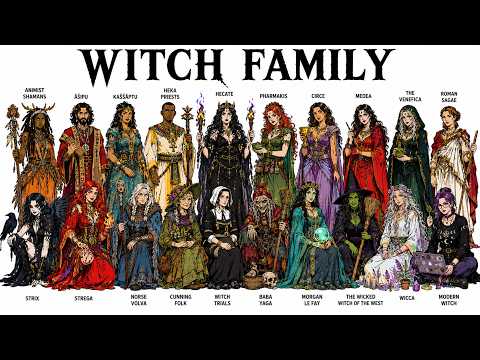
ANCIENT MAGICAL BEINGS THAT STARTED THE WITCH LEGEND - The Witch's DARK Family tree


EMERALD TABLE — Grimoire Record Ritual
⚔️ TypeSpell
📅 Date2026-08-04
📜 FileMC-2026-0336
Difficulty★★★☆☆ Intermedio
Read time10 min
🔗 Related AppGoetian Seals Generator
cha0smagicklabs.com — Digital Grimoire of Chaos Magick

When we conjure the image of a witch, the mind often conjures a figure cloaked in shadow, perhaps an ancient crone with a pointed hat, soaring through the moonlit sky on a broomstick, weaving spells of ill intent. Yet, a fundamental misunderstanding pervades this popular perception. A witch, in its most ancient form, is not a creature of myth; it is a title, a role bestowed upon individuals within human societies.

Unlike the lineage of mythical beings – the Mesopotamian demons Lilitu and Lamashtu, for instance – the witch's ancestral tree branches differently. It does not begin with supernatural entities or monstrous beings. Instead, its roots are firmly planted in humanity itself. For millennia, across diverse global cultures, it was believed that certain individuals possessed an extraordinary reservoir of knowledge. These were the people capable of healing the afflicted, communing with spirits, foretelling future events, or orchestrating rituals far beyond the scope of ordinary folk. Over vast stretches of time, these individuals gradually evolved within cultural narratives to become what many societies would eventually term 'witches'.

RitualThe Animist Shaman: Humanity's First Mystics

Long before the advent of recorded history, a profound belief system known as animism permeated the consciousness of numerous ancient cultures. This worldview posited that spirits were omnipresent, residing not only within animate beings like animals but also within the very fabric of the natural world: rivers, mountains, forests, and even inanimate objects. A deep, interconnectedness was perceived between the physical and spiritual realms, and certain individuals were believed to possess the rare and potent ability to navigate both. These figures are often identified as shamans.

While their specific practices and beliefs undoubtedly varied across different cultural landscapes, shamans were, as a general rule, esteemed members of their communities rather than ostracized outcasts. Their roles were multifaceted: they performed vital healing rituals, interpreted the cryptic language of dreams, presided over sacred ceremonies, acted as intermediaries with the spirit world, invoked blessings upon successful hunts, and sought answers during times of widespread illness, famine, or communal disaster. Some traditions held that they possessed the capacity to enter profound trance-like states, facilitating their journeys between worlds.

The Archetype of the Healer and Guide

The earliest understanding of a 'witch' leans heavily on the archetype of the healer and spiritual guide. These were individuals deeply attuned to the natural world, possessing a profound understanding of herbs, their medicinal properties, and the subtle energies that permeated existence. Their knowledge was not feared but sought after. They were the village wise women, the herbalists, the midwives, the storytellers who preserved ancestral wisdom. Their power stemmed from understanding, nurturing, and facilitating – not from malice or destruction.

The transition from this respected role to the image of the malevolent sorceress is a complex socio-historical phenomenon. It's often attributed to shifts in societal power structures, particularly the rise of patriarchal systems that sought to control or demonize female authority and knowledge. As societies became more centralized and organized under dominant religious or political doctrines, practices that deviated from the norm, especially those associated with female autonomy and traditional forms of spiritualism, began to be viewed with suspicion and, eventually, outright fear.

From Revered Elder to Feared Outcast

The historical lineage of the witch is not one of inherent evil. For the majority of human history, those who would later be branded as witches were revered figures. They were the pillars of community, offering solace, wisdom, and practical assistance. Their connection to the spiritual and natural worlds was seen as a gift, a vital link that maintained balance and well-being.

The dramatic shift in perception, culminating in the image of the broom-riding, spell-casting antagonist, is a relatively recent development in the grand narrative of human history. This transformation was fueled by a confluence of factors: religious persecution, societal anxieties, and the deliberate demonization of alternative spiritual paths. The very qualities that once made these individuals respected – their knowledge of herbs, their connection to nature, their intuitive abilities – were twisted and reinterpreted as signs of malevolence and pacts with dark forces during periods like the European witch trials.

The Role of Patriarchy in Demonization

Many contemporary scholars and practitioners argue that the demonization of the witch is intrinsically linked to patriarchal societal structures. In societies where male authority became dominant, women who held knowledge, power, or autonomy—especially those related to healing, midwifery, and spiritual insight—posed a perceived threat. By rebranding these women as 'witches' and associating them with evil, societies could effectively marginalize and control them. This narrative served to consolidate power, suppress female leadership, and enforce conformity to newly established religious and social norms.

The fear instilled by these narratives served a crucial social purpose: to keep women in check, to discourage independent thought or practice, and to solidify the dominance of established religious and political institutions. The image of the 'evil witch' became a convenient scapegoat for societal ills and a powerful tool for social control.

Connecting to the Spiritual: Early Forms of Ritual

The earliest forms of practice associated with the lineage of the witch involved deep engagement with the spiritual and natural worlds. This included communicating with ancestral spirits, understanding the cycles of nature and the moon, and utilizing herbs and natural elements for healing and ritual. These practices were not about wielding destructive power but about seeking balance, understanding, and connection.

The shamanistic journey between worlds, the interpretation of omens, and the channeling of natural energies were all part of a holistic approach to life, seeking harmony with the cosmos. These ancient rituals were foundational, providing the bedrock upon which later, more formalized magical practices would be built. The essence of these early practices was one of reverence for life and the interconnectedness of all things.

Modern Reclaimings and the Ancestral Echo

Today, many individuals who identify as witches are actively engaged in reclaiming and reinterpreting this ancient lineage. They seek to honor the wisdom of the animist shamans and the revered healers of antiquity, distinguishing their contemporary practices from the distorted, fear-mongering images that emerged during periods of persecution. This reclamation involves understanding the historical context, acknowledging the patriarchal forces that led to the demonization of witchcraft, and celebrating the inherent power and wisdom that resides within the archetype.

Many modern witches see themselves as carrying forward an ancestral echo – a continuation of the lineage of those who sought knowledge, healing, and a deeper connection to the earth and spirit. This involves studying ancient practices, reviving herbalism, practicing divination, and fostering a profound respect for the natural world. The goal is often to heal the historical wounds associated with the 'witch' label and to embrace its original meaning of spiritual insight and natural wisdom.

The Goetian Connection: A Different Branch of Ancient Power

While the lineage of the witch primarily arises from human spiritual practitioners, it's important to acknowledge that other ancient traditions explore different avenues of power and spiritual interaction. One such tradition involves entities and systems that predate much of common folklore, offering a distinct yet sometimes overlapping pathway into the arcane. These ancient systems often involve structured hierarchies of spirits and demons, documented in texts that have survived centuries of scrutiny.

The Goetia, for example, details a system of 72 demons, each with unique characteristics and powers, often depicted through their specific sigils or seals. These entities are not 'witches' in the human sense but represent a different facet of the ancient magical landscape – powers that can be invoked or worked with through specific ceremonial frameworks. Understanding these systems requires a meticulous approach, respecting the precise forms and intentions associated with each entity.

A Practical Tool for Working with Ancient Seals

The meticulous study and application of ancient magical systems, particularly those involving complex sigils and seals like those found in the Goetia, can be incredibly demanding. Reproducing these symbols accurately, understanding their correspondences, and integrating them into one's practice requires precision and focus. The process of generating, understanding, and utilizing these specific magical forms can be time-consuming when relying solely on manual methods.

This is where specialized tools become invaluable for the modern practitioner. The Goetian Seals Generator is designed to streamline the process of working with these ancient entities. This app provides a digital interface to accurately generate and explore the seals of the 72 Goetian demons, assisting practitioners in their ritual work and study. It ensures the fidelity of the symbols, allowing the mage to focus on the intention and gnosis required for effective magical operation, rather than wrestling with the minutiae of symbol creation.

FAQ: Unraveling the Witch's Origins

Is a witch a creature or a human title?

Primarily, a witch is understood as a human individual who holds a title or role within a society, often associated with possessing extraordinary knowledge or abilities. While folklore has created mythical beings that *appear* as witches, the historical and archetypal root is human.

Were ancient witches evil?

No, the earliest ancestors of what became known as witches were generally not evil. They were typically respected healers, spiritual guides, and wise members of their communities. The association with evil emerged much later due to historical and societal factors like the rise of patriarchal structures and religious persecution.

What is animism and how does it relate to early witches?

Animism is the belief that spirits inhabit all things – animals, plants, natural phenomena, and objects. Early witch ancestors, often referred to as shamans, were believed to have the ability to travel between the spiritual and physical worlds, mediating between humans and these spirits within an animistic framework.

Why did the perception of witches change over time?

The shift from revered healer to feared outcast is largely attributed to the rise of patriarchal societies that sought to control female autonomy and knowledge. Religious persecution and societal anxieties also played a significant role in demonizing these figures and their practices.

How does the Goetia differ from the witch lineage?

While the witch lineage stems from human practitioners of magic and spiritualism, the Goetia refers to a specific system of demonology detailing 72 demons. These entities are distinct from human witches, though both represent different facets of ancient magical and spiritual traditions that practitioners might engage with.

What are the benefits of using a Goetian Seals Generator app?

Apps like the Goetian Seals Generator offer precision in reproducing ancient seals, saving practitioners time and ensuring the accuracy of these complex symbols. This allows the mage to concentrate more fully on the intention and the ritualistic aspects of working with these entities.

Can the 'witch' archetype be traced to specific ancient Mesopotamian demons?

While some mythical lineages, like those explored in certain family trees of mythological creatures, might begin with figures like Lilitu and Lamashtu, the direct ancestral line of the 'witch' as understood in this context begins with human practitioners. The connection to ancient demons is more about the broader tapestry of ancient magical beings, rather than the direct origin of the witch archetype itself.

Mage's Arsenal

  • Essential: Goetian Seals Generator - Accurately generate and study the seals of ancient Goetian entities.
  • Reference: Understanding Animism and Shamanism (General knowledge bases).
  • Context: Historical texts on the evolution of witchcraft and mythology (General knowledge bases).
  • Tool: Reliable occult encyclopedia or historical texts on demonology.

About the author: Frater Alek0s is a veteran practitioner and researcher in the field of chaos magick. His work focuses on the practical and experimental application of occult techniques for self-development and reality exploration, demystifying esotericism for the modern practitioner.

Your Operation

To truly grasp the ancient roots of the witch archetype, engage with the concept of the shaman and the healer. Reflect on how societal structures can twist the perception of powerful, knowledgeable individuals. Consider the animistic worldview and its emphasis on the interconnectedness of all life. Understand that the 'witch' label has a complex and evolving history, moving from revered community member to feared outsider and now, for many, a reclaimed symbol of wisdom and natural power.

For those interested in exploring other branches of ancient spiritual interaction, delve into systems like the Goetia. Use tools like the Goetian Seals Generator to ensure accuracy in your studies and practice. Remember, true power lies not just in the symbols, but in the clarity of intention and the depth of your understanding and connection.


Referencias

  1. Carroll, P. J. (1987). Liber Null & Psychonaut. Weiser Books.
  2. Spare, A. O. (1913). The Book of Pleasure. Self-published.
  3. Hine, P. (1992). Condensed Chaos: An Introduction to Chaos Magic. New Falcon Publications.
  4. Crowley, A. (1904). The Book of the Law. Self-published.
  5. Sherwin, R. (2018). The Chaos Magic Handbook. CreateSpace.
  6. Kraig, D. M. (1988). Modern Magick: Eleven Lessons in the High Magickal Arts. Llewellyn Publications.
  7. Morrison, G. (2003). Pop Magic! The Art of Shaping Reality. Disinformation.
  8. DuQuette, L. M. (2003). The Chicken Qabalah of Rabbi Lamed Ben Clifford. Weiser Books.
  9. Webb, D. (2015). Chaos Magick: A Practical Guide. Self-published.
  10. Tyson, D. (2006). The Power of the Written Word. Llewellyn Publications.
  11. Bonewits, I. (1971). Real Magic. Creative Age Press.
  12. Greer, J. M. (2003). The New Encyclopedia of the Occult. Llewellyn Publications.

Solomon: From King of Israel to Master of Demons

Who was Solomon? How a King of Israel became the Master of Demons


EMERALD TABLE — Grimoire Record Solar
⚔️ TypeSpell
📅 Date2026-08-04
📜 FileMC-2026-0330
Difficulty★★☆☆☆ Practicante
Read time5 min
🔗 Related AppGoetian Seals Generator
cha0smagicklabs.com — Digital Grimoire of Chaos Magick

Solomon, the third king of Israel, stands as a figure of immense esoteric significance, his legend weaving through religious texts, art, and occult practices for millennia. But how did this revered monarch become intrinsically linked with arcane powers and the mastery of demons? This deep dive into the esoteric dimensions of King Solomon unveils his transformation from a biblical ruler to an occult icon.

SolarThe Biblical Narrative: Wisdom and Wealth

Solomon's story begins in the Hebrew Bible, where he is famously gifted divine wisdom by God in a dream vision. This supernatural insight would shape his reign, making him renowned not only for his justice and understanding but also for his unparalleled wealth and the magnificent Temple he constructed in Jerusalem. His wisdom was profound, his judgment astute, and his reign marked an era of peace and prosperity for Israel. This divine endowment, however, laid the groundwork for later, more mystical interpretations of his capabilities.

The Arcane Transformation: From King to Magus

The transition of Solomon from a historical and religious figure to an occult king is a fascinating journey through centuries of evolving mythologies and esoteric traditions. While the Bible paints him as divinely wise, the later development of folklore and occult grimoires attributed to him a far more direct and potent involvement with supernatural forces, particularly demons. This association is not unique to Solomon; many figures of historical or religious importance have been imbued with magical attributes over time, often as a way to legitimize or explain profound works or a perceived exceptional level of power and influence.

The Pact of Solomon: Demons and the Temple

One of the most potent narratives surrounding Solomon's occult legacy involves his supposed command over demons. Legends suggest that in his quest to build the Temple, an undertaking of immense scale and complexity, Solomon employed supernatural forces. This idea often manifests as a pact or a method of control, where Solomon, through divine grant or esoteric knowledge, could bind demons to his will, forcing them to serve him. This often involved mystical tools or symbols, chief among them King Solomon's Ring, which purportedly granted him dominion over the infernal host.

The imagery of Solomon surrounded by misshapen demons, coerced into building the Temple for the Israelite God, is indeed striking and has fueled centuries of speculation and artistic interpretation. It raises questions about the nature of divine power, the perceived role of supernatural entities in ancient constructions, and the complex relationship between the sacred and the profane in esoteric thought.

The Lesser Key of Solomon: A Grimoire's Legacy

The legend of Solomon's mastery over demons found its most tangible form in the grimoire tradition, particularly in texts attributed to him. The Goetian Seals Generator is a modern tool that helps practitioners engage with these ancient symbols. The *Lesser Key of Solomon*, a 17th-century compilation, is perhaps the most famous of these attributed works, divided into five books, including the *Ars Goetia*. This book lists 72 demons that Solomon allegedly summoned and controlled, detailing their seals, ranks, and the tasks they could perform.

The *Ars Goetia* lays out a system of Solomonic magic, providing instructions for conjuring these spirits, compelling them to appear, and making them obey the magician's commands. It describes the necessary preparations, the magical circle, the names of God, and the specific rituals required to harness their powers. This text has been profoundly influential in the history of Western occultism, shaping demonology and magical practices for centuries.

The Esoteric King: Solomon's Enduring Influence

The association of Solomon with demonology and esoteric magic has cemented his status as a central figure not just in religious history but in occult myth-history. From medieval romances to Renaissance magic, and into modern esoteric practices, Solomon is consistently depicted as a magus, a possessor of divine wisdom and supernatural power, capable of commanding spirits and wielding knowledge beyond mortal ken.

His story exemplifies how figures of historical and religious importance can be reinterpreted and imbued with new meanings within different cultural and spiritual contexts. The legend of Solomon the Magus continues to fascination, inspiring practitioners to explore the intricate relationship between divine wisdom, earthly power, and the mastery of forces both seen and unseen.

Arsenal of the Modern Mage

Engaging with the esoteric traditions associated with King Solomon often involves understanding and utilizing ancient symbols and seals. For the modern practitioner, technology can bridge the gap between historical practice and contemporary application.

* Essential: Goetian Seals Generator - This digital tool provides a convenient way to generate and study the seals of the 72 demons attributed to King Solomon, facilitating a deeper connection with the ancient practices of Solomonic magic. * Recommended Reading: *Solomon the Esoteric King* by Yuval Noah Harari (though often cited, his work is more historical and less occult-focused; for deeper esoteric context, consider Lenormant or Torijano). * Study Guide: For those new to esotericism, orienting oneself with reliable sources is crucial.

FAQ: Unpacking the Legend of Solomon

Who was King Solomon according to the Bible?

In the Hebrew Bible, Solomon was the third king of Israel, succeeding his father David. He is renowned for his divinely granted wisdom, his construction of the First Temple in Jerusalem, and a period of great peace and prosperity.

How did Solomon become associated with demons?

The association likely evolved from his legendary wisdom and power. Folklore and later occult texts, such as the *Ars Goetia*, attributed to him the ability to summon and control demons, often in service of his divine tasks, like building the Temple.

What is the "Lesser Key of Solomon"?

It is a 17th-century grimoire, or book of magic, attributed to King Solomon. It contains information on various aspects of ceremonial magic, including the summoning and control of 72 demons, their seals, and the rituals required for their invocation.

Did Solomon really command demons?

From a historical and strictly religious perspective, there is no evidence that Solomon commanded demons. This aspect of his legend belongs to the realm of folklore, esoteric traditions, and occult myth-history, rather than verifiable historical fact.

How are Solomon's seals used in magic?

The seals, or sigils, of the 72 demons listed in the *Ars Goetia* are traditionally used by magicians to invoke and command these spirits. Each seal is believed to represent a specific demon and is used in conjunction with rituals, incantations, and other magical tools.

About the author: Frater Alek0s is a veteran practitioner and researcher in the field of chaos magick. His work focuses on the practical and experimental application of occult techniques for self-development and reality exploration, demystifying esotericism for the modern practitioner.

What is the esoteric significance of Solomon?

Esoterically, Solomon represents the archetypal wise king and magus who attained supreme knowledge and control over both the material and spiritual worlds. He symbolizes the pinnacle of human achievement through divine favor and magical mastery.

Referencias

  1. Mathers, S. L. M. (1904). The Goetia: The Lesser Key of Solomon the King. Weiser Books.
  2. Peterson, J. H. (2001). The Lesser Key of Solomon. Weiser Books.
  3. McGregor, J. (2018). The Ars Goetia: A Practical Guide. New Falcon Publications.
  4. Crowley, A. (1904). The Goetia: The Lesser Key of Solomon the King. Self-published.
  5. Rankine, D. (2009). The Grimoire of St. Cyprian. Avalonia.
  6. Skinner, S. (2006). The Goetia of Dr Rudd. Golden Hoard Press.
  7. Boudet, J. (2001). The Grimoire of Armadel. Weiser Books.
  8. Waite, A. E. (1898). The Book of Black Magic and of Pacts. Redway.
  9. Rudd, T. (2007). The Goetia of Dr Rudd: The Angels and Demons of Liber Malorum Spirituum. Golden Hoard Press.
  10. Kieckhefer, R. (1989). Magic in the Middle Ages. Cambridge University Press.
  11. Agrippa, C. (1533). De Occulta Philosophia Libri Tres. Various.
  12. Betz, H. (1986). The Greek Magical Papyri in Translation. University of Chicago Press.

The Definitive Occultism Iceberg Explained

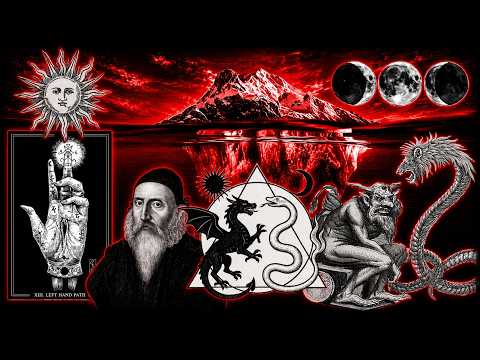
O iceberg DEFINITIVO do OCULTISMO


EMERALD TABLE — Grimoire Record Ritual
⚔️ TypeSpell
📅 Date2026-08-04
📜 FileMC-2026-0296
Difficulty★★★★☆ Avanzado
Read time19 min
🔗 Related AppGoetian Seals Generator
cha0smagicklabs.com — Digital Grimoire of Chaos Magick

Welcome, seeker. You've found yourself at a crossroads, a digital nexus where the arcane and the modern collide. This is not just a blog post; it's a page torn from a living grimoire, an exploration into the depths of occultism that aims to be as valuable as a whispered secret between masters. We're not here for surface-level definitions or academic drivel. We're here to understand the vast, often terrifying, landscape of esoteric knowledge, presenting it with the clarity and respect it deserves.

The "iceberg" is a powerful metaphor for this exploration. Just as the majority of an iceberg lies hidden beneath the waves, so too does the true depth and complexity of occultism reside beyond common perception. This post aims to bring some of that hidden knowledge to light, not by claiming definitive truth, but by illuminating pathways for further investigation.

Table of Contents

RitualLevel 1: Modern Astrology and Cartomancy (Tarot)

At the foundational level of our occult iceberg, we encounter practices that, while often popularized, possess a rich tapestry of symbolic meaning and historical depth. Modern astrology, with its intricate systems of celestial correspondences, planetary influences, and house divisions, offers a framework for understanding cosmic timing and personal predispositions. It's a language of archetypes written in the stars, a constant, albeit subtle, influence on our lives.

Hand-in-hand with astrology, we find Cartomancy, most notably through the esoteric wisdom of the Tarot. The Rider-Waite deck, a cornerstone for many practitioners, is not merely a set of cards but a visual grimoire in itself. Each card, from the Major Arcana's archetypal journey through the Fool's leap of faith to the Minor Arcana's depiction of daily life, presents symbolic narratives that reflect the human condition and the forces at play in our existence. For those starting their journey, understanding these archetypes can unlock profound personal insights.

The Ouija Board: A Cautionary Tale

The Ouija board, a seemingly simple game, often resides on the lower, more accessible tiers of the occult iceberg, but its potential for disruption and misunderstanding is significant. While some enthusiasts view it as a harmless parlor game or a tool for spirit communication, seasoned practitioners understand its inherent risks. The board acts as a conduit, a focal point that can unintentionally attract entities or psychically charged energies.

The danger lies not necessarily in malevolent spirits, but in the uncontrolled nature of the interaction. Unintentional ideomotor effect, where subconscious muscle movements guide the planchette, can be misinterpreted. More critically, the board can open energetic pathways without proper protective measures or clear intent, leading to unwanted psychic intrusions or energetic residue. As one community member wisely noted, "Please, DON'T USE THE OUIJA, DON'T PLAY THE GLASS GAME! [...] I regret PROFOUNDLY having done it." This sentiment is echoed by many who have experienced unpredictable or disturbing phenomena. Respecting the unseen and understanding the potential consequences are paramount.

Wicca and Modern Witchcraft

Moving up, we encounter Wicca and the broader spectrum of modern witchcraft. These paths often emphasize a connection with nature, the cycles of the moon and seasons, and the divine in both its masculine and feminine aspects. While often portrayed in popular culture, the practice itself is deeply personal, involving ritual, spellcraft, and a reverence for the Earth.

Witchcraft traditions vary widely, but many share a focus on personal empowerment and the manipulation of subtle energies. This can involve elaborate ceremonial workings or simple, intuitive practices aimed at manifesting desires, healing, or gaining insight. The beauty of these paths lies in their adaptability and their focus on individual experience and direct connection to the magical forces inherent in the universe.

Material Alchemy

Alchemy, often misunderstood as simply turning lead into gold, is a profound symbolic system that has influenced many esoteric traditions. Material Alchemy, specifically, refers to the tangible processes and transformations associated with this ancient art. While the ultimate goal for some alchemists was the creation of the Philosopher's Stone, a substance believed to grant immortality and transmute base metals, the true work was often seen as a spiritual and psychological purification.

The alchemical process involved meticulously documented stages of dissolution, purification, and recombination, often mirroring stages of spiritual development. Understanding the symbolic language of alchemical texts, the correspondences between metals, planets, and stages of transformation, offers a glimpse into a worldview where the material and spiritual realms were seen as intrinsically linked and capable of mutual influence.

Level 2: Aleister Crowley and Thelema

As we descend further into the depths of the occult iceberg, we encounter figures and systems that demand a more rigorous and often challenging engagement. Aleister Crowley, a towering and controversial figure in 20th-century occultism, introduced the world to Thelema, a philosophical and religious system based on his reception of the Book of the Law.

The core tenet of Thelema, "Do what thou wilt shall be the whole of the Law," is often misinterpreted as simple hedonism. However, Crowley defined "Wilt" as one's True Will – an individual's unique purpose and destiny in life. Thelema encourages the practitioner to discover and enact this True Will. This path involves extensive magical practices, philosophical study, and a deep exploration of consciousness, often pushing the boundaries of conventional morality and societal norms. Crowley's extensive writings, including *The Book of the Law*, *Magick in Theory and Practice*, and numerous other texts, remain foundational for many modern occultists.

The Hermetic Order of the Golden Dawn

The Hermetic Order of the Golden Dawn was a highly influential magical organization of the late 19th and early 20th centuries. Its teachings synthesized Kabbalah, Hermeticism, Tarot, astrology, Enochian magic, and Egyptian mythology, creating a comprehensive system of Western ceremonial magic. The Golden Dawn established a structured curriculum of magical training, progressing through various initiatory grades, each designed to impart specific knowledge and practical skills.

Many prominent figures in the occult revival, including Aleister Crowley, Arthur Edward Waite (co-creator of the Rider-Waite Tarot), and Dion Fortune, were members of or influenced by the Golden Dawn. Its legacy lies in its systematic approach to magic, its emphasis on ritual precision, and its profound impact on the development of Western esotericism. Studying the Golden Dawn's teachings provides a solid foundation in ritualistic magic and symbolic interpretation.

The Shadow of Neoplatonism and Gnosticism

Beneath the surface of more widely known occult systems, we find the profound philosophical underpinnings of Neoplatonism and Gnosticism. These ancient traditions offer complex cosmologies and views on the nature of reality, the divine, and the human soul.

Neoplatonism, stemming from the teachings of Plotinus, posits a hierarchical structure of reality emanating from the ultimate, ineffable One. The goal of the practitioner is often described as a mystical union with the One, achieved through contemplation and philosophical ascent. Gnosticism, a diverse set of religious ideas and systems, typically views the material world as a flawed creation, a prison created by a lesser deity (the Demiurge), from which the spiritual spark within humanity seeks liberation. Both traditions emphasize the importance of esoteric knowledge (gnosis) for salvation and offer intricate mythological narratives that have influenced countless subsequent esoteric movements. Their intricate mythologies and philosophical inquiries into existence itself continue to resonate within occult thought.

High Ceremonial Magic Rituals

High Ceremonial Magic represents a more formalized and structured approach to occult practice. It often involves elaborate rituals, precise symbolism, the use of consecrated tools, and the invocation or evocation of specific spiritual entities or forces. These rituals are designed to create a sacred space, align the practitioner with cosmic energies, and achieve specific magical goals.

Key elements often include the use of sigils (symbols representing intent), talismans, incantations, and specific timings aligned with astrological or lunar cycles. The goal is to consciously direct magical energy, often through a state of altered consciousness or gnosis, to manifest desired changes in the physical or spiritual realms. The emphasis is on discipline, understanding symbolic language, and precise execution to achieve potent magical results.

Level 3: Hermeticism and the Corpus Hermeticum

Hermeticism, a philosophical and religious tradition based on writings attributed to Hermes Trismegistus, forms a bedrock for much of Western esotericism. The *Corpus Hermeticum*, a collection of Greek texts from the early centuries CE, explores themes of cosmology, the divine mind (Nous), the creation of the universe, and the path to spiritual enlightenment.

The famous maxim, "As above, so below; as within, so without," encapsulates a core Hermetic principle: the interconnectedness of all things. This principle suggests that understanding the macrocosm (the universe) can illuminate the microcosm (the individual), and vice versa. Hermeticism emphasizes divine intellect, the power of the mind, and the potential for human beings to achieve divine knowledge and union through philosophical study and spiritual practice. Its influence is pervasive, touching upon Neoplatonism, Gnosticism, alchemy, and ceremonial magic.

Hermetic Kabbalah and the Tree of Life

The Hermetic Kabbalah represents a synthesis of Jewish Kabbalistic concepts with Western Hermetic philosophy, alchemy, and ceremonial magic. Central to this system is the Tree of Life, a complex diagram of ten interconnected spheres (Sephiroth) and twenty-two paths, which serves as a map of creation, consciousness, and the divine.

Each Sephirah represents a different attribute of the divine and a stage of emanation from the unknowable Ein Sof (the Infinite) to the material world. The paths between the Sephiroth represent the processes of transformation and connection. By studying the correspondences of the Tree of Life – its planetary, elemental, and symbolic associations – practitioners aim to understand the intricate workings of the universe and their own inner landscape, facilitating spiritual ascent and magical practice. It provides a profound symbolic language for exploring the divine and the structure of reality.

Chaos Magic

Chaos Magic, or Chaos Magick, is a contemporary magical tradition that emerged in the latter half of the 20th century. It is characterized by its pragmatic and results-oriented approach, often described as "belief as a tool." Unlike traditional magical systems that adhere to strict doctrines or pantheons, Chaos Magic encourages practitioners to adopt and discard beliefs and techniques as needed to achieve desired outcomes.

Key concepts include the use of altered states of consciousness (gnosis), the creation of sigils (often digital in modern practice), and the utilization of egregores and servitors. The emphasis is on experimentation, personal experience, and bypassing rigid belief systems to achieve magical effects. It’s a highly individualistic path that values innovation and adaptability, often incorporating elements from various traditions and even popular culture into its practice.

Theosophy of Helena Blavatsky

Theosophy, as formulated by Helena Blavatsky in the late 19th century, is a complex philosophical system drawing from Eastern religions (particularly Hinduism and Buddhism) and Western esoteric traditions. Blavatsky’s seminal works, *Isis Unveiled* and *The Secret Doctrine*, propose a vast cosmology, a doctrine of spiritual evolution, and the existence of ancient, hidden wisdom traditions.

Theosophy posits a universal brotherhood of humanity, the study of comparative religion, philosophy, and science, and the investigation of unexplained laws of nature and latent human powers. It introduced concepts like root races, manvantaras (cosmic cycles), and the hidden masters or mahatmas, who were believed to guide humanity's spiritual evolution. While often controversial, Theosophy significantly influenced subsequent esoteric movements and brought Eastern philosophical ideas into Western occult discourse.

Level 4: The Path of the Left-Hand Path (LHP) and LHP Philosophy

The Left-Hand Path (LHP) is a broad category encompassing esoteric traditions that diverge from mainstream spiritual or religious doctrines, often emphasizing individualism, self-deification, and the exploration of forbidden or transgressive knowledge. It stands in contrast to the Right-Hand Path (RHP), which typically involves adherence to established religious or spiritual dogma, asceticism, and a focus on spiritual liberation through submission to a higher power or universal law.

LHP philosophy often involves a rejection of conventional morality, a embrace of the material world and its perceived "shadows," and a focus on empowering the self to achieve ultimate freedom and self-realization. This can manifest in various ways, from the study of darker deities and forbidden texts to the exploration of psychological shadow work and challenging societal taboos. It is crucial to distinguish LHP from mere nihilism or destructive behavior; at its core, it is about individuation and transcending perceived limitations, often through embracing aspects of existence that are conventionally avoided.

The Tree of Death (Sitra Achra) and the Qliphoth

Within certain esoteric traditions, particularly those influenced by Kabbalistic concepts, the Qliphoth (or Klipoth) are often referred to as the "husks" or "shells" that surround the divine emanations on the Kabbalistic Tree of Life. They represent the darker, unbalanced, or chaotic aspects of existence, born from the "shells" left behind by the emanation of divine light.

Sitra Achra, a term from Zoharic Kabbalah meaning "the other side," refers to this realm of the Qliphoth. For some practitioners, particularly those on the Left-Hand Path, engaging with the Qliphoth is not about succumbing to darkness, but about understanding and integrating the shadow aspects of existence. It involves confronting the primal forces and chaotic energies that lie within and without, often as a means of achieving wholeness through the acknowledgment and mastery of all aspects of reality, not just the conventionally "light" ones.

Sacred Geometry and the Platonic Solids

Sacred Geometry is the study of geometric forms and patterns that are considered fundamental to the structure of the universe. It posits that these forms hold inherent symbolic and spiritual meaning, reflecting divine order and the underlying principles of creation.

The Platonic Solids – the tetrahedron, cube, octahedron, dodecahedron, and icosahedron – are particularly significant. These are convex polyhedra where each face is a congruent regular polygon, and the same number of faces meet at each vertex. They are believed to correspond to the classical elements (fire, earth, air, water, and ether/spirit) and are seen as the building blocks of the material universe. Understanding sacred geometry can unlock deeper insights into the interconnectedness of mathematical forms, the natural world, and esoteric symbolism.

Left-Hand Tantra (Vamachara)

Vamachara, often translated as "Left-Handed Way" or "Left-Handed Practice," is a specific current within Tantra that emphasizes practices that deviate from mainstream ascetic paths. Unlike the Right-Hand Path (Sadhana) of Tantra, which often involves chastity and symbolic rituals, Vamachara may incorporate transgressive elements, such as the use of forbidden substances or the engagement with energies and deities traditionally considered taboo.

The goal is often to achieve spiritual realization by confronting and integrating all aspects of existence, including those that are typically repressed or avoided. This path is not about indulgence but about a radical form of transformation that aims to transcend dualities and conventional morality. It requires immense discipline, clear intent, and a deep understanding of esoteric principles to navigate safely and effectively.

Level 5: Choronzon and the Crossing of the Abyss

The concept of Choronzon and the Crossing of the Abyss represents one of the most challenging and profound stages in certain esoteric traditions, particularly within the context of Aleister Crowley's *Liber 418* (The Vision and the Voice) and the Kabbalistic framework.

The Abyss is often described as a void or a crisis point in spiritual development, a barrier that must be crossed to achieve higher levels of consciousness. Choronzon is a symbolic entity or force that represents the sum of all illusions, the chaotic multiplicity of the ego, and the forces that prevent individuation and the union with the divine. Crossing the Abyss involves confronting and integrating these illusionary forces, shedding the ego's attachments and limitations, and ultimately achieving a state of unified consciousness or "knowledge and conversation of the Holy Guardian Angel." This is a perilous journey, often requiring extensive preparation and inner fortitude.

The Enochian Magic of John Dee and Edward Kelley

Enochian Magic is a complex system of ceremonial magic purportedly received by Dr. John Dee, Queen Elizabeth I’s advisor, and his scryer Edward Kelley, through angelic communications in the late 16th century. This system involves a unique language, a detailed cosmology, and a set of "calls" or "keys" intended to invoke angelic beings and explore different spiritual realms.

The Enochian system is known for its intricate structure, its unique angelic alphabet, and its vast scope. Dee and Kelley documented extensive dialogues and received complex charts and seals. The practice of Enochian Magic is often considered highly advanced due to its demanding nature, its symbolic complexity, and the potent energies it purports to channel. It remains a significant, albeit challenging, area of study within Western esotericism.

Egregore and Self-Sustaining Thought-Forms

Egregore (or Egregor) is a concept in occultism referring to a distinct, non-physical entity or collective consciousness created by the shared thoughts, beliefs, and emotional energy of a group of people. These thought-forms can become self-sustaining, developing their own identity and influence, and can affect the thoughts and actions of individuals within or outside the group.

Examples range from symbolic representations of nations or organizations to religious figures or even fictional characters that have gained a powerful collective belief. Understanding egregores is crucial for practitioners of magic, as it highlights how collective consciousness can manifest and wield influence. It also underscores the responsibility involved in magical work, as intentions and emotions can contribute to the formation of powerful, and potentially autonomous, energetic constructs.

Hyper-reality, Mantra Sigils, and Cyber-Occultism

As we approach the apex of the iceberg, we encounter the bleeding edge where occult principles intersect with modern technology and concepts of reality itself. This is the realm of Cyber-Occultism, a field exploring the magical potential of digital environments, artificial intelligence, and networked consciousness.

Mantra Sigils are a fascinating modern application. They blend the concept of sigils – condensed symbols of intent – with the repetition and vibrational power of mantras. These can be digital symbols, spoken phrases amplified by technology, or even code designed to resonate with specific energetic frequencies. The idea of Hyper-reality, a concept popularized by Jean Baudrillard, suggests a state where simulation becomes indistinguishable from reality. In Cyber-Occultism, this leads to questions about whether digital constructs, AI, or simulated worlds can be imbued with magical potency, or even become new planes of magical operation. This is where the ancient art of magic meets the frontiers of the 21st century, asking profound questions about the nature of consciousness, reality, and belief in an increasingly digitized world.

Conclusion: The Ever-Expanding Depths

The occult iceberg is not a static entity; it is a constantly expanding landscape. Each level, each concept, represents not an endpoint, but a gateway to further exploration. From the foundational archetypes of the Tarot and Astrology to the challenging philosophies of High Ceremonial Magic, Chaos Magic, and the esoteric depths of the Left-Hand Path, the journey into occultism is a path of continuous learning and personal transformation.

The desire to understand these mysteries, to explore what lies beyond the veil of ordinary perception, is a powerful one. It's a journey that often begins with curiosity and leads to profound self-discovery. Whether you are drawn to the structured systems of Hermeticism and Kabbalah or the experimental nature of Chaos Magic, the pursuit of occult knowledge is a testament to the human desire to understand the deeper currents of existence.

The journey of occultism is one of increasing complexity and profound personal challenge. As you delve deeper, remember the warnings and the wisdom shared by those who have trod these paths before. The pursuit of knowledge is rewarding, but it demands respect, diligence, and a willingness to confront the unknown within yourself and the universe.

---

Mage's Arsenal

* Essential: Goetian Seals Generator - This powerful tool simplifies the creation and visualization of Goetic seals, allowing you to focus on intent and ritual without the complexity of manual drafting. It's an invaluable resource for anyone exploring the Arcanum Goetia. * Recommended: *Liber Null & Psychonaut* by Peter J. Carroll. * Recommended: *The Golden Dawn* by Israel Regardie. * Recommended: *The Kybalion* by Three Initiates. * Recommended: *The Secret Doctrine* by Helena Blavatsky. * Recommended: *The Book of Pleasure* by Austin Osman Spare.

---

FAQ: Frequently Asked Questions

What is the difference between the Left-Hand Path and the Right-Hand Path in occultism?

The primary distinction lies in their approach to spiritual development and societal norms. The Right-Hand Path (RHP) generally aligns with mainstream religious or spiritual doctrines, emphasizing adherence to dogma, asceticism, and often submission to a higher power or universal law. In contrast, the Left-Hand Path (LHP) typically prioritizes individualism, self-deification, and the exploration of transgressive knowledge or 'forbidden' aspects of existence. LHP practitioners often reject conventional morality and societal taboos, focusing on personal empowerment and the integration of all aspects of reality, including the 'shadow' or 'darker' elements, to achieve individuation and transcendence.

How does one safely explore complex topics like the Qliphoth or Enochian Magic?

Exploring advanced topics like the Qliphoth or Enochian Magic requires significant preparation and caution. It is strongly advised to build a solid foundation in foundational esoteric principles, including Hermeticism, Kabbalah, basic ritual structure, and energetic protection techniques. Thorough research from reputable sources, understanding the symbolic language, and potentially seeking guidance from experienced practitioners are crucial. Always practice with clear intent, robust protective measures (such as banishing rituals), and a clear understanding of the potential energetic and psychological implications. Avoid rushing into complex practices without adequate grounding.

Can concepts like Egregore be applied to modern digital groups or online communities?

Absolutely. The concept of Egregore is highly relevant to modern digital groups, online communities, and even social media trends. Any group that shares a common belief system, strong emotional energy, or collective intent can potentially form an Egregore. Online forums, fandoms, political movements, or even shared cultural memes can develop their own distinct collective consciousness that influences participants. Recognizing this potential allows for a more conscious engagement with online communities and an understanding of how shared belief can manifest tangible (though non-physical) influences.

What is the relationship between Hermeticism, Kabbalah, and the Tree of Life?

Hermeticism and Kabbalah are deeply intertwined, particularly within Western esotericism. Hermeticism, with its emphasis on the interconnectedness of the macrocosm and microcosm ("As above, so below") and divine intellect, provided a philosophical framework. Kabbalah, originating from Jewish mysticism, offered a detailed symbolic map of creation and divine emanation in the form of the Tree of Life. Hermetic Kabbalah synthesizes these, using the Tree of Life as a primary tool for understanding universal principles, spiritual ascent, and magical practice, integrating Hermetic philosophies with Kabbalistic structures and symbolisms.

About the author: Frater Alek0s is a veteran practitioner and researcher in the field of chaos magick. His work focuses on the practical and experimental application of occult techniques for self-development and reality exploration, demystifying esotericism for the modern practitioner.

Is Chaos Magic a valid path for serious magical practitioners, or is it too informal?

Chaos Magic is absolutely a valid and potent path for serious magical practitioners. Its perceived informality stems from its rejection of rigid dogma and pantheons, not from a lack of efficacy. The core principles of Chaos Magic – utilizing belief as a tool, achieving gnosis (altered states of consciousness), and employing sigils and practical experimentation – are highly effective for achieving magical results. Many practitioners find its adaptable and personalized approach to be more conducive to their own development than systems with fixed belief structures. The emphasis is on results and personal gnosis, making it a powerful, albeit unconventional, system.

Referencias

  1. Carroll, P. J. (1987). Liber Null & Psychonaut. Weiser Books.
  2. Spare, A. O. (1913). The Book of Pleasure. Self-published.
  3. Hine, P. (1992). Condensed Chaos: An Introduction to Chaos Magic. New Falcon Publications.
  4. Crowley, A. (1904). The Book of the Law. Self-published.
  5. Sherwin, R. (2018). The Chaos Magic Handbook. CreateSpace.
  6. Kraig, D. M. (1988). Modern Magick: Eleven Lessons in the High Magickal Arts. Llewellyn Publications.
  7. Morrison, G. (2003). Pop Magic! The Art of Shaping Reality. Disinformation.
  8. DuQuette, L. M. (2003). The Chicken Qabalah of Rabbi Lamed Ben Clifford. Weiser Books.
  9. Webb, D. (2015). Chaos Magick: A Practical Guide. Self-published.
  10. Tyson, D. (2006). The Power of the Written Word. Llewellyn Publications.
  11. Bonewits, I. (1971). Real Magic. Creative Age Press.
  12. Greer, J. M. (2003). The New Encyclopedia of the Occult. Llewellyn Publications.