
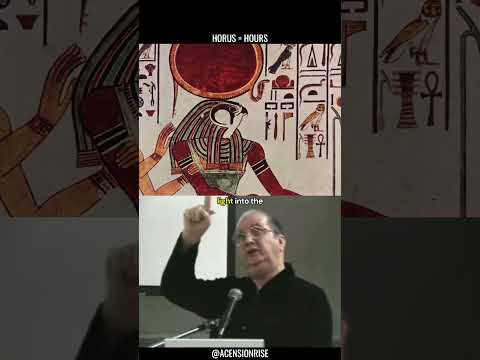
The symbol of Horus, the falcon-headed deity of ancient Egypt, resonates far beyond the sandy dunes of the Nile. It’s a potent reminder of the cosmic dance, a celestial clock ticking through the ages, influencing our very perception of time and reality. Many practitioners find the concept of *horus* deeply intertwined with our understanding of hours, cycles, and the hidden geometries that govern our world. This exploration delves into the profound connections between this ancient symbol and the structure of time itself, a foundational element for any serious practitioner.
The observer of esoteric systems, from the hermetic traditions to modern technomancy, often encounters recurring patterns. The ancient Egyptians, with their advanced understanding of astronomy and geometry, encoded profound truths into hieroglyphs and deities like Horus. It’s believed that their interpretations of the cosmos, particularly concerning time, were far more sophisticated than commonly understood today. The concept of Horus, as it relates to time, can be seen as a bridge connecting ancient astrological observations with the fundamental units of our day.
Table of Contents
The connection might seem tenuous at first glance. How does a deity relate to the simple act of telling time? Yet, delve deeper, and one finds a rich tapestry of symbolism. The very name "Horus" is often linguistically linked to concepts of "hours" or "time." This linguistic echo isn't accidental; it suggests a deep, perhaps even foundational, relationship between the deity and the measurement of temporal cycles. Examining this provides a new lens through which to view both ancient mythologies and our modern constructs of time.
MagitechThe Geometry of Time: Beyond the Clock Face
The common understanding of time is linear: a steady march from past to future. However, ancient wisdom, as suggested by figures like Jordan Maxwell, often portrays time as cyclical, multidimensional, and intrinsically linked to celestial events. The Egyptian civilization, in particular, was obsessed with cosmic cycles, aligning their calendars, architecture, and religious practices with the movements of the sun, moon, and stars. Horus, as a sky god, was central to this celestial observation.
Consider the number 12. It's a number that permeates our understanding of time: 12 hours on a clock face, 12 months in a year, 12 signs of the zodiac. This prevalence isn't arbitrary; it's a legacy of ancient cosmologies. The 12 stars on the European Union flag, or the 12 steps often cited in spiritual or recovery programs, all echo this fundamental numerological significance. It suggests a universal blueprint that resonates across cultures and disciplines, a pattern that the ancients recognized and integrated into their understanding of the divine and the temporal.
The symbolic representation of Horus often incorporates elements that speak to higher perception and cosmic awareness. The "Eye of Horus," for instance, is not merely a symbol of protection but also of insight, vision, and clarity. It can be interpreted as the all-seeing eye that perceives the cosmic order, the eye that sees beyond the veil of ordinary perception to the underlying geometry of time and space. This concept resonates with the esoteric understanding of the pineal gland, often referred to as the "third eye," a gateway to higher consciousness and deeper truths about reality.
Historical Echoes and Esoteric Interpretations
Throughout history, the concept of Horus has been a cornerstone of Egyptian mythology, representing divine kingship, protection, and the heavens. However, esoteric traditions have long sought deeper meanings within these narratives. The idea that "Jezus Origin Horus" (Jesus Origin Horus) is a notion that has circulated in certain esoteric circles, suggesting a lineage of archetypal figures representing divine wisdom and cosmic order. While such interpretations are not universally accepted, they highlight a common human tendency to seek unifying threads across different spiritual and historical narratives.
The examination of ancient civilizations reveals a consistent theme: they possessed knowledge and technology that appear far more advanced than what is commonly attributed to them. From the baffling structures in India and the Americas to the sheer engineering marvels of Egypt, it suggests a lost understanding of physics, mathematics, and perhaps even consciousness itself. The intricate geometry found in ancient texts and artifacts points towards a deep comprehension of cosmic principles, a knowledge that seems to have been deliberately fragmented or hidden by subsequent societal structures and "gatekeepers."
This potential suppression of knowledge raises questions about secret societies, their role in preserving or disseminating certain understandings, and their influence on modern educational systems. The pursuit of arcane knowledge has often been the domain of those who operate outside the mainstream, fostering a continuous, albeit often hidden, stream of esoteric wisdom.
The Symbolism of Twelve: A Universal Constant?
The number twelve frequently appears in systems deeply concerned with cyclical patterns and cosmic order. Whether it's the twelve hours marking the solar day, the twelve months that structure our year, or the twelve signs of the astrological wheel, this number seems to form a fundamental unit in our experience of time and the cosmos.
In various spiritual traditions, the number twelve also holds significant weight: * Christianity: The twelve apostles of Jesus. * Islam: The twelfth Imam in Shi'ite Muslim eschatology. * Numerology: Often associated with completion, cosmic order, and divine government. * Geometry: The Metatron's Cube, a complex geometric figure composed of 12 circles, is seen as a blueprint of creation.
The idea of "12 in, 12 out" can be interpreted in many ways: the 12 hours of day and 12 hours of night, the 12 hours of a clock's cycle, or even the 12 stages of spiritual development. This recurring presence suggests that twelve is not merely a numerical coincidence but a foundational element in the human understanding of temporal cycles and cosmic organization.
The Eye, The Tree, and The Cosmic Disclosure
Connections between symbols like the eye and the tree of knowledge are profound. In many traditions, the eye represents consciousness, perception, and divine oversight. The tree of knowledge, conversely, symbolizes illumination, the acquisition of understanding, and the duality of existence. The pairing of these symbols, as seen in some interpretations of esoteric lore, can represent the awakening of consciousness to the fundamental truths of the universe, illuminated by a divine or cosmic perspective.
The "Eye" being potentially linked to "Z-eYe-N" (Zion) and "Eclipse" or "Saturn Worship" points towards deeper, often controversial, esoteric interpretations. Saturn, in ancient and astrological contexts, often represents time, discipline, limitations, and karmic cycles. Eclipses, as celestial events that temporarily obscure light, can symbolize periods of transition, hidden knowledge, or cosmic shifts. These interpretations often intertwine with discussions of powerful elite groups and their alleged use of symbolism for control or hidden revelation.
Practical Application: Aligning with Cosmic Cycles
Understanding these ancient connections isn't just an academic exercise; it has practical implications for the modern practitioner. By recognizing the cyclical nature of time and the symbolic resonance of figures like Horus, we can begin to align our magical practices with these natural rhythms.
For instance, timing rituals and workings according to celestial cycles or even the simple division of the day into meaningful segments can enhance their effectiveness. The intention behind our actions, combined with an awareness of these larger cosmic patterns, can amplify our results.
The Chaos Magick Sigil Generator is an invaluable tool for this modern integration. It allows practitioners to transmute their desires into digital sigils swiftly, capturing the essence of intention without being bogged down by laborious manual creation. This digital approach frees up mental energy, allowing the practitioner to focus on the crucial element: gnosis.
* Problem: Manually creating sigils can be time-consuming, and any error in the intricate design can lead to a flawed manifestation. * Agitation: I've seen many aspiring mages frustrated by hours spent on a single sigil, only for it to fail because of a minor oversight in its construction. The focus shifts from the intent to the mechanics. * Solution: The Chaos Magick Sigil Generator simplifies this process immensely. It codifies your intent, generates a unique and balanced symbol, and allows you to focus on the vital energetic charge.
By leveraging such tools, we can bridge the gap between ancient wisdom and contemporary practice, making the power of cosmic timing and symbolic resonance accessible to all. Exploring themes like Horus, the number twelve, and the geometry of time offers a richer, more effective approach to magical work, grounding our intentions within the grander cycles of the universe.
---
*This page was updated in 2026, reflecting ongoing research into technomancy and ancient symbolic systems.*
Mage's Arsenal
* Essential: Chaos Magick Sigil Generator - Instantly create powerful digital sigils. * For Further Study: Books and lectures by Jordan Maxwell (though his passing is mourned, his work remains foundational). * Conceptual Reference: Works on Egyptian Mythology and Hermeticism.About the author: Frater Alek0s is a veteran practitioner and researcher in the field of chaos magick. His work focuses on the practical and experimental application of occult techniques for self-development and reality exploration, demystifying esotericism for the modern practitioner.
FAQ
* What is the connection between Horus and time? The connection is largely symbolic and linguistic. "Horus" is often phonetically linked to concepts of "hours" and temporal cycles, suggesting that the deity represented the cosmic clockwork and celestial order that governed time in ancient Egyptian thought. His role as a sky god further ties him to astronomical observation, which formed the basis of their timekeeping.* Why is the number 12 significant in timekeeping and symbolism? The number 12 is significant because it appears to be a fundamental unit identified by ancient civilizations for structuring temporal and cosmic cycles. It forms the basis of our 12-hour clock, 12 months, and the 12 signs of the zodiac. Its prevalence across diverse spiritual traditions suggests a deep-seated recognition of its role in cosmic order and completion.
* Can modern practitioners truly utilize ancient concepts of Horus and time? Absolutely. While direct worship might differ, the underlying principles—awareness of cycles, symbolic correspondences, and the power of geometric patterns—are timeless. Modern tools can help us integrate these ancient concepts, allowing us to align our intentions with cosmic rhythms more effectively.
* How do symbols like the Eye of Horus relate to personal development? The Eye of Horus can be seen as a symbol of awakened perception and higher consciousness. Esoterically, it relates to inner vision, clarity, and the ability to see beyond surface appearances. For personal development, it encourages introspection, self-awareness, and the cultivation of insight, much like the concept of the pineal gland as a gateway to deeper understanding.
* What are some other recurring numbers in esoteric traditions similar to 12? Other significant numbers include 3 (divine trinity, creation), 7 (completion, spiritual perfection), 9 (initiation, cosmic cycles), and 40 (testing, purification). Each carries its own set of correspondences and symbolic meanings within various esoteric systems.
Referencias
- Carroll, P. J. (1987). Liber Null & Psychonaut. Weiser Books.
- Spare, A. O. (1913). The Book of Pleasure. Self-published.
- Hine, P. (1992). Condensed Chaos: An Introduction to Chaos Magic. New Falcon Publications.
- Crowley, A. (1904). The Book of the Law. Self-published.
- Sherwin, R. (2018). The Chaos Magic Handbook. CreateSpace.
- Kraig, D. M. (1988). Modern Magick: Eleven Lessons in the High Magickal Arts. Llewellyn Publications.
- Morrison, G. (2003). Pop Magic! The Art of Shaping Reality. Disinformation.
- DuQuette, L. M. (2003). The Chicken Qabalah of Rabbi Lamed Ben Clifford. Weiser Books.
- Webb, D. (2015). Chaos Magick: A Practical Guide. Self-published.
- Tyson, D. (2006). The Power of the Written Word. Llewellyn Publications.
- Bonewits, I. (1971). Real Magic. Creative Age Press.
- Greer, J. M. (2003). The New Encyclopedia of the Occult. Llewellyn Publications.