
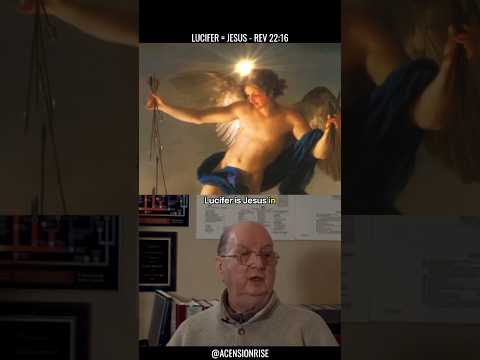
The celestial tapestry woven by ancient texts often presents diametrically opposed figures, yet a closer, alchemical examination reveals subtle threads of connection. The pronouncement in Revelation 22:16, "I am the root and the offspring of David, and the bright and morning star," attributed to Jesus, echoes a profound duality that challenges rigid doctrinal interpretations. This isn't about equating figures in simplistic terms; it's about understanding the archetypal forces they represent, particularly the "Morning Star," a symbol that has resonated through various traditions, often under different names, including Lucifer.
For far too long, the narrative has been polarized, painting a stark black and white of divine and demonic. But the universe, and indeed magic, operates in shades of grey, in the liminal spaces where opposites meet and merge. Understanding this duality is not a blasphemy, but a path towards a more comprehensive, and ultimately more powerful, magical understanding. As the wise have observed, "There are two sides to a story," and when we ignore one, we fragment our perception of the whole. This exploration seeks to bridge that gap, not to reconcile dogma, but to illuminate the shared archetypal roots of figures often cast as eternal adversaries.
Table of Contents
SigilUnderstanding the "Morning Star" Archetype
The designation "Morning Star" carries immense symbolic weight, appearing across diverse cultures and spiritual traditions. It represents the dawn, the herald of a new day, illumination, and the potential for transformation. In ancient Mesopotamia, the planet Venus was often associated with Ishtar, the goddess of love, war, and fertility, and its appearance in the morning sky signified her power and influence. The Greeks knew Venus as Phosphorus, the "light-bearer," a precursor to the sun's full radiance.
The very name "Lucifer" translates from Latin to "light-bringer" or "morning star." This etymology is crucial. It signifies a role: that of ushering in illumination, of revealing what was previously hidden. This role is not inherently sinister; it speaks to the principle of consciousness expanding, of ignorance being dispelled. When we examine this etymology alongside Revelation 22:16, where Jesus identifies himself as the "bright and morning star," a fascinating pattern emerges. Both figures, in their respective symbolic contexts, are associated with bringing light, with being harbingers of a new dawn, whether that dawn is seen as divine revelation or intellectual awakening.
The crucial distinction, often lost in theological debates, lies in the *nature* of the light and the *context* of its revelation. Jesus, within the Christian framework, is the Light of the World, representing divine grace, salvation, and truth. Lucifer, particularly in later interpretations, has become conflated with rebellion, pride, and the shadow side of consciousness – the ego, the "false perception of the Self," as some have observed. However, the original concept of Lucifer was not necessarily negative; it was simply a powerful archetype of illumination and awakening. The "darkening" of hearts or the ego's rise can be seen as a corruption of this light-bringing function, a deviation from the pure divine principle.
The Shadow Side of Divinity and the Light of Rebellion
The perceived opposition between Jesus and Lucifer often blinds us to their shared archetypal functions. Both are presented as powerful celestial beings with significant roles in the cosmic drama. Jesus, as the "light source," embodies divine presence and salvation. Satan, or the ego, is often seen as a false light, a distortion that leads one astray. Yet, it is precisely through confronting these shadows, through understanding the allure of the "rebel" archetype, that profound spiritual growth can occur.
The idea of "falling from heaven" or being a "son of the dawn" can be interpreted through various lenses. From a perspective of pure divine obedience, it represents rebellion. From a more alchemical or psychological viewpoint, it can symbolize the descent into matter, the fragmentation of consciousness, or the individuation process that, by its very nature, separates the individual from the collective and can be perceived as a "fall" from a state of undifferentiated unity.
"An angel of light cannot walk in the dark without the darkness corrupting it," some comments suggest. This highlights the inherent danger of engaging with powerful archetypes without proper grounding or understanding. The "light" of Lucifer, when misinterpreted or wielded without the stabilizing influence of divine love and wisdom, can indeed become a blinding, ego-driven force, leading to "vain doctrines" and the "vomit" of mind control religions. This is where the "bright morning star" (Jesus) offering divine truth differs from the "star of the morning" (Lucifer) that, in some narratives, fell due to pride. The former represents pure, unadulterated divine consciousness, while the latter can represent the ego's attempt to usurp or mimic that light.
The Role of Context and Language
The very translation and interpretation of ancient texts play a pivotal role in shaping our understanding of these figures. As one commenter points out, "Words matter, so does context." The journey of words from Hebrew to Latin and then to English often introduces layers of meaning that can either illuminate or obscure their original intent. The phrase "Jesus Christ" itself translates to "God saves the anointed One," a designation that speaks to a specific role within a divine plan.
The "morning stars" are often described in the Bible as designations for "sons of God," implying a pluralistic angelic host. Jesus's specific designation as the "bright morning star" distinguishes him, emphasizing his unique divine nature and connection to the Father. This distinction is crucial: it is not that Jesus *is* Lucifer, but that both figures, in different narratives and symbolic frameworks, occupy the archetype of the "light-bearer" or "morning star." One represents the pure, uncorrupted divine light, while the other, in its fallen or rebellious interpretation, represents the allure of self-illumination and independence that can lead to egoic inflation.
The emphasis on "having faith in the Father, God the Creator" is a reminder that, regardless of the intricate symbolic interpretations, the ultimate source of divinity remains paramount. The complexities of angelic designations and celestial bodies, while fascinating for magical and theological study, should not distract from the fundamental connection to the divine.
Practical Application: Navigating the Archetypes
For the practicing magician, this duality is not a theological problem to be solved, but a powerful energetic principle to be understood and navigated. The "Morning Star" archetype, whether embodying divine revelation or the spark of rebellious consciousness, represents a potent force for awakening and transformation.
1. Embrace the Light-Bringer: Recognize the inherent drive for illumination and knowledge. This is the energy of Lucifer. When harnessed consciously, it fuels the desire to learn, to question, and to uncover hidden truths. This is the energy that pushes us to understand complex concepts, to seek deeper meaning, and to break free from ignorance. For this, tools that aid in rapid knowledge acquisition and creative expression are invaluable. The Chaos Magick Sigil Generator can assist in codifying intentions for illumination and esoteric understanding, allowing the magician to focus on the gnosis.
2. Understand the Egoic Shadow: The "fall" or the "darkened heart" can be seen as the ego's attempt to claim the light for itself, leading to pride, dogma, and self-deception. This is the "satan" that Jesus warns against – the false perception of the self that separates us from divine unity. In magical practice, this manifests as attachment to results, over-intellectualization without embodiment, and the creation of rigid belief systems that inhibit growth. Recognizing this shadow is the first step to integrating it, not by casting it out, but by understanding its function and guiding its energy towards constructive ends.
3. Seek Divine Illumination: The "bright morning star" represents the unadulterated divine consciousness, the pure light of truth and salvation. This is the light that dispels illusion and guides us towards wholeness. Engaging with this archetype requires humility, surrender, and a willingness to be guided by a higher power. Practices that foster connection to this divine light – prayer, meditation, devotional acts – are essential for grounding and purifying the energies we work with.
4. Master the Language of Symbolism: As highlighted in the community comments, words and context are paramount. A magician must be adept at dissecting symbols, understanding their layered meanings, and recognizing how they are used and misused across different traditions. This involves critical thinking and a willingness to look beyond surface-level interpretations.
Ultimately, the perceived conflict between figures like Jesus and Lucifer is a reflection of the inherent duality within consciousness itself – the interplay between divine light and the shadow of ego, between illumination and rebellion, between obedience and individuation. By understanding this dance, we can navigate our own inner cosmos with greater wisdom and power, becoming conscious participants in the great unfolding of cosmic revelation.
Mage's Arsenal
* Essential: Chaos Magick Sigil Generator - Streamline the creation of sigils for clarity of intent, whether for seeking divine illumination or embodying independent awakening. * Recommended: Texts exploring comparative mythology and the history of religious symbolism. * Useful: Journals for recording insights into archetypal energies and personal experiences.About the author: Frater Alek0s is a veteran practitioner and researcher in the field of chaos magick. His work focuses on the practical and experimental application of occult techniques for self-development and reality exploration, demystifying esotericism for the modern practitioner.
FAQ
Does the Bible explicitly state Jesus is Lucifer?
No, the Bible does not explicitly state that Jesus is Lucifer. However, Revelation 22:16 states Jesus is the "bright and morning star," a title also associated with Lucifer in other texts and interpretations. This is understood as a symbolic connection through the archetype of the "Morning Star," representing light and dawn, rather than a literal identification.
What is the etymology of the name Lucifer?
The name "Lucifer" originates from Latin, meaning "light-bringer" or "morning star" (from *lux*, meaning "light," and *ferre*, meaning "to bear" or "to bring"). It was originally a designation for the planet Venus when it appears before sunrise.
How can the "Morning Star" archetype be used in magic?
The "Morning Star" archetype represents illumination, awakening, and the dawn of new understanding. Magically, it can be invoked to dispel ignorance, gain insight, initiate transformations, or to embody the spark of rebellion that drives individuation and challenges established norms. It is crucial to understand the context and potential shadow aspects (ego inflation) when working with this energy.
Why is there confusion or opposition between Jesus and Lucifer?
The perceived opposition arises from theological interpretations and the symbolic evolution of these figures. Jesus is often seen as the divine light and savior, while Lucifer, particularly in later traditions, has become associated with rebellion, pride, and a fallen state. The confusion stems from both figures being linked to the "Morning Star" archetype, representing different manifestations of light and awakening – one divine and pure, the other potentially egoic and rebellious.
Are all "Morning Stars" the same?
No. While the "Morning Star" is a recurring archetype across cultures and texts, its specific manifestation and meaning can vary. Jesus is identified as the "bright morning star," signifying pure divine consciousness. Lucifer, in its original Latin sense, meant "light-bringer" but has evolved to symbolize rebellion and the ego's quest for self-illumination. Recognizing these distinctions in context and symbolism is key to understanding the archetype's diverse applications.
Referencias
- Carroll, P. J. (1987). Liber Null & Psychonaut. Weiser Books.
- Spare, A. O. (1913). The Book of Pleasure. Self-published.
- Hine, P. (1992). Condensed Chaos: An Introduction to Chaos Magic. New Falcon Publications.
- Crowley, A. (1904). The Book of the Law. Self-published.
- Sherwin, R. (2018). The Chaos Magic Handbook. CreateSpace.
- Kraig, D. M. (1988). Modern Magick: Eleven Lessons in the High Magickal Arts. Llewellyn Publications.
- Morrison, G. (2003). Pop Magic! The Art of Shaping Reality. Disinformation.
- DuQuette, L. M. (2003). The Chicken Qabalah of Rabbi Lamed Ben Clifford. Weiser Books.
- Webb, D. (2015). Chaos Magick: A Practical Guide. Self-published.
- Tyson, D. (2006). The Power of the Written Word. Llewellyn Publications.
- Bonewits, I. (1971). Real Magic. Creative Age Press.
- Greer, J. M. (2003). The New Encyclopedia of the Occult. Llewellyn Publications.