
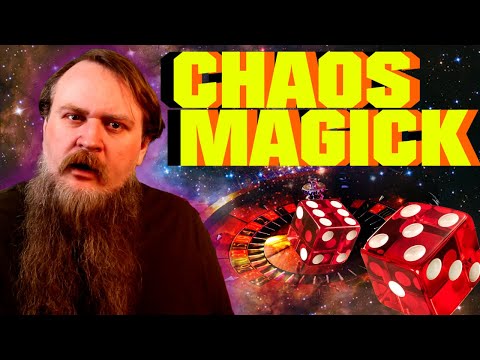
The air crackles, not with ozone from a storm, but with the focused intent of a practitioner. Forget dusty tomes and ancient dogma; chaos magick, at its core, is about results. It's the wild frontier of personal gnosis, where the only true authority is experimentation. This isn't about believing in fairies, it's about bending reality to your will through focused will and adaptable methodologies. Dive into the meta-principles, the raw power of belief, and the ultimate responsibility that comes with wielding it.
Chaos magick emerged from the fertile ground of Western esotericism, a potent antidote to the rigid structures of older magical traditions. Figures like Peter J. Carroll and Austin Osman Spare, though their approaches differed, laid foundational stones for a practice that prioritizes efficacy over adherence. The core tenet? Belief is a tool. Whatever works, *is* the work. This pragmatic approach liberates the practitioner from the shackles of complex symbolic systems, allowing for direct engagement with the forces that shape our perceived reality.
The Core Principles: Belief as a Tool, Not a Tenet
At the heart of chaos magick lies the concept of "bifurcation of consciousness" or "altered states of consciousness" (Gnosis). This is the state of heightened receptivity where the conscious mind is momentarily silenced, allowing the magical intention to bypass rational filters and impress itself upon the subconscious and, by extension, reality itself. This state can be achieved through various means: ecstatic dance, sensory overload, sensory deprivation, intense focus, or even mundane activities that induce a trance-like state.
"The magician, in his capacity as magician, is an artist. Art is the creation of works of art. The magician is the creator of his own world." - Peter J. Carroll
Unlike many traditional magical systems that demand adherence to specific pantheons, rituals, or cosmological maps, chaos magick is inherently eclectic. It encourages practitioners to "steal" or adapt symbols, myths, and techniques from any source that resonates. This could mean invoking fictional characters, employing sigils derived from internet memes, or using concepts from quantum physics as magical metaphors. The efficacy of the symbol or concept lies not in its historical provenance, but in its ability to charge and direct the practitioner's intent.
Sigils: The Building Blocks of Intent
Perhaps the most accessible and widely practiced technique in chaos magick is sigilization. A sigil is a symbolic representation of a desired outcome, stripped of its linguistic form and charged through a temporary suspension of conscious awareness. The process typically involves:
- Statement of Intent: Clearly define your desire in positive, present-tense language (e.g., "I am financially abundant" rather than "I don't want to be poor").
- Condensing the Statement: Remove all vowels and repeating letters from the statement to create a unique glyph. For example, "I AM FINANCIALLY ABUNDANT" might become "FNCLABDN."
- Artistic Representation: Translate this condensed statement into a unique visual symbol. This can be abstract or incorporate elements that resonate with the practitioner. The key is that it is distinct and meaningful to the creator.
- Charging the Sigil: This is where gnosis comes into play. The sigil is charged by bringing it to the practitioner's awareness during an altered state of consciousness. This is often done through intense focus or repetitive actions (like staring at the sigil while dancing ecstatically) until the conscious mind is overloaded and the sigil is "fired" into the subconscious.
- Forgetting the Sigil: After charging, the sigil should be consciously forgotten. This prevents the analytical mind from interfering with its manifestation. The intent is now set, and the universe (or your own subconscious) is tasked with its realization.
The beauty of sigils lies in their personalized nature and the direct feedback they provide. A practitioner can experiment with over 100 different methods for creating and charging sigils, a process that can be greatly enhanced by understanding the psychological underpinnings. For those seeking a deeper understanding and more robust techniques, resources like "Liber Null & Psychonaut" and "Condensed Chaos" are invaluable. These texts provide a framework for advanced experimentation, including the creation and manipulation of more complex magical constructs.
Servitors and Egregores: Conscious Constructs
Beyond sigils, chaos magick delves into the creation of artificial intelligences or "servitors." These are entities designed to perform specific tasks, acting as magical agents in the world. They are built using similar principles to sigils, often involving a detailed blueprint of the servitor's function, appearance, and methods of operation. The key difference is that servitors are intended for ongoing tasks, not immediate manifestation.
Egregores, on the other hand, are collective thought-forms, often imbued with potent energy by groups of people over time. While not always consciously created by a single individual, chaos magick allows for the manipulation or even dissolution of existing egregores, and the deliberate creation of new ones with shared intent. Understanding the psychology behind collective belief is paramount here.
The Role of Gnosis and Altered States
The concept of gnosis, or altered states of consciousness, is the engine of chaos magick. Without achieving this state, intention remains mere thought. Various methods can induce gnosis:
- Neurotic Gnosis: Intense emotional states like fear, anger, or sexual arousal.
- Monotonous Gnosis: Repetitive physical activity like dancing, chanting, or drumming.
- Inhibitory Gnosis: Sensory deprivation, meditation, or deep concentration.
The effectiveness of any magical operation hinges on the ability to enter and utilize these states. This is where consistent practice and self-awareness become critical. For practitioners seeking to refine their energy work and trance abilities, exploring resources on meditation and energy manipulation, such as those found in advanced reiki courses or in foundational texts of energy psychology, can be highly beneficial. A solid grounding in these disciplines can significantly amplify the results of your magical endeavors.
Arsenal del Mago
- "Liber Null & Psychonaut" by Peter J. Carroll: The foundational text for modern chaos magick.
- "Condensed Chaos" by Phil Hine: A highly practical and accessible guide to chaos magick techniques.
- "The Kybalion": While not strictly chaos magick, its principles of mentalism and hermeticism offer valuable insights into the nature of reality and consciousness.
- Tarot Deck (Rider-Waite or Thoth): For divination, meditation, and symbolic inspiration.
- Journal: Essential for recording operations, observations, and insights.
- Ritual Tools: While not strictly necessary, a athame (ritual knife) or wand can serve as excellent foci for intent.
Veredicto del Practicante: ¿Vale la pena integrarlo a tu práctica?
Chaos magick is not for the faint of heart or the dogmatic. It demands rigorous self-honesty, a willingness to experiment without fear of "failure," and the courage to take full responsibility for one's reality. If you are someone who thrives on autonomy, who believes that efficacy trumps tradition, and who is eager to explore the vast landscape of consciousness, then chaos magick offers an unparalleled toolkit. It strips away the unnecessary, leaving you with the potent, adaptable essence of magical practice. The results are only limited by your imagination and your willingness to *do*.
Preguntas Frecuentes
- ¿Es la magia del caos atea? No necesariamente. Puedes incorporar deidades o conceptos espirituales si funcionan para ti. La magia del caos es pragmática; usa lo que te da resultados.
- ¿Cómo sé si mi sigilo funcionó? La manifestación puede ser sutil o dramática. Lleva un diario y presta atención a las sincronicidades y eventos que ocurren después de cargar un sigilo.
- ¿Puedo dañar a otros con magia del caos? Cualquier herramienta puede ser mal utilizada. Sin embargo, una de las piedras angulares de la magia del caos es la responsabilidad personal. Enfocarse en la malevolencia a menudo resulta contraproducente para el practicante.
Tu Operación: Crea y Lanza Tu Primer Sigilo de "Claridad Mental"
Para poner estos principios en práctica de inmediato, vamos a crear un sigilo simple.
- Define tu intención: "Mi mente está clara y enfocada."
- Condensa el decir: Elimina vocales y letras repetidas de "MI MENTE ESTA CLARA Y ENFOCADA" para obtener algo como "MMNTSTCLRFNCD".
- Dibuja tu sigilo: Crea un símbolo abstracto a partir de estas letras. No pienses demasiado en la estética; busca una forma que te parezca potente o interesante.
- Prepara un momento para cargar: Enfócate en este sigilo. Puedes cantarlo, bailar, o realizar una actividad que te lleve a un estado de trance. Haz esto durante unos minutos, enfocándote intensamente en el símbolo y la intención.
- Olvida el sigilo: Una vez que sientas que la energía ha sido "disparada", guarda el sigilo en un lugar seguro y trata de no pensar en él activamente.
Ahora, deja que el universo haga su trabajo.
Practitioner's Note: True magick requires resources... Join the Binance community...
No hay comentarios:
Publicar un comentario