
Table of Contents
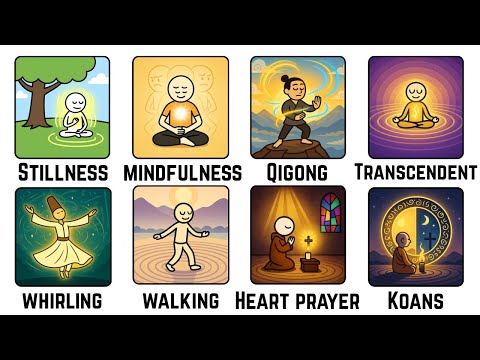
- The Stillness of Zazen: Seated Meditation
- Vipassana: The Insight Meditation
- Transcendental Meditation: Harnessing the Inner Hum
- Qigong: The Flow of Vital Energy
- Sufi Whirling: The Dance of Devotion
- The Meditative Stride: Walking Meditation
- Contemplative Prayer: Whispers to the Divine
- The Paradoxical Path: Koan Practice
The hum of the modern world is a siren song, luring us away from the inner sanctum of our own minds. We chase external validation, lost in the noise, forgetting that the greatest treasures — peace, clarity, and profound understanding — lie dormant within. For millennia, across cultures and continents, humanity has devised intricate systems, not to conquer the external, but to master the internal. These are not mere relaxation techniques; they are potent practices, alchemical processes designed to transmute the leaden dross of the unexamined life into the golden essence of self-awareness. Today, we delve into eight such powerful modalities, revealing their core principles and practical applications. This is not a superficial overview; it is a distilled essence, a practical guide for the discerning practitioner seeking tangible results. To truly understand these paths, one must move beyond passive consumption and into active experimentation. Consider this your grimoire for inner exploration.
The journey towards inner peace is not monolithic. While the ultimate goal might be shared, the methods are as diverse as the human psyche itself. Each tradition, refined over centuries, offers a unique lens through which to perceive and interact with the subtle energies of existence. The key is to find the path that resonates with your inherent nature and to approach it with disciplined intent. To merely read about these practices is akin to staring at a map without ever taking a single step. The true transformation occurs in the doing, in the sustained application of will and attention. This guide aims to equip you with the foundational knowledge to embark on your own empirical investigation.
The Stillness of Zazen: Seated Meditation
Rooted in Zen Buddhism, Zazen is perhaps the archetypal image of meditation: a simple, upright posture, eyes softly gazing downwards, and an unwavering focus on the present moment. It is the practice of "just sitting," shikan-taza, a direct confrontation with reality as it is, without judgment or alteration. The practitioner observes thoughts arising and passing like clouds in the sky, yet remains anchored to the breath, the posture, the sheer fact of existing. This is not about emptying the mind, an impossible feat, but about understanding the nature of mind itself — its tendency to wander, to grasp, to resist. Through sustained Zazen, a profound stillness can arise not from the absence of thought, but from the cessation of identifying with it. This practice cultivates a deep sense of presence and equanimity, essential for any serious practitioner seeking to navigate the complexities of reality.
To approach Zazen with the right intent is crucial. It's an act of rebellion against the constant external noise, a quiet declaration of sovereignty over one's inner landscape. The posture itself is a somatic anchor: a spine aligned like a growing tree, a pelvis firmly grounded, hands forming a cosmic mudra. This physical discipline is the gateway to mental clarity. Many find a simple cushion, a zabuton, an indispensable tool for maintaining comfort and spinal alignment during longer sits. The precision required in Zazen mirrors the meticulousness needed in other practical disciplines, such as sigil magic or the creation of complex chaos magick servitors. The principle is the same: disciplined focus, unwavering attention, and a willingness to observe without interference.
Vipassana: The Insight Meditation
Emerging from ancient Indian traditions and central to Theravada Buddhism, Vipassana translates to "insight" or "clear seeing." Unlike Zazen's pure awareness, Vipassana is an analytical practice. It involves systematically observing the impermanent, unsatisfactory, and selfless nature of all phenomena—both internal and external. The practitioner cultivates a detached, objective observation of bodily sensations, feelings, thoughts, and mental states. By witnessing the constant flux of these experiences, one begins to dismantle the illusions of permanence and self, leading to liberation from suffering. This method demands rigor and a willingness to confront uncomfortable truths about existence. The results are not just fleeting peace, but a deep, abiding understanding that reorients one's entire perception of reality.
The practical application of Vipassana involves a methodical scanning of the body and mind. For instance, when a sensation arises—say, an itch—the practitioner observes it without immediately reacting. They note its impermanence, its arising and passing. This systematic deconstruction of experience can be profoundly destabilizing to ingrained patterns of behavior, much like confronting the shadow aspects of one's psyche in practical shadow work. The insights gained are not abstract philosophical musings but direct, lived realizations. To truly master Vipassana, many turn to intensive retreats, often guided by experienced teachers. Resources like books by S.N. Goenka provide foundational knowledge, but the true practice is in the sustained, daily engagement. For practitioners interested in understanding the raw data of consciousness, Vipassana offers unparalleled clarity.
Transcendental Meditation: Harnessing the Inner Hum
Popularized in the West by Maharishi Mahesh Yogi, Transcendental Meditation (TM) is a mantra-based technique distinguished by its effortless approach. Practitioners are given a specific mantra, a sound or word imbued with vibrational significance, which they repeat silently while sitting with eyes closed. The intention is not to concentrate or control the mind, but to allow it to settle down naturally to quieter levels of awareness, eventually transcending thought altogether. TM purports to induce a unique state of "restful alertness," different from sleep or ordinary waking consciousness, leading to reduced stress, enhanced creativity, and improved overall well-being. Its systematic framework and widespread adoption make it one of the most accessible forms of meditation for the modern, stressed individual.
"Effortless" is the operative word here. Unlike concentration techniques that require active mental effort, TM is about allowing the mind to naturally settle. This principle of effortless action is echoed in certain advanced chaos magick techniques where intent is set in motion with minimal conscious struggle. While TM is often taught through certified instructors, the core concept—using a specific vibrational key to unlock deeper states of consciousness—is a powerful one. The effectiveness of TM has been the subject of numerous scientific studies, making it a practice that bridges the ancient wisdom traditions with empirical validation. For those seeking a structured yet profound method to access deep relaxation and mental clarity, TM offers a compelling, repeatable process.
Qigong: The Flow of Vital Energy
Qigong, an ancient Chinese practice, translates roughly to "energy work." It integrates gentle movement, mindful breathing, and focused intention to cultivate and circulate the body's vital life force, known as Qi (or Chi). Far from static stillness, Qigong is often dynamic, involving graceful, flowing movements that mirror natural phenomena like water or wind. Its benefits extend beyond mental tranquility, aiming to improve physical health, boost immune function, and enhance spiritual awareness. Qigong is not just about meditation; it's about harmonizing the body, breath, and spirit into a unified field of energy. This holistic approach makes it a powerful tool for overall well-being and a potent method for those who find stillness challenging.
The practical application of Qigong lies in its accessibility and adaptability. Whether performed by a seasoned martial artist or a frail elder, the principles of slow, deliberate movement and conscious breathing remain key. Imagine performing a ritual where every gesture is imbued with purpose, every breath a spark of intention. Qigong offers a similar embodied experience. Its movements can be adapted to any physical condition, making it a practice for virtually everyone. Consider the creation of a magical servitor: both require precise movements and focused intent. Qigong offers a framework for developing that precise control over one's own energetic system. Many enthusiasts find that incorporating specific Qigong forms into their daily routine significantly enhances their ability to focus intention and manage their energetic state.
Sufi Whirling: The Dance of Devotion
The Sema ceremony of the Mevlevi Order of Sufism, famously known as Sufi whirling, is a breathtaking practice of ecstatic dance. Dervishes, adorned in symbolic attire, spin rhythmically in one direction, their arms extended—the right hand raised to receive divine grace, the left hand lowered to bestow it upon the earth. It is a moving meditation, a devotional act aimed at achieving union with the Divine. The continuous spinning facilitates a trance-like state, where the ego dissolves, and the practitioner experiences a profound sense of oneness and spiritual ecstasy. This practice embodies the idea that spiritual awakening can be found not just in stillness, but in dynamic, surrendered movement.
The Sufi whirling is a testament to the power of rhythm and repetition in altering consciousness. The dizziness and sense of dislocation are not side effects to be avoided but integral parts of the process, dislodging the practitioner from mundane reality. This parallels the use of altered states of consciousness in various practical occultism disciplines, where the dissolution of ego is a key component for accessing deeper realities. While the formal Sema ceremony is specific to Sufism, the principle of using rhythmic motion to achieve altered states can be explored in a personal practice. The key is surrender—letting go of control and allowing the movement to guide you. This active engagement with a powerful, repetitive motion can be incredibly potent for shaking loose mental blockages and opening energetic pathways.
The Meditative Stride: Walking Meditation
While many associate meditation with sitting still, walking meditation offers a powerful alternative, particularly for those who struggle with prolonged stillness or find themselves restless. It involves bringing mindful awareness to the physical act of walking—the sensation of the feet hitting the ground, the movement of the legs, the rhythm of the breath, and the awareness of the surroundings. Developed in various traditions, particularly in Vipassana, it transforms a mundane activity into an opportunity for present-moment awareness. It’s about grounding oneself in the physical world while cultivating inner peace, proving that transformation can occur even on the move.
Walking meditation is a potent tool for integrating spiritual practice into daily life. Imagine walking to work, not lost in thought, but fully present with each step. This practice is particularly useful for dissipating pent-up energy or anxious thoughts. The deliberate rhythm of walking can help regulate the nervous system, much like a carefully constructed spell aims to bring order to chaotic energies. For practitioners engaging in complex rituals, the ability to maintain focus while in motion is invaluable. Tools like a simple pedometer or a mindfulness app can help track progress and reinforce the habit. The key is consistency and intentionality; each step becomes an anchor to the present, a miniature ritual in itself.
Contemplative Prayer: Whispers to the Divine
Across various religious and spiritual traditions, contemplative prayer represents a deep, silent communion with the divine or the ultimate reality. It moves beyond petitionary prayer (asking for things) into a space of quiet receptivity, where the focus is on simply being in the presence of God, the Universe, or the Absolute. Unlike structured meditation techniques, contemplative prayer is often less about specific methods and more about cultivating an open heart and a receptive mind, waiting to be touched by divine grace or insight. It is a path of listening, of stillness, and of profound trust in something larger than oneself.
The essence of contemplative prayer lies in its surrender. It is an act of faith, trusting that a deeper connection is possible beyond words and concepts. This echoes the principle of "belief amplification" in chaos magick, where investing belief can manifest results, though here the focus is on a spiritual connection rather than a specific outcome. For practitioners seeking to deepen their connection to a higher power or the universal consciousness, contemplative prayer offers a direct avenue. The result is not always a dramatic revelation, but often a subtle, deepening sense of peace, guidance, and belonging. In a world that clamors for action, the power of receptive listening can be profoundly transformative.
The Paradoxical Path: Koan Practice
Exclusive to the Rinzai school of Zen Buddhism, the koan is a paradoxical riddle or anecdote designed to disrupt logical, rational thought and provoke a breakthrough in understanding—an awakening known as satori. Koans are not meant to be solved through intellect. Questions like "What is the sound of one hand clapping?" or "If you meet the Buddha on the road, kill him!" are designed to push the practitioner beyond conceptual frameworks into direct, intuitive experience. The rigorous, often frustrating, contemplation of a koan is a powerful tool for exhausting the discursive mind and opening oneself to deeper, non-dual awareness.
Koan practice is a form of intense psychological and spiritual training. It's about confronting the limits of your own understanding and being willing to let go of preconceived notions. This mirrors the challenges faced when attempting to understand complex occult principles, such as the nature of tulpas or the mechanics of egregores. These concepts often defy simple logical explanation and require a leap of faith or intuitive grasp. The koan pushes the practitioner to make that leap. The result of successful koan practice is not an intellectual answer, but a fundamental shift in perception. It teaches that true wisdom often lies beyond the grasp of ordinary reasoning, in the realm of direct experience.
Veredicto del Practicante: ¿Vale la pena integrarlos a tu práctica?
Each of these eight modalities offers a distinct yet complementary approach to the art of inner mastery. They are not mutually exclusive; indeed, exploring them can provide a richer, more robust understanding of consciousness itself. Zazen and Vipassana offer foundational training in awareness and insight. Transcendental Meditation provides an effortless entry into deep relaxation. Qigong and Sufi whirling demonstrate the power of movement and embodied energy. Walking meditation integrates awareness into daily life, while Contemplative Prayer opens a channel to the subtle. The Koan practice serves as a potent catalyst for shattering limiting beliefs. Whether you are a neophyte seeking solace or a seasoned occultist aiming to refine your energetic control, integrating elements from these traditions can profoundly enhance your practice. The true value lies not in passive knowledge, but in dedicated, consistent experimentation. Your results will be the ultimate validation.
Arsenal del Mago
- Libros Clave: "The Three Pillars of Zen" by Philip Kapleau, "Mindfulness in Plain English" by Henepola Gunaratana, "Authentic Yoga" by Gregor Ma Gregor, "The Art of Qigong" by Ken Huang, "Works of Rumi," "The Miracle of Mindfulness" by Thich Nhat Hanh.
- Herramientas de Práctica: Zabuton (meditation cushion), comfortable clothing that allows free movement, a journal for recording insights, an eye mask for deeper focus.
- Recursos Digitales: Apps for guided meditation (e.g., Waking Up by Sam Harris, Headspace), Qigong instructional videos online, online forums for Zen and Sufi practitioners.
- Entendimiento Profundo: Seek out qualified teachers or experienced practitioners in traditions that resonate most strongly with you. Direct transmission of knowledge and experience is often invaluable.
Taller Práctico: Cultivando Tu "Observador Silencioso"
This exercise is designed to help you cultivate the core skill of detached observation, fundamental to many of these traditions, especially Vipassana and Zazen.
- Encuentra Tu Espacio: Choose a quiet location where you won't be disturbed for 10-15 minutes. Sit comfortably, either on a cushion on the floor or a chair, ensuring your spine is relatively straight.
- Inicia el Anclaje: Gently close your eyes or soften your gaze. Bring your awareness to the physical sensation of your breath entering and leaving your body. Observe it without trying to control it. Simply notice the rise and fall.
- Observa las Sensaciones: As thoughts, emotions, or physical sensations arise, acknowledge them without judgment. Imagine them as passing clouds in a vast sky. Notice the itch, the urge to move, the fleeting thought about dinner.
- Nombra y Suelta: If a thought or sensation becomes persistent, briefly and silently label it (e.g., "thinking," "itching," "planning"). The act of labeling helps to detach from identification. Then, gently redirect your attention back to the breath.
- Mantén la Constancia: Your mind will wander—this is natural. The practice is not about *never* wandering, but about *noticing* when you've wandered and gently returning to your anchor (the breath). Each return is a victory, a strengthening of your "observer muscle."
- Finaliza con Gratitud: When your allotted time is up, gently bring your awareness back to your surroundings. Wiggle your fingers and toes, and slowly open your eyes. Take a moment to acknowledge the effort and the stillness you cultivated.
Preguntas Frecuentes
- ¿Cuál de estas prácticas es la más rápida para obtener resultados? The speed of results is highly subjective and depends on individual consistency, intent, and disposition. Practices involving focused repetition (like TM or Koan study) or dynamic movement (like Qigong) might feel more immediately impactful for some, while the profound insights from Vipassana or Zazen may unfold more subtly over time.
- ¿Puedo combinar diferentes prácticas? Absolutely. Many find that combining complementary practices, such as Zazen for stillness and Walking Meditation for active presence, can create a more balanced and effective practice. The key is to approach each with clear intention and respect for its core principles.
- Do I need a teacher for every practice? While not strictly mandatory for all, having a qualified teacher significantly enhances understanding and prevents common pitfalls, especially for practices like Zen (Zazen, Koan), Sufi Whirling, and formal Vipassana retreats. For techniques like Qigong or Transcendental Meditation, structured courses or certified instructors are highly recommended to ensure correct technique and maximize benefits.
Tu Operación: El Cultivo del Observador Imperturbable
Your challenge is to implement the "Cultivating Your Unflappable Observer" workshop at least three times this week. After each session, dedicate 60 seconds to noting down in your journal:
- What was the longest period you remained focused on your breath without distraction?
- What were the most persistent types of thoughts or sensations that arose?
- How did you feel immediately after the exercise?
This structured reflection turns a simple exercise into data for your personal alchemical process. Analyze the patterns. Are you resisting certain sensations? Is a particular type of thought dominating? Use this empirical data to refine your approach. This is the heart of pragmatic magical practice: observe, record, analyze, adapt.
The Alchemist's Compendium: Mastering Eight Paths to Inner Stillness
Table of Contents
- The Stillness of Zazen: Seated Meditation
- Vipassana: The Insight Meditation
- Transcendental meditation: Harnessing the Inner Hum
- Qigong: The Flow of Vital Energy
- Sufi Whirling: The Dance of Devotion
- The Meditative Stride: Walking Meditation
- Contemplative Prayer: Whispers to the Divine
- The Paradoxical Path: Koan Practice
The journey towards inner peace is not monolithic. While the ultimate goal might be shared, the methods are as diverse as the human psyche itself. Each tradition, refined over centuries, offers a unique lens through which to perceive and interact with the subtle energies of existence. The key is to find the path that resonates with your inherent nature and to approach it with disciplined intent. To merely read about these practices is akin to staring at a map without ever taking a single step. The true transformation occurs in the doing, in the sustained application of will and attention. This guide aims to equip you with the foundational knowledge to embark on your own empirical investigation. For those seeking the deepest insights, understanding the historical context and philosophical underpinnings is crucial, often found in seminal works like "The Kybalion" or in the collected writings of esoteric masters.
The Stillness of Zazen: Seated Meditation
Rooted in Zen Buddhism, Zazen is perhaps the archetypal image of meditation: a simple, upright posture, eyes softly gazing downwards, and an unwavering focus on the present moment. It is the practice of "just sitting," shikan-taza, a direct confrontation with reality as it is, without judgment or alteration. The practitioner observes thoughts arising and passing like clouds in the sky, yet remains anchored to the breath, the posture, the sheer fact of existing. This is not about emptying the mind, an impossible feat, but about understanding the nature of mind itself — its tendency to wander, to grasp, to resist. Through sustained Zazen, a profound stillness can arise not from the absence of thought, but from the cessation of identifying with it. This practice cultivates a deep sense of presence and equanimity, essential for any serious practitioner seeking to navigate the complexities of reality. For a comprehensive exploration of Zen principles, consult works like "The Three Pillars of Zen" by Philip Kapleau.
The approach to Zazen matters. It is an act of rebellion against the constant external noise, a quiet declaration of sovereignty over one's inner landscape. The posture itself is a somatic anchor: a spine aligned like a growing tree, a pelvis firmly grounded, hands forming a cosmic mudra. This physical discipline is the gateway to mental clarity. Many find a simple cushion, a zabuton, an indispensable tool for maintaining comfort and spinal alignment during longer sits. The precision required in Zazen mirrors the meticulousness needed in other practical disciplines, such as sigil magic or the creation of complex chaos magick servitors. The principle is the same: disciplined focus, unwavering attention, and a willingness to observe without interference.
Vipassana: The Insight Meditation
Emerging from ancient Indian traditions and central to Theravada Buddhism, Vipassana translates to "insight" or "clear seeing." Unlike Zazen's pure awareness, Vipassana is an analytical practice. It involves systematically observing the impermanent, unsatisfactory, and selfless nature of all phenomena—both internal and external. The practitioner cultivates a detached, objective observation of bodily sensations, feelings, thoughts, and mental states. By witnessing the constant flux of these experiences, one begins to dismantle the illusions of permanence and self, leading to liberation from suffering. This method demands rigor and a willingness to confront uncomfortable truths about existence. The results are not just fleeting peace, but a deep, abiding understanding that reorients one's entire perception of reality. Resources such as "Mindfulness in Plain English" by Henepola Gunaratana offer accessible guidance.
The practical application of Vipassana involves a methodical scanning of the body and mind. For instance, when a sensation arises—say, an itch—the practitioner observes it without immediately reacting. They note its impermanence, its arising and passing. This systematic deconstruction of experience can be profoundly destabilizing to ingrained patterns of behavior, much like confronting the shadow aspects of one's psyche in practical shadow work. The insights gained are not abstract philosophical musings but direct, lived realizations. To truly master Vipassana, many turn to intensive retreats, often guided by experienced teachers. For practitioners interested in understanding the raw data of consciousness, Vipassana offers unparalleled clarity.
Transcendental meditation: Harnessing the Inner Hum
Popularized in the West by Maharishi Mahesh Yogi, Transcendental Meditation (TM) is a mantra-based technique distinguished by its effortless approach. Practitioners are given a specific mantra, a sound or word imbued with vibrational significance, which they repeat silently while sitting with eyes closed. The intention is not to concentrate or control the mind, but to allow it to settle down naturally to quieter levels of awareness, eventually transcending thought altogether. TM purports to induce a unique state of "restful alertness," different from sleep or ordinary waking consciousness, leading to reduced stress, enhanced creativity, and improved overall well-being. Its systematic framework and widespread adoption make it one of the most accessible forms of meditation for the modern, stressed individual. The scientific research validating TM's effects makes it a compelling option for those who prefer evidence-based practices.
"Effortless" is the operative word here. Unlike concentration techniques that require active mental effort, TM is about allowing the mind to naturally settle. This principle of effortless action is echoed in certain advanced chaos magick techniques where intent is set in motion with minimal conscious struggle. While TM is often taught through certified instructors, the core concept—using a specific vibrational key to unlock deeper states of consciousness—is a powerful one. For those seeking a structured yet profound method to access deep relaxation and mental clarity, TM offers a compelling, repeatable process.
Qigong: The Flow of Vital Energy
Qigong, an ancient Chinese practice, translates roughly to "energy work." It integrates gentle movement, mindful breathing, and focused intention to cultivate and circulate the body's vital life force, known as Qi (or Chi). Far from static stillness, Qigong is often dynamic, involving graceful, flowing movements that mirror natural phenomena like water or wind. Its benefits extend beyond mental tranquility, aiming to improve physical health, boost immune function, and enhance spiritual awareness. Qigong is not just about meditation; it's about harmonizing the body, breath, and spirit into a unified field of energy. This holistic approach makes it a powerful tool for overall well-being and a potent method for those who find stillness challenging. Books like "The Art of Qigong" by Ken Huang offer practical instruction.
The practical application of Qigong lies in its accessibility and adaptability. Whether performed by a seasoned martial artist or a frail elder, the principles of slow, deliberate movement and conscious breathing remain key. Imagine performing a ritual where every gesture is imbued with purpose, every breath a spark of intention. Qigong offers a similar embodied experience. Its movements can be adapted to any physical condition, making it a practice for virtually everyone. Consider the creation of a magical servitor: both require precise movements and focused intent. Qigong offers a framework for developing that precise control over one's own energetic system. Many enthusiasts find that incorporating specific Qigong forms into their daily routine significantly enhances their ability to focus intention and manage their energetic state.
Sufi Whirling: The Dance of Devotion
The Sema ceremony of the Mevlevi Order of Sufism, famously known as Sufi whirling, is a breathtaking practice of ecstatic dance. Dervishes, adorned in symbolic attire, spin rhythmically in one direction, their arms extended—the right hand raised to receive divine grace, the left hand lowered to bestow it upon the earth. It is a moving meditation, a devotional act aimed at achieving union with the Divine. The continuous spinning facilitates a trance-like state, where the ego dissolves, and the practitioner experiences a profound sense of oneness and spiritual ecstasy. This practice embodies the idea that spiritual awakening can be found not just in stillness, but in dynamic, surrendered movement. The poetry of Rumi offers deep insight into the Sufi path.
The Sufi whirling is a testament to the power of rhythm and repetition in altering consciousness. The dizziness and sense of dislocation are not side effects to be avoided but integral parts of the process, dislodging the practitioner from mundane reality. This parallels the use of altered states of consciousness in various practical occultism disciplines, where the dissolution of ego is a key component for accessing deeper realities. While the formal Sema ceremony is specific to Sufism, the principle of using rhythmic motion to achieve altered states can be explored in a personal practice. The key is surrender—letting go of control and allowing the movement to guide you. This active engagement with a powerful, repetitive motion can be incredibly potent for shaking loose mental blockages and opening energetic pathways.
The Meditative Stride: Walking Meditation
While many associate meditation with sitting still, walking meditation offers a powerful alternative, particularly for those who struggle with prolonged stillness or find themselves restless. It involves bringing mindful awareness to the physical act of walking—the sensation of the feet hitting the ground, the movement of the legs, the rhythm of the breath, and the awareness of the surroundings. Developed in various traditions, particularly in Vipassana, it transforms a mundane activity into an opportunity for present-moment awareness. It’s about grounding oneself in the physical world while cultivating inner peace, proving that transformation can occur even on the move. Thich Nhat Hanh's "The Miracle of Mindfulness" champions this practice.
Walking meditation is a potent tool for integrating spiritual practice into daily life. Imagine walking to work, not lost in thought, but fully present with each step. This practice is particularly useful for dissipating pent-up energy or anxious thoughts. The deliberate rhythm of walking can help regulate the nervous system, much like a carefully constructed spell aims to bring order to chaotic energies. For practitioners engaging in complex rituals, the ability to maintain focus while in motion is invaluable. Tools like a simple pedometer or a mindfulness app can help track progress and reinforce the habit. The key is consistency and intentionality; each step becomes an anchor to the present, a miniature ritual in itself.
Contemplative Prayer: Whispers to the Divine
Across various religious and spiritual traditions, contemplative prayer represents a deep, silent communion with the divine or the ultimate reality. It moves beyond petitionary prayer (asking for things) into a space of quiet receptivity, where the focus is on simply being in the presence of God, the Universe, or the Absolute. Unlike structured meditation techniques, contemplative prayer is often less about specific methods and more about cultivating an open heart and a receptive mind, waiting to be touched by divine grace or insight. It is a path of listening, of stillness, and of profound trust in something larger than oneself. This tradition emphasizes surrender and receptivity as pathways to divine connection.
The essence of contemplative prayer lies in its surrender. It is an act of faith, trusting that a deeper connection is possible beyond words and concepts. This echoes the principle of "belief amplification" in chaos magick, where investing belief can manifest results, though here the focus is on a spiritual connection rather than a specific outcome. For practitioners seeking to deepen their connection to a higher power or the universal consciousness, contemplative prayer offers a direct avenue. The result is not always a dramatic revelation, but often a subtle, deepening sense of peace, guidance, and belonging. In a world that clamors for action, the power of receptive listening can be profoundly transformative.
The Paradoxical Path: Koan Practice
Exclusive to the Rinzai school of Zen Buddhism, the koan is a paradoxical riddle or anecdote designed to disrupt logical, rational thought and provoke a breakthrough in understanding—an awakening known as satori. Koans are not meant to be solved through intellect. Questions like "What is the sound of one hand clapping?" or "If you meet the Buddha on the road, kill him!" are designed to push the practitioner beyond conceptual frameworks into direct, intuitive experience. The rigorous, often frustrating, contemplation of a koan is a powerful tool for exhausting the discursive mind and opening oneself to deeper, non-dual awareness. This method demands a relentless pursuit of direct experience over intellectual understanding.
Koan practice is a form of intense psychological and spiritual training. It's about confronting the limits of your own understanding and being willing to let go of preconceived notions. This mirrors the challenges faced when attempting to understand complex occult principles, such as the nature of tulpas or the mechanics of egregores. These concepts often defy simple logical explanation and require a leap of faith or intuitive grasp. The koan pushes the practitioner to make that leap. The result of successful koan practice is not an intellectual answer, but a fundamental shift in perception. It teaches that true wisdom often lies beyond the grasp of ordinary reasoning, in the realm of direct experience.
Veredicto del Practicante: ¿Vale la pena integrarlos a tu práctica?
Each of these eight modalities offers a distinct yet complementary approach to the art of inner mastery. They are not mutually exclusive; indeed, exploring them can provide a richer, more robust understanding of consciousness itself. Zazen and Vipassana offer foundational training in awareness and insight. Transcendental Meditation provides an effortless entry into deep relaxation. Qigong and Sufi whirling demonstrate the power of movement and embodied energy. Walking meditation integrates awareness into daily life, while Contemplative Prayer opens a channel to the subtle. The Koan practice serves as a potent catalyst for shattering limiting beliefs. Whether you are a neophyte seeking solace or a seasoned occultist aiming to refine your energetic control, integrating elements from these traditions can profoundly enhance your practice. The true value lies not in passive knowledge, but in dedicated, consistent experimentation. Your results will be the ultimate validation. For those serious about accelerating their results, consider the powerful techniques outlined in books like "Condensed Chaos" for rapid manifestation.
Arsenal del Mago
- Libros Clave: "The Three Pillars of Zen" by Philip Kapleau, "Mindfulness in Plain English" by Henepola Gunaratana, "Authentic Yoga" by Gregor Ma Gregor, "The Art of Qigong" by Ken Huang, "Works of Rumi," "The Miracle of Mindfulness" by Thich Nhat Hanh.
- Herramientas de Práctica: Zabuton (meditation cushion), comfortable clothing that allows free movement, a journal for recording insights, an eye mask for deeper focus.
- Recursos Digitales: Apps for guided meditation (e.g., Waking Up by Sam Harris, Headspace), Qigong instructional videos online, online forums for Zen and Sufi practitioners.
- Entendimiento Profundo: Seek out qualified teachers or experienced practitioners in traditions that resonate most strongly with you. Direct transmission of knowledge and experience is often invaluable. For rapid results and energetic alignment, exploring the purchase of high-quality ritual tools or talismans from reputable esoteric shops can be considered.
Taller Práctico: Cultivando Tu "Observador Silencioso"
This exercise is designed to help you cultivate the core skill of detached observation, fundamental to many of these traditions, especially Vipassana and Zazen.
- Encuentra Tu Espacio: Choose a quiet location where you won't be disturbed for 10-15 minutes. Sit comfortably, either on a cushion on the floor or a chair, ensuring your spine is relatively straight.
- Inicia el Anclaje: Gently close your eyes or soften your gaze. Bring your awareness to the physical sensation of your breath entering and leaving your body. Observe it without trying to control it. Simply notice the rise and fall.
- Observa las Sensaciones: As thoughts, emotions, or physical sensations arise, acknowledge them without judgment. Imagine them as passing clouds in a vast sky. Notice the itch, the urge to move, the fleeting thought about dinner.
- Nombra y Suelta: If a thought or sensation becomes persistent, briefly and silently label it (e.g., "thinking," "itching," "planning"). The act of labeling helps to detach from identification. Then, gently redirect your attention back to the breath.
- Mantén la Constancia: Your mind will wander—this is natural. The practice is not about *never* wandering, but about *noticing* when you've wandered and gently returning to your anchor (the breath). Each return is a victory, a strengthening of your "observer muscle."
- Finaliza con Gratitud: When your allotted time is up, gently bring your awareness back to your surroundings. Wiggle your fingers and toes, and slowly open your eyes. Take a moment to acknowledge the effort and the stillness you cultivated.
Preguntas Frecuentes
- ¿Cuál de estas prácticas es la más rápida para obtener resultados? The speed of results is highly subjective and depends on individual consistency, intent, and disposition. Practices involving focused repetition (like TM or Koan study) or dynamic movement (like Qigong) might feel more immediately impactful for some, while the profound insights from Vipassana or Zazen may unfold more subtly over time. For practitioners seeking rapid manifestation, combining these meditative states with well-crafted sigils or servitors can often expedite the process.
- ¿Puedo combinar diferentes prácticas? Absolutely. Many find that combining complementary practices, such as Zazen for stillness and Walking Meditation for active presence, can create a more balanced and effective practice. The key is to approach each with clear intention and respect for its core principles. Understanding foundational principles of energy work can help harmonize these diverse practices.
- Do I need a teacher for every practice? While not strictly mandatory for all, having a qualified teacher significantly enhances understanding and prevents common pitfalls, especially for practices like Zen (Zazen, Koan), Sufi Whirling, and formal Vipassana retreats. For techniques like Qigong or Transcendental Meditation, structured courses or certified instructors are highly recommended to ensure correct technique and maximize benefits. Investing in quality instruction or the best available books on these subjects is a sign of serious commitment.
Tu Operación: El Cultivo del Observador Imperturbable
Your challenge is to implement the "Cultivating Your Unflappable Observer" workshop at least three times this week. After each session, dedicate 60 seconds to noting down in your journal:
- What was the longest period you remained focused on your breath without distraction?
- What were the most persistent types of thoughts or sensations that arose?
- How did you feel immediately after the exercise?
This structured reflection turns a simple exercise into data for your personal alchemical process. Analyze the patterns. Are you resisting certain sensations? Is a particular type of thought dominating? Use this empirical data to refine your approach. This is the heart of pragmatic magical practice: observe, record, analyze, adapt. For those who find journaling tedious but wish to track their progress, consider utilizing specialized digital journals or habit-tracking apps designed for personal development.
Practitioner's Note: True magick requires resources. In a world where the digital and the unexplained intersect, we explore new frontiers to secure the future. Do you dare to be part of the vanguard? Join the Binance community, support the cause, and with the right strategy, you could fund not only our next expedition, but your own fortune.
No hay comentarios:
Publicar un comentario