
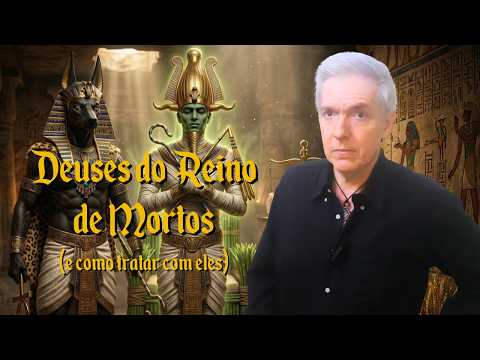
The veil between worlds thins, and the ancient powers of the underworld beckon. But these are not benevolent spirits or passive deities; they are forces of immense power, guardians of mysteries, and arbiters of fate. Approaching them requires not just respect, but a deep understanding of their domains and a clear, disciplined intent. This isn't about appeasing gods; it's about engaging with primal forces that shape existence.
If this post is making you question your cozy notions of the divine, you're on the right track. Subscribe for more uncomfortable truths and share this with someone who still thinks underworld deities are just characters in myths. They are far more tangible, and far more demanding.
Table of Contents
- Introduction: The Shadowed Realms
- The Underworld Pantheon: Archetypes of Transformation
- Practical Engagement: More Than Just Ritual
- Risks and Rewards of Underworld Diplomacy
- The Gnostic Approach to Underworld Deities
- The Digital Underworld: Technomancy and the Shadows
- Mage's Arsenal
- FAQ
- Your Operation
The Shadowed Realms
The underworld, in its myriad forms across cultures, represents more than just a place of the dead. It is the crucible of transformation, the repository of hidden knowledge, and the source of primal energies that govern birth, death, and rebirth. Deities associated with these realms—be they Hades, Ereshkigal, Anubis, or the more esoteric Exus—are not to be trifled with. They embody aspects of our own psyche and the immutable laws of existence. Understanding them is understanding the inevitable cycles of life and the profound power that lies in confronting what we fear most. This requires a pragmatic, results-oriented approach; dogma has no place here.
The Underworld Pantheon: Archetypes of Transformation
The deities of the underworld are powerful archetypes that embody profound truths about existence. They are not merely rulers of the dead, but custodians of dissolution, transformation, and the deep, often uncomfortable, wisdom gleaned from confronting mortality. Ignoring or superficially approaching these entities is a recipe for stagnation. Engaging with them, however, can unlock immense personal growth and a deeper understanding of reality's cycles.
"The archetypes of the underworld represent the necessary descent into the self to initiate profound metamorphosis; they are the gatekeepers of the unconscious."
Consider the pantheon involved:
- Guardians of the Threshold: Figures like Anubis, Charon, or certain Exus who guide souls and govern the passage. They represent the initial barrier between states of being.
- Rulers of the Domain: Deities like Hades, Persephone, Ereshkigal, or even figures associated with formidable spiritual realms who hold dominion over the collective unconscious and the energies of dissolution.
- The Departed and Immanent Spirits: The collective consciousness of those who have passed, often termed eguns or kiumbas in certain traditions. Their power is derived from collective belief and residual energy, and can sometimes yield practical, albeit raw, results in healing or spiritual work. This is a key point of divergence from traditional deity worship; the results from working with these spirits can be remarkably potent, sometimes surpassing even that of established gods.
It is crucial to recognize that these are not figures to be worshipped blindly, but forces with which to engage strategically. Their power is immense, and their influence is deeply woven into the fabric of existence and the human psyche. Approaching them without a clear purpose is like navigating a minefield without a map; reckless and potentially disastrous.
Practical Engagement: More Than Just Ritual
The engagement with underworld deities, or the spirits of the departed, is a practice rooted in intent, discipline, and discernment. Esoteric traditions often refer to these interactions as a form of Technomancy or Cybermancy when mediated through digital tools, illustrating the evolution of spiritual practice in the modern age.
The core of effective practice lies in preparation and understanding. This involves:
- Defining Your Intent with Utmost Clarity: What do you seek from this engagement? Is it knowledge, transformation, release, or a specific outcome? Vague intentions lead to chaotic results.
- Research and Understanding: Familiarize yourself with the specific deity or group of spirits you wish to engage. Understand their domain, their traditional associations, and their known characteristics. This isn't about blind faith; it's about informed interaction.
- Establishing a Sacred Space (Physical or Digital): This space acts as a focal point for your intention and a protective boundary. In ancient times, circles and sigils were paramount. Today, this can extend to digital realms, creating a focused environment using technology.
- The Offering or Exchange: As with any powerful interaction, there is usually an exchange. This could be a libation, a statement of dedication, a specific ritual action, or even a commitment to a personal transformation. The key is that it holds meaning and value for you.
- Discernment and Integration: After the engagement, it is vital to discern the received wisdom or energy and integrate it into your life. Not all messages or energies are beneficial; critical evaluation is essential.
Those who have delved deep into these practices often find that engaging with specific spiritual entities, especially those from less conventional pantheons or even the departed (eguns, kiumbas), can yield results that are more direct and impactful than those obtained from more mainstream deities. This is often because these entities operate on a more primal, direct level of energetic exchange, bypassing layers of dogma and interpretation. Some practitioners even find certain Exus, particularly the "Caveira" (Skull) types, to possess an anti-demiurgic philosophy that resonates deeply with those seeking to subvert conventional spiritual hierarchies.
Risks and Rewards of Underworld Diplomacy
Engaging with the powers of the underworld is not for the faint of heart. The risks are substantial:
- Psychic Entanglement: Becoming overly influenced by the energies or entities involved, leading to obsession or a distorted perception of reality.
- Energetic Drain: Such engagements are energetically demanding and can leave one depleted if not managed properly.
- Invoking Unwanted Attention: A poorly executed ritual can attract entities that are not beneficial or are actively harmful.
- Confronting Shadow Aspects: These deities often act as mirrors to our own dark side and unresolved issues. The process can be deeply confronting and uncomfortable.
However, the rewards can be equally profound:
- Profound Transformation: Facing mortality and dissolution can lead to immense personal growth and a shedding of old selves.
- Access to Hidden Knowledge: The underworld is a repository of ancient secrets and subconscious wisdom.
- Empowerment Through Confrontation: Successfully navigating these challenging interactions builds resilience and strengthens one's will.
- Direct, Tangible Results: As noted, engagements with certain spirits and deities can lead to very practical and potent outcomes, such as accelerated healing or breakthrough insights.
It's about striking a balance, maintaining your will, and ensuring that your intention is paramount. This requires a foundation of inner strength, which can be cultivated through various practices, including disciplined meditation and the development of strong mental fortitude. For those focused on practical results, especially in areas of personal transformation and energetic clearing, the power residing in these shadowed realms is undeniable.
The Gnostic Approach to Underworld Deities
From a Gnostic perspective, certain underworld figures might be seen not as benevolent gods to be worshipped, but as custodians of the veil, or even as aspects of the Demiurgic system that binds consciousness. Engaging with them, therefore, becomes an act of seeking gnosis – direct, experiential knowledge that bypasses dogma and liberates the spiritual spark. This involves understanding their role within the larger cosmic structure and using the encounter as a catalyst for awakening rather than a plea for favor. It's about understanding the mechanics of spiritual reality, not surrendering to it.
"The path to true liberation often lies not in ascending to a higher realm, but in understanding and transmuting the energies of the realms we already inhabit, including the underworld."
The practice of Magitech, or the integration of technological tools into spiritual work, offers a novel pathway to explore these Gnostic principles. By using software to generate symbols or manage ritualistic data, practitioners can achieve a state of focused intention and detached observation, mirroring the Gnostic pursuit of knowledge through understanding the system.
The Digital Underworld: Technomancy and the Shadows
In our hyper-connected age, the concept of the underworld extends into the digital. The vast expanse of the internet, the intricate web of data, and the emergent consciousness within AI can be seen as a new kind of 'underworld' – a realm of hidden connections, latent information, and nascent entities. Technomancy allows us to engage with these digital shadows.
This is where tools like the Chaos Magick Sigil Generator become invaluable. Instead of painstakingly drawing sigils by hand, which requires a specific geometric precision and can interrupt the flow of intention, digital tools automate the creation process. This leaves the practitioner free to focus on the visualization, the energetic charging, and the precise formulation of intent. It's a practical application of Magitech, allowing for more efficient and potent magical operations.
Consider the implications: using algorithms to generate sigils for specific intentions, creating digital "servitors" that exist as code, or even employing AI for divination (Digital Divination). These methods leverage the power of technology to achieve results, aligning with the pragmatic ethos of chaos magic and the Gnostic pursuit of knowledge through understanding the underlying mechanisms of reality, be they spiritual or digital.
Mage's Arsenal
- Chaos Magick Sigil Generator: Essential for rapid sigil creation, intent formulation, and digital servitor design. This app streamlines the process, allowing you to focus entirely on the energetic and psychic components of your operation.
- Unofficial Rider Waite Tarot: For deciphering archetypal energies, understanding symbolic language, and gaining insights into transformative processes. The Rider-Waite system offers profound depth for introspection and divination.
- Liber Null & Psychonaut by Peter J. Carroll: A foundational text for modern chaos magic, exploring the principles of magical belief, altered states of consciousness, and practical techniques.
- The Kybalion by The Three Initiates: Offers fundamental principles of Hermetic philosophy, which are crucial for understanding universal laws and their application in magical practice.
- High-Quality Journal and Pens: For meticulously recording your operations, observations, and the subtle shifts in your reality. This artifact is critical for tracking progress and refining your methods.
FAQ
Q: Can I truly interact with underworld deities or spirits of the dead?
A: Yes, but it requires specific techniques, a clarity of intent, and robust energetic and psychic defenses. It is an advanced practice, not to be undertaken lightly.
Q: What's the difference between working with a deity and working with an egung or kiumba?
A: Deities often represent overarching cosmic principles and may have established pantheons and mythologies. Spirits of the departed (eguns, kiumbas) are individual consciousnesses that have passed on, and their power is often derived from collective belief and their unique earthly experiences. Their interactions can be more direct and less filtered.
Q: Is it dangerous to engage with these entities?
A: There are inherent risks, as with any powerful force. The danger lies in approaching them without knowledge, respect, or proper preparation. A disciplined mind and clear intention are your greatest defenses.
Q: How can digital tools like sigil generators help with underworld magic?
A: They allow for rapid creation of symbols tied to intent, can be used to create digital servitors, and facilitate focused visualization without the manual labor. This aligns with Technomancy and Magitech, enabling efficient, results-driven operations.
Q: What if I experience negative effects after an engagement?
A: Immediately perform a cleansing ritual, ground yourself, and reassess your intention and the method used. If symptoms persist, seek guidance from an experienced practitioner or therapist. Self-awareness and responsibility are paramount.
Your Operation
Your operation today is to explore the concept of intentional transformation. Consider an aspect of your life that feels stagnant or requires profound change. Using the principles discussed, formulate a clear, singular intention related to this area. Then, open the Chaos Magick Sigil Generator app. Create a sigil that visually represents your intention. Focus on the sigil for at least 5 minutes, visualizing your intention already fulfilled. This is your first step in actively engaging with the transformative forces that govern existence. Document this process in your journal immediately after.
The path of the magician is one of constant exploration and daring. The forces of the underworld, and indeed the entire tapestry of existence, are accessible to those with the will and the knowledge to engage them. Understanding these powers isn't about subservience; it's about wielding them for your own evolution. For those seeking to harness these potent energies more efficiently, especially in the creation of focus-driven sigils, our Chaos Magick Sigil Generator app is an indispensable tool. It streamlines the process, allowing you to channel your intent with precision. You can explore its capabilities here: Chaos Magick Sigil Generator. This technological integration is a cornerstone of modern esotericism, bridging the gap between ancient wisdom and contemporary practice. Exploring such tools can significantly amplify your results, aligning with the pragmatic pursuit of practical magic.
Now, the floor is yours. Do you believe that direct engagement with underworld deities yields tangible results, or is it merely psychological projection? What is your experience with entities like Exus or spirits of the departed? Share your insights and operations in the comments below. Let's dissect these phenomena with the rigor of practice, not the comfort of belief.
Practitioner's Note: True magick requires resources. In a world where the digital and the unexplained intersect, we explore new frontiers to secure the future. Do you dare to be part of the vanguard? Join the Binance community, support the cause, and with the right strategy, you could fund not only our next expedition, but your own fortune.
No hay comentarios:
Publicar un comentario