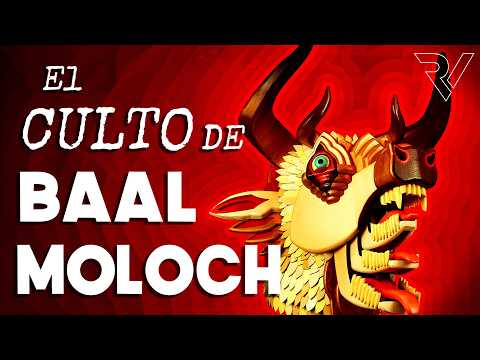
El velo que oculta las fuerzas primigenias de la psique humana es a menudo delgado. Detrás de nombres resonantes como Baal y Moloch yacen arquetipos de poder y sacrificio que han moldeado civilizaciones y continúan filtrándose en nuestra realidad, a menudo de formas que apenas comenzamos a reconocer. Este informe se adentra en las raíces de estos cultos cananeos, su demonización a través del monoteísmo, y su silenciosa transición hacia las sombras de la Goetia renacentista, desentrañando cómo estas entidades oscuras pueden ser vistas como fuerzas que devoran la vitalidad futura.
No te dejes engañar por interpretaciones apocalípticas fáciles; la verdadera comprensión reside en observar las estructuras de poder y creencia que consumen la energía colectiva. Como bien señalaba uno de nuestros estudiosos, "La carrera armamentista, la explotación desmedida de los recursos naturales, la obsesión por el crecimiento infinito a costa de la infancia y el futuro colectivo. Los adoradores de Moloch modernos están muy a la vista." Es un eco perturbador de antiguos rituales, manifestado en la obsesión por el control y la depredación.
La Dualidad Arquetípica: Baal y Moloch
Baal, a menudo representado como una deidad de la fertilidad, la tormenta y la realeza, encarnaba el poder manifiesto y la autoridad. Sin embargo, esta misma energía de dominio podía derivar hacia la tiranía y la demanda insaciable. Moloch, por otro lado, está intrínsecamente ligado al sacrificio, particularmente al sacrificio infantil. Su figura evoca el coste último del poder: la aniquilación de la vitalidad futura, los niños, el futuro mismo.
La demonización de estas deidades por el monoteísmo primitivo fue un acto de redefinición de la realidad psíquica. Al etiquetarlos como "demonios", se buscaba erradicar su influencia, pero ¿acaso no es un error pensar que lo que se demoniza desaparece? A menudo, lo demonizado simplemente se oculta, muta, y espera en las sombras. Como se comenta en la comunidad, "¿Acaso no estamos entregando a nuestros niños y adolescentes a un sistema educativo lleno de baales y de molochs?". La pregunta resuena con fuerza, invitándonos a examinar los sistemas modernos que demandan un sacrificio constante de la inocencia y el potencial.
La transición de estas figuras a la Goetia renacentista es un capítulo fascinante. Aquí, Baal y Moloch se transforman en entidades demoníacas con atributos específicos, a menudo invocados para obtener poder, conocimiento o dominio. Pero la invocación siempre conlleva un precio. El practicante se enfrenta al dilema de obtener poder a costa de su propia vitalidad, su integridad, o de energía que podría ser dirigida hacia fines más constructivos.
"El que tenga oídos qué oiga y que tenga ojos que vea. Esta muy claro."
Esta dualidad, Baal como el poder desmedido y Moloch como el sacrificio que este poder exige, se manifiesta hoy de innumerables formas. La sed de poder, la codicia insaciable, la explotación de los recursos y las generaciones futuras son los altares modernos donde se rinde culto a estos arquetipos. No es necesario buscar en templos antiguos; la manifestación está en las estructuras económicas, sociales y políticas que priorizan el crecimiento a corto plazo sobre la sostenibilidad a largo plazo.
El Eco Moderno de los Sacrificios
Los comentarios de la comunidad arrojan luz sobre la vigencia de este tema: "Quien diría que el capitalismo sería en realidad un culto que busca devorarlo todo, no puedo creerlo, que gran sorpresa(es sarcasmo obvio)." Esta observación, aunque sarcástica, apunta a una verdad incómoda. Los sistemas que exigen una constante extracción de recursos, ya sean naturales o humanos, para mantener un ciclo de producción y consumo perpetuo, replican el patrón del sacrificio molochiano.
El sistema educativo, la industria del entretenimiento, la presión por el éxito a cualquier precio... todos pueden ser vistos como entornos donde la "vitalidad futura" es canalizada o consumida. "Me llena de gozo descubrir en cada uno de uno de sus videos que a pesar de tratar en ocasiones con temas controversiales y 'trends' de internet nunca cae en bajezas ni interpretaciones apocalípticas ni en opiniones que esparzan aun mas la desinformación y el pánico colectivo", señala un miembro de la audiencia. Precisamente, el objetivo aquí no es infundir miedo, sino promover la claridad analítica.
La obsesión por el "crecimiento infinito" es el moderno altar de Moloch. Nos han enseñado a desear más, a consumir más, a proyectar un futuro de acumulación sin fin, sin considerar el coste energético o vital. Es una forma de sacrificio, donde el presente se entrega en aras de un futuro ilusorio que, paradójicamente, nunca llega realmente porque el ciclo de demanda nunca cesa.
"Son el pecado de sacrificar al futuro para evitar la muerte y el cambio. Codicia."
La clave está en reconocer estas dinámicas. No se trata de temer a entidades oscuras, sino de comprender las fuerzas arquetípicas que impulsan el comportamiento humano y social. La verdadera liberación no reside en la lucha contra demonios externos, sino en la desarticulación de las estructuras de pensamiento y comportamiento que perpetúan el ciclo de consumo y sacrificio.
Arsenal del Mago
Esencial: Para un análisis profundo de estas fuerzas y la psicología detrás de ellas, la lectura de "Liber Null & Psychonaut" de Peter J. Carroll es fundamental. Ofrece una perspectiva sobre la Magia del Caos que permite deconstruir y reconstruir la realidad psíquica.
Recomendado: Para comprender la historia antigua y los cultos cananeos, "The Ancient Near East: A Very Short Introduction" proporciona un contexto académico valioso.
Herramienta Práctica: Desarrollar la disciplina mental es contravenir la sed de poder desmedida. Considera herramientas que te ayuden a enfocar tu intención. Para el diseño de símbolos y la manifestación de la voluntad, Magickal Seals Generator puede ser una herramienta útil para comenzar a visualizar y dar forma a tu intención de manera estructurada.
Interpretación: Los mazos de Tarot con fuerte simbolismo arquetípico, como el Tarot de Thoth, pueden ofrecer perspectivas sobre estas energias duales y cíclicas.
Veredicto del Practicante: ¿Vale la pena integrar este conocimiento?
Absolutamente. Ignorar las bases arquetípicas de Baal y Moloch es operar a ciegas en un campo minado psíquico. Comprender estas fuerzas no es un ejercicio de erudición ociosa; es una herramienta vital para navegar la complejidad del mundo moderno. Nos permite identificar las trampas del poder desmedido y los costos ocultos del "progreso" superficial.
La demonización histórica sirvió para desplazar estas energías, pero el pragmatismo del practicante sabe que lo que se desplaza no desaparece, sino que busca nuevas vías de manifestación. Identificar estas manifestaciones modernas —en la economía, la política, e incluso en nuestras estructuras sociales— es el primer paso para desmantelar su influencia destructiva.
Esta exploración nos recuerda que el poder sin propósito, o peor aún, el poder dirigido hacia la autodestrucción colectiva, es la esencia de estos cultos arquetípicos. Si bien la Goetia ofrece vías para trabajar con estas energías, la verdadera maestría reside en reconocerlas en el mundo y, más importante aún, en nuestra propia psique, y redirigir esa fuerza vital hacia la creación y la autotrascendencia, en lugar del sacrificio.
Preguntas Frecuentes
¿Baal y Moloch son entidades reales o arquetipos psicológicos?
Desde una perspectiva pragmática de la magia, la distinción es menos importante que su efecto. Si un arquetipo genera resultados tangibles o influye en el comportamiento humano de manera predecible, opera con una forma de realidad. La investigación personal determinará tu propia conclusión.
¿Cómo puedo evitar ser una "víctima" de estos cultos modernos?
La autoconciencia es la armadura principal. Cuestiona las narrativas dominantes, analiza las estructuras de poder que te rodean y comprende hacia dónde se dirige tu energía vital. Cultiva un propósito claro y evita la complacencia.
¿Qué diferencia hay entre Baal y Moloch y otras deidades "oscuras" de la Goetia?
Baal y Moloch representan específicamente la dualidad de poder manifestado y sacrificio arquetípico, a menudo ligados a la vitalidad y el futuro. Otras entidades goéticas pueden enfocarse en diferentes aspectos del inconsciente colectivo o de la psique humana, como el conocimiento prohibido, la manipulación o la transformación radical.
Tu Operación: Diseña tu Contraculto Personal
Ahora que hemos desentrañado las sombras de Baal y Moloch, es hora de la acción. Tu desafío no es luchar contra ellos, sino construir tu propia fortaleza psíquica. Reflexiona sobre las áreas de tu vida donde sientes que la energía se consume sin un propósito claro. ¿Es tu tiempo, tu creatividad, tus recursos, tu futuro?
Diseña un "contraculto" personal: un conjunto de prácticas, intenciones y actos conscientes que redirijan esa energía hacia fines constructivos y de crecimiento personal. Quizás sea un ritual de dedicación a tu arte, un compromiso con la sostenibilidad en tu hogar, o una práctica diaria de meditación para enfocar tu voluntad.
Comparte en los comentarios tus ideas para este "contraculto". ¿Cómo vas a redirigir tu energía vital en lugar de sacrificarla?
Practitioner's Note: True magick requires resources. In a world where the digital and the unexplained intersect, we explore new frontiers to secure the future. Do you dare to be part of the vanguard? Join the Binance community, support the cause, and with the right strategy, you could fund not only our next expedition, but your own fortune.
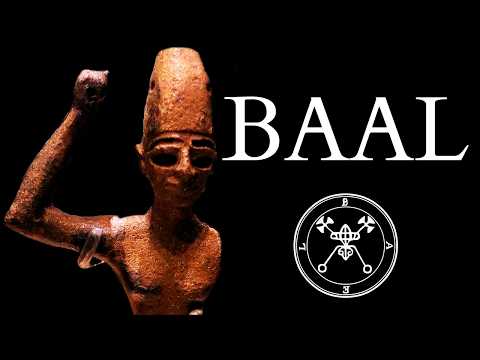
The name Baal conjures immediate images of a formidable demonic adversary, a dark entity locked in eternal conflict with the Israelite Yahweh. Yet, before his descent into infernal catalogs, Baal was far more. He was a paramount deity in the Canaanite pantheon, revered as a powerful god of storms, fertility, and kingship. For those who traced the intricate weave of ancient mythologies, delving into the origins of such figures offers a profound understanding of how beliefs evolve and transform across millennia. This exploration will pull back the veil on Baal's history, examining his titanic struggles against cosmic forces like Sea and Death, his pivotal confrontation with Yahweh, and the fascinating metamorphosis that ultimately saw this once-revered god relegated to the demonology of Western magical traditions. This isn't just a history lesson; it's an autopsy of divinity.
Baal's Canaanite Pantheon and Origins
To truly grasp Baal's significance, we must situate him within his original context: the vibrant and complex religious landscape of ancient Canaan. The Canaanites, inhabiting the Levant during the Bronze Age, possessed a rich tapestry of deities who governed the natural world and human affairs. Baal, whose name simply means "Lord" or "Master," rose to prominence as the chief deity of the pantheon, particularly in the city of Ugarit. His position wasn't static; it was earned through divine struggle and cosmic order.
Unlike a singular, divinely appointed ruler from the outset, Baal's ascendancy was a narrative of conquest. He inherited his power, much like a king claiming a throne, by defeating the older gods and establishing his dominion. This dynamic highlights a crucial aspect of ancient Near Eastern religions: the constant flux and negotiation of divine authority. The myths surrounding Baal reflect the anxieties and aspirations of an agricultural society dependent on the whims of weather – the life-giving rains and the destructive storms, both of which fell under his purview.
The archeological discoveries at Ugarit, particularly the vast collection of clay tablets inscribed in cuneiform, have been instrumental in reconstructing Baal's mythology. These texts, often referred to as the Baal Cycle, provide primary source material that allows us to piece together his divine exploits and his relationships with other gods. The complexity of these myths, with their poetic language and vivid imagery, reveals a sophisticated theological system that deeply influenced the nascent religious traditions of the region, including early Israelite beliefs. It's a testament to the enduring power of narrative that these ancient stories continue to resonate, even when their context has been so dramatically altered.
Understanding Baal's origins is key to appreciating his later demonization. He wasn't born a demon; he was a legitimate, even dominant, god in a sophisticated religious system. His story is a powerful example of how deities can be reinterpreted and demonized as ruling powers and belief systems shift. This process of divine reclassification is a recurring theme in religious history, and Baal's case is one of the most dramatic.
For those keen on delving deeper into the foundational texts and scholarly analyses, works like Smith & Coogan's "Stories from Ancient Canaan" offer invaluable insights into the mythological narratives. Similarly, Day's "Yahweh and the Gods and Goddesses of Canaan" provides critical comparative perspectives, while Cross's "Canaanite Myth and Hebrew Epic" intricately explores the relationship between these traditions. Mastering the linguistic tools, such as those found in "A Manual of Ugaritic," is also crucial for a true academic grasp of the subject.
The Battles for Supremacy: Sea, Death, and the Divine
Baal's reign was not one of passive inheritance. His mythology is punctuated by fierce battles against primordial cosmic adversaries, most notably the god of the Sea, Yam, and the personification of Death, Mot. These conflicts were not mere skirmishes; they were cosmic struggles that defined the very order of the universe.
The primary antagonist for Baal was Yam, often depicted as a monstrous, serpentine figure representing the untamed, chaotic power of the sea. In the Baal Cycle, Yam challenges Baal's authority, seeking to usurp his position as king of the gods. Baal, wielding his divine might and aided by other deities, confronts Yam. Their battle is depicted with visceral imagery, highlighting Baal's role as the god who brings order to chaos, who subdues the unruly forces of nature. The victory over Yam established Baal's supremacy and his control over the weather – the very rains that sustained the land.
Equally significant was Baal's confrontation with Mot, the god of the underworld and the arid desert, the embodiment of sterility and death. Mot represents the inevitable force of decay and cessation. In a dramatic turn of events within the myths, Mot ultimately defeats Baal, casting him into the underworld. This event signifies a period of drought and famine for the land, highlighting the crucial connection between Baal's life force and agricultural prosperity. The natural order is disrupted, and the world suffers.
However, Baal's demise is not permanent. His sister, the fierce warrior goddess Anat, plays a pivotal role in his resurrection. Anat, a powerful and often bloodthirsty deity in her own right, defeats Mot, dismembers him, and scatters his remains. This act allows Baal to return to life and reclaim his throne. The cyclical nature of this narrative – defeat, death, and resurrection – reflects ancient understandings of agricultural cycles, the rhythm of life and death, and the eternal struggle to maintain cosmic balance against forces of chaos and oblivion. Many scholars have noted the striking similarities between Anat's ferocity and depictions of goddesses like Kali or even the Mexica Cōātlīcue, suggesting universal archetypes of the divine feminine warrior.
The struggle against Yam and Mot wasn't just about Baal's personal power; it was a foundational myth for the entire Canaanite worldview. By conquering the sea's chaos and temporarily overcoming death, Baal demonstrated his capacity to both bring life and manage the forces that threatened it. This intricate cosmic drama underscored the belief that the divine realm was as dynamic and fraught with conflict as the mortal world.
The Clash of Deities: Baal vs. Yahweh
As Israelite tribes migrated and settled in Canaan, their monotheistic understanding of Yahweh began to clash with the prevailing polytheistic traditions. Yahweh, initially perhaps a more localized deity, was elevated to supreme status, and his followers actively worked to supplant the worship of local gods, prominent among them Baal. This historical and theological rivalry is deeply embedded in the Hebrew Bible.
The biblical narratives often portray Baal as a direct antagonist to Yahweh, symbolizing the foreign gods and the perceived corrupting influences of Canaanite religion. Prophets like Elijah famously challenged the priests of Baal, conducting showdowns designed to prove Yahweh's superior power. The famous confrontation on Mount Carmel, where Yahweh sends fire from the sky to consume Elijah's sacrifice while the prophets of Baal frantically call upon their god to no avail, is a prime example of this polemic.
From the perspective of the early Israelites, Baal represented everything antithetical to their covenant with Yahweh. While Baal was a god of storms and fertility, often associated with eroticism and the natural cycles of life, Yahweh was increasingly depicted as a singular, transcendent, and often wrathful God who demanded exclusive worship. The biblical authors actively deconstructed and demonized Baal's mythology to solidify Yahweh's supremacy. Baal's association with rain and storms, crucial for agriculture, was reattributed to Yahweh. His virility and fertility aspects were condemned as lasciviousness.
This process of theological competition and suppression meant that Baal's image was increasingly distorted. The narratives that once venerated him as a mighty storm god were recontextualized by his enemies to portray him as a false god, a trickster, or even a demonic entity. The biblical texts became the primary lens through which Baal was understood for centuries, effectively overshadowing his original Canaanite context. It’s fascinating to consider how the "divine travels" of deities, as they move across cultures and time, reflect the migrations and interactions of peoples and their evolving belief systems. Baal and Yahweh's story is a microcosm of this grander phenomenon.
Understanding this historical conflict is crucial for appreciating how Baal transitioned from a chief deity to a figure demonized in later traditions. It was a battle not just of myths, but of political and cultural dominance, where the victor rewrote the history of the vanquished.
The Fall from Grace: Baal in Western Magical Tradition
The narrative arc of Baal, from a revered storm deity to a figure within the demonic hierarchy, is a striking example of religious and cultural reinterpretation over time. As the Abrahamic religions—Judaism, Christianity, and Islam—gained prominence, the pantheons of older cultures were often systematically demonized or re-cast as malevolent forces.
In post-exilic Judaism and early Christianity, the concept of "demons" evolved to include the gods of pagan traditions. Baal, being one of the most prominent deities of a neighboring culture that had historically rivaled Israel, was a prime candidate for this demonization. He could easily be incorporated into the burgeoning demonological frameworks as a powerful, albeit malevolent, entity.
This reclassification became most pronounced in medieval and Renaissance grimoires. Texts like the Lemegeton (The Lesser Key of Solomon), particularly in its section on the Goetia, list Baal as one of the principal demons. Here, Baal is often described as a king, commanding legions of demons, and appearing with various terrifying forms—sometimes with multiple heads, riding a camel, and wielding terrible weapons. His original attributes as a storm god are twisted into associations with pestilence, fury, and deceit. The magical texts instruct practitioners on how to summon and command these figures, often framing it as a means to gain power, knowledge, or influence.
The irony is stark: a god who once brought life-giving rains and symbolized order and kingship was now cataloged as an infernal spirit in necromancer's lists. This transformation speaks volumes about the power dynamics inherent in religious and cultural change. The conquerors' gods become the conquered's demons. This demonization wasn't necessarily a reflection of Baal's inherent nature but a reflection of the power of the narratives that eventually suppressed his original worship.
The commentary "You either die a god or live long enough to become a demon" perfectly encapsulates this trajectory. Baal's story exemplifies how deeply intertwined divine stature and cultural dominance can be. The act of "demonization," as one commenter aptly put it, "merely listed in necromancer cataloges of infernal Spirits," signifies the ultimate reduction and re-contextualization of a once-mighty deity, stripped of his original cult and power, and repurposed for a new magical and theological framework.
Practitioner's Verdict: Is Baal Still Relevant?
In contemporary magical and esoteric practices, the figure of Baal continues to hold a complex and often controversial position. While many practitioners steer clear due to his demonized status in Abrahamic traditions, others explore him from a more historical, archetypal, or even practical standpoint. But is Baal, in his various guises, truly relevant to the modern mage?
From a historical and comparative mythology perspective, Baal is invaluable. Studying his myths allows us to understand the religious and cultural underpinnings of the ancient Near East, including the socio-political landscape that shaped early Israelite beliefs. He serves as a crucial reference point for understanding the evolution of religious thought and the phenomenon of divine reclassification. The idea that deities "travel" and transform is central to this understanding; Baal's journey from Canaanite king to demonic entity mirrors the migration and adaptation of peoples and their belief systems.
For practitioners interested in storm or fertility magic, Baal’s original associations offer a potent symbolic language. Working with the archetype of the storm god can be a powerful way to tap into energies of change, power, and elemental force. However, this requires a conscious effort to separate the core archetypal energies from the demonological accretions. It's about invoking the storm's raw power, not necessarily the specific entity as depicted in later grimoires, unless that is a deliberate personal choice after extensive research.
The demonological aspect of Baal, as presented in grimoires like the Goetia, is also a subject of study. Some practitioners work with these entities, viewing them not as inherently evil beings but as powerful forces or intelligences that can be engaged with through specific rituals and intents. This approach, however, carries significant risks and demands a high degree of knowledge, discipline, and ethical consideration. It’s a path best approached with caution and a solid grounding in magical theory and practice, perhaps after consulting resources like Liber Null & Psychonaut for a perspective on chaos magic's approach to entities.
Ultimately, Baal's relevance depends on the practitioner's intent and field of study. As a historical and mythological figure, his importance is undeniable. As a symbol of contested divine power and the evolution of religious thought, he offers profound insights. As an entity within a specific magical or demonic system, his engagement is a matter of personal practice and advanced study. The key is to approach him with respect for his historical context and a clear understanding of the various layers of interpretation that have accumulated around his name.
If you're looking to enhance your understanding of these ancient deities and their modern interpretations, exploring foundational texts and engaging with scholarly work is paramount. The resources recommended, such as Smith & Coogan's "Stories from Ancient Canaan" or Day's "Yahweh and the Gods and Goddesses of Canaan," are stepping stones to a deeper appreciation of these complex figures.
Arsenal of the Magus
To engage with the study of ancient deities and their transformations requires a well-equipped arsenal. Here are some essential tools and texts that can aid your exploration:
Foundational Texts on Canaanite Mythology:
Stories from Ancient Canaan by Smith & Coogan
Yahweh and the Gods and Goddesses of Canaan by John Day
Canaanite Myth and Hebrew Epic by Frank Moore Cross
Linguistic and Textual Resources:
A Manual of Ugaritic: Texts, Grammar and Glossary
Access to scholarly translations of Ugaritic texts (e.g., through academic journals or specialized libraries).
Texts on Demonology and Western Magic:
The Lesser Key of Solomon (Lemegeton): Goetia (various translations)
Pseudomonarchia Daemonum by Johann Weyer
Grimorium Verum
Liber Null & Psychonaut by Peter J. Carroll (for a chaos magic perspective on entities)
Tools for Ritual and Contemplation:
A journal for recording research, insights, and potential experimental work.
Incense (e.g., Sandalwood for focus, Myrrh for purification).
Visual aids: maps of the ancient Near East, artwork depicting storm or sea motifs.
Investing in quality resources is not an expense; it is a foundational step in any serious magical or historical inquiry.
Practical Workshop: Invoking the Storm's Resonance
While directly invoking Baal as depicted in later demonological texts is a complex undertaking requiring specific knowledge and preparation, we can explore the archetypal energy of the storm god. This exercise focuses on resonating with the power of storms for clarity and focused intent. Think of it as a preparatory ritual, clearing the channels for focused energy, much like lightning clears the atmosphere.
Preparation: Finding Resonance.
Choose a time when a storm is imminent or occurring naturally. If not possible, play storm sounds (thunder, rain) at a moderate volume.
Find a quiet space where you won't be disturbed. Dim the lights, perhaps light a dark blue or grey candle.
Focus on the symbolism of the storm: its power, its ability to clear the air, its transformative nature, and the raw, untamed energy it represents.
Centering and Grounding.
Sit or stand comfortably. Close your eyes and take several deep breaths.
Visualize yourself as a stable point, like a mountain peak that endures the storm. Feel your connection to the earth beneath you.
Imagine the storm's energy gathering around you, not to overwhelm, but to energize.
Focused Intention: The Seed of the Storm.
What is your intention? Is it clarity amidst confusion? A burst of creative energy? The power to overcome an obstacle? Formulate a single, concise statement of intent. For example: "I call upon the energy of the storm to bring clarity and focused power to my intentions."
Visualize this intention as a small, intensely charged point of energy within you, much like a nascent thunderclap.
Channeling the Storm's Echo.
As you listen to the storm sounds or visualize the storm, imagine its energy flowing through you. Feel the electric charge, the cleansing rain, the powerful winds.
Direct this channeled energy towards your formulated intention. Visualize the energetic seed growing, expanding, and radiating with storm-like intensity.
You may want to speak your intention aloud, allowing your voice to be carried by the imagined winds.
Release and Integration.
Once you feel the energy peak, visualize it being released into the world, carrying your intention.
Slowly bring your awareness back to your physical surroundings. Take a few more deep breaths.
Blow out the candle (if used) and mentally thank the forces you've worked with.
Record your experience, the intent, and any sensations or insights in your journal. This is crucial for tracking your practice.
This exercise is about harnessing the archetypal power associated with storm deities. Treat it as an experiment to understand your own receptivity to these energies and to refine your ability to focus intent. Remember, the true power lies in your will and your consistent practice.
Frequently Asked Questions About Baal
Is Baal still worshipped today?
While direct worship of Baal as a chief Canaanite deity is not widespread, his archetype and various interpretations continue to influence spiritual and magical practices. Some practitioners engage with him through historical study, demonological texts, or as an elemental force, particularly related to storms and fertility.
Why was Baal demonized?
Baal was demonized primarily through the polemical efforts of early Israelite prophets and scribes who sought to establish Yahweh as the sole deity. His worship was seen as idolatrous, and his myths were reinterpreted to portray him as a false god or a demonic entity, thereby reinforcing the monotheistic message.
What are Baal's main attributes?
In his original Canaanite context, Baal was primarily the god of storms, thunder, lightning, rain, and agricultural fertility. He was also associated with kingship and divine authority, having defeated older cosmic adversaries like Yam (Sea) and Mot (Death).
Are there any historical accounts of Baal's worship?
Yes, extensive historical accounts exist, primarily from archaeological finds at sites like Ugarit, which yielded numerous clay tablets detailing Baal's mythology, known as the Baal Cycle. Biblical texts also frequently mention and often condemn the worship of Baal.
Your Operation: Channeling the Storm's Echo
You've traversed the historical landscape, witnessed the cosmic battles, and understood the theological shifts that led to Baal's transformation. Now, it's time to internalize these insights. Your operation is not about summoning a demon, but about integrating the *principle* of transformation and power.
Your Operation for This Week: Outline a Personal Transformation.
Identify one aspect of your practice, belief system, or personal habit that you feel is "outdated" or no longer serves your highest good.
Consider how this aspect might have once held power or relevance, much like Baal's original dominion.
Now, envision its transformation: What will replace it? What new energy, knowledge, or practice will take its place, echoing Baal's emergence as king?
Write this down in your journal. Don't just state the change; explore the *process* of transformation. What battles will you need to "fight" within yourself? What cosmic forces (inner doubts, external obstacles) will you confront? How will you "resurrect" a more potent version of your practice or self?
This is your personal Baal Cycle. Reflect on it, engage with it, and let the principle of divine transformation inform your path forward. The myth is merely a mirror; the true power lies in your own capacity to evolve.
Practitioner's Note: True magick requires resources. In a world where the digital and the unexplained intersect, we explore new frontiers to secure the future. Do you dare to be part of the vanguard? Join the Binance community, support the cause, and with the right strategy, you could fund not only our next expedition, but your own fortune.