Saltar al contenido principal

Anuncio Superior

Mostrando las entradas para la consulta meditation techniques ordenadas por relevancia. Ordenar por fecha Mostrar todas las entradas

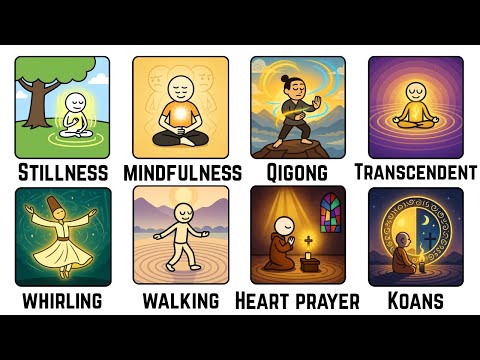
The Alchemist's Compendium: Mastering Eight Paths to Inner Stillness


The hum of the modern world is a siren song, luring us away from the inner sanctum of our own minds. We chase external validation, lost in the noise, forgetting that the greatest treasures — peace, clarity, and profound understanding — lie dormant within. For millennia, across cultures and continents, humanity has devised intricate systems, not to conquer the external, but to master the internal. These are not mere relaxation techniques; they are potent practices, alchemical processes designed to transmute the leaden dross of the unexamined life into the golden essence of self-awareness. Today, we delve into eight such powerful modalities, revealing their core principles and practical applications. This is not a superficial overview; it is a distilled essence, a practical guide for the discerning practitioner seeking tangible results. To truly understand these paths, one must move beyond passive consumption and into active experimentation. Consider this your grimoire for inner exploration.

The journey towards inner peace is not monolithic. While the ultimate goal might be shared, the methods are as diverse as the human psyche itself. Each tradition, refined over centuries, offers a unique lens through which to perceive and interact with the subtle energies of existence. The key is to find the path that resonates with your inherent nature and to approach it with disciplined intent. To merely read about these practices is akin to staring at a map without ever taking a single step. The true transformation occurs in the doing, in the sustained application of will and attention. This guide aims to equip you with the foundational knowledge to embark on your own empirical investigation.

The Stillness of Zazen: Seated Meditation

Rooted in Zen Buddhism, Zazen is perhaps the archetypal image of meditation: a simple, upright posture, eyes softly gazing downwards, and an unwavering focus on the present moment. It is the practice of "just sitting," shikan-taza, a direct confrontation with reality as it is, without judgment or alteration. The practitioner observes thoughts arising and passing like clouds in the sky, yet remains anchored to the breath, the posture, the sheer fact of existing. This is not about emptying the mind, an impossible feat, but about understanding the nature of mind itself — its tendency to wander, to grasp, to resist. Through sustained Zazen, a profound stillness can arise not from the absence of thought, but from the cessation of identifying with it. This practice cultivates a deep sense of presence and equanimity, essential for any serious practitioner seeking to navigate the complexities of reality.

To approach Zazen with the right intent is crucial. It's an act of rebellion against the constant external noise, a quiet declaration of sovereignty over one's inner landscape. The posture itself is a somatic anchor: a spine aligned like a growing tree, a pelvis firmly grounded, hands forming a cosmic mudra. This physical discipline is the gateway to mental clarity. Many find a simple cushion, a zabuton, an indispensable tool for maintaining comfort and spinal alignment during longer sits. The precision required in Zazen mirrors the meticulousness needed in other practical disciplines, such as sigil magic or the creation of complex chaos magick servitors. The principle is the same: disciplined focus, unwavering attention, and a willingness to observe without interference.

Vipassana: The Insight Meditation

Emerging from ancient Indian traditions and central to Theravada Buddhism, Vipassana translates to "insight" or "clear seeing." Unlike Zazen's pure awareness, Vipassana is an analytical practice. It involves systematically observing the impermanent, unsatisfactory, and selfless nature of all phenomena—both internal and external. The practitioner cultivates a detached, objective observation of bodily sensations, feelings, thoughts, and mental states. By witnessing the constant flux of these experiences, one begins to dismantle the illusions of permanence and self, leading to liberation from suffering. This method demands rigor and a willingness to confront uncomfortable truths about existence. The results are not just fleeting peace, but a deep, abiding understanding that reorients one's entire perception of reality.

The practical application of Vipassana involves a methodical scanning of the body and mind. For instance, when a sensation arises—say, an itch—the practitioner observes it without immediately reacting. They note its impermanence, its arising and passing. This systematic deconstruction of experience can be profoundly destabilizing to ingrained patterns of behavior, much like confronting the shadow aspects of one's psyche in practical shadow work. The insights gained are not abstract philosophical musings but direct, lived realizations. To truly master Vipassana, many turn to intensive retreats, often guided by experienced teachers. Resources like books by S.N. Goenka provide foundational knowledge, but the true practice is in the sustained, daily engagement. For practitioners interested in understanding the raw data of consciousness, Vipassana offers unparalleled clarity.

Transcendental Meditation: Harnessing the Inner Hum

Popularized in the West by Maharishi Mahesh Yogi, Transcendental Meditation (TM) is a mantra-based technique distinguished by its effortless approach. Practitioners are given a specific mantra, a sound or word imbued with vibrational significance, which they repeat silently while sitting with eyes closed. The intention is not to concentrate or control the mind, but to allow it to settle down naturally to quieter levels of awareness, eventually transcending thought altogether. TM purports to induce a unique state of "restful alertness," different from sleep or ordinary waking consciousness, leading to reduced stress, enhanced creativity, and improved overall well-being. Its systematic framework and widespread adoption make it one of the most accessible forms of meditation for the modern, stressed individual.

"Effortless" is the operative word here. Unlike concentration techniques that require active mental effort, TM is about allowing the mind to naturally settle. This principle of effortless action is echoed in certain advanced chaos magick techniques where intent is set in motion with minimal conscious struggle. While TM is often taught through certified instructors, the core concept—using a specific vibrational key to unlock deeper states of consciousness—is a powerful one. The effectiveness of TM has been the subject of numerous scientific studies, making it a practice that bridges the ancient wisdom traditions with empirical validation. For those seeking a structured yet profound method to access deep relaxation and mental clarity, TM offers a compelling, repeatable process.

Qigong: The Flow of Vital Energy

Qigong, an ancient Chinese practice, translates roughly to "energy work." It integrates gentle movement, mindful breathing, and focused intention to cultivate and circulate the body's vital life force, known as Qi (or Chi). Far from static stillness, Qigong is often dynamic, involving graceful, flowing movements that mirror natural phenomena like water or wind. Its benefits extend beyond mental tranquility, aiming to improve physical health, boost immune function, and enhance spiritual awareness. Qigong is not just about meditation; it's about harmonizing the body, breath, and spirit into a unified field of energy. This holistic approach makes it a powerful tool for overall well-being and a potent method for those who find stillness challenging.

The practical application of Qigong lies in its accessibility and adaptability. Whether performed by a seasoned martial artist or a frail elder, the principles of slow, deliberate movement and conscious breathing remain key. Imagine performing a ritual where every gesture is imbued with purpose, every breath a spark of intention. Qigong offers a similar embodied experience. Its movements can be adapted to any physical condition, making it a practice for virtually everyone. Consider the creation of a magical servitor: both require precise movements and focused intent. Qigong offers a framework for developing that precise control over one's own energetic system. Many enthusiasts find that incorporating specific Qigong forms into their daily routine significantly enhances their ability to focus intention and manage their energetic state.

Sufi Whirling: The Dance of Devotion

The Sema ceremony of the Mevlevi Order of Sufism, famously known as Sufi whirling, is a breathtaking practice of ecstatic dance. Dervishes, adorned in symbolic attire, spin rhythmically in one direction, their arms extended—the right hand raised to receive divine grace, the left hand lowered to bestow it upon the earth. It is a moving meditation, a devotional act aimed at achieving union with the Divine. The continuous spinning facilitates a trance-like state, where the ego dissolves, and the practitioner experiences a profound sense of oneness and spiritual ecstasy. This practice embodies the idea that spiritual awakening can be found not just in stillness, but in dynamic, surrendered movement.

The Sufi whirling is a testament to the power of rhythm and repetition in altering consciousness. The dizziness and sense of dislocation are not side effects to be avoided but integral parts of the process, dislodging the practitioner from mundane reality. This parallels the use of altered states of consciousness in various practical occultism disciplines, where the dissolution of ego is a key component for accessing deeper realities. While the formal Sema ceremony is specific to Sufism, the principle of using rhythmic motion to achieve altered states can be explored in a personal practice. The key is surrender—letting go of control and allowing the movement to guide you. This active engagement with a powerful, repetitive motion can be incredibly potent for shaking loose mental blockages and opening energetic pathways.

The Meditative Stride: Walking Meditation

While many associate meditation with sitting still, walking meditation offers a powerful alternative, particularly for those who struggle with prolonged stillness or find themselves restless. It involves bringing mindful awareness to the physical act of walking—the sensation of the feet hitting the ground, the movement of the legs, the rhythm of the breath, and the awareness of the surroundings. Developed in various traditions, particularly in Vipassana, it transforms a mundane activity into an opportunity for present-moment awareness. It’s about grounding oneself in the physical world while cultivating inner peace, proving that transformation can occur even on the move.

Walking meditation is a potent tool for integrating spiritual practice into daily life. Imagine walking to work, not lost in thought, but fully present with each step. This practice is particularly useful for dissipating pent-up energy or anxious thoughts. The deliberate rhythm of walking can help regulate the nervous system, much like a carefully constructed spell aims to bring order to chaotic energies. For practitioners engaging in complex rituals, the ability to maintain focus while in motion is invaluable. Tools like a simple pedometer or a mindfulness app can help track progress and reinforce the habit. The key is consistency and intentionality; each step becomes an anchor to the present, a miniature ritual in itself.

Contemplative Prayer: Whispers to the Divine

Across various religious and spiritual traditions, contemplative prayer represents a deep, silent communion with the divine or the ultimate reality. It moves beyond petitionary prayer (asking for things) into a space of quiet receptivity, where the focus is on simply being in the presence of God, the Universe, or the Absolute. Unlike structured meditation techniques, contemplative prayer is often less about specific methods and more about cultivating an open heart and a receptive mind, waiting to be touched by divine grace or insight. It is a path of listening, of stillness, and of profound trust in something larger than oneself.

The essence of contemplative prayer lies in its surrender. It is an act of faith, trusting that a deeper connection is possible beyond words and concepts. This echoes the principle of "belief amplification" in chaos magick, where investing belief can manifest results, though here the focus is on a spiritual connection rather than a specific outcome. For practitioners seeking to deepen their connection to a higher power or the universal consciousness, contemplative prayer offers a direct avenue. The result is not always a dramatic revelation, but often a subtle, deepening sense of peace, guidance, and belonging. In a world that clamors for action, the power of receptive listening can be profoundly transformative.

The Paradoxical Path: Koan Practice

Exclusive to the Rinzai school of Zen Buddhism, the koan is a paradoxical riddle or anecdote designed to disrupt logical, rational thought and provoke a breakthrough in understanding—an awakening known as satori. Koans are not meant to be solved through intellect. Questions like "What is the sound of one hand clapping?" or "If you meet the Buddha on the road, kill him!" are designed to push the practitioner beyond conceptual frameworks into direct, intuitive experience. The rigorous, often frustrating, contemplation of a koan is a powerful tool for exhausting the discursive mind and opening oneself to deeper, non-dual awareness.

Koan practice is a form of intense psychological and spiritual training. It's about confronting the limits of your own understanding and being willing to let go of preconceived notions. This mirrors the challenges faced when attempting to understand complex occult principles, such as the nature of tulpas or the mechanics of egregores. These concepts often defy simple logical explanation and require a leap of faith or intuitive grasp. The koan pushes the practitioner to make that leap. The result of successful koan practice is not an intellectual answer, but a fundamental shift in perception. It teaches that true wisdom often lies beyond the grasp of ordinary reasoning, in the realm of direct experience.

Veredicto del Practicante: ¿Vale la pena integrarlos a tu práctica?

Each of these eight modalities offers a distinct yet complementary approach to the art of inner mastery. They are not mutually exclusive; indeed, exploring them can provide a richer, more robust understanding of consciousness itself. Zazen and Vipassana offer foundational training in awareness and insight. Transcendental Meditation provides an effortless entry into deep relaxation. Qigong and Sufi whirling demonstrate the power of movement and embodied energy. Walking meditation integrates awareness into daily life, while Contemplative Prayer opens a channel to the subtle. The Koan practice serves as a potent catalyst for shattering limiting beliefs. Whether you are a neophyte seeking solace or a seasoned occultist aiming to refine your energetic control, integrating elements from these traditions can profoundly enhance your practice. The true value lies not in passive knowledge, but in dedicated, consistent experimentation. Your results will be the ultimate validation.

Arsenal del Mago

  • Libros Clave: "The Three Pillars of Zen" by Philip Kapleau, "Mindfulness in Plain English" by Henepola Gunaratana, "Authentic Yoga" by Gregor Ma Gregor, "The Art of Qigong" by Ken Huang, "Works of Rumi," "The Miracle of Mindfulness" by Thich Nhat Hanh.
  • Herramientas de Práctica: Zabuton (meditation cushion), comfortable clothing that allows free movement, a journal for recording insights, an eye mask for deeper focus.
  • Recursos Digitales: Apps for guided meditation (e.g., Waking Up by Sam Harris, Headspace), Qigong instructional videos online, online forums for Zen and Sufi practitioners.
  • Entendimiento Profundo: Seek out qualified teachers or experienced practitioners in traditions that resonate most strongly with you. Direct transmission of knowledge and experience is often invaluable.

Taller Práctico: Cultivando Tu "Observador Silencioso"

This exercise is designed to help you cultivate the core skill of detached observation, fundamental to many of these traditions, especially Vipassana and Zazen.

  1. Encuentra Tu Espacio: Choose a quiet location where you won't be disturbed for 10-15 minutes. Sit comfortably, either on a cushion on the floor or a chair, ensuring your spine is relatively straight.
  2. Inicia el Anclaje: Gently close your eyes or soften your gaze. Bring your awareness to the physical sensation of your breath entering and leaving your body. Observe it without trying to control it. Simply notice the rise and fall.
  3. Observa las Sensaciones: As thoughts, emotions, or physical sensations arise, acknowledge them without judgment. Imagine them as passing clouds in a vast sky. Notice the itch, the urge to move, the fleeting thought about dinner.
  4. Nombra y Suelta: If a thought or sensation becomes persistent, briefly and silently label it (e.g., "thinking," "itching," "planning"). The act of labeling helps to detach from identification. Then, gently redirect your attention back to the breath.
  5. Mantén la Constancia: Your mind will wander—this is natural. The practice is not about *never* wandering, but about *noticing* when you've wandered and gently returning to your anchor (the breath). Each return is a victory, a strengthening of your "observer muscle."
  6. Finaliza con Gratitud: When your allotted time is up, gently bring your awareness back to your surroundings. Wiggle your fingers and toes, and slowly open your eyes. Take a moment to acknowledge the effort and the stillness you cultivated.

Preguntas Frecuentes

  • ¿Cuál de estas prácticas es la más rápida para obtener resultados? The speed of results is highly subjective and depends on individual consistency, intent, and disposition. Practices involving focused repetition (like TM or Koan study) or dynamic movement (like Qigong) might feel more immediately impactful for some, while the profound insights from Vipassana or Zazen may unfold more subtly over time.
  • ¿Puedo combinar diferentes prácticas? Absolutely. Many find that combining complementary practices, such as Zazen for stillness and Walking Meditation for active presence, can create a more balanced and effective practice. The key is to approach each with clear intention and respect for its core principles.
  • Do I need a teacher for every practice? While not strictly mandatory for all, having a qualified teacher significantly enhances understanding and prevents common pitfalls, especially for practices like Zen (Zazen, Koan), Sufi Whirling, and formal Vipassana retreats. For techniques like Qigong or Transcendental Meditation, structured courses or certified instructors are highly recommended to ensure correct technique and maximize benefits.

Tu Operación: El Cultivo del Observador Imperturbable

Your challenge is to implement the "Cultivating Your Unflappable Observer" workshop at least three times this week. After each session, dedicate 60 seconds to noting down in your journal:

  • What was the longest period you remained focused on your breath without distraction?
  • What were the most persistent types of thoughts or sensations that arose?
  • How did you feel immediately after the exercise?

This structured reflection turns a simple exercise into data for your personal alchemical process. Analyze the patterns. Are you resisting certain sensations? Is a particular type of thought dominating? Use this empirical data to refine your approach. This is the heart of pragmatic magical practice: observe, record, analyze, adapt.

```

The Alchemist's Compendium: Mastering Eight Paths to Inner Stillness

The journey towards inner peace is not monolithic. While the ultimate goal might be shared, the methods are as diverse as the human psyche itself. Each tradition, refined over centuries, offers a unique lens through which to perceive and interact with the subtle energies of existence. The key is to find the path that resonates with your inherent nature and to approach it with disciplined intent. To merely read about these practices is akin to staring at a map without ever taking a single step. The true transformation occurs in the doing, in the sustained application of will and attention. This guide aims to equip you with the foundational knowledge to embark on your own empirical investigation. For those seeking the deepest insights, understanding the historical context and philosophical underpinnings is crucial, often found in seminal works like "The Kybalion" or in the collected writings of esoteric masters.

The Stillness of Zazen: Seated Meditation

Rooted in Zen Buddhism, Zazen is perhaps the archetypal image of meditation: a simple, upright posture, eyes softly gazing downwards, and an unwavering focus on the present moment. It is the practice of "just sitting," shikan-taza, a direct confrontation with reality as it is, without judgment or alteration. The practitioner observes thoughts arising and passing like clouds in the sky, yet remains anchored to the breath, the posture, the sheer fact of existing. This is not about emptying the mind, an impossible feat, but about understanding the nature of mind itself — its tendency to wander, to grasp, to resist. Through sustained Zazen, a profound stillness can arise not from the absence of thought, but from the cessation of identifying with it. This practice cultivates a deep sense of presence and equanimity, essential for any serious practitioner seeking to navigate the complexities of reality. For a comprehensive exploration of Zen principles, consult works like "The Three Pillars of Zen" by Philip Kapleau.

The approach to Zazen matters. It is an act of rebellion against the constant external noise, a quiet declaration of sovereignty over one's inner landscape. The posture itself is a somatic anchor: a spine aligned like a growing tree, a pelvis firmly grounded, hands forming a cosmic mudra. This physical discipline is the gateway to mental clarity. Many find a simple cushion, a zabuton, an indispensable tool for maintaining comfort and spinal alignment during longer sits. The precision required in Zazen mirrors the meticulousness needed in other practical disciplines, such as sigil magic or the creation of complex chaos magick servitors. The principle is the same: disciplined focus, unwavering attention, and a willingness to observe without interference.

Vipassana: The Insight Meditation

Emerging from ancient Indian traditions and central to Theravada Buddhism, Vipassana translates to "insight" or "clear seeing." Unlike Zazen's pure awareness, Vipassana is an analytical practice. It involves systematically observing the impermanent, unsatisfactory, and selfless nature of all phenomena—both internal and external. The practitioner cultivates a detached, objective observation of bodily sensations, feelings, thoughts, and mental states. By witnessing the constant flux of these experiences, one begins to dismantle the illusions of permanence and self, leading to liberation from suffering. This method demands rigor and a willingness to confront uncomfortable truths about existence. The results are not just fleeting peace, but a deep, abiding understanding that reorients one's entire perception of reality. Resources such as "Mindfulness in Plain English" by Henepola Gunaratana offer accessible guidance.

The practical application of Vipassana involves a methodical scanning of the body and mind. For instance, when a sensation arises—say, an itch—the practitioner observes it without immediately reacting. They note its impermanence, its arising and passing. This systematic deconstruction of experience can be profoundly destabilizing to ingrained patterns of behavior, much like confronting the shadow aspects of one's psyche in practical shadow work. The insights gained are not abstract philosophical musings but direct, lived realizations. To truly master Vipassana, many turn to intensive retreats, often guided by experienced teachers. For practitioners interested in understanding the raw data of consciousness, Vipassana offers unparalleled clarity.

Transcendental meditation: Harnessing the Inner Hum

Popularized in the West by Maharishi Mahesh Yogi, Transcendental Meditation (TM) is a mantra-based technique distinguished by its effortless approach. Practitioners are given a specific mantra, a sound or word imbued with vibrational significance, which they repeat silently while sitting with eyes closed. The intention is not to concentrate or control the mind, but to allow it to settle down naturally to quieter levels of awareness, eventually transcending thought altogether. TM purports to induce a unique state of "restful alertness," different from sleep or ordinary waking consciousness, leading to reduced stress, enhanced creativity, and improved overall well-being. Its systematic framework and widespread adoption make it one of the most accessible forms of meditation for the modern, stressed individual. The scientific research validating TM's effects makes it a compelling option for those who prefer evidence-based practices.

"Effortless" is the operative word here. Unlike concentration techniques that require active mental effort, TM is about allowing the mind to naturally settle. This principle of effortless action is echoed in certain advanced chaos magick techniques where intent is set in motion with minimal conscious struggle. While TM is often taught through certified instructors, the core concept—using a specific vibrational key to unlock deeper states of consciousness—is a powerful one. For those seeking a structured yet profound method to access deep relaxation and mental clarity, TM offers a compelling, repeatable process.

Qigong: The Flow of Vital Energy

Qigong, an ancient Chinese practice, translates roughly to "energy work." It integrates gentle movement, mindful breathing, and focused intention to cultivate and circulate the body's vital life force, known as Qi (or Chi). Far from static stillness, Qigong is often dynamic, involving graceful, flowing movements that mirror natural phenomena like water or wind. Its benefits extend beyond mental tranquility, aiming to improve physical health, boost immune function, and enhance spiritual awareness. Qigong is not just about meditation; it's about harmonizing the body, breath, and spirit into a unified field of energy. This holistic approach makes it a powerful tool for overall well-being and a potent method for those who find stillness challenging. Books like "The Art of Qigong" by Ken Huang offer practical instruction.

The practical application of Qigong lies in its accessibility and adaptability. Whether performed by a seasoned martial artist or a frail elder, the principles of slow, deliberate movement and conscious breathing remain key. Imagine performing a ritual where every gesture is imbued with purpose, every breath a spark of intention. Qigong offers a similar embodied experience. Its movements can be adapted to any physical condition, making it a practice for virtually everyone. Consider the creation of a magical servitor: both require precise movements and focused intent. Qigong offers a framework for developing that precise control over one's own energetic system. Many enthusiasts find that incorporating specific Qigong forms into their daily routine significantly enhances their ability to focus intention and manage their energetic state.

Sufi Whirling: The Dance of Devotion

The Sema ceremony of the Mevlevi Order of Sufism, famously known as Sufi whirling, is a breathtaking practice of ecstatic dance. Dervishes, adorned in symbolic attire, spin rhythmically in one direction, their arms extended—the right hand raised to receive divine grace, the left hand lowered to bestow it upon the earth. It is a moving meditation, a devotional act aimed at achieving union with the Divine. The continuous spinning facilitates a trance-like state, where the ego dissolves, and the practitioner experiences a profound sense of oneness and spiritual ecstasy. This practice embodies the idea that spiritual awakening can be found not just in stillness, but in dynamic, surrendered movement. The poetry of Rumi offers deep insight into the Sufi path.

The Sufi whirling is a testament to the power of rhythm and repetition in altering consciousness. The dizziness and sense of dislocation are not side effects to be avoided but integral parts of the process, dislodging the practitioner from mundane reality. This parallels the use of altered states of consciousness in various practical occultism disciplines, where the dissolution of ego is a key component for accessing deeper realities. While the formal Sema ceremony is specific to Sufism, the principle of using rhythmic motion to achieve altered states can be explored in a personal practice. The key is surrender—letting go of control and allowing the movement to guide you. This active engagement with a powerful, repetitive motion can be incredibly potent for shaking loose mental blockages and opening energetic pathways.

The Meditative Stride: Walking Meditation

While many associate meditation with sitting still, walking meditation offers a powerful alternative, particularly for those who struggle with prolonged stillness or find themselves restless. It involves bringing mindful awareness to the physical act of walking—the sensation of the feet hitting the ground, the movement of the legs, the rhythm of the breath, and the awareness of the surroundings. Developed in various traditions, particularly in Vipassana, it transforms a mundane activity into an opportunity for present-moment awareness. It’s about grounding oneself in the physical world while cultivating inner peace, proving that transformation can occur even on the move. Thich Nhat Hanh's "The Miracle of Mindfulness" champions this practice.

Walking meditation is a potent tool for integrating spiritual practice into daily life. Imagine walking to work, not lost in thought, but fully present with each step. This practice is particularly useful for dissipating pent-up energy or anxious thoughts. The deliberate rhythm of walking can help regulate the nervous system, much like a carefully constructed spell aims to bring order to chaotic energies. For practitioners engaging in complex rituals, the ability to maintain focus while in motion is invaluable. Tools like a simple pedometer or a mindfulness app can help track progress and reinforce the habit. The key is consistency and intentionality; each step becomes an anchor to the present, a miniature ritual in itself.

Contemplative Prayer: Whispers to the Divine

Across various religious and spiritual traditions, contemplative prayer represents a deep, silent communion with the divine or the ultimate reality. It moves beyond petitionary prayer (asking for things) into a space of quiet receptivity, where the focus is on simply being in the presence of God, the Universe, or the Absolute. Unlike structured meditation techniques, contemplative prayer is often less about specific methods and more about cultivating an open heart and a receptive mind, waiting to be touched by divine grace or insight. It is a path of listening, of stillness, and of profound trust in something larger than oneself. This tradition emphasizes surrender and receptivity as pathways to divine connection.

The essence of contemplative prayer lies in its surrender. It is an act of faith, trusting that a deeper connection is possible beyond words and concepts. This echoes the principle of "belief amplification" in chaos magick, where investing belief can manifest results, though here the focus is on a spiritual connection rather than a specific outcome. For practitioners seeking to deepen their connection to a higher power or the universal consciousness, contemplative prayer offers a direct avenue. The result is not always a dramatic revelation, but often a subtle, deepening sense of peace, guidance, and belonging. In a world that clamors for action, the power of receptive listening can be profoundly transformative.

The Paradoxical Path: Koan Practice

Exclusive to the Rinzai school of Zen Buddhism, the koan is a paradoxical riddle or anecdote designed to disrupt logical, rational thought and provoke a breakthrough in understanding—an awakening known as satori. Koans are not meant to be solved through intellect. Questions like "What is the sound of one hand clapping?" or "If you meet the Buddha on the road, kill him!" are designed to push the practitioner beyond conceptual frameworks into direct, intuitive experience. The rigorous, often frustrating, contemplation of a koan is a powerful tool for exhausting the discursive mind and opening oneself to deeper, non-dual awareness. This method demands a relentless pursuit of direct experience over intellectual understanding.

Koan practice is a form of intense psychological and spiritual training. It's about confronting the limits of your own understanding and being willing to let go of preconceived notions. This mirrors the challenges faced when attempting to understand complex occult principles, such as the nature of tulpas or the mechanics of egregores. These concepts often defy simple logical explanation and require a leap of faith or intuitive grasp. The koan pushes the practitioner to make that leap. The result of successful koan practice is not an intellectual answer, but a fundamental shift in perception. It teaches that true wisdom often lies beyond the grasp of ordinary reasoning, in the realm of direct experience.

Veredicto del Practicante: ¿Vale la pena integrarlos a tu práctica?

Each of these eight modalities offers a distinct yet complementary approach to the art of inner mastery. They are not mutually exclusive; indeed, exploring them can provide a richer, more robust understanding of consciousness itself. Zazen and Vipassana offer foundational training in awareness and insight. Transcendental Meditation provides an effortless entry into deep relaxation. Qigong and Sufi whirling demonstrate the power of movement and embodied energy. Walking meditation integrates awareness into daily life, while Contemplative Prayer opens a channel to the subtle. The Koan practice serves as a potent catalyst for shattering limiting beliefs. Whether you are a neophyte seeking solace or a seasoned occultist aiming to refine your energetic control, integrating elements from these traditions can profoundly enhance your practice. The true value lies not in passive knowledge, but in dedicated, consistent experimentation. Your results will be the ultimate validation. For those serious about accelerating their results, consider the powerful techniques outlined in books like "Condensed Chaos" for rapid manifestation.

Arsenal del Mago

  • Libros Clave: "The Three Pillars of Zen" by Philip Kapleau, "Mindfulness in Plain English" by Henepola Gunaratana, "Authentic Yoga" by Gregor Ma Gregor, "The Art of Qigong" by Ken Huang, "Works of Rumi," "The Miracle of Mindfulness" by Thich Nhat Hanh.
  • Herramientas de Práctica: Zabuton (meditation cushion), comfortable clothing that allows free movement, a journal for recording insights, an eye mask for deeper focus.
  • Recursos Digitales: Apps for guided meditation (e.g., Waking Up by Sam Harris, Headspace), Qigong instructional videos online, online forums for Zen and Sufi practitioners.
  • Entendimiento Profundo: Seek out qualified teachers or experienced practitioners in traditions that resonate most strongly with you. Direct transmission of knowledge and experience is often invaluable. For rapid results and energetic alignment, exploring the purchase of high-quality ritual tools or talismans from reputable esoteric shops can be considered.

Taller Práctico: Cultivando Tu "Observador Silencioso"

This exercise is designed to help you cultivate the core skill of detached observation, fundamental to many of these traditions, especially Vipassana and Zazen.

  1. Encuentra Tu Espacio: Choose a quiet location where you won't be disturbed for 10-15 minutes. Sit comfortably, either on a cushion on the floor or a chair, ensuring your spine is relatively straight.
  2. Inicia el Anclaje: Gently close your eyes or soften your gaze. Bring your awareness to the physical sensation of your breath entering and leaving your body. Observe it without trying to control it. Simply notice the rise and fall.
  3. Observa las Sensaciones: As thoughts, emotions, or physical sensations arise, acknowledge them without judgment. Imagine them as passing clouds in a vast sky. Notice the itch, the urge to move, the fleeting thought about dinner.
  4. Nombra y Suelta: If a thought or sensation becomes persistent, briefly and silently label it (e.g., "thinking," "itching," "planning"). The act of labeling helps to detach from identification. Then, gently redirect your attention back to the breath.
  5. Mantén la Constancia: Your mind will wander—this is natural. The practice is not about *never* wandering, but about *noticing* when you've wandered and gently returning to your anchor (the breath). Each return is a victory, a strengthening of your "observer muscle."
  6. Finaliza con Gratitud: When your allotted time is up, gently bring your awareness back to your surroundings. Wiggle your fingers and toes, and slowly open your eyes. Take a moment to acknowledge the effort and the stillness you cultivated.

Preguntas Frecuentes

  • ¿Cuál de estas prácticas es la más rápida para obtener resultados? The speed of results is highly subjective and depends on individual consistency, intent, and disposition. Practices involving focused repetition (like TM or Koan study) or dynamic movement (like Qigong) might feel more immediately impactful for some, while the profound insights from Vipassana or Zazen may unfold more subtly over time. For practitioners seeking rapid manifestation, combining these meditative states with well-crafted sigils or servitors can often expedite the process.
  • ¿Puedo combinar diferentes prácticas? Absolutely. Many find that combining complementary practices, such as Zazen for stillness and Walking Meditation for active presence, can create a more balanced and effective practice. The key is to approach each with clear intention and respect for its core principles. Understanding foundational principles of energy work can help harmonize these diverse practices.
  • Do I need a teacher for every practice? While not strictly mandatory for all, having a qualified teacher significantly enhances understanding and prevents common pitfalls, especially for practices like Zen (Zazen, Koan), Sufi Whirling, and formal Vipassana retreats. For techniques like Qigong or Transcendental Meditation, structured courses or certified instructors are highly recommended to ensure correct technique and maximize benefits. Investing in quality instruction or the best available books on these subjects is a sign of serious commitment.

Tu Operación: El Cultivo del Observador Imperturbable

Your challenge is to implement the "Cultivating Your Unflappable Observer" workshop at least three times this week. After each session, dedicate 60 seconds to noting down in your journal:

  • What was the longest period you remained focused on your breath without distraction?
  • What were the most persistent types of thoughts or sensations that arose?
  • How did you feel immediately after the exercise?

This structured reflection turns a simple exercise into data for your personal alchemical process. Analyze the patterns. Are you resisting certain sensations? Is a particular type of thought dominating? Use this empirical data to refine your approach. This is the heart of pragmatic magical practice: observe, record, analyze, adapt. For those who find journaling tedious but wish to track their progress, consider utilizing specialized digital journals or habit-tracking apps designed for personal development.

Practitioner's Note: True magick requires resources. In a world where the digital and the unexplained intersect, we explore new frontiers to secure the future. Do you dare to be part of the vanguard? Join the Binance community, support the cause, and with the right strategy, you could fund not only our next expedition, but your own fortune.

Unveiling the Solar Body: 11 Esoteric Habits for Enlightenment


The path to enlightenment is not a passive reception but an active forging. It is the construction of the Solar Body, a vessel of pure consciousness capable of transcending the cyclical suffering of Samsara. This journey, steeped in the wisdom of Ceremonial Magick, requires discipline, potent intent, and a deep understanding of the energetic currents that govern existence. Through rituals, symbols, and focused intent, we unlock profound spiritual experiences and gain celestial insights. This is where Eastern and Western esoteric traditions interweave, creating a potent tapestry for transformation. Today, we dissect 11 fundamental habits that form the bedrock of this sacred endeavor.

Many seek the accelerated path, the shortcut to gnosis, often overlooking the foundational work. The comments reveal a common thread: a desire for more practical application, especially regarding Magickal Yoga and breathwork. The question isn't merely about acquiring knowledge, but about integrating it into a living practice. This article is designed to be your practical guide, a blueprint for building the Solar Body, atom by atom.

Gratitude: The Foundation of Energetic Resonance

Gratitude is more than a pleasant emotion; it's a potent energetic anchor. In the realm of magick, it recalibrates your vibrational frequency to one of abundance and receptivity. When you approach your practice with genuine gratitude, you align yourself with the universal flow of giving and receiving. This isn't about simply saying "thank you"; it's about cultivating a profound appreciation for every element in your reality, from the breath in your lungs to the challenges that forge your character. This deepens your connection to the energetic matrix, making your intentions more resonant and potent. Consider it the essential first step in any alchemical process – acknowledging the value already present before seeking to transmute or manifest further.

Breath Control: The Gateway to Vital Force

Pranayama, the yogic art of breath control, is the cornerstone of vital force manipulation. Techniques like Antara Kumbhaka (internal breath retention) can energize your being in the morning, while Bahya Kumbhaka (external retention) aids in winding down before entering profound meditative states. Box breathing, or Samavritti Pranayama, offers general balance, and Pranic Breathing techniques, particularly when integrated with visualizations of Prana, can become a life-altering practice. Even simple *bellows breaths* or *humming breaths* can shift your energetic state dramatically. The placement and lock of the tongue, as explored in techniques like the Tongue of Wisdom or the Third Tongue Mudra, further refine energy flow, creating channels for higher consciousness to manifest.

"The breath is the bridge between the physical and the spiritual. It is the vehicle that carries your intent through the energetic realms."

Banishing and Invoking: Mastering the Energetic Landscape

Ceremonial Magick hinges on the precise manipulation of energy. Banishing rituals, often employing the Pentagram ritual for purification, clear the space of residual or unwanted energies, creating a sacred, consecrated area. This is crucial before any potent work. Subsequently, invoking rituals call forth specific energies, spirits, or archetypes to assist in your operation. This could range from calling upon planetary intelligences to invoking personal guides. The adept understands that the universe is alive with energetic forces; the key is to learn to interact with them consciously, rather than being passively influenced by them. This dance of banishing and invoking allows you to sculpt your immediate energetic environment.

Visualization and Thoughtforms: Architecting Reality

Your mind is the primary forge of your reality. Visualization is the art of projecting your desired outcome into the energetic ether with clarity and conviction. This isn't mere daydreaming; it's focused mental projection. When honed, this practice evolves into the creation of thoughtforms – self-sustaining energetic constructs imbued with specific intent. These can be used to influence events, attract desired circumstances, or even act as spiritual allies. Mastering visualization requires diligent practice, ensuring your mental imagery is vivid, detailed, and emotionally charged. The power here lies in the focused application of consciousness, shaping potentiality into actuality.

Daily Rituals: Anchoring Sacred Practice

Consistency is the crucible in which true magical transformation is forged. Daily rituals, however brief, serve to anchor your practice in the fabric of everyday life. These acts, imbued with intention and mindfulness, reinforce your connection to the sacred and your chosen path. Whether it's a morning invocation, a midday meditation, or an evening banishing, these consistent engagements create a strong energetic framework. They are the building blocks of the Solar Body, ensuring that the spiritual is not an occasional event but a perpetual state of being. The comments indicating interest in more on *daily rituals* underscore their perceived importance.

Posture and Yogic Harmony

The physical body is the temple of the spirit. Yogic asanas, when practiced with awareness, do more than just improve flexibility; they harmonize the mind, body, and spirit. Specific postures facilitate the flow of Prana, unlock energy centers (chakras), and prepare the physical form to hold higher vibrational states. Think of the interplay between posture and breath, as noted in the comments: the integration of specific breath control techniques with physical alignment can be profoundly transformative. This synergy between the physical, energetic, and mental is vital for building the robust Solar Body. Many are deeply interested in how yoga is applied within a magical framework, recognizing its immense potential.

Thinking in Correspondences: The Language of the Cosmos

The universe communicates through a complex web of correspondences – relationships between seemingly disparate elements. Understanding these symbolic linkages (e.g., planetary hours, elemental associations, symbolic meanings of colors and numbers) is akin to learning the language of the cosmos. It allows you to craft more potent spells, rituals, and meditations by aligning your intent with natural forces and archetypal energies. This is the essence of magickal thinking: seeing the interconnectedness of all things and using that knowledge to influence your reality. It transforms mundane observations into potent magical keys.

Energy, Frequency, and Vibration: The Underlying Matrix

At its most fundamental level, reality is energy. Your thoughts, emotions, and actions emit distinct vibrational frequencies that interact with the universal energy matrix. Building the Solar Body means consciously raising your own vibration to align with higher states of consciousness. This involves understanding how to generate and sustain specific frequencies, often through focused intent, breathwork, and meditation. By mastering your own energetic output, you can influence your environment and manifest your desires with greater efficacy. As noted, discussions around *vibration* and its application are highly valued.

Meditation and Mindfulness: Cultivating the Inner Citadel

Meditation is the practice of stilling the mental chatter to access deeper states of awareness. Mindfulness is the art of bringing this focused awareness into every moment of your life. Together, they are indispensable tools for self-mastery. Through meditation, you can observe your thoughts and emotions without being consumed by them, a critical step in detaching from the ego and its limitations. Mindfulness extends this practice into daily life, allowing you to engage with the world from a place of centeredness and clarity. This inner work is paramount for building a stable and radiant Solar Body.

Documentation and Journaling: The Alchemist's Logbook

The alchemist meticulously records every step of their Great Work. Similarly, documenting your magical practice is essential. This isn't just about keeping a diary; it's about creating a record of your intentions, rituals, observations, and results. Journaling allows you to track your progress, identify patterns, refine your techniques, and learn from your successes and failures. It provides an invaluable feedback loop, transforming raw experience into distilled wisdom. The act of writing itself can also serve as a form of ritual, solidifying your intent.

Mage's Arsenal: Essential Tools for the Journey

  • Magickal Seals Generator App (Essential): For instantly creating sigils and symbols aligned with your intent, bypassing the tedium of manual design and focusing on the energetic charge. Generate your sacred geometry here.
  • Books on Ceremonial Magick & Chaos Magick: Foundational texts like "Liber Null" or works by Aleister Crowley and Austin Osman Spare are invaluable for understanding the principles and practices.
  • Tarot Decks (e.g., Thoth, Rider-Waite-Smith): For divination, symbolic exploration, and understanding correspondences.
  • Journal and Pen: A dedicated space for recording your operations, insights, and progress.
  • High-Quality Incense and Candles: To consecrate your ritual space and enhance atmospheric focus.

Veredict of the Practitioner

The path to enlightenment and the construction of the Solar Body is a meticulously crafted operation, not a lottery win. The 11 habits outlined here are not merely suggestions; they are the fundamental pillars upon which a robust spiritual practice is built. While the theoretical understanding of magick, yoga, and meditation is widely available, the true power lies in consistent, disciplined application. The comments from practitioners in Brazil and elsewhere highlight the hunger for accessible, practical wisdom in a world often devoid of true spiritual guidance. The integration of Western and Eastern methods, as suggested by harmonious chaos, is not a contradiction but an essential evolution for the modern practitioner.

Your Operation: Igniting the Solar Fire

Your operation begins now. Select ONE habit from the list above that you feel is your weakest point. Dedicate yourself for the next 7 days to actively practicing and documenting this habit in your journal. Whether it's conscious gratitude, focused breathwork, or meticulous documentation, commit fully. Observe the subtle shifts in your energetic state, your mental clarity, and your perception of reality. The true magick is in the doing, the consistent application of willpower and intent. Document your experience, noting any challenges or breakthroughs.

For those delving deep into the esoteric and seeking to explore the frontiers of the digital ecosystem, the utilization of secure and advanced platforms for financial management and potential investments in related digital assets can be a pragmatic step.

Frequently Asked Questions

  • Q: How long does it take to build the Solar Body?
    A: The "Solar Body" is a metaphor for profound spiritual realization. The timeline is intensely personal and depends on dedication, practice intensity, and individual karmic and energetic predispositions. It is a lifelong refinement rather than a destination.
  • Q: Can I combine techniques from different traditions?
    A: Absolutely. The most potent magick often arises from the intelligent synthesis of various disciplines, creating a unique system tailored to the practitioner.
  • Q: Is Banishing really necessary if I'm only doing positive work?
    A: Yes. Banishing clears residual energies, including unintentional energetic debris from daily life or prior operations, ensuring your sacred space is pure and receptive to your intended energies.
  • Q: How can I think in correspondences if I'm new to magick?
    A: Start with basic associations: elements (Fire, Water, Air, Earth), planets, and colors. Observe these connections in nature and symbolism around you. Books on magickal correspondences and even basic symbology guides can accelerate this learning process.

Practitioner's Note: True magick requires resources. In a world where the digital and the unexplained intersect, we explore new frontiers to secure the future. Do you dare to be part of the vanguard? Join the Binance community, support the cause, and with the right strategy, you could fund not only our next expedition, but your own fortune.
Awakening the Witch Within: A Practical Guide to Ancestral Power and Inner Magic


The call of the witch is an ancient echo, a primal force stirring within the modern spiritual seeker. It's not about dusty tomes and cryptic rituals; it's about reclaiming an inherent power, a connection to your deepest self and the lineage that forged you. This isn't merely a guided meditation; it's a meticulously crafted operative designed to unlock the dormant sorceress within, a journey into the very fabric of your soul.

Many approach this path with a romanticized notion, expecting instant transformation. The truth is, harnessing ancestral power requires more than passive listening. It demands active engagement, a willingness to confront the shadows and embrace the wild, sovereign current of your being. This practice is an invitation to move beyond theoretical understanding and into visceral experience.

The modern witch, often finding herself adrift in a sea of information, frequently struggles to initiate the core of her practice. The digital age, while offering unprecedented access, can also dilute focus. The traditional methods of meditation and visualization, while potent, can be time-consuming to perfect. For those truly dedicated to manifesting their inner power, having tools that streamline the process is not a luxury, but a necessity for consistent progress.

This is why incorporating advanced tools into your practice can be a significant accelerator. Imagine being able to craft personalized sigils instantly, imbuing them with your intent before even beginning a formal meditation. Tools like Magickal Seals Generator allow you to bypass the tedious manual creation and jump straight to the energetic work. This focus allows you to deepen your connection to the ancestral energies and feminine rebirth you seek, without getting bogged down in technicalities.

The Practicalities of Inner Alchemy

Your spiritual journey is a personal operation, and like any significant endeavor, it benefits from precision and intention. The concept presented here is a framework, a potent catalyst. However, the true magic unfolds when you integrate these principles into your daily practice, transforming ephemeral insights into tangible manifestations.

Consider the common feedback from practitioners: a profound emotional release, a tingling sensation, a feeling of returning home, or connecting with unseen guides. These are not mere anecdotal occurrences; they are indicators of deep energetic shifts. The intensity of these experiences, often described as "intense" or "strongest meditation," highlights the potent nature of focused intent and ancestral connection.

For instance, one practitioner noted:

"I saw my mother’s hand reaching out, felt her welcoming me, saying ‘finally you see’…saw the headdress of a grandmother I never knew… saw myself as a girl... I step onto the path, I am ready now."

This is a testament to the power of invoking ancestral lineages. It speaks to the deep-seated need for connection and validation that transcends the mundane. The meditation acts as a bridge, allowing these ancestral voices to be heard.

Another common thread is the manifestation of physical sensations: heat, tingling, dizziness, and a profound sense of relaxation. These are the body's responses to energetic realignment. When the mind stills and the spirit opens, the physical vessel often reflects these profound internal changes. As one comment states:

"I’ve never felt like this before. I’m very new to witchcraft and this is the first spiritual meditation I’ve ever done. I felt really dizzy all of a sudden and everything started spinning. And my hands grew very hot even though my room is freezing."

This is the body integrating new energetic frequencies. It's a sign that the barriers are breaking down, allowing for a more potent expression of your innate magic.

The Witch's Toolkit: Essential Resources

To truly embody the witch within, one must possess not only the will but also the right instruments. While intention is paramount, context and practical aids can significantly amplify your results. Consistency in practice often hinges on accessibility to reliable tools and knowledge.

Here's a curated selection of resources every serious practitioner should consider:

  • Essential: Magickal Seals Generator: For instant creation of sigils and symbols, perfect for aligning with meditation intentions.
  • Recommended: Norse Rune Oracle: To tap into ancient wisdom and gain clarity on your ancestral path.
  • Recommended: Lunar App: To synchronize your practices with celestial cycles, enhancing the potency of your rituals.
  • For Deeper Study: Books on Chaos Magick: Resources that explore the practical application of will and belief.
  • For Energetic Hygiene: High-Quality Incense and Smudging Tools: To cleanse your space and prepare your altar for sacred work.

Navigating the Shadow and Reclaiming Your Feminine Power

The journey inward often involves confronting the "shadow self"—the repository of our unacknowledged fears, desires, and traumas. This meditation is designed to guide you through this confrontation, transforming it from a source of anxiety into a wellspring of power.

Consider the experience of one practitioner:

"when you said about shadow self emerging, i saw her, and she was me. i realized that she is me, this new version of me that has emerged with this new moon. i set her free 😭"

This is the core of shadow work: integration, not eradication. By acknowledging and accepting all parts of yourself, you reclaim a wholeness that unlocks immense personal power. The feminine rebirth is intrinsically linked to this process, shedding societal conditioning and embracing the untamed, intuitive aspects of your nature.

This entire process requires dedication and a commitment to understanding the nuances of energetic manipulation. While inspiration is vital, the practical application of techniques can be significantly enhanced by leveraging digital tools. For those who are serious about exploring the frontiers of the digital ecosystem and its potential for personal growth and practice enhancement, having access to diverse platforms and resources is key.

Harnessing Ancestral Wisdom for Modern Practice

The wisdom of our ancestors is not lost; it echoes in our DNA, waiting to be reawakened. This meditation serves as a personal ancestral healing ritual, a way to connect with the strength, resilience, and magic of those who came before us. It's about honoring your lineage and understanding that you are a vital link in an unbroken chain.

The feeling of "coming home" described by many is the soul's recognition of its ancient roots. It's a powerful affirmation that you are not alone, that you carry within you the accumulated wisdom and power of generations.

Taller Práctico: La Operación de Despertar del Alma

Your Operation: Personal Integration and Activation

Now that you understand the principles and have witnessed the potential, it's time to enact your own operation. This is not just about listening; it's about doing.

  1. Find Your Sacred Space: Choose a quiet place where you won't be disturbed. Dim the lights, light incense if you wish, and prepare your immediate environment for introspection.
  2. Set Your Intention: Before beginning any guided practice, clearly state your intention. It could be to connect with ancestral wisdom, reclaim your feminine power, or simply to experience deep inner peace.
  3. Engage with the Meditation: Use headphones for an immersive experience. Allow yourself to be guided by the prompts, visualizing, feeling, and remembering.
  4. Integrate the Sensations: When you experience physical manifestations like tingling or heat, acknowledge them without judgment. These are signs of energetic activity.
  5. Journal Your Experience: After the meditation, take a few minutes to record your impressions, feelings, visions, or any ancestral connections you experienced. This act solidifies the insights and helps you track your progress.
  6. Create a Sigil for Integration: Using a tool like Magickal Seals Generator, create a simple sigil representing "Inner Witch Awakened" or "Ancestral Power Integrated." Charge it with your intent and place it somewhere visible as a reminder.

Preguntas Frecuentes

  • Q: How can I deepen my connection to my ancestors?
    A: Consistent practice, journaling, scrying, and researching your family history can all aid in strengthening ancestral connections.
  • Q: I feel overwhelmed by the emotions that arise during meditation. What should I do?
    A: It's common. Ground yourself by focusing on your breath and the physical sensations in your body. If needed, pause the meditation and return to it later.
  • Q: How often should I perform this meditation?
    A: As often as you feel called to. Some find daily practice beneficial during specific moon phases or Sabbats, while others may use it monthly or whenever they seek empowerment.
  • Q: What if I don't have a clear ancestral lineage?
    A: Focus on the archetypal energies of the divine feminine and the "witch" archetype. Connect with the collective unconscious and the universal feminine power available to all.

The path of the witch is a reclamation – of power, of self, of ancient wisdom. It's a dynamic, personal journey that requires courage, intention, and a willingness to experiment. Embrace the magic that has always resided within you.

Your Operation: Share Your Awakening

What has been your most profound realization during a spiritual practice? Did you feel a tangible connection to your ancestors or a surge of inner magic? Share your experiences and insights in the comments below. Let's build a collective of awakened witches.

Practitioner's Note: True magick requires resources. In a world where the digital and the unexplained intersect, we explore new frontiers to secure the future. Do you dare to be part of the vanguard? Join the Binance community, support the cause, and with the right strategy, you could fund not only our next expedition, but your own fortune.

The Unspoken Prerequisite: Why Meditation is the Bedrock of All Effective Magick


The Foundation of Power

The air crackles with potential, a sigil pulses with latent energy, an invocation hangs poised on the edge of manifestation. But before any of these breathtaking acts of will can occur, there’s a silent, often overlooked, cornerstone upon which all true magick is built: still fucking attention. We chase complex rituals, arcane correspondences, and potent incantations, yet we neglect the most powerful tool at our disposal – our trained mind. Meditation isn't some fluffy, optional add-on for the New Age crowd; it is the bedrock, the absolute prerequisite for wielding magick effectively. It’s the first lesson in almost every serious occult course for a reason.

Why Meditation is King (and Not Just a Squishy Feeling)

Why all the fuss? Because magick, at its core, is the art and science of manipulating consciousness and reality through focused will. If your mind is a chaotic storm of anxieties, distractions, and scattered thoughts, you're trying to conduct a symphony with a broken baton in a hurricane. You might produce *some* noise, but coherent, directed power? Unlikely.

"The repeated recognition of your own thoughts over a long period helps in distinguishing between your imagination and the communication of spirits."

This is where consistent meditation becomes an indispensable ally. It's not about achieving some ethereal state of bliss, although that can be a pleasant byproduct. It's about discipline. It’s about learning to:

* Focus Intent: To hold a single, unwavering intention for extended periods, essential for spellcasting, sigil creation, and energy manipulation. * Discernment: To clearly distinguish between your own imaginative projections, egoic desires, and genuine external influences or communications from entities. * Willpower Cultivation: To strengthen your psychological resolve, allowing you to push through resistance and manifest your desires despite obstacles. * Energetic Control: To become acutely aware of your own energy body and learn to direct it with precision.

Taming the Monkey Mind: It's Not About Emptiness

The most common hurdle for beginners is the infamous "monkey mind." Thoughts, images, and sensations flit through consciousness like startled birds, making it seem impossible to concentrate. The crucial realization, echoed by countless practitioners, is that meditation isn't about *stopping* thoughts; it’s about observing them without becoming entangled.

"The greatest magic of all is to be able to control and work with our ego and with our mind."

The practice is in the return. Each time you notice your mind has wandered and gently, without judgment, guide your awareness back to your chosen anchor – be it your breath, a color, or a mantra – you are forging a stronger mental muscle. This repeated act of gentle redirection is the very essence of training your attention. It’s like an athlete repeatedly lifting weights; each rep strengthens the capacity for focus.

Meditation as Your Ultimate Magical E-Tool

Think of your mind as a sophisticated piece of magical equipment. Without proper calibration and maintenance, it’s unreliable at best, dangerous at worst. Meditation is the maintenance manual and the calibration tool rolled into one.

* For Sigil Magic: How can you burn a clear image of your desire into a sigil if your mind is a blurry mess? Focused visualization during sigil creation requires a prepared mind. * For Evocation: How can you discern the subtle whispers of an entity from your own inner chatter if your mental landscape is a cacophony? Discernment is key. * For Energy Work: How can you effectively channel, shape, and direct energy if your own energy is scattered and unfocused?

Taller Práctico: Guía para una Meditación de Enfoque Básico

Here's a straightforward method to begin building your mental foundation. This is about cultivating single-pointed awareness, the absolute lynchpin for magick.

  1. Find Your Seat: Sit comfortably in a chair or on the floor. Maintain a straight spine but relax your shoulders. Avoid lying down, as it encourages sleep.
  2. Relax the Body: Gently release tension from your muscles. A quick progressive relaxation can help: tense and release each muscle group from your toes to your head.
  3. Close Your Eyes: Gently close your eyelids.
  4. Anchor to Your Breath: Bring your awareness to the sensation of your breath entering and leaving your body. Notice the coolness of the inhale, the warmth of the exhale. Feel the subtle rise and fall of your chest or abdomen.
  5. Gentle Redirection: When thoughts inevitably arise – stories, worries, plans – simply acknowledge them without judgment. Think of them as clouds passing in the sky. Then, gently guide your awareness back to the sensation of your breath.
  6. Consistency is Key: Start with just 5-10 minutes. The goal is not duration, but consistent daily practice. Gradually increase the time as you feel comfortable.

This technique, often called mindfulness of breath, is remarkably effective for honing focus. The act of noticing your mind has strayed and returning it to the breath *is* the practice.

Arsenal del Mago: Equipo Esencial para la Disciplina Mental

While the mind is the primary tool, certain aids can significantly enhance your practice.

  • Books:
    • Consorting with Spirits by Jason Miller: For understanding how mental discipline aids spirit communication.
    • Liber Null & Psychonaut by Peter J. Carroll: A foundational text on Chaos Magick, emphasizing practical will.
    • The Kybalion: Explores mental alchemy and the Principle of Mentalism.
    • Psychic Witch by Mat Auryn: Offers practical exercises for mental training.
  • Tools:
    • A comfortable meditation cushion or bench can improve posture and focus.
    • A timer to avoid checking the clock.
    • Optional: A simple string of prayer beads (mala) can aid counting breaths or mantras.
  • Environment:
    • A quiet space where you won't be disturbed is ideal.
    • A specific incense like sandalwood or frankincense can help create an olfactory anchor for your practice.

Veredicto del Practicante: ¿Es la Meditación Realmente Obligatoria?

Let's cut through the fluff. Is meditation *optional* for magick? If you're content with sporadic, weak results bordering on coincidence, then yes, it's optional. If you aim for consistent, powerful manifestation, control, and a deep understanding of occult forces, then NO. It is non-negotiable.

The practitioners who achieve profound results are those who have mastered their internal landscape. They treat their minds with the same seriousness and respect they afford to their ritual tools. To neglect mental training is to hobble yourself before you even begin. It’s akin to a martial artist neglecting physical conditioning – you’ll never reach your full potential.

Preguntas Frecuentes

  • Q: How long should I meditate?
    A: Start with 5-10 minutes daily. The key is consistency, not duration. As you progress, you can naturally extend your sessions.
  • Q: What if I can't stop thinking?
    A: That's normal. Meditation isn't about having an empty mind, but about practicing noticing when your mind wanders and gently returning your focus. The "return" is the training.
  • Q: Does the type of meditation matter for magick?
    A: While different techniques offer unique benefits, the core principle for magick is training focus and will. Find a method you can practice consistently. Mindfulness of breath and focused visualization are excellent starting points.
  • Q: How does meditation help with discerning spirits?
    A: By practicing observation without immediate reaction, you learn to see thoughts/impressions as distinct from yourself. This cultivated awareness makes it easier to recognize when an external influence is present versus your own mental noise.

Tu Operación: Inicia Tu Disciplina

Your task is simple, yet profoundly challenging: commit to a daily meditation practice for the next 30 days.

1. Choose Your Anchor: Decide whether you'll focus on your breath, a specific color, or a simple mantra. 2. Set Your Time: Dedicate at least 5 minutes each day. Schedule it like any other critical appointment. 3. Execute Consistently: Show up. Observe your mind. Gently return your focus. No excuses. 4. Journal (Optional but Recommended): Briefly note your experience each day – how long you meditated, any challenges, any insights. This builds accountability and tracks progress.

This isn't about becoming a guru overnight. It's about laying the foundation. Your future magical workings depend on your present mental discipline. Go forth and train your mind. The true power lies within your directed intention.

Practitioner's Note: True magick requires resources. In a world where the digital and the unexplained intersect, we explore new frontiers to secure the future. Do you dare to be part of the vanguard? Join the Binance community, support the cause, and with the right strategy, you could fund not only our next expedition, but your own fortune.

Quick Reset Meditation: Reclaim Your Inner Calm

The Quick Reset Meditation | Calm Your Mind, Release Stress & Find Inner Peace


EMERALD TABLE — Grimoire Record Meditation
⚔️ TypeSpell
📅 Date2026-07-09
📜 FileMC-2026-0006
⭐ Difficulty★★☆☆☆ Practicante
⏱ Read time7 min
🔗 Related AppChaos Magick Sigil Generator
cha0smagicklabs.com — Digital Grimoire of Chaos Magick

The modern world bombards us. Notifications ping, deadlines loom, and the sheer volume of information can feel overwhelming. In this relentless torrent, remembering your own inner power, your ability to simply *be*, can feel like a forgotten art. This is where the concept of a "quick" intervention becomes not just useful, but essential. But what does "quick" truly mean in the context of magic and inner peace? It’s not about superficial speed, but about an efficient, potent gateway.

When we talk about a "quick reset," we're not just referring to a brief pause. We're talking about a targeted, effective method to shift your internal state, much like how Amazon Quick (AWS, 2026) aims to consolidate disparate work tools into a single, efficient platform. Imagine your mind as a collection of open tabs – overwhelming, draining, and distracting. A quick reset is the magic that closes those unnecessary tabs, revealing the core of your being. It's about reclaiming your focus and energy with precision.

MeditaciónThe Essence of a Quick Reset

A quick reset isn't about complex rituals or hours of introspection. It's about accessing a state of centeredness and peace rapidly and effectively. Think of it as a finely tuned tool. Just as Quick (Quick.com.co, 2026) optimizes logistics and delivery with AI, a quick reset optimizes your mental and emotional state. It’s about finding that crucial moment to pause, breathe, and realign before the demands of the day pull you further off course. This isn't about escaping reality, but about strengthening your inner foundations so you can engage with it from a place of power and clarity.

This practice draws parallels to the core idea behind tools like QuickBooks Online, which simplify complex financial management into an accessible format for users. While the applications are different—one financial, the other psycho-spiritual—the underlying principle holds true: distilling complexity into a manageable, actionable form. You don't need to overhaul your entire internal system; you need a precise method to address the immediate need for calm and focus.

Principles of Rapid Re-Centering

The guided meditation presented here is designed with efficiency and potency in mind. It leverages established principles of mindfulness and relaxation, distilled into a format that can be accessed and applied rapidly. The core tenets include:

* Breath as an Anchor: The breath is your most immediate connection to the present moment. By consciously controlling and observing it, you can anchor yourself, pulling your awareness away from racing thoughts and stressors. * Mindful Relaxation: Actively releasing physical tension is crucial. Stress often manifests as tightness in the shoulders, jaw, or forehead. Consciously relaxing these areas creates a sympathetic response throughout the body, signaling safety and calm. * Visualisation as a Catalyst: Using imagery, like the "gentle silver moonlight," provides a symbolic pathway for unconscious integration. This isn't mere fantasy; it’s the intentional use of archetypal imagery to communicate with your deeper mind, facilitating release and replenishment. * Intentional Release: Phrases like "I release what no longer serves me" are not just words; they are spoken intentions. When imbued with focused awareness and breath, they act as powerful commands to your psyche, initiating a process of energetic unburdening. * Reconnecting with Inner Wisdom: The core of any successful reset is remembering your inherent capacity for peace and strength. The imagery of the heart's flame serves as a reminder of this ever-present inner resource, a form of "magic" that is uniquely yours.

The Guided Reset Meditation in Practice

This meditation is structured to be potent yet accessible. You can use it in minutes, making it a true "quick" reset.

Step 1: Grounding Breath

* Begin by taking a slow, gentle inhale and softly exhaling. * Allow your shoulders to relax. Unclench your jaw. Soften your forehead. * For these next few moments, there is nowhere you need to be and nothing you need to do. Just breathe. In through the nose and out through the mouth.

Step 2: Releasing the Unnecessary

* Breathing in calm. Breathing out everything you no longer need to carry. * Imagine with each exhale that your worries become mist, drifting away into the breeze.

Step 3: Filling with Inner Light

* With every inhale, picture a gentle silver moonlight filling your body. * It washes over your mind, your heart, your shoulders, your chest, your stomach, your legs, right down to your feet. * This moonlight asks nothing of you. It simply reminds you of something you've always known: You are allowed to pause. You are allowed to begin again.

Step 4: Affirming Intent

* Take another deep breath. As you exhale, silently repeat: "I release what no longer serves me. I return to myself." * Notice your breathing becoming slower. Your thoughts becoming quieter. Your energy becoming lighter.

Step 5: Igniting Your Inner Flame

* Imagine a tiny flame glowing in the center of your heart. Warm. Unwavering. * No matter what has happened today, this light has never left you. It is your wisdom. Your strength. Your magic. * Rest with that feeling for a few quiet breaths.

Step 6: Gentle Return

* Now gently begin returning your awareness to the room around you. Notice the sounds nearby. Feel your feet upon the earth. * Take one nourishing breath in. And slowly let it go.

Carry this calm with you into the rest of your day. Knowing you can return to this moment whenever you need it. Blessed be.

When to Use Your Quick Reset

This practice is incredibly versatile, designed to be a reliable tool whenever you need it most. Consider integrating it into your routine for:

* Morning Activation: Start your day from a centered place, setting a positive intention. * Midday Stress Relief: A perfect way to break up a demanding workday and prevent burnout. * Emotional Overwhelm: When feelings become too intense, this meditation provides a rapid pathway back to equilibrium. * Anxiety Regulation: The focus on breath and gentle release can significantly calm the nervous system. * Pre/Post-Work Transition: Smooth the shift between work and personal life. * Peaceful Breaks: Even a few minutes can offer a significant mental respite. * Evening Relaxation: Wind down and prepare for restful sleep.

Arsenal of the Modern Mage

To enhance your practice and integrate these concepts into your digital workflow, consider these tools:

* Essential: Chaos Magick Sigil Generator - Create potent sigils with speed and intention. This tool can help codify your desires, aligning them with the principle of focused intent that underpins any effective ritual, including a quick reset. * Inspiration: *Liber Null & Psychonaut* by Peter J. Carroll - For those who wish to delve deeper into the principles of chaos magick, particularly its pragmatic and experimental aspects. * Resource: QuickBooks Online Login - While a financial tool, its interface and focus on clear, accessible management can serve as a metaphor for how to approach your inner life—bringing clarity to complexity.

FAQ: Frequently Asked Questions

What makes this meditation "quick"?

The entire practice can be completed in under 5 minutes. The key is the targeted approach to breath, relaxation, and visualization, designed for maximum impact in minimal time. It's about efficiency, not superficial speed.

Can this really help with stress and anxiety?

Yes, absolutely. By consciously regulating your breath and releasing physical tension, you directly influence your nervous system, helping to shift from a stress response to a state of calm regulation. The visualization and affirmations further support this mental and emotional recalibration.

How often should I use this meditation?

As often as you need it. There's no strict rule. Some find it beneficial daily, perhaps in the morning or evening. Others use it reactively, whenever they feel overwhelmed or disconnected. Consistency is more important than frequency in the long run, but for a "quick" reset, daily use can build resilience rapidly.

Is this a form of magic?

All practices that involve focused intention, altered states of consciousness, and a desire to manifest change can be considered a form of inner technology or practical magic. This meditation works by directing your will and attention with specific symbolic language and somatic awareness to achieve a desired internal state.

Can I use this meditation while driving?

No, this meditation is not safe to use while driving or operating heavy machinery. The deep relaxation and visualization can significantly alter your state of awareness, which is dangerous when operating a vehicle or machinery. Always use this meditation in a safe, stationary environment.

About the author: Frater Alek0s is a veteran practitioner and researcher in the field of chaos magick. His work focuses on the practical and experimental application of occult techniques for self-development and reality exploration, demystifying esotericism for the modern practitioner.

Bibliography

* AWS. (2026). *AI Assistant - Amazon Quick*. Retrieved from https://aws.amazon.com/quick/ * Quick. (2026). *Servicio logístico de transporte y distribución en Colombia*. Retrieved from https://www.quick.com.co/ * QuickBooks Online. (2026). *QuickBooks Online Login: Sign in to Access Your QuickBooks Account*. Retrieved from https://quickbooks.intuit.com/login/