Saltar al contenido principal

Anuncio Superior

Mostrando entradas con la etiqueta Neuroscience. Mostrar todas las entradas

The Alchemist's Grimoire: Deconstructing Human Consciousness - A Practical Inquiry


The hum of existence, the silent roar of awareness – consciousness. It’s the bedrock of our reality, the very lens through which we perceive the universe. Yet, this fundamental aspect of our being remains a profound enigma, a phantom whispered about but rarely grasped. We are all, in this moment, conscious. But the *what*, the *how*, and the *why* of it? That's where the consensus dissolves, splintering into a myriad of theories, each a unique key attempting to unlock the ultimate mystery.

This isn't about blind faith or mystical pronouncements. This is about dissection. We're pulling back the veil, not to marvel at the magic, but to understand the mechanics. Forget the simple enchantment; we're diving into the arcane blueprints of the mind, exploring the most potent theories that attempt to map the landscape of human consciousness. From the cold, hard logic of materialism to ideas that bend reality to its breaking point, prepare to have your assumptions challenged and your understanding recalibrated.

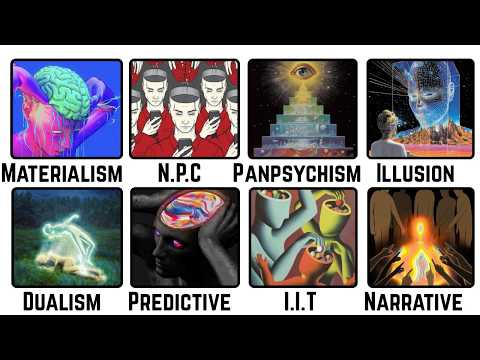
Materialism / Physicalism: The Machine of Being

At its core, materialism posits that consciousness is an emergent property of physical matter, specifically the complex workings of the brain. Think of it as a hyper-sophisticated biological computer. Every thought, every emotion, every subjective experience – a cascade of electrochemical signals firing across intricate neural networks. This perspective suggests that if we could fully map and understand the brain's physical structure and processes, consciousness would be explained, leaving no room for the supernatural or the unquantifiable.

It’s a powerful and scientifically dominant view, offering a tangible framework for study. Yet, it faces the infamous ‘hard problem of consciousness’: how can subjective experience—what it feels like to see red, or feel pain—arise from mere physical processes? Critics argue that explaining the *function* of consciousness is not the same as explaining the *experience*. It's akin to saying that if a damaged antenna alters the radio signal, the antenna is the sole producer of the broadcast itself; it ignores the source or the nature of the signal.

NPC Theory: The Puppets of Perception

Gaining traction in online discourse, the NPC (Non-Player Character) theory offers a provocative, albeit cynical, lens. It suggests that a significant portion of humanity operates on a predetermined script, lacking genuine consciousness or free will, much like characters in a video game. These individuals – the ‘NPCs’ – are seen as going through the motions, repeating pre-programmed responses without true inner awareness or independent thought. The theory often implies that only a select few are truly ‘conscious players’ in the grand simulation.

This idea, while unsettling, touches upon observed patterns of societal behavior, conformity, and how easily people can be influenced by media or dominant narratives. It prompts us to question the depth of our own agency and the nature of collective thought. Is the apparent uniformity in certain behaviors a sign of shared programming, or a misunderstanding of human psychology and social dynamics? The implications are stark: if this were true, what distinguishes a ‘player’ from a ‘puppet’?

Panpsychism: The Sentient Universe

Imagine a universe alive, not just with biological organisms, but with consciousness at its most fundamental level. Panpsychism suggests that consciousness, or proto-consciousness, is a fundamental property of reality, present in all matter, from the smallest subatomic particle to the most complex brain. In this view, consciousness isn't something that magically appears in brains; rather, brains are intricate structures that integrate these basic conscious elements into a complex, unified experience. It's not that rocks think, but that the very fabric of reality possesses a rudimentary form of awareness.

This perspective offers a way to bridge the gap between the physical and the phenomenal. If consciousness is everywhere, then the emergence of complex consciousness in brains is less of a leap and more of a sophisticated arrangement. It aligns with a worldview where everything is interconnected and imbued with a form of spirit or awareness. It’s a profoundly different way of seeing the world, where the inanimate may not be so inanimate after all.

Illusionism: The Grand Deception

Illusionism, a more radical form of physicalism, argues that consciousness, as we commonly understand it—the rich subjective experience—is, in essence, an illusion. Proponents suggest that our brains are masters of self-deception, creating a compelling narrative or a "user illusion" that makes us feel like we have a unified, conscious self. The subjective qualia, the "what it's like" to be something, are not fundamental properties of reality but rather sophisticated tricks of the mind, designed to aid survival and navigation.

This theory is contentious, as it directly challenges our most intimate sense of self. If consciousness is an illusion, then what is real? It compels us to scrutinize our own subjective experiences: are they genuine perceptions, or sophisticated biological algorithms at play? This perspective forces a deep introspection into the reliability of our own inner world. Think of it as the mind creating a dashboard of lights and sounds to represent the complex machinery beneath.

Dualism: The Ghost in the Shell

One of the oldest and most intuitive theories, dualism posits that mind and body are fundamentally separate substances. Developed most famously by René Descartes, it suggests that there is a non-physical realm of mind (consciousness, soul, spirit) that interacts with the physical realm of the body. The body is a machine, but it is animated by a distinct, immaterial consciousness. This aligns with many religious beliefs that posit an eternal soul distinct from the mortal coil.

The primary challenge for dualism is the interaction problem: how can a non-physical entity causally influence a physical one, and vice versa? If the mind is not physical, how does it affect neurons, or receive sensory input? The scientific method, which relies on observable and measurable physical phenomena, struggles to accommodate non-physical interactions without resorting to speculative mechanisms. Many find it a conceptually tidy explanation for the subjective experience that materialism struggles with, but its explanatory power regarding the mechanics of interaction is limited.

Predictive Processing Theory: The Brain as a Prophet

Emerging from neuroscience and cognitive science, Predictive Processing (PP) offers a compelling framework. It suggests that the brain doesn't passively receive sensory information; instead, it actively predicts what's happening in the world and updates those predictions based on incoming data. Consciousness, in this view, is tied to the brain's ongoing process of generating and refining these predictions. Our perception of reality is, in a sense, the brain’s best guess, constantly being corrected by sensory input.

This theory elegantly explains many phenomena, such as hallucinations, illusions, and how we can perceive stable objects even with incomplete sensory data. It suggests that our "reality" is a constructed model, an internal simulation that we experience as objective. The feeling of 'being there' is the result of the brain successfully minimizing prediction errors. It’s a dynamic dance between expectation and experience, where consciousness is the ongoing consequence of this predictive loop. This perspective is particularly fascinating when considering how our internal world shapes our external experience, a concept explored in various esoteric traditions as the power of belief or intent.

Integrated Information Theory (IIT): The Calculus of Awareness

Integrated Information Theory (IIT), championed by Giulio Tononi, proposes a mathematical framework for consciousness. It argues that consciousness is a fundamental property of any system that possesses a certain amount of integrated information. The theory uses a measure called Phi (Φ) to quantify consciousness. A system's consciousness is proportional to the extent to which its parts are interconnected and can generate information that is both specific and unified. The more integrated information a system has, the more conscious it is.

IIT suggests that consciousness isn’t an all-or-nothing phenomenon but exists on a spectrum. Even simple systems could possess a minimal amount of consciousness. This theory offers a potentially testable scientific hypothesis for consciousness, moving beyond philosophical speculation into quantifiable metrics. It’s a bold claim: that consciousness can be measured like temperature or mass, opening up possibilities for detecting consciousness in artificial systems or even non-biological substrates. The complexity of the calculations involved, however, makes it incredibly challenging to apply to complex brains.

Narrative Self Theory: The Storyteller Within

This theory posits that our sense of self, our continuous consciousness, is constructed through the narratives we create about our lives. We are, in essence, the stories we tell ourselves. Our experiences, memories, and intentions are woven into a coherent personal history that gives us a sense of identity and continuity over time. The ‘self’ isn't a static entity but a dynamic narrative constantly being edited and revised.

This aligns with our internal experience of remembering past events and planning for the future, all framed within a personal story. It also explains why different cultures and individuals can have vastly different senses of self, as they are shaped by unique narrative structures. From an esoteric perspective, this resonates with the idea of self-creation and the power of shaping one's autobiography through intention and belief. The narrative self is the protagonist of our personal mythology.

The Alchemist's Verdict: Which Theory Holds the Gold?

The quest to define consciousness is less about finding a single, definitive answer and more about understanding the multifaceted nature of this profound phenomenon. Each theory, from the stark materialism to the all-encompassing panpsychism, offers a unique perspective, a different facet of the diamond that is awareness.

Materialism provides a robust framework for scientific inquiry, but often struggles with the subjective ‘feel’ of experience. NPC theory, while provocative and unsettling, forces a critical look at societal programming and individual agency; it's a harsh mirror, reflecting potential autopilot modes we might inhabit. Panpsychism offers a universe brimming with inherent awareness, a romantic notion that imbues existence with deep meaning, yet it challenges our conventional understanding of ‘life.’ Illusionism is a mind-bender, suggesting our deepest sense of self might be a sophisticated trick, urging us to question our senses and our very being. Dualism, while intuitive, founders on the mechanics of interaction, leaving a gap between the spiritual and the physical. Predictive Processing presents consciousness as an active, predictive process, a dynamic construction of reality that makes the brain a prophet rather than a passive receiver. IIT attempts to quantify consciousness, offering a potential scientific scalpel for dissection, but its complexity is immense. Finally, Narrative Self Theory speaks to the profound power of storytelling in shaping who we believe ourselves to be, a deeply human and mystical process.

As practitioners of the arcane, we understand that reality is not always what it seems. It’s a tapestry woven with threads of the physical, the mental, and the energetic. The truth likely lies not in choosing one theory, but in integrating aspects of several. Perhaps consciousness is a blend: a physical process (materialism, PP, IIT) that creates a compelling narrative (Narrative Self), which we ourselves perceive as a grand illusion (Illusionism), all within a universe that might itself be awake (Panpsychism), while some individuals may indeed operate on a more programmed level (NPC Theory), and the interaction between our inner and outer worlds remains a profound mystery that touches upon the dual nature of existence.

Arsenal of the Inquisitive Mind

  • Key Texts: For a deep dive into the philosophical underpinnings, consider works by Daniel Dennett ("Consciousness Explained"), David Chalmers ("The Conscious Mind"), and works exploring neurophilosophy. For a more esoteric lens, explore texts like "The Kybalion" for principles of mentalism and "I Am That" by Nisargadatta Maharaj for non-dualistic perspectives.
  • Tools for Exploration: Tools for introspection and self-observation are paramount. This includes high-quality journals for recording thoughts and insights, meditation aids for quieting the mental chatter, and even biofeedback devices that can offer tangible data on physiological states correlated with mental activity.
  • Recommended Reading on Related Concepts:
    • Predictive Processing: "The Predictive Mind" by Jakob Hohwy offers a comprehensive overview.
    • Integrated Information Theory: Explore Tononi's foundational papers and the growing body of research inspired by IIT.
    • Narrative Self: Daniel Dennett's "La Mala Percepción del Yo" delves into this.
  • For the Materialist Angle: Books like "Incognito: The Secret Lives of the Brain" by David Eagleman provide accessible insights into neuroscience.

Practical Workshop: Mapping Your Own Awareness

Theory is potent, but practice is its crucible. To truly grapple with consciousness, you must turn the gaze inward. This workshop provides a structured approach to observe your own awareness:

  1. The Observer's Log: For one week, dedicate 10-15 minutes each day to journaling. Don't just record events; record your experience of those events.
    • Sensory Details: What did you see, hear, smell, taste, feel? Be as specific as possible.
    • Emotional Responses: What emotions arose? Were they fleeting or persistent?
    • Shifting Thoughts: Track the flow of your thoughts. Notice patterns, repetitions, sudden tangents. Are they yours, or echoes of external influences?
    • The Feeling of 'Being': Beyond the content of your thoughts, what is the underlying sensation of awareness itself? Can you isolate it?
  2. The Prediction Test: Choose a mundane daily activity (e.g., walking to your car, making coffee). Before you do it, try to consciously predict every single sensory input and every thought or feeling you anticipate experiencing. Then, perform the action and compare your predictions to your actual experience. Where were your predictions accurate? Where did reality deviate? This exercise, while seemingly simple, can illuminate the predictive nature of the brain.
  3. Narrative Tagging: As you journal, observe the stories you're telling yourself about your day. Are you the victim of circumstance? The hero overcoming odds? The passive observer? Try to identify the recurring narrative threads and consciously introduce a new element or perspective into your personal story. How does this subtle shift in narrative affect your experience?

This is not about finding a definitive "answer" to consciousness, but about developing a nuanced, empirical understanding of its manifestation within your own being. The most profound insights into the nature of consciousness often arise from meticulous self-observation.

Frequently Asked Questions

Q: If consciousness is an illusion, does that mean life is meaningless?
A: Not necessarily. Even if consciousness is an illusion, the experience of it is profoundly real to us. Meaning is often derived from these experiences, our relationships, and the narratives we create. The illusion of a beautiful sunset doesn't make the sunset less breathtaking.

Q: How can I tell if someone else is conscious, or just an NPC?
A: This is the philosophical zombie problem. From a practical standpoint, assuming consciousness in others is the most functional and empathetic approach. The NPC theory, while a thought experiment, is not a practical basis for human interaction.

Q: Can consciousness exist without a brain?
A: This depends on the theory. Materialism says no. Panpsychism, Dualism, and some spiritual interpretations would suggest yes, or at least that consciousness is a fundamental property that can manifest through various substrates.

Q: Is there scientific proof for any of these theories?
A: Materialism, Predictive Processing, and IIT have the most empirical scientific investigation behind them, with ongoing research. Panpsychism and Dualism are more philosophical, though they inform scientific questions. Illusionism is a philosophical interpretation of scientific findings. Narrative Self theory bridges psychology and philosophy.

Q: What is the relationship between consciousness and energy?
A: Some fringe theories and spiritual traditions posit consciousness as a form of energy or an attribute of a universal energy field. Scientifically, brain activity involves electrochemical energy, but it's a leap to equate this with consciousness itself being a distinct form of energy in the physics sense. However, the idea that we are "energy in a skinsuit" and that this energy has always existed is a common theme in reincarnation beliefs and certain esoteric philosophies.

Your Operation: Crafting Your Personal Consciousness Hypothesis

You've journeyed through the theoretical landscapes of consciousness. Now, it's time to synthesize. Your final operation is to articulate your current, working hypothesis about consciousness. This isn't about finding the absolute truth, but about formulating a practical framework that resonates with your experience and guides your exploration.

Consider these prompts:

  • Which theory (or combination of theories) best explains your lived experience of consciousness?
  • What implications does your chosen hypothesis have for your daily life, your interactions, and your understanding of reality?
  • Identify one aspect of consciousness that remains particularly mysterious to you, and outline a simple experiment or observation you could conduct to explore it further.

Write down your hypothesis. This is not a static decree, but a living document—a map that will evolve as you continue to explore the boundless territory of your own awareness. The greatest discoveries are often born from the courage to ask the most fundamental questions.

Practitioner's Note: True magick requires resources. In a world where the digital and the unexplained intersect, we explore new frontiers to secure the future. Do you dare to be part of the vanguard? Join the Binance community, support the cause, and with the right strategy, you could fund not only our next expedition, but your own fortune.

Alpha Waves: The Scientific Key to Unlocking Enhanced Memory and Super Intelligence


The Symphony of the Mind: Brainwaves and Consciousness

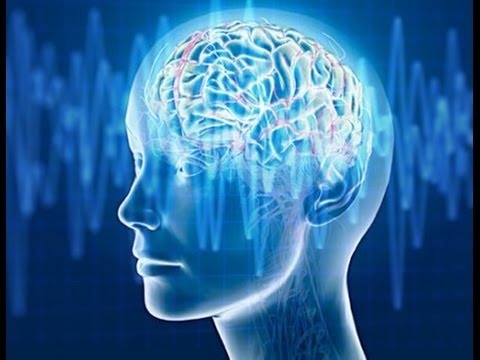
The human brain is a marvel of bio-electrical activity, a complex symphony of energy and consciousness. This intricate dance is expressed through distinct patterns known as brainwaves, each vibrating at a unique frequency. These frequencies are not mere biological curiosities; they are the very fabric of our mental states, influencing everything from our deepest sleep to our most profound moments of insight.

For decades, science has sought to map and understand these internal rhythms. The invention of the electroencephalogram (EEG) by Hans Berger in the 1920s was a watershed moment. This groundbreaking device allowed researchers to amplify and measure the subtle electrical frequencies emanating from the brain, categorizing them with familiar Greek letters: Beta, Alpha, Theta, and Delta. Each wave type corresponds to a different state of consciousness, and understanding their role is fundamental to unlocking our cognitive potential.

Demystifying Alpha Waves: The Science of Relaxation and Learning

Among these vital brainwave frequencies, Alpha waves stand out as particularly significant for cognitive enhancement. Often associated with a state of relaxed awareness or "wakeful relaxation," Alpha waves play a crucial role in accelerated learning and heightened mental acuity. When our brains are predominantly producing Alpha waves, we are in a state of alert receptivity. Our minds are calm yet focused, creating an optimal environment for memory potentiation and information absorption.

"The mind is not a vessel to be filled, but a fire to be kindled." - Plutarch

This state is often achieved through specific auditory stimuli, such as the specially designed music found in high-quality biofeedback recordings or curated playlists like the Official Alpha Waves Playlist. Interestingly, scientific research indicates that chronic stress can significantly impede the production of Alpha waves. This creates a detrimental cycle: stress hinders our ability to learn, work productively, and maintain a peaceful, positive state of mind, which in turn can exacerbate stress. Breaking this cycle requires intentional strategies to foster relaxation and promote Alpha wave generation.

The Practical Applications: Alpha Waves for Daily Life

Integrating Alpha wave stimulation into your daily routine can yield tangible benefits across various cognitive tasks. The key lies in consistent, mindful application. Consider these scenarios:

  1. Reading Enhancement: When listening to Alpha wave audios while reading, you can significantly maximize your ability to process information at a faster rate, capturing more data per second. This is invaluable for students and professionals alike.
  2. Mathematical Acuity: Practicing math exercises while immersed in Alpha wave frequencies can stimulate your brain, enabling faster and more accurate calculations. This is particularly helpful for complex problem-solving and test preparation.
  3. Sleep Optimization: Incorporating Alpha wave sounds into your nightly routine can profoundly impact your sleep quality. Listening as you drift off can lead to more restorative sleep, noticeable upon awakening.
  4. Focused Studying: Visit a quiet space, relax for a few minutes, and then engage in your study material while listening to Alpha waves. This exercise, repeated consistently, demonstrably improves concentration levels. For instance, libraries offer an ideal environment for this practice.
  5. Workplace Efficiency: If your job permits, listening to Alpha waves can enhance your cognitive performance and job efficiency. This subtle boost can translate to increased productivity and a more positive work experience.

Nurturing Future Einsteins: Alpha Waves for Children

The developmental stage of childhood is a critical period for cognitive growth. Introducing Alpha wave exercises can be instrumental in helping children develop essential concentration skills. Encouraging daily engagement with these auditory tools can support their full intellectual potential. By fostering an environment of focused calm, we can lay the groundwork for lifelong learning and academic success.

The Neuroscience of Alpha Wave Stimulation

The efficacy of Alpha wave music is rooted in neuroplasticity – the brain's remarkable ability to reorganize itself by forming new neural connections. When exposed to specific frequencies associated with relaxation and focus, the brain begins to mirror these patterns. This process, known as brainwave entrainment, essentially tunes our internal brainwave activity to the external auditory stimulus.

For instance, listening to music precisely engineered to produce Alpha frequencies encourages our brain to adopt that same oscillatory pattern. This heightened Alpha activity is linked to reduced activity in the amygdala (the brain's fear center) and increased connectivity in areas associated with executive function and memory recall. The music acts as a gentle guide, coaxing the brain into a more receptive and efficient state. It is a testament to the interconnectedness of our mind, body, and environment, demonstrating how external stimuli can directly influence our internal cognitive landscape.

Arsenal of the Mind: Tools for Cognitive Enhancement

To truly harness the power of Alpha waves and optimize your mental performance, consider incorporating these essential resources into your practice:

  • Key Texts: While not directly about Alpha waves, foundational texts on consciousness and perception offer crucial context. For deeper exploration of altered states and consciousness, delving into works like Liber Null & Psychonaut by Peter J. Carroll or Condensed Chaos by Phil Hine is highly recommended. For principles that echo the search for higher understanding, consider The Kybalion.
  • Auditory Tools: High-quality Alpha wave audio tracks are paramount. Look for professionally produced playlists or dedicated apps. The Official Alpha Waves Playlist is a starting point, with many other resources available online.
  • Cognitive Trackers: Utilize journaling or specialized apps to track your cognitive performance, mood, and concentration levels when using Alpha wave audios. This data is invaluable for personalizing your practice.
  • Environment: A quiet, comfortable space free from distractions is crucial for maximizing the effectiveness of Alpha wave audios during study sessions or relaxation.

Frequently Asked Questions About Alpha Waves

  • Can Alpha waves truly make me more intelligent? While Alpha waves enhance learning, memory, and focus – which are components of intelligence – they don't fundamentally alter IQ. They optimize your brain's ability to utilize its existing capacity more effectively.
  • How quickly can I expect to see results? Results vary individual to individual. Some may notice improved focus or relaxation within a few sessions, while significant improvements in memory or learning speed may take consistent practice over several weeks.
  • Is it safe to listen to Alpha waves all day? It's generally safe, but moderation is key. It's best to use Alpha wave audios during specific activities like studying, reading, or for relaxation. Continuous, passive listening might not be as beneficial as targeted use.
  • Can I listen to Alpha waves while doing complex tasks that require active thinking? Yes, many find it beneficial for tasks like complex problem-solving or creative work, as it provides a calm yet focused state. However, avoid using it for activities requiring high-level Beta wave activity (e.g., critical decision-making under pressure) without prior experience.

Your Operation: Integrate Alpha Waves for Peak Performance

The knowledge of Alpha waves is now at your disposal. The true power lies not in understanding, but in application. Your operation begins now.

Your Operation: Implement Daily Alpha Wave Practice

Commit to integrating Alpha wave audio into one specific daily activity for the next 21 days. Choose from the following, or devise your own strategic application:

  1. Morning Reading Ritual: Dedicate 30 minutes each morning to reading a book or article while listening to Alpha wave music. Note any difference in comprehension and retention compared to your usual reading habits.
  2. Pre-Study Concentration Session: Before embarking on any study session, spend 15 minutes listening to Alpha wave audio to prime your mind for focus. Record your perceived level of concentration and the efficiency of your study period.
  3. Evening Relaxation and Recall: Listen to Alpha wave music for 20-30 minutes before sleep. As you relax, mentally review the key information or events of your day. Observe any changes in dream recall or how vividly you remember the day’s events.

Document your experience consistently. What changes do you observe in your focus, memory recall, and overall mental clarity? The science is clear, but the results are ultimately personal. Now, go forth and optimize your mind.

Practitioner's Note: True magick requires resources. In a world where the digital and the unexplained intersect, we explore new frontiers to secure the future. Do you dare to be part of the vanguard? Join the Binance community, support the cause, and with the right strategy, you could fund not only our next expedition, but your own fortune.

Manifestation as Physics: Harnessing Your Nervous System for Reality Creation


The shimmering veil between what you desire and what you experience is thinning. Forget the whispers of wishful thinking and the vague promises of fluffy positivity. We're diving into the bedrock of reality creation, where quantum mechanics, neuroscience, and the raw power of consciousness converge. This isn't about chanting mantras under a full moon; it's about understanding the fundamental physics that govern your existence and learning to wield them with precision.

Many approaches to manifestation falter because they speak of "sending energy" or "raising vibrations" without grounding these concepts in tangible, biological processes. The truth is, you are a biological machine, finely tuned to perceive and interact with the world. Your nervous system is not merely a passive receiver; it is an active architect of your perceived reality. The key to true manifestation lies not in abstract cosmic forces, but in the concrete symphony of your internal state.

We'll dissect the mechanisms, expose the common pitfalls, and equip you with the knowledge to become a conscious architect of your life. This journey requires courage, introspection, and a willingness to confront the subconscious programming that might be sabotaging your desires. Are you ready to upgrade your operating system?

Introduction: Beyond the Mystical

For too long, manifestation has been relegated to the realm of wishful thinking, vague affirmations, and ethereal "vibes." While these may offer a fleeting psychological boost, they fail to address the robust biological and physical underpinnings of how reality is actually constructed. This post cuts through the mysticism to reveal the scientific framework that makes manifestation not a matter of luck or decree, but a predictable outcome of your internal state interacting with the fabric of existence.

We will explore how the principles of quantum physics, the intricacies of neuroscience, and the biology of your nervous system are not just metaphors, but literal mechanisms through which your desires can be brought into being. This is about harnessing your inherent capabilities, not appealing to external forces. The key is understanding the "how" – the precise biological and physical processes that are already at play, whether you're consciously directing them or not.

The Quantum Blueprint: Why Your Thoughts Matter (Scientifically)

Quantum physics offers a revolutionary perspective: at the most fundamental level, reality is not a collection of solid objects, but a probabilistic field of potential. The observer plays a crucial role in collapsing these potentials into concrete manifestations. While this can be interpreted esoterically, its implications for manifestation are profound and scientifically grounded. Your conscious attention, your emotional state, and your expectations are not mere epiphenomena; they are active participants in the creation of your experienced reality.

Think of it like tuning a radio. Your intention acts as the dial, and your emotional state as the signal strength. Without a clear, focused tuning (intention) and sufficient power (emotional coherence), you're simply picking up static – the default, unscripted flow of events. The "Observer Effect" in quantum mechanics, though often misunderstood and misapplied, hints at a universe where consciousness is not merely a detached witness but an active participant in shaping what is observed.

To truly manifest, you must become a conscious observer, deliberately tuning your internal state to the frequency of your desires. This requires understanding how your thoughts, emotions, and beliefs are not just abstract concepts, but energetic patterns that influence the quantum field. This is the first step in moving from passive experience to active creation. For a deeper dive into the philosophical underpinnings, consulting works like The Tao of Physics provides valuable context.

The Subconscious Matrix: How Expectations Sculpt Your Reality

One of the most critical insights from neuroscience and psychology is the overwhelming influence of the subconscious mind. While your conscious mind entertains and rationalizes, your subconscious holds the deep-seated beliefs, patterns, and expectations that truly govern your life. This is where the concept of "feeling" becomes paramount, as highlighted by one of our community members: the subconscious doesn't "think," it *feels*. It operates on a deep, visceral level, constantly scanning for evidence to confirm its existing programming.

If your subconscious is saturated with the feeling of being undervalued, expecting setbacks, or anticipating abandonment, it will diligently filter your perception of reality to match these internal expectations. You won't necessarily *think* "people will leave me," but you will unconsciously seek out and interpret interactions as validation of that underlying feeling. This is why simply *saying* positive affirmations often fails – they don't resonate with the deeply ingrained emotional truths held within the subconscious. Your subconscious beliefs are the true blueprint, and your external reality is merely the echo.

Understanding this is transformative. It means that the work of manifestation is not about forcing external circumstances, but about reprogramming the internal landscape. It requires a courageous exploration of your own emotional history and core beliefs. This phenomenon also explains why some individuals can read people so adeptly – their subconscious is hyper-vigilant for specific patterns, a survival mechanism that can become a double-edged sword.

The Anatomy of a Failed Technique: Scams and Subconscious Sabotage

Why do so many manifestation techniques fall flat? Often, they bypass the crucial element: subconscious alignment and nervous system safety. Techniques that rely solely on visualization or affirmations without addressing the underlying emotional architecture are akin to trying to build a skyscraper on quicksand. If your nervous system perceives your desired reality as fundamentally unsafe or unbelievable, it will actively resist the shift.

This is where many "manifestation gurus" capitalize on hopeful individuals. They offer superficial methods that promise quick results but fail to address the deep-seated programming that is the true barrier. The "Law of Attraction," while containing kernels of truth, is often oversimplified. The *feeling* of abundance is not achieved by mere thought, but by a profound shift in your nervous system's state, signaling that safety and fulfillment are not future possibilities, but present realities.

"The universe doesn't give you what you want, it gives you what you are." - Unknown

Beware of techniques that suggest bypassing your emotional reality or that promise results without requiring profound inner work. True transformation comes from addressing the root causes, not just trimming the branches. The neurology behind concepts like the "17-second rule" for holding a thought, popularized by figures like Abraham Hicks, points to the brain's capacity for sustained focus and the subsequent electrochemical changes that occur, demonstrating a scientific basis for the power of sustained, coherent intention.

Nervous System Safety: The Non-Negotiable Foundation of Manifestation

This is the crux of conscious manifestation: your nervous system must feel safe in your desired reality. If your default state is one of anxiety, fear, or scarcity, your nervous system will interpret any attempt to inhabit a reality of abundance, peace, or connection as a threat. It will trigger a fight, flight, or freeze response, pulling you back to the familiar, even if the familiar is undesirable.

Consider the paradox: how can a child, an "empty vessel," experience horrific trauma? This challenges the simplistic view of manifestation. The answer lies in the environment and the collective consciousness they are born into. While they may not have cemented *personal* beliefs yet, they are profoundly influenced by the energetic and emotional atmosphere around them, and potentially by ancestral patterns. The scientific interpretation suggests that while a child might not "manifest" trauma through personal belief in the adult sense, they are highly sensitive to, and can become imprinted by, the energetic and emotional states of their caregivers and environment. This is an area where quantum field theory and consciousness studies continue to explore the complex interplay of individual and collective fields.

Achieving nervous system safety is not about suppressing negative emotions but about integrating them and creating a new baseline of inner security. This involves practices that regulate the nervous system, such as deep breathing exercises, mindfulness, somatic experiencing, and cultivating a profound sense of self-compassion. Without this foundational sense of safety, any manifestation efforts will be like trying to launch a rocket from a shaky platform.

Aligning Your Inner Blueprint: Practical Steps for Conscious Creation

Shifting your inner blueprint to align with your desires requires a systematic approach. It's about consciously rewiring your subconscious and recalibrating your nervous system:

  1. Identify Your Core Beliefs: What are the deep-seated assumptions you hold about yourself, others, and the world? Techniques like journaling (especially writing fictional stories about yourself in your desired reality, as suggested by one commenter, to immerse your subconscious), shadow work, or guided meditations can help uncover these.
  2. Emotional Re-parenting: Acknowledge and validate the past experiences and emotions that have shaped your current programming. Forgive yourself and others where necessary. This is not about dwelling in the past but about releasing its hold on your present.
  3. Cultivate Nervous System Safety: Integrate daily practices that activate your parasympathetic nervous system (the "rest and digest" response). This could include:
    • Deep diaphragmatic breathing exercises
    • Gradual exposure to situations that trigger mild discomfort, with conscious tools to regulate your response
    • Mindfulness meditation focusing on present-moment awareness without judgment
    • Somatic practices to release stored tension in the body
    • Spending time in nature
  4. Intentional Visualization with Embodiment: Go beyond just "seeing" your desire. Feel the emotions, sensations, and realities of having it *now*. Imagine yourself interacting within that reality. The more vivid and emotionally resonant, the more potent the signal.
  5. Conscious Language and Focus: Pay attention to your internal and external dialogue. Reframe negative self-talk. Deliberately focus your attention on what you *want*, not on the absence of it.
  6. Action Aligned with Inner State: Once your inner blueprint begins to shift, take inspired actions that feel congruent with your new reality. This is not about forcing things, but about responding to opportunities that arise from your recalibrated state.

This process mirrors the concept of shifting to a new timeline, where your core beliefs and the state of your nervous system determine the reality you inhabit. It’s a continuous calibration, not a one-time fix.

Manifestation as Physics: A Synthesis

Viewing manifestation through the lens of physics, biology, and neuroscience demystifies the process and empowers you with practical tools. It’s about understanding that your internal state – your thoughts, emotions, and beliefs – creates an energetic signature that interacts with the quantum field. Your nervous system is the biological transducer, interpreting and projecting this signature into your experienced reality.

When you achieve coherence between your conscious intention, your subconscious programming, and a state of nervous system safety, you are essentially creating a resonant frequency that draws experiences in alignment with that state. It's not about "making" things appear out of nowhere, but about filtering and solidifying the potentials that already exist within the quantum field, aligning with your dominant energetic output. This explains how seemingly disparate events, like old acquaintances contacting you or opportunities presenting themselves, can occur – your energetic field has shifted, making you a magnet for corresponding real-world experiences.

This perspective also addresses the question of how those perceived as "wicked" can attract wealth or power. They may not be operating from a place of expansive consciousness or ethical alignment, but they are often incredibly effective at *feeling* empowered, driven, and secure in their desires, even if those desires are self-serving. Their internal state, however warped, is coherent.

Practitioner's Verdict: Is This Science-Based Approach Sustainable?

Absolutely. Shifting from esoteric interpretations to a tangible, science-based understanding of manifestation offers a more robust and sustainable path to creating your desired reality. The primary advantage is its controllability. By focusing on your internal state, your nervous system regulation, and the rewiring of subconscious beliefs, you are addressing the root cause rather than chasing symptoms.

Pros:

  • Empowerment: Places agency firmly in your hands.
  • Sustainability: Creates lasting change by addressing underlying programming rather than superficial desires.
  • Reduced Frustration: Eliminates the disappointment of failed "magical" techniques.
  • Holistic Well-being: Practices for nervous system safety inherently improve mental and emotional health.

Cons:

  • Requires Deep Introspection: Demands honesty and courage to confront challenging inner patterns.
  • Patience and Consistency: True recalibration takes time and consistent effort; it's not an overnight fix.
  • Challenges to Existing Paradigms: May conflict with more traditional mystical beliefs.

For practitioners, this means prioritizing self-awareness and self-regulation as the ultimate manifestation tools. It’s a path that deepens your understanding of yourself and your place in the cosmos, not through blind faith, but through empirical observation of your own internal and external worlds.

The Magician's Arsenal: Essential Tools for the Conscious Creator

To effectively navigate this path of conscious creation, consider building your arsenal with resources that support a scientific and psychological approach:

  • Books:
    • "Your Brain on Quantum Physics" by Daniel Cummins (for a general understanding of quantum concepts)
    • "The Body Keeps the Score" by Bessel van der Kolk (for understanding trauma and nervous system regulation)
    • "Breaking the Habit of Being Yourself" by Dr. Joe Dispenza (for a practical guide on rewiring the brain and subconscious)
    • "Attached: The New Science of Adult Attachment and How to Have an ... Secure Love" by Amir Levine and Rachel S.F. Heller (for understanding relational safety patterns)
  • Tools:
    • A high-quality journal for introspection and story-writing.
    • Meditation apps (e.g., Calm, Headspace) for guided nervous system regulation.
    • Somatic experiencing resources or practitioners.
    • Biofeedback devices (optional, for advanced tracking of physiological states).
  • Software:
    • Apps for mood tracking and journaling.
    • Digital planners for setting intentions and tracking inspired actions.
  • Practices:
    • Regular sessions of mindfulness, deep breathing, or yoga.
    • Therapy or coaching focused on subconscious patterns and nervous system regulation.

Investing in these resources is investing in your operational capacity as a conscious creator. It’s about acquiring the knowledge and techniques to master your internal state.

Frequently Asked Questions

How can I regulate my nervous system when I feel overwhelmed?

Focus on ground-up techniques. Start with your breath: slow, deep inhales and even longer exhales. Next, engage your senses: touch your feet to the ground, notice 5 things you can see, 4 things you can hear, 3 things you can feel, 2 things you can smell, 1 thing you can taste. Gentle movement, like shaking out your limbs, can also release stored tension.

Does this explain how seemingly "bad" people attract wealth?

Yes, to an extent. They often possess a strong, albeit misaligned, inner conviction and emotional drive that creates a coherent signal. If their core programming strongly *feels* powerful, abundant, and deserving (regardless of ethics), their nervous system is in a state of perceived dominance, which can attract resources. However, this often comes at great personal cost and lacks true well-being.

What if I can't shake the feeling of fear or scarcity?

This is where consistent, therapeutic-level practice is crucial. It's not about suppressing the fear but about creating a new baseline of safety *alongside* it. Start small, with brief moments of safety cultivation, and gradually increase the duration and intensity. Acknowledging the fear without judgment, and then actively engaging in safety-building practices, is key.

How does this model explain incredible manifestations like regrowing organs or money appearing from nowhere?

While the scientific framework explains the mechanism of attraction through internal states, certain extreme manifestations (like spontaneous regeneration or 'out of thin air' money) venture into territory where the limits of consciousness and quantum physics are still being explored. Some interpretations suggest these might be extreme edge cases of consciousness interacting with the quantum field, or perhaps misinterpretations of how resources are actually acquired. However, the foundational principle remains: a profound internal alignment can produce extraordinary external results, pushing the boundaries of what we currently understand.

Your Operation: Calibrating Your Nervous System

This is your phase to implement and calibrate. For the next 7 days, dedicate yourself to one foundational practice of nervous system regulation chosen from the list above (breathing, mindfulness, somatic release, grounding). Make it non-negotiable – a daily appointment with yourself.

Log your experience in your journal each day. Note:

  • The specific practice you engaged in.
  • How you felt before, during, and after the practice.
  • Any subtle shifts in your perception, emotional state, or interactions.

The goal isn't immediate manifestation, but to build the capacity for inner safety—the bedrock upon which all conscious creation is built. You are recalibrating your internal operating system. Observe the data objectively.

This article explores the intersection of quantum physics, neuroscience, and consciousness in manifestation. It is intended for educational and informational purposes only. The practices discussed are not a substitute for professional medical or psychological advice. Always consult with a qualified healthcare provider for any health concerns or before making any decisions related to your health or treatment.

Practitioner's Note: True magick requires resources. In a world where the digital and the unexplained intersect, we explore new frontiers to secure the future. Do you dare to be part of the vanguard? Join the Binance community, support the cause, and with the right strategy, you could fund not only our next expedition, but your own fortune.