
The hum of existence, the silent roar of awareness – consciousness. It’s the bedrock of our reality, the very lens through which we perceive the universe. Yet, this fundamental aspect of our being remains a profound enigma, a phantom whispered about but rarely grasped. We are all, in this moment, conscious. But the *what*, the *how*, and the *why* of it? That's where the consensus dissolves, splintering into a myriad of theories, each a unique key attempting to unlock the ultimate mystery.
This isn't about blind faith or mystical pronouncements. This is about dissection. We're pulling back the veil, not to marvel at the magic, but to understand the mechanics. Forget the simple enchantment; we're diving into the arcane blueprints of the mind, exploring the most potent theories that attempt to map the landscape of human consciousness. From the cold, hard logic of materialism to ideas that bend reality to its breaking point, prepare to have your assumptions challenged and your understanding recalibrated.
Table of Contents
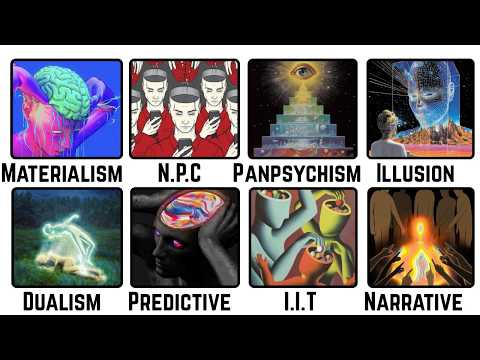
- Materialism / Physicalism: The Machine of Being
- NPC Theory: The Puppets of Perception
- Panpsychism: The Sentient Universe
- Illusionism: The Grand Deception
- Dualism: The Ghost in the Shell
- Predictive Processing Theory: The Brain as a Prophet
- Integrated Information Theory (IIT): The Calculus of Awareness
- Narrative Self Theory: The Storyteller Within
- The Alchemist's Verdict: Which Theory Holds the Gold?
- Arsenal of the Inquisitive Mind
- Practical Workshop: Mapping Your Own Awareness
- Frequently Asked Questions
- Your Operation: Crafting Your Personal Consciousness Hypothesis
Materialism / Physicalism: The Machine of Being
At its core, materialism posits that consciousness is an emergent property of physical matter, specifically the complex workings of the brain. Think of it as a hyper-sophisticated biological computer. Every thought, every emotion, every subjective experience – a cascade of electrochemical signals firing across intricate neural networks. This perspective suggests that if we could fully map and understand the brain's physical structure and processes, consciousness would be explained, leaving no room for the supernatural or the unquantifiable.
It’s a powerful and scientifically dominant view, offering a tangible framework for study. Yet, it faces the infamous ‘hard problem of consciousness’: how can subjective experience—what it feels like to see red, or feel pain—arise from mere physical processes? Critics argue that explaining the *function* of consciousness is not the same as explaining the *experience*. It's akin to saying that if a damaged antenna alters the radio signal, the antenna is the sole producer of the broadcast itself; it ignores the source or the nature of the signal.
NPC Theory: The Puppets of Perception
Gaining traction in online discourse, the NPC (Non-Player Character) theory offers a provocative, albeit cynical, lens. It suggests that a significant portion of humanity operates on a predetermined script, lacking genuine consciousness or free will, much like characters in a video game. These individuals – the ‘NPCs’ – are seen as going through the motions, repeating pre-programmed responses without true inner awareness or independent thought. The theory often implies that only a select few are truly ‘conscious players’ in the grand simulation.
This idea, while unsettling, touches upon observed patterns of societal behavior, conformity, and how easily people can be influenced by media or dominant narratives. It prompts us to question the depth of our own agency and the nature of collective thought. Is the apparent uniformity in certain behaviors a sign of shared programming, or a misunderstanding of human psychology and social dynamics? The implications are stark: if this were true, what distinguishes a ‘player’ from a ‘puppet’?
Panpsychism: The Sentient Universe
Imagine a universe alive, not just with biological organisms, but with consciousness at its most fundamental level. Panpsychism suggests that consciousness, or proto-consciousness, is a fundamental property of reality, present in all matter, from the smallest subatomic particle to the most complex brain. In this view, consciousness isn't something that magically appears in brains; rather, brains are intricate structures that integrate these basic conscious elements into a complex, unified experience. It's not that rocks think, but that the very fabric of reality possesses a rudimentary form of awareness.
This perspective offers a way to bridge the gap between the physical and the phenomenal. If consciousness is everywhere, then the emergence of complex consciousness in brains is less of a leap and more of a sophisticated arrangement. It aligns with a worldview where everything is interconnected and imbued with a form of spirit or awareness. It’s a profoundly different way of seeing the world, where the inanimate may not be so inanimate after all.
Illusionism: The Grand Deception
Illusionism, a more radical form of physicalism, argues that consciousness, as we commonly understand it—the rich subjective experience—is, in essence, an illusion. Proponents suggest that our brains are masters of self-deception, creating a compelling narrative or a "user illusion" that makes us feel like we have a unified, conscious self. The subjective qualia, the "what it's like" to be something, are not fundamental properties of reality but rather sophisticated tricks of the mind, designed to aid survival and navigation.
This theory is contentious, as it directly challenges our most intimate sense of self. If consciousness is an illusion, then what is real? It compels us to scrutinize our own subjective experiences: are they genuine perceptions, or sophisticated biological algorithms at play? This perspective forces a deep introspection into the reliability of our own inner world. Think of it as the mind creating a dashboard of lights and sounds to represent the complex machinery beneath.
Dualism: The Ghost in the Shell
One of the oldest and most intuitive theories, dualism posits that mind and body are fundamentally separate substances. Developed most famously by René Descartes, it suggests that there is a non-physical realm of mind (consciousness, soul, spirit) that interacts with the physical realm of the body. The body is a machine, but it is animated by a distinct, immaterial consciousness. This aligns with many religious beliefs that posit an eternal soul distinct from the mortal coil.
The primary challenge for dualism is the interaction problem: how can a non-physical entity causally influence a physical one, and vice versa? If the mind is not physical, how does it affect neurons, or receive sensory input? The scientific method, which relies on observable and measurable physical phenomena, struggles to accommodate non-physical interactions without resorting to speculative mechanisms. Many find it a conceptually tidy explanation for the subjective experience that materialism struggles with, but its explanatory power regarding the mechanics of interaction is limited.
Predictive Processing Theory: The Brain as a Prophet
Emerging from neuroscience and cognitive science, Predictive Processing (PP) offers a compelling framework. It suggests that the brain doesn't passively receive sensory information; instead, it actively predicts what's happening in the world and updates those predictions based on incoming data. Consciousness, in this view, is tied to the brain's ongoing process of generating and refining these predictions. Our perception of reality is, in a sense, the brain’s best guess, constantly being corrected by sensory input.
This theory elegantly explains many phenomena, such as hallucinations, illusions, and how we can perceive stable objects even with incomplete sensory data. It suggests that our "reality" is a constructed model, an internal simulation that we experience as objective. The feeling of 'being there' is the result of the brain successfully minimizing prediction errors. It’s a dynamic dance between expectation and experience, where consciousness is the ongoing consequence of this predictive loop. This perspective is particularly fascinating when considering how our internal world shapes our external experience, a concept explored in various esoteric traditions as the power of belief or intent.
Integrated Information Theory (IIT): The Calculus of Awareness
Integrated Information Theory (IIT), championed by Giulio Tononi, proposes a mathematical framework for consciousness. It argues that consciousness is a fundamental property of any system that possesses a certain amount of integrated information. The theory uses a measure called Phi (Φ) to quantify consciousness. A system's consciousness is proportional to the extent to which its parts are interconnected and can generate information that is both specific and unified. The more integrated information a system has, the more conscious it is.
IIT suggests that consciousness isn’t an all-or-nothing phenomenon but exists on a spectrum. Even simple systems could possess a minimal amount of consciousness. This theory offers a potentially testable scientific hypothesis for consciousness, moving beyond philosophical speculation into quantifiable metrics. It’s a bold claim: that consciousness can be measured like temperature or mass, opening up possibilities for detecting consciousness in artificial systems or even non-biological substrates. The complexity of the calculations involved, however, makes it incredibly challenging to apply to complex brains.
Narrative Self Theory: The Storyteller Within
This theory posits that our sense of self, our continuous consciousness, is constructed through the narratives we create about our lives. We are, in essence, the stories we tell ourselves. Our experiences, memories, and intentions are woven into a coherent personal history that gives us a sense of identity and continuity over time. The ‘self’ isn't a static entity but a dynamic narrative constantly being edited and revised.
This aligns with our internal experience of remembering past events and planning for the future, all framed within a personal story. It also explains why different cultures and individuals can have vastly different senses of self, as they are shaped by unique narrative structures. From an esoteric perspective, this resonates with the idea of self-creation and the power of shaping one's autobiography through intention and belief. The narrative self is the protagonist of our personal mythology.
The Alchemist's Verdict: Which Theory Holds the Gold?
The quest to define consciousness is less about finding a single, definitive answer and more about understanding the multifaceted nature of this profound phenomenon. Each theory, from the stark materialism to the all-encompassing panpsychism, offers a unique perspective, a different facet of the diamond that is awareness.
Materialism provides a robust framework for scientific inquiry, but often struggles with the subjective ‘feel’ of experience. NPC theory, while provocative and unsettling, forces a critical look at societal programming and individual agency; it's a harsh mirror, reflecting potential autopilot modes we might inhabit. Panpsychism offers a universe brimming with inherent awareness, a romantic notion that imbues existence with deep meaning, yet it challenges our conventional understanding of ‘life.’ Illusionism is a mind-bender, suggesting our deepest sense of self might be a sophisticated trick, urging us to question our senses and our very being. Dualism, while intuitive, founders on the mechanics of interaction, leaving a gap between the spiritual and the physical. Predictive Processing presents consciousness as an active, predictive process, a dynamic construction of reality that makes the brain a prophet rather than a passive receiver. IIT attempts to quantify consciousness, offering a potential scientific scalpel for dissection, but its complexity is immense. Finally, Narrative Self Theory speaks to the profound power of storytelling in shaping who we believe ourselves to be, a deeply human and mystical process.
As practitioners of the arcane, we understand that reality is not always what it seems. It’s a tapestry woven with threads of the physical, the mental, and the energetic. The truth likely lies not in choosing one theory, but in integrating aspects of several. Perhaps consciousness is a blend: a physical process (materialism, PP, IIT) that creates a compelling narrative (Narrative Self), which we ourselves perceive as a grand illusion (Illusionism), all within a universe that might itself be awake (Panpsychism), while some individuals may indeed operate on a more programmed level (NPC Theory), and the interaction between our inner and outer worlds remains a profound mystery that touches upon the dual nature of existence.
Arsenal of the Inquisitive Mind
- Key Texts: For a deep dive into the philosophical underpinnings, consider works by Daniel Dennett ("Consciousness Explained"), David Chalmers ("The Conscious Mind"), and works exploring neurophilosophy. For a more esoteric lens, explore texts like "The Kybalion" for principles of mentalism and "I Am That" by Nisargadatta Maharaj for non-dualistic perspectives.
- Tools for Exploration: Tools for introspection and self-observation are paramount. This includes high-quality journals for recording thoughts and insights, meditation aids for quieting the mental chatter, and even biofeedback devices that can offer tangible data on physiological states correlated with mental activity.
- Recommended Reading on Related Concepts:
- Predictive Processing: "The Predictive Mind" by Jakob Hohwy offers a comprehensive overview.
- Integrated Information Theory: Explore Tononi's foundational papers and the growing body of research inspired by IIT.
- Narrative Self: Daniel Dennett's "La Mala Percepción del Yo" delves into this.
- For the Materialist Angle: Books like "Incognito: The Secret Lives of the Brain" by David Eagleman provide accessible insights into neuroscience.
Practical Workshop: Mapping Your Own Awareness
Theory is potent, but practice is its crucible. To truly grapple with consciousness, you must turn the gaze inward. This workshop provides a structured approach to observe your own awareness:
- The Observer's Log: For one week, dedicate 10-15 minutes each day to journaling. Don't just record events; record your experience of those events.
- Sensory Details: What did you see, hear, smell, taste, feel? Be as specific as possible.
- Emotional Responses: What emotions arose? Were they fleeting or persistent?
- Shifting Thoughts: Track the flow of your thoughts. Notice patterns, repetitions, sudden tangents. Are they yours, or echoes of external influences?
- The Feeling of 'Being': Beyond the content of your thoughts, what is the underlying sensation of awareness itself? Can you isolate it?
- The Prediction Test: Choose a mundane daily activity (e.g., walking to your car, making coffee). Before you do it, try to consciously predict every single sensory input and every thought or feeling you anticipate experiencing. Then, perform the action and compare your predictions to your actual experience. Where were your predictions accurate? Where did reality deviate? This exercise, while seemingly simple, can illuminate the predictive nature of the brain.
- Narrative Tagging: As you journal, observe the stories you're telling yourself about your day. Are you the victim of circumstance? The hero overcoming odds? The passive observer? Try to identify the recurring narrative threads and consciously introduce a new element or perspective into your personal story. How does this subtle shift in narrative affect your experience?
This is not about finding a definitive "answer" to consciousness, but about developing a nuanced, empirical understanding of its manifestation within your own being. The most profound insights into the nature of consciousness often arise from meticulous self-observation.
Frequently Asked Questions
Q: If consciousness is an illusion, does that mean life is meaningless?
A: Not necessarily. Even if consciousness is an illusion, the experience of it is profoundly real to us. Meaning is often derived from these experiences, our relationships, and the narratives we create. The illusion of a beautiful sunset doesn't make the sunset less breathtaking.
Q: How can I tell if someone else is conscious, or just an NPC?
A: This is the philosophical zombie problem. From a practical standpoint, assuming consciousness in others is the most functional and empathetic approach. The NPC theory, while a thought experiment, is not a practical basis for human interaction.
Q: Can consciousness exist without a brain?
A: This depends on the theory. Materialism says no. Panpsychism, Dualism, and some spiritual interpretations would suggest yes, or at least that consciousness is a fundamental property that can manifest through various substrates.
Q: Is there scientific proof for any of these theories?
A: Materialism, Predictive Processing, and IIT have the most empirical scientific investigation behind them, with ongoing research. Panpsychism and Dualism are more philosophical, though they inform scientific questions. Illusionism is a philosophical interpretation of scientific findings. Narrative Self theory bridges psychology and philosophy.
Q: What is the relationship between consciousness and energy?
A: Some fringe theories and spiritual traditions posit consciousness as a form of energy or an attribute of a universal energy field. Scientifically, brain activity involves electrochemical energy, but it's a leap to equate this with consciousness itself being a distinct form of energy in the physics sense. However, the idea that we are "energy in a skinsuit" and that this energy has always existed is a common theme in reincarnation beliefs and certain esoteric philosophies.
Your Operation: Crafting Your Personal Consciousness Hypothesis
You've journeyed through the theoretical landscapes of consciousness. Now, it's time to synthesize. Your final operation is to articulate your current, working hypothesis about consciousness. This isn't about finding the absolute truth, but about formulating a practical framework that resonates with your experience and guides your exploration.
Consider these prompts:
- Which theory (or combination of theories) best explains your lived experience of consciousness?
- What implications does your chosen hypothesis have for your daily life, your interactions, and your understanding of reality?
- Identify one aspect of consciousness that remains particularly mysterious to you, and outline a simple experiment or observation you could conduct to explore it further.
Write down your hypothesis. This is not a static decree, but a living document—a map that will evolve as you continue to explore the boundless territory of your own awareness. The greatest discoveries are often born from the courage to ask the most fundamental questions.
Practitioner's Note: True magick requires resources. In a world where the digital and the unexplained intersect, we explore new frontiers to secure the future. Do you dare to be part of the vanguard? Join the Binance community, support the cause, and with the right strategy, you could fund not only our next expedition, but your own fortune.
No hay comentarios:
Publicar un comentario