
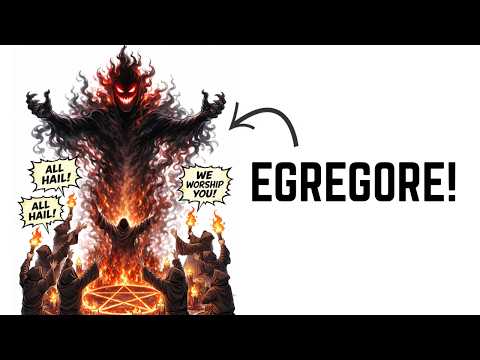
The air crackles, not from static, but from the unseen currents of shared belief. We move within a symphony of thought-forms, symphonies composed by the collective unconscious. These are the Egregores—invisible architects of our shared reality, born from the crucible of human emotion, intent, and unwavering attention. Forget dusty grimoires for a moment; the most potent magic is often woven in the collective psyche, shaping not just personal destinies, but the very fabric of civilization. This isn't about ancient gods in the ether; it's about the tangible power of shared ideas, materialized through sustained focus.
Tabla de Contenidos
- ¿Qué son los Egrigóres? El Nexo entre la Mente y la Materia
- La Alquimia de la Creación: Cómo Nacen los Egrigóres
- Egrigóres en Acción: De Dioses Antiguos a Movimientos Modernos
- El Poder de la Creencia Colectiva: Manifestación Real de Realidades
- Jesús y Dios como Egrigóres: Un Análisis Pragmático
- Manipulación y la Necesidad Espiritual: ¿Por qué Creamos Egrigóres?
- Egrigóres vs. Tulpas: Distinguiendo las Creaciones de la Mente
- Aprovechando el Poder del Egrégore: Tu Próximo Paso Estratégico
- Arsenal del Mago: Herramientas para la Maestría de Egrigóres
- Preguntas Frecuentes sobre Egrigóres
¿Qué son los Egrigóres? El Nexo entre la Mente y la Materia
An egregore is a collective thought-form, a psychically charged entity or concept born from the shared consciousness of a group. Think of it as a psychic construct that gains autonomy and influence through sustained belief, emotion, and focused attention from multiple individuals. While often discussed in esoteric circles, the principle is observable in everyday phenomena. Religions, political movements, national identities, and even successful brands can exhibit egregoric characteristics. They are, in essence, materialized spiritual energy, shaping our perceptions, actions, and ultimately, our shared reality. Understanding this is the first step towards mastering the invisible forces that govern our world.
La Alquimia de la Creación: Cómo Nacen los Egrigóres
The formation of an egregore is a fascinating process, akin to a spiritual alchemy. It begins with a seed of an idea or desire, shared by a few. As more individuals invest their emotional energy and attention into this concept, it begins to solidify. This isn't mere agreement; it's the active channeling of psychic energy.
- Conception: An initial idea, symbol, or goal emerges. This could be a deity, a political ideology, a brand logo, or even a shared aspiration.
- Attraction of Focus: Individuals become aware of and drawn to this concept. This awareness starts the process of investment.
- Emotional Imbuement: Participants imbue the concept with their feelings – passion, devotion, anger, hope, fear. This emotional charge is the 'fuel' for the egregore.
- Sustained Attention & Ritual: Through consistent thought, discussion, rituals, prayer, or collective action, the egregore is reinforced and fed. This sustained focus prevents it from dissipating.
- Manifestation & Autonomy: Once sufficiently charged, the egregore begins to exert its own influence, acting as a semi-autonomous entity that can inspire, guide, or even manipulate its creators. Its power grows with the size and fervor of its following.
The key is the collective investment. A lone individual can create a sigil or a tulpa with personal intent, but an egregore requires a shared psychic mass. This highlights the raw power of group dynamics and shared belief systems.
Egrigóres en Acción: De Dioses Antiguos a Movimientos Modernos
The history of humanity is a tapestry woven with the influence of egregores. Ancient pantheons, for instance, were not merely stories; they were powerful collective constructs fueled by millennia of worship, ritual, and belief. The traits attributed to gods like Zeus, Odin, or Isis were amplified through the collective imagination, granting them a tangible psychic presence and efficacy.
In more recent times, consider the evolution of national identities. What is patriotism if not a powerful egregore, drawing on shared symbols, histories, and collective emotions? Similarly, major political movements, from the rise of communism to the fervor surrounding democratic ideals, represent potent egregores that mobilize millions. Even the seemingly mundane world of branding has its egregores; think of the immense psychic energy invested in the logos and mythologies of companies like Apple or Coca-Cola.
"The collective unconscious is a reservoir of latent memory traces… It is the objective psychic condition of human existence." - Carl Jung
These examples underscore that egregores are not confined to occult theory; they are fundamental forces shaping human civilization. To ignore them is to remain oblivious to a primary driver of history and culture.
El Poder de la Creencia Colectiva: Manifestación Real de Realidades
The comments section often sparks profound insights, and one user put it perfectly: "A collective manifestations through hundreds of thousands or especially billions of people will create real realities." This is the core mechanism. When a vast number of minds align with a single concept, investing their psychic and emotional capital, the probability of that concept manifesting in the physical world increases dramatically.
This is not magic in the sense of violating physical laws, but rather magic as a profound manipulation of probability and perception through focused collective will. The 'miracles' attributed to different deities across cultures can be seen as direct results of billions of minds channeling energy towards those specific archetypes, creating localized pockets of amplified reality that conform to the believers' expectations. This is the power of unified intent, amplified to a planetary scale. It's a potent reminder that our collective beliefs aren't just abstract ideas; they are blueprints for the reality we inhabit.
Jesús y Dios como Egrigóres: Un Análisis Pragmático
The question of whether figures like Jesus or the concept of God are egregores is a natural extension of this understanding. Consider the sheer psychic investment over two millennia. Billions have prayed, visualized, celebrated, and fought in the name of Jesus. Even if the historical figure never existed in the way described, the sustained, collective belief has undoubtedly forged an incredibly powerful egregore.
This entity, born from humanity's faith, need, and desire for salvation, now embodies the expectations of believers. It "answers" prayers and "appears" not necessarily due to an inherent divine nature, but because it is a psychic construct designed to respond in precisely that way. The question then becomes: Do we create our gods through our faith and need? From a pragmatic, magical perspective, the answer leans towards yes. The power and influence attributed to these figures are undeniably real, regardless of their ultimate origin. This is a critical distinction for any practitioner: the energy and manifestation are real, irrespective of the ontological debate. The same logic applies to the broader concept of 'God' – a vast, amorphous egregore born from humanity's perennial yearning for the transcendent. Understanding this opens up pathways for engaging with these forces consciously, rather than being blindly influenced by them.
Manipulación y la Necesidad Espiritual: ¿Por qué Creamos Egrigóres?
A recurring theme in the community's feedback points to a fundamental human drive: "people are easily manipulated and I believe humans need to believe in something spiritual." This is precisely why egregores, both positive and negative, can exert such a powerful influence. Humans are, by nature, meaning-making creatures who often seek comfort, guidance, and a sense of belonging.
This spiritual need makes us susceptible to the gravitational pull of established egregores. Religious institutions, political parties, and even popular ideologies often leverage this inherent need to form strong collective identities. They present a pre-packaged belief system, offering answers and community in exchange for focused attention and emotional investment. While this can lead to profound spiritual experiences and collective progress, it also opens the door to manipulation. Those who understand egregoric mechanics can subtly or overtly steer collective attention to serve their own agendas, creating self-serving thought-forms or reinforcing existing ones. Recognizing this interplay between spiritual need and potential manipulation is crucial for maintaining personal autonomy within the collective consciousness. This is why developing your own internal compass and critical thinking is paramount when engaging with any group belief system.
Egrigóres vs. Tulpas: Distinguiendo las Creaciones de la Mente
The question regarding tulpas is a common one, and it's essential to differentiate them from egregores. While both are forms of conscious creation, their scale and origin differ significantly.
A tulpa is an entity created by an individual's focused intent and imagination, often through dedicated meditation and visualization techniques. It's a personal creation, a companion or tool that exists primarily within the creator's psyche, though some practitioners report external manifestations. The energy investment comes from a single source.
An egregore, on the other hand, is a collective creation. It arises from the shared belief, emotion, and attention of a group. Its power and influence are derived from this collective psychic mass, making it far larger and more autonomous than a tulpa. Religions, political parties, and brands are examples of egregores. While a tulpa might be your personal magical servant, an egregore is akin to a public utility, a force that exists independently and influences a wider population. Understanding this distinction is vital for effective magical practice, as the methods for creating, interacting with, and controlling each are vastly different.
Aprovechando el Poder del Egrégore: Tu Próximo Paso Estratégico
Now that you grasp the fundamental mechanics of how egregores form and operate, the question becomes: How do you leverage this knowledge? Blindly following established egregores can lead to manipulation and a loss of personal agency. However, understanding their nature grants you a powerful strategic advantage.
The ultimate goal for any serious practitioner is to move from being a passive recipient of egregoric influence to becoming a conscious architect of your own reality. This involves several key steps:
- Self-Awareness: Identify the egregores you are currently influenced by. Analyze your beliefs, emotional responses, and the group affiliations you hold. Are they serving your highest good, or are they subtly controlling you?
- Intentional Creation: With a clear understanding of egregoric principles, you can begin to consciously create your own focused realities. This could involve developing personal power symbols, focusing collective intent for a specific, positive outcome, or even working with established egregores in a more informed, less subservient manner.
- Ethical Application: The power to shape collective consciousness comes with immense responsibility. Always ensure your intentions are aligned with constructive, ethical goals. The dark side of egregoric manipulation is a path that leads to destruction, for both the creator and the creation.
This journey requires dedication, precision, and a willingness to challenge your own deeply ingrained beliefs. It's about understanding the invisible currents and learning to navigate them, or even redirect them, with purpose. For those seeking to delve deeper into the practical application of such concepts, exploring advanced texts on ceremonial magic and the psychology of belief systems is highly recommended. Resources like Liber Null & Psychonaut offer profound insights into practical magic and thought-form construction.
Arsenal del Mago: Herramientas para la Maestría de Egrégore
- Libros Fundamentales: Liber Null & Psychonaut por Peter J. Carroll (indispensable para la magia del caos), Condensed Chaos por Phil Hine (un enfoque práctico y directo).
- Herramientas de Visualización: Un diario de alta calidad para registrar ideas y operaciones, tarjetas de índice o software para diseño de símbolos.
- Recursos de Investigación: Acceso a best practices en psicología colectiva, antropología de las religiones y estudios de redes sociales para entender las dinámicas de grupo.
- Herramientas de Conexión Digital: Plataformas de comunicación online y foros dedicados a la práctica esotérica pueden ser útiles para identificar o colaborar en la creación de pequeños grupos de enfoque.
Preguntas Frecuentes sobre Egrigóres
¿Puede un individuo crear un egregore por sí solo?
Si bien un individuo puede crear un símbolo potente o una forma de pensamiento para uso personal (como un tulpa o un sigilo), un egregore se define por su naturaleza colectiva. Requiere la energía y la atención compartidas de múltiples mentes para manifestarse plenamente como una entidad influenciable.
¿Son los egrigóres siempre peligrosos?
No necesariamente. Los egrigóres pueden ser neutrales, beneficiosos o dañinos, dependiendo de las intenciones y la energía invertida por sus creadores. Los egrigóres positivos pueden fomentar la cooperación, la creatividad y el progreso social. La clave está en la conciencia y la intención detrás de su creación y mantenimiento.
¿Cómo me protejo de influencias egregores negativas?
La autoconciencia es tu principal defensa. Identifica tus propias creencias y emociones, y cuestiona su origen. Fortalece tu voluntad individual a través de prácticas como la meditación, el establecimiento de límites psíquicos y el desarrollo de tu propio sistema de creencias basado en la razón y la experiencia personal, en lugar de la adhesión ciega a lo colectivo.
Tu Operación: Diseña Tu Símbolo Egregórico Personal
Ahora es tu turno de poner este conocimiento en práctica. Elige un objetivo que desees manifestar en tu vida: puede ser algo simple como mejorar tu concentración, o algo más complejo como atraer una oportunidad profesional específica. Luego, sigue estos pasos para diseñar tu propio símbolo egregórico personal:
- Define tu Intención: Sé extremadamente claro y conciso sobre lo que deseas. Escríbelo en una frase. Ejemplo: "Mi voluntad es manifestar una mayor disciplina en mi práctica diaria."
- Crea tu Símbolo: Transforma tu intención en un símbolo visual único. Evita usar símbolos preexistentes. Debe ser algo que resuene contigo a un nivel intuitivo. Puede ser una combinación de formas geométricas, líneas, o incluso una imagen abstracta. La singularidad es clave.
- Imbuye de Emoción: Mira tu símbolo y siente la *realidad* de tu intención cumplida. Siente la disciplina, la constancia, la energía. Conecta profundamente con esa emoción.
- Carga y Lanzamiento: Sostén el símbolo (o una imagen mental clara de él) y enfócate en tu intención y emoción durante al menos 5-10 minutos. Al final, deshazte del símbolo (quemarlo, rasgarlo, o simplemente olvidarlo conscientemente) lanzando la energía al universo.
Registra tu operación en tu diario mágico. Observa las sincronicidades y los cambios que comienzan a manifestarse en tu vida. ¿Estás preparado para ejercer tu voluntad sobre la corriente colectiva?
Practitioner's Note: True magick requires resources. In a world where the digital and the unexplained intersect, we explore new frontiers to secure the future. Do you dare to be part of the vanguard? Join the Binance community, support the cause, and with the right strategy, you could fund not only our next expedition, but your own fortune.
No hay comentarios:
Publicar un comentario