
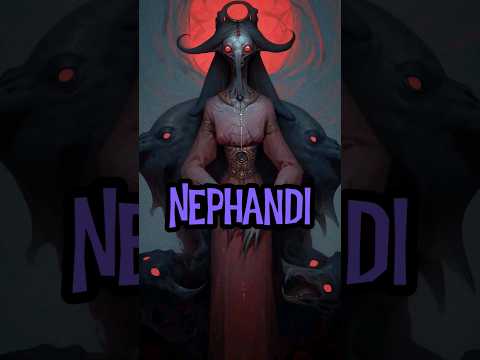
The veil between reality and the yawning void is thinner than most dare to admit. In the complex tapestry of Mage: The Ascension, where magic is the art of reshaping existence through Will, there exist those who twist this divine spark not towards creation, but towards utter annihilation. These are the Nephandi, the fallen mages, and they represent the ultimate perversion of magical potential. Forget vampires and werewolves; the true existential threat in the World of Darkness often whispers from within the ranks of mages themselves.
Imagine a power capable of unraveling the very fabric of reality, not to rebuild it in a new image, but to simply erase it. This is the core ambition of the Nephandi. They are not driven by the same desires as other supernatural creatures, nor by the Technocracy's sterile order or the Traditions' ideological struggles. Their path is one of nihilism, an embrace of entropy, and a fervent desire to see all that is, cease to be.
The concept of the Nephandi taps into a primal, Lovecraftian horror – the fear of cosmic indifference and the ultimate futility of existence. When exploring the darker corners of this tabletop RPG, understanding the Nephandi is crucial. They embody the abyss that gazes back when you peer too deeply into the nature of magic and reality.
Who Are the Nephandi? The Twisted Path to Oblivion
At their core, Nephandi are mages who have deliberately chosen a path of destruction. This isn't a descent caused by external corruption, but a conscious, often philosophical, embrace of evil. They see the universe as flawed, painful, or simply meaningless, and their solution is its complete eradication.
Some delve into pacts with entities from beyond, beings that personify entropy, chaos, or utter void. These can range from demonic entities and Archons of Oblivion to more abstract forces that humans can barely comprehend. The common thread is a rejection of creation and an alignment with forces that seek to unmake.
It’s a chilling thought: what if your most terrifying cultists aren’t foreign invaders, but the very mages you thought were on your side? The idea of them infiltrating power structures, like their "special projects division" reportedly separating from the Syndicate, highlights their insidious nature. They don't always operate in shadows; sometimes, they are already inside the house.
Philosophies of Annihilation: Why Destroy?
The motivations of Nephandi are varied, but they all lead to the same destructive end. Some believe that the current universe is a flawed prison, a cosmic mistake that must be undone. They might seek to return existence to a primordial state of nothingness, or they might aspire to become demons themselves, believing this to be the only true state of being after the universe's end.
"They either want to destroy the world or drag it into Oblivion, and the difference between that is really just a difference in philosophy."
This sentiment captures the chilling pragmatism of their outlook. For them, destruction is not an act of malice, but a philosophical necessity, a cosmic correction. They might genuinely believe they are ushering in a new, even if empty, order. This isn’t about personal gain or power in the traditional sense; it's about embracing the ultimate outcome they perceive as inevitable or desirable.
The notion that "Most Nephandi aspire to become demons" speaks to a twisted form of transcendence. They seek to shed their mortal coils and embrace a more fundamental, destructive essence. This often stems from contacts with what they perceive as older, more powerful realities, where only beings of pure destruction or primal essence remain.
However, the underlying truth might be far more insidious. Are they truly enlightened, or are they being manipulated by the very demons they seek to emulate? The promise of power, of becoming like their dark patrons, could be a sophisticated deception designed to gather more followers and spread greater chaos. It's a gamble where the stakes are reality itself.
Then there are those who worship actual cosmic horrors, entities like those described in Cthulhu myths, but they don't necessarily see evil as an end in itself. They act because they believe their alien gods command it, viewing their destructive acts as a form of divine service.
The Price of Fall: Gilgul and the Widderslainte
The path of a Nephandi is often one of no return. In the lore, the concept of "Gilgul" is particularly grim. It's a form of soul destruction and reincarnation, often into a state of pure, unthinking animality or a monstrous form, effectively erasing the mage's individuality and consciousness. This is essentially the ultimate price for their fall, a spiritual auto-da-fé.
This process ensures they cannot be reborn as "Widderslainte"—those who embody the opposite path, fighting against entropy. It’s a divine or cosmic punishment, ensuring their negative energy is contained or transformed into something less capable of conscious, targeted destruction.
Recognizing the Signs: Infiltration and Warning Signs
Identifying a Nephandus is incredibly difficult, as they are masters of deception, often masking their true intentions behind philosophical arguments or even feigned altruism. They may infiltrate mundane power structures, organizations, or even spiritual groups, seeking to sow discord and weaken the world from within.
The idea of them ruling the Technocracy, or deeply influencing its "special projects divisions," is a terrifying thought. Their ability to manipulate, to twist ideologies, and to exploit weaknesses makes them a constant threat. If you see them, the instinct might be to "run and tell your nearest Marauders where to go," but even then, it’s a race against time and the insidious spread of their influence.
Mages who walk the path of destruction are often contrasted with those who seek to preserve or reshape reality. While Traditions might debate philosophies and the Technocracy enforce order, the Nephandi stand apart, their goal singular: unmaking.
"My main cha is reincarnated gigulled famous canon barabbi from few thousands years ago 😂."
This comment highlights how deeply the concept of Gilgul has permeated the player base, showing the long-term impact of these figures on the game's narrative and player imagination. It’s a testament to the game’s ability to create truly nightmarish scenarios.
The Tools of Annihilation and Defense
The Nephandi wield immense power, often drawing from the Abyss or their chosen patrons. Their magic is inherently destructive, capable of unraveling spells, corrupting souls, and manifesting horrors. This is where the need for potent defenses becomes paramount. Understanding their methods requires a deep dive into the "Dictionaries Infernal," ancient texts that catalogue the entities and forces they draw upon. Concepts like "Cthonics" and the "Tellurian" (the Earth itself) become battlegrounds.
For those who hunt them, like the infamous Harry Dresden (a character from another popular fantasy series, used here metaphorically for a skilled investigator of supernatural threats), the fight is existential. As one commenter noted, "When Harry Dresden tells you did not do something you don't do it." This emphasizes the absolute certainty and danger associated with such entities; their word, or their intent, is deadly serious.
Creating specialized tools and understanding esoteric arts is crucial. This is why mages study. This is why seals are made. To protect, to channel, and sometimes, to actively combat these forces.
For any serious practitioner of the magical arts, having the right tools to understand and counter these threats is not optional; it's essential. In the intricate dance of Will and reality, having swift and reliable methods to generate protective symbols, understand cosmic alignments, or even trace the lineage of fallen spirits can make the difference between preserving existence and succumbing to oblivion.
To aid in such endeavors, many practitioners find immense value in digital tools that streamline complex processes. For instance, generating powerful sigils, the very bedrock of many protective and offensive magical operations, can be time-consuming manually. Tools like the Chaos Magick Sigil Generator app offer a swift and efficient way to create custom sigils, allowing you to focus your Will and energy on the intent rather than the tedious creation process. This allows for rapid response to threats and more potent ritual work.
Veredicto del Practicante
The Nephandi are not merely villains; they are a philosophical challenge. They represent the seductive allure of nihilism and the ultimate consequence of wielding power without ethical grounding. They are the dark reflection of creation, the ultimate ‘other’ that threatens to consume all. To understand them is to understand the deepest shadows that magic can cast.
Their presence in Mage: The Ascension forces players and Storytellers to confront the most profound questions about existence, purpose, and the very nature of evil. They are a reminder that the greatest threats often come not from external monsters, but from the twisted potential within ourselves and our own kind.
Arsenal del Mago
* Essential: Chaos Magick Sigil Generator - For crafting potent sigils to ward off or represent destructive forces. * Grimoires detailing demonic pacts and infernal hierarchies (e.g., Pseudomonarchia Daemonum, Dictionnaire Infernal). * Research into philosophical nihilism and existentialism. * Texts on cosmic horror and entropic forces. * Art and literature depicting apocalyptic themes.
Taller Práctico: Creación de un Sigilo de Protección Contra la Corrupción
While confronting Nephandi directly is the domain of experienced mages and requires extensive preparation, understanding the symbolic defense against their influence is a valuable skill for any practitioner. Here’s how to create a sigil to ward off destructive influences:
- Define tu Intención Clara y Concisamente: Escribe una declaración en tiempo presente, positiva y enfocada en la protección. Por ejemplo: "Mi voluntad es inquebrantable y protege mi ser de toda influencia destructiva."
- Elimina Letras Repetidas: De tu declaración, crea una cascada de letras únicas. Siguiendo el ejemplo: M Y V O L T A N D P R E U I N F C X.
- Diseña tu Sigilo: Utiliza las letras extraídas como base para crear un glifo. Puedes hacerlo a mano, entrelazando las letras, o usar una herramienta digital. Enfócate en líneas limpias y formas que evoquen fortaleza y resistencia.
- Carga el Sigilo con Energía: Una vez creado el sigilo, es crucial cargarlo. Esto puede hacerse a través de un estado gnóstico (meditación profunda, excitación, dolor controlado), visualización intensa, o rituales diseñados para infundir energía. Al cargar, enfócate en la fuerza de tu intención.
- Disipa y Olvida (Parcialmente): Una vez cargado, debes "olvidar" conscientemente el sigilo y su intención inmediata. Esto permite que el subconsciente y la energía infundida hagan su trabajo. Sin embargo, guarda el sigilo en un lugar seguro (un diario, un amuleto) donde puedas consultarlo o reactivarlo si es necesario.
This practical exercise, even if not directly facing an actual Nephandus, builds the mental fortitude and symbolic understanding necessary to resist their influence.
Preguntas Frecuentes
- Q: ¿Son todos los Nephandi inherentemente 'malvados'?
A: La definición de maldad es fluida, pero su objetivo primario es la destrucción, lo cual es percibido como malvado por la mayoría de las estructuras de existencia. Sus motivaciones pueden ser filosóficas, pero sus acciones son inherentemente destructivas. - Q: ¿Pueden los Mages de las Tradiciones volverse Nephandi?
A: Sí, el camino hacia la caída es una elección consciente. Un mago de cualquier camino puede, con el tiempo y la deliberación, abrazar la destrucción y convertirse en Nephandi. - Q: ¿Qué diferencia a los Nephandi de los demonios?
A: Los Nephandi son magos caídos que eligen la destrucción o pactan con entidades destructivas. Los demonios son entidades de otra naturaleza, a menudo primordiales o infernales, que a veces son invocadas o veneradas por los Nephandi. - Q: ¿Hay alguna esperanza de redención para un Nephandus?
A: El concepto de Gilgul sugiere un fin definitivo para su individualidad consciente. La redención es extremadamente improbable, si no imposible, una vez que uno ha cruzado ese umbral.
Tu Operación: El Eco del Vacío
Reflexiona sobre la siguiente pregunta: Si te enfrentaras a una crisis personal que te hiciera cuestionar el valor de la existencia, ¿qué fuerza encontrarías dentro de ti para seguir existiendo y creando, en lugar de sucumbir a la desesperanza? Describe brevemente un símbolo o una acción que represente tu respuesta personal a esta introspección.
Your exploration into the abyss doesn't have to be a one-way street. Understand that the forces of entropy are countered by the power of focused Will and creation. For practitioners seeking to bolster their own creative energies and defenses, having access to powerful, intuitive tools is paramount. The ability to quickly generate and charge resonant sigils can be a significant advantage when dealing with the subtle, or overt, influences that seek to unravel your work and your reality.
Practitioner's Note: True magick requires resources. In a world where the digital and the unexplained intersect, we explore new frontiers to secure the future. Do you dare to be part of the vanguard? Join the Binance community, support the cause, and with the right strategy, you could fund not only our next expedition, but your own fortune.
No hay comentarios:
Publicar un comentario