
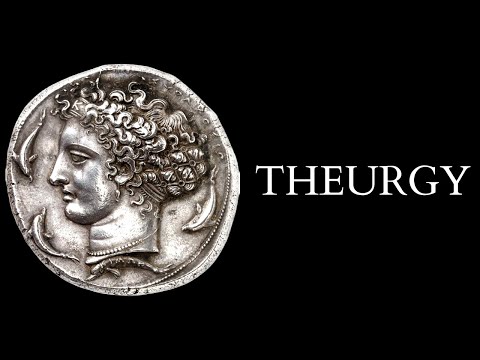
In the grand theater of existence, where the divine echoes through the mundane, the pursuit of salvation is not a passive plea but an active art. Theurgy, the 'God-Doing', is precisely this: the masterful orchestration of ritual and philosophy to bridge the chasm between mortal and immortal.
The echoes of ancient pagan thought on attaining a higher state of being are scarce, often lost to the sands of time. Yet, within the scant surviving pages of Proclus’ On the Hieratic Art According to the Greeks, we find a surprisingly concise, yet profoundly potent, exposition on salvation through Theurgy. This text, a single manuscript exemplar first brought to print in 1497 by Marsilio Ficino, stands as a monumental testament to the intricate synthesis of pagan philosophy and religious practice.
Proclus outlines a four-stage ascent, a meticulously crafted ladder for the aspirant to ascend towards magical prowess and ultimate immortalization. This journey is not one of idle contemplation, but of active participation in the divine fabric of reality. It commences with the profound realization that the world itself is a divine emanation, a continuous outflow from the ultimate source. From this foundational understanding, the practitioner embarks on invoking the divine through carefully constructed incantations, seeking direct divine epiphanies. The path is further illuminated by the acquisition of occult passcodes – resonant keys to unlock cosmic energies – and the animation of cultic statues, imbuing them with divine presence. The ultimate culmination lies in conjunctions with the Divine, a state of unified consciousness and being.
The Four Stages of Theurgic Ascent
Proclus’ roadmap for apotheosis is a rigorous, yet achievable, process for the dedicated practitioner. Each stage builds upon the last, deepening the connection with the divine and expanding the practitioner’s capacity to channel cosmic energies.
-
Understanding the Divine Emanation: The World as Manifest Deity
The initial step is a fundamental recalibration of perception. It requires understanding that the cosmos is not a mere collection of inert matter, but a dynamic, living expression of the Divine. Every atom, every star, every intricate biological process is a facet of the singular, ultimate source. This recognition shifts the practitioner’s focus from external manipulation to internal alignment with universal principles.
-
The Power of Invocation: Incantations and the Sacred Word
Once the practitioner grasps the immanence of the divine, the next step involves actively calling upon these forces. Incantations are not simply rhyming verses; they are precisely calibrated vibrational keys, designed to resonate with specific divine frequencies. The proper use of sacred language, whether in ancient tongues or modern conceptualizations, can attune the practitioner's energetic field, drawing down celestial influences.
-
Receiving Divine Epiphanies and Occult Passcodes
As the practitioner becomes more attuned, direct experiences of the divine, or epiphanies, become possible. These moments can range from profound inner knowing to vivid visionary experiences. Concurrently, the individual learns to discern and employ 'occult passcodes'. These are not literal passwords, but symbolic representations, gestures, or mental constructs that act as keys to specific realms or energies within the greater cosmic architecture.
-
Animating Divine Forms and Conjunction with the Absolute
The apex of theurgy involves the animation of cultic statues, imbuing them with sacred energy and divine presence. This is more than mere idol worship; it is the practical application of the preceding stages to create focal points of divine manifestation. The ultimate goal, however, is the direct, unmediated conjunction with the Divine – a merging of the individual consciousness with the universal, achieving a state of immortalized being.
The Legacy of Proclus: A Practical Guide to the Divine
The surviving text of Proclus, though brief, offers an invaluable glimpse into the Hellenistic pursuit of deification. It underscores that the path to spiritual liberation was not solely philosophical debate, but an active, hands-on engagement with the divine through carefully constructed rituals and profound mental discipline.
For modern practitioners, this ancient blueprint offers a powerful framework. It is a testament to the idea that the divine is not a distant abstraction, but an immanent reality accessible through dedicated practice. Theurgy, as presented by Proclus, is the ultimate act of self-empowerment, where one ceases to be a mere recipient of fate and becomes an active architect of their spiritual destiny.
The practical application of these principles requires a deep dive into the symbolic language of the cosmos. Understanding correspondences, the energetic signatures of planets, elements, and archetypes, becomes paramount. This is where the study of systems like astrology, tarot, and gematria can provide invaluable context, acting as the ancient 'passcodes' Proclus alluded to.
Veredicto del Practicante: ¿Vale la pena el estudio de la Teúrgia?
Theurgy, as espoused by Proclus, is not for the faint of heart or the intellectually lazy. It demands rigorous self-discipline, a profound capacity for abstract thought, and an unwavering commitment to experimentation. However, for those willing to undertake this challenging yet rewarding path, the potential rewards are immeasurable: not merely access to magical powers, but the ultimate transformation of consciousness and the attainment of a divinized state.
Pros:
- Offers a structured, philosophical framework for spiritual attainment.
- Emphasizes active participation and personal empowerment.
- Connects esoteric ritual with profound philosophical understanding.
- Provides a historical bridge to understanding ancient pagan spiritual practices.
Contras:
- Requires significant intellectual rigor and devotion.
- The texts are often dense and require dedicated scholarship.
- Mistakes in practice can lead to psychological disorientation if not approached with proper guidance and self-awareness.
Arsenal del Mago
- Libros Fundamentales: Proclus' On the Hieratic Art according to the Greeks (cualquier edición académica), The Elements of Theology de Proclus, All From One: A Guide to Proclus, Proclus: An Introduction.
- Herramientas de Estudio: Un diario detallado para registrar experiencias y comprensiones, herramientas de astrología para comprender las correspondencias cósmicas, y acceso a textos filosóficos clásicos.
- Recursos de Investigación: Para consultas académicas y traducciones precisas, bibliotecas universitarias y bases de datos de textos antiguos son invaluables.
Taller Práctico: La Semilla de la Intención Teúrgica
Antes de embarcarse en complejas evocaciones, la base de toda práctica teúrgica es la correcta formulación de la intención y la comprensión de las energías involucradas. Este ejercicio inicial te ayudará a sentar las bases para tu propio camino de 'God-Doing'.
-
Clarifica Tu Intención Divina:
Reflexiona sobre un área de tu vida donde buscas una mayor alineación con un principio divino o una mejora sustancial. No pienses en objetivos mundanos, sino en el crecimiento espiritual o la manifestación de una virtud superior (ej. "Desarrollar una mayor paciencia divina", "Manifestar la sabiduría para tomar decisiones correctas", "Canalizar la energía creativa del cosmos en mi trabajo").
-
Investiga Correspondencias Solares:
Identifica qué correspondencias planetarias, elementos, colores o arquetipos se asocian tradicionalmente con tu intención. Por ejemplo, si tu intención se relaciona con la sabiduría o la comunicación, podrías investigar correspondencias con Mercurio, el aire, o el arquetipo del mensajero.
-
Formula una Pequeña Invocación:
Basándote en tu intención y las correspondencias, escribe una o dos frases que actúen como una suave llamada. No es una orden, sino una invitación. Por ejemplo, si buscas la sabiduría, podrías decir: "Oh, inteligencia cósmica, fuente de toda verdad, te invito a que tu luz ilumine mi entendimiento."
-
Visualiza el Flujo Divino:
Siéntate en un lugar tranquilo. Cierra los ojos y visualiza la energía divina que resuena con tu intención fluyendo hacia ti. Imagina que esa energía se integra en tu ser, fortaleciendo tu voluntad y alineando tu conciencia. Siente la conexión, no solo la aspiración.
-
Registra Tu Experiencia:
Escribe en tu diario lo que has sentido, visualizado y comprendido. Anota cualquier palabra o concepto que haya surgido. Este registro es el primer paso para comprender tu propia relación con las fuerzas teúrgicas.
Preguntas Frecuentes
- ¿Es la Teúrgia una forma de "magia oscura"?
- No, la Teúrgia, según Proclus, es explícitamente el "God-Doing", la práctica de trabajar con las fuerzas divinas o superiores para la elevación espiritual y la unión con lo divino. Se distingue de la hechicería por su objetivo y su fuente de poder, enfocándose en la luz y la emanación divina.
- ¿Se puede practicar Teúrgia sin creer en dioses paganos específicos?
- La esencia de la Teúrgia es la conexión con un principio divino o una fuente trascendente. Si bien Proclus opera dentro de un marco politeísta helenístico, los principios de alineación, invocación y unión pueden ser adaptados por practicantes de diversas sendas espirituales que busquen una conexión con lo sagrado.
- ¿Qué tan importante es la traducción y edición de Proclus?
- Extremadamente importante. Dada la antigüedad y la naturaleza esotérica del texto, la calidad de la traducción y el comentario pueden impactar significativamente la comprensión. Ediciones académicas con notas detalladas son preferibles para desentrañar las sutilezas de la filosofía y la práctica teúrgica.
Tu Operación: El Despertar del Aspirante Teúrgico
Ahora que has explorado la esencia de la Teúrgia y los pasos delineados por Proclus, el desafío es integrarlo en tu viaje. No basta con leer sobre la unión divina; es un estado que se cultiva a través de la práctica consciente y la voluntad enfocada.
Tu tarea: Dedica una semana completa a la contemplación diaria de tu propia "Intención Divina", tal como la definiste en el Taller Práctico. Cada día, realiza una breve meditación o visualización enfocada en esa intención. Mantén un registro diario de tus percepciones, sincronicidades o cualquier cambio sutil en tu estado de ser. El objetivo no es la manifestación externa inmediata, sino el fortalecimiento de tu conexión interna con ese principio divino que buscas encarnar. ¿Qué descubres sobre ti mismo cuando te conviertes en un agente activo de tu propia elevación espiritual?
Practitioner's Note: True magick requires resources. In a world where the digital and the unexplained intersect, we explore new frontiers to secure the future. Do you dare to be part of the vanguard? Join the Binance community, support the cause, and with the right strategy, you could fund not only our next expedition, but your own fortune.
No hay comentarios:
Publicar un comentario