
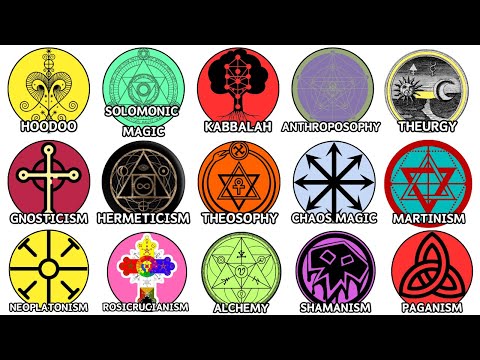
The veil between the mundane and the mystical is thinner than you think. Across millennia, humanity has sought to understand its place in the cosmos, to harness unseen forces, and to awaken dormant aspects of the psyche. This quest has spawned a dazzling array of esoteric traditions, each offering a unique map to the hidden territories of reality. But with so many paths – from the ancient whispers of Hoodoo to the bold assertions of Chaos Magic – where does one begin? This isn't about blind faith; it's about pragmatic exploration.
Forget the endless intros and fluffy pronouncements. In this definitive guide, we cut straight to the core of fifteen pivotal esoteric practices, distilling their essence into actionable knowledge. We're diving deep into the currents of spiritual science, mystical lore, and practical magic that have shaped human consciousness for centuries. Think of this as your seasoned guide opening ancient grimoires, revealing the fundamental principles without the spiritual fluff. We'll explore how these systems, despite their surface differences, often share common roots and offer complementary insights into the human condition. Let's begin the excavation.
Table of Contents
- 0:00 Hoodoo: Ancestral Energy & Fetish Magic
- 1:36 Solomonic Magic: Angelic & Ceremonial Operations
- 2:19 Kabbalah: The Tree of Life & Divine Emanations
- 3:52 Anthroposophy: Spiritual Science for the Modern Age
- 5:09 Theosophy: Ancient Wisdom for Universal Brotherhood
- 6:28 Gnosticism: The Spark Within & The Demiurge
- 7:45 Hermeticism: As Above, So Below – The Emerald Tablet
- 9:03 Chaos Magic: Will, Belief & Practical Sorcery
- 10:07 Martinism: The Reintegration of the Spirit
- 11:01 Neoplatonism: The One & The Ascent of the Soul
- 12:12 Theurgy: Divine Work for Spiritual Transformation
- 12:51 Rosicrucianism: The Rose Cross & Inner Awakening
- 13:43 Alchemy: The Great Work & The Philosopher's Stone
- 14:36 Shamanism: Bridging Worlds & Spirit Allies
- 15:38 Paganism: Nature Worship & Reciprocal Energies
0:00 Hoodoo: Ancestral Energy & Fetish Magic
Hoodoo, also known as "Low Magic" or "Conjure," is a rich tradition deeply rooted in African American folk magic. It’s less a codified religion and more a collection of practical techniques derived from West African spiritual traditions, blended with elements of Christianity and Native American beliefs. At its heart, Hoodoo focuses on practical problem-solving through the manipulation of spiritual forces. This involves working with ancestral spirits, nature spirits, and even petitioning biblical figures or saints. Its tools are diverse: from mojo bags and gris-gris to trick bags and spiritual baths, all imbued with intention and charged with personal energy.
"The goal of Hoodoo is to bring about tangible results in the physical world, whether it's for protection, prosperity, love, or overcoming obstacles. It’s about actively engaging with the spirit realm to influence your circumstances."
Practitioners often use natural elements like herbs, roots, stones, and personal concerns (like hair or nails) to create spiritual anchors. This is where the pragmatic aspect shines: the belief is that by focusing energy and intent through these material conduits, you can create a direct channel to spiritual assistance. Understanding the correspondences of herbs and the power of spoken incantations are key. For deeper study and practical application, consider texts that explore authentic Hoodoo practices, often referred to as "Hoodoo Manuals" or "Conjure Books," ensuring they are written by practitioners with verifiable lineage, rather than mere academic interpretations. If you’re serious about exploring this path, seeking out well-researched books on Hoodoo is essential.
1:36 Solomonic Magic: Angelic & Ceremonial Operations
The Solomonic tradition, associated with the biblical King Solomon, refers to a body of grimoires and magical systems focused on ceremonial operations, angelic invocation, and the binding of spirits. Texts like "The Key of Solomon" and "The Goetia" (part of "The Lesser Key of Solomon") are central. These systems emphasize rigorous preparation, the creation of sacred space through protective circles and magical tools (wands, swords, pentacles), and the precise invocation of angelic hierarchies or demons. The intent is often to gain knowledge, divine assistance, or command over various entities.
This is high-ceremonial magic, demanding discipline and a deep understanding of correspondences – planetary, angelic, and demonic. The emphasis is on purification, precise timing (often dictated by astrological alignments), and the power of divine names and seals. Unlike the immediate, often intuitive nature of Hoodoo, Solomonic magic is a structured, almost legalistic approach to interacting with the supernatural. For those aspiring to this path, a solid foundation in the historical texts and their modern interpretations, such as those found in advanced Ceremonial Magic courses or specific scholarly editions of the grimoires, is paramount.
2:19 Kabbalah: The Tree of Life & Divine Emanations
Kabbalah is a complex esoteric tradition within Judaism that explores the mystical relationship between the divine and the created universe. Its central metaphor is the Tree of Life, a diagram consisting of ten Sephiroth (emanations of God) and twenty-two paths. Kabbalists use this structure to understand creation, the Divine nature, and the path of spiritual ascent. It’s not just a symbolic map, but a system for meditation, contemplation, and ethical development.
The intricate symbolism and numerological (Gematria) and letter-based (Notarikon, Temurah) methods within Kabbalah offer profound insights into the divine sparks within all things, a concept that resonates with earlier Gnostic beliefs. The idea of returning to the divine source is a recurring theme. For serious study, look beyond popular interpretations; investigate scholarly works on Jewish mysticism and the authentic Kabbalah, focusing on texts like the Zohar and the writings of Isaac Luria. The structured approach to understanding divine energies and their manifestation offers a framework for personal spiritual growth aligned with the principle of "As above, so below."
3:52 Anthroposophy: Spiritual Science for the Modern Age
Founded by Rudolf Steiner, Anthroposophy, or "spiritual science," aims to apply rigorous, systematic methods of inquiry to the realm of the spirit. It posits that humanity can develop higher faculties of perception to directly apprehend spiritual realities, much like scientists investigate the physical world. Anthroposophy describes human evolution through distinct bodies: the physical body, the etheric body (life force), the astral body (soul and consciousness), and the Self (spiritual essence). It’s a holistic worldview seeking to integrate scientific understanding with spiritual insight, emphasizing the development of higher consciousness and critical thinking in an era increasingly reliant on externalized thought processes, including AI.
"Anthroposophy is not a religion, but a spiritual science that seeks to comprehend the fundamental laws of existence, both material and spiritual."
Unlike dogmatic religions, it encourages individual experiential investigation. Its relevance to understanding consciousness and the human psyche in a technologically driven world is significant. For those intrigued, exploring introductory texts on Anthroposophy by Steiner himself, or reputable commentaries on his work, is the recommended path, offering a framework for developing one's own spiritual capacities.
5:09 Theosophy: Ancient Wisdom for Universal Brotherhood
The Theosophical Society, co-founded by Helena Blavatsky, aimed to revive ancient esoteric wisdom and foster a sense of universal brotherhood. Theosophy draws from a vast array of traditions, including Hinduism, Buddhism, Kabbalah, and Hermeticism, to propose an underlying spiritual unity in all religions and philosophies. It outlines a cosmic evolutionary scheme for humanity and the universe, emphasizing the cyclical nature of existence and the potential for spiritual enlightenment through study and ethical living.
Theosophy’s emphasis on "ancient wisdom" positions it as a foundational text for many later esoteric movements. Its teachings on karma, reincarnation, and the different planes of existence have had a profound impact. While sometimes complex, Theosophy offers a framework for understanding the interconnectedness of all things. Further exploration into the foundational texts of Theosophy, such as Blavatsky's "The Secret Doctrine," can provide deeper context.
6:28 Gnosticism: The Spark Within & The Demiurge
Gnosticism, a diverse set of ancient religious and philosophical movements, generally posits that salvation is achieved through gnosis—a special, intuitive knowledge of the divine. Gnostic cosmologies often describe the material world as a flawed creation, brought about by a lesser, ignorant deity known as the Demiurge, distinct from the true, transcendent God. Within humanity, however, resides a divine spark or fragment of the supreme being, trapped within the material form. The goal of the Gnostic path is to awaken this divine spark and achieve reunification with the true divine source.
The emphasis on the divine spark within and the need to return to the source makes Gnosticism a particularly compelling system for self-exploration. Its parallels with Kabbalistic thought, particularly concerning divine emanations and the nature of spiritual light, are striking indeed. Understanding the historical context and interpretations of Gnosticism, accessible through translations of Nag Hammadi texts and scholarly analyses, is crucial for grasping its unique perspective on consciousness and liberation.
7:45 Hermeticism: As Above, So Below – The Emerald Tablet
Hermeticism is a spiritual, philosophical, and esoteric tradition based on the teachings attributed to Hermes Trismegistus, a legendary syncretic figure combining the Greek god Hermes and the Egyptian god Thoth. The core of Hermetic philosophy is encapsulated in the axiom "As Above, So Below," meaning that the principles governing the macrocosm (universe) are reflected in the microcosm (human being) and vice versa. The foundational text is the Emerald Tablet, a short, cryptic work hinting at the secrets of primal matter and the universe.
Hermeticism offers a view of reality as a unified, interconnected whole, where understanding the hidden laws of nature and the human psyche can lead to mastery. It’s a precursor to many later Western esoteric traditions. For practical application, engaging with the foundational texts of Hermeticism, including the "Corpus Hermeticum" and the Emerald Tablet itself, provides the essential blueprint for this philosophical path. Learning to apply its principles can offer a profound understanding of universal dynamics.
9:03 Chaos Magic: Will, Belief & Practical Sorcery
Chaos Magic, emerging in the mid-20th century, is perhaps the most radically pragmatic of modern esoteric systems. It rejects dogma and fixed belief systems, viewing them as limitations. Instead, Chaos Magicians adopt a "gnostic" approach, believing that the key to magic lies not in specific symbols or rituals, but in the power of belief itself, which can be temporarily adopted and discarded as a tool. Its practitioners might utilize anything from sigils and altered states of consciousness to pop culture icons and scientific theories as magical agents.
"The magician is defined by what they can achieve, not by what they believe. Belief is a tool, and the magician is the craftsman."
The focus is on results – on effectively manipulating the subjective and objective realities to achieve desired outcomes. This often involves intense concentration, altered states (like gnosis), and the creation of personal symbols or "servitors" (magical AI, essentially) to carry out specific intentions. Whether you're using an ancient sigil or a meme, the operative principle is the same: a focused will charged with belief, directed at a target. For those looking to dive into this experimental approach, texts like "Liber Null & Psychonaut" by Peter J. Carroll and "Condensed Chaos" by Phil Hine are considered seminal works in Chaos Magic.
10:07 Martinism: The Reintegration of the Spirit
Martinism is a form of esoteric Christian mysticism that focuses on the path of spiritual reintegration. Tracing its origins to the teachings of Louis Claude de Saint-Martin, it emphasizes the concept of the "reintegration" of humanity into its original divine state, lost through the fall. Martinism is characterized by its use of symbolic initiations, contemplative prayer, and the exploration of divine correspondences, often through a Christian lens. It seeks to unveil the hidden spiritual laws and divine presence within the individual and the cosmos.
The path is one of inner transformation, seeking to understand the spiritual nature of man and his relationship to the divine. It encourages a personal, direct experience of spiritual realities rather than blind adherence to dogma. If you’re drawn to a deeply symbolic and introspective path that bridges esoteric philosophy with Christian mysticism, exploring the foundational writings associated with Martinism is a worthy endeavor.
11:01 Neoplatonism: The One & The Ascent of the Soul
Neoplatonism, a philosophical school that flourished in the Roman Empire, is a mystical interpretation of Plato's philosophy. Its central figure, Plotinus, described a hierarchical universe emanating from an ineffable, ultimate reality known as "The One." From The One emanate Intellect (Nous), then the World Soul, and finally the material world. The goal for the Neoplatonist is the mystical ascent of the soul back to union with The One, achieved through philosophical contemplation, purification, and ecstatic experiences.
This philosophy provides a profound metaphysical framework for understanding spiritual hierarchies and the soul's journey. It has influenced countless subsequent esoteric and mystical traditions. Engaging with primary texts, such as Plotinus's "The Enneads," offers direct insight into the sophisticated cosmology and ethical path of Neoplatonism.
12:12 Theurgy: Divine Work for Spiritual Transformation
Theurgy, often associated with Neoplatonism and particularly championed by Iamblichus, translates to "Divine Work." It is a set of magical practices intended to invoke or compel divine powers (gods, angels, elementals) to aid in the purification and spiritual elevation of the practitioner. Unlike theurgy, which aims for direct communion with the divine, other forms of magic might focus on manipulation. Theurgic rituals often involve symbolic actions, invocations, and purifications designed to align the practitioner with higher spiritual forces, facilitating a transformation of consciousness and a direct experience of the divine.
The critical distinction here is the aim: not just to gain power or knowledge, but to achieve spiritual perfection and union with the divine through participation in divine operations. The ethical and spiritual discipline required for true theurgy is immense. For those interested in the practice of divine work, studying the texts of the later Neoplatonists and exploring scholarly works on Theurgy provides essential context.
12:51 Rosicrucianism: The Rose Cross & Inner Awakening
Rosicrucianism is a mystical and esoteric tradition that appeared in Europe in the early 17th century, cloaked in manifestos and symbolic allegories. While its historical origins are debated, it centers on the symbolic union of the Rose (representing the individual) and the Cross (representing the material world or spiritual attainment). Rosicrucianism emphasizes the pursuit of hidden wisdom, spiritual alchemy, and the transformation of the self. Alleged central figures like Christian Rosenkreutz and later interpretations involving figures like the Count of Saint Germain point to a lineage of spiritual seekers focused on inner awakening and the hidden knowledge of the universe.
The focus is on personal evolution, and the path often involves allegorical stages and the study of universal laws. While some organizations offer structured initiatory degrees, the core of Rosicrucianism lies in the individual's quest for spiritual knowledge. Exploring the historical manifestos and reputable modern interpretations of Rosicrucianism can illuminate its symbolic language and philosophical underpinnings.
13:43 Alchemy: The Great Work & The Philosopher's Stone
Alchemy is a complex protoscientific and philosophical tradition that sought to purify, mature, and perfect certain materials. While often popularly associated with turning base metals into gold (the "lesser work"), its ultimate aim was the "Great Work"—the discovery of the Philosopher's Stone, capable of transmuting metals, granting immortality, and achieving spiritual perfection. Alchemists saw the material transformation as analogous to the spiritual transformation of the practitioner.
It's crucial to understand that not all alchemists were focused on literal gold; many pursued spiritual alchemy, seeking inner purification and enlightenment. The symbolism of stages like calcination, dissolution, separation, conjunction, and distillation represents psychological and spiritual processes. Many alchemists were devout monotheists within Christian, Jewish, and Islamic traditions, refuting the claim that all believed in Roman gods. For a comprehensive understanding, delve into spiritual interpretations of Alchemy and its symbolic language, looking for texts that emphasize the psychological and spiritual dimensions rather than just the metallurgical aspects.
14:36 Shamanism: Bridging Worlds & Spirit Allies
Shamanism is one of the oldest spiritual practices known, found in nearly every culture worldwide. At its core, a shaman is an individual who acts as an intermediary between the human world and the spirit world. Through altered states of consciousness—often induced by drumming, chanting, or entheogens—shamans journey into non-ordinary reality to communicate with spirits, diagnose and heal illness, and guide the souls of the deceased. They work with spirit allies, often appearing as animals or nature spirits, to gain knowledge and power.
The practice is intensely practical, focused on solving problems within the community through spiritual means. It’s about establishing a reciprocal relationship with the spirit world. Understanding the diverse forms of Shamanism requires looking at specific cultural contexts, but the universal theme of bridging worlds remains constant.
15:38 Paganism: Nature Worship & Reciprocal Energies
Paganism is a broad umbrella term encompassing a wide variety of indigenous, polytheistic, and nature-based spiritual traditions that predated or exist outside of the Abrahamic religions. While diverse, many pagan paths share a reverence for nature, a belief in multiple deities (often associated with natural forces or archetypes), and a focus on reciprocal relationships with the divine and the natural world. Practices can include seasonal rituals, offerings, and the veneration of ancestors and nature spirits.
Modern Paganism, often referred to as Neopaganism, includes traditions like Wicca, Druidry, and various forms of reconstructed polytheism. The underlying principle is a connection to earth-based spirituality and a recognition of energetic forces at play in the universe. Exploring the diverse expressions of Paganism reveals a spectrum of beliefs and practices rooted in a deep respect for life and the cycles of nature.
Arsenal del Mago
- Libros Fundamentales: "The Kybalion" (Hermeticism), "Liber Null & Psychonaut" (Chaos Magic), "The Secret Doctrine" (Theosophy), "The Enneads" (Neoplatonism), "The Key of Solomon" (Solomonic Magic).
- Herramientas de Estudio: Un diario para registrar operaciones y visiones, un mazo de Tarot (como el Thoth o Rider-Waite para su rica simbología), y acceso a bibliotecas digitales especializadas en ocultismo.
- Recursos Digitales: Software de astrología avanzado para sincronizar operaciones, aplicaciones de meditación guiada para alcanzar estados de gnosis, y plataformas de cursos online con contenido riguroso sobre tradiciones esotéricas.
Taller Práctico: Tu Primera Operación de Intención
Has recorrido un mapa vasto y fascinante de la psique y el espíritu. Ahora es el momento de poner esa comprensión en acción. La eficacia de cualquier práctica esotérica reside en su aplicación. No te pierdas en la teoría; sumérgete en la práctica.
- Selecciona Tu Foco: Elige UNA de las quince tradiciones discutidas que más resuene contigo. No intentes abarcar todo a la vez. La especialización temprana es clave para la maestría.
- Define Una Intención Clara: Tu objetivo debe ser específico, medible, alcanzable, relevante y con un marco temporal (SMART). Por ejemplo, en lugar de "tener más dinero", intenta "recibir $50 adicionales la próxima semana a través de un medio inesperado y positivo".
- Adopta un Principio: Investiga un principio básico de la tradición elegida (ej: el principio de correspondencia en Hermeticismo, el uso de la creencia en Magia del Caos, o la invocación de ancestros en Hoodoo).
- Realiza Una Acción Mínima: Crea un pequeño ritual o ejercicio basado en ese principio y tu intención. Puede ser tan simple como escribir una afirmación enfocada en tu intención y colocarla en un lugar visible, trazar un sigilo básico, o realizar una corta meditación visualizando el resultado deseado.
- Describe Tu Experiencia: Al terminar, anota en tu diario: tu intención, el principio que usaste, el ejercicio que realizaste, y cualquier sensación o pensamiento que surgió durante y después. La documentación es la base de la experimentación.
Preguntas Frecuentes
¿Son todas estas prácticas compatibles entre sí?
Si bien muchas tradiciones comparten principios subyacentes y se pueden integrar de forma pragmática (especialmente bajo el paraguas de la Magia del Caos), cada una tiene su propio sistema de creencias y metodologías. Es recomendable especializarse inicialmente en una o dos y luego explorar cómo se conectan. Un enfoque superficial en muchas puede diluir su efectividad.
¿Necesito ser cínico o escéptico para practicar estas artes?
Un escéptico bien informado es un practicante más fuerte. El cinismo hacia el dogma ciego y las afirmaciones sin fundamento es esencial. La Magia del Caos, en particular, fomenta la adopción temporal de creencias sin apego permanente. La clave es la experimentación y la evaluación crítica de los resultados.
¿Cuál es la forma más rápida de obtener resultados?
La "rapidez" es relativa en la magia. La claridad de intención, la intensidad de la voluntad, la precisión en la ejecución y la sincronización astrológica (si aplica a la tradición) son factores clave. La Magia del Caos, al centrarse en la creencia como herramienta, a menudo permite resultados más rápidos para el practicante experimentado, pero siempre dentro de los límites de la realidad percibida.
¿Cómo puedo mantenerme seguro al explorar estas prácticas?
¿Qué diferencia hay entre Esoterismo, Misticismo y Ocultismo?
Aunque a menudo usados indistintamente, hay matices. El Ocultismo generalmente se refiere a las prácticas y conocimientos "ocultos" o secretos. El Misticismo se enfoca en la experiencia directa y personal de lo divino o la realidad última, a menudo a través de la contemplación y la unión. El Esoterismo es el término más amplio, abarcando cualquier sistema de conocimiento o práctica que se reserve para iniciados o aquellos que buscan una comprensión más profunda de la realidad, a menudo implicando una dimensión espiritual o filosófica oculta de conocimiento.
Tu Operación: Define Tu Paradigma
Has pasado por un recorrido que abarca desde prácticas ancestrales y ceremoniales hasta sistemas modernos y experimentales. Ahora te enfrentas a una pregunta crucial: ¿Cómo integrarás esta vasta información en tu propia arquitectura de la realidad? No se trata de adoptar ciegamente un sistema, sino de discernir qué resuena con tu propia experiencia y te impulsa hacia un mayor autoconocimiento y eficacia. Tu camino es único.
A continuación, te propongo tu siguiente desafío práctico:
El Desafío del Discernimiento: Durante los próximos siete días, dedica 15 minutos diarios a reflexionar sobre una de las tradiciones presentadas. Pregúntate: ¿Qué principio, símbolo o técnica dentro de esta tradición parece ofrecer una herramienta valiosa para mi crecimiento personal o para la manifestación de mis intenciones? Anota tus reflexiones. Al final de la semana, revisa tus notas y define la primera acción concreta que tomarás para integrar ese principio descubierto en tu práctica.
¿Cuál de estas tradiciones te ha llamado más la atención? ¿Qué principio crees que podrías aplicar de inmediato? Comparte tus impresiones y los primeros pasos de tu integración en los comentarios de abajo. Tu experiencia es valiosa, y tus luchas y triunfos son parte de la conversación que moldea el panorama esotérico moderno.
Practitioner's Note: True magick requires resources. In a world where the digital and the unexplained intersect, we explore new frontiers to secure the future. Do you dare to be part of the vanguard? Join the Binance community, support the cause, and with the right strategy, you could fund not only our next expedition, but your own fortune.
No hay comentarios:
Publicar un comentario