
Table of Contents
- The Shadowed Peaks of Belief
- Beyond the Cauldron: Defining Witchcraft in Mexico
- Whispers from the Past: Indigenous Roots and Colonial Shadows
- The Shifting Sands of Fear: Contemporary Encounters
- Practitioner's Verdict: Navigating the Labyrinth of Belief
- Arsenal of the Sorcerer
- Practical Workshop: Basic Warding Techniques
- Frequently Asked Questions
- Your Operation: Confronting the Unknown
The Shadowed Peaks of Belief
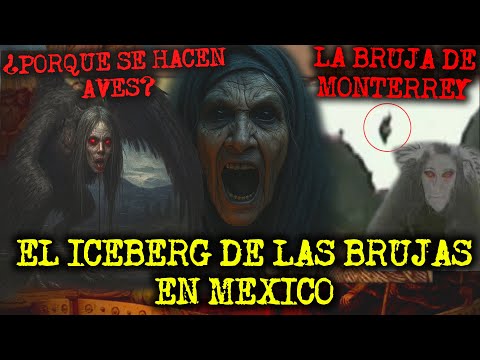
The air hangs thick with unspoken histories in the rural corners of Mexico. Beneath the veneer of modern life, ancient beliefs persist, weaving tales of shadows, whispers, and the potent energy of the feminine. When we speak of "witches" in Mexico, we invoke an image far more complex than a simple Halloween caricature. It's an iceberg, with the most visible tip representing folklore and superstition, while the submerged mass delves into deeply rooted spiritual practices, historical trauma, and the raw, untamed forces of the human psyche. This exploration is not about sensationalism, but about understanding a potent facet of Mexican spiritual and cultural identity.Beyond the Cauldron: Defining Witchcraft in Mexico
Before we dive into anecdotes, it's crucial to clarify what "brujería" (witchcraft) often signifies in the Mexican context, as it diverges from Western notions. While some interpretations align with darker magical practices or even Satanism, originating from Old World traditions and alien to the Americas prior to European contact, the Mexican perception is often a broader, more syncretic phenomenon. It can encompass indigenous shamanic traditions, folk healing, and the potent energies invoked through belief and intent. The comments reveal this duality: the fear of a "bruja" is distinct from the role of a "curandero" (healer). The intention behind the practice, whether for harm or protection, is paramount in distinguishing these archetypes within the cultural tapestry. Understanding this semantic nuance is the first step in truly grasping the iceberg.Whispers from the Past: Indigenous Roots and Colonial Shadows
The concept of witchcraft in Mexico is deeply intertwined with its pre-Hispanic past and the tumultuous era of colonization. Indigenous cultures possessed rich traditions of shamanism, where individuals communed with spirits, manipulated energies, and acted as intermediaries between the physical and spiritual realms. These figures, often misunderstood and feared by the colonizers, were later demonized and conflated with European notions of witchcraft during the Inquisition.The comments echo this historical layering. For instance, reports of strange lights over hills, like those near the Cerro de la Estrella in Iztapalapa, were once attributed to UFOs but now, through the lens of contemporary folklore, are reinterpreted as potential manifestations of nocturnal witch gatherings. This phenomenon of reinterpreting past anomalies through current belief systems is a testament to the enduring power of these narratives. The historical trauma of forced conversion and the suppression of indigenous spiritual practices undeniably left scars, twisting indigenous power into the fear-laden figure of the "bruja."
The Shifting Sands of Fear: Contemporary Encounters
The modern manifestations of witchcraft lore in Mexico are as varied as its landscape. The personal testimonies shared by the community paint a vivid, often chilling, picture. One account describes a baby's persistent crying, only soothed after a visit from an aunt who warned of a "light like fire" on the roof. The subsequent discovery of protective talismans – needles and scissors crossed, open Bibles, mirrors, and religious figures – speaks to a folk magic aimed at warding off malevolent forces. The climax, where a "very large bird" was shot at on the roof, only to vanish, is a recurring motif in these narratives. This "pájaro muy grande" or "pájaro gigante" is a potent symbol, often associated with witches transforming their shape to travel or attack. It appears in reports from various states, from the State of Mexico to Veracruz and Tamaulipas.Another deeply unsettling account from Puebla details a neighbor's persistent warnings about a "witch" during a wife's pregnancy. The climax involves a terrifying nocturnal encounter: an immense heaviness on the chest, paralysis, and the chilling presence of a cold, strangely scented silhouette of a woman leaning in, her breath on the narrator's face. This experience, described as both terrifying and astonishing, highlights the personal, visceral impact these beliefs can have.
The legends of "bolas de fuego" (fireballs) are also prevalent, seen in Tepoztlán and Pachuca. These are often interpreted as witches in flight or as manifestations of their energy. Tepoztlán, in particular, is rich with lore, including tales of a captured witch whose head was buried, leading to an unnaturally active tree. Such narratives underscore the idea that supernatural phenomena are localized and deeply embedded in the landscape.
Furthermore, the comment about a ritual in the State of Mexico involving a mother gouging out her child's eyes with a spoon raises questions about extreme ritualistic practices sometimes associated with sects or darker forms of witchcraft, moving beyond simple folk belief into more disturbing territory.
Practitioner's Verdict: Navigating the Labyrinth of Belief
From a practitioner's perspective, these accounts are not mere superstitions; they are data points in the vast experiment of human consciousness and its interaction with unseen forces. The "iceberg" metaphor is apt because much of what is perceived as supernatural is, in fact, the manifestation of deeply ingrained cultural beliefs, psychological phenomena, and perhaps, genuinely potent energies.* The Power of Belief: The sheer consistency of certain themes – the "pájaro gigante," the "bolas de fuego," the paralysis/heaviness during nocturnal encounters – suggests a powerful collective unconscious at play. When a community shares and reinforces these narratives, they gain a tangible power, influencing perception and even manifesting in ways that seem to confirm the belief. * Protection Rituals: The use of crossed needles, scissors, mirrors, and clothing worn inside-out are common folk protective measures. While their efficacy is debated, they represent the human need to actively engage with perceived threats and assert control. A practitioner understands that the *act* of performing a protective ritual can bolster one's confidence and mental fortitude, which in itself can be a powerful defense. * Intent is Key: The distinction between healers and those practicing darker arts hinges on intent. The stories of witches seeking to harm, like the one threatening the newborn, highlight this negative polarity. However, the desire to capture and control a witch, as described in one comment ("hacerla tu sirviente"), shifts the dynamic, revealing a complex interplay of fear, power, and dominance. This desire to control such potent forces is itself a dangerous endeavor; the warning that "they do not forgive" and the immense spiritual fortitude required suggests that such endeavors are best left to those with a profound understanding of magical ethics and consequences. * Indigenous Wisdom vs. Colonial Fear: It is vital to differentiate between the original spiritual practices of indigenous peoples and the fear-based interpretations imposed by colonial powers. The former often involved respect for nature and spiritual balance, while the latter demonized and suppressed these traditions. What is now labeled as "witchcraft" may be a distorted echo of ancient shamanic power.
Arsenal of the Sorcerer
For any serious exploration into the nature of folk magic, especially in its more complex or potentially perilous aspects, a solid foundation of knowledge and practical tools is indispensable.* Books: * "El Libro de los Muertos" (The Egyptian Book of the Dead) - For understanding ancient concepts of the afterlife and spiritual journeys. * "El Kybalion" - To grasp foundational hermetic principles that underpin many magical systems. * "Condensed Chaos: An Introduction to the Magic of Chaos" by Phil Hine - Essential for understanding modern practical magic, sigilization, and the creation of personal deities or servers, which can be adapted to counter or understand perceived entities. * "El Poder del Pensamiento: El Poder del Sexo" by Aleister Crowley - For advanced studies on willpower, consciousness manipulation, and the intersection of the physical and spiritual. * Tools: * A well-crafted ritual dagger (athame) - For directing energy and intent. * High-quality incense (Sandalwood, Frankincense) - To purify space and aid in altered states of consciousness. * Mirrors - For scrying, protection, and reflecting energies. * Red thread - Symbolic for binding or containing energies, as hinted in one of the community's anecdotes. * Digital Resources: * Apps for astrological charts and correspondences - To understand the energetic timing of rituals. * Digital grimoires or journaling apps - For meticulously recording experiences and observations.
Practical Workshop: Basic Warding Techniques
One of the most critical skills in navigating environments where supernatural phenomena are believed to be active is the ability to protect oneself. While complex rituals exist, simpler methods can be employed.- Cleansing the Space: Begin by energetically cleansing your living or working area. This can be done through smudging with sage or palo santo, using sound (bells, clapping), or visualising a protective light filling the space.
- The Symbolic Barrier: Utilize symbols of protection. The 'X' formation mentioned in one anecdote, using needles or scissors, is a folk method. You can also draw protective symbols (like a pentagram, or symbols meaningful to you) on windows and doors, or place them strategically.
- Mirrors as Deflectors: Small mirrors placed facing outwards near entrances or windows are believed to reflect negative energies back to their source.
- Personal Warding: Visualize yourself encased in a sphere of impenetrable light. Focus on your intention to be shielded from any unwanted influences. Repeat a personal mantra or affirmation of safety.
- The Power of Names: If you are aware of specific entities or individuals believed to be causing harm, invoking protective deities or figures of authority within your belief system, or even your own name with authority, can be a powerful deterrent.
Remember, the effectiveness of these techniques often lies in the practitioner's belief and consistent application.
Frequently Asked Questions
* What is the difference between a "bruja" and a "curandero" in Mexico? A "bruja" is often associated with darker magic or malevolent intent, while a "curandero" is a traditional healer who uses natural remedies and spiritual practices for well-being. However, the lines can blur in folk belief. * Are the "bolas de fuego" real? Reports of "bolas de fuego" are widespread and have been interpreted in various ways, from atmospheric phenomena and ball lightning to manifestations of witchcraft. Their consistent reporting suggests a real perceived phenomenon, though its exact nature remains in the realm of folklore and speculation for most. * How can I protect myself from negative influences? Key methods include cleansing your space, using protective symbols, employing mirrors, and strengthening your personal energetic shield through visualization and affirmations. Consistent practice is key. * Can you truly capture a witch? Folklore abounds with tales of capturing entities, often requiring specific rituals, immense courage, and precise execution. The risks are always stated as extremely high, with severe consequences for failure. Practitioner accounts suggest that such direct confrontations are extraordinarily dangerous and rarely advisable.
Your Operation: Confronting the Unknown
The stories shared are more than just anecdotes; they are invitations to explore your own perceptive abilities and your connection to the unseen forces that shape our reality. The recurring motif of the "pájaro gigante" or "bola de fuego" is a powerful symbol of the unknown intruding upon the mundane.For your operation, I challenge you to do the following:
Find a quiet space, preferably at dusk or during the night.
1. Meditate on the "pájaro gigante" or "bola de fuego." What does this symbol represent to you? Is it a messenger, a guardian, a destructive force, or something else entirely? Allow your intuition to guide you. 2. Consider your personal protective measures. Based on the techniques discussed, what would be your immediate, go-to method for shielding yourself and your home if you felt threatened by a perceived external force? Visualize yourself implementing it with unwavering conviction. 3. Record your thoughts and insights. Document your reflections in a journal. This act of recording transforms a fleeting thought into a tangible piece of your personal magical research.
This is your experiment. Observe, reflect, and understand. The true power lies not just in encountering the unknown, but in how you choose to engage with it.
Practitioner's Note: True magick requires resources. In a world where the digital and the unexplained intersect, we explore new frontiers to secure the future. Do you dare to be part of the vanguard? Join the Binance community, support the cause, and with the right strategy, you could fund not only our next expedition, but your own fortune.
No hay comentarios:
Publicar un comentario