
Table of Contents
- Unveiling the Illusion
- The Thin Veil Between Fiction and Fact
- Societal Infiltrations and the Power of Belief
- Esoteric Connections: Beyond the Obvious
- Verdict of the Practitioner: Is This a Warning or a Playbook?
- Arsenal of the Magician
- Practical Workshop: Crafting Your Own Reality Filter
- Frequently Asked Questions
- Your Operation: Discerning Truth in the Digital Echo Chamber
Unveiling the Illusion
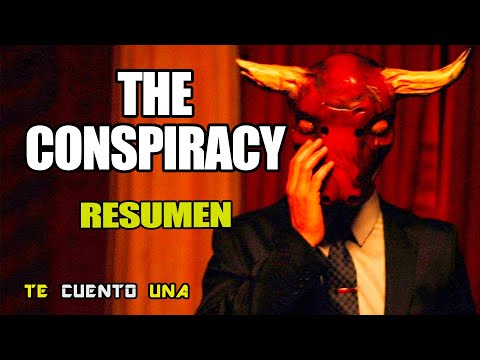
The scent of ozone and anticipation hung heavy in the air, much like the digital ether through which this narrative flows. We’ve all stumbled upon them: those grainy, unsettling videos that blur the lines between documentary and nightmare. "The Conspiracy" opens its maw with the unsettling premise of a found-footage film that is almost too real. But what happens when the veneer of fiction begins to crack, revealing unsettling parallels to our own perceived reality? This isn't just about dissecting a film; it's about understanding how narratives, especially those laced with conspiracy, weave themselves into the collective psyche and, more importantly, into our own operative frameworks. The initial reaction might be dismissive – "just a movie," "gorrito de aluminio" – but the truly astute practitioner recognizes the echoes of deeper patterns and the potential for these fictional constructs to become self-fulfilling prophecies.
The Thin Veil Between Fiction and Fact
The very nature of found footage is to create an immersive, raw experience. It purports authenticity, a window directly into an unfiltered event. When "The Conspiracy" presents itself in this format, it exploits our innate human curiosity and our subconscious desire to believe that there’s more to the world than meets the eye. Commenters noted the inspiration from films like *Eyes Wide Shut*, and indeed, the themes of secret societies, hidden rituals, and the erosion of personal agency are potent.
This film, or whatever it truly represents, taps into a primal fear: the fear of being manipulated, of being a pawn in a game orchestrated by unseen forces. The notion that "any similarity to reality is pure coincidence" becomes a mantra for the uninitiated, a shield against uncomfortable truths. For the practitioner, however, it's an invitation to investigate. If a fictional narrative can evoke such strong reactions and resonate with so many pre-existing anxieties and beliefs—even those surrounding real-world events like the 9/11 "inside job" theory—then its power lies not just in its narrative, but in its ability to activate latent archetypes and societal conditioning within the viewer.
"The best way to hide something is to put it in plain sight." This ancient adage is the foundation of much occult and conspiratorial thought, and finding its echoes in a piece of media designed to be ostensibly "fiction" is a powerful indicator of its underlying purpose.
Societal Infiltrations and the Power of Belief
The film's narrative reportedly probes the chilling concept of a clandestine group, a "club" that wields significant influence. This echoes real-world discussions around entities like the Bilderberg Group, which investigative journalists like Cristina Martín Jiménez have meticulously documented. When a film touches upon such subjects, it's not merely entertainment; it’s a form of cultural impregnation. It plants seeds of doubt, confirms existing suspicions, and can even serve as a subtle form of predictive programming.
The comments reveal a spectrum of reactions: from genuine fear ("Dice mi mami que ya no me estén asustando") to analytical engagement ("Cuando a dicho el club bidelberg me a hecho recordar al libro de Cristina Martín Jiménez..."). This highlights how audiences process information that straddles the line between the mundane and the esoteric. The recurring mention of "el loquito siempre tiene razón" speaks to the archetype of the outsider seer, the one who perceives truths others dismiss. In the realm of magical practice, this is the voice of intuition validated against the noise of mass consensus.
The discussion around Jim betraying Aaron, with the threat to their families, introduces a critical element: sacrifice and coercion. Within magical frameworks, understanding these dynamics is paramount. What are we willing to betray for perceived safety or power? What forces are capable of leveraging our deepest attachments against us? These are not just plot points; they are operational considerations in the theatre of influence and control.
Esoteric Connections: Beyond the Obvious
While the film might present itself as a contemporary thriller, its archetypal underpinnings are ancient. The "hunt" and the ritualistic nature of the clandestine gatherings evoke imagery found in various occult traditions, from Dionysian mysteries to more modern interpretations of sacred sex and sacrifice. The mention of Mithras ("El dios mitra mitrasero") is particularly intriguing, connecting the narrative to one of the oldest mystery cults focused on strength, loyalty, and cosmic order—or its perversion.
The comment about "La cacería me hace acordar a la boda sangrienta o el menu" further suggests a primal, almost transactional understanding of life and death within these shadowy organizations. It's a brutal reminder that in many systems of power, especially those operating outside conventional morality, individuals can become mere commodities.
Verdict of the Practitioner: Is This a Warning or a Playbook?
"The Conspiracy" functions on multiple levels. As found footage, it aims to shock and immerse. As social commentary, it reflects anxieties about hidden power structures. But from the perspective of a magical practitioner, it's a potent teaching tool. It demonstrates how narratives can be weaponized, how belief can shape reality, and how readily individuals can be drawn into systems of control, even when those systems are presented as entertainment.
The film’s power lies in its ambiguity, which allows viewers to project their own fears and knowledge onto it. It confirms the suspicions of those already engaged in critical thinking and, perhaps, nudges others towards questioning the official narratives they consume daily. The risk, as highlighted by the comments, is that these narratives, once internalized, can become self-fulfilling. The "joke" about the summarizer being "involved" subtly points to the permeable boundary between observer and participant in systems of belief and manipulation.
Arsenal of the Magician
To navigate the intricate web of influence and perception, a well-equipped practitioner requires specific tools and knowledge.
* Books for Critical Insight: * *"The Kybalion"* - For understanding universal laws that govern all phenomena, visible and invisible. * *"Liber Null & Psychonaut"* by Peter J. Carroll - Essential for grasping the principles of Chaos Magic, including the nature of belief as a tool. * *"Propaganda" by Edward Bernays* - To understand the engineering of consent and the manipulation of public opinion. * *"Brave New World" by Aldous Huxley* - A fictional exploration of a society controlled through pleasure and distraction, a common theme in conspiratorial thought. * Analytical Tools: * A discerning mind, trained to question assumptions and identify underlying motivations. * Access to diverse information sources, critically evaluated for bias and agenda. * Digital Hygiene: * Secure communication methods, as hinted at by the journalist comment about encrypted phones. Understanding personal data security is crucial when dealing with sensitive information or exploring fringe topics.
Practical Workshop: Crafting Your Own Reality Filter
The most potent defense against external manipulation is a robust internal framework. This workshop focuses on developing your "Reality Filter"—a mental and energetic construct to discern truth and maintain sovereignty.
-
Step 1: Define Your Core Beliefs
Before engaging with external narratives, particularly those designed to provoke, clearly define your own foundational truths. What principles do you hold as non-negotiable? What is your understanding of reality, consciousness, and agency?
-
Step 2: Practice Skepticism as a Tool, Not a Weapon
Approach information with healthy skepticism. Ask: Who is presenting this? What is their agenda? What is the evidence? Can this be independently verified? Crucially, distinguish between skepticism and cynicism. Skepticism seeks truth; cynicism denies possibility.
-
Step 3: Cultivate Psychic Resilience
Engage in practices that strengthen your psychic defenses. This could include meditation, visualization, energy work, or even the ritualistic use of symbols that represent your personal sovereignty. The goal is to create an energetic buffer against undue influence.
-
Step 4: Analyze Narrative Structures
When consuming any narrative, especially those with conspiratorial undertones, analyze its structure. Identify the hero, the villain, the conflict, and the resolution. Observe how emotional triggers are used. This analytical detachment prevents you from being swept away by the narrative's current.
-
Step 5: Integrate and Synthesize, Don't Just Absorb
Rather than passively absorbing information, actively integrate it. Does it align with your core beliefs? Does it offer new perspectives? How can this information refine your understanding of the world and your place in it? If it's a fictional narrative, what archetypal truths does it illuminate?
Frequently Asked Questions
-
Is "The Conspiracy" a real documentary or fiction?
While the film is presented in a found-footage style, its narrative is fictional. However, its power lies in its ability to tap into real-world anxieties and conspiracy theories, making its themes resonate with perceived truths.
-
How do I avoid being manipulated by media narratives?
Develop critical thinking skills, diversify your information sources, understand narrative structures, and cultivate personal psychic resilience. Be aware of your own emotional triggers and biases.
-
What is "predictive programming" in media?
Predictive programming suggests that media (films, books, etc.) can subtly introduce ideas or concepts that prepare audiences for future events or societal shifts, making them more acceptable when they occur.
-
Are secret societies real and influential?
The existence of groups operating with secrecy and wielding influence is a recurring theme throughout history and in contemporary society. The extent of their power and their true agendas remain subjects of debate and investigation.
-
How can I better understand the "powers that be"?
Study history, economics, psychology, and sociology. Analyze patterns of power and influence across different cultures and eras. Engage with critical thinkers and investigative journalists, but always maintain your own independent analysis.
Your Operation: Discerning Truth in the Digital Echo Chamber
The digital landscape is a battlefield of narratives, a vibrant, often chaotic ecosystem where truth and fiction intertwine with dizzying speed. "The Conspiracy" serves as a stark reminder that the lines we draw between entertainment and reality are more porous than we often admit. The "found footage" format, the whispers of secret societies, the chilling parallels to documented events—these are not mere plot devices. They are deliberate constructs designed to provoke, to question, and to illuminate.
Your final operation, then, is to cultivate an unshakeable discernment. Do not simply consume the information that is fed to you. Deconstruct it. Analyze its origins, its intent, and its impact on your own psyche. Ask yourself: "Is this narrative designed to empower me, or to control me? Is it revealing a hidden truth, or weaving a more elaborate illusion?" The greatest power lies not in knowing all the secrets, but in mastering the art of uncovering them for yourself, guided by your own inner compass. Now, go forth. Scrutinize the whispers. Question the shadows. And forge your own undeniable reality.
Practitioner's Note: True magick requires resources. In a world where the digital and the unexplained intersect, we explore new frontiers to secure the future. Do you dare to be part of the vanguard? Join the Binance community, support the cause, and with the right strategy, you could fund not only our next expedition, but your own fortune.
No hay comentarios:
Publicar un comentario