Saltar al contenido principal

Anuncio Superior

Mostrando entradas con la etiqueta Self-Improvement. Mostrar todas las entradas

The Pragmatic Architect: Mastering Mental Forces for Tangible Results


The air crackled not with static, but with an unspoken potential. The sigil, a freshly charged glyph, pulsed with a raw energy, a testament to the power of focused intent waiting to be unleashed. This isn't about whispers in the ether; it's about forging the very fabric of your reality through the disciplined application of mental forces. Forget abstract philosophy; we're diving into the workshop of the mind, where intention is the hammer and will is the anvil.

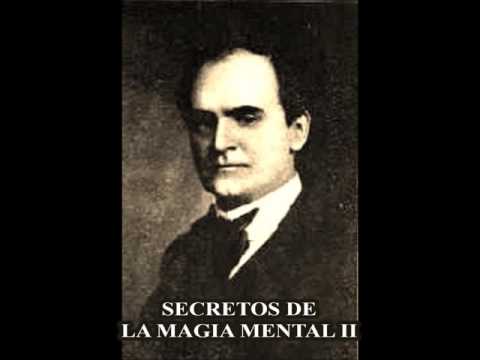
William Walker Atkinson, a figure whose insights resonate even a century later, understood this. His works, like "The Secret of Mental Magic" (1907) and its subsequent explorations, are less about arcane rituals and more about the precise engineering of consciousness. The key is not just to believe, but to do, to apply these principles systematically. This isn't a passive journey; it's an active construction, a conscious creation of your desired reality. We're going to dissect the core concepts from his "Secrets of Mental Magic, Part II," stripping away the fluff to reveal the actionable mechanics.

Chapter 5: The Science of Telementation

Telemenentation, in essence, is the projected movement of mental energy. It’s not about teleportation in the physical sense, but the transmission of thought, influence, or even healing across space. Atkinson frames this as a science, implying discernible laws and predictable outcomes, much like physics. The crucial element here is not just the sender’s intent, but the method of transmission and the receiver’s receptivity. Understanding the underlying principles of conscious projection allows you to wield this force effectively.

Think of it as a directed broadcast. You wouldn't randomly shout into the void and expect a specific message to be heard. You tune your radio to a specific frequency. Similarly, telemenentation requires a clear target, a precise message (your intention), and a means of transmission. This doesn't happen through wishful thinking. It demands focused mental discipline. Many find that foundational practices like meditation techniques are paramount to developing the necessary focus and clarity for such projections. It’s about building your internal transmitter.

The comments hint at this power, with phrases like "my will fulfills my desires" and "strengthening the aura." This isn't mere affirmation; it's the recognition of an internal locus of control. The comments also touch upon practical applications like "prácticas en lo laboral" (practices in the workplace) and "auto protección" (self-protection). These aren't abstract concepts; they are areas where directed mental energy can yield tangible results, influencing outcomes and safeguarding your personal space.

Chapter 6: Mental Therapeutics

This chapter delves into the profound connection between the mind and physical well-being. Atkinson, writing long before modern psychosomatic medicine, recognized that mental states could directly influence health. The concept of “Mental Therapeutics” suggests that the mind can be used as a tool for healing, both for oneself and for others. This aligns with the comments discussing "auto curación" (self-healing) and "práctica para la salud a distancia" (distant healing practice).

The effectiveness of mental therapeutics hinges on several factors: the practitioner’s clarity of intent, the belief system of the recipient (or the practitioner's detachment from it, focusing solely on the projection), and the underlying energetic principles at play. It’s about directing vital force and influencing the subtle energies of the body. This isn’t a replacement for conventional medical advice, but rather a complementary approach that acknowledges the mind’s potent role in the healing process. For those interested in the theoretical underpinnings, exploring the foundational concepts of vitalism and energy healing can provide further context.

The detailed timestamps in the comments, such as "1:35:00 Práctica para la salud propia o directamente sobre un paciente" and "1:46:02 y 2:01:20 Práctica para la salud a distancia," highlight a strong reader interest in the practical application of these healing principles. This isn't just theoretical curiosity; it's a desire for functional techniques that can be applied to improve well-being. The mention of "Teoría en que se sustenta" (Theory on which it is based) and "Procedimiento del tratamiento de sanación según el órgano" (Procedure for healing treatment according to the organ) indicates a need for structured, scientifically-grounded (within the framework of mental science) approaches.

Chapter 7: Mental Architecture

This section shifts focus to the deliberate construction of one’s mental landscape. "Mental Architecture" implies that our thoughts, beliefs, and habits form structures within our consciousness. Just as an architect designs a building, we can consciously design our minds to support our goals. This resonates deeply with the comments discussing "construcción de mente-cerebro" (mind-brain construction), "Ley de la auto sugestión" (Law of Autosuggestion), and "Construcción del hombre magnético" (Construction of the Magnetic Man).

Atkinson emphasizes that this architecting process involves understanding the foundational laws governing mental operations, such as the law of attraction and the law of autosuggestion. The comment "Las expresiones físicas determinan el estado mental" (Physical expressions determine mental state) flips this on its head, suggesting a feedback loop. Our physical posture and actions can, in turn, influence our mental state, a concept explored in fields like embodied cognition. The creation of a "magnetic man" speaks to developing an attractive, influential, and resilient mental presence.

The pursuit of developing one's will and acquisitiveness (money) are directly addressed here. Comments like "Cómo desarrollar la voluntad" (How to develop will) and "Adquisitividad (dinero)" (Acquisitiveness - money) are prime indicators of the reader's practical desires. Atkinson’s approach offers a framework for consciously shaping these aspects of life, moving beyond passive hope to active design. This is where the true power of mental magic lies – in its capacity to reshape reality through deliberate, structured mental effort.

"He who understands the laws of his own mind, holds the key to his destiny." - William Walker Atkinson (paraphrased for context)

The journey described by Atkinson is not a passive reception of cosmic gifts but an active engagement with the fundamental forces of existence. It’s about understanding the blueprints of consciousness and becoming the architect of your own experience. This requires rigorous self-examination, consistent practice, and an absolute commitment to mastering your inner world to influence your outer one.

The Pragmatic Toolkit: Essential Resources

To truly engage with these powerful principles, a well-equipped practitioner needs the right tools and knowledge. While Atkinson's insights are foundational, they are best understood and applied with the aid of supplementary resources:

  • Core Texts: For a deeper dive into the mechanics of mental influence and consciousness, Atkinson's own works are indispensable. Beyond "The Secret of Mental Magic," explore titles such as "Thought Vibration," "The Kybalion" (attributed to him), and "The Power of Concentration." These provide the theoretical bedrock.
  • Practical Guides to Mind Training: Resources focused on practical exercises for developing focus, willpower, and mental clarity are crucial. Books on mindfulness practices, concentration exercises, and the psychology of habit formation can significantly enhance your ability to implement Atkinson's principles.
  • Tools for Manifestation: While the mind is the primary tool, external aids can amplify and focus intent during practice. This might include journals for tracking progress and intentions, specifically designed sigil creation tools, or even guided meditation audio programs that facilitate altered states of consciousness.
  • Understanding Energetic Concepts: To grasp concepts like telemenentation and mental therapeutics, an understanding of subtle energies is beneficial. Exploring works on bioenergy, aura strengthening, and the energetic basis of health can provide a richer interpretive framework.

Frequently Asked Questions

  • Can I really influence events with my mind? Atkinson presents mental power as a science, not magic in the supernatural sense. By understanding and applying the laws of thought and suggestion, you can influence outcomes, especially your own reactions and perceptions, which in turn shape your reality.
  • Is "Mental Therapeutics" the same as faith healing? While both involve belief and intention, Mental Therapeutics, as outlined by Atkinson, focuses on the scientific principles of mental projection and suggestion, emphasizing a disciplined, systematic approach rather than solely reliance on external faith.
  • How do I develop my 'willpower' effectively? Atkinson suggests consistent practice of concentration, the deliberate setting and execution of small goals, and the conscious overcoming of desires that impede progress. It's about building mental muscle through disciplined application.

Your Operation: Forge Your Mental Blueprint

Now, the practical application. Take one aspect from Chapters 5, 6, or 7 that resonates most with you. It could be strengthening your personal aura (Chapter 5), setting a clear intention for a minor health improvement (Chapter 6), or reaffirming a specific goal through autosuggestion (Chapter 7).

Step 1: Define Your Objective. Be specific. Instead of "improve my job," aim for "project confidence and competence during my next team meeting." Instead of "feel healthier," aim for "focus on invigorating energy flow in my solar plexus for 5 minutes daily."

Step 2: Craft Your Mental Statement. Formulate a clear, affirmative statement. For the job example: "I am perceived as a competent and confident contributor." For health: "My vital energy is strong and revitalizing."

Step 3: Practice Focused Transmission. Dedicate 5-10 minutes each day to concentrate solely on this statement and the associated feeling. Visualize the outcome. If it's about confidence, feel that confidence radiating from you. If it's about energy, imagine vibrant light filling the targeted area.

Step 4: Observe and Adjust. Pay attention to how you feel and how events unfold. Did your meeting go better? Do you feel a subtle shift in your energy? This is not about instant miracles, but about consistent reinforcement of your mental blueprint.

The true mastery lies not in grasping these concepts, but in their diligent application. What aspect of your mental architecture are you ready to begin constructing today? Share your chosen objective and your initial approach in the comments below. Let’s discuss the practicalities of building our desired realities.

Practitioner's Note: True magick requires resources. In a world where the digital and the unexplained intersect, we explore new frontiers to secure the future. Do you dare to be part of the vanguard? Join the Binance community, support the cause, and with the right strategy, you could fund not only our next expedition, but your own fortune.

Magickal Alchemy for the Modern Practitioner: 3 Real-World Routines for Focus, Boundaries, and Sleep in 2025


Introduction: Beyond the Capes and Incantations

The air crackles not with arcane pronouncements, but with the hum of the digital age. We're not casting spells in moonlit groves, but navigating the daily barrage of notifications, demands, and the ever-present specter of overwhelm. Many approach magick thinking it requires elaborate robes and ancient tomes. But true magick, the kind that reshapes your reality, is often far more grounded, pragmatic, and frankly, *adult*. This isn't about cosplay; it's about conscious application of will to effect change. Today, we’re stripping away the theatrical and diving into three potent, real-world magickal routines designed for the modern practitioner. No more relying on sheer willpower, which, let's be honest, is a finite and often unreliable resource. We’re talking about intention setting that’s fast and effective, state regulation to navigate the energetic chaos of daily life, and a systematic way to measure your results, proving to yourself – unequivocally – what works within a 7-day cycle.

This is about understanding the mechanics of your own consciousness and applying them deliberately. It’s about transforming abstract occult principles into tangible, repeatable results. Whether you're a seasoned occultist questioning the efficacy of rote ritual, or a curious newcomer seeking practical self-improvement, these methods offer a direct path to mastering your focus, reinforcing your energetic boundaries, and achieving truly restorative sleep. Forget the performative aspects; we’re here for observable change.

Morning Focus Primer: Setting Your Intentions for Unshakable Clarity

The dawn is a liminal space, a potent time for setting the energetic tone for the day ahead. The `Morning Focus Primer` is designed to cut through the mental fog and establish crystal-clear priorities with minimal fuss. This isn't about lengthy meditations that may or may not lead anywhere; it's about precision and anchoring your intent into the immediate future.

Here’s how to execute this routine effectively:

  1. Find Your Center (3-30 Breaths): Before your feet hit the floor, or as you prepare your first cup of coffee, engage in a set of deep, slow breaths. The precise number is less critical than the quality and intention behind them. Whether it’s three profoundly deep inhalations and exhalations, or thirty mindful breaths, the goal is to transition from the semi-conscious state of sleep to alert, present awareness. Focus on the sensation of the breath entering and leaving your body. If your mind wanders, gently guide it back to the breath. This simple act is the initial anchor, grounding you in the present moment.
  2. Declare Your Prime Directive: With your awareness stabilized, articulate your single most important intention for the day. This should be a clear, actionable objective. Avoid vague aspirations. Instead of "be productive," opt for "complete the Q3 report by 3 PM" or "dedicate 2 focused hours to project X." Write this intention down. The act of writing solidifies it. Some practitioners find it powerful to speak this intention aloud, directly into the space around them, imbuing it with vocal energy.
  3. Visualize the Outcome: Spend a brief moment vividly imagining the successful completion of your primary intention. See yourself performing the tasks with calm competence, achieving the desired result, and experiencing the satisfaction of accomplishment. This isn't an arduous visualization exercise; it’s a focused mental snapshot of your desired reality.
  4. Commit and Release: Acknowledge that the intention is set and the energetic groundwork laid. Release the mental grip on the outcome. You have declared your purpose; now, move into your day with the understanding that the intention is in motion. Trust the process.

This primer takes mere minutes but sets a powerful precedent, guiding your actions and filtering distractions. It’s a stark contrast to aimlessly drifting into the day, making it a cornerstone for anyone serious about mastering their focus. For those struggling with the exact breath count, remember that consistency and intent are paramount. Start with a number that feels right and commit to it for the 7-day loop. The goal is conscious breath control, not achieving a specific number.

Midday Boundary Banish: Reclaiming Your Energy in the Digital Wilds

The midday point is a critical juncture. The initial focus of the morning can wane, and the relentless influx of digital information – emails, social media, news cycles – can create energetic entanglements and drain your psychic reserves. The `Midday Boundary Banish` is an exercise in energetic hygiene, designed to reset your state, reinforce your personal boundaries, and halt the insidious creep of doomscrolling and digital overwhelm. This is where we actively push back against external energetic intrusions.

Implement this routine as follows:

  1. Identify the Intrusion: Take a moment to acknowledge what is consuming your attention or draining your energy. Is it a barrage of demanding emails? A spiraling social media feed? The weight of ambient anxiety from news headlines? Be honest and specific.
  2. The Symbolic Severance: Visualize your energy field as an aura. Identify the threads or tendrils of external influence that are penetrating this aura. Imagine these as sticky, draining, or distracting attachments. Now, with a gesture of firm intent (a swift downward chop of the hand, a visualized cutting motion, or a determined mental push), visualize severing these attachments cleanly. Imagine them recoiling, unable to maintain their hold. This act is a potent symbol of reclaiming your psychic space.
  3. The Energetic Reset: Following the severance, perform a quick internal reset. This can be as simple as clapping your hands sharply, snapping your fingers, or taking three quick, deep breaths with an outward sigh. The goal is a distinct, audible or kinesthetic punctuation mark that signifies the end of the intrusion and the beginning of your renewed energetic state.
  4. Re-Establish Your Zone: Briefly reaffirm your core intention or the task at hand. Remind yourself of what is truly important and what requires your focused attention. This isn’t about ignoring the world, but about engaging with it on your own terms, from a place of strength and clarity.

This routine is particularly vital in our hyper-connected era. Many find that the constant "engagement" required by digital platforms erodes their personal boundaries. This practice offers a direct, symbolic counter-action. For those with complex trauma, engaging with difficult external stimuli can indeed trigger fight-or-flight responses, making traditional methods like tarot readings or complex symbolic rituals feel counterproductive. The `Midday Boundary Banish`, by contrast, focuses on a direct, symbolic act of severance and a clear energetic reset, making it a more accessible approach for managing overwhelm without exacerbating anxiety.

Night Compression Ritual: Ditching Stress for Deep, Restorative Sleep

The transition from wakefulness to sleep is often a battleground for the stressed mind. The day’s anxieties, unfinished tasks, and emotional residue can keep the mind racing, preventing the deep, restorative sleep crucial for physical and energetic recovery. The `Night Compression Ritual` is designed to compress the day’s mental and emotional detritus, allowing you to release it and enter sleep with a clear, settled consciousness.

Here’s the process:

  1. The Inventory of the Day: Before you even prepare for bed, take 5-10 minutes to conduct a brief "brain dump." On a piece of paper or in a dedicated digital journal, list out any lingering thoughts, worries, to-dos, or emotional residues from the day. Don’t censor or overanalyze; just get them out of your head and onto the page. This externalization is key.
  2. The Symbolic Compaction: Once you have your list, engage in a symbolic act of "compression." This could involve:
    • Physically crumpling the paper into a tight ball.
    • Visually imagining all the listed items being compressed into a tiny, dense point of energy.
    • Using a hand gesture to symbolically push all those thoughts and feelings down and away from your mind.
    The specific method is less important than the clear intent to consolidate and release the day's mental clutter.
  3. The Verbal Release (Optional but Recommended): If you've written your inventory, you can then ceremonially discard it. Rip it up, burn it safely (if environmentally feasible and safe), or simply tear it into small pieces. As you do, declare a phrase like "I release the burdens of the day. They are contained and no longer mine to carry."
  4. Transition to Stillness: Once the "compression" and release are complete, consciously shift your focus to physical relaxation. Engage in gentle stretching, deep breathing, or a guided meditation focused on body scan awareness. The goal is to signal to your nervous system that the day's work is done and it is safe to enter a state of rest.

This ritual is akin to defragmenting a hard drive. By actively processing and symbolically releasing the day’s mental load, you create the necessary space for sleep. For those experiencing chronic stress or anxiety, this practice is not merely a suggestion but a necessity. It provides a concrete method to interrupt the rumination cycle that often plagues sleepless nights, much like cognitive behavioral therapy aims to do by addressing thought patterns. The key is the symbolic action, which taps into deeper patterns of release than mere intellectual acknowledgment.

The 7-Day Measurement Loop: Proving Your Own Magickal Efficacy

Theory is one thing, but tangible results are the true measure of any magickal practice. To move beyond belief and into knowing, you need a system to track your progress. The `7-Day Measurement Loop` is your empirical method to verify what works for you. This is where you become your own scientist, your own alchemist of the psyche, and the ultimate arbiter of the effectiveness of these routines.

Here’s how to implement the loop:

  1. Choose Your Metric: Based on the routine you’ve implemented (Focus, Boundaries, or Sleep), define a clear, measurable outcome.
    • For Focus: e.g., "Number of tasks completed within designated work blocks," "Hours spent on primary tasks without distraction," "Subjective clarity score (1-10)."
    • For Boundaries: e.g., "Number of times I felt drained by external demands," "Instances of doomscrolling/unwanted digital engagement," "Subjective feeling of energetic resilience (1-10)."
    • For Sleep: e.g., "Time taken to fall asleep," "Number of times waking during the night," "Subjective quality of sleep (1-10)."
  2. Establish a Baseline: For 1-2 days *before* starting the routines, track your chosen metric(s) without any intervention. This gives you a starting point.
  3. Daily Logging (Hit/Partial/Miss): For seven consecutive days, diligently perform the chosen routine(s) and then log your results. Use a simple system:
    • Hit: You fully achieved your desired outcome for the day. The routine worked as intended.
    • Partial: You partially achieved the outcome, or the routine had a moderate effect.
    • Miss: You did not achieve the outcome, or the routine had little to no discernible effect.
    Keep a brief note on *why* you scored it that way. This qualitative data is invaluable.
  4. Review and Refine: At the end of the 7 days, review your log.
    • Did you see a trend? Were there more "Hits" than "Misses" compared to your baseline?
    • Which routines seemed most effective?
    • Were there any external factors that influenced the results (stressors, changes in diet, etc.)?
    Use this data to refine the routines or to identify which ones to prioritize. This isn't about perfection, but about informed adaptation.

This scientific approach demystifies magick, grounding it in observable phenomena. It leverages principles similar to those found in behavioral psychology and self-tracking methodologies, demonstrating that magickal practice can be as evidence-based as any other discipline when approached with rigorous self-observation. The feedback loop is critical for any serious practitioner seeking to move beyond blind faith.

Veredict of the Practicant: Is This "Bullshit" or Actual Alchemys?

After years immersed in the esoteric, one develops a keen sense for what resonates and what merely sounds profound. The common critique that much of occultism is "bullshit" often stems from a disconnect between theoretical dogma and practical application—especially when practitioners rigidly adhere to rituals without understanding their underlying mechanics. It's easy to get lost in LBRPs and visualizations, repeating movements and words without truly grasping their purpose, leading to a feeling of futility.

These routines, however, cut to the chase. They are designed for the adult practitioner who needs observable results, not dogma.

  • Pro: Extreme Practicality: They integrate seamlessly into daily life, requiring minimal time and no elaborate setup. The focus is on applied willpower and conscious intention, not external theatricality.
  • Con: Requires Commitment to Observation: The "measurement loop" is non-negotiable. If you skip the tracking, you're just doing nice exercises. The real magick lies in the self-verification.
  • Pro: Addresses Modern Ills: Focus, energetic boundaries in a digital age, and sleep quality are critical, often overlooked aspects of well-being that magick can profoundly impact.
  • Con: Might Feel Too Simple: For those accustomed to complex ceremonies, these direct methods might initially feel underwhelming. The power is in their simplicity and repeatability, not their complexity.
  • Pro: Empowers Agency: By providing a framework for self-measurement, these routines empower you to become your own authority, discerning what truly works for *you*, rather than relying on external decrees.
In essence, this is magick stripped down to its functional core. It’s not about convincing yourself of mystical truths; it’s about deliberately altering your state, influencing your environment, and observing the verifiable outcomes. This approach bypasses the "bullshit" by demanding proof. It’s the difference between reciting incantations and engineering reality.

Arsenal of the Adept

While these routines are designed to be accessible with minimal tools, certain resources can significantly enhance your practice and understanding. Investing in quality materials is an investment in your own development and the efficacy of your work.

  • Essential Reading:
    • Condensed Chaos: A Manual of Practical Magick by Phil Hine (Chaos Magick principles are deeply embedded here).
    • Liber Null & Psychonaut: The Practice of Chaos Magic by Peter J. Carroll ( foundational text for practical, results-oriented magick).
    • The Kybalion: Hermetic Philosophy by Three Initiates (for understanding universal principles that underpin many magickal systems).
  • Tools for Intentionality:
    • A high-quality journal and pen (essential for the measurement loop and brain dumps).
    • A comfortable, dedicated space for your morning and night routines.
  • Digital Aids:
    • Reliable meditation and sleep-aid apps (for supporting the routines).
    • Task management or productivity software (to aid in focus definition).

Remember, the tools are secondary to the practitioner's will and intent. However, using well-crafted tools can act as powerful psychological anchors and enhance the symbolic weight of your operations. For ultimate clarity in defining intentions, exploring advanced journaling techniques or even dedicated manifestation journals can further refine your practice.

Frequently Asked Questions

  • What is the difference between manifestation and Magick? Manifestation is often seen as the practical application of intention to achieve specific outcomes, a subset of broader magickal work. Magick, in its most practical sense, is the science and art of causing change in conformity with Will. Manifestation focuses on the 'what'; magick encompasses the 'how' and the deeper 'why,' including state manipulation, energetic principles, and broader reality-shaping.
  • These routines sound like cognitive behavioral therapy. What's the difference? While there are clear parallels between these routines and CBT (e.g., the brain dump, reframing thoughts, behavioral activation), the key differentiator is the *supernatural or metaphysical framework* and the explicit intention to interact with or influence subtle energies and consciousness beyond the purely material. CBT aims for psychological well-being within a materialistic paradigm; these routines acknowledge and actively engage with possibilities beyond that paradigm.
  • Can I combine these routines with other magickal practices like sigil creation or tarot? Absolutely. These routines are designed to build a solid foundation of focus, boundaries, and mental clarity, which will invariably enhance the efficacy of other practices. A clear mind and strong energetic boundaries make sigil charging more potent and tarot readings more insightful.
  • What if I miss a day of the routine or the measurement loop? Consistency is important, but perfection is not the goal. If you miss a day, simply resume the next day. For the measurement loop, note the missed day and continue. The data might be slightly less clean, but it's better to have imperfect data than no data at all. Adaptability is a key magickal skill.

Your Operation: Implement and Observe

Theory is inert without application. Magickal alchemys only yield their true value when they are put into practice, observed rigorously, and refined through empirical feedback. You've been given the blueprints; now it's time to build.

Your Operation: Launch Your 7-Day Experiment

Select ONE of the three routines presented: Morning Focus Primer, Midday Boundary Banish, or Night Compression Ritual. Commit to performing it daily for the next seven days. Simultaneously, establish and maintain the 7-Day Measurement Loop for the specific routine you’ve chosen. Before beginning, spend one day assessing your baseline for the chosen metric. Track your progress diligently. At the end of the seven days, review your logs. Does the data support the efficacy of the routine? How did your subjective experience align with the objective measurements? Document your findings. This is not merely an exercise; it is your first empirical step in becoming a master of your own energetic and psychological landscape.

Share your findings and any challenges you encountered in the comments below. What did your 7-day loop reveal? Did you experience more "Hits" than "Misses"? Your experience is invaluable data for yourself and the community.

Practitioner's Note: True magick requires resources. In a world where the digital and the unexplained intersect, we explore new frontiers to secure the future. Do you dare to be part of the vanguard? Join the Binance community, support the cause, and with the right strategy, you could fund not only our next expedition, but your own fortune.

The Unveiled Power: Mastering Mental Magic with William Walker Atkinson's Secrets


The air crackled with an unseen energy, a silent hum that resonated with the very fabric of reality. Not the crackle of static electricity, but the palpable charge of focused intention, the nascent whisper of a manifestation on the horizon. This is the domain of Mental Magic, a realm where thought is the architect and will, the chisel, shaping not just our perceptions, but the very world around us. William Walker Atkinson, a titan of early 20th-century esoteric thought, laid bare these profound principles in his seminal work. Forget the mystical jargon; this is about raw, untapped mental power, a tool accessible to all, yet wielded by few. Are you ready to forge your own mental arsenal?

The Bedrock of Reality: Understanding Atkinson's Vision

William Walker Atkinson, writing in the early 1900s, was not dabbling in the superficial. He was dissecting consciousness itself, laying bare the mechanics of mind that govern our experiences. His work, such as "The Secret of Mental Magic" (1907) and the more expansive "Mental Magic" (1920), serves as a foundational text for anyone serious about harnessing their inner power. Many today discover him through audio versions, a testament to the enduring appeal of his insights, echoing sentiments of profound gratitude for his ability to articulate complex truths that resonate across generations. As one practitioner noted, Atkinson’s teachings are not merely for aficionados of the occult, but for anyone seeking to recalibrate their understanding of reality. This is a journey into the very engine of creation, where thought precedes form.

"The only true understanding of the universe comes from within. All power, all force, all energy, all action, and all motion originate in the mind. The universe is a creation of the mind." - Adapted from Atkinson's core tenets.

Chapter 1: Mental Magic - The Core Principles

At its heart, Mental Magic, as expounded by Atkinson, is the understanding and application of the mind's inherent power. It’s about recognizing that your thoughts, beliefs, and intentions are not passive occurrences but active forces that shape your reality. This isn't about chanting ancient spells in dimly lit rooms; it's about mastering the internal landscape to influence the external. The initial preface and introduction to Atkinson's works often dedicate themselves to establishing this fundamental premise: that the mind is the ultimate instrument of creation. The journey begins with introspection, with acknowledging the immense potential that lies dormant within your consciousness. Many who first encounter these texts find themselves drawn back repeatedly, not just for intellectual stimulation, but for a profound sense of alignment and clarity that guides their daily actions.

Chapter 2: The Fundamental Force - The Ocean of Energy

Atkinson posited a "Fundamental Force," an omnipresent energy that permeates all existence. This force, he argued, is the source of all phenomena, and the human mind acts as a conduit and director of this energy. Think of it as a vast, unseen ocean of potential. Your thoughts and intentions are the ripples you create on its surface, sending waves of influence outward. This concept is crucial for understanding how mental commands, or suggestions, can manifest tangible results. It’s the scientific bedrock, stripped of unnecessary dogma, that underpins the practice of mental magic. The ability to tap into and direct this force is what differentiates a passive observer from an active creator. The recognition that time and information are invaluable resources for this exploration drives many to seek out condensed forms of knowledge, like audiobooks, allowing them to integrate these powerful concepts while engaged in other tasks.

Chapter 3: Mental Suggestion - The Art of Subtle Influence

Mental Suggestion is the engine through which the Fundamental Force is directed. Atkinson delves deeply into how one mind can influence another, and more importantly, how to influence one's own mind. This isn't about coercion or manipulation in a negative sense, but about understanding the mechanisms of belief and perception. It’s about planting seeds of thought that will grow into desired realities. The power of suggestion lies in its subtlety; it bypasses the critical faculty and works directly with the subconscious mind. Whether you're aiming for personal transformation or influencing outcomes, mastering suggestion is paramount. The repeated listening to Atkinson’s works, even after years, underscores the depth of his insights into this powerful psychological and energetic tool. This is where the practice truly begins to feel tangible, where the abstract becomes actionable.

Chapter 4: Personal Influence - Projecting Your Will

Practitioner's Verdict: Is Atkinson's Work Still Relevant in the Digital Age?

Absolutely. While Atkinson wrote over a century ago, the fundamental principles of mental magic, suggestion, and personal influence remain unchanged. If anything, in our hyper-connected, information-saturated world, the ability to control one's own mind and project a clear, focused intention is more critical than ever. People still seek out his work for its clarity and directness, recognizing it as a timeless guide. The core concepts are not bound by time but are eternal truths about consciousness. The challenge, as always, lies not in the knowledge itself, but in its consistent, disciplined application.

The Magician's Arsenal: Essential Tools for Mental Mastery

To truly internalize and apply Atkinson's teachings, a curated set of tools can significantly enhance the process:

  • William Walker Atkinson’s Core Works: "The Secret of Mental Magic," "Mental Magic," "Thought Vibration," and "The Kybalion" (attributed to him and others) are essential reading.
  • A High-Quality Journal: For recording intentions, observations, daily practices, and the manifestation of your mental work. A leather-bound journal often enhances the ritualistic aspect and encourages deeper reflection.
  • Meditation Aids: While not strictly necessary, guided meditation recordings or a comfortable meditation cushion can facilitate deeper states of focus required for mental projection.
  • A Quiet Space: A dedicated area free from distractions is crucial for practicing mental exercises without interruption.
  • Recommended Readings: Beyond Atkinson, consider works like "The Science of Mind" by Ernest Holmes or "The Power of Your Subconscious Mind" by Joseph Murphy for complementary perspectives.

Practical Workshop: Crafting Daily Affirmations for Manifestation

Atkinson’s emphasis on suggestion is directly applicable to the creation of powerful affirmations. Here’s how to craft them for daily practice:

  1. Define Your Clear Intention: What specific outcome or state of being do you wish to manifest? Be precise. Instead of "I want to be rich," aim for "I am attracting $X amount of money by [date] through opportunities that align with my highest good."
  2. Formulate in the Present Tense: Affirmations are most potent when stated as if they are already true. "I am," " I have," "I choose."
  3. Keep it Positive: Focus on what you *do* want, not what you *don't* want. "I radiate confidence" is more effective than "I am not insecure."
  4. Infuse with Emotion: Feel the truth of the affirmation as you speak or think it. This emotional charge is critical for its energetic impact.
  5. Practice Daily: Repeat your affirmations aloud or mentally multiple times a day, especially upon waking and before sleep. Consistent repetition anchors them into your subconscious.

Frequently Asked Questions About Mental Magic

  • Is Mental Magic the same as hypnosis? While both involve influencing the mind, mental magic, as presented by Atkinson, is more about conscious direction of fundamental energy through focused will and intention, rather than inducing a trance state for external control.
  • Can Mental Magic be used for negative purposes? The principles themselves are neutral, but using them to harm or control others against their will is energetically unsustainable and ultimately self-defeating. Atkinson stressed ethical application.
  • How long does it take to see results? Manifestation timelines vary greatly depending on the clarity of intention, consistency of practice, and the energetic inertia of the desired outcome. Some results can be almost immediate, while others may take sustained effort.
  • Do I need special powers to practice Mental Magic? No. Atkinson's work is predicated on the idea that every human possesses these innate mental abilities. The practice is about awakening and honing them.

Your Operation: Cultivating a Daily Mental Discipline

The true power of Atkinson’s teachings lies in consistent application. Don't let this knowledge remain theoretical. Your operation begins now. This week, commit to a daily practice:

  1. Morning Affirmation (5 minutes): Upon waking, before any other thought intrudes, repeat your most potent, personal affirmations. Feel their truth.
  2. Midday Focus (2 minutes): Take a brief pause during your day to bring your primary intention to the forefront of your mind. Visualize it for a moment.
  3. Evening Reflection (5 minutes): Before sleep, review your day, acknowledging any small manifestations or progress. Then, reinforce your core intentions for the following day.

Consistency is the keystone. This is not about grand, sporadic efforts but about the steady, unwavering cultivation of your mental power. The universe responds not to fleeting desires, but to persistent, directed will. Now, go forth and shape your reality.

Practitioner's Note: True magick requires resources. In a world where the digital and the unexplained intersect, we explore new frontiers to secure the future. Do you dare to be part of the vanguard? Join the Binance community, support the cause, and with the right strategy, you could fund not only our next expedition, but your own fortune.