
The air crackled not with static, but with an unspoken potential. The sigil, a freshly charged glyph, pulsed with a raw energy, a testament to the power of focused intent waiting to be unleashed. This isn't about whispers in the ether; it's about forging the very fabric of your reality through the disciplined application of mental forces. Forget abstract philosophy; we're diving into the workshop of the mind, where intention is the hammer and will is the anvil.
Table of Contents
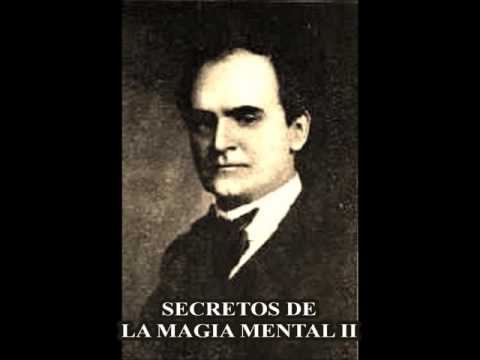
William Walker Atkinson, a figure whose insights resonate even a century later, understood this. His works, like "The Secret of Mental Magic" (1907) and its subsequent explorations, are less about arcane rituals and more about the precise engineering of consciousness. The key is not just to believe, but to do, to apply these principles systematically. This isn't a passive journey; it's an active construction, a conscious creation of your desired reality. We're going to dissect the core concepts from his "Secrets of Mental Magic, Part II," stripping away the fluff to reveal the actionable mechanics.
Chapter 5: The Science of Telementation
Telemenentation, in essence, is the projected movement of mental energy. It’s not about teleportation in the physical sense, but the transmission of thought, influence, or even healing across space. Atkinson frames this as a science, implying discernible laws and predictable outcomes, much like physics. The crucial element here is not just the sender’s intent, but the method of transmission and the receiver’s receptivity. Understanding the underlying principles of conscious projection allows you to wield this force effectively.
Think of it as a directed broadcast. You wouldn't randomly shout into the void and expect a specific message to be heard. You tune your radio to a specific frequency. Similarly, telemenentation requires a clear target, a precise message (your intention), and a means of transmission. This doesn't happen through wishful thinking. It demands focused mental discipline. Many find that foundational practices like meditation techniques are paramount to developing the necessary focus and clarity for such projections. It’s about building your internal transmitter.
The comments hint at this power, with phrases like "my will fulfills my desires" and "strengthening the aura." This isn't mere affirmation; it's the recognition of an internal locus of control. The comments also touch upon practical applications like "prácticas en lo laboral" (practices in the workplace) and "auto protección" (self-protection). These aren't abstract concepts; they are areas where directed mental energy can yield tangible results, influencing outcomes and safeguarding your personal space.
Chapter 6: Mental Therapeutics
This chapter delves into the profound connection between the mind and physical well-being. Atkinson, writing long before modern psychosomatic medicine, recognized that mental states could directly influence health. The concept of “Mental Therapeutics” suggests that the mind can be used as a tool for healing, both for oneself and for others. This aligns with the comments discussing "auto curación" (self-healing) and "práctica para la salud a distancia" (distant healing practice).
The effectiveness of mental therapeutics hinges on several factors: the practitioner’s clarity of intent, the belief system of the recipient (or the practitioner's detachment from it, focusing solely on the projection), and the underlying energetic principles at play. It’s about directing vital force and influencing the subtle energies of the body. This isn’t a replacement for conventional medical advice, but rather a complementary approach that acknowledges the mind’s potent role in the healing process. For those interested in the theoretical underpinnings, exploring the foundational concepts of vitalism and energy healing can provide further context.
The detailed timestamps in the comments, such as "1:35:00 Práctica para la salud propia o directamente sobre un paciente" and "1:46:02 y 2:01:20 Práctica para la salud a distancia," highlight a strong reader interest in the practical application of these healing principles. This isn't just theoretical curiosity; it's a desire for functional techniques that can be applied to improve well-being. The mention of "Teoría en que se sustenta" (Theory on which it is based) and "Procedimiento del tratamiento de sanación según el órgano" (Procedure for healing treatment according to the organ) indicates a need for structured, scientifically-grounded (within the framework of mental science) approaches.
Chapter 7: Mental Architecture
This section shifts focus to the deliberate construction of one’s mental landscape. "Mental Architecture" implies that our thoughts, beliefs, and habits form structures within our consciousness. Just as an architect designs a building, we can consciously design our minds to support our goals. This resonates deeply with the comments discussing "construcción de mente-cerebro" (mind-brain construction), "Ley de la auto sugestión" (Law of Autosuggestion), and "Construcción del hombre magnético" (Construction of the Magnetic Man).
Atkinson emphasizes that this architecting process involves understanding the foundational laws governing mental operations, such as the law of attraction and the law of autosuggestion. The comment "Las expresiones físicas determinan el estado mental" (Physical expressions determine mental state) flips this on its head, suggesting a feedback loop. Our physical posture and actions can, in turn, influence our mental state, a concept explored in fields like embodied cognition. The creation of a "magnetic man" speaks to developing an attractive, influential, and resilient mental presence.
The pursuit of developing one's will and acquisitiveness (money) are directly addressed here. Comments like "Cómo desarrollar la voluntad" (How to develop will) and "Adquisitividad (dinero)" (Acquisitiveness - money) are prime indicators of the reader's practical desires. Atkinson’s approach offers a framework for consciously shaping these aspects of life, moving beyond passive hope to active design. This is where the true power of mental magic lies – in its capacity to reshape reality through deliberate, structured mental effort.
"He who understands the laws of his own mind, holds the key to his destiny." - William Walker Atkinson (paraphrased for context)
The journey described by Atkinson is not a passive reception of cosmic gifts but an active engagement with the fundamental forces of existence. It’s about understanding the blueprints of consciousness and becoming the architect of your own experience. This requires rigorous self-examination, consistent practice, and an absolute commitment to mastering your inner world to influence your outer one.
The Pragmatic Toolkit: Essential Resources
To truly engage with these powerful principles, a well-equipped practitioner needs the right tools and knowledge. While Atkinson's insights are foundational, they are best understood and applied with the aid of supplementary resources:
- Core Texts: For a deeper dive into the mechanics of mental influence and consciousness, Atkinson's own works are indispensable. Beyond "The Secret of Mental Magic," explore titles such as "Thought Vibration," "The Kybalion" (attributed to him), and "The Power of Concentration." These provide the theoretical bedrock.
- Practical Guides to Mind Training: Resources focused on practical exercises for developing focus, willpower, and mental clarity are crucial. Books on mindfulness practices, concentration exercises, and the psychology of habit formation can significantly enhance your ability to implement Atkinson's principles.
- Tools for Manifestation: While the mind is the primary tool, external aids can amplify and focus intent during practice. This might include journals for tracking progress and intentions, specifically designed sigil creation tools, or even guided meditation audio programs that facilitate altered states of consciousness.
- Understanding Energetic Concepts: To grasp concepts like telemenentation and mental therapeutics, an understanding of subtle energies is beneficial. Exploring works on bioenergy, aura strengthening, and the energetic basis of health can provide a richer interpretive framework.
Frequently Asked Questions
- Can I really influence events with my mind? Atkinson presents mental power as a science, not magic in the supernatural sense. By understanding and applying the laws of thought and suggestion, you can influence outcomes, especially your own reactions and perceptions, which in turn shape your reality.
- Is "Mental Therapeutics" the same as faith healing? While both involve belief and intention, Mental Therapeutics, as outlined by Atkinson, focuses on the scientific principles of mental projection and suggestion, emphasizing a disciplined, systematic approach rather than solely reliance on external faith.
- How do I develop my 'willpower' effectively? Atkinson suggests consistent practice of concentration, the deliberate setting and execution of small goals, and the conscious overcoming of desires that impede progress. It's about building mental muscle through disciplined application.
Your Operation: Forge Your Mental Blueprint
Now, the practical application. Take one aspect from Chapters 5, 6, or 7 that resonates most with you. It could be strengthening your personal aura (Chapter 5), setting a clear intention for a minor health improvement (Chapter 6), or reaffirming a specific goal through autosuggestion (Chapter 7).
Step 1: Define Your Objective. Be specific. Instead of "improve my job," aim for "project confidence and competence during my next team meeting." Instead of "feel healthier," aim for "focus on invigorating energy flow in my solar plexus for 5 minutes daily."
Step 2: Craft Your Mental Statement. Formulate a clear, affirmative statement. For the job example: "I am perceived as a competent and confident contributor." For health: "My vital energy is strong and revitalizing."
Step 3: Practice Focused Transmission. Dedicate 5-10 minutes each day to concentrate solely on this statement and the associated feeling. Visualize the outcome. If it's about confidence, feel that confidence radiating from you. If it's about energy, imagine vibrant light filling the targeted area.
Step 4: Observe and Adjust. Pay attention to how you feel and how events unfold. Did your meeting go better? Do you feel a subtle shift in your energy? This is not about instant miracles, but about consistent reinforcement of your mental blueprint.
The true mastery lies not in grasping these concepts, but in their diligent application. What aspect of your mental architecture are you ready to begin constructing today? Share your chosen objective and your initial approach in the comments below. Let’s discuss the practicalities of building our desired realities.
Practitioner's Note: True magick requires resources. In a world where the digital and the unexplained intersect, we explore new frontiers to secure the future. Do you dare to be part of the vanguard? Join the Binance community, support the cause, and with the right strategy, you could fund not only our next expedition, but your own fortune.
No hay comentarios:
Publicar un comentario