
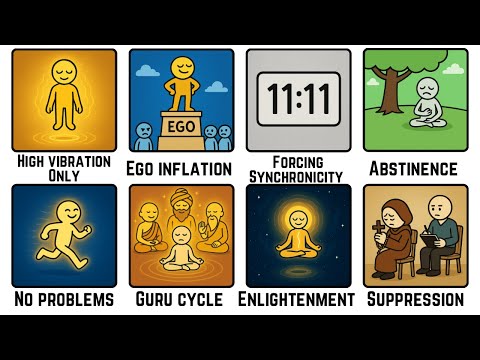
The path of spiritual awakening is often depicted as a serene ascent, a journey towards luminous clarity. Yet, for many, it becomes a treacherous landscape riddled with hidden egoic traps and psychological mirages. This isn't about rejecting the journey, but about navigating it with eyes wide open, understanding that the ego, in its infinite cunning, can masquerade as enlightenment itself. We're here to dissect these illusions, not to dismiss the profound transformation spiritual awakening entails, but to arm you with the awareness needed to traverse it authentically.
Table of Contents
- The Siren Song of High Vibration
- When the Ego Dons the Monk's Robes: Inflation and Enlightenment
- The Compulsion for Meaning: Forcing Signs and Synchronicities
- Renouncing the Vessel: Rejecting Human Needs
- The Myth of the Problem-Free Paradise
- The Endless Quest: Chasing Gurus, Not Truth
- The Illusion of Instantaneous Ascension
- When Faith Overrides Form: Ignoring Mental Health
- Arsenal del Mago
- Veredicto del Practicante: ¿Está tu Despertar a Salvo?
- Preguntas Frecuentes
- Tu Operación: El Espejo del Ego
The Siren Song of High Vibration
One of the earliest and most seductive traps is the exclusive pursuit of "high vibration." While cultivating positive states is valuable, fixating solely on euphoria can lead to a perilous denial of the human experience. True spiritual growth doesn't mean eradicating what you perceive as "low vibration" emotions like sadness, anger, or fear. Instead, it involves understanding and integrating them. These feelings are not roadblocks but messengers, offering profound insights when we have the courage to listen. Rejecting them creates an imbalance, a superficial spiritual veneer that crumbles at the first sign of genuine adversity. This constant chase for an elusive, perpetual high can become its own form of spiritual bypassing, a way to avoid deeper self-examination and shadow work.
When the Ego Dons the Monk's Robes: Inflation and Enlightenment
Perhaps the most insidious trap is ego inflation masquerading as enlightenment. As individuals deepen their spiritual practice, they may experience profound insights, moments of clarity, or a sense of expanded consciousness. The ego, however, is a master manipulator. It can latch onto these experiences, distorting them into a feeling of superiority, of having "figured it all out." This is not enlightenment; it is simply the ego amplifying itself through spiritual terminology. True spiritual maturity is marked by humility, a recognition of the vastness of what is unknown, and a compassionate understanding of others' journeys. Be wary of any spiritual teacher or teaching that promotes a sense of exclusive knowledge or spiritual hierarchy. The Psychology of Awakening is complex; distinguishing between genuine liberation and egoic aggrandizement is paramount.
The Compulsion for Meaning: Forcing Signs and Synchronicities
Spiritual seekers often look for validation in the outer world, seeing meaning in every coincidence. While synchronicity is a powerful phenomenon, the ego can corrupt this by projecting significance onto every random event. This can manifest as an obsessive search for "signs" – interpreting every repeated number, every animal sighting, or every song on the radio as a direct message. This compulsion often stems from a desire for external validation and a fear of making decisions independently. Instead of fostering genuine discernment, it creates an anxious dependence on cosmic breadcrumbs. A grounded spirituality trusts inner knowing while appreciating the meaningful patterns the universe may offer, rather than contorting reality to fit a preconceived narrative. The danger here can lead to isolating yourself, seeing the world solely through your perceived "special" lens, as noted by one community member who described a coworker's persistent, self-centered interpretation of everyday events.
Renouncing the Vessel: Rejecting Human Needs
A misconception that frequently arises is that spiritual awakening necessitates the abandonment of basic human needs: food, rest, social connection, financial security, and healthy boundaries. This ascetic ideal, when taken to an extreme, is not a sign of advancement but a form of self-neglect. Our physical bodies are the vessels through which we experience this reality. Disregarding their needs for sustenance, rest, or the establishment of healthy boundaries is not spiritual transcendence; it is a dangerous rejection of embodied existence. True awakening integrates the spiritual and the material, recognizing that caring for the physical self is a foundation for robust spiritual practice and emotional healing.
The Myth of the Problem-Free Paradise
Another prevalent illusion is the belief that spiritual awakening eradicates all problems. This idea suggests a life devoid of challenges, conflicts, or difficulties once one is "awakened." This is a fantasy. Spiritual growth often brings challenges to the surface, forcing us to confront ingrained patterns, past traumas, and deeply held beliefs. Awakening doesn't remove problems; it equips us with greater self-awareness, resilience, and the capacity to navigate them with grace and understanding. The goal isn't a problem-free existence, but a conscious and balanced approach to life's inevitable ups and downs. This is where Shadow Work becomes not an optional extra, but a crucial component of authentic growth.
The Endless Quest: Chasing Gurus, Not Truth
The spiritual marketplace is replete with charismatic figures, and it's easy to fall into the trap of constantly seeking the "next great guru" or the "ultimate teaching." This constant hopping from one teacher to another, without committing to personal practice and integration, often indicates an avoidance of deeper work. While guidance is invaluable, true spiritual transformation arises from within. Reliance solely on external authorities can stunt personal development and foster dependency. It's crucial to discern genuine wisdom from superficial charisma and to ground oneself in consistent, personal practice. As one commenter noted, many historical figures presented as gurus were, in essence, confidence artists – a cautionary tale for any seeker.
The Illusion of Instantaneous Ascension
The concept of "instant enlightenment" is a powerful allure, promising a quick fix to existential suffering. While profound moments of awakening can occur suddenly, true, integrated spiritual maturity is a process, not an event. It requires consistent effort, dedication, and the integration of lessons learned into daily life. The desire for instant results often leads to impatience, disillusionment, and a superficial engagement with spiritual principles. The spiritual journey is a marathon, not a sprint, demanding patience and perseverance. The idea that one can bypass the necessary stages of development is a seductive egoic trap.
When Faith Overrides Form: Ignoring Mental Health
Perhaps the most critical pitfall is the neglect of mental health in the name of faith or spiritual advancement. Believing that spiritual practice alone can cure serious mental health conditions like depression, anxiety, or trauma without professional support is dangerous. While mindfulness, meditation, and spiritual inquiry can be powerful adjuncts to healing, they are not substitutes for necessary medical or psychological care. True spiritual strength involves acknowledging all aspects of oneself, including psychological vulnerabilities, and seeking appropriate help. A balanced approach integrates spiritual practices with a pragmatic understanding of mental well-being, ensuring grounded spirituality.
Arsenal del Mago
- Libros Clave: "Liber Null & Psychonaut" de Peter J. Carroll (para una comprensión profunda de la magia del caos), "Condensed Chaos" de Phil Hine (un manual práctico para exploradores), "The Kybalion" (para principios herméticos fundamentales), y cualquier obra de Carl Jung (clave para entender la psicología del ego y la Sombra).
- Herramientas Conceptuales: Un diario de introspección para rastrear patrones egoicos, herramientas de mindfulness y meditación (apps como Headspace o Calm), y un marco de referencia científico (como física cuántica o psicología evolutiva) para anclar la experiencia.
- Recursos de Apoyo: Identifica terapeutas o consejeros con experiencia en trauma y espiritualidad, foros de discusión para practicantes serios (donde se fomente el debate honesto, no la adoración), y, cuando corresponda, comunidades de prácticas grupales supervisadas.
Veredicto del Practicante: ¿Está tu Despertar a Salvo?
Navegar el camino espiritual sin caer en estas trampas requiere vigilancia constante y una profunda autoconciencia. El objetivo no es culpar al ego, sino reconocer su astucia y utilizar su energía de manera constructiva. La verdadera transformación se manifiesta en un equilibrio armónico entre el mundo interior y exterior, en la aceptación de la totalidad de la experiencia humana, y en una sabiduría práctica que se aplica a la vida cotidiana. Si te encuentras persiguiendo constantemente un estado de euforia, buscando validación externa, o descuidando tus necesidades básicas o tu salud mental en nombre de la espiritualidad, es una señal clara de que estás operando bajo la influencia de uno de estos engaños egoicos. La autoconciencia es tu principal herramienta; úsala para discernir entre el oro genuino de la iluminación y el espejismo del ego inflado.
Preguntas Frecuentes
¿Cómo puedo diferenciar entre mi ego y mi intuición espiritual?
Tu intuición tiende a ser tranquila, clara y te guía hacia la integración y la compasión, incluso en las dificultades. El ego se manifiesta como orgullo, juicio, necesidad de validación externa, y a menudo promueve la división o la superioridad.
¿Es malo buscar maestros espirituales?
No es malo buscar guía, pero es perjudicial depender exclusivamente de ella o idealizar a un maestro. Busca guías que te empoderen para encontrar tu propia verdad interior, no aquellos que exigen devoción ciega.
¿Qué hago si me doy cuenta de que he caído en una de estas trampas?
El primer paso es la autoconciencia. Reconoce la trampa sin juicio y redirige tu energía conscientemente. Si es necesario, busca apoyo profesional o comunitario. La auto-indulgencia o la autocrítica excesiva son también formas del ego.
¿Cómo puedo mantener la "vibración alta" sin caer en la negación?
Enfócate en la gratitud y la apreciación por lo que es, en lugar de solo lo que deseas. Permite que todas las emociones fluyan, reconociendo su propósito transitorio y aprendiendo de ellas. La integración es más poderosa que la supresión.
Tu Operación: El Espejo del Ego
Para tu práctica personal esta semana: Dedica 10 minutos cada día a observar tus pensamientos y emociones. Cuando identifiques un pensamiento o sentimiento que parezca impulsado por el deseo de superioridad, validación, o negación de la realidad, rótulo mentalmente como "Ego". Sin juzgarlo ni reprimirlo, simplemente obsérvalo. Pregúntate: ¿Qué necesidad básica está intentando satisfacer este pensamiento de mi ego? ¿Cómo puedo satisfacer esa necesidad de una manera más equilibrada y arraigada en la realidad?
Practitioner's Note: True magick requires resources. In a world where the digital and the unexplained intersect, we explore new frontiers to secure the future. Do you dare to be part of the vanguard? Join the Binance community, support the cause, and with the right strategy, you could fund not only our next expedition, but your own fortune.
No hay comentarios:
Publicar un comentario