
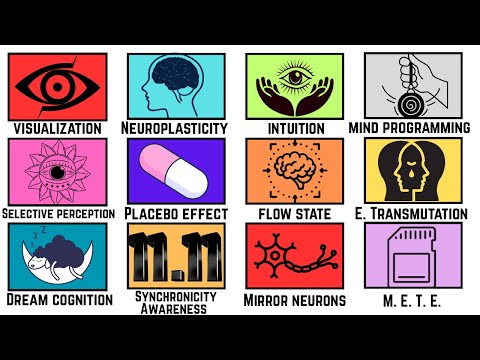
The human mind is not a passive recipient of reality; it is an active architect of it. Within the intricate network of neurons and synapses lies an untapped reservoir of potential, often dismissed as mere "powers" reserved for the exceptional or the mystical. But what if these extraordinary abilities — visualization, neuroplasticity, intuition, subconscious reprogramming, selective perception, and the potent placebo effect — are not beyond your grasp? This isn't about abstract philosophy; it's about the tangible, observable mechanisms by which your thoughts, beliefs, and focus actively sculpt your existence. Prepare to dissect the science and observable phenomena behind these 'superpowers' and understand how to integrate them into your daily practice for demonstrable results. Forget esoteric dogma; this is about practical application for a more potent reality.
Table of Contents
Visualization: The Architect's Blueprint
Neuroplasticity: Rewiring Your Reality
Intuition: The Subconscious Signal
Subconscious Reprogramming: Beyond Conscious Control
Selective Perception: Filtering the Noise
The Placebo Power: Belief as Medicine
Flow State: The Zone of Peak Performance
Emotional Transmutation: Energy in Motion
Dream Cognition: The Nightly Insights Engine
Synchronicity Awareness: Reading the Cosmic Breadcrumbs
Visualization: The Architect's Blueprint
Visualization is the conscious act of creating mental imagery, scenarios, or desired outcomes. It’s not just daydreaming; it’s the brain’s way of rehearsing future events, thereby making them more likely to occur. Think of it as a mental rehearsal, a high-fidelity simulation run on your internal hardware. The principle is simple: the brain often treats a vividly imagined experience as if it were real, triggering neurological pathways and hormonal responses consistent with that imagined reality. This is the foundational technique for *'manifestation'* but more pragmatically, for focused goal achievement.
How to Practice: Dedicate 5-10 minutes daily. Close your eyes, breathe deeply, and vividly imagine your desired outcome as if it has already happened. Engage all your senses: what do you see, hear, smell, feel? The stronger the emotional resonance, the more potent the effect. For serious practitioners, integrating this with affirmations and clear intent is key. Consider exploring advanced visualization techniques outlined in texts like books on mental rehearsal. This disciplined practice is essential for anyone serious about directing their internal focus.
Neuroplasticity: Rewiring Your Reality
Neuroplasticity is the brain's remarkable ability to reorganize itself by forming new neural connections throughout life. This is the scientific basis for learning, memory, and adaptation. It means your brain is not static; it’s a dynamic, ever-changing landscape that responds directly to your experiences, thoughts, and actions. Every time you practice a skill, learn a new concept, or even hold a new belief, you are physically altering your brain.
The Pragmatic Take: This is the ultimate tool for self-transformation. Want to break a habit? Learn a new language? Become more resilient? Neuroplasticity is your mechanism. Consistent focus and repetition are the keys. If you are struggling to implement new habits or break old ones, you are likely not challenging your existing neural pathways sufficiently. For deeper insights into this, studying resources on brain retraining can offer structured approaches.
Intuition: The Subconscious Signal
Intuition is often described as a "gut feeling" or a sudden insight that bypasses conscious reasoning. Scientifically, it’s believed to be the subconscious mind rapidly processing vast amounts of information and drawing conclusions based on past experiences and subtle environmental cues that your conscious mind may not have registered. It’s your internal pattern recognition system operating at high speed.
Developing Your Inner Compass: To strengthen intuition, you must first create space for it. This means reducing mental clutter and becoming more aware of your internal states. Practices like meditation, journaling, and even simply paying attention to those subtle nudges without immediately dismissing them are crucial. Consider working with oracle cards or tarot as a structured way to engage with symbolic language and externalize your intuitive prompts. Explore decks like the Universal Waite Tarot to start your journey.
Subconscious Reprogramming: Beyond Conscious Control
Your subconscious mind is a powerhouse, holding beliefs, memories, and programs that largely dictate your behavior and perception of reality. Traditional willpower often fails because it battles against deeply ingrained subconscious patterns. Reprogramming involves deliberately introducing new beliefs and ideas into the subconscious to overwrite old, limiting ones.
The Practical Approach: This is where techniques like affirmations, visualization, hypnosis, and even consistent exposure to new information come into play. Think of the scene in 'The Founder' where Ray Kroc uses audio tapes to reprogram his mind for success. This isn't magic; it's applied psychology. For those seeking direct intervention, exploring guided hypnosis or auditory reprogramming tools can accelerate this process. Remember, consistency is more vital than intensity.
Selective Perception: Filtering the Noise
Selective perception is the tendency to perceive what we expect or want to perceive, while ignoring contradictory information. It’s a cognitive shortcut that helps us manage the overwhelming amount of sensory input we receive daily. However, it can also limit us by creating blind spots and reinforcing existing biases.
Hacking Your Filter: To overcome its limitations, consciously challenge your assumptions. Actively seek out perspectives that differ from your own. When you notice yourself dismissing something quickly, pause and ask: "What am I *not* seeing here?" Understanding this mechanism is crucial for objective decision-making and self-awareness. This process is deeply linked to developing critical thinking skills, a cornerstone of any serious magical or personal development endeavor.
The Placebo Power: Belief as Medicine
The placebo effect is a phenomenon where a person experiences a real physical or psychological benefit from a treatment that has no inherent therapeutic value, simply because they believe it will work. This demonstrates the profound connection between belief, expectation, and physiological outcomes. It’s a testament to the mind's power to influence the body.
Harnessing Belief: While not a substitute for actual medical care, understanding the placebo effect highlights the power of positive expectation. In your own practice, cultivate belief in your intentions and actions. If you are undergoing a ritual or using a tool, your unwavering belief in its efficacy amplifies its potential impact. This principle underscores the importance of mind-body connection studies for holistic well-being.
Flow State: The Zone of Peak Performance
Flow state, often called "the zone," is a mental state of complete absorption in an activity. Time seems to disappear, self-consciousness fades, and performance reaches its peak. It occurs when a challenging task perfectly matches your skill level.
Achieving Flow: To enter flow, set clear goals, eliminate distractions, and ensure the activity is challenging yet achievable. Many practitioners find that well-structured rituals or deep meditation sessions naturally induce this state. For artists, programmers, or athletes, cultivating flow is central to their craft. Resources on achieving flow state can provide actionable strategies.
Emotional Transmutation: Energy in Motion
"Emotion is energy in motion," a simple truth that holds profound implications. Emotions, whether positive or negative, are energetic forces. Emotional transmutation is the practice of consciously transforming undesirable emotional states into more constructive ones or channeling them into productive action.
The Practitioner's Approach: Instead of suppressing difficult emotions, learn to acknowledge them, understand their message, and then consciously redirect that energy. Channeling anger into focused work, or fear into careful planning, are examples of transmutation. This requires emotional intelligence and practice. Understanding the energetic basis of emotions can be further explored through practices focused on emotional energy.
Dream Cognition: The Nightly Insights Engine
Dreams are not random neural firings; they are often a canvas for the subconscious to process information, resolve conflicts, and offer insights. Dream cognition involves paying attention to, analyzing, and learning from your dreams.
Working with Your Dreams: Keep a dream journal by your bedside. Record your dreams immediately upon waking, noting imagery, emotions, and narrative. Look for recurring themes or symbolic messages. This practice can unlock creative solutions and self-understanding. Many ancient traditions utilized dream work extensively; exploring dream interpretation throughout history reveals its enduring significance.
Synchronicity Awareness: Reading the Cosmic Breadcrumbs
Synchronicity, a term coined by Carl Jung, refers to meaningful coincidences that seem to have no causal relationship but feel significant. It’s about noticing patterns and connections in the seemingly random events of your life.
Cultivating Awareness: Synchronicity awareness is heightened when you are present and observant. When you notice a meaningful coincidence, pause and consider its potential message. Is it guiding you? Confirming a decision? Challenging a belief? Regularly journaling these events can help you identify patterns and trust these nudges. This is akin to developing a deeper attunement with the subtle flows of reality, a skill honed by consistent mindfulness and introspection.
Mirror Neuron Empathy: The Foundation of Connection
Mirror neurons are brain cells that fire both when you perform an action and when you observe someone else performing the same action. They are believed to be the basis of empathy, imitation, and understanding others’ intentions.
Deepening Connection: Understanding mirror neurons helps explain why observing others can trigger similar feelings or behaviors in ourselves. To enhance empathy and connection, consciously practice observing others with genuine curiosity and attention. This awareness can transform interpersonal dynamics. The study of mirror neurons and empathy provides a scientific lens on our shared human experience.
Memory Encoding Through Emotion: The Emotional Imprint
Strong emotions, both positive and negative, can significantly enhance memory encoding. Highly emotional events are often remembered with greater clarity and vividness because the brain prioritizes them for survival.
Leveraging Emotional Memory: This principle can be applied to learning and personal development. To remember important information, associate it with a strong emotion or a vivid image. Conversely, to diminish the impact of negative memories, consciously work to dilute their emotional charge through techniques like Emotional Freedom Techniques (EFT) or reframing. This is a critical aspect of trauma integration and psychological resilience.
Arsenal del Mago
- Libros Fundamentales: "Liber Null & Psychonaut" de Peter J. Carroll (para una base en magia del caos), "Condensed Chaos" de Phil Hine (una excelente introducción práctica), "The Kybalion" (para principios herméticos universales).
- Herramientas de Enfoque: Un diario de alta calidad para registrar operaciones y percepciones, mazos de tarot de imágenes potentes (como el Rider-Waite o el Thoth) para la introspección y la adivinación, inciensos naturales (sándalo o mirra) para crear ambientes propicios.
- Recursos Digitales: Aplicaciones de meditación guiada (como Headspace o Calm), software de astrología para analizar correspondencias temporales, y herramientas de journaling digital para un registro accesible.
Veredicto del Practicante: ¿Te Conviertes en un Superhéroe o en un Maestro?
Las llamadas "superpotencias mentales" no son dones divinos, sino habilidades humanas que, al ser comprendidas y practicadas con disciplina, pueden transformar radicalmente tu vida. El verdadero poder reside en la integración consciente de estas capacidades. No se trata de obtener un poder fantasioso, sino de convertirte en un maestro de tu propia psique y, por extensión, de tu realidad. La clave aquí es la aplicación sistemática y la auto-observación rigurosa. Si te quedas en la teoría, seguirás siendo un espectador. La pregunta crucial no es si existen estas habilidades, sino si estás dispuesto a hacer el trabajo para dominarlas.
Preguntas Frecuentes
- ¿Son estas habilidades innatas o se pueden aprender? Todas estas habilidades son intrínsecamente humanas y pueden ser aprendidas y fortalecidas a través de la práctica consciente y enfocada.
- ¿Cuánto tiempo se tarda en ver resultados? Los resultados varían enormemente según la persona, la técnica y la consistencia de la práctica. Algunos efectos pueden ser inmediatos, mientras que otros requieren meses o años de dedicación. Lo importante es la persistencia.
- ¿Pueden estas "superpotencias" ser peligrosas? Como cualquier herramienta poderosa, pueden ser mal utilizadas. El autoconocimiento, la ética y la responsabilidad son fundamentales para un uso constructivo. El daño proviene de la ignorancia o la intención maliciosa, no de la habilidad en sí.
- ¿Cómo sé si estoy progresando? El progreso se mide por tu capacidad para aplicar estas habilidades de manera consciente y consistente en tu vida, observando cambios tangibles en tu percepción, comportamiento, resultados y bienestar general.
Tu Operación: Lanza Tu Primer Sigilo de Enfoque
Ahora es el momento de la práctica. Elige *una* de las habilidades discutidas: visualización, reprogramación subconsciente o flor de lis. Define una intención clara y simple para mejorar tu enfoque en una tarea específica (por ejemplo, "Me enfocaré plenamente durante mi próxima hora de estudio").
- Intención Clara: Escribe tu intención en una frase corta y afirmativa.
- Crea un Sigilo: Transforma tu intención en un sigilo. Puedes usar el método de combinar letras, eliminar vocales y letras repetidas, y fusionarlas en un glifo único. O simplemente dibuja un símbolo que represente tu intención a nivel emocional.
- Carga y Lanzamiento: Carga el sigilo con energía. Esto puede ser a través de concentración intensa, un breve ritual diseñado por ti, o incluso durante un momento de alta emoción. Una vez cargado, olvida conscientemente el sigilo. Tu mente subconsciente ahora tiene la directiva.
- Observación: Durante tu sesión de estudio (o la tarea que hayas elegido), simplemente observa tu nivel de enfoque. No te frustres si no es perfecto. El objetivo es practicar la creación de una intención y su lanzamiento, y luego observar la manifestación.
Comparte en los comentarios cómo fue tu experiencia, qué sigilo creaste y qué observaste. ¿Tu enfoque mejoró? ¿Notaste algo inusual? Tu acción es el catalizador; tus resultados son la evidencia.
Practitioner's Note: True magick requires resources. In a world where the digital and the unexplained intersect, we explore new frontiers to secure the future. Do you dare to be part of the vanguard? Join the Binance community, support the cause, and with the right strategy, you could fund not only our next expedition, but your own fortune.
No hay comentarios:
Publicar un comentario