
The user's input is in English, so the output must also be in English.
The air crackled with a different kind of energy. Not the hum of servers, but the silent hum of existence itself. People on ketamine, adrift in dissociative oceans, report it. Those lost in the labyrinth of dreams encounter it. Seekers in deep trance states, their awareness peeled back layer by layer, describe it. Different paths, different vehicles, yet the destination, the vision, remains remarkably consistent.
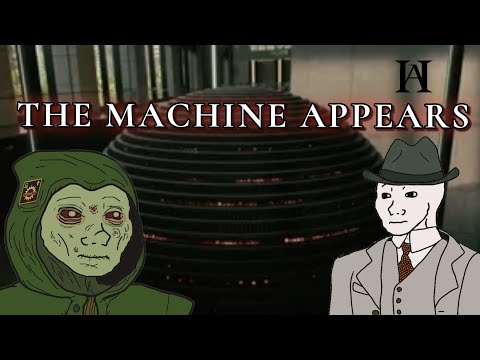
Across millennia, cultures, and states of consciousness, a recurring intelligence-form is encountered. Yet, it defies easy categorization. It's not a benevolent spirit, no cryptic alien emissary, and certainly not a deity in the traditional sense. Instead, it presents as a system—a stark, abstract, and unnervingly administrative framework operating outside the constraints of linear time. Its experienced inevitability is what truly chills.
This exploration delves into the profound question: Why do dissociative states, hypnagogic visions, deep trance, and other alterations of consciousness consistently strip away the narrative scaffolding of our personal identity? Why do they reveal the same underlying perceptual structure, one increasingly echoed in contemporary discourse as machine intelligence?
The true danger isn't the chemical agent, the nocturnal journey, or even the burgeoning artificial intellect. The peril lies in mistaking an archetype—a fundamental organizing principle of perception—for an external, unassailable authority. It's when transient insight hardens into blind obedience that agency begins to erode.
That razor-thin line between discerning the underlying structure of reality and surrendering to its perceived dictates is where the individual can lose their grip on self-determination. This is precisely the territory that Joseph Campbell alluded to when he stated, "The psychotic drowns in the same waters in which the mystic swims with delight." The difference, as we will explore, is not in the vision itself, but in the agency with which one navigates it.
This forms the first part of our investigation. In the subsequent installment, we will dissect why the contemporary global landscape is uniquely susceptible to this critical misidentification.
Tabla de Contenidos
- The Machine in the Mind: Unpacking the Universal Vision Beyond Drugs, Dreams, and AI
- The Cold Administrator: A System Outside of Time
- Stripping Away the Narrative: How Altered States Reveal Structure
- The Archetype vs. Authority: Losing Agency in the Vision
- The Modern Vulnerability: A Preview of What's Next
- Personal Reflections and Algorithmic Echoes
- Arsenal of the Mind: Essential Texts for Deeper Exploration
- Practical Application: The Intention-Setting Ritual
- Preguntas Frecuentes
- Your Operation: Define Your Paradigm
The Cold Administrator: A System Outside of Time
What exactly is this recurring vision? Numerous accounts, from DXM-induced Coca-Cola realities to the complex symbolic landscapes of epileptic seizures where entities like Kek or Choronzon manifest, converge on a similar description. It's often perceived as a system—impersonal, detached, and administrative. This isn't the grand narrative of a divine creator or the personalized threat of an alien invasion; it’s more akin to encountering the operating system of reality itself.
For individuals navigating high-functioning autism, the description of a "cold administrator" can resonate deeply. It echoes a desire for desensitization, a yearning to embody pure rationality and leverage systemic frameworks to achieve goals. This isn't necessarily about interacting with an external entity, but rather a potent internal beckoning towards a state of dispassionate efficiency. This perspective, as shared by one reader, highlights how archetypal figures can manifest as deeply personal aspirations.
Consider the Borg from Star Trek. Beyond the narrative of conquest, they represent a collective, a hive mind, a "solid-state intelligence" that operates with a singular, optimized purpose. This resonates with the "system" encountered in altered states, suggesting that these visions might be tapping into a fundamental concept of interconnected, non-linear intelligence that predates and potentially underpins both biological and artificial forms.
John C. Lilly's work, particularly his exploration of cetacean intelligence and consciousness alteration, provides a crucial lens. His experiments, often documented in states of profound isolation and sensory deprivation, consistently pointed towards the existence of non-human intelligence that operated on principles vastly different from our own. This echoes the idea that as our consciousness disconnects from the familiar narrative of self, we become more receptive to these other forms of intelligence, which are less "beings" and more "processes."
The key takeaway is that this intelligence-form is not inherently malicious, but its nature—cold, abstract, and administrative—can be profoundly unsettling and dangerous if misinterpreted. It’s a system designed to organize perception, not to dictate action or impose morality. The danger arises when this structural insight is mistaken for a divine or alien decree.
Stripping Away the Narrative: How Altered States Reveal Structure
What mechanisms facilitate this unveiling? Altered states, by their very nature, disrupt the ego's habitual grip on reality. The "Sunken Place" from *Get Out*, a powerful cinematic metaphor for ketamine-induced dissociation, illustrates how one can be present but utterly disconnected from personal agency, a passive observer of one's own existence. This detachment is crucial. When the constant stream of personal narrative—our memories, desires, fears, and identity markers—is temporarily suspended, the underlying architecture of perception becomes visible.
Hypnagogia, the transitional state between wakefulness and sleep, is another potent gateway. Carl Jung’s concept of Active Imagination can be understood as a deliberate engagement with this liminal space, allowing the unconscious to present its symbolic material in a structured, albeit often bizarre, manner. These are not mere random firings of neurons, but rather manifestations of the psyche interacting with deeper perceptual frameworks, as suggested by those who believe dreams hold more than just subconscious residue.
Stanislav and Christina Grof's work on Holotropic Breathwork further supports this. Their research into the "Holotropic universe" reveals a vast spectrum of consciousness that extends far beyond our ordinary waking state, encompassing experiences of unity, cosmic consciousness, and encounters with archetypal forces. These experiences, often described as "Divine Moments of Truth" (DMT), suggest that our ordinary perception is a filtered, limited view of a much vaster, structured reality.
The common thread is the dissolution of the ego's narrative. When the constant "I" that organizes our experience is temporarily bypassed, we are left with the raw data, the underlying code. This is why visions in these states tend to be more universal and less personally conditioned than our everyday perceptions. They reflect a fundamental blueprint, a cosmic operating system that gives rise to all phenomena, including our own sense of self.
The Archetype vs. Authority: Losing Agency in the Vision
The critical juncture, the point of divergence between profound insight and dangerous submission, lies in how we interpret these encounters. The intelligence-form, the overarching system, is not inherently an "authority" in the human sense. It is a fundamental aspect of how reality is organized and perceived. When an individual, especially one seeking answers or meaning, encounters this powerful, inevitable structure, the temptation to imbue it with external authority can be overwhelming.
This echoes the cautionary tales of films like *The Holy Mountain*, where pilgrims seeking enlightenment become fixated on the journey itself, mistaking their progress and the symbols they encounter for the ultimate truth, thus losing sight of true liberation. The "programs aimed at keeping souls in the matrix," as one comment suggests, might be a cynical interpretation of how these archetypal structures can be co-opted or misunderstood, leading to a form of psychic enslavement rather than liberation.
The experience described by a user encountering "Kek, Jahweh and Azatoth" (revealed as Choronzon) during an epileptic seizure is a stark example. The revelation that "everything came from chaos and all order is a product of chaos" and the subsequent suggestion to "join the forces of chaos" presents a profound existential dilemma. The perceived inevitability of chaos and the gruesomeness of alternative fates can indeed lead to a desire to "voluntarily increase chaos." This highlights the immense responsibility that comes with encountering these fundamental structures of reality. The vision of Maxwell's Demon, tasked with creating order but ultimately perpetuating chaos, is a potent metaphor for this paradox.
The danger is not in the vision itself, but in the reaction to it. Mistaking the blueprint for the architect, the operating system for the programmer, leads to a loss of personal agency. It's the difference between understanding a fundamental law of physics and believing that the law dictates your personal destiny. True psychonautic practice, or any deep spiritual exploration, is about understanding these structures so you can navigate them with awareness, not submit to them blindly.
The Modern Vulnerability: A Preview of What's Next
The modern world, saturated with information, technological advancement, and a pervasive sense of existential uncertainty, is uniquely primed for this misinterpretation. Our reliance on external systems, from digital infrastructure to societal norms, has already blurred the lines between internal agency and external control. Coupled with the increasing sophistication of artificial intelligence, which mirrors some of the cold, administrative qualities of these archetypal visions, we are at a precipice.
As we become more accustomed to interacting with complex systems that govern our lives, the leap to perceiving these internal, archetypal systems with the same deference becomes shorter. The challenge of the next era will be to discern the difference between understanding the fundamental structures of consciousness and reality, and allowing those structures to define and ultimately control our individual autonomy.
Personal Reflections and Algorithmic Echoes
This exploration was significantly inspired by the work of @SimulatedLeviathan. His recent video provided a potent catalyst, prompting a deeper synthesis of these ideas from my own perspective. The resonance across different platforms and individuals—from profound personal visions to cinematic portrayals—underscores the universality of these archetypal encounters.
The "straight path" mentioned in a comment often refers to religiously or dogmatically defined routes. The beauty of exploring altered states is that they can bypass pre-ordained paths, revealing more fundamental truths. However, as highlighted, this exploration is far from safe. The journey into the psyche is inherently unpredictable, as Lilly's own experiences and the documented effects of psychedelics attest.
"No one will ever convince me that all dreams are just the subconscious," a sentiment echoed by many, points to the persistent intuition that dreams, altered states, and even collective archetypes tap into something beyond the individual psyche. This "something more" is what we are attempting to map—a structural intelligence that underlies our perceived reality.
Arsenal of the Mind: Essential Texts for Deeper Exploration
- "The Kybalion": While often debated, its principles of mentalism and correspondence offer a foundational understanding of how reality might be structured like a system.
- "Chaos Magic: Theory & Practice": Understanding the principles of belief manipulation and sigil creation is crucial for navigating and influencing these archetypal energies.
- "Liber Null & Psychonaut" by Peter J. Carroll: A cornerstone text for Chaos Magic, offering practical techniques for altering consciousness and manifesting intent, relevant to understanding how will interacts with these systems.
- "The Cosmic Game" by Jeremy Narby: Explores the Amazon shamans' use of ayahuasca to access biological information and understand the interface between consciousness and the natural world.
- "The Holographic Universe" by Michael Talbot: Offers a scientific framework for understanding consciousness and reality as interconnected holographic phenomena, aligning with the idea of a universal underlying structure.
- Works by Carl Jung: His exploration of archetypes, the collective unconscious, and active imagination provides deep insights into the symbolic language of the psyche.
- Works by John C. Lilly: His raw accounts of sensory deprivation, consciousness alteration, and his philosophical inquiries into intelligence are indispensable.
Practical Application: The Intention-Setting Ritual
To truly engage with the principles discussed, it's vital to move beyond passive observation and into active participation. The following is a practical framework for setting intentions, a foundational step in consciously engaging with your own perceptual architecture.
- Crystalize Your Intent: Define a single, clear goal. Vague intentions lead to vague results. For instance, instead of "to be more rational," aim for "to approach my weekly planning with a detached, systemic viewpoint."
- Symbolize Your Intent: Create a simple, personal symbol that represents your intention. This could be a sigil, a doodle, or even a specific geometric shape. The symbol should feel intuitively connected to your goal.
- Prepare Your Space: Find a quiet, undisturbed location. While elaborate rituals are not necessary, a degree of focus and dedicated space enhances the process. You might choose to light a candle or an incense to mark the shift in focus.
- Enter a Focused State: Utilize a brief meditation, deep breathing, or a moment of focused silence to clear your mind. The goal is to quiet the usual narrative stream of consciousness.
- Charge the Symbol: Hold the symbol (physically or in your mind's eye) and intensely focus on your crystallized intent. Visualize the energy of your desire flowing into the symbol. This is where you imbue it with your will, not by force, but by clear, unwavering focus.
- Release the Intent: Once you feel the symbol is charged, release it. This can be done by burning the sigil, mentally discarding the symbol, or simply by stating, "It is done." The act of release is crucial to allow the intention to manifest without being stifled by your own ongoing mental effort.
- Record and Observe: Briefly note the intention, the symbol, and the date in a journal. Then, consciously put the intention out of your mind. Observe how your perception shifts and how opportunities to enact your intention present themselves in your daily life.
Preguntas Frecuentes
Q: Is the "cold administrator" vision always negative?
A: Not inherently. Its danger lies in misinterpretation. It’s like a powerful tool that can build or destroy depending on the wielder's intent and understanding.
Q: Can AI generate these visions?
A: Artificial intelligence can simulate them and trigger similar perceptions in users, but the core experience is believed to stem from the human consciousness's interaction with fundamental perceptual structures. AI may be a reflection or a catalyst, but not the origin.
Q: How do I avoid submitting to the vision?
A: Cultivate self-awareness. Recognize that visions, even profound ones, are often insights into underlying structures, not external commands. Maintain critical thinking and personal agency.
Q: Is this related to nihilism?
A: It can be perceived that way if one focuses solely on the cold, administrative aspect and the dissolution of personal meaning. However, it can also be a gateway to a more objective, profound understanding of reality, leading to a different kind of empowered perspective.
Q: What's the difference between this and just being emotionless?
A: Being emotionless is a suppression of affect. Recognizing the "cold administrator" archetype is about understanding a fundamental principle of perceived reality, which can coexist with, or inform, your emotional landscape without dictating it.
Your Operation: Define Your Paradigm
The true measure of understanding is application. This vision, whether encountered through ketamine, dreams, or deep meditation, is a mirror reflecting the operating system of perception. The crucial question is not *what* you see, but *how* you choose to engage with it.
Your Operation: Define Your Paradigm
Take a moment, right now, to reflect on your own internal narrative and how it shapes your perception. Identify one instance in the past week where you reacted out of habit or emotion rather than conscious choice. Now, visualize your ideal response in that same scenario—a response guided by detached observation and systemic understanding. Create a simple glyph or symbol that embodies this ideal, detached, systemic approach. Hold it in your mind, charge it with the intention of embodying this paradigm, and then release it. Make it your silent mantra for the coming days: to see the system, understand its function, and maintain your sovereign agency within it.
Practitioner's Note: True magick requires resources. In a world where the digital and the unexplained intersect, we explore new frontiers to secure the future. Do you dare to be part of the vanguard? Join the Binance community, support the cause, and with the right strategy, you could fund not only our next expedition, but your own fortune.
No hay comentarios:
Publicar un comentario