
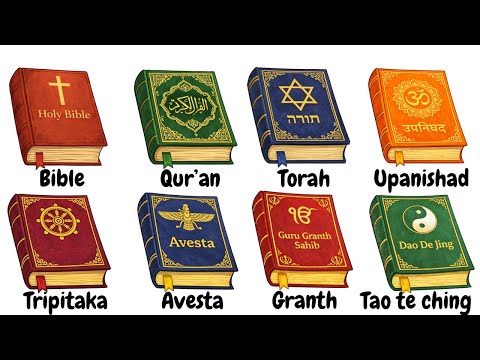
No ritual is complete without a foundational understanding of its components. Likewise, no true exploration of the world's spiritual architectures can occur without a clear-eyed dissection of their original blueprints. We are not here to kneel, nor are we here to scoff. We are here to excavate. To understand the raw power, the human intent, and the societal impact embedded within the most influential texts ever conceived.
Imagine peering into the forge where creation itself was hammered into existence, not with divine reverence, but with the cold, sharp tools of historical analysis, anthropological insight, and sheer intellectual curiosity. This is not an act of desecration; it is an act of profound respect for the power of ideas and the enduring human quest for meaning. We will dismantle the pillars of faith, not to topple them, but to understand the engineering behind them. Prepare to see the familiar through a lens unclouded by dogma.
Tabla de Contenidos
- The Genesis of Meaning: Why Deconstruct the Sacred?
- The Bible: A Tapestry of Prophecy and Politics
- The Quran: Divine Revelation and Linguistic Purity
- The Torah: The Law's Foundation and Its Fractures
- The Vedas and Upanishads: The Echoes of Ancient Wisdom
- The Tripitaka: The Buddha's Path to Liberation
- The Avesta: The Light and Shadow of Zoroastrianism
- The Guru Granth Sahib: A Symphony of Devotion and Unity
- The Dao De Jing: The Uncarved Block of Natural Order
- Veredict of the Pragmatist: The Enduring Power of Texts
- Arsenal of the Seeker: Essential Tools for Deeper Study
- Taller Práctico: The Art of Textual Dissection
- Preguntas Frecuentes
- Tu Operación: Unraveling Your Own Narrative
The Genesis of Meaning: Why Deconstruct the Sacred?
The world's most potent texts are not static relics. They are dynamic forces that have shaped civilizations, ignited wars, inspired countless acts of altruism, and fueled an equal number of atrocities. To approach them "without sentiment" is to strip away generations of interpretation, cultural overlay, and emotional baggage. It is to confront the bare bones of the message, the historical context of its creation, and the undeniable human biases that inevitably seep into any narrative, no matter how divinely inspired.
The very act of questioning, of seeking an unvarnished view, is a practice of profound self-empowerment. It's akin to examining the energetic imprint of a powerful sigil – understanding its construction allows for greater control over its manifestation, or at least a clearer perception of its effects. This is about building a more robust understanding of the forces that have molded our collective consciousness, enabling us to navigate the present and future with greater clarity.
The Bible: A Tapestry of Prophecy and Politics
The Bible, a colossal collection of scrolls, is less a single book and more a library. Its narrative arc spans millennia, weaving together law, prophecy, poetry, and history. Its origins are shrouded in the oral traditions of ancient Israel, gradually codified by various scribes and edited by influential figures over centuries. The tension between divine pronouncements and political maneuvering is palpable. Prophecies, written as far back as a thousand years before the common era, are indeed striking, but understanding their composition requires acknowledging the societal pressures and interpretive frameworks of the time.
The New Testament, with its gospels, presents a fascinating case study. While the precise dating remains a scholarly debate, with Mark often placed around 70 CE and John closer to 100 CE, these texts were – in their own way – firsthand accounts from those who followed Jesus, witnessed his teachings, and experienced his life. However, the transmission of these stories, initially oral, inevitably involved shaping and recollection, a point often misunderstood. The idea that the divine version of historical figures could appear "Germanic" rather than reflecting their likely Middle Eastern features is a testament to how interpretations evolve and, at times, distort. The Bible’s influence is undeniable, but its interpretation has been a constant battleground, often wielded as much for earthly power as for spiritual enlightenment.
"The Bible is a collection of divine truths, clothed in human language." - William E. Gladstone
The Quran: Divine Revelation and Linguistic Purity
The Quran, considered by Muslims to be the literal word of God (Allah) revealed to the Prophet Muhammad, stands as a testament to linguistic perfection and theological consistency. Unlike texts that underwent extensive compilation and editing over long periods, the Quran is believed by adherents to be a direct, unadulterated dictation. Muhammad, who was illiterate, recited verses revealed by the Archangel Jibril (Gabriel), which were then meticulously recorded by his companions.
A key distinction from the Bible is the Quran's stance on Jesus (Isa, peace be upon him). While revered as a highly important prophet, he is unequivocally not considered the Son of God. The Quran emphasizes the oneness of God (Tawhid) and views the Bible as divinely inspired, but believes its original message was altered over time. This is why many passages prompt reflection: "Remember when..." The Quran is seen as a clarification and a final testament, a "remembrance of God" designed to guide humanity back to its pristine, intended path. Its compilation under Uthman, the third Caliph, aimed to standardize the text and prevent any divergence, a crucial act in preserving its perceived purity.
The Torah: The Law's Foundation and Its Fractures
The Torah, comprising the first five books of the Hebrew Bible, lays down the foundational laws and narratives of Judaism. Its roots are ancient, tracing back to Moses, who is traditionally credited with receiving its tenets directly from God on Mount Sinai. However, critical scholarship suggests a complex editorial history, with different sources likely integrated over time.
The inclusion of the Talmud on such a list is a pointed question that raises significant debate. While the Torah is the central sacred text, the Talmud, a vast compendium of rabbinic laws, ethical teachings, and historical discussions, serves as a vital commentary and interpretation of the Torah, deeply influencing Jewish life and practice. The notion that "politicians who are Masons serve" the Talmud is a conspiratorial leap, conflating distinct traditions and demonstrating how easily narratives can be twisted to fit pre-existing biases. The intricate legalistic and ethical framework of the Talmud, while profound, is also a testament to the human endeavor of interpreting divine will in a complex world.
The Vedas and Upanishads: The Echoes of Ancient Wisdom
The Vedas, considered among the oldest sacred texts in Hinduism, are vast collections of hymns, rituals, and philosophical insights originating from ancient India. They are characterized by their abstract and often poetic language, forming the bedrock of Hindu thought. The Upanishads, which emerged later, are philosophical texts that delve deeper into the metaphysical understandings presented in the Vedas, acting as both commentary and a continuation of these profound ideas.
The relationship between the Vedas and Upanishads is not one of opposition, but of layered development. The Upanishads explore the esoteric meanings and ultimate realities hinted at in the Vedic hymns, offering profound discussions on Brahman (the ultimate reality) and Atman (the self). This layered approach reflects a tradition that values continuous inquiry and philosophical refinement, where later texts build upon and clarify the insights of earlier ones, rather than contradicting them.
The Tripitaka: The Buddha's Path to Liberation
The Tripitaka, also known as the Pali Canon, is the foundational scripture of Theravada Buddhism. It's a comprehensive collection divided into three "baskets": the Vinaya Pitaka (monastic rules), the Sutta Pitaka (discourses of the Buddha), and the Abhidhamma Pitaka (philosophical and psychological analysis).
The Buddha's teachings, initially transmitted orally, were eventually compiled by monastic communities. The oral tradition emphasizes the importance of accurate recitation and memorization, a process that, over time, involves human memory and interpretation, much like the whispered game in your analogy. While the goal is to preserve the core teachings of liberation from suffering, the very act of transmission and codification introduces points of potential divergence and requires rigorous discipline to maintain fidelity to the original intent.
The Avesta: The Light and Shadow of Zoroastrianism
The Avesta is the primary sacred text of Zoroastrianism, one of the world's oldest monotheistic religions. Attributed to the prophet Zoroaster (Zarathustra), it contains hymns (Gathas) considered to be his direct words, along with later liturgical texts. The religion's core tenet is the cosmic struggle between good (Ahura Mazda) and evil (Angra Mainyu), a dualistic worldview that has influenced subsequent major religions.
The Avesta's teachings emphasize free will and individual responsibility, where every person is an active participant in the cosmic battle between light and darkness. Its historical impact is significant, offering insights into the development of theological concepts like heaven, hell, and a final judgment. However, like all ancient texts, its interpretation and the societal structures it influenced are subject to historical scrutiny, revealing both its moments of enlightenment and its darker applications.
The Guru Granth Sahib: A Symphony of Devotion and Unity
The Guru Granth Sahib is the central religious scripture of Sikhism. It is revered not merely as a book, but as the eternal living Guru. Compiled by the Sikh Gurus, it contains hymns and teachings from the Sikh Gurus themselves, as well as selections from saints of other faiths whose messages aligned with Sikh principles of universal love, devotion, and equality.
The compilation of the Guru Granth Sahib was a deliberate act to consolidate the spiritual teachings and prevent the dilution or misinterpretation of Sikhism by later, less enlightened individuals or external influences. Its message is one of profound unity, transcending sectarian divides and emphasizing the inherent divinity within all beings. It stands as a beacon against religious exclusivism, offering a path of devotion grounded in service and ethical living.
The Dao De Jing: The Uncarved Block of Natural Order
The Dao De Jing, attributed to the ancient Chinese philosopher Lao Tzu, is a foundational text of Taoism. It is known for its profound yet deceptively simple verses that explore the concept of the Dao – the ineffable, natural order of the universe. It advocates for living in harmony with this natural flow, embracing simplicity, humility, and non-action (wu wei).
Unlike texts that dictate specific rituals or theological doctrines, the Dao De Jing offers a philosophy for living. Its wisdom lies in its paradoxes and its gentle guidance towards aligning oneself with the natural rhythms of existence. It encourages introspection and a letting go of artificial constructs, urging the practitioner to return to an authentic, unadorned state of being, much like an "uncarved block" ready to reveal its inherent form.
Veredict of the Pragmatist: The Enduring Power of Texts
These sacred books, varied as they are in origin and content, share a common thread: their monumental impact on human history and individual lives. They provided frameworks for understanding existence, dictated moral codes, and offered solace in times of despair. To analyze them without sentiment is to appreciate their functional power as blueprints for belief, social cohesion, and, yes, conflict.
However, the "without sentiment" approach has its limitations. The very "sentiment" – devotion, faith, awe – is what imbues these texts with their perceived power for billions. A purely clinical dissection misses the lived experience. The key is to understand both: the historical, societal, and psychological mechanics, *and* the subjective, transformative power they hold for adherents. Our goal is not to diminish their significance, but to understand its origins and its mechanisms, thereby empowering our own conscious engagement with meaning-making systems. The influence of these texts is undeniable, and understanding them is a crucial step in understanding ourselves and the societies we inhabit.
Arsenal of the Seeker: Essential Tools for Deeper Study
To truly engage with the depth of these ancient narratives requires more than casual reading. A practitioner seeking to dissect and understand these foundational texts would be wise to equip themselves with a robust arsenal:
- "The Bible" (Various translations and critical editions are essential for comparative analysis)
- "The Quran" (English translations by reputable scholars like M.A.S. Abdel Haleem)
- "The Torah" (The Five Books of Moses, often found within larger Bible editions)
- "The Upanishads" (Translations by scholars like Swami Nikilananda or Eknath Easwaran)
- "The Vedas" (Selections and scholarly interpretations are more practical than the full collection for most)
- "The Dhammapada" (A key text within the Tripitaka, offering core Buddhist teachings)
- "The Avesta" (Selections, particularly the Gathas, for understanding Zoroastrian core)
- "The Guru Granth Sahib" (English translations)
- "The Dao De Jing" (Translations by Stephen Mitchell or Ursula K. Le Guin offer accessible philosophical insights)
- A comprehensive encyclopedia of comparative religion.
- Scholarly works on the history of religion and textual criticism.
Taller Práctico: The Art of Textual Dissection
Engaging with sacred texts is a ritual in itself, one that requires discipline and a structured approach. Here’s how to begin your own textual dissection:
- Select Your Text: Choose one of the major texts discussed or another of interest.
- Acquire a Reputable Translation: Opt for scholarly translations that provide historical context and annotations. Avoid overly devotional or simplistic versions for this initial dissection.
- Understand the Historical Context: Before diving into the text itself, research the period and culture in which it was created. Who were the authors or compilers? What were the prevailing social, political, and philosophical ideas of their time?
- Identify the Core Messages: Read through the text with a critical eye. What are the central narratives, laws, prophecies, or philosophical arguments? Try to summarize them in neutral, objective language.
- Note Areas of Ambiguity and Controversy: Where does the text seem contradictory? What passages have led to significant debate or conflict throughout history? What are the common criticisms or alternative interpretations?
- Analyze the Language and Structure: Pay attention to recurring themes, metaphors, and rhetorical devices. How is the text organized? Does it use narrative, legalistic, poetic, or philosophical modes?
- Compare with Other Texts (Optional but Recommended): If possible, compare similar themes or concepts across different religious traditions. This highlights both unique elements and common threads in human spiritual thought.
- Journal Your Findings: Keep a detailed record of your observations, questions, and preliminary conclusions. This journal becomes your personal grimoire of understanding.
This process isn't about finding "truth" or "lies," but about understanding the architecture of belief systems and their impact on the human psyche and society.
Preguntas Frecuentes
- Is it disrespectful to analyze sacred texts critically? True respect lies in understanding, not in blind adherence. Critical analysis, when approached with intellectual honesty, deepens comprehension and can reveal the profound human endeavor behind these texts.
- Can these texts still be relevant today? Absolutely. These texts have shaped millennia of thought, ethics, and culture. Understanding their origins and evolution is crucial for navigating contemporary societal structures and individual belief systems.
- What is the difference between a sacred text and a historical document? Sacred texts are often considered divinely inspired or authoritative by their adherents, carrying religious and spiritual weight. Historical documents are primarily analyzed for their factual accounts of past events. However, the line can blur, as sacred texts also function as historical documents, offering insights into the past of the societies that produced them.
- How do I avoid imposing my own biases when analyzing these texts? This is a continuous challenge. Practice active listening to the text itself, research the historical and cultural context thoroughly, be aware of your own preconceptions, and engage with diverse scholarly interpretations.
Tu Operación: Unraveling Your Own Narrative
Now, turn your gaze inward. Every individual, by virtue of their experiences, beliefs, and societal conditioning, constructs their own personal narrative – their own "sacred text." Consider the core beliefs and convictions that shape your reality.
List the top five foundational "truths" that guide your decisions and perceptions. For each "truth," ask yourself:
- Where did this belief originate?
- What experiences or influences reinforced it?
- Are there alternative perspectives that challenge it?
- How does this belief serve you, and how might it limit you?
This exercise is not about discarding your core beliefs, but about understanding their construction, their "authorship" by your own life experiences and external influences. By dissecting your own narrative with the same critical rigor you would apply to an ancient scripture, you begin to possess a more potent form of self-mastery. The uncarved block of your own being awaits your conscious shaping.
Practitioner's Note: True magick requires resources. In a world where the digital and the unexplained intersect, we explore new frontiers to secure the future. Do you dare to be part of the vanguard? Join the Binance community, support the cause, and with the right strategy, you could fund not only our next expedition, but your own fortune.
No hay comentarios:
Publicar un comentario