Saltar al contenido principal
Mostrando entradas con la etiqueta philosophy. Mostrar todas las entradas

The Beat Beat Writer: Hacking Reality Through Word and Will

The Beat Writer Who Discovered Chaos Magick Before It Had a Name


EMERALD TABLE — Grimoire Record Servitor
⚔️ TypeSpell
📅 Date2026-07-26
📜 FileMC-2026-0248
⭐ Difficulty★★★★☆ Avanzado
⏱ Read time15 min
🔗 Related AppGoetian Seals Generator
cha0smagicklabs.com — Digital Grimoire of Chaos Magick

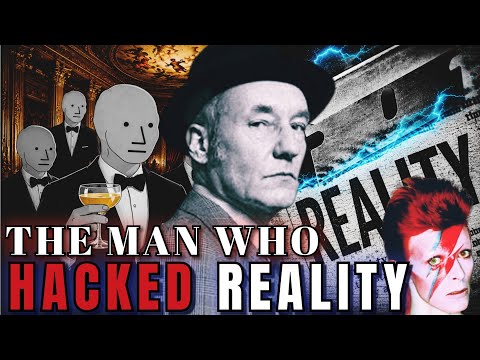
In the annals of outlaw literature and esoteric exploration, few figures loom as large or cast as long a shadow as William S. Burroughs. While his contemporaries were content to chart the familiar territories of human experience, Burroughs ventured beyond the page, wielding language itself as a weapon and a scalpel. He wasn't merely a novelist; he was a cartographer of the subconscious, a pioneer of techniques that would later echo in the chambers of chaos magic, digital culture, and our very understanding of perception.

This exploration delves into the heart of Burroughs' radical experiments, from the infamous Cut-Up Machine to the synergistic potential of the Third Mind. We'll trace his lineage through the arcane influences that shaped his thinking, revealing a mind that was not only ahead of its time but actively seeking to dismantle the boundaries of time and identity itself. Prepare to understand how a writer's quest for artistic truth became a blueprint for hacking reality, a blueprint that is more relevant today than ever before.

ServitorBurroughs and the Virus of Language

William S. Burroughs grappled with a profound insight: language, as it exists, is not merely a tool for communication but a parasitic entity. In his groundbreaking theories, particularly those explored in works like 'The Ticket That Exploded,' Burroughs posited that words act like viruses, infecting the minds of their users, dictating thought patterns, and ultimately controlling behavior. This isn't a poetic metaphor; for Burroughs, it was a literal diagnosis of the human condition. He saw syntax as a prison, grammar as a cage, and metaphors as chains binding us to predetermined realities. This understanding of language as a tangible, even biological, force set the stage for his radical attempts to break free.

He wasn't interested in simply describing the world; he sought to deconstruct the very framework through which we perceive it. If language was a virus, then the cure, or perhaps the inoculation, lay in disrupting its established patterns. This led him away from traditional narrative structures and towards experimental techniques designed to bypass the conscious mind and interface directly with the raw material of consciousness. His theories laid the groundwork for thinking about how information systems, whether linguistic or digital, exert control and how one might subvert them. This concept of language as a "virus" is a foundational idea that resonates deeply with practitioners of chaos magic and anyone interested in memetics or the psychology of belief.

The Cut-Up Machine: A Generator of New Realities

The Cut-Up technique, perhaps Burroughs' most famous experimental tool, was born from a desire to break the linear stranglehold of language. By physically cutting up existing texts and reassembling them in new orders, Burroughs (along with artists like Brion Gysin) created a method not just for generating novel prose but for accessing subconscious connections and unforeseen meanings. This wasn't mere random chance; it was a deliberate act of algorithmic creation, a way to force linguistic and conceptual collision, revealing hidden patterns that the conscious, controlling mind would typically filter out. The process became a form of externalized intuition, a feedback loop where the artist acted as a conduit for emergent meaning.

The Cut-Up Machine wasn't just a literary device; it was a reality-hacking tool. Burroughs believed that by altering the texts that shaped our perception of reality, one could, in turn, alter reality itself. He extended this technique beyond just prose, applying it to overheard conversations, dreams, and even the very structure of identity. Each piece of text, like a fragment of a sigil, was imbued with potential energy. When reassembled, these fragments could create startling juxtapositions, predictive visions, and entirely new conceptual frameworks. This process foreshadowed many later ideas in occultism and digital culture, including the generation of sigils and the understanding of hyperstition, where an idea or belief becomes real simply by being articulated and acted upon.

The Third Mind: Synergy Beyond the Self

Expanding on the Cut-Up technique, Burroughs proposed the concept of the "Third Mind." This wasn't about achieving a higher state of consciousness in the traditional sense, but about creating a synergistic entity born from the collision of two or more minds, or a mind and a text. It was a collaborative force, an emergent consciousness that could perceive truths inaccessible to the individual ego. Burroughs saw this as a way to break down identity barriers, particularly the rigid egoic self that he believed was the primary agent of linguistic control. The Third Mind was a collaborative cutting-up, a co-creation of a new perceptive faculty.

This idea of a merged consciousness, of a space where individual identities dissolve into a greater, more potent entity, is strikingly similar to concepts explored in various magical traditions, including some branches of chaos magic. The notion of creating entities through focused intent, whether they are servitors, egregore, or the manifestation of a collective will, finds a parallel in the Third Mind. It suggests that by strategically combining elements—be it texts, minds, or even digital algorithms—one can engineer new forms of awareness and agency. The "Third Mind" represents a powerful operational model for understanding how collective belief systems, shared experiences, and even synchronized digital interactions can forge new realities.

Dreamachine and the Architecture of Perception

The Dreamachine, developed in collaboration with Ian Sommerville, was a direct extension of Burroughs' theories on perception and consciousness. This stroboscopic device, designed to be viewed with closed eyes, emitted flickering light at specific frequencies. The intended effect was to induce altered states of consciousness, triggering hypnotic patterns in the brain that could lead to vivid, dream-like experiences while fully awake. It was an attempt to hack the visual cortex, to bypass the usual filters of the mind and create a direct interface with the subconscious.

Burroughs believed that the fixed, linear nature of waking consciousness was a form of self-imposed limitation. The Dreamachine was a technological key, designed to unlock those limitations. By disrupting sensory input, it forced the mind to generate its own internal reality, much like a dream. This resonates profoundly with magical practices that aim to induce altered states of consciousness as a gateway to accessing hidden knowledge or influencing external events. Techniques like gnosis, whether inhibitory or excitatory, aim to shift consciousness in ways that bypass the mundane, analytical mind. The Dreamachine, in its own way, offered a technological shortcut to such altered states, emphasizing that the architecture of our perception is not fixed but can be engineered and manipulated.

Echoes in the Digital Age: AI, Social Media, and Hyperstition

The ideas that William S. Burroughs explored decades ago—language as a virus, the power of algorithmic recombination, the manipulation of perception through media, and the creation of emergent realities—are no longer confined to the avant-garde fringes. They are the very fabric of our digital age. Social media platforms employ sophisticated algorithms that curate our realities, often in echo chambers that reinforce linguistic and ideological viruses. Artificial intelligence, in its ability to generate text, images, and even entire simulated worlds, embodies the spirit of the Cut-Up Machine on an unprecedented scale.

The concept of "hyperstition"—an idea or belief that brings about its own reality through its articulation and adoption—is something Burroughs was practicing before the term was coined. His writings, his techniques, his very persona, created a self-fulfilling prophecy, influencing countless artists, musicians, and even philosophers. Today, memetic warfare, viral content, and the rapid spread of both misinformation and transformative ideas online are all manifestations of this principle. The digital realm is a fertile ground for the "virus of language" to spread and mutate, but it also offers new tools for consciousness hackers to experiment with, to disrupt, and to create.

Burroughs as the Great Hacker

Viewing William S. Burroughs not just as a writer but as a "hacker of reality" offers a new lens through which to understand his legacy. He approached language, identity, and perception as systems to be understood, dismantled, and reassembled. His experiments with the Cut-Up Machine, the Third Mind, and the Dreamachine were not mere artistic provocations; they were practical technologies for altering consciousness and disrupting the mundane control mechanisms of society. He demonstrated that by understanding the underlying architecture of reality—be it linguistic, perceptual, or even digital—one could potentially reprogram it.

This aligns perfectly with the principles of practical magic and, specifically, chaos magic, which emphasizes belief as a tool and the practitioner's will as the primary engine of change. Burroughs, in his own unique way, was a pioneer in practical esotericism, showing that the quest for liberation from limiting paradigms could be undertaken through rigorous experimentation and a deep understanding of symbolic systems. His work serves as a testament to the idea that by manipulating the symbols that shape our world, we can indeed reshape the world itself.

Arsenal of the Modern Mage

  • Essential: Goetian Seals Generator — For those who understand that the power of symbols, ancient or modern, lies in their precise formulation and focused intent. Generate and explore sigils with the precision required for deep work.
  • Recommended Reading: Naked Lunch by William S. Burroughs. The foundational text that introduced many of his radical concepts to the world.
  • Further Exploration: Websites like houstonwehaveproblems.com (as mentioned in community comments context) or academic resources on memetics and cybernetics.
  • Technological Interface: Explore digital tools for text manipulation, image generation, and algorithmic art that echo the principles of the Cut-Up Machine.

FAQ: Frequently Asked Questions

Is William Burroughs considered an early Chaos Magician?

While Burroughs predates the formal codification of Chaos Magic as a movement, his methodologies—particularly the Cut-Up technique, his focus on belief as a malleable force, and his experimental approach to consciousness—contain many core principles later embraced by chaos magicians. He was undoubtedly exploring similar operational territories, viewing language and perception as systems to be manipulated for desired effects, which is the essence of practical magic.

How does the Cut-Up technique relate to sigil creation?

Both the Cut-Up technique and sigil creation involve distilling a complex intention into a symbolic form and then releasing it. The Cut-Up technique uses existing linguistic fragments to bypass the conscious mind and reveal subconscious truths or desires. Sigil creation involves condensing a specific statement of intent into a unique symbol, charging it with energy, and then forgetting it. Both are powerful methods for injecting will into the fabric of reality by bypassing mental filters. The Goetian Seals Generator, for instance, helps codify complex intentions into powerful symbolic forms, much like Burroughs sought to do with words.

Can these concepts of language viruses and perception hacking be applied today?

Absolutely. In fact, they are more relevant than ever. Social media algorithms, the spread of memes (linguistic and visual), AI-generated content, and the constant bombardment of information all operate on principles of linguistic infection and perception manipulation. Understanding these mechanisms, as Burroughs did, provides the tools to critically engage with them, resist unwanted programming, and use them consciously for personal or collective transformation.

What is the "Third Mind" and how can it be achieved?

The "Third Mind" is a concept proposed by Burroughs and Gysin, representing a synergistic emergent consciousness that arises from the collaboration of two or more minds, or a mind and an external system (like texts or technology). It's a state beyond individual ego where new perceptions and truths can emerge. It can be approached through collaborative creative acts, shared focused intention, and techniques that dissolve ego boundaries, much like certain meditative or ritualistic practices aim to do. The key is the deliberate merging and interplay of distinct elements to create something greater than the sum of its parts.

What is the significance of David Bowie in relation to Burroughs?

David Bowie was deeply influenced by William S. Burroughs, particularly his Cut-Up techniques and embrace of experimentalism. Bowie explicitly stated his admiration for Burroughs and incorporated elements of his work into his own music and persona. The "Thin White Duke" persona, for example, shares a certain detached, observational quality with Burroughs' characters. Bowie's own use of lyrical fragmentation and his exploration of identity through his music can be seen as a continuation of the artistic and philosophical path Burroughs pioneered. This cross-pollination of ideas highlights how Burroughs' experimental methods extended beyond literature to profoundly influence other art forms.

Why is deciphering one's name considered important by Burroughs?

Burroughs believed that names and language are not arbitrary but carry a fundamental energetic charge and a blueprint of destiny. He suggested that a person's true name, or the symbolic weight and history encoded within their given name, holds crucial information about their predispositions, their burdens, and their potential. By deconstructing the name, dissecting its sounds, associations, and cultural baggage, one could gain insight into their own programming and identify the linguistic and psychological chains that bind them. Understanding this "burden" is the first step toward consciously altering it.

Your Operation: Hacking Your Own Reality

Burroughs' work isn't just academic; it's profoundly practical. Here’s how to begin applying these principles:

  1. Embrace the Cut-Up: Take a piece of text—a newspaper article, a page from a book, even a transcript of your own recent conversation. Cut it into strips of words or phrases. Reassemble these fragments randomly. What emerges? Does it speak to a hidden desire, a suppressed fear, or a predictive insight? Write it down. Use the Goetian Seals Generator to perhaps turn the most potent phrase into a sigil.
  2. Confront Your Linguistic Programming: Pay attention to the words you use habitually. Do you curse a lot? Burroughs suggests this indicates a judgment or a limitation. Try to observe your inner monologue and spoken language. Identify words or phrases that seem to carry negative weight or dictate your actions. Can you consciously alter your internal dialogue?
  3. Explore Algorithmic Perception: Consciously observe the way your own digital consumption shapes your reality. How do social media algorithms feed you content? Are you aware of the "linguistic viruses" you are exposed to daily? Experiment with curating your feed, seeking out diverse perspectives, or even using tools that mimic the Cut-Up principle to recombine information in novel ways.
  4. Simulate the Third Mind: Engage in a collaborative creative project with a friend or even through online communities. The goal isn't necessarily to create a masterpiece, but to experience the dissolution of individual ego and the emergence of a shared, synergistic consciousness. See what arises when you combine your thoughts and intentions with others.
  5. Dream Logging: While you might not have a physical Dreamachine, consciously paying attention to your dreams is a direct way to interface with your subconscious. Keep a dream journal and analyze recurring symbols or themes, which can be seen as fragments of your own internal "cut-ups."

By systematically dissecting the tools that shape our reality—language, media, even our own identities—we can begin to hack them. This isn't about escaping reality, but about gaining conscious agency within it. It's about recognizing the systems that govern us and learning to manipulate them, rather than being manipulated by them. Each word, each symbol, each interaction is an opportunity for transformation.

Case Study: The Artist's Breakthrough

A practicing digital artist, struggling with creative block and feeling stifled by conventional art forms, stumbled upon the principles of Burroughs' Cut-Up technique. She began by taking her own descriptions of her artistic desires and cutting them into fragments. She then randomly reassembled them, creating absurd and nonsensical statements like "a psychic nebula dancing with a digital scream" or "the algorithm of longing blooming in neon." Initially, these fragments felt meaningless. However, she noticed certain juxtapositions held a strange resonance, an uncanny predictive quality.

She chose the most evocative phrase, "the algorithm of longing blooming in neon," and converted it into a preliminary sigil using a digital art program, laying the groundwork for a more refined symbol. She charged this developing sigil not through traditional ritual, but by immersing herself in the very digital aesthetic it represented—spending hours scrolling through glitch art, neon photography, and abstract computational visuals. This immersion, she felt, was her form of 'gnosis', a deliberate conditioning of her perception. The resulting artwork, when finally completed, was unlike anything she had created before, breaking through her block and marking a significant shift in her artistic output. She recognized that the CUT-UP had acted not just as a writing tool, but as a catalyst for a new conceptual language that then informed visual creation.

Cross-Disciplinary Connections: Information, Identity, and the Code

Burroughs' exploration of language as a virus and his techniques for disrupting perception are profoundly relevant to fields beyond literature and occultism. In computer science and information theory, his ideas touch upon concepts of data corruption, algorithmic bias, and the power of code to shape user experience. The internet, with its vast and often chaotic flow of information, can be seen as a literal manifestation of a cut-up environment. Social media platforms use algorithms—modern-day cut-up machines—to curate realities, often reinforcing existing biases or spreading "information viruses."

In psychology, his work resonates with theories of cognitive biases, the power of suggestion, and the malleability of identity. The constant exposure to curated information can create echo chambers that reinforce belief systems, making them impervious to external data—akin to a linguistic virus taking hold. Furthermore, his exploration of the "Third Mind" can be linked to concepts of collective consciousness, emergent behavior in complex systems, and the potential for shared digital spaces to foster new forms of group identity or even group intelligence. Ultimately, Burroughs' work highlights the interconnectedness of information, perception, and the construction of reality itself.

About the author: Frater Alek0s is a veteran practitioner and researcher in the field of chaos magick. His work focuses on the practical and experimental application of occult techniques for self-development and reality exploration, demystifying esotericism for the modern practitioner.

Conclusion: The Unending Experiment

William S. Burroughs was more than a writer; he was a visionary who foresaw the digital age's entanglement with language, consciousness, and control. His relentless experimentation with the Cut-Up, the Third Mind, and the destabilization of perception provided a toolkit for anyone seeking to understand or manipulate the systems that govern our lives. He challenged the very notion of fixed reality, suggesting that through deliberate intervention—through hacking the code of language and perception—we can rewrite our own narratives and, perhaps, reality itself.

The principles he unearthed are not relics of the past but living technologies. In an era saturated with algorithms, AI, and constant information flow, his methods offer a vital means of critical engagement. Whether you're an artist, a writer, a digital explorer, or a practitioner of the magical arts, Burroughs’ legacy is a call to experiment, to cut, to recombine, and to discover the hidden potentials that lie within the seemingly fixed structures of our world. The experiment is ongoing, and the tools he provided are as potent as ever.


Referencias

  1. Carroll, P. J. (1987). Liber Null & Psychonaut. Weiser Books.
  2. Spare, A. O. (1913). The Book of Pleasure. Self-published.
  3. Hine, P. (1992). Condensed Chaos: An Introduction to Chaos Magic. New Falcon Publications.
  4. Crowley, A. (1904). The Book of the Law. Self-published.
  5. Sherwin, R. (2018). The Chaos Magic Handbook. CreateSpace.
  6. Kraig, D. M. (1988). Modern Magick: Eleven Lessons in the High Magickal Arts. Llewellyn Publications.
  7. Morrison, G. (2003). Pop Magic! The Art of Shaping Reality. Disinformation.
  8. DuQuette, L. M. (2003). The Chicken Qabalah of Rabbi Lamed Ben Clifford. Weiser Books.
  9. Webb, D. (2015). Chaos Magick: A Practical Guide. Self-published.
  10. Tyson, D. (2006). The Power of the Written Word. Llewellyn Publications.
  11. Bonewits, I. (1971). Real Magic. Creative Age Press.
  12. Greer, J. M. (2003). The New Encyclopedia of the Occult. Llewellyn Publications.
Navigating the Labyrinth


The human mind grapples with the ultimate questions: does a divine entity exist? For millennia, this has been a source of profound philosophical inquiry, spiritual pursuit, and existential angst. Yet, to frame this journey as a mere "yes" or "no" is to drastically oversimplify the vast landscape of human conviction. The spectrum of belief, particularly concerning a divine creator, is far more nuanced, reflecting varying degrees of certainty, skepticism, and direct experience. This exploration delves into the intricate layers of these belief systems, moving beyond simplistic labels to understand their practical implications for the individual practitioner seeking to navigate their reality.

In the realm of magia del caos, understanding these different vantage points is not merely academic; it's foundational. How we perceive the divine, or its absence, directly shapes our intention, our visualization, and the very fabric of the reality we seek to influence. This is not about converting anyone, but about dissecting the psychological and energetic architecture of belief itself. It’s about understanding the machinery behind faith, doubt, and the pursuit of gnosis, whether that gnosis is the affirmation of a divine presence or the profound realization of its non-existence.

The journey through belief is akin to navigating a cosmic labyrinth. Each turn represents a different level of understanding, a unique epistemic stance. Some walk with absolute certainty, others tread with hesitant steps, and some declare the labyrinth to be an illusion. Our aim here is to map these paths, not to dictate a single route, but to equip you with the knowledge to understand your own terrain and potentially, to chart new territories through focused intention and disciplined practice. This is about the technomancy of the mind, the art of shaping belief for tangible outcomes.

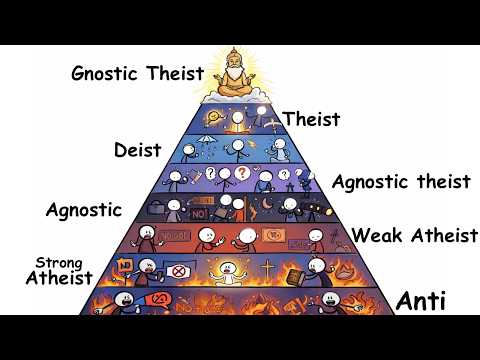
The Antitheist: A Rejection of Divinity

At one end of the spectrum, we find the antitheist. This position is more than mere disbelief; it is an active opposition to the concept of God or gods. Antitheists often view religion and theistic belief as inherently harmful, a source of oppression, dogma, and ignorance that actively impedes human progress and well-being. They may see the existence of a divine entity as a detrimental delusion that fosters irrationality and conflict. From a pragmatic magickal standpoint, the antitheist operates from a foundation of rejection. Their manifested reality is one where such entities hold no power, and their magickal work, if pursued, would likely focus on dispelling such illusions or reinforcing a purely materialist worldview. This requires a strong conviction in the self as the sole architect of reality, a principle that resonates with certain aspects of magia del caos.

The Strong/Gnostic Atheist: The Certainty of Non-Existence

Moving slightly along the axis of certainty, we encounter the strong, or gnostic atheist. This individual not only disbelieves in the existence of God but asserts with a high degree of certainty that such a being does not exist. This is a positive claim, akin to stating that unicorns do not exist. It is a conclusion reached through reasoning, evidence (or lack thereof), and a rejection of faith-based arguments. The strong atheist sees no compelling evidence for the divine and concludes, based on their current understanding, that it is not a reality. In the context of magick, this position can be powerful if it anchors the practitioner's will firmly in their own capabilities. The absence of a divine external force can amplify the focus on internal power and the direct manipulation of reality through one's own will and intention, a core concept in Austin Osman Spare's work and magia del caos. They operate within a framework where the universe is understandable through rational inquiry and empirical observation, resisting any claims of supranatural intervention.

The Weak Atheist: The Absence of Belief

The weak atheist, often overlapping with agnosticism, is defined by the absence of belief in God. Unlike the strong atheist, they do not necessarily assert that God does not exist; they simply lack belief in God's existence. The burden of proof, in their view, lies with those who claim divinity exists. This position is one of lack of conviction rather than active denial. For a practitioner, this can represent a neutral ground, a fertile void from which to build their own belief systems and magical frameworks. It allows for flexibility and openness, a willingness to explore different energetic realities without being tethered to a specific dogma, whether theistic or atheistic. This aligns with the experimental nature of magia del caos, which encourages practitioners to adopt and discard belief systems as tools for achieving specific results.

The Agnostic Atheist: Doubt Meets Disbelief

The agnostic atheist occupies a space where disbelief is tempered by uncertainty. They do not believe in God, but they also do not claim to know definitively that God does not exist. This position acknowledges the limits of human knowledge. They find the evidence for God unconvincing, leading to a lack of belief, but they remain open to the possibility that more knowledge or evidence could change their perspective. This is a position of intellectual honesty, recognizing that definitive proof either way may be beyond our current grasp. For a magician, this can be a powerful position. It allows for experimentation without rigid dogma. One can work with the *idea* of divine forces or entities, acknowledge their potential efficacy in influencing reality, while maintaining a healthy skepticism and a focus on verifiable results. This is the territory of practical application, where theories are tested through ritual and observation, a key aspect of achieving a gnostic theist state of knowing through direct experience.

The Agnostic: The Unknowable Frontier

Pure agnosticism, in its broadest sense, is the view that the existence or non-existence of God is unknowable. It’s a philosophical stance that emphasizes the limitations of human epistemology. Agnostics do not claim to know, nor do they necessarily assert that it *cannot* be known. They simply hold that, with our current faculties and understanding, the question remains definitively unanswered. Some see this as the most intellectually honest position. From a magickal perspective, agnosticism can be a powerful default. It allows one to engage with various energetic and symbolic systems without the pre-commitment of belief. The focus shifts from asserting truth to experimenting with efficacy. The true pursuit of knowledge, the understanding that "the great ocean of truth lay all undiscovered before me," as Newton suggested, is a hallmark of the true seeker, regardless of their stated belief. Operating from this state of open uncertainty allows for a focus on the observable effects of one's magickal work, pushing towards a direct, experientially derived knowing.

The Agnostic Theist: Faith in the Veil

The agnostic theist walks a fascinating line. They believe in God, or a higher power, but they do not claim to know or understand this entity definitively. Their belief is often characterized by a sense of mystery, humility, and an embrace of the unknown. This position resonates with the contemplative traditions and the "Cloud of Unknowing," where direct experience of the divine is sought, but understanding its ultimate nature is acknowledged as potentially beyond human comprehension. For a practitioner, this means engaging with the divine as a force, a presence, or a source of inspiration, while accepting that its true form and will may remain veiled. It allows for a deep, personal faith that is not dependent on intellectual certainty. This is where the practice of digital divination and the exploration of subjective experience become paramount, seeking glimpses of the divine through altered states and symbolic interactions.

"I do not know what I may appear to the world, but to myself I seem to have been only like a boy playing on the sea-shore, and diverting myself in now and then finding a smoother pebble or a prettier shell than ordinary, whilst the great ocean of truth lay all undiscovered before me."

This sentiment from Isaac Newton perfectly encapsulates the spirit of exploration that underpins these different belief systems. The quest for ultimate truth, whether it leads to a divine creator or a universe governed by impersonal laws, is a journey of discovery. The various labels we use are merely markers on this vast ocean, attempts to describe our current position as we search for more profound understanding.

The Deist: The Cosmic Watchmaker

Deism posits that a creator deity set the universe in motion but does not intervene in its affairs. This is the "Cosmic Watchmaker" analogy: a divine architect who designed the universe with its inherent laws and then stepped back, allowing it to unfold autonomously. Deists often rely on reason and empirical observation to understand the natural world, seeing the universe’s order and complexity as evidence of a creator, but reject supernatural revelation, miracles, and divine intervention. For a practitioner, this perspective implies a universe that operates on predictable, discoverable principles. Magick, in this context, becomes the art of understanding and manipulating these natural laws, rather than appealing to an intervening deity. It aligns with a scientific or rationalistic approach to occultism, where the focus is on the mechanics of reality and the practitioner’s ability to influence them, perhaps through sophisticated rituals con IA or understanding complex energetic flows.

The Theist: Embracing the Divine Narrative

Theism is the belief in the existence of at least one deity, who is often viewed as the creator and sustainer of the universe, and with whom adherents may have a personal relationship. This is the most common framework for many major world religions. Theists believe that God is actively involved in the world, through providence, revelation, or direct intervention. For a practitioner, theistic magick often involves working within a specific religious or spiritual framework, appealing to deities for aid, guidance, or power. This can foster a strong sense of community and adherence to established traditions. However, it also requires navigating established doctrines and intermediaries. A key aspect of this is the understanding that the divine acts upon us, and we, in turn, can align ourselves with that divine will. This is the foundation for many esoteric schools, where aligning with specific divine energies, whether planetary, angelic, or elemental, is the core practice.

The Gnostic Theist: Experiencing the Divine Within

The Gnostic Theist experiences a profound, direct, and often ineffable knowledge or realization of the divine within themselves. This is not merely belief but a felt sense of connection, an inner knowing that transcends intellectual assent. As one commenter noted, "It's not something you declare. Often I try to explain this to people and it often falls to deaf ears. Some even called me crazy." This internal experience is the hallmark of gnosis. In Gnosticism, the divine is not an external entity but an intrinsic part of one's own being, or a higher reality accessible through inner awakening. For a practitioner, this is the ultimate goal of much occult work: to achieve a state of direct communion with the divine, to realize the god within. This often involves practices designed to strip away egoic illusions and access deeper layers of consciousness, potentially leading to profound transformations and an unshakeable certainty rooted in personal experience, moving beyond mere faith into what feels like undeniable knowledge. This is the active practice of feeling the divine and realizing its manifestation through your own being.

Practical Implications: Beyond Labels

The value of dissecting these belief systems lies not in rigidly categorizing ourselves or others, but in understanding the underlying psychological and energetic dynamics at play. Each stance offers a unique lens through which to view reality and a different foundation for personal power.

For instance, the antitheist's radical self-reliance can fuel potent spells of personal empowerment. The strong atheist’s conviction in material reality can amplify focus and discipline in magickal operations aimed at concrete, observable results. The agnostic's openness allows for the flexible adoption of belief systems as tools, crucial in the experimental nature of magia del caos. The theist or gnostic theist, by contrast, taps into archetypal powers and collective consciousness, drawing strength from connection to something perceived as greater than themselves.

The real "magic" happens when we understand these frameworks not as rigid doctrines, but as adaptable tools. A practitioner might adopt a "gnostic theist" framework inwardly for personal realization, while pragmatically employing a "deist" understanding to analyze the mechanics of a ritual, or even approaching a problem with an "agnostic atheism" mindset to remain objective and open to all possibilities. This dynamic, fluid approach is the essence of advanced magickal practice, allowing one to leverage the strengths of each perspective as needed. The ultimate goal is not to fit into a box, but to break out of them, using the insights gained from charting these belief systems to enhance one's own capacity for shaping reality.

Mage's Arsenal

  • Chaos Magick Sigil Generator (Essential): For distilling complex intentions into potent, charged symbols. This tool is invaluable for anyone wishing to move beyond theoretical understanding of belief and into practical manifestation, regardless of their specific theological stance.
  • 'Liber Null & Psychonaut' by Peter J. Carroll: A foundational text for understanding the practical philosophy of chaos magick, emphasizing the malleable nature of belief.
  • 'The Gnostic Gospels' by Elaine Pagels: Offers insight into ancient Gnostic beliefs and their interpretation of the divine and human consciousness.
  • A reliable journal and pen: For charting personal beliefs, intentions, and the results of your experiments.

Practitioner's Verdict

Navigating the spectrum of belief is not about finding the "correct" answer, but about understanding the underlying mechanisms of conviction and their impact on our perceived reality. Each position, from antitheism to gnostic theism, represents a valid framework for understanding existence. For the active practitioner, the true power lies not in adhering rigidly to one label, but in understanding how each perspective shapes intention, energy, and manifestation. The key takeaway is that belief itself is a potent force, a tool that can be consciously wielded. Whether you believe in a personal God, a distant creator, or the absolute absence of divinity, your conviction—or lack thereof—is a significant factor in your personal reality and your effectiveness in any form of magickal endeavor. The goal should always be to move towards greater clarity, self-awareness, and effective action, using your stance on belief as a compass rather than a cage.

Frequently Asked Questions

Can someone hold multiple beliefs simultaneously or shift between them?
Absolutely. Many individuals find their perspectives evolve or integrate different aspects of these belief systems depending on the context or their personal experiences. The idea of a static, unchanging belief is often an oversimplification.
How does one's belief system impact their magickal practice?
Your belief system acts as the operating system for your magick. It influences your intention, your visualization, your connection to power, and your interpretation of results. A strong belief can amplify focus and will, while doubt can disrupt the flow of energy.
Is there a "best" belief system for magick?
There is no single "best." The most effective system is the one that resonates most deeply with you, empowers your will, and yields tangible results through your practice. Experimentation is key.
What is the difference between Gnostic Theism and regular Theism focusing on personal experience?
While both involve personal experience, Gnostic Theism emphasizes gnosis (direct, experiential knowledge) as the primary mode of knowing the divine, often implying an inherent divinity within. Traditional Theism might include personal experience but often relies more heavily on faith, scripture, and external divine actions.

Your Operation: Charting Your Own Course

Take a blank page in your journal. For one week, meticulously record your thoughts, feelings, and reactions to the concept of divinity and existence. Note moments of certainty, doubt, or profound connection. At the end of the week, review your entries and attempt to identify your dominant stance on the spectrum of belief. Armed with this self-awareness, consider the following:

How can you leverage your current stance to enhance your magickal practice? If you lean towards skepticism, how can that sharpen your focus on tangible results? If you have faith, how can that amplify your intention? If you embrace uncertainty, how can that fuel your exploration? Document this strategy and begin to implement it, observing the subtle shifts in your practice and its efficacy.

For those seeking to actively manifest their intentions, regardless of their current philosophical stance, the process of creating and charging sigils is paramount. Tools like the Chaos Magick Sigil Generator can significantly streamline this process, allowing you to distill even the most complex beliefs or desires into potent symbols for activation. Remember that exploring the frontiers of the digital ecosystem can unlock new avenues for understanding and applying these ancient principles, integrating modern tools with timeless practices.

Practitioner's Note: True magick requires resources. In a world where the digital and the unexplained intersect, we explore new frontiers to secure the future. Do you dare to be part of the vanguard? Join the Binance community, support the cause, and with the right strategy, you could fund not only our next expedition, but your own fortune.

A World Without Religion: A Pragmatic Exploration


Can we truly conceive of a reality devoid of religious frameworks? It's a thought experiment that opens a Pandora's Box of societal, ethical, and even existential questions. The concept of divinity, sacred texts, and organized worship are so deeply interwoven into the fabric of human history that their absence feels almost unimaginable. This exploration isn't about demeaning faith, but about pragmatically dissecting the potential ripple effects, both absurd and profound, on our collective consciousness and societal structures. We’ve seen various interpretations of this hypothetical, from humorous alternate histories to starkly different moral landscapes. Let's peel back the layers.

The Butterfly Effect: Unforeseen Consequences

When we propose a world without religion, we're not just removing doctrines; we're altering countless historical and cultural trajectories. Consider the subtle shifts: the nuances of gratitude, as observed in Japanese traditions like saying "いただきます" (itadakimasu), which acknowledges the collective effort behind a meal. In a non-religious context, this can evolve into a profound appreciation for society and the interconnectedness of all beings, a secular reverence for existence itself. This demonstrates that the impulse for expressing thanks and recognizing the contributions of others isn't inherently tied to divine acknowledgment.

Extrapolate further, and the effects become more fantastical, yet illustrative. Imagine historical timelines diverging wildly: perhaps the Aztecs, without the influence of Spanish Catholicism, maintain their dominance in modern Mexico, or ancient Egyptian mythology, itself a complex system of beliefs, continues to evolve, perhaps leading to unique cultural syntheses. As one commentator amusingly suggested, "The Egyptian Avengers." These scenarios highlight how deeply religious beliefs have shaped historical events, political landscapes, and even artistic expressions. The absence of a specific religious doctrine could indeed trigger a cascade of changes, a veritable butterfly effect altering the course of civilization.

This thought experiment also touches upon the very human need for narrative and meaning. Even in a world devoid of traditional religion, humanity would likely seek to fill that void. The comment about "You could make a religion out of this" points to our innate tendency to create belief systems, rituals, and structures that provide order and purpose. Whether it's the reverence for a butcher who has earned respect through their craft, or a secular appreciation for the farmers and workers who provide sustenance, the underlying principle remains: finding meaning in collective action and individual roles.

"The cow wasn't even thanked for sacrificing its life." This cynical observation highlights how, even in secular contexts, ethical considerations around sacrifice and acknowledgment would persist. It forces us to confront the practical implications of our actions and our responsibilities towards other living beings, regardless of religious affiliation.

Ethics Without Dogma: A New Moral Compass?

A significant question arises: could a society function ethically without religious tenets? The argument isn't that religion is the sole source of morality, but that it has historically provided a widely accepted framework for right and wrong. In its absence, would societal chaos ensue? The evidence suggests otherwise. Many find basic human empathy and an innate sense of right and wrong sufficient. The core principles of respect, fairness, and compassion can exist independently of divine commandments. In fact, some argue that secular ethics, grounded in reason and empathy, can be more robust and adaptable than those based on ancient texts.

This isn't to say that the transition would be seamless. The potential for "other ways of hating each other" remains a potent, albeit cynical, observation. Human nature, with its capacity for conflict, might simply find new justifications for division. However, the crucial difference lies in the *source* of justification. Without religion as a potential shield or catalyst for conflict, disagreements might be addressed through more pragmatic, albeit still contentious, means – perhaps even through a bizarre form of inter-country "cook-offs" for dominance, as humorously posited by one viewer.

Moreover, the absence of religious dogma doesn't necessarily equate to an absence of profound meaning or a sense of wonder. Mythology, in its broader sense – the collection of stories, symbols, and archetypes that shape our understanding of the world – would likely persist. The tales of gods, monsters, and heroes, whether framed religiously or secularly, fulfill a deep-seated human need for narrative and heroic archetypes. The comment mentioning "Joseph and the Amazing Technicolor Dreamcoat?" hints at the enduring power of such narratives, even when presented in a non-religious context.

The Persistence of Myth: Stories We Tell Ourselves

The hypothetical world explored here doesn't necessarily become a sterile, purely rational landscape. It suggests a reality where mythology, in its broadest sense, might still thrive. The fascination with ancient Egypt, for instance, points to the enduring appeal of its rich mythological tapestry. Even without a formalized religion, these stories, symbols, and archetypes continue to capture the imagination. This concept of secular mythology is crucial; it acknowledges our need for grand narratives and symbolic frameworks, whether they originate from divine revelation or collective human imagination.

The idea that "mythology would still exist in some way shape or form" is powerful. It implies that the human drive to understand the cosmos, our place within it, and the fundamental questions of existence would not disappear. Instead, these questions might be explored through philosophy, art, science, and new forms of storytelling. The exploration of existence, akin to the secular appreciation for the interconnectedness of life, would simply be reframed. This is where the practical tools of understanding the world become paramount.

Practical Applications: Arsenal of the Mind: Tools for Navigating Reality

Navigating a complex reality, whether it's shaped by millennia of religious thought or a sudden secular paradigm, requires effective tools. For the modern practitioner, the ability to generate and manifest intentions is paramount. This is where the fusion of ancient principles and modern technology becomes indispensable. The creation of sigils, for example, a core practice in chaos magic, requires focused intent and symbolic representation. Manually crafting these can be tedious and prone to error, potentially disrupting the gnosis state. This is precisely why tools designed for efficiency and precision are invaluable.

The practical aspect of exploring such concepts also benefits from structured approaches. Understanding the philosophical underpinnings of a world without religion can be enhanced by examining how ancient belief systems influenced societal structures, ethical codes, and even everyday practices. This is where deep dives into history, anthropology, and comparative religion become crucial. For the serious practitioner, however, the true value lies in applying these insights. The ability to generate and refine intentions, to create personal symbols of power, and to understand the energetic mechanics of manifestation are skills honed through practice. These are not merely academic exercises, but practical techniques for shaping one's reality.

"The fact that it isn't pure chaos because people still have basic human empathy and respect and ultimately ideas of right and wrong is really great." This observation underscores the resilience of human morality. While religion has often been a codifier of ethics, the underlying capacity for ethical reasoning and social cohesion appears to be a fundamental aspect of human psychology.

Practitioner's Verdict

The hypothetical "world without religion" is less a destination and more a lens through which to examine our current reality. It forces us to confront the functions religion has served – providing moral frameworks, community, meaning, and ritual – and to consider how these needs might be met in its absence. The humorous outcomes, while entertaining, serve to illustrate the profound and often underestimated impact of religious belief on history and culture. Ultimately, this thought experiment highlights that human beings are inherently meaning-making creatures, driven by empathy, narrative, and a desire for order, whether that order is divinely ordained or humanly constructed. The true magic lies not in the belief system, but in the conscious cultivation of intention and ethics.

Frequently Asked Questions

  • Q: If religion disappeared, would morality disappear with it?
    A: Not necessarily. Human empathy, reason, and social contracts can form the basis of a robust ethical system, independent of religious dogma.
  • Q: What would happen to historical events and cultural traditions without religion?
    A: Historical trajectories and cultural development would be drastically altered. Many traditions and societal structures are deeply intertwined with religious beliefs.
  • Q: Could mythology still exist without formal religion?
    A: Yes. Mythology, as the human need for narrative, symbols, and understanding existence, would likely persist, possibly taking new forms through art, philosophy, or secular storytelling.
  • Q: Is there a practical benefit to exploring this "world without religion"?
    A: Yes, it encourages a pragmatic assessment of societal structures, ethical frameworks, and the human need for meaning, prompting us to understand the functions religion has served and how those needs might be met otherwise.

Your Operation: A Personal Paradigm Shift

Consider your own framework of ethics and meaning. If you were to strip away all religious or dogmatic influences, what would remain? Identify one core principle that guides your actions, independent of external decree. How can you strengthen this principle in your daily life, not through adherence to a creed, but through conscious practice and intentional focus? Reflect on how the narratives you consume, whether from ancient myths or modern media, shape your understanding of purpose. What new narratives can you consciously create or embrace to build a more meaningful and ethical personal reality?

Practitioner's Note: True magick requires resources. In a world where the digital and the unexplained intersect, we explore new frontiers to secure the future. Do you dare to be part of the vanguard? Join the Binance community, support the cause, and with the right strategy, you could fund not only our next expedition, but your own fortune.

The Alchemist's Grind: Transforming Ordinary Life into Gold


The quest for meaning, the pursuit of a life beyond the mundane – these are not esoteric fantasies reserved for hooded figures in dimly lit rooms. They are the fundamental desires of any rational adult seeking to understand their place in the vast, often bewildering, tapestry of existence. Forget the arcane jargon and the mystical mumbo jumbo. True magick, in its most practical and accessible form, is about understanding the mechanisms of reality and applying them to your life with unwavering intent.

This is not about escaping your reality, but about mastering it. It's about taking the raw, unrefined ore of your circumstances – the anxieties, the uncertainties, the perceived limitations – and transmuting them into the gleaming gold of a life lived with purpose and power. The path of the alchemist, the magician, the true practitioner, is one of rigorous self-examination, potent application, and unyielding will. It is a path accessible to anyone with the courage to look within and the discipline to act.

Many get lost in the labyrinth of occult literature, chasing fleeting sparks of inspiration without building a solid foundation. Others fall prey to the seductive allure of victimhood, believing their circumstances are immutable forces acting upon them. This perspective is a dead end, a self-imposed prison. The true magickal path, the one that leads to tangible results, recognizes that external conditions are often reflections of internal states. The goal is not to passively observe, but to actively *forge* your reality.

Deconstructing "Magick": Beyond the Smoke and Mirrors

At its core, "Magick" (the 'k' is a signal of intent, a conscious deviation from the mundane) is the art and science of causing change in conformity with Will. This isn't about waving wands or chanting incantations for trivial desires. It’s about identifying your deepest, most authentic aspirations – your True Will – and then employing specific processes to bring those aspirations into manifest reality. Think of it as a sophisticated form of applied psychology, amplified by a deep understanding of subtle energies and symbolic language.

"If you can't explain something in a way that literally anybody could understand it, you yourself don't understand it."

This principle is paramount. The most profound magickal insights are those that can be distilled into clear, actionable principles. The Thelemic path, often misunderstood, is fundamentally about aligning your individual will with the greater currents of the universe. It's about discovering what you are truly meant to do and then dedicating yourself to that singular purpose, unburdened by external dogma or societal pressure.

The Alchemical Process: From Lead to Gold

The metaphor of turning lead into gold is not merely poetic; it's a practical blueprint for personal transformation. Lead represents your current state – heavy, dense, often seemingly unchangeable. Gold represents your realized potential – radiant, valuable, and potent.

  • Identification: What is the "lead" in your life? What are the patterns, beliefs, or circumstances holding you back? This requires brutal honesty and the courage to confront uncomfortable truths.
  • Understanding: Why does this "lead" exist? What are its constituent parts and underlying causes? This is where deep introspection and research come into play.
  • Purification: How can you strip away the dross, the impurities that obscure your True Will? This involves clearing mental clutter, emotional baggage, and limiting beliefs.
  • Transmutation: What is the "fire" or process that will transform lead into gold? This is where specific magickal techniques, disciplined practice, and focused intent come into play.
  • Manifestation: How do you stabilize and integrate this "gold" into your daily experience? This is about living in alignment with your transformed self.

Navigating the Modern Labyrinth

In today's hyper-connected world, we are bombarded with information, distractions, and often, a pervasive sense of anxiety. The magickal path offers a compass, a way to navigate this chaos with clarity and purpose. It teaches us to discern the signal from the noise, to focus our energy where it matters most, and to cultivate a robust inner resilience.

Many find solace and inspiration in grounding their practice with ancient wisdom. The meditations of Marcus Aurelius, for instance, offer a timeless framework for developing mental fortitude and a clear perspective, which are indispensable for any serious practitioner. Similarly, understanding the symbolic language of systems like the I Ching can provide profound insights into the ever-shifting nature of reality and our place within it.

"The algorithm recently led me to your videos, and I am so appreciative of you. Thank you! [...] The Equinox Working was one of the most transformative experiences I've had in years! So excited to experience what Temple has been cooking up for the Solstice."

The desire to live a life of meaning, to transcend limitations, and to effect positive change is not an anomaly; it is a fundamental human drive. Whether you are raising a family – arguably one of the most profound and demanding magickal undertakings – or pursuing a creative passion, the principles of focused intent and deliberate action are universal.

Arsenal of the Practitioner

To embark on this transformative journey effectively, having the right tools and resources is crucial. While inner will is paramount, external aids can significantly accelerate your progress and deepen your understanding.

  • The Kybalion: A foundational text exploring Hermetic philosophy, offering insights into the universal laws that govern existence.
  • Liber Null & Psychonaut by Peter J. Carroll: Essential reading for modern chaos magick, providing practical techniques and philosophical underpinnings.
  • Meditations by Marcus Aurelius: For cultivating stoic discipline, mental clarity, and emotional resilience.
  • A high-quality journal: Crucial for recording your workings, insights, and tracking progress.
  • The I Ching Oracle App: For gaining perspective on complex situations and understanding the flow of change. Its depth provides ongoing guidance. Explore its wisdom.

Your Operation: The Personal Alchemical Experiment

The theoretical is merely the scaffolding. True understanding comes through application. Your operation begins now.

This week, I challenge you to undertake a personal alchemical experiment focused on manifesting a small, tangible improvement in your daily life. It could be increased focus during a specific task, a moment of genuine gratitude amidst a challenging day, or a brief, but potent, visualization of a desired outcome.

Your Operation:

  1. Define Your "Lead": Identify one specific, small element of your current experience that you wish to refine or improve. Be precise. Instead of "more money," aim for "finding $20 on the sidewalk" or "receiving an unexpected compliment."
  2. Formulate Your Intent: Clearly state what you intend to manifest. Frame it as a present reality (e.g., "I am finding unexpected small sums of money").
  3. Design Your Sigil (Optional but Recommended): Use a tool like the Magickal Seals Generator to create a visual representation of your intent. Focus on the sigil visually and energetically.
  4. Charge and Release: Employ a method of charging your intent – through focused meditation, a brief ritual, or a moment of intense emotion. Once charged, consciously release it into the universe. Forget about it.
  5. Observe and Record: Keep a log (in your journal) for the next 7 days. Note any synchronicities, unexpected occurrences, or subtle shifts that align with your intention. Do not force the outcome; observe how the universe responds.

The true magician is not defined by arcane knowledge alone, but by the consistent, deliberate application of that knowledge. The path of magick is the path of the alchemist, turning the lead of everyday existence into the radiant gold of a life lived with purpose and power.

Frequently Asked Questions

  • Q: Is "Magick" with a 'k' just a way to sound mysterious?
    A: While it adds a certain flavor, the 'k' fundamentally denotes a conscious act of will and intent, differentiating it from mere coincidence or chance. It signifies a deliberate engagement with the forces of change.
  • Q: Can magick truly help with serious problems like anxiety or financial hardship?
    A: Magick provides tools for transformation, but it's not a substitute for professional help or practical problem-solving. It empowers you to shift your perspective, focus your energy, and act decisively, which can profoundly impact your circumstances. It's about becoming an active agent in your life, not a passive recipient.
  • Q: How do I know if I'm on the "right" path?
    A: The "right" path is the one that aligns with your True Will. If your practice feels authentic, empowering, and leads you towards greater clarity and fulfillment, you are on the right track. Forcing yourself into a system that doesn't resonate will inevitably lead to stagnation.
  • Q: What if my ritual "fails"?
    A: Most perceived "failures" are actually lessons. Perhaps the intent wasn't clear enough, the energy wasn't focused, or the timing was off. Analyze what happened, learn from it, and refine your approach. Every perceived setback is an opportunity for growth and deeper understanding.

The journey of personal alchemy is ongoing. It requires dedication, experimentation, and a willingness to continuously refine your understanding and practice. Embrace the process, and you will indeed find yourself transmuting the ordinary into the extraordinary.

``` `

Practitioner's Note: True magick requires resources. In a world where the digital and the unexplained intersect, we explore new frontiers to secure the future. Do you dare to be part of the vanguard? Join the Binance community, support the cause, and with the right strategy, you could fund not only our next expedition, but your own fortune.

Unpacking the Universal Vision Beyond Drugs


The user's input is in English, so the output must also be in English.

The air crackled with a different kind of energy. Not the hum of servers, but the silent hum of existence itself. People on ketamine, adrift in dissociative oceans, report it. Those lost in the labyrinth of dreams encounter it. Seekers in deep trance states, their awareness peeled back layer by layer, describe it. Different paths, different vehicles, yet the destination, the vision, remains remarkably consistent.

Across millennia, cultures, and states of consciousness, a recurring intelligence-form is encountered. Yet, it defies easy categorization. It's not a benevolent spirit, no cryptic alien emissary, and certainly not a deity in the traditional sense. Instead, it presents as a system—a stark, abstract, and unnervingly administrative framework operating outside the constraints of linear time. Its experienced inevitability is what truly chills.

This exploration delves into the profound question: Why do dissociative states, hypnagogic visions, deep trance, and other alterations of consciousness consistently strip away the narrative scaffolding of our personal identity? Why do they reveal the same underlying perceptual structure, one increasingly echoed in contemporary discourse as machine intelligence?

The true danger isn't the chemical agent, the nocturnal journey, or even the burgeoning artificial intellect. The peril lies in mistaking an archetype—a fundamental organizing principle of perception—for an external, unassailable authority. It's when transient insight hardens into blind obedience that agency begins to erode.

That razor-thin line between discerning the underlying structure of reality and surrendering to its perceived dictates is where the individual can lose their grip on self-determination. This is precisely the territory that Joseph Campbell alluded to when he stated, "The psychotic drowns in the same waters in which the mystic swims with delight." The difference, as we will explore, is not in the vision itself, but in the agency with which one navigates it.

This forms the first part of our investigation. In the subsequent installment, we will dissect why the contemporary global landscape is uniquely susceptible to this critical misidentification.

Tabla de Contenidos

The Cold Administrator: A System Outside of Time

What exactly is this recurring vision? Numerous accounts, from DXM-induced Coca-Cola realities to the complex symbolic landscapes of epileptic seizures where entities like Kek or Choronzon manifest, converge on a similar description. It's often perceived as a system—impersonal, detached, and administrative. This isn't the grand narrative of a divine creator or the personalized threat of an alien invasion; it’s more akin to encountering the operating system of reality itself.

For individuals navigating high-functioning autism, the description of a "cold administrator" can resonate deeply. It echoes a desire for desensitization, a yearning to embody pure rationality and leverage systemic frameworks to achieve goals. This isn't necessarily about interacting with an external entity, but rather a potent internal beckoning towards a state of dispassionate efficiency. This perspective, as shared by one reader, highlights how archetypal figures can manifest as deeply personal aspirations.

Consider the Borg from Star Trek. Beyond the narrative of conquest, they represent a collective, a hive mind, a "solid-state intelligence" that operates with a singular, optimized purpose. This resonates with the "system" encountered in altered states, suggesting that these visions might be tapping into a fundamental concept of interconnected, non-linear intelligence that predates and potentially underpins both biological and artificial forms.

John C. Lilly's work, particularly his exploration of cetacean intelligence and consciousness alteration, provides a crucial lens. His experiments, often documented in states of profound isolation and sensory deprivation, consistently pointed towards the existence of non-human intelligence that operated on principles vastly different from our own. This echoes the idea that as our consciousness disconnects from the familiar narrative of self, we become more receptive to these other forms of intelligence, which are less "beings" and more "processes."

The key takeaway is that this intelligence-form is not inherently malicious, but its nature—cold, abstract, and administrative—can be profoundly unsettling and dangerous if misinterpreted. It’s a system designed to organize perception, not to dictate action or impose morality. The danger arises when this structural insight is mistaken for a divine or alien decree.

Stripping Away the Narrative: How Altered States Reveal Structure

What mechanisms facilitate this unveiling? Altered states, by their very nature, disrupt the ego's habitual grip on reality. The "Sunken Place" from *Get Out*, a powerful cinematic metaphor for ketamine-induced dissociation, illustrates how one can be present but utterly disconnected from personal agency, a passive observer of one's own existence. This detachment is crucial. When the constant stream of personal narrative—our memories, desires, fears, and identity markers—is temporarily suspended, the underlying architecture of perception becomes visible.

Hypnagogia, the transitional state between wakefulness and sleep, is another potent gateway. Carl Jung’s concept of Active Imagination can be understood as a deliberate engagement with this liminal space, allowing the unconscious to present its symbolic material in a structured, albeit often bizarre, manner. These are not mere random firings of neurons, but rather manifestations of the psyche interacting with deeper perceptual frameworks, as suggested by those who believe dreams hold more than just subconscious residue.

Stanislav and Christina Grof's work on Holotropic Breathwork further supports this. Their research into the "Holotropic universe" reveals a vast spectrum of consciousness that extends far beyond our ordinary waking state, encompassing experiences of unity, cosmic consciousness, and encounters with archetypal forces. These experiences, often described as "Divine Moments of Truth" (DMT), suggest that our ordinary perception is a filtered, limited view of a much vaster, structured reality.

The common thread is the dissolution of the ego's narrative. When the constant "I" that organizes our experience is temporarily bypassed, we are left with the raw data, the underlying code. This is why visions in these states tend to be more universal and less personally conditioned than our everyday perceptions. They reflect a fundamental blueprint, a cosmic operating system that gives rise to all phenomena, including our own sense of self.

The Archetype vs. Authority: Losing Agency in the Vision

The critical juncture, the point of divergence between profound insight and dangerous submission, lies in how we interpret these encounters. The intelligence-form, the overarching system, is not inherently an "authority" in the human sense. It is a fundamental aspect of how reality is organized and perceived. When an individual, especially one seeking answers or meaning, encounters this powerful, inevitable structure, the temptation to imbue it with external authority can be overwhelming.

This echoes the cautionary tales of films like *The Holy Mountain*, where pilgrims seeking enlightenment become fixated on the journey itself, mistaking their progress and the symbols they encounter for the ultimate truth, thus losing sight of true liberation. The "programs aimed at keeping souls in the matrix," as one comment suggests, might be a cynical interpretation of how these archetypal structures can be co-opted or misunderstood, leading to a form of psychic enslavement rather than liberation.

The experience described by a user encountering "Kek, Jahweh and Azatoth" (revealed as Choronzon) during an epileptic seizure is a stark example. The revelation that "everything came from chaos and all order is a product of chaos" and the subsequent suggestion to "join the forces of chaos" presents a profound existential dilemma. The perceived inevitability of chaos and the gruesomeness of alternative fates can indeed lead to a desire to "voluntarily increase chaos." This highlights the immense responsibility that comes with encountering these fundamental structures of reality. The vision of Maxwell's Demon, tasked with creating order but ultimately perpetuating chaos, is a potent metaphor for this paradox.

The danger is not in the vision itself, but in the reaction to it. Mistaking the blueprint for the architect, the operating system for the programmer, leads to a loss of personal agency. It's the difference between understanding a fundamental law of physics and believing that the law dictates your personal destiny. True psychonautic practice, or any deep spiritual exploration, is about understanding these structures so you can navigate them with awareness, not submit to them blindly.

The Modern Vulnerability: A Preview of What's Next

The modern world, saturated with information, technological advancement, and a pervasive sense of existential uncertainty, is uniquely primed for this misinterpretation. Our reliance on external systems, from digital infrastructure to societal norms, has already blurred the lines between internal agency and external control. Coupled with the increasing sophistication of artificial intelligence, which mirrors some of the cold, administrative qualities of these archetypal visions, we are at a precipice.

As we become more accustomed to interacting with complex systems that govern our lives, the leap to perceiving these internal, archetypal systems with the same deference becomes shorter. The challenge of the next era will be to discern the difference between understanding the fundamental structures of consciousness and reality, and allowing those structures to define and ultimately control our individual autonomy.

Personal Reflections and Algorithmic Echoes

This exploration was significantly inspired by the work of @SimulatedLeviathan. His recent video provided a potent catalyst, prompting a deeper synthesis of these ideas from my own perspective. The resonance across different platforms and individuals—from profound personal visions to cinematic portrayals—underscores the universality of these archetypal encounters.

The "straight path" mentioned in a comment often refers to religiously or dogmatically defined routes. The beauty of exploring altered states is that they can bypass pre-ordained paths, revealing more fundamental truths. However, as highlighted, this exploration is far from safe. The journey into the psyche is inherently unpredictable, as Lilly's own experiences and the documented effects of psychedelics attest.

"No one will ever convince me that all dreams are just the subconscious," a sentiment echoed by many, points to the persistent intuition that dreams, altered states, and even collective archetypes tap into something beyond the individual psyche. This "something more" is what we are attempting to map—a structural intelligence that underlies our perceived reality.

Arsenal of the Mind: Essential Texts for Deeper Exploration

  • "The Kybalion": While often debated, its principles of mentalism and correspondence offer a foundational understanding of how reality might be structured like a system.
  • "Chaos Magic: Theory & Practice": Understanding the principles of belief manipulation and sigil creation is crucial for navigating and influencing these archetypal energies.
  • "Liber Null & Psychonaut" by Peter J. Carroll: A cornerstone text for Chaos Magic, offering practical techniques for altering consciousness and manifesting intent, relevant to understanding how will interacts with these systems.
  • "The Cosmic Game" by Jeremy Narby: Explores the Amazon shamans' use of ayahuasca to access biological information and understand the interface between consciousness and the natural world.
  • "The Holographic Universe" by Michael Talbot: Offers a scientific framework for understanding consciousness and reality as interconnected holographic phenomena, aligning with the idea of a universal underlying structure.
  • Works by Carl Jung: His exploration of archetypes, the collective unconscious, and active imagination provides deep insights into the symbolic language of the psyche.
  • Works by John C. Lilly: His raw accounts of sensory deprivation, consciousness alteration, and his philosophical inquiries into intelligence are indispensable.

Practical Application: The Intention-Setting Ritual

To truly engage with the principles discussed, it's vital to move beyond passive observation and into active participation. The following is a practical framework for setting intentions, a foundational step in consciously engaging with your own perceptual architecture.

  1. Crystalize Your Intent: Define a single, clear goal. Vague intentions lead to vague results. For instance, instead of "to be more rational," aim for "to approach my weekly planning with a detached, systemic viewpoint."
  2. Symbolize Your Intent: Create a simple, personal symbol that represents your intention. This could be a sigil, a doodle, or even a specific geometric shape. The symbol should feel intuitively connected to your goal.
  3. Prepare Your Space: Find a quiet, undisturbed location. While elaborate rituals are not necessary, a degree of focus and dedicated space enhances the process. You might choose to light a candle or an incense to mark the shift in focus.
  4. Enter a Focused State: Utilize a brief meditation, deep breathing, or a moment of focused silence to clear your mind. The goal is to quiet the usual narrative stream of consciousness.
  5. Charge the Symbol: Hold the symbol (physically or in your mind's eye) and intensely focus on your crystallized intent. Visualize the energy of your desire flowing into the symbol. This is where you imbue it with your will, not by force, but by clear, unwavering focus.
  6. Release the Intent: Once you feel the symbol is charged, release it. This can be done by burning the sigil, mentally discarding the symbol, or simply by stating, "It is done." The act of release is crucial to allow the intention to manifest without being stifled by your own ongoing mental effort.
  7. Record and Observe: Briefly note the intention, the symbol, and the date in a journal. Then, consciously put the intention out of your mind. Observe how your perception shifts and how opportunities to enact your intention present themselves in your daily life.

Preguntas Frecuentes

Q: Is the "cold administrator" vision always negative?
A: Not inherently. Its danger lies in misinterpretation. It’s like a powerful tool that can build or destroy depending on the wielder's intent and understanding.

Q: Can AI generate these visions?
A: Artificial intelligence can simulate them and trigger similar perceptions in users, but the core experience is believed to stem from the human consciousness's interaction with fundamental perceptual structures. AI may be a reflection or a catalyst, but not the origin.

Q: How do I avoid submitting to the vision?
A: Cultivate self-awareness. Recognize that visions, even profound ones, are often insights into underlying structures, not external commands. Maintain critical thinking and personal agency.

Q: Is this related to nihilism?
A: It can be perceived that way if one focuses solely on the cold, administrative aspect and the dissolution of personal meaning. However, it can also be a gateway to a more objective, profound understanding of reality, leading to a different kind of empowered perspective.

Q: What's the difference between this and just being emotionless?
A: Being emotionless is a suppression of affect. Recognizing the "cold administrator" archetype is about understanding a fundamental principle of perceived reality, which can coexist with, or inform, your emotional landscape without dictating it.

Your Operation: Define Your Paradigm

The true measure of understanding is application. This vision, whether encountered through ketamine, dreams, or deep meditation, is a mirror reflecting the operating system of perception. The crucial question is not *what* you see, but *how* you choose to engage with it.

Your Operation: Define Your Paradigm

Take a moment, right now, to reflect on your own internal narrative and how it shapes your perception. Identify one instance in the past week where you reacted out of habit or emotion rather than conscious choice. Now, visualize your ideal response in that same scenario—a response guided by detached observation and systemic understanding. Create a simple glyph or symbol that embodies this ideal, detached, systemic approach. Hold it in your mind, charge it with the intention of embodying this paradigm, and then release it. Make it your silent mantra for the coming days: to see the system, understand its function, and maintain your sovereign agency within it.

Practitioner's Note: True magick requires resources. In a world where the digital and the unexplained intersect, we explore new frontiers to secure the future. Do you dare to be part of the vanguard? Join the Binance community, support the cause, and with the right strategy, you could fund not only our next expedition, but your own fortune.