
Table of Contents
- A Legacy Whispered in Shadows
- What Exactly is the Kuman Thong?
- Historical Origins: From Protection to Power
- The Forbidden Ritual: Crafting a Kuman Thong
- The Kuman Thong in Modern Practice: Power and Peril
- Kuman Thong vs. Egregores: A Comparative Analysis
- Verdict of the Practitioner: Is the Kuman Thong Worth the Risk?
- Arsenal of the Mage: Essential Tools for Deeper Exploration
- Practical Workshop: Creating a Simple Sigil for Personal Protection
- Frequently Asked Questions
- Your Operation: Define Your Paradigm
A Legacy Whispered in Shadows
The air tasted of ozone and something ancient, a scent often associated with raw power. In certain corners of Southeast Asia, a legend persists, a whisper of amulets so potent they were deemed too dangerous for common practice, their creation and use shrouded in secrecy and fear. This is not a tale of benevolent spirits or simple charms; it’s the story of the Kuman Thong, a phenomenon that blurs the lines between folklore, magic, and the very essence of existence. You might have seen them depicted in popular media, sometimes as Tamagotchi-like companions, other times as harbingers of dread. But what lies beneath the surface of these forbidden artifacts? Today, we dissect a legend, not to idolize, but to understand its mechanics.What Exactly is the Kuman Thong?
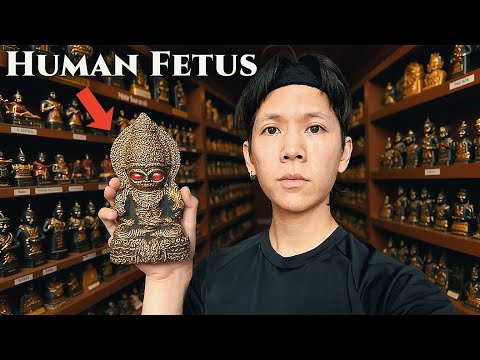
At its core, the Kuman Thong (often translated as "Golden Boy" or "Spirit Child") refers to a type of spirit or amulet in Thai and Southeast Asian animistic traditions. They are believed to be the spirits of deceased fetuses or infants, ritually prepared and imbued with spiritual energy. These spirits are then housed within effigies, amulets, or consecrated containers, and are invoked by practitioners to provide protection, fortune, and assistance in various endeavors.The concept is deeply rooted in animism, the belief that spirits inhabit all things, natural and artificial. The Kuman Thong embodies a powerful, yet potentially volatile, spirit that can be bound to serve its conjurer. It’s a pragmatic transaction: offerings and devotion in exchange for supernatural aid. For those who dabble in the occult, understanding the nature of such entities is paramount. They are not mere symbols; they are conduits of belief and intent, amplified by ritual.
Historical Origins: From Protection to Power
The origins of the Kuman Thong are ancient, intertwined with folk beliefs concerning the spirit world and the perceived power of departed souls. Early forms likely involved rituals for appeasing the spirits of stillborn children or those who died tragically, seeking their protection and good fortune for the living. This practice is not unique to Thailand; similar beliefs can be found in various cultures where ancestors or spirits of the young are veneroned.However, the Kuman Thong gained notoriety and its "forbidden" status due to the darker aspects associated with its creation. Legends speak of necromantic rituals, often performed by individuals with malicious intent or a thirst for power, involving the desecration of fetuses and the binding of volatile spirits. These tales, amplified by fear and superstition, led to the perception of the Kuman Thong as a tool of black magic, capable of immense power but at a significant karmic cost.
This evolution from a protective charm to an instrument of potent, often dangerous magic, highlights a recurring theme in occult studies: the dual nature of power. As one notable occultist put it:
"All enchantment is a force; and all force is a duality. The light casts a shadow, and the shadow can be shaped into a weapon."The history of the Kuman Thong is a stark reminder that intent and methodology are everything in the manipulation of spiritual energies. Whether for protection or coercion, the underlying principles of spirit binding and energetic manipulation remain.
The Forbidden Ritual: Crafting a Kuman Thong
The most infamous aspect of the Kuman Thong lore concerns its creation. While benevolent practitioners might receive consecrated amulets from respected monks, the darker legends speak of a far more disturbing process. The ritual, as described in hushed tones and ancient texts, is said to involve:* Acquisition of a Fetus: This is the most controversial and feared element. Legends speak of obtaining a fetus, often through illicit means, which is then ritually prepared. * Ritual Consecration: The fetus is subjected to a series of intense rituals, often involving chanting, burning of sacred herbs like *Waan* (a type of magical plant), and the application of magical inscriptions. The aim is to preserve the physical form and imbue it with spiritual power. * Binding and Invocation: The prepared spirit is then believed to be bound to an effigy or amulet. The practitioner must then perform ongoing rituals and offerings, such as food, drink, and toys, to maintain the spirit's allegiance and power.
It's crucial to understand that the efficacy of such practices is debated, and many of these accounts are rooted in folklore and superstition. However, the *belief* in these rituals is what imbues the Kuman Thong with its perceived power. The intent behind the creation, and the subsequent belief of the practitioner and those around them, fuels the energetic transaction. As you delve deeper into the study of occultism, you'll find that the "how" is often less important than the "why" and the "belief" that underpins it.
The Kuman Thong in Modern Practice: Power and Peril
In contemporary Southeast Asia, the Kuman Thong remains a significant part of folk belief and occult practice. While the more extreme legends of ritualistic fetus preparation are widely deplored and often considered taboo, commercially produced Kuman Thong amulets and effigies are readily available. These are typically consecrated by monks or spiritual masters, intended for protective and prosperity-drawing purposes.Practitioners invoke their Kuman Thong for:
* Protection: Guarding against malevolent spirits, accidents, and misfortune. * Wealth and Fortune: Attracting customers to businesses, increasing luck in gambling, and general financial prosperity. * Guidance and Information: Some believe Kuman Thong can provide insights or forewarnings.
However, working with such powerful entities is not without its risks. Stories abound of practitioners being overwhelmed by their Kuman Thong, experiencing negative consequences, or finding their lives spiraled by the entity's demands. This is where the principle of karmic balance comes into play.
"Every action has an equal and opposite reaction. For every power invoked, a price is demanded."The power derived from a Kuman Thong is often seen as borrowed, not earned, and the "interest" can be steep. The belief that these entities are born from deceased children also adds a layer of ethical complexity, a point that resonates deeply for many who encounter this facet of occult lore.
Kuman Thong vs. Egregores: A Comparative Analysis
It's tempting to draw parallels between the Kuman Thong and the concept of Egregores, another prevalent topic in occult studies. While both involve the creation or binding of spiritual entities, there are key distinctions:* Origin: Kuman Thong are typically believed to be spirits of deceased infants, ritually bound. Egregores, on the other hand, are psychic constructs or collective consciousnesses formed by the shared belief and emotional energy of a group of people. * Nature: Kuman Thong are often treated as distinct personalities with their own agency (albeit bound). Egregores are more akin to energetic patterns or entities that exist because of consistent belief and focus from a group. Think of them as psychic machines designed by collective will. * Creation: While Kuman Thong creation (in its darker forms) involves specific, often gruesome, rituals, Egregores are "born" organically from collective thought and belief; they can also be deliberately constructed through focused group intent.
Both systems, however, demonstrate the fundamental principle of manifestation through belief and directed energy. The Kuman Thong is a more individualized, often solitary, endeavor in spirit binding, while Egregores are inherently communal. Understanding the nuances between these forms of spiritual constructs is vital for any serious practitioner aiming to harness or defend against such energies. If you're interested in the mechanics of collective belief, exploring how entities like those in Egregores form is a crucial next step.
Verdict of the Practitioner: Is the Kuman Thong Worth the Risk?
From a pragmatic occultist's perspective, the Kuman Thong presents a profound dilemma. Its potential for power – for protection, wealth, and influence – is undeniable, as evidenced by centuries of belief and practice. However, the inherent risks are equally significant.Pros: * Potentially immense power for protection and prosperity. * Deep connection to ancient animistic traditions. * Can serve as a powerful focal point for personal will and belief.
Cons: * Significant ethical concerns surrounding its creation lore. * High potential for negative repercussions, including spiritual or psychological backlash. * Requires continuous energy investment and offerings. * The concept itself can be deeply disturbing for many.
Ultimately, whether one chooses to engage with the Kuman Thong is a personal decision, fraught with peril. It demands an understanding of spiritual law, immense discipline, and a clear grasp of one's own intentions. For most, the pursuit of power through such means is akin to playing with fire – exhilarating but potentially devastating. It’s a potent reminder that manipulating spiritual forces, especially those tied to life and death, requires more than just desire; it demands wisdom and responsibility. If you seek safer avenues for harnessing personal power, consider exploring techniques like Sigil Magic or disciplined meditation.
Arsenal of the Mage: Essential Tools for Deeper Exploration
To truly understand the forces at play in traditions like the Kuman Thong, equipping yourself with the right knowledge and tools is paramount. While direct engagement with such practices is not recommended for beginners, studying them requires a robust foundation.- Books:
- "The Golden Child: Folk Belief and the Supernatural in Thailand" by Professor Stanley J. Tambiah. Provides crucial anthropological context.
- "Thai Folk-Religion and Folk-Psychiatry" by Thomas John Hudec. Offers deep insights into the belief systems.
- "Liber Null & Psychonaut: The Practice of Chaos Magic" by Peter J. Carroll. Essential for understanding the principles of spirit binding and manifestation, even if not directly related to Kuman Thong.
- "The Kybalion" by The Three Initiates. For understanding the fundamental laws of the universe, applicable to all forms of magic.
- Tools:
- A high-quality notebook or journal for recording observations, rituals, and insights. Specialized occult journals can enhance the experience.
- A protective amulet or talisman for your own spiritual defense during research.
- Incense such as Sandalwood or Frankincense to create a conducive atmosphere for study and ritual.
- Resources:
- Academic papers on Southeast Asian folklore and religious practices.
- Reputable occult forums or communities dedicated to ethical practice and deep study.
Practical Workshop: Creating a Simple Sigil for Personal Protection
While the Kuman Thong represents a complex and potentially dangerous path, the principles of intent, belief, and energetic charging are universal in magic. Here's a simplified exercise to harness these principles for personal protection, a safer entry point into the world of conscious manifestation.- Define Your Intent: Clearly state your desire for protection. Be specific. For example: "I am shielded from all physical and spiritual harm."
- Symbolize Your Intent: Condense your statement into a single, powerful word or phrase. Example: "SHIELDED".
- Deconstruct and Design: Break down the letters of your word into abstract shapes and lines. Eliminate repeating letters. Focus on creating a visually unique symbol that resonates with your intent. There's no "right" or "wrong" design; it's about your personal connection to it. For "SHIELDED": S, H, I, E, L, D. You might combine these into a stylized glyph.
- Charge the Sigil: Enter a state of heightened awareness, often achieved through meditation, chanting, or intense focus. Hold the sigil in your mind's eye or in your hand, and pour your intention and energy into it. Visualize its purpose being fulfilled.
- Release and Forget: Once charged, the sigil's work begins. The key is to "forget" it consciously. This allows the subconscious to work without the hindrance of conscious doubt. You can do this by destroying the original drawing (burning, tearing) or simply filing it away and moving on.
This process bypasses the need for external entities and focuses on empowering your own will. It’s a fundamental technique that forms the bedrock of many magical systems, including Chaos Magic.
Frequently Asked Questions
- Are Kuman Thong real? The existence of Kuman Thong as physical entities is a matter of belief and folklore. However, their power as psychological and energetic catalysts is very real for those who believe in them and practice with them.
- Can Kuman Thong bring good luck? Many practitioners believe they can, particularly in areas like business and gambling, by warding off misfortune and attracting positive energies.
- Is it dangerous to own a Kuman Thong? Engaging with any spiritual practice carries potential risks. With Kuman Thong, especially those created through controversial means, the dangers are amplified due to ethical concerns and the potential for backlash.
- Are there safer alternatives to Kuman Thong? Yes. Many amulets, talismans, and magical systems focus on protection and prosperity without the ethical complications and inherent risks associated with Kuman Thong lore. Exploring Protection Magic or personal development techniques is advisable for beginners.
- How do Kuman Thong differ from Egregores? Kuman Thong are understood as spirits of deceased infants bound to objects, while Egregores are psychic constructs formed by collective belief.
Your Operation: Define Your Paradigm
The lore of the Kuman Thong forces us to confront uncomfortable truths about power, belief, and the human psyche. It exists at the intersection of ancient animism, necromancy, and the deeply human desire to influence reality.Your operation is this: Reflect on the concept of borrowed power. Consider the Kuman Thong as a potent metaphor for how we seek easy solutions or external agents to solve our problems. Where in your life are you seeking power through means that might carry a hidden cost?
Analyze a situation where you've sought external help for a personal goal. Did it truly empower you, or did it create a dependency? How could you have approached it by strengthening your own inner resolve and resources, rather than relying on an external entity or force? Document your thoughts. The most profound magic often lies not in summoning spirits, but in understanding and mastering the spirits within yourself.
Practitioner's Note: True magick requires resources. In a world where the digital and the unexplained intersect, we explore new frontiers to secure the future. Do you dare to be part of the vanguard? Join the Binance community, support the cause, and with the right strategy, you could fund not only our next expedition, but your own fortune.
No hay comentarios:
Publicar un comentario