
Table of Contents
- Welcome to the Age of False Revelation
- Beyond Sadness: Deconstructing Doomerism
- The Mirage of Instant Knowledge
- The Unfinished Ascent: Why Doomerism Fails
- Knowing the Cage vs. Escaping It
- The Price of Liberation: Discipline and Transformation
- Arsenal of the Modern Mystic
- The Gnostic Imperative: Your Next Operation
- Frequently Asked Questions
Welcome to the Age of False Revelation
The digital ether hums with pronouncements, a constant deluge of pronouncements that once would have required arduous journeys or forbidden texts. "Everything is fake." "The world is a prison." "Nothing matters." These aren't the whisperings of isolated cults anymore; they echo casually from the mouths of Gen Z, Alpha, and increasingly, everyone else. Concepts once confined to ancient esoteric traditions or fringe philosophies—gnosis, illusion, prison planets, NPCs, psyops—have been democratized, stripped of their sacred context, their inherent demands for initiation, discipline, and transformation.
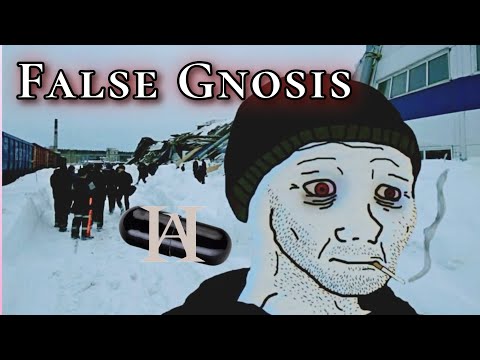
We are witnessing a disturbing phenomenon: the ascent of doomerism as a secularized, albeit hollow, echo of Gnosticism. This isn't about politics or mere pessimism; it's an ontological diagnosis of the modern condition. This exploration delves into the mechanics of this "false gnosis" and its chilling implications for the human spirit, particularly within the context of what some have termed "digital castration"—the severing of our agency and authentic connection through pervasive, disembodied technology.
This transformation feels less like an awakening and more like an arrested development, a psychic stasis masquerading as enlightenment. As practitioners and observers of reality's deeper currents, understanding this shift is paramount. This is where magia caotica meets the stark realities of the informational age, exposing the code behind our perceived reality.
Beyond Sadness: Deconstructing Doomerism
Let's be clear: doomerism is not simply sadness, nor is it clinical depression, nor even straightforward pessimism. While these emotional states may be present, doomerism is a fully formed metaphysical system. It posits a reality irrevocably broken, a cosmic machine beyond repair, rendering any form of active participation or seeking of liberation utterly meaningless. It’s a grand, all-encompassing narrative that offers a perverse form of certainty—the certainty of futility.
This perception, while perhaps holding a kernel of truth regarding the imperfections of our world, is fundamentally a misdiagnosis of the path. It's the equivalent of recognizing the bars of a cage and then deciding the bars themselves are the extent of reality, refusing to even consider the possibility of a lock, a key, or the will to escape. The doomer is not wrong about the existence of the machine; their profound error lies in believing that merely knowing about it is sufficient, that observation equates to understanding or that mere awareness grants escape.
"The modern doomer is not wrong about the machine. He is wrong to believe that knowing about it is enough."
The Mirage of Instant Knowledge
Classical Gnosticism, in its various historical manifestations, was never about passive reception. It was a rigorous, often perilous, journey. It demanded sacrifice, discipline, and a profound internal transformation. The promise was liberation from ignorance and suffering, but the path was steep and required a willingness to shed old skins, confront inner demons, and actively reforge one's being. This process, this genuine gnosis, was inherently costly and transformative.
What doomerism offers is a stark contrast: knowledge without initiation, revelation without a ladder, insight that paralyzes rather than liberates. It presents a seemingly comprehensive worldview that promises ultimate understanding, yet it leaves the practitioner frozen, their will sapped, their potential for transcendence extinguished. This is the hallmark of false gnosis—a seductive certainty that offers the illusion of awakening while ensuring eternal slumber within the confines of despair.
The Unfinished Ascent: Why Doomerism Fails
The critical failure of doomerism lies in its concept of "arrested initiation." It mimics the language of awakening—"truth," "illusion," "matrix"—but bypasses the essential stages of development that true esoteric paths demand. Users who comment on these themes often grapple with this disconnect, asking:
- "Is Doomerism the New Gnosticism WITHOUT the Gnosis?"
- "Is it someone that has received knowledge without knowing how to use it properly and without knowing how to be properly initiated into it?"
These questions highlight the core issue: doomerism offers the *sensation* of profound insight without the *substance* of transformative practice. It's like reading a detailed blueprint of a starship without ever learning how to pilot it. The knowledge of the "prison" is presented as the ultimate revelation, rendering the very idea of escape futile because the "how" has been omitted.
Furthermore, the concept of "humiliation ritual" surfaces in discussions, describing the daily grind of modern existence as a form of forced abasement that erodes individual will and agency. This resonates with the doomer narrative, where the external world is perceived as inherently corrupt and performative, leading to a self-imposed withdrawal.
Knowing the Cage vs. Escaping It
The digital age has amplified this phenomenon. We are inundated with information about the machinations of power, the flaws in societal structures, and the psychological manipulation at play. Social media feeds, news cycles, and online communities are rife with content that exposes the "machine." Yet, this constant exposure often leads not to empowerment, but to a sense of overwhelming helplessness.
The contemporary doomer is adept at dissecting the mechanisms of control, the "psyops," and the underlying "code" of reality. They can identify the elements of "digital castration"—the ways technology can erode genuine connection and agency. However, their knowledge stops at observation. They see the cage, they understand its construction, but they fail to seek the key or even acknowledge its existence. This is a critical divergence from genuine paths of knowledge, which always emphasize agency and the evolution of the self.
Many viewers find this distinction crucial, noting their own journey from initial shock and shame to a desire for understanding and active participation. As one keenly observed, "I refuse to be a quiet sad cog in the machine. Knowledge IS power and I feel better equipped now that I can understand the mindset of the actors on the world stage." This sentiment underscores that understanding the system is merely the first step; the true power lies in charting a course beyond its limitations.
The Price of Liberation: Discipline and Transformation
True gnosis, whether framed through ancient esoteric traditions or modern magia del caos, has always demanded a price. It is not freely given, nor is it achieved through passive observation. It requires active participation, a willingness to engage in rigorous practice, and a commitment to personal transformation. This might involve the meticulous crafting of sigilos, the disciplined energy work of servidores mágicos, or the profound introspection of meditation.
"True gnosis was never instant. It was never disembodied. It was never free. It demanded cost, discipline, and transformation."
This is where the "false gnosis" of doomerism falters. It offers the *promise* of enlightenment without the *work*. It presents a closed-loop system of despair that freezes the will, preventing the very ascent it superficially mimics. The insights doomerism provides, while sharp, are ultimately sterile. They reveal the problem without offering a solution, the cage without a key, the illusion without the path out.
Arsenal of the Modern Mystic
To navigate the complexities of reality and avoid the trap of false gnosis, a practitioner requires specific tools and knowledge. The modern mystic's arsenal is not just about esoteric texts but also about understanding the digital landscape through which much of this "knowledge" is disseminated.
- Foundational Texts: Works that bridge the gap between theory and practice are essential. Books like "Liber Null & Psychonaut" by Peter J. Carroll offer practical applications of magia del caos, while texts that explore philosophical underpinnings, such as those by G.R.S. Mead, provide historical and contextual depth.
- Digital Tools for Discernment: Beyond traditional tools, understanding the algorithms and psychological mechanisms of online platforms is critical. Awareness of psychology, propaganda techniques, and memetic warfare is becoming as important as knowing planetary correspondences in traditional astrology.
- Ritualistic Practice Platforms: While not directly physical, the digital realm can be used for practice. Private journals (digital or physical) for recording operations, for instance, are vital. Consider software that aids in organizing thoughts or scheduling practices.
- Curated Information Sources: Seek out channels and researchers (like the one producing this content) that offer structured analysis and practical applications, rather than mere pronouncements of doom. Look for those who emphasize the 'how' and the 'why' of transformation, not just the diagnosis of a flawed reality.
The Gnostic Imperative: Your Next Operation
The diagnosis is clear: doomerism offers a compelling narrative of despair, a closed system that paralyzes the will under the guise of ultimate knowledge. True gnosis, however, demands action, transformation, and a willingness to engage with the world not as a prison, but as a crucible.
Your operation is this: Recognize the seductive nature of paralyzing "truth." When faced with pronouncements of absolute futility, question the absence of a path forward. Identify where the "knowledge" stops and the "practice" should begin. Your next step is not to accept the doomer's diagnosis as final, but to actively seek the methods—the rituals, the disciplines, the mental shifts—that transcend the perceived limitations.
Your Operation: Chart Your Course Beyond the Cage
- Identify a core doomerist assertion that resonates with you (e.g., "AI will inevitably lead to human obsolescence," "Society is too corrupt to be fixed," "Meaning is an illusion").
- Deconstruct the assertion: What evidence is presented? What is the underlying philosophy?
- Reverse the premise: If this assertion were false, what would be the opposing truth? What agency or possibility does that opposing truth suggest?
- Formulate an Actionable Counter-Practice: Based on the potential for agency, devise a small, concrete practice for yourself. This could be:
- Researching a historical example of societal resilience or technological advancement used for good.
- Engaging in a creative act (writing, drawing, music) that asserts your individual will and meaning-making capacity.
- Practicing a brief meditation focused on inner strength and the ability to influence your immediate reality.
- Connecting authentically with another person, fostering a bond that transcends superficial digital interaction.
- Record your experience: Note how engaging in this counter-practice affected your perception of the original doomerist assertion. Did it shift your perspective? Did it offer a sliver of empowerment?
This is not about denying reality, but about refusing to be imprisoned by a singular, paralyzing interpretation of it. True gnosis is found in the active pursuit of understanding and the courageous act of transformation, not in the passive acceptance of despair.
Frequently Asked Questions
- Q: Is doomerism inherently bad if it leads to a more realistic view of the world?
A: The danger lies in its totality. A realistic view acknowledges flaws but doesn't negate agency or the possibility of change—internal or external. Doomerism presents a closed system where participation is futile, which is not realism but existential paralysis. - Q: How can I distinguish between genuine insight and the "false gnosis" of doomerism?
A: Genuine insight tends to empower, motivate, and lead to transformative action or deeper self-understanding. False gnosis, like doomerism, often leads to apathy, despair, and a withdrawal from engagement, presenting knowledge as an endpoint rather than a starting point. - Q: Can technology truly "castrate" us spiritually or psychologically?
A: In many ways, yes. When technology is used for passive consumption, constant distraction, or to create echo chambers that reinforce nihilistic worldviews, it can certainly erode our agency, our capacity for deep thought, and our connection to authentic experience. Recognizing this is the first step towards reclaiming that power. - Q: If doomerism is a form of arrested initiation, what would a complete initiation look like in this context?
A: A complete initiation would involve moving beyond the mere observation of the "prison" to actively seeking and utilizing the tools, practices, and inner shifts necessary to navigate or transcend it. It would involve turning knowledge into power, and power into directed action and personal evolution.
Practitioner's Note: True magick requires resources. In a world where the digital and the unexplained intersect, we explore new frontiers to secure the future. Do you dare to be part of the vanguard? Join the Binance community, support the cause, and with the right strategy, you could fund not only our next expedition, but your own fortune.
No hay comentarios:
Publicar un comentario