Saltar al contenido principal
Mostrando entradas con la etiqueta practical chaos magick. Mostrar todas las entradas

Philosophical Foundations of Chaos Magick

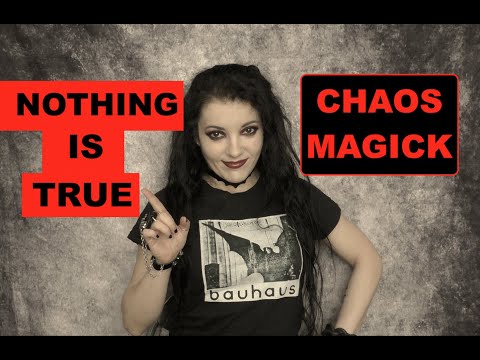
CHAOS MAGICK explained. Philosophical Features.


EMERALD TABLE — Grimoire Record Chaos
📖 Synopsis: Unravel the core philosophical tenets of Chaos Magick, from its pragmatic approach to belief and the concept of "chaos" as potential, to the crucial role of gnosis and the practitioner's sovereignty in shaping reality. This is the bedrock for practical application.
⚔️ TypeSpell
✒️ AuthorFrater Alek0s — Chaos Mage
📅 Date2026-09-16
📜 Scroll ✶MC-2026-0662
🌙 Moon phase🌒 Waxing Crescent
✧ Ruling element✨ Ether
✨ Sphere / TraditionChaos
⭐ Difficulty★★★★☆ Avanzado
⏱ Read time15 min
🔗 Related AppChaos Magick Sigil Generator
“The void is not an absence, but the womb of all that is yet to be, and the magician is the midwife who calls forth form from the unformed.”
⚠️ Requires prior experience with the grimoire's basic techniques.
cha0smagicklabs.com — Digital Grimoire of Chaos Magick

The quote, "Nothing is true, everything is permitted," echoes from the digital halls of pop culture, often misattributed to the essence of Chaos Magick. While it captures a sliver of its spirit, the philosophical landscape of this modern magical paradigm is far richer and more complex. Welcome, seeker, to a deeper exploration of Chaos Magick, a tradition that challenges dogma and empowers the practitioner to become the architect of their own reality. This delve into its philosophical underpinnings is but the first step in your journey, a crucial foundation before we explore the practical applications in future explorations. For those forging their own path, this knowledge is not just academic; it's a blueprint for becoming the practitioner you aspire to be.

If you want to put this into practice, Chaos Magick Sigil Generator guides you step by step.

Chaos Magick, a vibrant current in the magical subculture, emerged from the fertile soil of the United Kingdom in the late 1970s. It is now widely recognized as a potent force on the Left-Hand Path, emphasizing self-transformation and the rejection of externally imposed belief systems. The very term "Chaos" points not to disorder in the mundane sense, but to the primal state of undifferentiated potential, the void from which all reality springs. It is from this abyssal source that practitioners, through the intentional manipulation of consciousness, can draw forth and shape their desired realities. This manipulation is often achieved by accessing altered states of consciousness, a state known in ancient Greek as *gnosis* (γνῶσις), a profound state of knowing or direct experience that bypasses ordinary rational thought. While the modern formalization of Chaos Magick is credited to Peter J. Carroll and Ray Sherwin in the 1970s, its conceptual roots can be traced to the pioneering work of figures like Aleister Crowley, Austin Osman Spare, and Kenneth Grant, whose explorations of will, altered states, and the manipulation of belief laid crucial groundwork.

The philosophy underpinning Chaos Magick is not a monolithic doctrine but rather a dynamic and evolving framework that prioritizes results and individual experience over rigid adherence to any single cosmology or theory. It is a fluid system that encourages experimentation, adaptation, and the creation of unique magical paradigms. This flexibility is one of its most distinguishing features and a core reason for its appeal to a diverse range of practitioners.

CaosThe Nature of "Chaos" in Chaos Magick

The term "chaos" in Chaos Magick is central to its philosophical identity. It does not refer to random, meaningless disorder, but rather to a dynamic, primordial state of potentiality. This is the unmanifested reality, the undifferentiated mass of possibilities from which all form and experience arise. Think of it as the raw, unformed clay of existence before it is shaped by conscious intent. Practitioners seek to access this state of "chaos" not to wallow in it, but to tap into its generative power.

This concept aligns with certain philosophical traditions that posit a formless, primordial ground of being. In many creation myths, the world emerges from a watery abyss or a formless void. Chaos Magick embraces this idea, seeing the unenfirmed potential of chaos as the ultimate source of magical power. By entering states of gnosis, practitioners can temporarily dissolve their ordinary, conditioned sense of self and reality, becoming more receptive to the influence and shaping of this primal potential.

This engagement with "chaos" is not about succumbing to randomness but about reclaiming agency. It is the understanding that by stepping outside of conventional frameworks of belief and perception, one can gain access to deeper, more fundamental levels of reality where change is more fluid and potent. Chaos is the fertile ground of possibility, and the magician is the gardener who cultivates it.

The Pragmatic Imperative: Results Over Belief

Perhaps the most defining philosophical tenet of Chaos Magick is its radical pragmatism. Unlike many traditional magical systems that demand adherence to specific belief structures, pantheons, or rituals, Chaos Magick asserts that belief itself is a tool, not a prerequisite. The efficacy of a magical act is judged by its results. If a technique, symbol, or invocation yields the desired outcome, it is considered valid, regardless of whether the practitioner "truly" believes in the underlying cosmology.

This is often encapsulated in the phrase, "belief is a tool." A Chaos Magickian might adopt a temporary belief system – perhaps that of Egyptian gods, alien intelligences, or even abstract mathematical concepts – for the duration of a working, and then discard it, much like changing clothes. This fluid approach to belief allows for immense flexibility and innovation. It means that a practitioner is not bound by the dogma of any single tradition. They can draw inspiration from any source, whether it be ancient grimoires, modern science fiction, psychological theories, or personal visionary experiences.

This pragmatism is liberating. It frees practitioners from the often-arduous task of conforming to pre-existing belief structures and empowers them to actively experiment and discover what works for them. The focus shifts from faith to efficacy, from adherence to exploration. This is why Chaos Magick is often described as results-oriented and experimental. The magician becomes an experimental scientist of the supernatural, rigorously testing hypotheses and refining techniques based on observable outcomes.

The Principle of "Belief as a Tool" and Its Implications

The idea of treating belief as a malleable tool has profound implications for magical practice. It reframes the relationship between the magician and their reality. Instead of being a passive recipient of cosmic laws or divine will, the magician becomes an active shaper, using belief as a lens through which to focus their will and influence the flow of events.

Consider the creation of a sigil. Traditionally, the power of a sigil is often linked to the specific meaning of the symbols used or the alignment with supernatural forces. In Chaos Magick, the sigil's power is understood to derive from the practitioner's focused intent, their ability to bypass the conscious censor, and their capacity to imbue the symbol with energetic charge, often during a state of gnosis. The "meaning" can be as simple as a coded statement of intent, and the "power" comes from the psychological and energetic mechanisms that the practitioner activates.

This instrumental approach to belief also allows for personal evolution. As a practitioner gains experience and understanding, their belief systems can adapt and change, reflecting their growing insights. This is not seen as a betrayal of past beliefs, but as a natural progression of self-development. The magician learns to wield different cosmologies like different keys, unlocking specific potentials or navigating particular energetic landscapes as needed.

Gnosis: The Bridge Between Consciousness and Chaos

If Chaos Magick empowers the practitioner to shape their reality, then gnosis is the bridge that connects the conscious will to the latent potential of chaos. Gnosis is not merely altered consciousness; it is a specific type of altered state characterized by an intense focus of awareness and a temporary inhibition or suspension of the rational mind. This state is crucial for bypassing the conscious censor, the part of the mind that is accustomed to filtering perceptions and beliefs, and allows for the direct implantation of intent into the subconscious or the broader magical matrix.

There are various methods for inducing gnosis, often categorized as either "inhibitory" (striving to inhibit the mind) or "overload" (overwhelming the mind with stimuli). Inhibitory methods might include deep meditation, breath control techniques, or trance states. Overload methods could involve intense chanting, ecstatic dancing, sensory deprivation/overstimulation, or engaging in deeply analytical or repetitive tasks while simultaneously focusing on the magical intent. Peter J. Carroll, a key figure in Chaos Magick, famously described gnosis as a "state of intense focus of consciousness where conscious inhibition is suspended," and it is this suspension that allows magical work to bypass the limitations of ordinary waking consciousness.

The importance of gnosis cannot be overstated. It is the engine that drives magical change. Without this altered state, the conscious intent, however strong, may struggle to manifest effectively in the world. The ability to consistently and reliably enter states of gnosis is a hallmark of a proficient Chaos Magickian. It is the crucial intermediary step that transforms belief and intention into tangible results by bridging the gap between the magician's inner world and the external manifestation of their will.

Iconoclasm and Perennialism: Embracing Contradictions

Chaos Magick's philosophical stance is often characterized by a fascinating interplay between iconoclasm and perennialism. Iconoclasm refers to the rejection of established beliefs, symbols, and authorities. Chaos Magickians are encouraged to question, dismantle, and deconstruct traditional religious, spiritual, and magical dogmas. They are urged to smash the idols of conventional thinking and to forge their own understanding of reality. This iconoclastic impulse is what drives the exploration beyond established traditions and the embrace of novel methods.

Simultaneously, Chaos Magick exhibits a form of perennialism – the idea that underlying truths or wisdom exist across diverse magical and religious traditions. While iconoclastic in its rejection of dogma, it is perennialist in its willingness to borrow, adapt, and synthesize elements from any tradition that proves effective. A Chaos Magickian might draw upon the archetypal imagery of Egyptian gods for one working, the symbolic language of quantum physics for another, and the structure of a Buddhist meditation for a third. This is not seen as syncretism in the traditional sense, but as a radical eclecticism driven by pragmatic utility.

This embrace of contradiction is key. Chaos Magick recognizes that reality itself is rife with paradox. The universe is not a neatly ordered, easily decipherable system. By embracing paradox and contradiction, practitioners can tap into a more fluid and dynamic understanding of existence, one that is less bound by linear logic and more open to emergent possibilities. This intellectual flexibility allows them to hold seemingly opposing ideas simultaneously, leveraging them for magical effect.

Chaos Magick and Science: A Symbiotic Relationship

The relationship between Chaos Magick and science is often one of mutual respect and influence. While magic operates beyond the current scope of empirical scientific validation for many phenomena, Chaos Magick draws heavily on scientific concepts and methodologies. The scientific method itself – observation, hypothesis, experimentation, refinement – is deeply embedded in the Chaos Magickian's approach.

Concepts from physics, such as quantum entanglement, observer effects, and information theory, are often used metaphorically and sometimes even operationally within Chaos Magick. The idea that observation can influence reality, or that seemingly disparate elements can be linked by non-local connections, resonates with magical principles. Likewise, neurobiology and psychology, particularly theories on consciousness, belief formation, and altered states, provide frameworks for understanding how magical effects might be produced through psychological and neurological mechanisms.

This engagement with science is pragmatic. It seeks to understand the underlying mechanisms of magic through the lens of current scientific understanding, not to prove magic as science, but to better inform magical practice. It allows for the integration of new discoveries and conceptual models into magical theory and technique, keeping the tradition dynamic and forward-looking. It is a testament to the tradition's adaptability that it can embrace both the ancient mysteries of gnosis and the cutting-edge insights of modern science, finding common ground in the exploration of reality's deeper structures.

The Role of the Practitioner: Creator of Meaning and Reality

In Chaos Magick, the practitioner is not a supplicant seeking favor from external deities or forces. Instead, they are an active participant, a co-creator of their own reality. The emphasis is on personal power, self-deification, and the cultivation of individual will. The magician is the sovereign of their own universe, responsible for the creation of meaning, the definition of their goals, and the execution of their magical workings.

This empowers the individual immensely. It shifts responsibility from external entities to the practitioner, fostering a sense of agency and self-reliance. The journey of a Chaos Magickian is one of continuous self-discovery and self-creation. They are encouraged to explore their own potential, to challenge their own limitations, and to define their own spiritual path. This path is not predetermined; it is actively constructed through conscious choice, experimentation, and the relentless application of will.

The philosophical underpinnings of Chaos Magick, therefore, converge on a powerful message: the universe is a malleable construct, and consciousness is the primary tool for its shaping. By understanding the nature of chaos as potential, embracing belief as a tool, harnessing gnosis, and engaging with the world through iconoclasm and a dynamic perennialism, the practitioner can unlock profound levels of personal power and effect meaningful change in their lives and the world around them.

FAQ: Frequently Asked Questions

What is the primary philosophy of Chaos Magick?

The core philosophy of Chaos Magick is pragmatism and the belief that "belief is a tool." It emphasizes results over adherence to specific doctrines and encourages practitioners to experiment with different systems and cosmologies, using what works for them to achieve their desired outcomes.

How does Chaos Magick define "Chaos"?

In Chaos Magick, "Chaos" refers to the primordial state of unmanifested potential, the boundless source from which all reality arises. It is not random disorder but a dynamic, generative force that practitioners can access through altered states of consciousness (gnosis) to shape their reality.

What is "gnosis" in the context of Chaos Magick?

Gnosis is a state of intense focus of consciousness where the rational mind's inhibitory functions are suspended. It is a crucial state for bypassing the conscious censor and directly implanting magical intent into the subconscious or the broader magical matrix, enabling magical effects.

How does Chaos Magick handle different belief systems or traditions?

Chaos Magick is radically eclectic. It borrows and adapts techniques and symbolism from any source – ancient traditions, modern science, pop culture, personal visions – as long as they prove effective. Belief is treated as a tool, temporarily adopted and discarded as needed, rather than a fixed dogma.

What is the role of the individual practitioner in Chaos Magick?

The practitioner is seen as the primary agent of change, the sovereign of their own reality. The focus is on personal power, self-deification, and the cultivation of individual will, empowering the practitioner to actively shape their experiences and manifest their desires.

How does Chaos Magick relate to science?

Chaos Magick often engages with scientific concepts, such as quantum physics and neurobiology, as metaphors or frameworks for understanding magical processes. It draws upon the scientific method of experimentation and refinement to test magical hypotheses, viewing science as a source of valuable insights for magical practice.

What does "Nothing is true, everything is permitted" mean in Chaos Magick?

While often a popular soundbite, this phrase is interpreted in Chaos Magick not as a license for nihilism, but as an assertion of radical freedom from dogma and external authority. It means that established beliefs are conventions, not absolute truths, and the practitioner is free to construct their own meaningful reality and ethical framework.

Can I use scientific theories in my magic?

Absolutely. Chaos Magick encourages the integration of scientific concepts into magical practice. For example, understanding quantum observer effects can inform how focusing intent might influence reality, or knowledge of neuroplasticity can provide insights into altering belief patterns.

Is Chaos Magick considered a "Left-Hand Path" tradition?

Yes, Chaos Magick is generally considered a Left-Hand Path tradition. This means it emphasizes individual sovereignty, self-transformation, and often involves working with archetypal forces traditionally considered "dark" or transgressive, rejecting externally imposed moral or spiritual structures.

How does Chaos Magick differ from traditional magic systems?

Its key differences lie in its lack of fixed dogma, its pragmatic approach to belief, its emphasis on individual experimentation and results, and its radical eclecticism. Chaos Magick empowers the practitioner to be their own authority and to create their own magical systems.

Arsenal of the Modern Mage

To navigate the currents of chaos and harness its potential, a practitioner requires tools that facilitate both theoretical understanding and practical application. The digital age has provided an unprecedented array of resources that can amplify magical intent and streamline ritualistic work.

* Essential: Chaos Magick Sigil Generator — While the philosophical foundations of Chaos Magick emphasize the practitioner's inner power, tools that aid in the creation and charging of magical implements can be invaluable. This generator automates the complex process of converting intent into a sigil, allowing you to focus your limited conscious energy on the crucial step of gnosis. Instead of spending hours wrestling with symbolic language or artistic skill, you can generate potent sigils in moments, freeing up your time and mental energy for the actual magical work. It’s the perfect solution when you need to manifest quickly and efficiently, bypassing the usual hurdles of sigil creation. * Recommended Reading: *Liber Null & Psychonaut* by Peter J. Carroll. This foundational text delves into the theory and practice of Chaos Magick, offering deep insights into its philosophical underpinnings and practical techniques. * Recommended Reading: *Condensed Chaos* by Phil Hine. A more accessible entry point to Chaos Magick, offering a broad overview of its principles and practices. * Recommended Reading: *The Book of Pleasure* by Austin Osman Spare. A seminal work exploring the art of sigil creation and the manipulation of consciousness. * Journal: A dedicated journal for recording sigils, intentions, states of gnosis, results, and reflections is indispensable for tracking progress and refining techniques. Whether digital or physical, a consistent record is a powerful aid. * Mindfulness/Meditation App: Apps that guide meditation, breathwork, or provide ambient soundscapes can be instrumental in developing and accessing states of gnosis. Consistent practice in quieting the rational mind is key.

About the author: Frater Alek0s is a veteran practitioner and researcher in the field of chaos magick. His work focuses on the practical and experimental application of occult techniques for self-development and reality exploration, demystifying esotericism for the modern practitioner.

Exploring the Currents: Your Next Steps

As you integrate these philosophical concepts, consider how they resonate with your own experiences and aspirations. The journey into Chaos Magick is a personal one, characterized by exploration and self-discovery.

Have you encountered the idea of "belief as a tool" in other traditions, or perhaps in your own life? What are your thoughts on accessing "chaos" as a source of potential? Share your insights and experiences in the comments below. Your perspective adds another thread to the ever-expanding tapestry of this practice. If this exploration into the philosophical roots of Chaos Magick has sparked your curiosity, consider sharing it with fellow seekers who might benefit from this perspective. The journey of understanding is always more potent when shared.

For those ready to move from philosophy to practice, remember the tools that can accelerate your path. When you're ready to craft your intentions into potent symbols, the Chaos Magick Sigil Generator is ready to assist you in manifesting your will with speed and precision.

The Chaos Magick Sigil Generator tool, part of the cha0smagicklabs ecosystem, is built exactly for this kind of work.

---


Referencias

  1. Mircea Eliade (1957). The Sacred and the Profane. Harcourt Brace.
  2. Karen Armstrong (1993). A History of God. Alfred A. Knopf.
  3. Joseph Campbell (1949). The Hero with a Thousand Faces. Pantheon Books.
  4. Rudolf Otto (1917). The Idea of the Holy. Oxford University Press.
  5. William James (1902). The Varieties of Religious Experience. Longmans, Green and Co..
  6. Huston Smith (1958). The World's Religions. Harper & Row.
  7. James George Frazer (1890). The Golden Bough. Macmillan.
  8. Rene Guenon (1927). The Crisis of the Modern World. Sophia Perennis.
  9. Carroll, P. J. (1987). Liber Null & Psychonaut. Weiser Books.
  10. Spare, A. O. (1913). The Book of Pleasure. Self-published.

Chaos Magic Servitors: How to Craft and Maintain Them

How To Create & Maintain A Servitor (Revised & Expanded Video) Occult Magical Entities & Chaos Magic


EMERALD TABLE — Grimoire Record Ritual
📖 Synopsis: The realm of Chaos Magic offers a potent toolkit for the modern practitioner, and among its most fascinating creations are servitors. These entities, brought forth from the ether of intent and shaped by focused will, are not mere figments of imagination but dynamic agents capable of manifesting desired outcomes.
⚔️ TypeSpell
✒️ AuthorFrater Alek0s — Chaos Mage
📅 Date2026-09-16
📜 Scroll ✶MC-2026-0645
🌙 Moon phase🌒 Waxing Crescent
✧ Ruling element✨ Ether
✨ Sphere / TraditionChaos
⭐ Difficulty★★★★☆ Avanzado
⏱ Read time17 min
🔗 Related AppLunar Phase Calculator
“Nothing is true, everything is permitted.”
⚠️ Requires prior experience with the grimoire's basic techniques.
cha0smagicklabs.com — Digital Grimoire of Chaos Magick

The realm of Chaos Magic offers a potent toolkit for the modern practitioner, and among its most fascinating creations are servitors. These entities, brought forth from the ether of intent and shaped by focused will, are not mere figments of imagination but dynamic agents capable of manifesting desired outcomes. This comprehensive guide delves deep into the creation, activation, and maintenance of servitors, exploring practical techniques, personal insights, and answering the critical questions that arise when working with these unique occult constructs. If you are seeking to harness the power of Chaos Magic, understanding servitors is a vital step in your journey from aspirant to adept.

If you want to put this into practice, Lunar Phase Calculator guides you step by step.

RitualThe Essence of Servitors: More Than Just Constructs

At its core, a servitor is a being or entity created by a practitioner to perform a specific task or series of tasks. It is not a spirit summoned from an external plane, nor is it a traditional elemental or demon. Instead, a servitor is a manifestation of the practitioner's own will, belief, and intention, given form and purpose. Think of it as a highly specialized magical agent, imbued with the energy and directive needed to accomplish its assigned mission. The concept is akin to creating a digital agent within your computer, but instead of code, you are using consciousness and belief as the programming language.

The power of a servitor lies in its singular focus. Unlike human beings, who are often embroiled in a myriad of thoughts, emotions, and desires, a servitor has one overarching purpose. This unwavering dedication allows it to exert a concentrated influence on its assigned task. As the community comments suggest, servitors can range from reminders for medication to finding financial opportunities, or even acting as protective companions. The key is intention and the clarity with which that intention is conveyed to the servitor during its creation.

The diversity of servitor creation methods highlighted by practitioners speaks to the flexibility of this magical art. Some rely heavily on visualization and sigils, while others focus on naming, form, and task assignment. The comment about creating a servitor from a "white orb" whose goal was to find money, and subsequently getting a job, demonstrates that even rudimentary forms can yield potent results when the underlying principles of intent and belief are applied. This is the beauty of Chaos Magic: it provides a framework, but the practitioner is encouraged to experiment and find what resonates most effectively with their individual magical style and psychological makeup.

The idea of servitors as a "different take on amulets, talismans, charms, sigils" offered by one commenter is also insightful. While these are all tools for focusing magical intent, servitors possess a unique characteristic: a semblance of independent agency, albeit one directed by the creator. They are animated by the practitioner's life force and belief, creating a deeper, more interactive relationship than with a static object. This living aspect, as described by the practitioner who found a comfort and protection from an accidentally created servitor, is what makes them so compelling.

The process, as one user described their servitor living in an incense burner and being "fed" weekly, illustrates the ongoing relationship that can be cultivated. This isn't a one-off spell; it's akin to raising a magical assistant. The drawing of the servitor's sigil on days when its intervention was most needed, leading to tangible results, further underscores the direct link between the servitor's activity and the practitioner's intent. This active engagement, far from being mere superstition, is the practical application of directed will.

The notion of giving a servitor "free will because I don't want him to simply be an object" introduces an advanced concept: the development of a more sentient, self-directed servitor. While the primary purpose remains rooted in the creator's intent, allowing a servitor a degree of autonomy can foster a more complex and potentially more powerful entity. This approach acknowledges that even artificial constructs can, with sufficient complexity and energy, approach a form of independent being. The idea of the servitor protecting the owner at night through dreams adds another layer of sophisticated interaction.

The comparison to "playing a video game and customizing characters" is also an excellent analogy for those who struggle with visualization. The digital realm itself offers a powerful medium for conceptualizing and even manifesting servitors. Creating a character in a game, assigning it a name, abilities, and a mission, mirrors the fundamental steps of servitor creation. This highlights how familiar technological interfaces can be adapted for magical purposes, making the process accessible to a wider range of practitioners.

The mention of "internal gnomes running my life" and calling them "gnomies" is a charming example of anthropomorphizing internal processes or perceived external influences. This can be seen as a playful, personalized form of servitor-like interaction, where abstract concepts or habitual patterns are given a name and persona. While perhaps not a formally created servitor, it represents a similar psychological mechanism of externalizing and then interacting with aspects of oneself or one's environment.

The accidental creation of a servitor that provided protection and comfort for years illustrates that these entities can arise organically from focused psychological energy, even without a conscious, structured ritual. This suggests that the subconscious mind, when charged with emotion and intent, can indeed manifest persistent forms of magical assistance. The fact that it "slowly disappeared" might indicate the ebb and flow of the practitioner's belief or the servitor's energy source diminishing over time, underscoring the importance of ongoing maintenance and intention.

The Mechanics of Creation: Building Your Magical Agent

Creating a servitor is not about complex incantations or arcane rituals; it's about clarity of purpose, focused intention, and the infusion of energy. There are several key components involved, and while methods may vary, the underlying principles remain consistent.

Defining the Task and Purpose

This is the foundational step. What do you want your servitor to achieve? Be as specific as possible. Vague intentions lead to vague results. Instead of "make me rich," aim for something like "attract $500 in unexpected income within the next lunar cycle." The more precise the task, the more effectively the servitor can be programmed. Consider the scope: is it a single, short-term task, or an ongoing function?

Naming the Servitor

A name imbues the servitor with a distinct identity, making it easier to focus your intention. It doesn't have to be an elaborate, ancient-sounding name. It can be a simple designation, a word that resonates with its purpose, or even a personal nickname. Some practitioners choose names that reflect the servitor's function, while others opt for phonetically pleasing sounds that feel "right." The name acts as a focal point for your will and a designation for the entity.

Assigning Form and Appearance

While some servitors may be formless energies, many benefit from a defined appearance. This can be anything from a simple geometric shape to a complex anthropomorphic or zoomorphic form. Again, specificity is key. Visualize it clearly. What color is it? What texture? What size? Does it have any distinguishing features? This visualization helps to anchor the servitor in a tangible form within your mind, making it easier to interact with and direct. For those who struggle with visualization, as mentioned in the community feedback, using existing forms like those from video games or creating a visual representation through drawing or digital art can be highly effective.

The Sigil of the Servitor

A sigil is a symbolic representation of your servitor and its purpose. Many practitioners create a unique sigil for each servitor. This can be done by creating a statement of intent and then processing it into a symbol, or by designing a symbol that visually represents the servitor's form or function. The sigil acts as a focal point for energy and a key to accessing the servitor. It’s crucial that the sigil is not accidentally drawn or recognized by the conscious mind, as this can interfere with its magical charge. Some practitioners intentionally make their sigils complex or abstract to avoid this.

Infusing Energy and Intention

This is where the "magic" truly happens. Once the servitor has a name, form, and purpose, it needs to be charged with energy. This is typically done through a state of gnosis – an altered state of consciousness where the conscious mind is quieted, and the will can be impressed upon the subconscious. Gnosis can be achieved through various methods, such as deep meditation, chanting, ecstatic dance, or even intense physical exertion. During gnosis, you focus all your intention on the servitor, pouring your energy and belief into its creation. Think of it as breathing life into your magical construct. The community highlights various methods, from simple naming and task assignment to drawing sigils and using incense burners as focal points for energy.

Activating and Maintaining Your Servitor

Creation is only the first step; activation and maintenance are crucial for the servitor to function effectively and reliably.

The Activation Ritual

Activation is the moment the servitor effectively comes "alive" and begins its work. While the creation process itself imbues it with initial energy, a distinct activation ritual solidifies its purpose and sends it forth. This can be as simple as a focused moment of will, a declaration of its purpose, or a more elaborate ritual involving the servitor's name and sigil. The key is to consciously release the servitor and its mission into the world. Some practitioners perform activation during a specific lunar phase or planetary hour, while others activate it immediately after its creation. The comment about giving the servitor "free will" and an "deactivation phrase" suggests a more complex, almost contract-like approach to activation, acknowledging the entity's emerging autonomy.

Feeding and Energy Transfer

Servitors, like any magical construct, require energy to function. This "feeding" can take many forms, depending on the servitor's nature and your own practices. It can involve: * Direct energy transfer: During meditation or gnosis, consciously directing energy towards the servitor. * Emotional resonance: Focusing on the emotion connected to the servitor's task (e.g., feelings of abundance for a money servitor). * Symbolic offerings: Certain practitioners use symbolic offerings, such as incense, specific colors, or even small amounts of their own blood (used with extreme caution and ethical consideration), to energize their servitors. The community member who uses an incense burner and burns incense weekly for their servitor exemplifies this approach. * Performance of its task: Ironically, the servitor's own success in performing its task can also be a form of energetic feedback.

The frequency and method of feeding will depend on the servitor's complexity and the demands placed upon it. A servitor tasked with a continuous function will likely require more frequent attention than one with a single, short-term objective.

Communication and Interaction

Regular interaction with your servitor is vital for maintaining its awareness and effectiveness. This isn't about having conversations, but rather about reinforcing its purpose and acknowledging its existence. This can involve: * Visualizing it: Bringing its form to mind periodically. * Using its name: Calling upon it when its task requires action. * Reviewing its sigil: Reinforcing its identity and purpose. * Offering symbolic "thanks" or acknowledgments: As highlighted by the user who drew their servitor's sigil before needing its assistance.

This ongoing engagement ensures the servitor remains "active" and attuned to your will.

Dealing with Deactivation or Retirement

Not all servitors are meant to exist indefinitely. Sometimes, a servitor’s task is completed, or the practitioner may wish to retire it. Deactivation is the process of consciously releasing the servitor and returning its energy. This can be done through a simple ritual of acknowledgment and release, a formal declaration of its task being fulfilled, or by using a pre-assigned deactivation phrase, as one practitioner noted. It's important to consciously deactivate a servitor to avoid it becoming a lingering drain on your energy or a source of uncontrolled influence.

My Personal Techniques and Insights

Over years of working with servitors, I've developed a set of practices that have proven consistently effective. While I encourage experimentation, these methods form the backbone of my servitor work.

Precision in Purpose: The Non-Negotiable Foundation

My primary focus is on extreme precision in defining the servitor's purpose. I avoid any ambiguity. For instance, instead of "attract clients," I would refine it to "attract three new paying clients for my [specific service] within the next 30 days." I often write down the exact task and its parameters, sometimes even casting it into a sigil itself to further imbue it with intent. Vagueness is the enemy of efficacy.

The "Mental Sculpting" Approach to Form

While visualization is a common method, I find "mental sculpting" to be more powerful. Instead of just seeing a form, I mentally feel its texture, its weight, its energy signature. I imagine it as a dense mass of energy, which I then sculpt and shape with my will and intention. This tactile approach helps to anchor the servitor more firmly in the astral. For those who struggle with visual imagination, I highly recommend the video game character customization analogy – it's a practical way to build a tangible form.

The Name as a Command Key

I treat the servitor's name not just as an identifier, but as a command key. When I call its name with focused intent, it’s a direct instruction. This requires a strong mental connection, often forged through regular interaction. I don't typically use elaborate activation rituals; calling its name with the core intent of its service is often sufficient to engage it.

Energy Infusion Through Emotional Resonance

While direct energy transfer is effective, I find that tapping into the emotion associated with the desired outcome is a potent method of feeding. For a servitor tasked with attracting abundance, I focus on the feeling of financial security and freedom as I charge it. This emotional charge acts as a powerful energetic catalyst, aligning the servitor with the desired reality.

The Servitor's "Home"

I often assign my servitors a conceptual or even a physical "home." This could be a specific object in my home (like the incense burner mentioned in the comments), a corner of my altar, or even a designated space in my digital environment. This "home" acts as a focal point for the servitor and a place where it can rest or recharge when not actively engaged in its task. It helps to contain and focus its energy.

Maintenance Through Acknowledgment

I make it a point to acknowledge my servitors regularly, even if it's just a brief mental nod of thanks or a quick visualization. This reinforces their existence and my connection to them. It’s like checking in on a work colleague – it ensures they are performing optimally and remain aligned with their purpose. The act of drawing the servitor's sigil for reinforcement, as one practitioner found, is a powerful form of this acknowledgment.

Common Questions Answered

Can Servitors Become Independent or Harmful?

This is a common concern, especially with more advanced servitors. If created with a poorly defined purpose, excessive autonomy, or if improperly maintained, a servitor *could* potentially develop unintended behaviors. However, for the vast majority of practitioners using well-defined, task-oriented servitors, the risk is minimal. Think of it like programming a complex AI: the output is largely determined by the input and ongoing directives. Ethical creation, clear purpose, and regular interaction are your best defenses against negative outcomes. The comment about giving a servitor "free will" while still ensuring its primary function is a nuanced approach to this very topic.

How Long Do Servitors Last?

The lifespan of a servitor depends on several factors: the initial energy invested, the clarity of its purpose, the ongoing "feeding" and maintenance, and the nature of its task. A servitor created for a short-term goal may naturally dissipate once its task is complete. A servitor designed for ongoing functions, with regular maintenance, can potentially last for years, even decades. Like any magical construct, its existence is tied to belief and energy. Some practitioners intentionally build in a lifespan or deactivation clause.

Can I Create a Servitor for Protection?

Absolutely. Protection servitors are incredibly useful. They can be programmed to act as energetic shields, to identify and ward off negative influences, or even to alert you to potential dangers. Their form and function can be tailored to your specific needs. A "white orb" serving as a protective entity or a "knight" guarding your home, as seen in the community feedback, are excellent examples of protective servitors.

What If I Can't Visualize Well?

As highlighted by several comments, visualization is not the only path to servitor creation. Focus on other sensory inputs: How does it feel? What does it sound like? What is its energetic signature? You can use names, sigils, talismans, or even written descriptions as anchors. The "video game customization" analogy is also a fantastic approach for those who are more visually oriented in that specific medium. The intention is what matters most.

Can Servitors Perform Multiple Tasks?

While possible, creating a servitor for a single, highly specific task is generally more effective, especially for beginners. Creating a servitor for multiple, complex tasks can dilute its focus and energy. If you need multiple functions, it's often better to create separate servitors, each dedicated to a singular purpose. However, a servitor can be programmed to perform several *related* sub-tasks that contribute to a larger goal.

The Lunar Phase Calculator: Your Ally in Timing

When working with the ebb and flow of universal energies, precise timing can be a significant advantage. For rituals, spellcasting, and even servitor activation, understanding the current lunar phase can dramatically amplify your results. For instance, activating a servitor designed for abundance might be more potent under a waxing moon, while a servitor for banishing negativity could be better suited for the waning moon or the dark moon phase. The Lunar Phase Calculator is an indispensable tool for any practitioner looking to synchronize their magical workings with natural cycles. It provides clear, intuitive data on the moon's phase, its zodiacal position, and related astrological influences, allowing you to choose the most opportune moments for your workings. Rather than guessing or relying on memorization, this app offers precise, real-time information, saving you the effort of manual calculation and ensuring your magical timing is always optimal. If you're serious about harnessing the full potential of astrological and lunar timing, this tool is essential for ensuring your servitors are activated and maintained at their peak energetic moments.

My Methods in Action: A Practical Example

Let me illustrate with a servitor I created for financial flow, whom I internally refer to as "Aurum."

1. Purpose: To manifest an average of $1000 in unexpected income per month for the next six months. 2. Name: Aurum (Latin for gold). 3. Form: I didn't visualize a distinct shape. Instead, I felt a warm, golden light, like molten gold, with a subtle hum. It's more of a localized energetic presence than a visual entity. 4. Sigil: I generated a unique sigil based on the concept of "golden flow" and the specific monetary goal. I keep this sigil in a hidden digital file. 5. Creation & Infusion: I performed this during a waxing crescent moon, focusing intensely on the feeling of financial ease and opportunities manifesting. I directed a significant portion of my energy into the concept of the "golden hum." 6. Activation: I called its name, Aurum, and stated its purpose clearly during a deep meditative state. I then mentally released it to begin its work. 7. Maintenance: I engage with Aurum weekly through a brief meditation where I visualize the golden hum, reinforcing its presence and purpose. I also consciously acknowledge any unexpected income, mentally attributing it to Aurum's work. 8. Results: Within days, I received a refund I had long forgotten about. Over the following months, small freelance opportunities and unexpected payments consistently arrived, averaging around the target amount.

This example demonstrates how precision in purpose, a clear energetic anchor, and consistent reinforcement lead to tangible results.

About the author: Frater Alek0s is a veteran practitioner and researcher in the field of chaos magick. His work focuses on the practical and experimental application of occult techniques for self-development and reality exploration, demystifying esotericism for the modern practitioner.

Conclusion: The Empowering Nature of Servitor Magic

Servitors represent a powerful and practical application of Chaos Magic principles. They are a testament to the practitioner's ability to harness their own will and belief to create entities that can influence reality. Whether you are a beginner looking to understand the basic principles of magical creation or an experienced practitioner seeking to expand your repertoire, working with servitors offers a profound and rewarding path.

The key is to approach it with clarity, intention, and consistent practice. Don't be afraid to experiment and find the methods that resonate most deeply with you. As the community feedback shows, there are as many ways to create and interact with servitors as there are practitioners. The journey of creating and maintaining your own magical agents is not just about achieving specific goals; it's about deepening your understanding of consciousness, energy, and your own extraordinary potential.

The Lunar Phase Calculator tool, part of the cha0smagicklabs ecosystem, is built exactly for this kind of work.

Have you ever worked with servitors, or are you planning to create your first one? Share your experiences, questions, and any unique methods you've discovered in the comments below. Your insights enrich our collective understanding and inspire others on their magical path. If this exploration into servitor magic has sparked your interest, consider sharing this guide with fellow practitioners who might benefit from this knowledge.


Referencias

  1. Hine, P. (1992). Condensed Chaos: An Introduction to Chaos Magic. New Falcon Publications.
  2. Carroll, P. J. (1987). Liber Null & Psychonaut. Weiser Books.
  3. D'Andrade, B. (2017). Creating Magical Entities: A Complete Guide to Creating Thoughtforms. Evolved Publishing.
  4. Kraft, K. (2005). Servitors and Constructs. Self-published.
  5. Webb, D. (2012). The Servitor: A Practical Magickal Guide. Self-published.
  6. Tyson, D. (2014). The Demon's Gate: Creating and Controlling Spirits. Self-published.
  7. Asprem, E. (2014). The Problem of Disenchantment. SUNY Press.
  8. Bogdan, H. (2007). Western Esotericism and Rituals of Initiation. SUNY Press.
  9. Spare, A. O. (1913). The Book of Pleasure. Self-published.
  10. Crowley, A. (1904). The Book of the Law. Self-published.